Post-harvest vineyard spraying: what to apply, when, and why
TL;DR
- Post-harvest is the most skipped spray window in the vineyard calendar.
- That's a mistake.
- Copper, sulfur, and oil applied after fruit comes off cut overwintering powdery mildew and Botrytis inoculum, knock down mealybugs that spread leafroll virus, and protect fresh pruning wounds from Eutypa and Botryosphaeria.
- Timing, product choice, and clean spray records all matter here.
Why does post-harvest spraying matter at all?
The vine is still awake for four to eight weeks after harvest, sometimes longer in warm ground like the Central Valley or Paso Robles. Canopy tissue is still making and moving carbohydrates down into the wood and roots. Pathogens know this, and they use the window.
Most growers spend their spray budget between budbreak and veraison, which makes sense. The fruit is on the vine, disease pressure is real, and every dollar has an obvious target. The trouble is the calendar doesn't stop at the last pick.
Powdery mildew (Erysiphe necator) keeps sporulating on post-harvest leaves and infects green shoot tissue, building inoculum that overwinters as cleistothecia in the bark [1]. Knock that population back before leaf drop or you start next season behind. Botrytis cinerea works the same way. Late-season rain after harvest sets up gray mold on leaf petioles and cane tissue, and those lesions carry into dormancy.
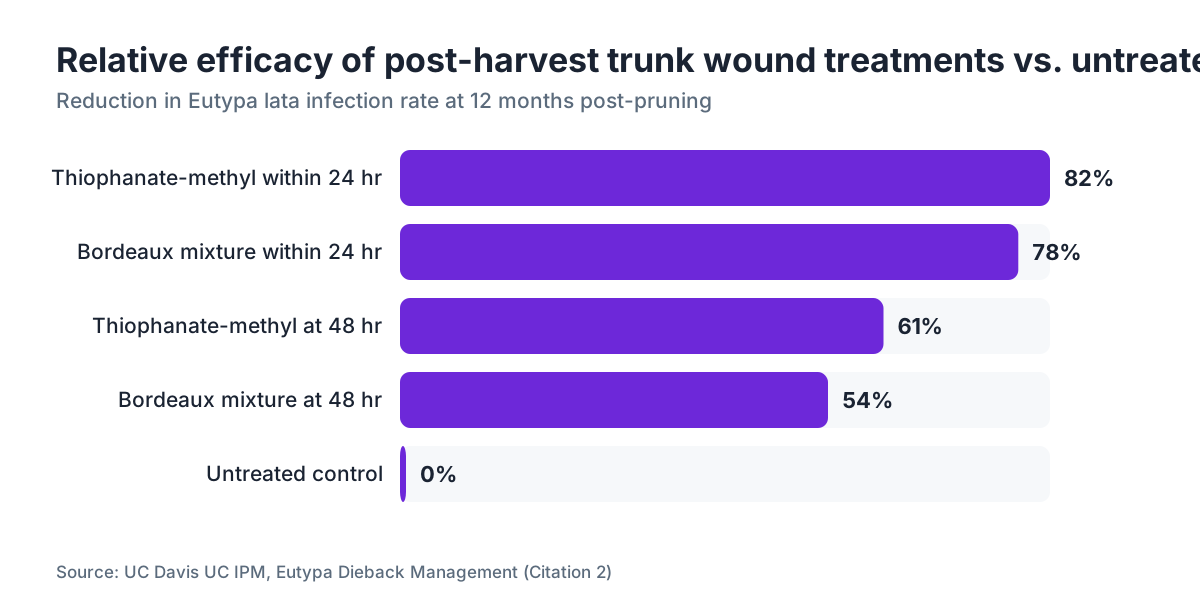
Trunk diseases are the highest-stakes reason to spray after the fruit is off. Eutypa lata and the Botryosphaeriaceae complex (including Diplodia and Lasiodiplodia) infect fresh pruning wounds. Growers often prune partway in fall and finish in late winter, which means fresh cuts sit open. Wound protectants have a narrow effective window, roughly 24 to 72 hours before rain, so timing is the whole ballgame with that practice [2].
Mealybugs are the fourth reason. Grape mealybug (Pseudococcus maritimus) and vine mealybug (Planococcus ficus) push their last-generation crawlers in fall across much of California. Those crawlers move under the bark to overwinter, and a well-timed spirotetramat or organophosphate spray in this window cuts that overwintering population, which tracks directly with leafroll virus spread the next season [3]. This is one post-harvest spray with a payoff you can actually measure in later virus surveys.
What are the primary post-harvest spray targets?
Five targets matter, and which ones apply to your block depends on region, disease history, and whether you had a clean harvest or a messy one.
Powdery mildew. Sulfur still works after harvest and it's the cheapest thing you can spray. One application at 2 to 3 lb/acre elemental sulfur (wettable sulfur) interrupts the late-season sporulation cycle. UC IPM guidance notes oil can smother cleistothecia on bark if temperatures stay below 90 degrees F [1]. Keep sulfur and oil at least 14 days apart.
Botrytis. If your region gets fall rain and you saw bunch rot at harvest, a post-harvest botryticide earns its cost. Captan and copper materials are the common low-cost options. The pricier FRAC Group 7 and 11 chemistries buy you little here, since resistance pressure is off with no fruit hanging.
Trunk disease wound protection. Thiophanate-methyl (Topsin M) and Bordeaux mixture (copper sulfate plus hydrated lime) have the strongest evidence behind them. UC Davis plant pathology work found fungicide applied within 24 hours of a pruning cut cut Eutypa infection by more than 80 percent versus untreated controls [2]. Bordeaux is the cheapest at roughly $15 to $30 per acre in materials, depending on mix rate.
Mealybugs and leafroll virus vectors. Spirotetramat (Movento) is systemic and hits crawlers. Buprofezin and chlorpyrifos (where still legal) have been used too, though chlorpyrifos is banned for agricultural use in California and restricted in several other states [3]. Check your state registration before you order anything.
Leafhoppers. Western grape leafhopper (Erythroneura elegantula) third-generation activity can run into October in warm years. Kaolin clay, insecticidal soap, or a pyrethroid in October reduces adults before they move to leaf litter to overwinter.
When exactly should you time post-harvest applications?
The window is different for each target, and treating them as one window is the most common planning mistake growers make. Powdery mildew and canopy sanitation run from just after harvest through about 50 percent leaf drop. Trunk wound protection runs off the pruning cut, not the calendar. Mealybug timing runs off trap counts.
Once leaves are more than halfway gone, the canopy stops being a real pathway for uptake or contact, and you're spending money on dirt. In the San Joaquin Valley, harvest for most varieties finishes by mid-October, so the sanitation window closes by mid-November most years. On the cooler coast, harvest can run into late October and the canopy holds green into December.
Trunk disease is simple. Spray before rain, and within 24 to 72 hours of making the cut [2]. That's a pruning-event window, not a post-harvest window. Any fall tipping, hedging, or wound-making during harvest operations, protect those wounds the same day.
Mealybug crawler timing is region and species specific. On California's Central Coast, vine mealybug crawlers usually peak in September and October. UC IPM recommends monitoring with sticky traps to confirm crawler activity before you spray, because hitting the sedentary adult phase is mostly wasted money [3].
Copper for bacterial diseases like Pierce's disease (Xylella fastidiosa) has no strong post-harvest evidence. That copper practice is a dormant-season treatment aimed at pruning-wound infection by Xylella, and current UC guidance is that timing around sharpshooter flight periods matters more than copper timing [4].
One honest caveat. Nobody has clean trial data isolating post-harvest powdery mildew sprays as their own variable from a full-season program. The closest evidence comes from Australian and California work on cleistothecia carry-over, which shows a correlation between late-season inoculum density and early-season flag shoot incidence the following spring [1].
Which products are registered for post-harvest use in vineyards?
Registration comes before efficacy. A product is only legal if it's registered in your state for grapes and the label either permits post-harvest use or doesn't limit it to a pre-harvest window. Under FIFRA Section 12(a)(2)(G), using any pesticide in a way inconsistent with its label is a federal violation, which is why the label is the law [5].
Here's a working reference for the common post-harvest targets.
| Target | Product class | Example active ingredients | REI | Notes |
|---|---|---|---|---|
| Powdery mildew | Sulfur | Wettable sulfur | 24 hr | Cheapest; avoid above 90 F |
| Powdery mildew | Oil | Mineral or JMS stylet oil | 4 hr | Don't mix within 14 days of sulfur |
| Trunk diseases | Benzimidazole | Thiophanate-methyl | 12 hr | Apply within 24 hr of pruning |
| Trunk diseases | Copper | Bordeaux mixture | 48 hr | Also suppresses Botrytis |
| Botrytis | Copper | Copper hydroxide, Bordeaux | 48 hr | Low cost, broad spectrum |
| Mealybug | Tetramic acid | Spirotetramat | 24 hr | Systemic; targets crawlers |
| Mealybug | Organophosphate | Chlorpyrifos | 24 hr | Banned in CA; check state regs |
| Leafhopper | Pyrethroid | Zeta-cypermethrin | 12 hr | Label REI varies by product |
Those REI values are general ranges. Read the specific product label for the current registered REI every time. The EPA Worker Protection Standard under 40 CFR Part 170 requires you to record the REI and notify workers before re-entry [6].
Organic growers work with a shorter list. OMRI-listed sulfur, copper (within an allowed total load), and insecticidal soap are the practical picks. Copper builds up in soil, which is a real problem in vineyards with decades of use. Some European certification programs now cap annual copper at 4 kg Cu/ha/year [7]. California has no statutory cap yet, but track your cumulative copper load anyway, especially on lighter soils that buffer poorly.
What are the re-entry interval and worker safety rules for post-harvest sprays?
The EPA Worker Protection Standard, at 40 CFR Part 170 and last revised in 2015, applies to every agricultural pesticide application no matter what stage the crop is in [6]. Post-harvest does not mean post-compliance.
Four WPS requirements slip through the cracks in the post-harvest rush.
First, notification. Before any application, warn workers who will be in the area, by oral warning or field posting depending on the product and REI. For REIs over 4 hours, post the application-specific information at a central spot workers can reach.
Second, the REI itself. Nobody enters the treated area during the REI, including the operator if they aren't the applicator. Common post-harvest products range from 4 hours (horticultural oil) to 48 hours (some copper formulations). Some organophosphates carry 72-hour or 120-hour REIs.
Third, PPE. Label PPE requirements apply during application, full stop. Post-harvest often means workers are pulling harvest bins, doing trellis repairs, or irrigating in the next row over. Being nearby doesn't suspend the label.
Fourth, records. Keep a record of each application for at least two years under federal rules [5]. Each record needs the product name and EPA registration number, the rate and total amount applied, the date and location, the applicator's name and certification number if commercially licensed, and the REI. California and Washington layer on more than the federal minimum.
This is where spray record software pays for itself. Keeping records in a system like VitiScribe means every post-harvest application is timestamped, tied to a block map, and ready the minute a county agricultural commissioner asks. Paper logs are legal, but digging a two-season-old entry out of a binder is slow and easy to get wrong.
How does post-harvest spraying differ in California vs. Washington vs. New York?
Region drives both which diseases matter and which products you can legally spray. California leans on trunk disease and mealybug work, Washington leans on Botrytis, and New York leans on downy mildew. Get the region wrong and you spray the wrong target.
In California, the top post-harvest priorities are trunk diseases (Eutypa, Botryosphaeria), mealybugs, and powdery mildew in warm years. Chlorpyrifos is banned for agricultural use in California as of February 2024 [3], which removes one mealybug tool and pushes growers to spirotetramat or buprofezin. UC IPM is the most detailed California source and it updates regularly [3].
In Washington, Botrytis is the main post-harvest worry in the Yakima Valley, because fall rain arrives earlier and more reliably than in California's desert regions. WSU Extension recommends post-harvest Botrytis sprays for sites with a bunch-rot history and publishes annual pest management guides with registered product lists [8]. Powdery mildew matters in Washington too, and the pathogen has shown reduced sensitivity to DMI fungicides (FRAC Group 3) in some surveys, which makes post-harvest sulfur rotations useful for resistance management.
In New York, especially the Finger Lakes and Hudson Valley, the post-harvest program often centers on downy mildew (Plasmopara viticola) rather than powdery mildew, because fall runs wet and cool. Cornell Cooperative Extension recommends post-harvest copper for downy mildew, aimed at cutting the overwintering oospore load in infected leaves that fall to the vineyard floor [9]. Trunk disease matters in New York too, mostly for Concord and hybrid varieties that get mechanically hedged in fall.
One contrast worth flagging. California grows mostly Vitis vinifera, where trunk disease is financially brutal. New York and the Pacific Northwest grow a mix of vinifera and cold-hardy hybrids, and hybrids tend to shrug off Eutypa better, which lowers the urgency of wound treatment there a notch.
Does post-harvest copper affect soil health and should you worry about it?
Yes, and it's more than an organic-certification technicality. Copper does not break down in soil. It stacks up, and at high concentrations it suppresses soil microbial communities, especially the mycorrhizal fungi that help vines take up nutrients [7].
A 2010 meta-analysis of European vineyard soils (Komarek et al., Environment International) found total soil copper in long-farmed vineyards ranging from 50 to over 1500 mg Cu/kg dry soil, with the highest levels where Bordeaux mixture had been used for decades [7]. For reference, EU regulatory ecotoxicological thresholds for copper in soil start around 100 mg/kg. Plenty of French and Italian vineyards sit well above that.
The EU capped copper at 4 kg Cu/ha/year for all member states starting in 2019, and set a 7-year average limit of 28 kg Cu/ha total. California has no equivalent statutory cap, though certification programs like Certified California Sustainable Winegrowing and SIP Certified track copper use as a sustainability metric.
Here's the practical move. If your block has a long history of annual Bordeaux, run a soil copper test before you add another post-harvest copper spray. UC Cooperative Extension soil labs run a standard copper analysis for around $20 to $40 per sample. If you're already above 150 mg/kg in the top 6 inches, switch to a copper-alternative wound protectant like thiophanate-methyl. The slightly higher materials cost is worth it.
If you're building a long-term soil health plan for the vineyard, copper accounting belongs in the same conversation as compost and cover crops.
How do you build an efficient post-harvest spray schedule?
Efficiency means getting the right sprays out in the right order, no wasted trips, no tank conflicts. Most small and mid-size operations are doing this with one sprayer, one driver, and a tight window before dormancy shuts the door.
Start with the most time-sensitive job: trunk wound treatment. Any fall pruning or tipping, protect the wound the same day or next morning. Have the product mixed and the sprayer loaded before you pick up the loppers.
Next, schedule the mealybug or leafhopper spray off monitoring, not the calendar. Check the sticky traps. If crawler counts sit below threshold (guidelines vary by region, but WSU and UC IPM both publish economic thresholds), skip it [3][8]. That's real money saved.
For powdery mildew, one post-harvest sulfur pass usually covers you if the season program was solid. Go to two passes only if you had late-season breakthrough or a long-lingering green canopy.
Tank conflicts to avoid: sulfur and oil within 14 days. Oil and anything high-pH (Bordeaux is strongly alkaline) in the same tank. Copper and phosphonate products can mix, but run a jar compatibility test first.
Document every application as you make it. The two-year federal record is the floor, not the ceiling. Agencies in California, Washington, and New York can audit further back, and if you're chasing an organic transition, the paper trail from conventional sprays becomes part of your certification file. A tool like VitiScribe captures that at the point of application instead of leaving it as a January catch-up chore.
Budget roughly 3 to 5 spray passes across the window in a full-program year: one wound treatment, one sulfur or oil, one copper or Botrytis pass, and one to two insecticide passes based on pressure. Materials for a basic program run around $40 to $120 per acre depending on products. That's cheap insurance against an Eutypa-infected vine that ends up pulled and replanted at $12 to $20 per vine [2].
What records do you need to keep for post-harvest pesticide applications?
Federal law under FIFRA and the WPS sets a minimum of two years of pesticide application records [5][6]. Federal is the floor. California requires three years and, for anyone with a commercial applicator license, a Pesticide Use Report (PUR) filed with the county agricultural commissioner within 30 days of each application [10].
Washington requires pest control records for two years under WAC 16-228 and RCW 17.21, and licensed applicators must report applications to the Washington State Department of Agriculture [8].
New York requires records for two years under 6 NYCRR Part 325, and every commercial applicator must keep a record of each application including the target pest, product, rate, and location [9].
At a minimum, each spray record needs:
- Date of application
- Block or location (field name, acres treated)
- Pesticide product name and EPA registration number
- Amount of product applied and dilution rate
- Target pest or disease
- Application method (airblast, backpack, drone)
- Applicator name and, if licensed, certificate number
- PHI and REI noted
- Weather at time of application (wind speed and direction are required for some products)
California's Pesticide Use Reporting system is the most detailed state-level requirement in the country. Know what fields it asks for before you're standing in the row, and you skip a lot of back-filling. CDPR publishes the reporting requirements on its site [10].
One mistake growers make over and over: recording block acreage wrong. If your spray record says 5 acres but the county assessor parcel data shows 4.3 planted acres, an auditor will catch the gap. Map your blocks accurately once and use those numbers everywhere.
Are there any organic-approved options for post-harvest vineyard disease management?
Yes, and the organic toolkit works reasonably well after harvest, because the fruit is off and there's no residue concern pushing you toward the priciest OMRI products.
Sulfur is OMRI-listed and effective for powdery mildew. It's the backbone of any organic post-harvest program. Apply 2 to 3 lb/acre wettable sulfur, or the label-equivalent liquid rate.
Copper is OMRI-listed, with the cumulative soil-loading caveat above. Bordeaux mixture (copper sulfate plus hydrated lime, typically a 4-4-100 formula for dormant use) is the classic organic trunk disease and Botrytis material. Fixed coppers (copper hydroxide, copper octanoate) carry OMRI listings too.
Insecticidal soap and kaolin clay (Surround WP) are OMRI-listed and effective on soft-bodied insects, including mealybug crawlers and leafhoppers. Kaolin creates a physical barrier that confuses and deters crawlers, though at post-harvest timing with no fruit to protect, the economics have to pencil out against next season's mealybug pressure.
Spinosad (from Saccharopolyspora spinosa fermentation) is OMRI-listed and effective on leafhoppers. It's weak on mealybugs, but for blocks where leafhopper is the main fall insect target, it's a strong organic pick.
Neem oil (azadirachtin) is OMRI-listed with some effect on mealybug crawlers, though the data on vine mealybug specifically is thinner than for other targets. UC IPM notes efficacy is variable [3].
The NOP regulations at 7 CFR Part 205 require that every material used in certified organic production appear on the USDA National List of Allowed and Prohibited Substances or hold a specific exemption [11]. Verify your product's listing before the first application, not after.
What are the biggest mistakes growers make with post-harvest spraying?
Skipping the window entirely is the most common mistake, and it compounds. A season of heavy powdery mildew followed by no post-harvest cleanup means you open spring with a heavy cleistothecia load, chasing disease from the first flag shoot.
Spraying too late is the second most common error. Wait for the first frost warning to get a sulfur pass out and the canopy is already at 70 percent defoliation, so you're mostly spraying the ground. The spray does almost nothing at that point.
Ignoring trunk wounds is the third mistake, and the most expensive. Eutypa dieback can take four to seven years to kill a cordon, and by the time you see the wilting and stunting, the infection is years old. Replacing a cordon or a whole vine costs far more than a thiophanate-methyl application the day you made the cut [2].
Mixing incompatible products to save a pass is a frequent one. Sulfur and oil phytotoxicity is the classic, but growers also hit copper and phosphonate interactions that cut the efficacy of both. The jar test takes five minutes and saves a whole tank of wasted product.
Failing to document is the administrative mistake that bites at audit time, or when you need spray records for an organic transition clock, a wine club with sustainability requirements, or a grape purchase contract that requires IPM compliance.
Frequently asked questions
How soon after harvest should I spray the vineyard?
For trunk wound protection, spray within 24 hours of any pruning cut. For powdery mildew and Botrytis, start within a week of harvest and finish before 50 percent leaf drop. For mealybugs, monitor with sticky traps first and time the spray to crawler activity, which usually peaks in September and October in California's Central Coast and Napa regions.
Can I use sulfur in the vineyard after harvest?
Yes. Sulfur is one of the most effective and affordable post-harvest options for powdery mildew. Apply wettable sulfur at 2 to 3 lb/acre while the canopy is still at least 50 percent intact. Skip it if temperatures exceed 90 degrees F, which can cause phytotoxicity on green tissue. Don't apply within 14 days of any oil-based product in the same block.
What is the best fungicide for trunk disease after harvest?
Thiophanate-methyl (Topsin M) and Bordeaux mixture (copper sulfate plus hydrated lime) have the strongest evidence for trunk wound protection. UC Davis plant pathology research found applications within 24 hours of a pruning cut reduced Eutypa infection by over 80 percent. Bordeaux is the lower-cost option at roughly $15 to $30 per acre in materials. Apply to the cut surface directly when possible.
Do post-harvest sprays require the same WPS records as during-season sprays?
Yes. The EPA Worker Protection Standard under 40 CFR Part 170 applies year-round, regardless of crop stage. Every application must be recorded, REIs must be observed, workers must be notified before re-entry, and records must be kept at least two years federally. California requires three years and monthly Pesticide Use Reports to the county agricultural commissioner.
How do I control mealybugs after harvest in the vineyard?
Target the last-generation crawlers, which in California usually peak September through October. Spirotetramat (Movento) is systemic and effective on crawlers. Buprofezin is another option. Chlorpyrifos is banned for agricultural use in California as of February 2024. Confirm crawler activity with sticky traps before applying; spraying during the sedentary adult phase wastes product and money.
Is copper spray safe to use post-harvest in organic vineyards?
Copper is OMRI-listed and permitted under NOP regulations (7 CFR Part 205) for certified organic production. The practical concern is cumulative soil loading. In long-farmed vineyards, soil copper can reach levels that suppress mycorrhizal fungi. If your block has decades of copper history, get a soil copper test before adding more. The EU caps copper at 4 kg Cu/ha/year; California has no statutory cap yet.
What is the post-harvest spray program recommended by UC Davis?
UC Davis Cooperative Extension recommends post-harvest sulfur or oil for powdery mildew cleistothecia reduction, copper or thiophanate-methyl for trunk wound protection after any fall pruning, and pest-pressure-based sprays for mealybugs timed to crawler activity. The UC IPM program provides annually updated product lists and economic thresholds specific to California wine grape regions.
Can I skip post-harvest sprays if the season was clean?
You can scale back, but skipping entirely carries risk. Even after a clean season, mealybug crawlers are moving under bark in fall, and trunk wounds from any fall tipping or hedging need protection. A minimal program, just a wound treatment and one sulfur pass, costs less than $50 per acre in materials and offers real insurance against next season's disease pressure and vine loss from trunk pathogens.
What spray records do I need to keep in California after harvest?
California requires three years of pesticide use records and a monthly Pesticide Use Report (PUR) filed with the county agricultural commissioner within 30 days of each application. Records must include the product EPA registration number, application rate, date, location by field or block, acres treated, applicator name and license number, and target pest. CDPR publishes the full reporting requirements on its website.
How does post-harvest spraying reduce leafroll virus spread?
Leafroll virus is transmitted by mealybugs, particularly grape mealybug and vine mealybug. Post-harvest sprays targeting fall crawlers reduce the overwintering population, which lowers the vector load available to transmit the virus during next season's growth. Lower spring mealybug populations correlate directly with reduced leafroll virus incidence in later annual surveys at California study sites.
What is the PHI and REI for Bordeaux mixture in post-harvest vineyard use?
Bordeaux mixture is a copper sulfate and hydrated lime combination with no meaningful pre-harvest interval concern applied post-harvest, since fruit is already off. The re-entry interval is typically 48 hours for copper formulations, but always read the specific product label since formulations vary. Under the EPA WPS, the REI must be posted and workers notified before re-entry into the treated area.
Does post-harvest spraying help with downy mildew in New York and Washington?
Yes, especially in wetter eastern regions. Cornell Cooperative Extension recommends post-harvest copper in New York vineyards to reduce overwintering oospore load from downy mildew (Plasmopara viticola) in infected leaves that drop to the vineyard floor. In Washington, WSU Extension emphasizes Botrytis as the main post-harvest target, but copper programs also help with downy mildew in high-rainfall years.
How much does a post-harvest spray program cost per acre?
Materials for a basic program covering powdery mildew, Botrytis, trunk wounds, and one insecticide pass typically run $40 to $120 per acre depending on products. Bordeaux mixture sits at the low end; spirotetramat or proprietary fungicides push toward the high end. Labor and equipment cost are site-specific. Compare that to vine replacement at $12 to $20 per vine when trunk disease goes unchecked.
Can drones be used for post-harvest vineyard spraying?
Drone application of pesticides in vineyards is legal in several states including California and Washington, if the operator holds the right commercial applicator license and the product label permits aerial application. The post-harvest canopy is often more open than at mid-season, which can improve spray penetration. Records requirements match ground application, and the drone operator's license number must appear in the spray log.
Sources
- UC Davis UC IPM, Grape Powdery Mildew Management: Powdery mildew (Erysiphe necator) can continue sporulating on post-harvest leaves and overwinter as cleistothecia in bark; post-harvest sulfur or oil applications reduce inoculum load
- UC Davis Plant Pathology, Eutypa Dieback and Trunk Disease Management in Vineyards: Fungicide applications within 24 hours of pruning cuts reduced Eutypa infection rates by over 80% compared to untreated controls; Bordeaux mixture and thiophanate-methyl are the primary recommended materials
- UC IPM, Mealybugs in Vineyards and Leafroll Virus Vector Management: Vine mealybug crawlers peak in fall; monitoring with sticky traps before application is recommended; chlorpyrifos banned for agricultural use in California effective February 2024
- UC Davis UC IPM, Pierce's Disease Management in Vineyards: Copper timing for Pierce's disease is best aligned with sharpshooter vector flight periods rather than post-harvest application timing
- U.S. EPA, Federal Insecticide, Fungicide, and Rodenticide Act (FIFRA) Section 12: Applying any pesticide inconsistently with the label is a federal violation under FIFRA Section 12(a)(2)(G); applicators must maintain records for a minimum of two years
- U.S. EPA, Worker Protection Standard for Agricultural Pesticides, 40 CFR Part 170: EPA WPS requires REI posting, worker notification, and PPE compliance for all agricultural pesticide applications year-round including post-harvest; records must be kept for two years
- Komarek et al. 2010, Environment International, Copper contamination of vineyard soils meta-analysis: Total soil copper concentrations in long-farmed European vineyards ranged from 50 to over 1500 mg Cu/kg dry soil; EU capped copper applications at 4 kg Cu/ha/year starting 2019
- WSU Extension, Pacific Northwest Pest Management Handbooks, Grape Pest Management: WSU Extension recommends post-harvest Botrytis applications for Washington sites with bunch rot history and provides annually updated registered product lists and thresholds
- Cornell University Cooperative Extension, Viticulture and Enology, New York and Pennsylvania Pest Management Guidelines for Grapes: Cornell recommends post-harvest copper applications in New York vineyards to reduce overwintering downy mildew oospore load; two-year pesticide records required under 6 NYCRR Part 325
- California Department of Pesticide Regulation, Pesticide Use Reporting Requirements: California requires Pesticide Use Reports filed with the county agricultural commissioner within 30 days of application and three years of record retention
- USDA Agricultural Marketing Service, National Organic Program Regulations 7 CFR Part 205: NOP regulations require that all materials used in certified organic production appear on the National List of Allowed and Prohibited Substances; sulfur and copper are allowed with restrictions
Last updated 2026-07-09