Veraison definition: what it means and why it matters in the vineyard
TL;DR
- Veraison is the French term for the onset of ripening in grapes.
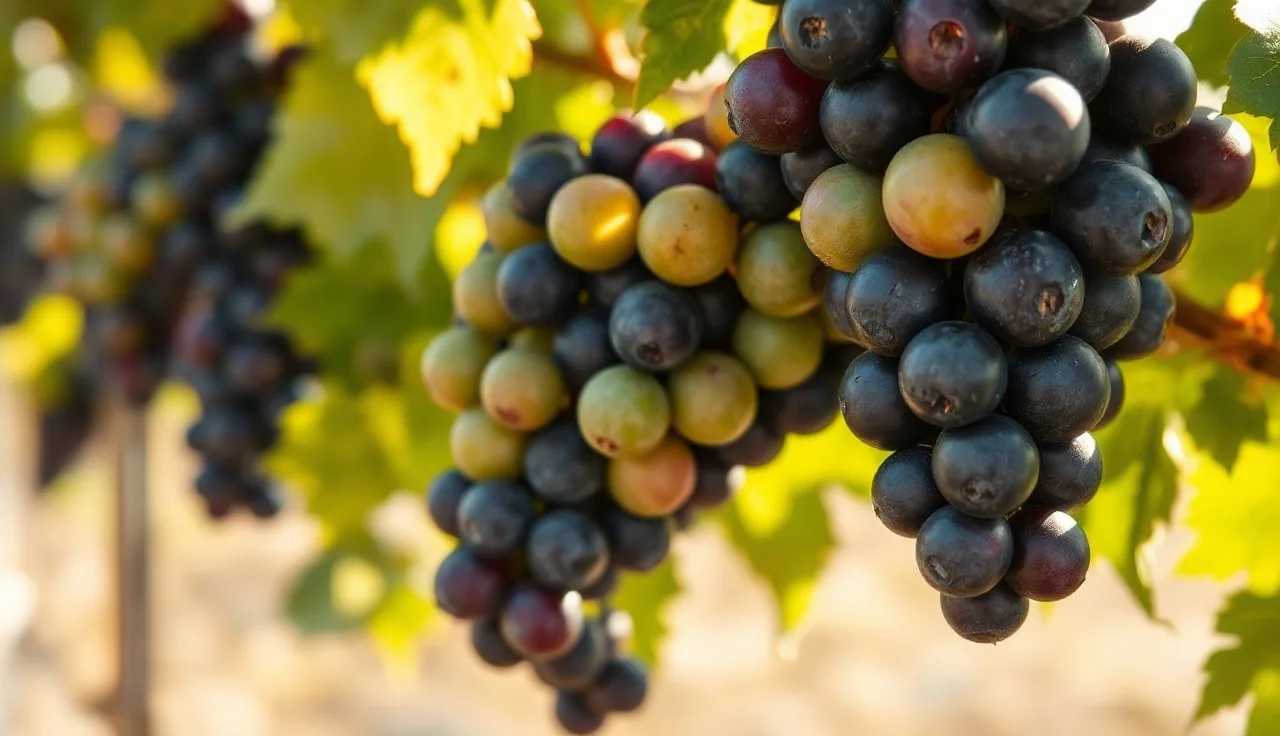
- Berries soften, change color from green to red or translucent yellow, and begin filling with sugar while acid levels drop.
- It usually starts 40 to 50 days before harvest.
- The exact timing tells you a lot about crop load, canopy work still worth doing, and when to start scouting for late-season disease.
What does veraison mean, exactly?
Veraison (pronounced veh-ray-ZOHN, borrowed straight from French) is the moment a grapevine berry leaves its green, hard, acid-heavy phase and starts ripening. The word comes from the French "véraison," which growers used to describe the color change in red varieties, the most visible sign that ripening had begun.
It isn't a single moment. It's a window. The first berries in a cluster, or the first clusters in a block, start the process and the rest follow over one to three weeks [1]. That staggered timing matters on the ground, because a block that flips uniformly usually ripens more evenly at harvest.
Both red and white varieties go through veraison, though the color change is louder in reds. Cabernet Sauvignon and Merlot berries turn dark purple or nearly black. Chardonnay and Sauvignon Blanc shift from opaque green to a translucent golden green. The physiology underneath is identical: the vine stops feeding shoot growth and starts feeding the berries.
What actually happens inside the berry at veraison?
The berry runs through a fast set of chemical and structural changes, roughly one to two weeks once any given berry starts [2].
Sugar accumulation kicks off. Before veraison the berry stores almost no sugar. After it, glucose and fructose flood in from the leaves through the phloem, and Brix (the standard measure of dissolved sugars) climbs from near zero to somewhere between 18 and 28 degrees Brix by harvest, depending on variety and climate [2]. Malic acid, which runs the early season, starts getting respired away. Tartaric acid holds steadier, so it becomes a bigger share of the acid profile as malic drops.
Anthocyanins, the red and purple pigments, start building in the skins of red varieties, pushed mostly by light exposure and temperature. That's why canopy work in the weeks around veraison has such an outsized effect on red wine color. You can't fix a shaded cluster after the fact.
The berry softens, too. Before veraison a Cabernet berry is close to a small hard pea. After, the cell walls in the flesh relax, water moves in, and the berry turns plump and slightly yielding. Berry weight roughly doubles between veraison and harvest in most varieties [3].
Seeds shift as well. Still maturing before veraison, they move from green and astringent toward brown, with tannins that polymerize as they go. Green seed tannins taste harsh. Mature seed tannins are still grippy but rounder. That green-to-brown seed change is one of the oldest field tests for phenolic maturity.
When does veraison typically happen in the season?
Timing shifts with variety, climate, and vintage, but a few benchmarks hold up. Veraison generally starts 40 to 50 days before harvest [1], and about 100 to 120 days after budbreak in most wine grape varieties grown in temperate climates [4].
Early-ripening varieties like Pinot Gris or Chardonnay hit veraison earlier on the calendar than late ones like Cabernet Sauvignon or Petit Verdot. On California's Central Coast that might mean mid-July for the early varieties and late July into early August for the late ones. In cooler regions like New York's Finger Lakes, veraison often runs two to four weeks later than Napa or Sonoma for the same variety.
Growing Degree Days (GDD) travel better than calendar dates. UC Davis's long-running work on vine phenology puts veraison for most varieties between roughly 1,400 and 1,800 GDD accumulated from January 1 (base 50°F / 10°C), depending on variety and site [4]. Cornell Cooperative Extension has published GDD thresholds calibrated to New York conditions for Concord, Niagara, and the cold-hardy hybrids common in the Northeast [5].
Warm vintages pull veraison forward. A 2020 study in Global Change Biology found that veraison dates in major European wine regions have shifted earlier by roughly six to eight days per decade since the 1980s, driven by warming temperatures [6]. The trend is less documented in the US, but there's no reason to think American vineyards are exempt.
How do you scout for and confirm veraison in a block?
The simplest method: walk the block daily starting around 90 to 95 days after budbreak and squeeze a few berries from different spots, inside and outside the canopy, from clusters at different positions on the shoot. When you see the first color change in reds, or the first softening and translucency in whites, write down the date. That's your veraison start.
A more systematic version marks 10 to 20 sentinel vines per block at the start of the season, then counts the percentage of berries at veraison each visit. Washington State University Extension recommends tracking percent veraison across marked vines every two to three days once it starts, because the speed of progression tells you as much as the start date [7]. A block that runs from 10% to 90% veraison in five days has far more uniform ripening ahead than one that stretches that over two weeks.
Log which part of the block flips first. In most vineyards with any topographic change, there's a pattern: warmer spots, often the top of a slope or the south-facing end of rows, go first. That spatial pattern is worth recording every year. If you track phenology in a field operations platform, veraison date by block becomes one of the most useful pieces of history you'll build. VitiScribe's block-level record system keeps those phenology entries attached to the block's full history, so you can compare vintage timing without digging through paper logs.
Photo documentation is underused. A time-stamped photo of representative clusters from your sentinel vines, every two to three days, gives you a visual record that earns its keep when you're trying to reconstruct why a block ripened unevenly.
Why does veraison timing matter for crop and canopy management?
Veraison is about the best trigger you'll find all season for a specific set of decisions, mostly because it marks the end of the window where certain moves still pay off.
Crop thinning. Green drop (pulling whole clusters before veraison) is the standard tool for cutting crop load. Once veraison starts, the vine has already spent resources on those berries, and dropping them afterward does less for sugar concentration in the fruit that stays [3]. It can still help disease control and air circulation, but it won't move Brix the way a pre-veraison drop does. Most growers time green drop for about 60 to 70 days before target harvest, which lands comfortably before veraison in most varieties.
Leaf removal. Pulling leaves in the fruit zone before veraison feeds light to the clusters right when anthocyanin synthesis is ramping up in reds. Post-veraison leaf pulls still help air circulation and disease reduction, but the color and phenolic payoff falls off sharply after about 50% veraison [3].
Canopy hedging. Lateral shoots left to run through veraison steal photosynthate the vine should be pushing into the berries. Most operations hedge or top around veraison for that reason.
Shoot positioning and tying. Get shoots into the trellis wires before or at veraison, because they turn brittle afterward. Move them late and you risk snapping them.
Irrigation. In regulated deficit irrigation programs, veraison is often the point where managers either end the deficit and let berries rehydrate some, or hold water back on purpose to limit berry size and concentrate flavor. WSU Extension has a detailed framework for post-veraison irrigation in Washington Riesling and Cabernet Sauvignon worth reading if you're on the edge of that call [7].
What disease and pest pressure changes around veraison?
The berry's shift in skin structure and chemistry at veraison opens vulnerabilities that don't exist earlier.
Botrytis cinerea (gray mold) is the biggest worry. Botrytis spores are almost always in the vineyard already. What changes at veraison is the berry's susceptibility. Softened skin and rising sugar make an easier entry point, especially on tight-clustered varieties like Pinot Noir or Muscat [8]. If Botrytis is a risk on your site, your fungicide program needs a veraison-timing application, or one right after.
Sour rot, a complex of bacteria and yeast that follows insect feeding and cracking, also climbs post-veraison as sugars rise. Spotted wing drosophila (Drosophila suzukii) opens the berry for sour rot organisms in many regions. The management window for that pest is tight and starts right at veraison.
Powdery mildew (Erysiphe necator) runs the other direction. Berries get increasingly resistant to new infection after about 8 Brix, which usually lands two to four weeks after veraison [8]. But they're vulnerable right up to that point, so veraison is not the time to let the mildew program slide.
On the application side, veraison is a good time to review pre-harvest intervals (PHIs) for anything you're still spraying. The EPA Worker Protection Standard requires re-entry interval (REI) compliance regardless of growth stage, but post-veraison the calendar tightens because a harvest date is now in sight [9]. Every application from here to picking should have its PHI penciled against your target harvest date.
How does veraison vary between grape varieties?
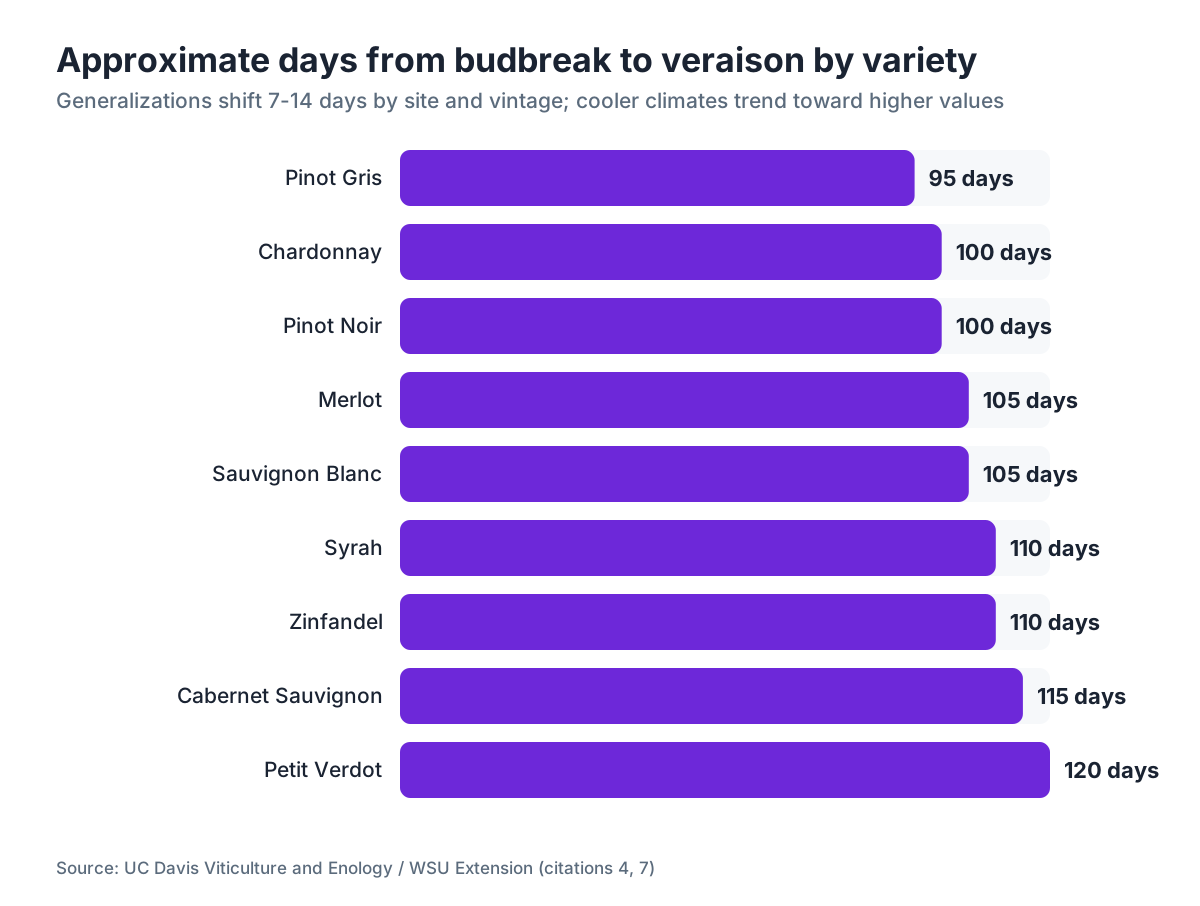
Variety is the single biggest predictor of when veraison arrives, measured from budbreak. The table below gives approximate days from budbreak to veraison for common wine grape varieties, drawn from UC Davis and WSU extension data [4][7]. These are generalizations. Actual numbers shift 7 to 14 days by site and vintage.
| Variety | Approx. days from budbreak to veraison | Ripening class |
|---|---|---|
| Pinot Gris / Grigio | 90-100 | Early |
| Chardonnay | 95-105 | Early to mid |
| Pinot Noir | 95-105 | Early to mid |
| Merlot | 100-110 | Mid |
| Sauvignon Blanc | 100-110 | Mid |
| Syrah | 105-115 | Mid to late |
| Zinfandel | 105-115 | Mid to late |
| Cabernet Sauvignon | 110-120 | Late |
| Petit Verdot | 115-125 | Late |
These gaps have real weight in a mixed-variety vineyard or a winery sourcing from several blocks. A manager running both Chardonnay and Petit Verdot on one property may have blocks at completely different phenological stages in late July, which means scouting schedules, irrigation calls, and spray programs have to run block by block rather than farm-wide.
For growers supplying fruit to a vineyard or winery under contract, knowing your variety's typical veraison-to-harvest interval lets you hand buyers a confident harvest window five to six weeks out, instead of waiting on Brix testing in September.
What's the connection between veraison and harvest timing?
The 40 to 50 day span from veraison to harvest is a rough guide, not a contract. Warm years compress it. Cool years stretch it. But it's good for backward planning. If you're targeting a late September pick on Cabernet Sauvignon and your veraison usually runs 45 days out, you're watching for veraison around mid-August. If nothing has started by late August in that scenario, it's time to ask hard questions about crop load, vine health, and whether the block will even reach maturity.
Most growers use veraison as the start date for formal harvest monitoring. Two to three weeks after veraison, Brix testing on representative berry samples starts making sense. Before that it's too early, and the numbers move too fast to schedule anything. Many operations also start daily rain-forecast watching post-veraison, because a heavy rain at 20-plus Brix can crack berries and set off rapid disease in ways that just don't happen at lower sugar.
For wine quality, the veraison-to-harvest stretch is often described by researchers as the window where the wine is essentially made in the field. A 2016 review in the Australian Journal of Grape and Wine Research reported that temperature during ripening, especially the ratio of daytime high to nighttime low, is among the strongest predictors of aromatic profile in finished wine [10]. All of that happens in those 40 to 50 days.
How should veraison dates be recorded for compliance and planning purposes?
From a pure compliance angle, most regulators don't require you to record veraison dates. From a farm-records angle, it's one of the most useful phenological data points you can keep year over year.
At minimum, record the date you first saw veraison in each block, the rough percentage of berries at veraison that day, and the date the block reached about 80% veraison (a common threshold for calling veraison "complete" for management purposes). Some growers also note which rows or vine positions lag, since a persistent lag points toward rootstock issues, nutrition problems, or disease.
If you're keeping pesticide records and timing sprays post-veraison, the EPA Worker Protection Standard at 40 CFR Part 170 covers any pesticide application. It requires that workers and handlers get pesticide safety information and application-specific details, and that REIs are observed [9]. The WPS doesn't change with phenological stage, but your PHI obligations sharpen in the post-veraison window. Dated spray records tied to growth stage make an audit easier and help you reconstruct decisions if a residue question comes up at harvest.
For digital records, attaching veraison observations to each block's record in a field operations system builds a searchable multi-year phenology log with no extra effort. That longitudinal data earns its keep when you're explaining a late harvest to a buyer or troubleshooting a block that underperforms year after year. VitiScribe holds this kind of block-level phenological entry alongside spray logs and harvest data, so everything from a growing season stays tied together.
Does uneven veraison across a block indicate a problem?
Some unevenness is normal. Berries within a single cluster don't all flip at once, and clusters on sun-exposed cane positions go before shaded ones. A three-to-five day spread across a well-managed block is nothing to worry about.
A spread of ten days or more, or a pattern where the same rows always lag, is worth chasing down. Common causes:
Vine-to-vine crop load. Vines carrying more clusters have more work to push through veraison. If your training or pruning left inconsistent crop loads, this is where it shows.
Nutrient stress, nitrogen in particular. Low-nitrogen vines tend to shut down early and can stall at partial veraison. A mid-summer petiole sample tells you where the block stands.
Viral infection. Leafroll virus disrupts carbohydrate movement in the phloem and can cause badly delayed, uneven veraison, sometimes three weeks or more behind healthy vines on the same site [11]. If sections of a block sit green and hard while the next rows over are at full veraison, put leafroll on your list.
Water stress. Both extremes cause trouble. Severe drought before veraison staggers the timing. So does over-watering that keeps vigor high and delays the vine's switch to reproductive mode.
If the pattern repeats across vintages, soil sample, tissue test, and consider disease testing before you write it off as ordinary vineyard variability.
What do university and extension sources say about veraison management?
UC Davis's Department of Viticulture and Enology has published widely on berry development and phenology, and its resources keep putting veraison at the center of late-season decisions. Their materials describe veraison as the "transition from the lag phase to the ripening phase" and stress that the physiological switch is driven by the vine's internal hormonal signals, mainly abscisic acid (ABA), rather than temperature accumulation alone, though temperature shapes the timing [4].
Cornell Cooperative Extension, serving the Northeast and Great Lakes, has adapted phenology guidance for cooler climates and hybrid varieties. Their pest management guidelines tie Botrytis and sour rot scouting directly to veraison timing and give threshold-based spray recommendations built for the narrow windows of shorter seasons [5].
WSU Extension's viticulture program in Washington has done some of the most rigorous applied work on veraison and post-veraison irrigation in dry western climates. Their regulated deficit irrigation research shows that allowing some berry rehydration right after veraison, instead of holding maximum water stress, gives better fruit quality in some varieties without the berry-size penalty growers fear [7].
All three programs land on the same point: veraison is the most useful single phenological marker for coordinating late-season work, precisely because you can see it without instruments and it predicts harvest with enough lead time to act. You don't need a refractometer to see veraison start. You need to be in the vineyard.
Frequently asked questions
What is veraison in simple terms?
Veraison is when grapes start to ripen. The berries change color, soften, and begin filling with sugar while their acid levels drop. In red varieties the shift from green to purple or red is obvious. In whites it's subtler, green to translucent yellow-green. It happens roughly 40 to 50 days before harvest and marks the start of the final push toward picking.
How do you pronounce veraison?
The standard English pronunciation most American growers use is veh-ray-ZOHN. Some say VEHR-ay-zon with the accent up front. Either is understood. The word comes straight from French, where the original is closer to vay-ray-ZON. In casual vineyard talk you'll hear all three. Nobody is going to correct you.
What triggers veraison in grapevines?
The trigger is mainly hormonal, driven by abscisic acid (ABA) building up in the berry as it reaches the end of its first growth phase. Temperature accumulation (Growing Degree Days) shapes the timing, but it doesn't flip the switch mechanically the way day length does in some other crops. UC Davis research describes it as the vine's internal signal to move resources from shoot growth to berry development.
How long does veraison take to complete?
An individual berry makes the transition in about one to three days once it starts. Across a whole cluster or block, the process usually takes one to three weeks from first berry to last. A tight, uniform block might finish in seven to ten days. A block with mixed vine age and variable crop loads might drag out to three weeks. The speed of completion is a good ripening-uniformity signal.
Should I do a green drop before or after veraison?
Before. Cluster thinning (green drop) has its strongest effect on Brix concentration done 60 to 70 days before harvest, well ahead of veraison. Once veraison begins, the vine has already committed phloem resources to those berries, so removing them afterward does less to concentrate sugars in the rest. Post-veraison thinning still helps air circulation and disease pressure, but it won't move the Brix needle much.
What Brix level should I expect at veraison?
Low, typically 4 to 8 degrees Brix at the start. The fast sugar accumulation comes after veraison, not during the onset. Most varieties climb from veraison-level Brix to harvest-target Brix (18 to 26 degrees, variety dependent) over roughly five to seven weeks. If you're testing early in veraison and seeing single digits, that's normal and expected.
Can leafroll virus delay veraison?
Yes, and by a lot. Grapevine leafroll-associated virus disrupts phloem function, which directly interferes with sugar transport into the berry. Infected vines can lag three weeks or more behind healthy neighbors in the same block, sitting green and hard while uninfected vines reach full veraison. Persistent uneven veraison that repeats in the same vines across vintages is a classic field sign of leafroll worth testing for.
What pesticide rules apply in the post-veraison window?
The EPA Worker Protection Standard (40 CFR Part 170) applies year-round, covering re-entry intervals and worker notification for any pesticide application. Post-veraison, the more pressing issue is pre-harvest intervals (PHIs). Every pesticide label is a legal document, and applications made in the weeks after veraison have to be checked against the PHI so you're outside the required interval by harvest. California, Washington, and other states may add restrictions beyond the federal baseline.
Does veraison timing predict harvest date?
Roughly, yes. The common rule is 40 to 50 days from the start of veraison to harvest, though warm vintages compress it and cool ones extend it. It's good for giving buyers and winery logistics a ballpark harvest window in late July or August, not for setting a specific pick date. Brix monitoring starting two to three weeks after veraison gives you the sharper answer.
Why does veraison happen at different times in different parts of my vineyard?
Aspect, elevation, soil depth, vine age, crop load, and rootstock all create within-vineyard variation. Warmer, well-drained spots, often the top of a slope or the south end of rows in the Northern Hemisphere, veraison first. Shaded areas, low spots, and heavily cropped vines lag. The spatial pattern usually repeats across vintages, so mapping it once gives you a template for how the block ripens.
What does veraison look like in white grapes?
In whites there's no dramatic color shift, so it's easy to miss. Look for berries softening when you squeeze them gently, a move from opaque to slightly translucent, and a shift from flat green to a warmer yellow-green. In some varieties like Muscat or Gewürztraminer a light pink or golden blush appears. If you're unsure, Brix-testing a few berries confirms whether sugar accumulation has started.
How do I record veraison dates for multi-block vineyards?
Record veraison separately for each block, noting the date of first observed veraison and the date the block hits roughly 80% completion. Attach the observations to sentinel vine records if you're using marked vines for phenology tracking. Over several vintages, block-level veraison dates become one of the most useful pieces of data you have for harvest planning, spray timing, and understanding site differences.
Does climate change affect veraison timing?
Yes, and the trend is documented. A 2020 study in Global Change Biology found that veraison dates in major European wine regions have shifted earlier by roughly six to eight days per decade since the 1980s. American vineyards have less long-term published phenology data, but the mechanism, warmer temperatures accelerating GDD accumulation, applies the same way. Earlier veraison means an earlier harvest window and potentially more heat exposure during ripening.
Sources
- UC Davis Viticulture and Enology, Grape Berry Development: Veraison begins 40 to 50 days before harvest and progresses over one to three weeks across a block
- UC Davis Viticulture and Enology, Berry Composition and Wine Quality: Sugar accumulation begins at veraison, with glucose and fructose rising from near zero to 18-28 degrees Brix by harvest depending on variety and climate
- UC Agriculture and Natural Resources, Crop Thinning and Canopy Management in Wine Grapes: Berry weight roughly doubles between veraison and harvest; pre-veraison crop thinning has stronger Brix concentration effects than post-veraison thinning
- UC Davis Viticulture and Enology, Vine Phenology and Growing Degree Days: Veraison occurs about 100 to 120 days after budbreak and between roughly 1,400 and 1,800 GDD (base 50F); the switch is driven by hormonal signals including ABA, with temperature shaping timing
- Cornell Cooperative Extension, Grape Phenology and Pest Management Guidelines: Cornell publishes GDD thresholds calibrated to New York conditions for Concord, Niagara, and cold-hardy hybrids, and ties Botrytis and sour rot scouting to veraison timing
- Global Change Biology, 2020, Earlier wine grape harvest dates signal climate change: Veraison and harvest dates in major European wine regions have shifted earlier by roughly six to eight days per decade since the 1980s
- Washington State University Extension, Viticulture in the Pacific Northwest: WSU recommends tracking percent veraison on marked sentinel vines every two to three days; their irrigation research shows post-veraison rehydration can improve fruit quality without major berry-size penalties
- UC Statewide Integrated Pest Management Program, Grape Pest Management Guidelines: Berries become increasingly resistant to new powdery mildew infections after about 8 Brix; Botrytis susceptibility increases sharply at veraison due to softening skin and rising sugar
- EPA, Agricultural Worker Protection Standard, 40 CFR Part 170: The EPA Worker Protection Standard mandates re-entry interval compliance and worker notification requirements for pesticide applications regardless of phenological stage
- Australian Journal of Grape and Wine Research, 2016, Temperature and wine aromatic profile during ripening: The ratio of daytime high to nighttime low temperature during the veraison-to-harvest window is among the strongest predictors of aromatic profile in finished wine
- UC Davis Foundation Plant Services, Grapevine Leafroll Disease: Leafroll-associated virus disrupts phloem function and can delay veraison by three weeks or more in infected vines compared to healthy neighbors on the same site
Last updated 2026-07-09