Veraison: what it is, when it happens, and why it drives every harvest decision
TL;DR
- Veraison is the stage when grape berries shift from hard and green to soft and colored, driven by hormonal changes inside the berry.
- It starts sugar accumulation, acid drop, and flavor development.
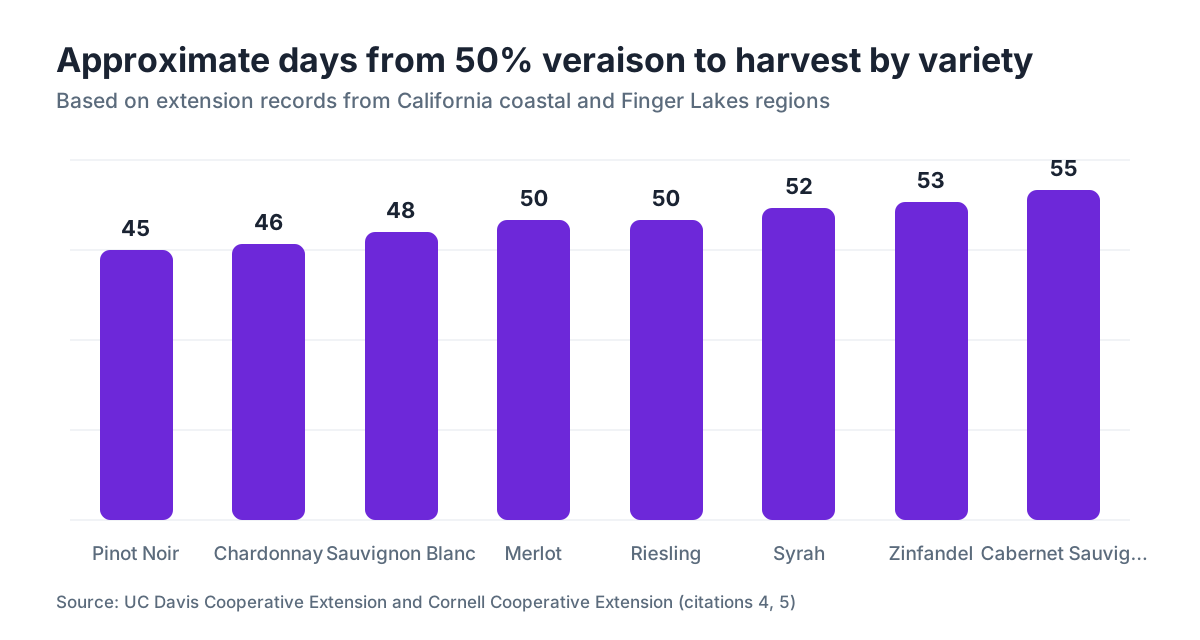
- In most wine regions it falls 45 to 55 days before harvest.
- Everything from irrigation cutbacks to your last fungicide window gets timed off this one event.
What does veraison mean, exactly?
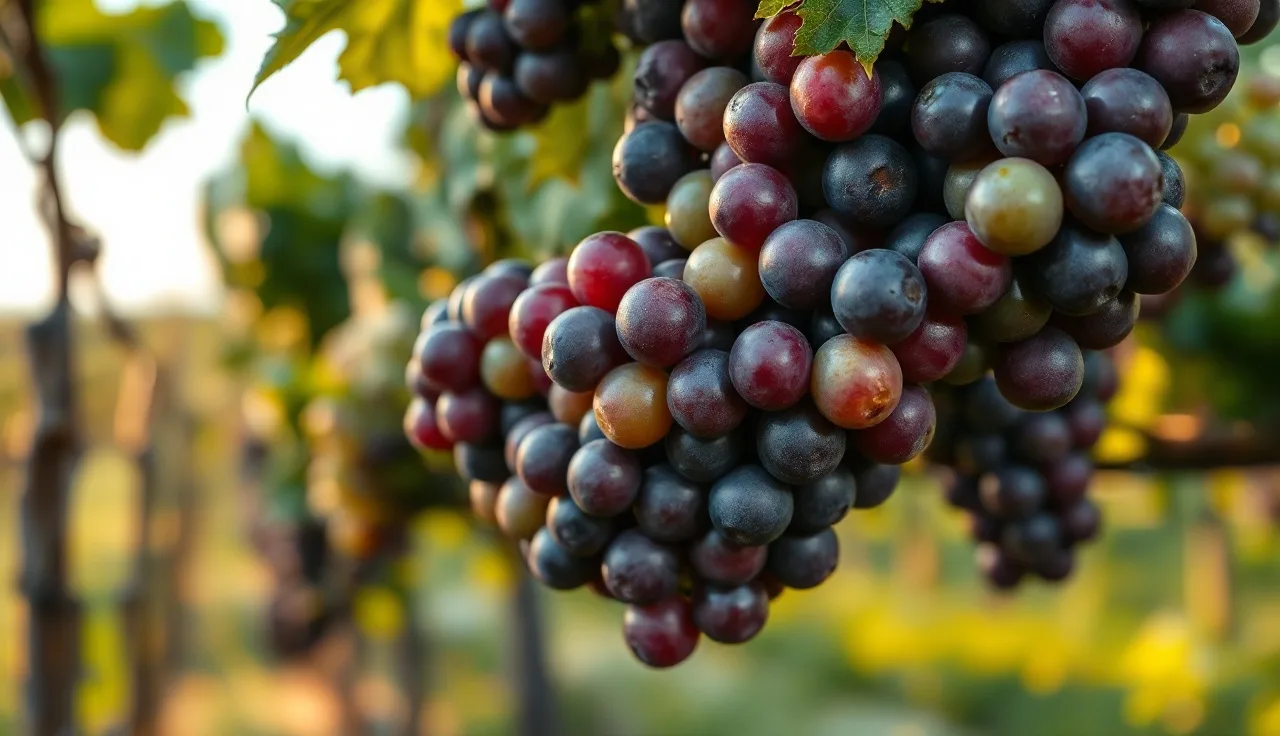
Veraison (pronounced veh-ray-ZON, from the French véraison) is the technical term for the onset of berry ripening in Vitis vinifera and hybrid wine grapes. It's the moment a berry stops being a green, hard, photosynthetic structure and becomes a ripening organ. The word comes from the Old French "virer," meaning to turn, and that's exactly what happens. Red and black varieties turn from green to red, then to deep purple or blue-black. White varieties turn from opaque green to translucent yellow-green or golden.
The change isn't just cosmetic. Before veraison, berries grow by cell division and then cell expansion, piling up malic acid and little else. At veraison a hormonal switch flips, driven mostly by abscisic acid (ABA), and the berry stops acting like a leaf and starts acting like a fruit [1]. Sugar from the leaves starts flowing in through the phloem. Malic acid begins to break down. The berry softens as cell walls loosen. Anthocyanins and other phenolic compounds start building in the skin.
Veraison isn't an instant event on a single vine, and it's definitely not instant across a block. Berries within one cluster turn at slightly different times. Clusters on the sun-exposed shoulders of the canopy usually go first. Interior, shaded clusters lag by days or a full week. That gap matters a lot when you set harvest targets.
What actually triggers veraison in grapevines?
The honest answer: we're still working it out. Abscisic acid is the clearest documented signal. ABA concentrations spike in berry flesh and skin right at veraison, and spraying exogenous ABA on pre-veraison berries can pull the color change forward [1]. ABA drives anthocyanin synthesis and sugar accumulation while softening the cell wall through enzyme activity.
ABA doesn't act alone. Auxin (indole-3-acetic acid) drops sharply in the seed and berry flesh just before veraison, and that drop seems to release a brake on the ABA response [2]. Seeds matter too. Seedless varieties and berries with fewer seeds can ripen unevenly, partly because seeds are a big source of the hormonal signals that coordinate ripening. Ethylene, the main ripening hormone in climacteric fruit like tomatoes, plays a smaller part in grapes (which are non-climacteric), but it can speed up coloring once veraison begins.
Temperature acts directly. Warm days push the hormonal cascade along. Cool nights during the pre-veraison stretch tend to line up with tighter, more uniform veraison timing. Heat above roughly 35°C (95°F) during berry development can delay or disrupt veraison by stressing the vine's phloem transport [3]. Water status counts as well. Mild deficit before veraison (the kind you run in a regulated deficit irrigation program) tends to advance timing by a few days, while severe stress can stall it out.
When does veraison happen? Timing by variety and region
Veraison timing sits on three things stacked together: the variety's genetic ripening window, the season's heat accumulation up to that point, and the site's own microclimate.
Varieties group by maturity class. Early varieties like Pinot Noir and Chardonnay usually hit veraison in mid-to-late July in California's coastal regions, late July in the Willamette Valley, and early to mid-August in New York's Finger Lakes. Mid-season varieties like Merlot, Syrah, and Sauvignon Blanc follow two to three weeks later. Late varieties like Cabernet Sauvignon and Mourvèdre can reach veraison in mid-to-late August in warm California regions. In very cool climates like upstate New York, some late varieties barely finish veraison before early fall frost becomes a worry [4].
Growing degree days (GDD, base 50°F) predict it reasonably well. UC Davis extension research puts veraison for most varieties between 1,400 and 2,200 GDD from April 1 [5]. Pinot Noir on a Region I site (below 2,500 seasonal GDD) might color up around 1,400 GDD. Cabernet on a Region III or IV site might need 2,000 GDD or more.
The table below shows approximate veraison windows for common varieties in three major US regions.
| Variety | Napa/Sonoma (CA) | Willamette Valley (OR) | Finger Lakes (NY) |
|---|---|---|---|
| Pinot Noir | Jul 15, Aug 1 | Jul 25, Aug 10 | Aug 5, Aug 20 |
| Chardonnay | Jul 20, Aug 5 | Aug 1, Aug 15 | Aug 1, Aug 20 |
| Merlot | Aug 1, Aug 15 | Aug 10, Aug 25 | Aug 15, Sep 1 |
| Syrah | Aug 5, Aug 20 | Aug 15, Sep 1 | Aug 20, Sep 10 |
| Cabernet Sauvignon | Aug 10, Aug 25 | Aug 20, Sep 5 | Sep 1, Sep 20 |
| Zinfandel | Aug 5, Aug 20 | Aug 20, Sep 5 | Rarely grown |
These are approximations from extension publications and grower experience. Your site and vintage will vary, sometimes by two to three weeks from a warm year to a cold one.
How do you accurately assess when veraison is happening in your vineyard?
The standard field method is percent veraison. You count the berries or clusters that have started color change as a fraction of the total in a representative sample. Most viticulturists call the block "at veraison" when 50 percent of berries have started to soften and change color [5].
For a reliable number, walk the block on purpose instead of your usual path. Sample at least 10 to 20 vines spread across the block, interior and edges both, and check clusters from different canopy positions. Count individual berries in a handful of clusters, or use a faster cluster-by-cluster score of "not started," "partial," or "complete."
Softness beats color as an indicator for white varieties, where the color shift is subtle. Squeeze berries gently between thumb and forefinger. Pre-veraison berries are firm and snap back. Berries at veraison feel noticeably soft.
Track percent veraison daily, or every two days, once you think it's close. The move from 10 percent to 90 percent usually takes 10 to 20 days in a well-managed canopy with good vine balance [3]. If it drags for three or four weeks, you probably have a canopy or vigor issue worth chasing down. Growers who log percent veraison by block every year build a dataset worth real money for predicting harvest windows, planning labor, and scheduling spray program closures. Tools like VitiScribe let you attach these phenological records to your block map so the data is actually findable next season.
What physical changes happen inside the berry at veraison?
The change is dramatic at the biochemical level. Sugar concentration, maybe 2 to 5 Brix before veraison, climbs fast to 18 to 26 Brix at harvest as glucose and fructose flood in from the leaves [2]. The glucose-to-fructose ratio is roughly 1:1 at veraison and tips slightly toward fructose as ripening runs on.
Malic acid, the dominant acid before veraison, starts breaking down through respiration. Tartaric acid is more stable and becomes the main acid at harvest. Total titratable acidity can fall from above 20 g/L before veraison to 5 to 8 g/L at harvest in warm climates, though in cool climates it may still sit above 10 g/L [4]. pH rises from around 2.9 to 3.0 pre-veraison into the harvest range of 3.2 to 3.6 for most wine styles.
In red varieties, anthocyanin synthesis in the skin kicks off at veraison. The accumulation pattern is variety-specific and heat-sensitive. Temperatures above 30 to 35°C during ripening can block anthocyanin synthesis and leave you with poor color, a real problem in hotter vintages [3]. Aroma compounds shift hard too, including monoterpenes in aromatic varieties like Muscat and methoxypyrazines in Cabernet Sauvignon and Sauvignon Blanc. Methoxypyrazines (that green pepper note) break down with sun exposure and heat after veraison, which is why canopy work before and at veraison shapes wine aroma so directly.
The skin itself changes. Cuticular wax gets thicker. Cell walls in the flesh loosen as pectins are modified. The berry gets more prone to cracking, Botrytis infection, and insect damage.
How does veraison affect your spray program and pesticide compliance?
Veraison is probably the loudest phenological marker in your spray calendar, and this is where growers lose money by fudging the date.
Botrytis (gray mold) risk climbs sharply at veraison because the berry surface softens and small wounds from berry-to-berry contact in tight clusters give the fungus a way in. Most Botrytis programs call for a critical spray right at 50 percent veraison, often a FRAC Group 7 or Group 11 material (or a Group 17 like cyprodinil), then a final spray 2 to 3 weeks later if the weather favors infection [6]. After that window, most fungicide labels either ban further applications or impose preharvest intervals (PHIs) that make late sprays useless.
Label PHIs are the compliance piece that bites hardest. Every registered pesticide label states the number of days between the last application and harvest. Common PHIs on post-veraison grapes run from 1 day (some sulfur formulations) to 7 days (many SDHI fungicides) to 14 days or more (some insecticides). Apply a 14-day PHI material on August 20, harvest on September 1, and you're in violation of federal pesticide law under FIFRA [7].
The EPA Worker Protection Standard (WPS, 40 CFR Part 170) requires restricted entry intervals (REIs) posted at field entry points after any application, and workers can't enter treated areas until the REI expires [8]. At veraison, when scout crews walk every block and harvest crews start pre-harvest prep, REI compliance is easy to drop. Document every application date, product, REI, and PHI in your spray records.
Calcium foliar sprays often go on at veraison and 2 weeks after to firm up berry skins and cut splitting. They're generally not restricted pesticides, but they belong in your records too.
On certified organic blocks, elemental sulfur applications have to stop in time to meet your certifier's requirements and the label PHI (usually 0 to 1 day for sulfur, but check your product). Copper programs usually wind down before veraison, since late copper can hold back fermentation yeast.
What vineyard management decisions hinge on veraison timing?
A lot more than most new growers expect.
Irrigation cutbacks are the big one. Regulated deficit irrigation (RDI) programs usually aim for moderate water stress starting around veraison to hold berry size down and concentrate flavor compounds. WSU extension research in Washington's Columbia Valley found that post-veraison irrigation deficits reduced berry weight and raised anthocyanins without cutting yield much in most varieties [9]. The real question is how much stress, which turns on soil type, vine age, rootstock, and your wine style target. A shallow sandy loam wants a different plan than a deep clay loam.
Leaf removal, if you haven't already done it on the cluster zone, often wraps up at veraison to improve spray penetration for the Botrytis window and put more sun on the clusters for color in red varieties. Late shoot topping also happens around veraison in many programs to slow vegetative growth and send carbohydrates toward ripening.
Harvest logistics planning starts at veraison. If you're 45 to 55 days out, you need to book portable toilets, schedule lab pickup, confirm crush appointments, and talk to picking crews. Labor is tight in most wine regions. Growers who wait until Brix targets get close before locking in dates often find crews and crush pads already booked somewhere else.
Pest monitoring for grape leafhoppers, mealybugs, and vine mealybug ramps up at and after veraison because the insects key on ripening berries. Spotted lanternfly (Lycorma delicatula), now established in the mid-Atlantic and spreading, is a real problem from veraison through harvest because it feeds on the phloem and weakens vines right when they need maximum sugar transport [10].
How does veraison affect canopy management and vine balance?
The link between canopy management and veraison quality is well documented. A dense, shaded canopy delays veraison onset and stretches the period of uneven ripening within clusters. Worse, shaded berries develop less color, fewer tannins, and higher methoxypyrazine content in red varieties [5].
The target, in most quality programs, is a canopy that lets dappled light hit the cluster zone for a few hours a day. The VSP (vertical shoot positioning) trellis pulls this off in most climates when shoot density stays around 3 to 4 shoots per foot of cordon. At veraison it pays to walk your blocks specifically to check whether clusters are sunburned (overexposed on west-facing slopes in hot climates) or shaded and damp (in dense, high-vigor blocks prone to Botrytis).
Crop load drives veraison uniformity too. Overcropped vines carrying more clusters than the canopy can ripen show delayed, uneven veraison. Green harvest (crop thinning) before veraison is the fix, but it's expensive and has to happen early. Thinning after 50 percent veraison does much less for the clusters that stay, and it's generally not worth doing for evenness.
Does veraison differ for red versus white varieties?
The physiology underneath is the same, but the visual and practical differences matter in the field.
Red varieties are easy to read because the color change from green to red-purple is obvious and fast once it starts. White varieties show a quieter shift from opaque green to translucent yellow-green or pale gold, and it's easy to miss if you're not looking carefully. The softness test (squeezing berries between your fingers) is more reliable for whites. So is measuring berry weight or berry diameter, both of which jump measurably at veraison [2].
For white varieties like Chardonnay, Sauvignon Blanc, and Riesling, the loss of green and gain of translucency is the most reliable visual cue. Pinot Gris sits in between and can trick you, since its skin carries pinkish pigment even before veraison. Track berry firmness and sugar (Brix) directly on that one.
Tannin management at veraison is mostly a red variety concern. The ratio of skin tannins to seed tannins shifts during ripening, and some winemakers watch seed color and crunch as proxies for tannin polymerization. Green, bitter seeds mean unripe tannins. Brown, crunchy seeds signal physiological maturity. Seed ripeness often lags sugar ripeness, especially in cooler vintages, and veraison starts that seed maturation clock.
How do you record veraison data properly for compliance and future planning?
Two reasons to track veraison carefully: agronomic decisions and compliance documentation.
On compliance, your spray records need the date of each application, the product and EPA registration number, the rate, and the total area treated. If an auditor or a winery buying your fruit asks for records showing you respected PHIs, you need application dates next to a documented harvest date. If your records show an application on August 15 and harvest on August 22 for a product with a 14-day PHI, you have a problem. A documented veraison date backs up the timeline of every decision that followed.
On planning, a multi-year set of veraison dates by block lets you predict harvest windows with real accuracy. If Block 3 (Cabernet, older vines, south-facing) hits 50 percent veraison on August 12 year after year, and you harvest 48 days later every time, that's useful. If that block veraisons on August 5 in a warm year, you know harvest likely lands in late September, not early October.
A plain spreadsheet works if you're disciplined about it. A purpose-built vineyard record system like VitiScribe attaches phenological notes to block records alongside spray logs, irrigation events, and Brix readings, so your compliance paperwork and your agronomy data live in one place instead of scattered across notebooks and a whiteboard calendar.
Extension programs at UC Davis, Cornell, and WSU all publish phenological tracking worksheets with veraison assessment protocols [4][5][9]. They're free and worth downloading if you're formalizing your record-keeping for the first time.
What does research say about using veraison as a harvest date predictor?
The 45-to-55-day rule of thumb for the veraison-to-harvest interval is widely cited and holds up well within a variety and site, though it has real limits.
A review of long-term phenological records from European wine regions found that veraison timing explained about 80 percent of the year-to-year variation in harvest dates [3]. Warm vintages squeeze the veraison-to-harvest interval a little. Cool vintages stretch it, sometimes to 60 or even 70 days for late-ripening varieties in marginal climates.
Cornell Cooperative Extension has tracked veraison-to-harvest intervals for Finger Lakes varieties over decades. The data shows Riesling averages about 50 days from 50 percent veraison to commercial harvest, with a standard deviation of roughly 5 to 7 days depending on the vintage [4]. That's enough spread to matter for labor scheduling and crush planning.
The limit of using veraison alone is that it can't account for weather after veraison. A heat spike in late September, a rain event that swells berries and drops Brix, an early frost, or a Botrytis outbreak can all pull harvest forward or push it in ways a simple day-count won't catch. Brix monitoring starting 3 to 4 weeks after veraison, paired with acid and pH measurement, is the practical way to sharpen the prediction as you close in.
Nobody has great data on how climate change is shifting the veraison-to-harvest interval specifically. Most published work tracks the shift in absolute calendar dates of veraison, not the length of the ripening period. The closest data suggests the interval itself hasn't compressed as hard as the calendar dates have advanced, but that finding comes from European datasets and may not carry over to California or the Pacific Northwest.
Frequently asked questions
What is veraison in simple terms?
Veraison is the point when wine grapes start to ripen. Red and black varieties change color from green to red or purple. White varieties turn from opaque green to translucent yellow. The berries soften, start piling up sugar, and begin losing acid. It's driven mostly by the hormone abscisic acid and usually happens 45 to 55 days before harvest.
How do you pronounce veraison?
The common English pronunciation in US wine country is veh-ray-ZON. The French original is closer to veh-reh-ZOH, with a nasal final syllable. Either one is understood by anyone in the industry. The word comes from Old French and ties back to the verb "virer," meaning to turn.
How long does veraison take to complete?
In a well-balanced vine with good canopy management, the block-level move from about 10 percent to 90 percent of berries showing color change usually takes 10 to 20 days. Dense, shaded canopies or overcropped vines can stretch it to 3 to 4 weeks. Berry-level veraison within a single cluster spans several days, since berries at different positions ripen at slightly different rates.
What is the difference between veraison and harvest maturity?
Veraison is the start of ripening, not the end. At veraison, Brix might be 2 to 8 degrees. Commercial harvest targets run 20 to 26 Brix for most wine styles, reached 45 to 55 days after 50 percent veraison. The full ripening period covers continued sugar accumulation, acid degradation, phenolic and aroma compound development, and seed maturation.
Can you do anything to speed up or delay veraison?
You can nudge the timing at the margins. Mild pre-veraison water stress tends to advance veraison by a few days. Exogenous abscisic acid (ABA) applications can advance color in red varieties and are registered for that use in some regions. Heavy crop loads delay veraison, and green harvest before veraison can bring it forward. You can't really hold a vine back once warm temperatures and the hormonal signals are moving.
What pests and diseases become a bigger problem after veraison?
Botrytis cinerea risk climbs because softening berries are more open to infection through wounds and at berry-to-berry contact points in tight clusters. Grape berry moth and other Lepidopteran pests keep attacking ripening berries. Sour rot becomes a concern in wet weather. Spotted lanternfly (in eastern US regions) intensifies feeding on phloem tissue from veraison through leaf drop. Yellow jackets and other stinging insects go after damaged berries.
When should you stop applying fungicides after veraison?
It depends on the product's preharvest interval (PHI) on the label, which is a legal requirement under FIFRA. Common Botrytis fungicides have PHIs from 1 to 14 days. Most programs target a final Botrytis application around 2 to 3 weeks post-veraison. Check each label individually. Applying inside the PHI before harvest violates federal law regardless of intent.
Does veraison happen at the same time across a whole vineyard block?
No. Veraison is uneven at every level: between blocks, between vines in a block, between clusters on a vine, and between berries in a cluster. Clusters in sunnier, warmer canopy positions go first. Interior, shaded clusters lag. The common field call of "50 percent veraison" is a block-level average that marks the midpoint of that gradient, not a uniform event.
How does veraison relate to Brix measurements?
Brix measures dissolved solids in grape juice, mostly sugars. At veraison, Brix is typically 2 to 8 degrees, depending on variety and site. From veraison on, Brix builds at roughly 0.2 to 0.5 degrees per day in warm climates, reaching harvest targets of 20 to 26 Brix about 45 to 55 days later. Regular Brix sampling, starting 2 to 3 weeks after veraison, is the main tool for projecting harvest date.
Does irrigation management change at veraison?
Yes, substantially. Most regulated deficit irrigation (RDI) programs cut applied water at or just before veraison to impose mild stress, hold berry size down, and concentrate flavor compounds. WSU research found post-veraison deficits raised anthocyanins in red varieties without major yield loss. The right cutback depends on soil water-holding capacity, vine age, rootstock, and your wine style target. There's no single number that works everywhere.
What records should I keep about veraison for compliance purposes?
Document the date you assessed each block, the percent veraison at that assessment, and the method (berry count versus cluster scoring). Tie these to your spray logs so you can show that post-veraison applications respected preharvest intervals. Keep a note of who did the assessment. Under the EPA Worker Protection Standard, your spray records need application dates alongside REI postings, and phenological records support the timeline.
Why does veraison matter for wine quality?
The timing and evenness of veraison largely sets the ripening window you have before harvest. A compact, even veraison gives you a consistent ripening curve and a cluster population that reaches maturity together. Uneven veraison leaves ripe and unripe berries in the same cluster at harvest, which muddies flavor and makes picking decisions harder. Canopy management, crop load, and vine balance all shape veraison evenness.
How does climate and region affect when veraison happens?
Heat accumulation drives phenology. Warmer regions and warmer vintages push veraison earlier. UC Davis research puts most varieties at veraison between 1,400 and 2,200 growing degree days (base 50°F) from April 1. In California's Napa Valley, Cabernet Sauvignon may reach veraison in mid-August. In New York's Finger Lakes, the same variety might not arrive until early September, leaving a tighter margin before fall frost.
Can veraison be uneven and what causes it?
Yes, and it's one of the more common quality problems in high-vigor or poorly managed blocks. The main causes are heavy shade in the canopy (which delays color change in shaded clusters), overcropping (too many clusters for the leaf area to ripen evenly), and poor vine balance from excess vegetative growth. Boron deficiency and poor fruit set can add to it. Fixing these with canopy management and crop thinning before veraison works better than trying to correct after.
Sources
- Lecourieux D et al., Journal of Experimental Botany, ABA and berry ripening: Abscisic acid (ABA) concentrations spike in berry flesh and skin at veraison, and exogenous ABA application can advance color change in pre-veraison berries
- UC Davis Viticulture & Enology, Grape Berry Development: Sugar concentration rises from 2 to 5 Brix before veraison to 18 to 26 Brix at harvest as glucose and fructose accumulate; auxin drops in berry flesh just before veraison
- Mozell MR & Thach L, Wine Economics and Policy, climate and phenology review: Temperatures above 35°C during berry development can delay or disrupt veraison; veraison timing explains roughly 80 percent of harvest date variation across years in European records
- Cornell Cooperative Extension, Finger Lakes Grape Program: Riesling in the Finger Lakes averages about 50 days from 50 percent veraison to commercial harvest; late-ripening varieties may need 60 to 70 days in cool vintages
- UC Agriculture and Natural Resources, viticulture notes, veraison assessment and GDD thresholds: Most varieties reach 50 percent veraison between 1,400 and 2,200 GDD (base 50°F) from April 1; viticulturists define veraison at the block level as 50 percent of berries beginning color change and softening
- UC IPM, Grape Botrytis Management Guidelines: A critical Botrytis spray at 50 percent veraison followed by a second application 2 to 3 weeks later is the standard program recommendation for susceptible varieties
- US EPA, Federal Insecticide, Fungicide, and Rodenticide Act (FIFRA): Applying a pesticide within its preharvest interval (PHI) before harvest violates FIFRA; PHIs are enforceable label requirements
- US EPA, Agricultural Worker Protection Standard (WPS), 40 CFR Part 170: The EPA Worker Protection Standard requires restricted entry interval (REI) postings at field entries after pesticide applications; workers may not enter treated areas until the REI expires
- Washington State University Extension, Irrigation Management in Pacific Northwest Vineyards: Post-veraison regulated deficit irrigation reduced berry weight and increased anthocyanin concentration in red varieties in Columbia Valley trials without significant yield loss
Last updated 2026-07-09