Downy Mildew Infection Events and Spray Timing in Vineyards
Primary downy mildew infection requires 0.1 inch of rain and temperatures above 50°F overnight. Those are the conditions that move overwintered oospores from the soil to the vine. Every grower in a wet-spring wine region needs to know this number, and needs a system that tells them when it's been met.
TL;DR
- The "10-10-10 rule" is a practical primary infection threshold: 10mm of rain, 10°C (50°F) minimum temperature, and 10cm of shoot growth -- when all three conditions are met, a primary infection event has occurred and your spray response window is 2-4 days
- Secondary downy mildew infection cycles can occur every 5-7 days under optimal conditions from sporulation on existing lesions -- once secondary cycles are underway, protectant-only programs struggle to catch up
- Ridomil Gold (mefenoxam, FRAC Group 4) has notable resistance in many eastern US wine regions -- limit to 2-3 applications per season and always use in premixture with contact materials
- Protectant fungicides (copper, mancozeb) need to be on the vine before the rain event; effective pre-rain application window is 3-5 days before qualifying rainfall
- Zampro and Revus Top offer the strongest kickback activity -- up to 3-4 days post-infection -- but they must be applied before symptoms appear (incubation period is 7-14 days)
- Every spray record should document the infection event conditions that triggered the application: qualifying rainfall amount, temperature, and your risk assessment -- this is what distinguishes an IPM program from a calendar program to DPR auditors and organic certifiers
VitiScribe weather integration tracks downy mildew infection conditions automatically by region. That means you're not manually watching the weather station and calculating infection risk, the system tells you when conditions have been met and when a spray response is warranted.
Understanding the Downy Mildew Infection Cycle
Plasmopara viticola, the oomycete pathogen causing grape downy mildew, operates in two distinct phases:
Primary infection originates from oospores in the soil that germinate and release zoospores during the first notable rainfall events of the season. The minimum conditions: 0.1 inches of rain, temperatures above 50°F, and grapevine green tissue present. The "10-10-10 rule" (10mm rain, 10°C minimum temperature, 10cm shoot growth) is a commonly used practical threshold.
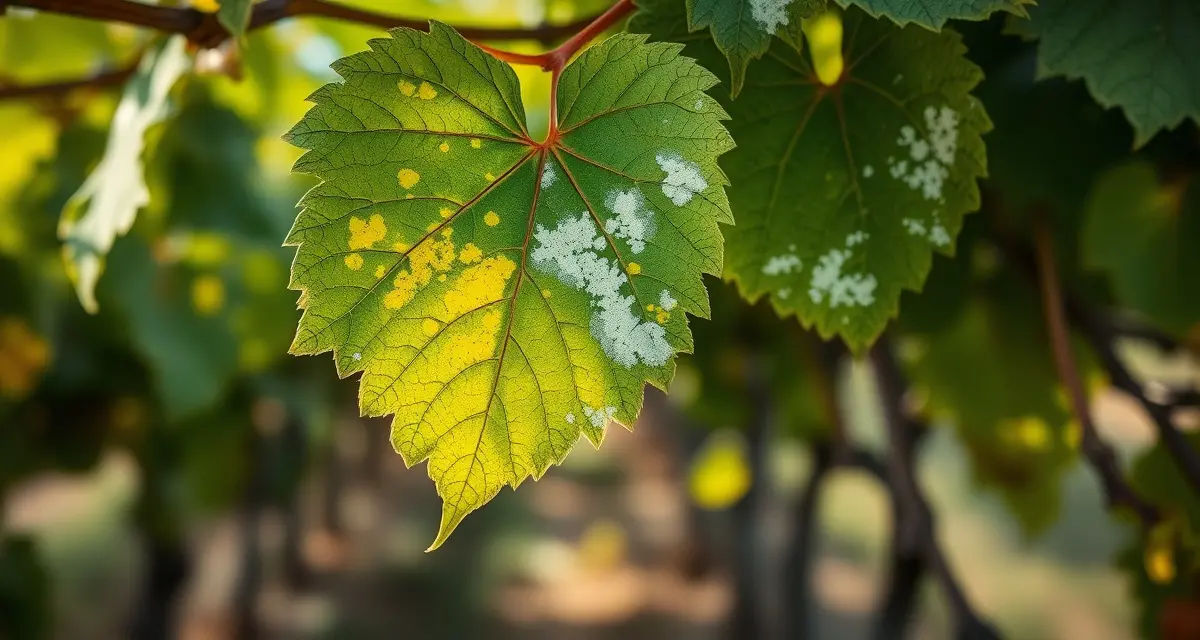
Secondary infections come from sporulation on existing lesions. During wet, warm periods, spore release occurs nightly from infected tissue, the cottony white sporulation visible on the underside of affected leaves. These secondary cycles can occur every 5-7 days under optimal conditions.
The two phases require different responses. Primary infection timing drives your protective fungicide program. Secondary infection response often requires kickback chemistry.
Identifying Primary Infection Events
Monitoring Conditions in Real Time
In cool, wet wine regions, much of Oregon's Willamette Valley, coastal California, and New York's Finger Lakes, downy mildew risk accumulates quickly in spring. You need to know:
- Has rainfall exceeded 0.1 inches since the last application?
- Have overnight temperatures stayed above 50°F following that rain?
- Is there green tissue present on the vine?
When all three conditions are met, a primary infection event has occurred. Your response window is typically 2-4 days for a protectant-only program, extending slightly if you have a product with kickback activity in your arsenal.
What Primary Infection Looks Like
Early primary infection symptoms appear 7-14 days after the infection event as yellow, oily-looking spots on the upper leaf surface, the "oil spots" characteristic of downy mildew. Under the spot on the leaf underside, you'll find white cottony sporulation when conditions are humid.
In shoot tips and tendrils, infection causes distortion and browning. Infected flower clusters show white sporulation and then brown off and drop, the most economically damaging symptom.
Spray Timing Decisions After an Infection Event
Protectant Timing
If you're on a preventative program with good coverage, your goal is to have a protectant fungicide in place before the infection event occurs. With weather monitoring through VitiScribe, you can see a rain event approaching and spray ahead of it if the window allows.
For most protectant products, mancozeb, copper, captan, the effective protection window before a rain event is 3-5 days. After a heavy rain that washes residues, coverage is reduced and re-application timing moves up.
Post-Infection Response Window
If a primary infection event occurred and you didn't have protectant coverage in place, or coverage was insufficient, you have a kickback window. This is the period after infection but before symptoms appear (the incubation period) when products with post-infection activity can intercept the disease cycle.
Kickback products for post-infection downy mildew control:
- Zampro (ametoctradin + dimethomorph): Up to 4 days post-infection
- Revus Top (mandipropamid + difenoconazole): Up to 3 days post-infection
- Ridomil Gold (mefenoxam): Systemic activity with kickback in 1-2 day post-infection window; resistance concerns limit its use in most programs
- Forum (dimethomorph): Kickback activity within 24-48 hours post-infection
- Ranman (cyazofamid): Primarily protective, limited kickback
Record your kickback applications with the known or estimated infection event date. This establishes the post-infection timing that justifies the product selection.
Tank Mixing for Coverage and Kickback
A common post-infection program combines a product with kickback activity with a contact protectant to maintain surface coverage for the secondary infection cycle. Your downy mildew vineyard IPM hub has the full program frameworks by region and season.
Before mixing, verify compatibility using the spray window planner, which also helps confirm application conditions are within label requirements.
Documenting Spray Timing Decisions
Your spray records should include the rationale for the timing decision, not just the date of application. This is what distinguishes an IPM program from a calendar program in the eyes of a DPR auditor or organic certifier.
In VitiScribe, each spray record includes a field for application rationale and weather conditions at application. Log the infection event conditions that triggered the spray: date of qualifying rain, temperature during that period, and your infection risk assessment. This documentation is your IPM justification.
Related Articles
FAQ
What weather conditions trigger downy mildew infection in vineyards?
Primary downy mildew infection requires at least 0.1 inches (approximately 2.5mm) of rain, temperatures at or above 50°F (10°C) during the rain event and following night, and the presence of green grapevine tissue. The commonly used "10-10-10 rule" provides a practical field threshold: 10mm of rain, 10°C minimum temperatures, and 10cm of shoot growth. Secondary infection cycles, driven by existing lesions producing new spores, require humid conditions and temperatures above 65°F for rapid sporulation.
How do I time fungicide applications after a downy mildew infection event?
Ideally, you apply a protectant fungicide before the infection event occurs, before the qualifying rain. If you have protectant coverage in place with adequate residue before rainfall, you're positioned well. If an infection event occurred without adequate coverage, use a product with kickback activity within 2-4 days of the event, before symptoms appear. Products like mandipropamid (Revus) and ametoctradin/dimethomorph (Zampro) have the strongest post-infection activity. Document the infection event date in your spray record to justify the kickback product selection.
What fungicides have kickback activity for post-infection downy mildew control?
Products with documented post-infection (kickback) activity for downy mildew control include mandipropamid (Revus, Revus Top), ametoctradin plus dimethomorph (Zampro), dimethomorph alone (Forum), and mefenoxam (Ridomil Gold, with notable resistance concerns in many regions). Most copper and contact fungicides are primarily preventive with minimal kickback activity. When selecting a kickback product, choose based on your FRAC code rotation history to avoid applying the same mode of action consecutively, which drives resistance.
How do I use downy mildew infection event records to justify spray interval extensions?
If your weather station data shows that rainfall between two spray applications did not meet the 10mm threshold, you can document that observation in your spray record notes to justify the extended interval. Record the weather station source, the observed rainfall amounts, and the temperatures during the period. A note such as "interval extended to 14 days; no qualifying infection events observed during the period (maximum recorded rainfall 3.2mm on June 22)" creates a defensible record of a threshold-based decision. This type of documentation is what sustainable certification programs and winery buyer audits are looking for when they ask how spray interval decisions are made.
At what point in the season can I reduce or stop my downy mildew program in the Willamette Valley?
In Oregon's Willamette Valley, downy mildew infection risk decreases significantly after bunch closure (when berries have expanded enough that the cluster interior is no longer as accessible to new infections) and again after the summer dry period typically begins in late July. The key transition: once your blocks have passed bunch closure and your local weather station is showing fewer qualifying infection events, you can shift from 7-day intervals to 10-14 day intervals and eventually to monitoring-only as conditions dry. Don't stop abruptly -- monitor weather for any late-summer wet periods, which can drive leaf-level infections even after clusters are safe. VitiScribe's weather-integrated spray alerts continue tracking conditions throughout the season so you're notified if qualifying infection events occur even after your primary program has wound down.
What is Downy Mildew Infection Events and Spray Timing in Vineyards?
[FAQ_ANSWER_PLACEHOLDER: This answer needs to be generated by AI with specific data, examples, and actionable advice relevant to Downy Mildew Infection Events and Spray Timing in Vineyards. Target 50-150 words.]
How much does Downy Mildew Infection Events and Spray Timing in Vineyards cost?
[FAQ_ANSWER_PLACEHOLDER: This answer needs to be generated by AI with specific data, examples, and actionable advice relevant to Downy Mildew Infection Events and Spray Timing in Vineyards. Target 50-150 words.]
How does Downy Mildew Infection Events and Spray Timing in Vineyards work?
[FAQ_ANSWER_PLACEHOLDER: This answer needs to be generated by AI with specific data, examples, and actionable advice relevant to Downy Mildew Infection Events and Spray Timing in Vineyards. Target 50-150 words.]
Sources
- Oregon Department of Agriculture (ODA)
- UC Cooperative Extension Viticulture
- American Vineyard Foundation
- American Society for Enology and Viticulture (ASEV)
- Wine Institute
Get Started with VitiScribe
Downy mildew spray decisions are only as good as the weather data behind them, and the records that satisfy IPM audits are the ones that document the infection event conditions that triggered each application. VitiScribe's weather-integrated spray records capture qualifying rainfall and temperature data alongside your application details, so the infection event rationale is preserved in the record from the moment of entry. Try VitiScribe free and log your first weather-triggered downy mildew spray record from the field today.