Attention vineyard spray signs: what the law actually requires

TL;DR
- Federal Worker Protection Standard (40 CFR Part 170) requires agricultural employers to post a warning sign at every field entry point before any pesticide application that carries a restricted-entry interval (REI).
- The sign must be at least 8.5 by 11 inches, show specific language and the warning symbol, and stay posted until the REI expires.
- State rules often add stricter requirements.
What does federal law say about vineyard spray signs?
Spray a pesticide with a restricted-entry interval on your vineyard blocks, and you have to post a warning sign before anyone can enter the treated area. That's the law. It comes from the EPA's Worker Protection Standard (WPS), codified at 40 CFR Part 170, revised in 2015 with most provisions effective January 2017. [1]
The WPS covers agricultural employers, agricultural handlers, and farm workers. One worker who could walk into a treated block puts you under the rule. A grower working entirely alone is technically exempt, but the moment a family member, intern, or seasonal worker is involved, you're covered.
The standard says the warning sign goes up at "each entry point to the treated area" before the start of any application that generates an REI. It stays up through the whole REI. Once the REI expires and the block has cleared, you can pull the sign. Not before. [1]
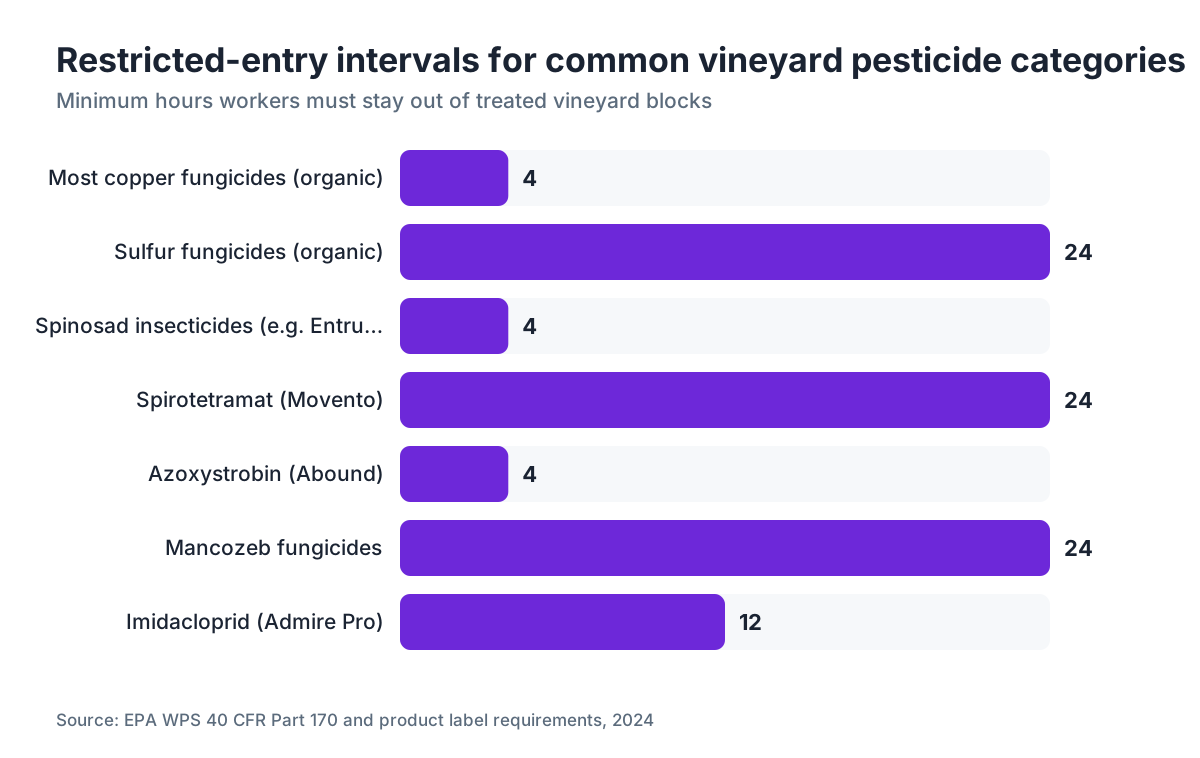
Here's the detail that trips people up. The posting obligation follows the REI, not the spray day. Movento (spirotetramat) carries a 24-hour REI, so your sign is up for a day. Sulfur fungicides usually carry a 24-hour REI too. Older products like Lorsban Advanced (chlorpyrifos, now largely gone from grape use) ran 24 to 72 hours depending on formulation. Read your specific label every time. The label is the law.
What exactly does the sign have to say and look like?
The EPA fixes both the text and the physical format. The required words are "DANGER. PESTICIDES. KEEP OUT." The sign also has to display the international agricultural pesticide warning symbol, a circle with a silhouette of a person and a spray wand under a prohibition bar, printed in black on an orange or red-orange background. [1]
Minimum size is 8.5 by 11 inches, a standard sheet of paper. The word "DANGER" has to be at least 1 inch tall. The warning symbol has to be at least 2 inches across. Those are floors. Bigger is always fine.
Where a treated block borders a public road or a non-agricultural area that workers or the public could approach, you need a sign there too, facing outward. A lot of managers miss this because they only think about their own crew's entry points. The rule covers every reasonably accessible point.
The sign also has to be readable from a reasonable distance in daylight, which the EPA treats as legible from the closest spot a person reaches before entering. For a typical vineyard row entrance, that means eye level at the block opening, not tucked behind a vine post where nobody reads it until they're already inside.
A few states go further. California's Department of Pesticide Regulation (CDPR) requires English and Spanish text on every WPS warning sign, plus the property name and the date and time the REI starts and ends. That extra detail is worth copying even outside California. It cuts confusion when an inspector shows up. [2]
Where exactly do you post signs in a vineyard block?
Every entry point. Simple to say, messy in practice. A 10-acre block might have a main road entrance, a secondary entrance the irrigation crew uses, a gap in the hedgerow where workers cut through to the next block, and a public easement path. All of them get signs.
EPA guidance sets no distance rule like one sign per 100 feet of perimeter. The test is functional. Would a reasonable person approaching the block know, before entering, that an application is in effect? If no, you need another sign. [1]
For long block boundaries along roads, some growers post every 300 to 400 feet as a working habit, plus at every formal entry point. That's not a regulatory number. It's a visibility call. On rolling ground or blocks where vine rows block sightlines, go tighter.
Here's what I'd actually do. Walk the perimeter of each block before you spray. Drop a flag or stake anywhere a person could reasonably enter. Post signs at those spots. Then photograph the posted signs with your phone. That timestamp becomes part of your compliance record, and it's genuinely useful when a state inspector asks whether signs were up before workers went in. [3]
Run multiple blocks at once and you need a log. Some managers keep a whiteboard in the spray shed with block names, application dates, REI end times, and sign status. Others use a shared field notebook. Either works. The record is what you have to produce.
How long must the sign stay posted?
The sign stays up through the entire REI. The clock starts when the application to that block is done, not when you start spraying. Spray a block from 7 a.m. to 9 a.m., and the REI starts at 9 a.m.
You cannot pull the sign early. Not because the block looks dry, not because the wind died, not because you're sure the residue broke down. The REI on the label controls. [1]
Most modern vineyard fungicides run 4 to 24 hours. Some insecticides and systemic products run longer. A handful of products used in organic vineyards, including certain copper formulations, carry a 4-hour REI. Short, but it still requires posting and correct removal timing.
Apply a second product to the same block before the first REI expires and the clock resets to the later of the two end times. That's a planning problem as much as a compliance one, because it changes when you can send in scouts, tractor crews, or harvest contractors.
What size sign is required, and can you print your own?
Yes, you can print your own. The EPA does not require a store-bought sign. Any laser or inkjet printer works as long as the output hits the specs: at least 8.5 by 11 inches, "DANGER" text at least 1 inch tall, warning symbol at least 2 inches across, symbol in black on an orange background. [1]
Here's where I'd spend the money anyway. Laminated signs hold up in the field far better than plain paper, and you reuse them. For a vineyard spraying 20 to 40 times a season across several blocks, a pack of 25 laminated pre-printed WPS signs runs roughly $25 to $60 depending on supplier and quantity. That's cheaper and faster than printing and laminating your own every week. Farm supply retailers and online sellers both carry them.
Use pre-printed signs in a state like California that wants the REI start and end time plus the property name, and you just write that on the sign with a permanent marker each time. Done. No custom printing per application.
Sun and rain are real. A sign that's rain-soaked, sun-bleached, or torn reads like you don't take compliance seriously, even when you do. Swap out anything hard to read. Inspectors notice the state of your signs.
What records do you need to keep alongside the spray signs?
The sign isn't a record. It's a physical posting. Your records come from the pesticide application log, which is a separate but parallel requirement.
Federal WPS requires a central posting at the farm establishment listing all current REI information for any block treated in the last 30 days. [9] That posting has to include the crop, the location of the treated area, the product applied, and the REI end date and time. Workers must be able to see it at any time during the workday.
State pesticide use reporting adds another layer. In California, licensed pest control advisors (PCAs) and growers applying restricted materials file use reports with their county agricultural commissioner, usually within 7 days of application. [2] Washington and Oregon run similar requirements through their departments of agriculture. [4]
At a minimum, your spray record should show the date and time of application, the block or field identifier, the product name and EPA registration number, the rate applied, the total amount used, the applicator's name, the REI, and the target pest. Using a PCA? Their license number goes on the record too.
Keep those records at least two years. That's the federal WPS floor. Several states require three. Some crop insurance programs want five for indemnification. Keep them longer when in doubt. Storage costs almost nothing next to the exposure of failing to produce records during an inspection.
Managing records across many blocks and spray seasons is where field-level software earns its keep. VitiScribe is built for vineyard operations and puts spray logs, REI tracking, and central posting data in one place, which cuts the chance of a posting gap when you're running several blocks at once.
For how spray compliance fits the rest of your field operations, see our overview of vineyard management practices.
What are the penalties for not posting spray signs correctly?
Federal WPS violations can draw civil penalties up to $19,339 per violation under current EPA penalty authority, adjusted for inflation periodically. [5] Willful violations run higher. In practice, a first-time violation caught during a routine inspection often ends in a warning letter and a corrective action plan rather than a maximum fine, especially for a small operation with otherwise good records. But that depends on the inspector, the state, and whether there's evidence a worker got exposed.
State penalties vary a lot. California's CDPR can assess fines and suspend applicator licenses for posting violations. Washington State Department of Agriculture has the same authority. [4] Texas penalties for WPS violations run from a few hundred to several thousand dollars per incident. The bigger cost is usually the investigation a missing sign triggers, which then surfaces other gaps.
Worker exposure is the worst case. A worker enters a treated block during an active REI, gets exposed, and you can't show proper signs were posted. Now you're looking at liability well past a regulatory fine. Citation record, medical costs, legal exposure. It stacks up fast.
Inspections happen. The WPS requires state lead agencies to run compliance monitoring, and grape regions with large farmworker populations, including the Napa Valley, Paso Robles, the Willamette Valley, and the Yakima Valley, tend to have active county agricultural commissioner offices. Don't treat sign posting as paperwork you can skip.
Do organic vineyards still need to post spray signs?
Yes. Organic certification does not get you out of WPS sign requirements. The WPS covers all pesticide products used in commercial agriculture, and the EPA's definition of pesticide includes most substances used in organic production: copper hydroxide, sulfur, spinosad, pyrethrin. [1]
Copper fungicides, used heavily in organic grape production against downy and powdery mildew, usually carry a 4-hour REI. Sulfur carries a 24-hour REI. Spinosad products like Entrust SC carry a 4-hour REI. All of them require posting.
The real difference is frequency. Organic vineyards often spray more often because the products have shorter residual activity, so you post signs more times per season. Run a 7 to 10 day sulfur program through a wet spring and that's a posting event every week, sometimes more.
A few OMRI-listed products carry no REI, meaning no restricted-entry period and no sign. But check the specific label every time. Don't assume it off memory.
UC Davis viticulture and plant pathology extension resources cover organic spray programs and their WPS obligations in useful detail. [6] WSU Extension has similar guidance for the Pacific Northwest. [7]
How does WPS sign posting work during harvest?
Harvest is the riskiest window for sign compliance, because the block is suddenly full of people: harvest crew, bin delivery drivers, sorting equipment operators, sometimes hospitality visitors at estate wineries.
Apply a pesticide and the REI hasn't expired before harvest starts? You cannot send harvest workers in. Obvious on paper. Harder when the Brix is right and everyone wants to pick that day. Don't cut the corner. The REI controls.
Plan backward from your target pick date. Need to apply a botryticide 10 days out? Check the REI (usually 4 to 24 hours for most botryticides) and the pre-harvest interval (PHI), which is a separate label restriction. The PHI is how many days must pass between the last application and harvest. Both have to be honored.
For estate tasting rooms next to vineyard blocks, post signs on winery property fencing too, not only at agricultural entry points. A tasting room guest who wanders into a vine row during an active REI is standing in a treated area. The liability from an exposure complaint by a paying guest is serious. A well-placed sign is cheap insurance.
Wine country destinations like Gervasi Vineyard or Ponte Winery that offer vineyard-integrated guest experiences should have explicit protocols for blocking visitor access to treated blocks during REIs. Many already do. Confirm yours is documented.
What's the difference between a WPS spray sign and a state-required pesticide posting?
The WPS spray sign, sometimes called a field reentry warning sign, is the federal requirement under 40 CFR 170.409. It applies only when an REI is in effect, and it exists to protect agricultural workers. [1]
State requirements go broader. California requires extra information on signs and runs its own posting timeline rules through CDPR. Several states also require separate right-to-know notices, public notification for certain applications near schools or homes, and air blast sprayer notifications for neighbors. [2]
Those neighbor rules bite in wine regions where vineyards border homes or agritourism sites. In some California counties, growers have to give neighbors 48 hours of advance notice before applying certain pesticide categories. That's separate from the WPS sign, which is a worker protection tool, not a neighborhood notification tool.
For vineyards operating near public-access areas like those at South Coast Winery or Allegretto Vineyard Resort, review both the WPS posting rules and your county's public notification rules as two separate compliance tracks. They overlap. They aren't the same thing.
How do you keep track of spray sign postings across multiple blocks?
Block-level spray records are the base. Each application record should log what you sprayed and when signs went up and came down. If an inspector asks whether the sign was in place before workers entered, your log entry, ideally with a timestamp and a photo, is your answer.
Once you're past a few blocks and running multiple spray events a week, a paper log per block gets unwieldy. A whiteboard in the spray shed with current REI end times for every active block is a free way to make status visible to anyone walking through. Update it every time you start and finish an application.
Digital tracking is more reliable at scale. Tools that let you log applications from a phone in the field and calculate REI end times automatically stop a sign coming down 4 hours early because someone misread the label. For operations tracking both spray applications and field labor entry times, that kind of software, including VitiScribe, can flag conflicts before they happen.
Cornell Cooperative Extension has published WPS compliance checklists for grape growers in the Northeast worth downloading and adapting. [8] WSU Extension has region-specific guidance for Washington growers. [7]
Frequently asked questions
What is the minimum size for an attention vineyard spray sign under WPS?
The EPA Worker Protection Standard requires the sign to be at least 8.5 by 11 inches (standard letter size). The word "DANGER" has to be in letters at least 1 inch tall, and the warning symbol has to be at least 2 inches across. Larger is always fine. That size is the floor. Many growers run bigger signs for better visibility at block entrances.
Can I download and print my own WPS spray sign?
Yes. The EPA does not require manufactured signs. Print the WPS warning sign on any printer as long as it meets the size, text height, and symbol specs. Laminate it for reuse. Several university extension programs, including UC Davis and Cornell, offer printable WPS sign templates free. California growers also have to include the REI start and end time and the property name.
How soon before spraying do I have to post the sign?
The WPS requires the sign up at each entry point no later than the start of the application. Signs must already be up before the sprayer treats that block. Posting after spraying starts is a violation. Many growers post signs the morning before a planned spray as part of the pre-spray checklist so nobody forgets under pressure.
Do I need a spray sign if I'm applying sulfur or copper in an organic vineyard?
Yes. Organic certification doesn't exempt you from WPS. Sulfur carries a 24-hour REI, and most copper products carry a 4-hour REI. Both require a WPS warning sign at every entry point before application, posted until the REI expires. A few OMRI-listed products carry a 0-hour REI, meaning no posting is required, but you have to confirm that on the specific product label.
What information does California require on vineyard spray signs that federal law doesn't?
California's Department of Pesticide Regulation requires signs to include the property name, the date and time the REI began, and the date and time the REI expires. Signs also need both English and Spanish text. Federal WPS doesn't require that extra detail. Growers in other states can add it voluntarily, and many compliance consultants recommend it because it reduces confusion.
What happens if a worker enters a treated block while the spray sign is still posted?
A worker entering a block during an active REI is a WPS violation, whether or not the sign was properly posted. The employer can face civil penalties up to $19,339 per violation under current EPA penalty schedules. If the worker shows symptoms of pesticide exposure, liability and medical costs compound fast. The sign is a warning tool. The REI itself is the legal restriction on entry.
How long do I have to keep pesticide application records related to sign postings?
The WPS requires application records kept at least 2 years. Several states, including California, require 3 years. Some crop insurance programs want 5 years. Most advisors recommend keeping them as long as your storage allows, since storage costs almost nothing next to the exposure of failing to produce records during an inspection or legal proceeding.
Do spray sign rules apply to custom hire or contract spray operators working in my vineyard?
Yes. The WPS puts the primary obligation on the agricultural employer (the vineyard owner or operator), not the person applying the pesticide. Hire a contract sprayer and you're still responsible for making sure signs are posted and your workers know current REIs. Your service agreement should clearly define who posts signs and who logs the application time.
What does the EPA's WPS warning symbol look like, and where can I find it?
The WPS warning symbol is a circle showing a silhouette of a person with a spray wand under a prohibition bar (a diagonal line), printed in black on an orange or red-orange background. The EPA provides the official artwork on its pesticide worker safety pages. University extension programs including UC Davis and Cornell also distribute printable WPS sign templates with the correct symbol.
Are tasting room guests or agritourism visitors protected by WPS sign requirements?
WPS is built to protect agricultural workers and handlers, not the general public. But if visitors wander into a treated block during an active REI, the exposure and liability risk is real no matter the regulatory category. Estate wineries with open vineyard access should post signs visible to guests and keep protocols for blocking visitor access to any block with an active REI.
Can spray signs be reused, or do you need a new one for each application?
Signs can be reused. A laminated WPS warning sign is durable and lasts a full season or longer. For states that require REI dates and times on the sign (like California), write that on the laminated surface with a dry-erase or permanent marker, then wipe and update for the next application. Replace signs that have faded, torn, or gotten hard to read.
How does the pre-harvest interval (PHI) differ from the REI, and do both require spray signs?
The REI (restricted-entry interval) controls when workers can re-enter a treated area after spraying. The PHI (pre-harvest interval) controls how many days must pass between the last application and harvest to meet residue tolerance limits. Both are label requirements with the force of law. Only the REI triggers WPS posting. The PHI is a separate restriction tracked in your application records, not a sign obligation.
Where can I find state-specific vineyard spray sign requirements beyond federal WPS?
Start with your state's lead agency for WPS enforcement, usually the state department of agriculture or department of pesticide regulation. California's CDPR site has detailed posting requirements. WSU Extension covers Washington and the Pacific Northwest. Cornell Cooperative Extension covers New York and the Northeast. UC Davis has extensive resources for California growers. Your county agricultural commissioner handles county-level rules.
Sources
- EPA, Worker Protection Standard 40 CFR Part 170: Federal WPS requires warning signs at every entry point to treated areas before application begins, specifying minimum 8.5x11 inch size, DANGER text at 1-inch height, and sign removal only after REI expires.
- California Department of Pesticide Regulation, Worker Protection Standard: California requires bilingual English and Spanish WPS warning signs including property name, REI start and end date and time.
- UC Davis Agriculture and Natural Resources, Pesticide Safety Resources: Photographic documentation of sign postings with timestamps supports compliance records during inspections.
- Washington State Department of Agriculture, Pesticide Management: Washington State has pesticide use reporting requirements and WPS enforcement authority including license suspension for posting violations.
- EPA, Civil Monetary Penalty Inflation Adjustments, FIFRA Violations: Civil penalties for WPS violations can reach up to $19,339 per violation under current EPA penalty authority, adjusted for inflation.
- UC Davis Agriculture and Natural Resources, Viticulture and Integrated Pest Management: UC Davis extension resources cover organic grape spray programs and their WPS obligations, including REIs for copper and sulfur.
- Washington State University Extension, Worker Protection Standard Resources for Growers: WSU Extension provides region-specific WPS compliance guidance including sign posting requirements for Pacific Northwest grape growers.
- Cornell Cooperative Extension, WPS Compliance for Grape Growers: Cornell provides printable WPS compliance checklists and sign templates for northeastern grape growers.
- EPA, Agricultural Worker Protection Standard Central Posting Requirements: WPS requires a central posting at the farm establishment listing all current REI information for any block treated within the previous 30 days, accessible to workers during the workday.
- EPA, WPS Revised Rule Fact Sheet (2015): The 2015 revised WPS took effect January 2017 and updated sign specifications, central posting requirements, and civil penalty authority for non-compliance.
Last updated 2026-07-09