Best opportunity to spray for mealybugs in vineyards

TL;DR
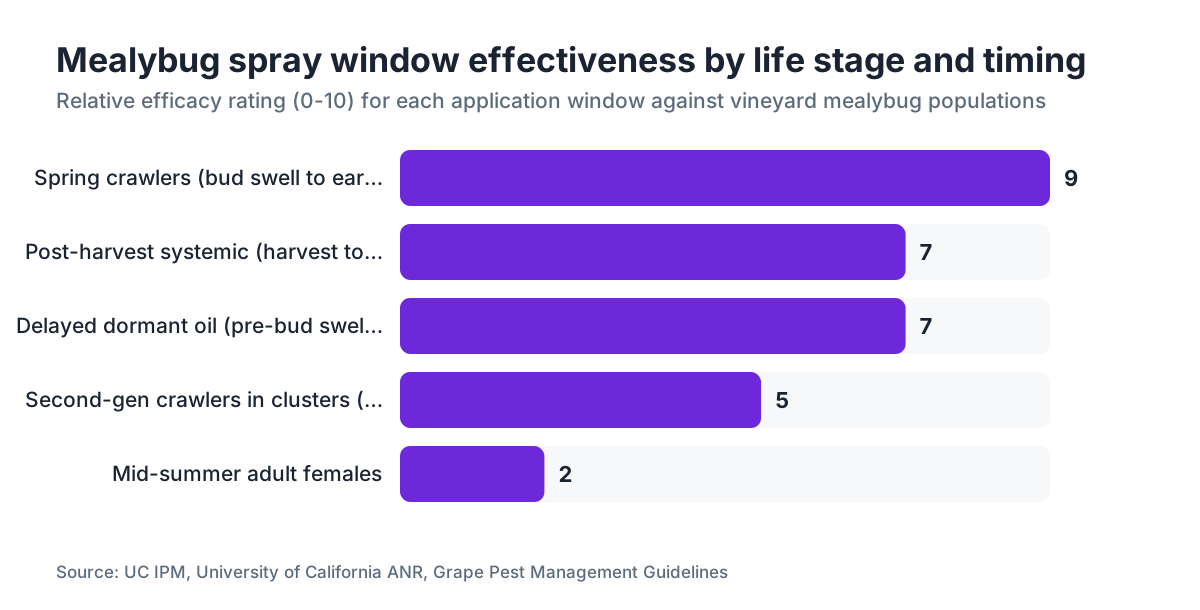
- The two best windows to spray for mealybugs in vineyards are spring crawler emergence (roughly bud swell through bloom, when first-instar nymphs are exposed and moving) and the post-harvest window before bark tightens and the vine goes dormant.
- Both hit life stages with no waxy coat.
- Spraying mid-summer adults instead wastes money and pesticide.
Why timing matters more than which product you pick
Mealybug control is almost entirely a timing problem. The adult female and her egg mass sit under a thick waxy coat, tucked under loose bark, in bark crevices, and deep in the bunch. Almost nothing gets through that armor at a field rate you can afford. The crawlers are the opening. Those are the newly hatched first-instar nymphs, and they're soft, exposed, and moving across the vine looking for a place to feed. Hit them then and you get real mortality. Miss it and you're spraying wax.
Three California mealybug species keep vineyard managers up at night: grape mealybug (Pseudococcus maritimus), vine mealybug (Planococcus ficus), and obscure mealybug (Pseudococcus viburni). Vine mealybug is the mean one. It infests roots as well as above-ground tissue and has become the dominant worry across California's San Joaquin Valley and coastal regions. Grape mealybug is still the main species in a lot of Pacific Northwest blocks. The timing rules below hold broadly, but vine mealybug's root habit means you may need a soil application layered on top of your foliar timing. [1][2]
Any program that ignores the life cycle burns money. Dormant oil, mid-season contact materials, and post-harvest systemics each have a job, but only if you know which life stage you're aiming at and why.
What is the life cycle of vineyard mealybugs and when are they vulnerable?
Generations vary by species and region. Grape and vine mealybug run two to three generations per year in California's warmer zones and one to two in cooler coastal and Northwest sites. [1] That spread is the whole reason calendar spraying fails.
Here's the general annual arc for vine mealybug in California:
- Overwintering: Mostly first- and second-instar nymphs under bark, in crevices near the graft union, and on roots. Some populations hold big numbers on roots alone.
- Spring emergence: Once soil and vine temperatures climb past roughly 50°F, overwintering nymphs wake up. First-generation crawlers show up around bud swell to early shoot growth, usually late February through April depending on the site.
- First-generation adults: Mature by bloom to early fruit set. Egg masses appear on berries, at the base of clusters, and under bark.
- Second-generation crawlers: Emerge mid-summer, often July, and move straight onto clusters. This is the generation that fouls the bunch and does direct crop damage.
- Third generation (where climate allows): August into September. It feeds late, and its nymphs become next year's overwintering population.
Two windows give you a clean shot. First-generation crawlers in spring, before the waxy armor builds and before they reach the clusters. And post-harvest, when a systemic can still move through live vine tissue and kill nymphs before dormancy, and when bark is often treated with dormant oil. [2][3]
Mid-season sprays on second-generation crawlers in clusters are sometimes forced on you when a population blows up, but efficacy is lower. Coverage inside tight clusters is bad, and beneficial insects (especially the mealybug destroyer, Cryptolaemus montrouzieri) are at their most active. Knocking out biocontrol in July costs you later.
What is the single best spray timing for mealybugs in vineyards?
One window, one choice: first-generation crawler emergence in spring. UC Davis and UC Cooperative Extension research keeps landing on this as the highest-leverage moment. [1][2] The nymphs are mobile, bare of wax, and not yet on the clusters. Vine tissue is growing hard so systemics absorb well. And natural enemies haven't built up, so your spray does less damage to the season's biocontrol.
What that looks like in the field: scout weekly from bud swell on. Put double-sided sticky tape around several cordon arms per block. When you see steady crawler catch on the tape, that's your trigger. Don't spray by date. Crawler timing swings two to three weeks depending on whether the winter ran warm or cold. [1]
For vine mealybug, UC Davis IPM suggests treating when you find mealybugs or egg masses on 20% or more of vines at pruning, or when you get consistent crawler catch on tape in spring. No hard universal spray threshold exists in the literature. That 20%-at-pruning figure comes from UC IPM guidelines and is described there as a guideline, not a validated economic threshold. [1]
The best single timing, in one line: spray at first consistent crawler catch on your monitoring tape, usually bud swell through early shoot growth, before the population reaches the clusters.
Which products actually work and what are their modes of action?
The materials with the strongest field data for vineyard mealybugs sit in a handful of chemistry groups. This is a condensed summary, not a label review. Check your state registration and the current label before you buy anything.
| Product / AI | Mode of action | Best timing | Notes |
|---|---|---|---|
| Spirotetramat (Movento) | Lipid biosynthesis inhibitor, systemic | Bloom through veraison, spring crawlers | Two-way systemic; moves to roots, reaches vine mealybug root colonies [3] |
| Buprofezin (Applaud) | Chitin synthesis inhibitor | Crawlers, first and second instar | Insect growth regulator; no direct adult kill; low bee risk |
| Imidacloprid (Admire Pro) | Neonicotinoid, systemic | Pre-bloom soil drench | Soil application avoids canopy exposure; bee risk limits foliar timing near bloom [4] |
| Chlorpyrifos | Organophosphate | Crawlers | Phased out in many states; California restrictions apply; check current registration [5] |
| Petroleum oil (dormant) | Contact, smothering | Dormant through delayed dormant | No resistance risk; fits organic programs; coverage is everything |
| Kaolin clay | Physical barrier | Pre-bloom canopy | Cuts crawler attachment; rarely enough alone |
| Pyriproxyfen (Esteem) | Juvenile hormone analog | Crawlers | Good resistance-management rotation option |
Spirotetramat has the most peer-reviewed California trial data against vine mealybug at the root zone, which is what you want when the population survives below your canopy spray. The UC Davis study led by Walton and others found spirotetramat cut vine mealybug on roots and trunks against untreated controls. [3]
Resistance is real. Vine mealybug populations in the San Joaquin Valley have shown reduced sensitivity to some organophosphates and neonicotinoids in field trials. Rotating IRAC mode-of-action groups year to year isn't optional anymore. It's the baseline. [2]
For organic programs, the standard is petroleum oil at delayed dormant (late dormant, just before bud break) plus Cryptolaemus montrouzieri releases in spring. Efficacy trails synthetic programs on high-pressure blocks. But a multi-year program with good biocontrol establishment can hold populations under economic thresholds on low-to-moderate pressure sites.
How do you monitor mealybugs to know when to spray?
Sticky tape is the practical standard, full stop. Wrap 2-inch double-sided tape (or commercial mealybug monitoring tape) around cordon arms or the trunk at the graft union on 10 to 15% of the vines in a block. Check weekly starting at bud swell. [1] When you catch crawlers on several vines, not one lone outlier, you're in the spray window.
Some UC Cooperative Extension advisers add a degree-day model on top of tape. Vine mealybug first-generation egg hatch starts around 100 to 150 degree-days base 50°F accumulated from January 1, depending on region. The UC IPM Pest Management Guidelines carry the degree-day numbers for vine mealybug. [1] The model gives you a heads-up to prep equipment and line up crews. The tape catch is what confirms before you spray.
At pruning, look at what you're cutting. Live colonies or egg masses on more than 20% of the canes, spurs, and graft unions you touch is a rough sign spring treatment is likely warranted. [1]
Vine mealybug also gives itself away with honeydew trails and sooty mold. Sooty mold on leaves or berries in summer is a solid tell that the population is big enough to push second-generation pressure onto clusters. Translation: you missed the spring window and it's time to plan for a post-harvest treatment.
What is the post-harvest spray opportunity and when does it close?
Post-harvest is the second-best timing and the most wasted. After harvest but before leaves drop and dormancy locks in, vines are still moving carbohydrates and water. A systemic applied now can ride the phloem to nymphs hiding under bark and on roots. [3]
The window usually runs from harvest (late August through October, depending on variety and region) until about 50% leaf drop. Once the leaves are off and the vine is dormant, systemic uptake falls off a cliff. That's why spirotetramat and some other systemics carry post-harvest labels.
Dormant oil is a different animal. It kills by contact and smothering, not systemic movement, so it goes on later, from dormancy through delayed dormant. Coverage is everything. You need the oil into bark crevices, around the graft union, and down to the base of the vine. Use real water volume, usually 100 gallons per acre or more, and slow the tractor down. A half-speed pass with double the water beats a fast pass at low volume every time. [6]
Here's the pairing UC Farm Advisors often suggest: a post-harvest systemic at or right after harvest, then dormant oil at delayed dormant before bud swell. That hits the overwintering population from two sides and lets you open spring with lower starting pressure. You won't wipe mealybugs out. You'll start the season at a number you can manage.
How do worker protection standard requirements apply to mealybug sprays?
The EPA Worker Protection Standard (WPS), codified at 40 CFR Part 170, sets the legal floor for handling pesticide applications around agricultural workers and handlers. [7] For mealybug sprays, the parts that bite are restricted entry intervals (REIs) on every product, notification before application, and personal protective equipment for handlers mixing, loading, and applying.
REIs for common mealybug materials run from 4 hours (some oil and buprofezin products) to 24 hours (many organophosphates) to 72 hours (some neonicotinoids at certain rates). Read the specific label. Under FIFRA the label is the law, not the general chemistry class. [7]
Vineyards with 11 or more workers on any day in any 30-day period over the past year must provide pesticide safety training for all workers, a central posting area with application information, and decontamination supplies in the field. Smaller operations still owe the REI and handler PPE requirements. The worker training and posting pieces are what scale up with headcount. [7]
Application records have to capture the product name, EPA registration number, application date, location, rate, and applicator name. Most states pile on more. California DPR (Department of Pesticide Regulation) requires pest control records be kept at least three years, and some categories get submitted. [8] Keeping those current is where a tool like VitiScribe earns its keep, especially at harvest when you're trying to prove pre-harvest intervals (PHIs) were met.
PHIs matter for mealybug programs. Spirotetramat has a 7-day PHI in grapes. Imidacloprid soil applications carry varying PHIs by rate and label. Spraying second-generation crawlers in July? Count backward from your expected harvest date before you pull the trigger.
What do UC Davis, Cornell, and WSU say about mealybug spray programs?
UC Davis and UC Cooperative Extension own the deepest body of work on vine mealybug, which fits its status as the most economically damaging grape pest in California. The UC IPM Pest Management Guidelines for Grape are the reference standard here and are free at ipm.ucanr.edu. [1] Their short list: monitor with sticky tape from bud swell, treat at crawler emergence, reach for spirotetramat where root colonies are in play, and protect natural enemies by keeping broad-spectrum insecticides out of the summer canopy when biocontrol is present.
Cornell Cooperative Extension treats grape mealybug and obscure mealybug as the dominant species in New York and the Northeast. Their guidelines lean on dormant oil timing and degree-day monitoring, and they note vine mealybug has been detected in New York but isn't widespread as of recent reports. Cornell's IPM program is at cornell.edu. [9]
WSU Extension covers grape mealybug as the primary species in Washington's Yakima Valley and Columbia Basin, where vine mealybug has also established. WSU research has looked at kaolin clay and buprofezin for lower-spray programs on certified organic blocks, and their publications run through the WSU Viticulture and Enology program. [10]
All three land on the same core point: no program works without scouting. You cannot time a mealybug spray by the calendar because crawler emergence can shift three weeks or more between a cold spring and a warm one at the same site.
How do you manage mealybugs in an organic or low-spray vineyard?
Organic mealybug management is genuinely harder, and anyone who tells you different is selling something. The honest version: organic programs can hold populations under economic thresholds on low-to-moderate pressure blocks, but on high vine mealybug pressure, especially with root colonies, they often can't keep up with synthetic programs.
What you get to work with under most certified organic programs:
- Petroleum-based and plant-based horticultural oils (delayed dormant and in-season)
- Kaolin clay as a physical deterrent (needs labor-heavy reapplication)
- Pyrethrin materials (short residual, high bee toxicity, careful at bloom)
- Neem oil and azadirachtin products (IGR activity, moderate on crawlers)
- Biological control, mostly Cryptolaemus montrouzieri releases
Biocontrol is the most durable long-term tool. Cryptolaemus montrouzieri, the mealybug destroyer, is a predatory beetle you can buy commercially. Spring releases timed to first-generation egg masses (the adults go for egg masses first) can set up breeding populations that ride through the season. UC Davis research found Cryptolaemus establishment gets badly suppressed by broad-spectrum insecticide use, so the organic or reduced-spray vineyard actually has an edge in building biocontrol over time. [1]
Parasitoid wasps, mainly Anagyrus pseudococci and Leptomastix dactylopii, are also commercially available and can add useful control of grape and vine mealybug. Their efficacy hinges on you not spraying materials that kill them.
Managing a vineyard with a certification requirement? Document every spray and every release. Certifiers want records of all materials applied, OMRI-listed biologicals included.
Does mealybug spread grapevine leafroll viruses and does that change the spray strategy?
Yes, and this is arguably the most important thing to understand about mealybugs in wine grapes. Several species, vine mealybug and grape mealybug among them, are confirmed vectors of Grapevine leafroll-associated virus 3 (GLRaV-3) and other viruses in the leafroll complex. [11] These viruses cut sugar accumulation, delay ripening, and grind down vine productivity over time. There's no cure. An infected vine stays infected.
GLRaV-3 is the most widespread and damaging of the complex. A New Zealand study estimated GLRaV-3 dropped soluble solids by roughly 2 to 3 Brix at harvest in infected Cabernet Sauvignon blocks. Equivalent yield hits in California have been pegged in the hundreds of dollars per ton in premium regions, though the exact number swings with market and variety.
Virus transmission rewrites the spray math. Crawlers are the main vector because they're the mobile stage that walks from an infected vine to a healthy one. That makes spring crawler emergence matter even more: controlling crawlers is controlling virus spread at the same time. A late-summer spray on adults or second-generation crawlers in the clusters does nothing about transmission that already happened in spring.
Blocks with confirmed leafroll virus should get spring crawler treatment regardless of population density, because every vine-to-vine crawler move is a possible transmission event. Where roguing and replanting is the long-term plan, hard mealybug management buys time for the healthy vines around the infected ones. [11]
What records do you need to keep for mealybug spray applications?
Federal WPS requires pesticide application records be maintained, and most states stack more on top. California DPR requires Pesticide Use Reports (PURs) filed monthly with the county agricultural commissioner, and field records kept at least three years. [8] Washington requires application records held two years minimum. Oregon and New York run similar state requirements. Check your county ag commissioner or state department of agriculture for the current specifics.
At a minimum, your spray records should capture:
- Date and time of application
- Block or field ID
- Product name and EPA registration number
- Active ingredient and rate (per-acre and total applied)
- Total acres treated and gallons applied
- Applicator name and, where required, pesticide applicator license number
- Target pest
- REI and PHI from the label
- Equipment used and any calibration notes
- Weather at application (temperature, wind speed, direction)
If you're in a mandatory-reporting state, the record format has to match what the agency accepts. California's county ag commissioner offices have specific PUR format requirements.
Tracking all of this on paper or in spreadsheets is where most small vineyards fall apart, especially when you're running back-to-back spray events in a compressed spring window. VitiScribe is built around this exact workflow. Log spray events from a phone in the field, generate compliant records automatically. Start with a free trial if you're doing this on paper now.
How do you evaluate whether your mealybug spray program is actually working?
Success isn't zero mealybugs. It's a population below the level that causes economic damage or virus spread. Here's how to judge it.
- Sticky tape catch trends. Line up this season's weekly catches against last year's at the same phenological stage. If spring catches are lower this year after treatment, the program is doing its job.
- Pruning assessment in winter. The share of vines with live colonies or egg masses at pruning reflects last season's endpoint population. This is your most reliable year-over-year metric.
- Harvest inspection. Count the share of clusters with mealybug contamination at harvest. One cluster per lug can trigger rejection at some wineries. Track it block by block over several seasons.
- Leafroll symptom mapping. Vine symptoms (leaf reddening in reds, uneven ripening) usually show up one to two seasons after transmission. A spike in symptomatic vines is a lagging sign that mealybug pressure ran higher than the spray program held.
Nobody has clean long-term economic threshold data for mealybug in wine grapes. The UC IPM guidelines say so themselves. The closest published number is the 20%-infestation-at-pruning guideline, and it rests on field experience and expert consensus, not a formal economic threshold study. [1] Use it as a guide, not gospel.
Frequently asked questions
When is the worst time to spray for mealybugs in a vineyard?
Mid-summer applications aimed at adult females and settled second-instar nymphs under waxy coats are the weakest and most damaging. The wax repels contact insecticides, coverage into tight clusters is poor, and broad-spectrum summer sprays wreck natural enemies like Cryptolaemus mealybug destroyers that are working for you that time of year. If you're forced to spray mid-season, pick a selective IGR like buprofezin.
Can I spray for mealybugs at bloom?
Most bee-toxic insecticides carry label restrictions against application during bloom or when bees are foraging. Neonicotinoids like imidacloprid have explicit bloom restrictions. Spirotetramat can go on at bloom under label conditions but should dodge peak bee activity. Check the specific label. The practical move is to apply systemics a week before or after bloom peak, not during. Vineyard bloom usually runs 10 to 14 days.
How do I know if I have vine mealybug vs. grape mealybug in my vineyard?
The fastest field tell is location. Vine mealybug (Planococcus ficus) infests roots heavily and drops large, visible egg masses on trunk, cordons, and berries, with waxy filaments of roughly equal length around the margin. Grape mealybug (Pseudococcus maritimus) stays mostly above ground and has longer wax filaments at the tail. UC Davis IPM has photos for comparison. ID matters because vine mealybug's root colonies need soil-active or systemic materials that a grape mealybug program may skip.
What is the pre-harvest interval (PHI) for common mealybug insecticides in grapes?
PHIs in grapes vary by product: spirotetramat (Movento) is 7 days, imidacloprid soil application (Admire Pro) runs 21 to 30 days depending on rate and label version, buprofezin (Applaud) is 30 days, and petroleum oil is usually 0 days. Always verify with the current label, not this article, before application. PHIs can change when labels are amended, and the label is the legal document.
How often do I need to reapply during the season?
For spring crawler emergence, one well-timed application at peak crawler catch often does it if coverage is thorough and pressure is moderate. On high-pressure vine mealybug blocks, two applications 10 to 14 days apart at first and second crawler peaks are sometimes needed to catch a staggered hatch. Dormant oil at delayed dormant is one annual pass. Skip the fixed calendar schedule; let monitoring data drive timing.
Does mealybug pressure vary by grape variety?
Yes, and meaningfully. Tight-clustered varieties like Pinot Noir and some Chardonnay clones trap honeydew and debris that make good microhabitats for egg masses inside the bunch, which worsens second-generation infestation at harvest. Open-clustered varieties are more forgiving. Variety doesn't move your spring spray timing, but it should shape how hard you treat high-pressure blocks heading into harvest.
Are there degree-day models I can use to predict mealybug crawler emergence?
Yes. UC IPM publishes degree-day thresholds for vine mealybug crawler emergence, with first-generation egg hatch starting around 100 to 150 degree-days base 50°F accumulated from January 1. Use these to prep equipment and crews, then confirm with sticky tape catches before you spray. UC ANR's online degree-day calculator at ipm.ucanr.edu lets you enter your location and base temperature.
What spray equipment gives the best coverage for mealybug applications?
A properly calibrated airblast sprayer with enough water volume, at least 75 to 100 gallons per acre, and good canopy penetration gives the best results. Slow the forward speed to buy dwell time, especially on older vines with tight bark. For dormant oil, many advisers go higher still, 100 to 150 gallons per acre, to saturate bark crevices at the graft union. Electrostatic sprayers have shown better coverage in some trials but aren't widely validated for mealybug specifically.
Can beneficial insects alone control mealybugs without spraying?
On low-to-moderate pressure blocks with an established biocontrol program and no broad-spectrum insecticide history, Cryptolaemus montrouzieri and parasitoid wasps (Anagyrus pseudococci) can hold populations under economic thresholds. UC Davis has documented California blocks managed mostly with biocontrol. But on high vine mealybug pressure, especially with established root colonies, biocontrol alone usually isn't enough without some chemical knockdown in the first one to two years to get the population to a manageable level.
How does leafroll virus spread change the economic justification for mealybug sprays?
Significantly. If your block has confirmed GLRaV-3 or other leafroll virus, each crawler that walks from an infected vine to a healthy one is a transmission event. New Zealand research found leafroll virus cut soluble solids by roughly 2 to 3 Brix in infected Cabernet Sauvignon, with real revenue implications in premium markets. That reshapes the cost-benefit math, making aggressive spring crawler treatment worth it even at mealybug densities you might otherwise tolerate.
What is the worker re-entry interval for mealybug sprays and how do I post it?
REIs are product-specific and run from 4 hours (some oils, buprofezin) to 24 hours (many organophosphates) to 72 hours for some neonicotinoids at certain rates. Under EPA WPS, you post the treated area with application information at the start of the REI and keep workers out for the full interval. Check your specific product label. The WPS regulation is at 40 CFR Part 170; California DPR adds posting requirements on top of the federal standard.
Do mealybugs overwinter in the soil as well as on the vine?
Vine mealybug does. A big share of the population overwinters on roots, sometimes several feet deep. That's what makes vine mealybug harder than grape mealybug: dormant oil and canopy sprays never reach the root colony. Spirotetramat, because it moves downward through the phloem, earns its place in vine mealybug programs for this reason. Soil drenches with systemic neonicotinoids pre-bloom also hit root populations.
How do I decide whether to use a soil drench or foliar spray?
If your infestation includes visible mealybugs at the graft union and below, or you've confirmed vine mealybug by species ID, a soil-applied systemic reaches the root colony that foliar sprays can't. Imidacloprid soil drenches applied pre-bloom (usually March through early April in California) move through the root system into the vine. Spirotetramat applied foliar also moves downward and reaches roots. Where infestation is purely above-ground (grape mealybug), foliar timing at crawlers is enough.
Sources
- UC IPM, University of California Agriculture and Natural Resources: Grape Pest Management Guidelines, Mealybugs: UC IPM crawler monitoring protocol, 20% vine infestation guideline at pruning, and degree-day thresholds for vine mealybug
- UC Cooperative Extension, Tulare/Kings Counties: Vine Mealybug Management: Vine mealybug species identification, generation timing, and resistance management recommendations
- UC Davis Department of Entomology: Spirotetramat efficacy against vine mealybug including root colonies: Spirotetramat two-way systemic movement and reduction of vine mealybug on roots and trunks compared to untreated controls
- EPA: Imidacloprid Registration Review and Bee Risk Assessment: Imidacloprid neonicotinoid bloom restrictions and bee toxicity risk requiring pre-bloom soil application timing
- California Department of Pesticide Regulation: Chlorpyrifos Phase-Out: Chlorpyrifos phase-out and current registration restrictions in California
- UC Cooperative Extension: Dormant Oil Application Guidelines for Vineyards: Dormant oil water volume recommendations of 100 gallons per acre or more for adequate bark penetration
- EPA: Worker Protection Standard, 40 CFR Part 170: WPS requirements for REIs, handler PPE, worker training, and application notification for agricultural pesticide use
- California Department of Pesticide Regulation: Pesticide Use Reporting: California requirement to file Pesticide Use Reports monthly with county agricultural commissioner and retain records for three years
- Cornell Cooperative Extension: New York State Integrated Pest Management Program, Grape IPM: Grape mealybug and obscure mealybug as dominant species in Northeast, dormant oil timing, vine mealybug detection status in New York
- Washington State University Extension: Viticulture and Enology, Grape Mealybug Management: Grape mealybug as primary species in Washington State, buprofezin and kaolin clay in organic programs
- Phytobiomes Journal / American Phytopathological Society: Grapevine Leafroll-Associated Virus 3 Transmission by Mealybugs: Mealybug species confirmed as vectors of GLRaV-3; crawlers as primary mobile transmission life stage; estimated 2 to 3 Brix reduction in infected Cabernet Sauvignon
Last updated 2026-07-09