Best time to spray for sharpshooters in vineyards

TL;DR
- Spray for sharpshooters in early spring, when overwintered adults first move into vineyard border rows, then again 3 to 4 weeks later when first-generation nymphs appear on riparian plants.
- Miss that window by two weeks and the population outruns any rescue spray.
- The goal is killing adults before they inject Xylella fastidiosa, the bacterium behind Pierce's Disease.
Why sharpshooter timing matters more than product choice
Pierce's Disease (PD) comes from the bacterium Xylella fastidiosa, and sharpshooters are its main vector across most North American wine regions [1]. The Blue-Green Sharpshooter (BGSS, Graphocephala atropunctata) rules coastal California vineyards. The Glassy-Winged Sharpshooter (GWSS, Homalodisca vitripennis) is the bigger worry in inland Southern California, parts of Texas, and it is now established in Hawaii [2]. In Maryland and the wider Mid-Atlantic, the Green Sharpshooter and Potato Leafhopper add summer pressure. Different bugs, but the timing logic holds.
Here is the hard truth. Once a sharpshooter injects X. fastidiosa into a vine's xylem, no spray pulls it back out. The plant goes into a slow decline and you lose it. Sprays only work by cutting the number of infected insects feeding on your vines, which means getting in front of the population instead of chasing it.
Product choice is secondary. A cheap pyrethroid applied the right week beats a premium systemic applied two weeks late.
UC Cooperative Extension has tracked BGSS population dynamics for decades. Adults overwinter in riparian shrubs and woody plants along creek corridors. They start moving into vineyard border rows as temperatures warm in late winter and early spring, usually once cumulative degree-days (base 50 degrees F) climb past roughly 100 DD [3]. The calendar date shifts by region and by year, which is exactly why degree-day models beat a fixed date printed in a guide.
What is the best time of year to spray for sharpshooters?
For Blue-Green Sharpshooter in coastal California, the window opens late February through April. Adults move from riparian hosts into the border rows first, then push inward. UC Davis recommends hanging yellow sticky traps at vineyard edges near riparian corridors starting in January so you catch the first immigration flush [3].
Glassy-Winged Sharpshooter runs two peaks. UC Riverside researchers found a spring peak (roughly April to June) and a second flight in late summer (August to September). The spring peak carries the highest PD transmission risk because vines are growing fast, xylem flow is high, and that makes them prime feeding sites [2].
Maryland and the broader Mid-Atlantic run later. Green Sharpshooter (Draeculacephala minerva) adults turn active in May, when grasses in ditches and field margins mature and dry down and the insects go looking for other hosts. University of Maryland Extension suggests scouting border rows from mid-April on and treating when you find more than one adult per 10 sweep-net sweeps along the perimeter [4].
Spring is the priority. A summer spray earns its keep only if second-generation nymph counts blow past threshold, and even then it rarely pays off the way a well-timed spring pass does.
What time of day should you apply sharpshooter sprays?
Early morning, right at or just after sunrise. That timing helps for three separate reasons.
Sharpshooters are ectotherms. They are sluggish in cool air and less likely to bolt off the plant when spray hits. The UC Statewide IPM Program notes that sharpshooter adults turn into active fliers once air temperatures pass roughly 65 to 70 degrees F, so a pass made before the day warms keeps more insects sitting still long enough for contact insecticides to reach them [3].
EPA Worker Protection Standard restricted-entry intervals (REIs) are easier to schedule off an early start too. Treat at 6 a.m. and, for many products, your crew can re-enter safely by afternoon the same day. Check the label REI, since it overrides any general rule of thumb [5].
Wind is the third factor. Sharpshooter sprays live or die on coverage of the lower canopy, especially the basal shoots where adults feed. Wind over 10 mph scatters droplets and starves the inner canopy. Mornings are usually the calmest hours. Afternoon heat also flashes off water-based carriers before the residue sets.
One practical note. Do not spray within a few hours of forecast rain. Most pyrethroid and neonicotinoid products need four to six hours of dry weather to fix residue on the leaf, though the label always wins.
Which products work best and how does timing affect efficacy?
Products registered for sharpshooter management in California (and most other states) fall into a handful of classes. The table below lays out the common options and how timing plays into each.
| Product class | Example active ingredient | Mode of action | Best use timing | Residual (approx.) |
|---|---|---|---|---|
| Pyrethroid | Zeta-cypermethrin | Contact / repellent | Adult immigration, border rows | 7-14 days |
| Neonicotinoid (soil) | Imidacloprid | Systemic, xylem-mobile | Pre-bloom, 30+ days before fruit | 4-8 weeks |
| Neonicotinoid (foliar) | Acetamiprid | Translaminar | Nymph hatch, before peak flight | 10-21 days |
| Kaolin clay | Surround WP | Physical barrier / irritant | Pre-immigration, early spring | Reapply after rain |
| Organophosphate | Malathion | Contact | Emergency rescue, broad spectrum | 5-7 days |
Pyrethroids on the border rows at adult immigration are the backbone of most BGSS programs in coastal California. UC Cooperative Extension trials showed 70 to 85% reductions in adult counts in treated border rows versus untreated checks when the spray landed during peak immigration [3].
Soil imidacloprid is a different animal. Because it moves in the xylem, the vine itself hands the product to feeding adults. But there is a hard fence around it. In California, soil imidacloprid on grapes must go on at least 30 days before bloom so residue in flowers drops to acceptable levels for bees [6]. Miss that pre-bloom window and soil imidacloprid is off the table until after harvest, by which point the BGSS damage for the season is already done.
Kaolin clay (Surround WP) is not a toxicant, so it slots cleanly into organic programs. Applied to a clean canopy before adults arrive, it works as a physical and behavioral deterrent. You need thorough coverage and you need to reapply after real rain. Some organic growers in Napa run it along creek-adjacent rows with decent results, but nobody should expect it to knock down a heavy infestation like a pyrethroid will.
For GWSS, the California Department of Food and Agriculture (CDFA) runs a Statewide Pierce's Disease Management Program with product recommendations it updates regularly [7].
How do you monitor sharpshooter populations to choose the right spray date?
Yellow sticky traps are the standard. Hang them at the vineyard perimeter, within 30 feet of any riparian corridor, weed ditch, or cover-crop border where sharpshooters overwinter. UC Cooperative Extension recommends one trap per 5 to 10 acres for BGSS, checked weekly from January through May [3].
Degree-day (DD) models take the guesswork out of predicting when adults show. California's Integrated Pest Management site runs a degree-day calculator tied to CIMIS weather station data [3]. For BGSS, meaningful adult activity in vineyards usually starts around 100 to 200 accumulated DD above a 50 degrees F base, counted from January 1. For GWSS, the UC Riverside model predicts egg hatch and nymph emergence off citrus and other hosts, which then drives the adult flight into the vineyard.
Sweep-net sampling is your backup. Walk the border rows with a standard 15-inch sweep net, take 25-sweep samples, and count adults. If you keep finding more than 1 to 2 adults per 25 sweeps along the border, a spray is economically justified under UC IPM threshold guidance [3].
Maryland and the Mid-Atlantic lean on visual scouting, since formal DD models for the regional sharpshooter complex are thinner than California's. University of Maryland Extension recommends eyeballing border rows for adults feeding on lower canes and leaf petioles [4]. Early mornings are when they sit still long enough to count.
Record every trap count, every sweep sample, every spray date. Across multiple blocks, a digital field log saves you at audit time. VitiScribe is built for vineyard spray records and links your monitoring counts straight to your application records for compliance reporting.
How does vineyard location affect sharpshooter spray timing?
It varies enormously. Vineyards within a quarter mile of perennial streams, riparian corridors, or irrigated ornamental plantings see earlier and heavier immigration than isolated hilltop sites. This is no minor tweak. A creek-bench vineyard in Napa's Carneros may log first adult captures in January, while a hillside vineyard three miles away might not catch one until March [1].
In Southern California wine country, GWSS pressure runs heaviest in blocks next to citrus groves, ornamental oleander, or other favored hosts. The CDFA GWSS program targets the citrus-to-vineyard corridor as the highest-risk interface [7].
The Mid-Atlantic is a different story again. Vineyards on Maryland's Eastern Shore carry higher leafhopper pressure from grassy borders and ditches. Wineries in the western Maryland Piedmont see lower absolute pressure but can still take economic damage in a warm year with a wet spring that pushes grass and weed growth around the block. So Maryland spray timing hinges on local habitat mapping, which is something University of Maryland extension agents can help with [4].
Hilltop vineyards with good airflow and no riparian corridor generally need fewer sprays, and you can often stop at border-row applications instead of whole-block passes. Creek-side sites usually need two: one at first adult immigration, one when nymphs show up on riparian hosts about 30 days later.
What spray coverage and equipment settings matter for sharpshooter control?
Sharpshooters live in the lower canopy: basal leaves, cane nodes, and leaf petioles in the bottom third of the vine. They also spend a lot of time on the underside of leaves. That matters because most vineyard airblast sprayers are set for the upper canopy to hit powdery mildew. For sharpshooters, you redirect air and nozzles downward and inward.
WSU Extension's spray application guides recommend checking spray distribution with water-sensitive paper cards placed at several canopy heights [8]. Run cards at knee height and shoulder height. If the knee-height cards come back short every time, you are undertreating exactly where the sharpshooters sit.
For border-row passes at adult immigration, one trip down the perimeter with the airblast set at low forward speed (1.5 to 2 mph) and high air volume pushes coverage into the hedgerow and edge vegetation. Some growers run a hand-gun or boom sprayer on the first row or two to nail coverage before the main airblast program even starts.
Medium-to-coarse droplets (200 to 400 microns VMD) work well for most pyrethroid and neonicotinoid applications here. Very fine droplets drift and lose contact time on the leaf. Very coarse droplets run off waxy leaves before they absorb. Follow the label for any specific droplet requirement.
What are the EPA and state compliance rules for sharpshooter sprays?
Every pesticide application in a vineyard falls under the Federal Insecticide, Fungicide, and Rodenticide Act (FIFRA) and the EPA Worker Protection Standard [5]. The WPS requires you post restricted-entry intervals (REIs) on field entry notices whenever a product carries an REI longer than 4 hours. Most pyrethroids carry a 12 to 24 hour REI. Imidacloprid products can run up to 12 hours depending on formulation. Malathion commonly carries 24 hours.
In California, every pesticide application must be recorded within 7 days and submitted monthly to the county agricultural commissioner [9]. The record needs the product name, EPA registration number, application date and time, site, acreage treated, amount applied, and pest target. A missing record during a county audit can trigger fines, and two violations in a season can suspend your applicator license.
The WPS also requires that workers and handlers get annual safety training and that you keep the Safety Data Sheet (SDS) on hand for any product in use. If a licensed PCA (Pest Control Adviser) writes your spray recommendation, that written recommendation has to accompany the application record in California [9].
Maryland's MDA requires similar records under its Pesticide Regulation rules, and the state participates in the National Pesticide Information Center registry [10]. Check with your county extension office for the exact form.
The pre-harvest interval (PHI) is separate from the REI. It sets how many days before harvest you must stop applying a given product. Imidacloprid on California grapes carries a 30-day PHI. Zeta-cypermethrin carries 7 days. Always check the current label, because PHIs are legally binding and a violation can get the whole crop rejected for sale.
How does a two-spray program compare to a single application?
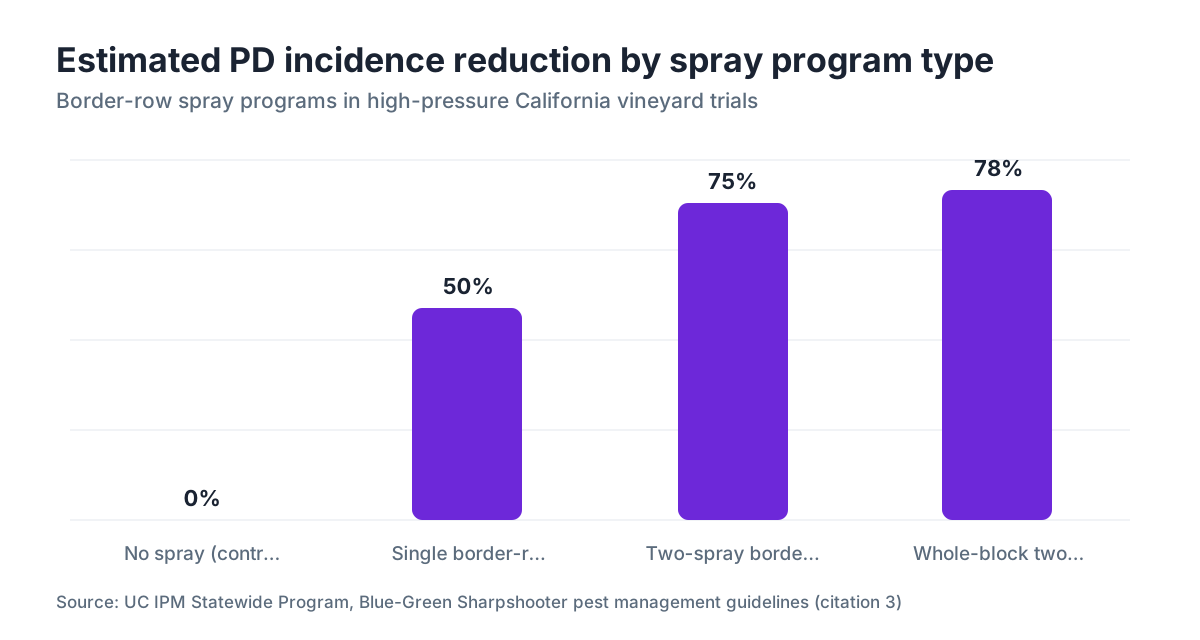
For high-PD-pressure vineyards (creek-adjacent, disease history, high BGSS trap counts), a two-spray program beats a single pass in UC trials, and it is not close. The first spray hits adult immigration into border rows in early spring. The second, timed 3 to 4 weeks later, catches first-generation nymphs that hatched on riparian hosts and are starting to move [3].
A single well-timed border spray cuts PD incidence 40 to 60% against an untreated control in moderate-pressure vineyards. A two-spray program pushed that to 70 to 80% in some UC Cooperative Extension trials, though results swing by site and year [3].
For low-pressure sites with no recent PD history and no riparian habitat nearby, a single border-row spray in early spring is usually enough and skips needless insecticide exposure. Do not over-engineer this. The point is protecting the vine's xylem during the peak inoculation window, not clearing every leafhopper out of the county.
A two-spray program also helps with resistance management. Run a pyrethroid on the first pass and a neonicotinoid on the second, and you split the selection pressure across two modes of action. That matters, because sharpshooter populations build tolerance fast under heavy repeated use of one chemistry.
What does a sharpshooter spray calendar look like across the season?
This is the question most vineyard managers actually want answered. The calendar below maps a typical program for a coastal California vineyard with moderate-to-high BGSS pressure. Shift dates 4 to 6 weeks later for northern California or Maryland, and 4 to 6 weeks earlier for the hottest inland Southern California sites.
January: Deploy yellow sticky traps at the vineyard perimeter. Check weekly. No spray yet.
Late January to February: First adult captures signal immigration. If counts pass 1 to 2 per trap per week at the border, prep the first application.
February to mid-March: Apply the first pyrethroid to border rows (up to 4 rows in from riparian or weedy edges). Early morning, air temps below 65 degrees F. Log it.
Late March to April: Watch for first-generation nymph hatch on riparian hosts. Second application with a foliar neonicotinoid (acetamiprid or similar) if nymph counts pass threshold or trap catches stay high. This is also the last window for soil imidacloprid before pre-bloom restrictions lock it out in most California situations.
May (pre-bloom): No new insecticide for BGSS unless a specific emergency exemption applies. Avoid anything with a long bloom-period restriction. Bloom is the worst possible time to spray.
June to July: Post-bloom, monitor second-generation adults. If GWSS is also present, this stretch is its summer peak. A targeted border-row pass may be worth it.
August to September: Most vineyards are inside harvest PHI windows now. Check the PHI on any product first. Late-season GWSS sprays have to account for the 30-day PHI on some systemics.
October to November: Post-harvest, work the ground cover. Mow or disc rank vegetation in border areas to cut overwintering habitat.
Keeping all this straight across multiple blocks is where a purpose-built field log earns its keep. VitiScribe's spray record module lets you attach monitoring counts, product REIs, and PHI deadlines to each application entry so nothing slips through at audit time.
What are the biggest sharpshooter spray mistakes vineyard managers make?
Spraying the whole block when you only needed the border is the most expensive error. BGSS and GWSS immigration follows a gradient from the riparian edge inward. UC IPM data shows 80% or more of sharpshooter-mediated PD infections happen within the first two to four rows off the vineyard's riparian edge [1]. A whole-block spray burns product, raises worker exposure, wipes out beneficials deep in the vineyard, and rarely beats a clean border program.
Waiting too long is the second big one. Plenty of managers wait for visible PD symptoms (scorching, leaf reddening, matchstick petioles) before they think about sharpshooters. By then you are staring at a latent infection from last season. Vines show symptoms 3 to 12 months after infection, which means the spray decisions that actually mattered got made the previous spring.
Spraying at the wrong time of day genuinely cuts efficacy. An afternoon pyrethroid pass on a 75 degrees F day kills fewer adults on contact than the same product at 55 degrees F in the morning. That is not a rounding error.
Blowing the pre-bloom window for soil systemics is a planning failure that is hard to walk back. Manage GWSS in Southern California, forget to get imidacloprid in the ground before bloom (which in some Temecula Valley sites lands as early as late March), and you lose your best systemic tool until after harvest.
The last one: sloppy records. A handwritten note on a clipboard does not satisfy California DPR monthly reporting. If a county inspector asks for your pesticide use reports and you cannot produce the current season, the fines run well past the annual cost of compliant record-keeping software.
Frequently asked questions
When is the best timing to spray for sharpshooters in vineyards in California?
Late January through April for Blue-Green Sharpshooter in coastal California. Target adult immigration into border rows first, then time a second application 3 to 4 weeks later when first-generation nymphs appear on riparian hosts. UC Cooperative Extension degree-day models pegged to CIMIS weather data sharpen the exact date year to year. Waiting until PD symptoms appear is too late.
What time of day should I spray for sharpshooters?
Early morning, at or just after sunrise, when air temperatures sit below 65 to 70 degrees F. Sharpshooters are sluggish in cool air and stay on the plant longer during spray contact. Wind is usually calmest at dawn, which improves coverage of the lower canopy where adults feed. Afternoon applications see more insect flight and weaker contact kill.
Does spraying for sharpshooters actually prevent Pierce's Disease?
It cuts the risk a lot but does not zero it out. UC Cooperative Extension trials found two-spray border programs reduced PD incidence 70 to 80% in high-pressure sites. The mechanism is fewer infected adults feeding on vines during the spring infection window. Once a vine is infected there is no cure, so timely sprays are the only practical tool.
What is the best product to spray for sharpshooters in vineyards?
Pyrethroids (zeta-cypermethrin, bifenthrin) are the workhorse for contact kill during adult immigration. Soil-applied imidacloprid works well for GWSS but must go on at least 30 days before bloom in California. Kaolin clay (Surround WP) is a physical deterrent for organic programs. Rotate modes of action between passes to slow resistance. Always check the current label for state restrictions.
How often should I spray for sharpshooters in a high-pressure vineyard?
Two targeted applications per season is the standard for high-pressure sites with riparian habitat next door. The first covers adult immigration in early spring; the second catches first-generation nymph movement 3 to 4 weeks later. More than two rarely improves outcomes and adds cost, resistance pressure, and beneficial disruption. Low-pressure hilltop vineyards may need only one border-row pass.
What is the timing of vineyard sprays for sharpshooters in Maryland?
In Maryland, Green Sharpshooter adults turn active in May, when grasses in field margins mature and dry down. University of Maryland Extension recommends monitoring border rows from mid-April and treating when you find more than one adult per 10 sweep-net sweeps along the perimeter. That is 6 to 8 weeks later than coastal California. Formal degree-day models for Maryland's complex are less developed.
Can I spray for sharpshooters at bloom?
No, not with most registered insecticides. Pyrethroid and neonicotinoid applications during bloom are highly toxic to bees and are restricted or prohibited on most labels during flowering. The soil imidacloprid pre-bloom window must close at least 30 days before bloom in California. Finish your spring program before bloom starts, then pick it up post-bloom if second-generation pressure warrants.
Do I need to spray my whole vineyard or just the border rows?
Border rows only, in most cases. UC IPM data shows 80% or more of sharpshooter-mediated PD infections occur within the first two to four rows off the vineyard's riparian or weedy edge. Whole-block sprays waste money, expose workers, and disrupt beneficials in the interior. Save full-block passes for cases where trap counts show sustained infestation across the block.
What records do I need to keep for sharpshooter pesticide applications?
In California, applications must be recorded within 7 days and submitted monthly to the county agricultural commissioner. Required fields include product name, EPA registration number, application date and time, site, acreage, amount applied, and pest target. Maryland requires similar records under MDA Pesticide Regulation rules. REI posting, SDS availability, and PCA written recommendations are additional WPS and state requirements. Missing records can trigger fines and license suspension.
How do I set up a sharpshooter monitoring program in my vineyard?
Hang yellow sticky traps at the perimeter near any riparian corridor or weedy border, one trap per 5 to 10 acres, checked weekly from January through May. Add 25-sweep net samples along border rows. Use degree-day models (through UC IPM's online calculator) to predict peak adult emergence. Log every count with date and location so you can track trends and justify spray timing.
What is the pre-harvest interval (PHI) for common sharpshooter sprays?
PHIs vary by product. Zeta-cypermethrin carries a 7-day PHI on grapes. Soil-applied imidacloprid carries a 30-day PHI in California. Malathion PHIs run 1 to 3 days depending on formulation. The PHI is legally binding: harvesting before it expires can get the crop rejected. Always check the current label for the specific PHI, since it supersedes any general guidance.
Does cover crop or weed management affect sharpshooter pressure?
Yes, a lot. Rank grass and broadleaf weeds in vineyard surrounds and ditches give sharpshooters overwintering and breeding habitat. Mowing or discing border vegetation in fall cuts the overwintering population heading into spring. During the season, keeping a short or clean inter-row cover crop in the first 2 to 4 rows next to riparian corridors reduces harborage near the canopy. It is not a spray replacement in high-pressure sites, but it lowers the baseline entering spring.
Are there organic options for sharpshooter control?
Kaolin clay (Surround WP) is OMRI-listed and works as a physical deterrent and behavioral irritant. Applied thoroughly before adult immigration and reapplied after rain, it can reduce feeding meaningfully, though it will not match a well-timed pyrethroid on a heavy infestation. Some organic programs also use spinosad products, though these carry higher bee toxicity and must go on after dark. Biocontrol options are still mostly in research with no widely available commercial product.
Sources
- UC Agriculture and Natural Resources, Pierce's Disease of Grapevines: Xylella fastidiosa is transmitted by sharpshooter leafhoppers; 80% or more of infections occur in the first 2-4 rows adjacent to riparian habitat
- UC Riverside, Center for Invasive Species Research, Glassy-Winged Sharpshooter: GWSS has two population peaks per year, spring (April-June) and late summer (August-September), with spring carrying highest PD transmission risk
- UC IPM Statewide Program, Blue-Green Sharpshooter pest management guidelines: Yellow sticky trap monitoring, degree-day models, and border-row spray timing recommendations for BGSS; two-spray programs cut PD incidence 70-80% in high-pressure trials
- University of Maryland Extension, Vineyard Pest Management: Maryland sharpshooter monitoring threshold is more than 1 adult per 10 sweep-net sweeps; adults active from May; scouting recommended from mid-April
- U.S. EPA, Worker Protection Standard for Agricultural Pesticides: WPS requires posting of REI field entry notices, annual worker safety training, and SDS availability for all pesticide applications in agricultural settings
- California Department of Pesticide Regulation, Imidacloprid Restrictions on Grapevines: Imidacloprid soil applications to grapes in California must be made at least 30 days before bloom to allow residue in flowers to decline to acceptable levels
- California Department of Food and Agriculture, Pierce's Disease Control Program: CDFA administers Statewide Pierce's Disease Management Program with GWSS product recommendations and targets citrus-to-vineyard corridor as highest-risk interface
- Washington State University Extension, Vineyard Spray Application: WSU recommends water-sensitive paper cards at multiple canopy heights to verify spray pattern distribution; sharpshooters concentrate in lower canopy
- California Department of Pesticide Regulation, Pesticide Use Reporting Requirements: California requires pesticide applications to be recorded within 7 days and submitted monthly to the county agricultural commissioner with specific required fields
- Maryland Department of Agriculture, Pesticide Regulation Section: Maryland requires pesticide application records under MDA Pesticide Regulation rules; state participates in National Pesticide Information Center registry
- Cornell Cooperative Extension, Vineyard IPM for Leafhoppers: Cornell Extension provides Northeast vineyard leafhopper and sharpshooter IPM guidance including monitoring protocols and economic thresholds
Last updated 2026-07-09