Best timing for flea beetle spray control in vineyards
TL;DR
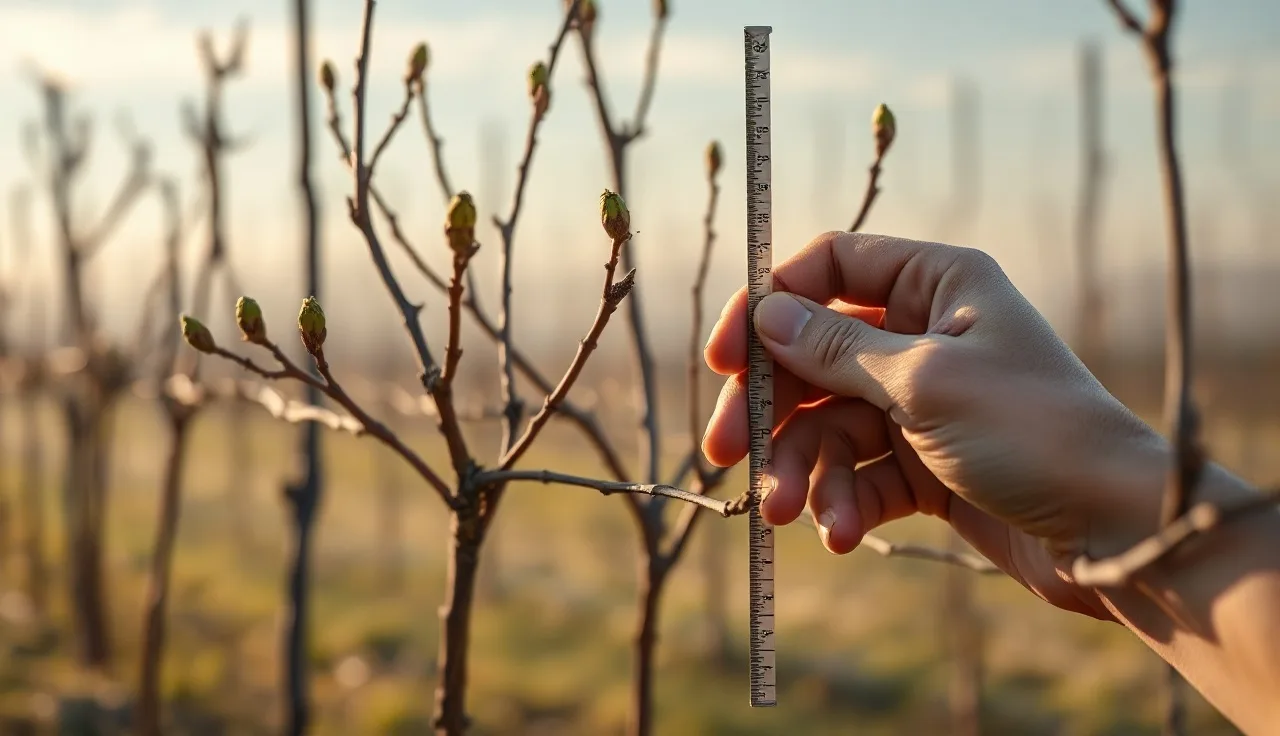
- Spray for grape flea beetles when shoots are 1 to 4 inches long, usually at or just before budbreak.
- That window closes fast, often inside 7 to 10 days in a warm spring.
- One well-timed pyrethroid or carbamate spray at the right shoot length beats three sprays applied late, after the beetles have already chewed through your buds.
What is the grape flea beetle and why does timing matter so much?
The grape flea beetle (Altica chalybea) is a small, shiny, blue-green beetle that spends winter as an adult in leaf litter and along woodland edges near vineyards. Adults come out in early spring and go straight for swelling grape buds, sometimes before shoots even push. That feeding hollows out or kills individual buds. In a bad year in a young block, you can lose a chunk of your primary buds before you ever notice a problem.
The damage window is genuinely narrow. Cornell's integrated pest management program notes flea beetles do the most harm from tight cluster through the 4-inch shoot stage, and economic injury usually happens in that first week or two of shoot emergence [1]. Once shoots pass 4 to 6 inches, the beetles are still around, but the vine has enough growing points that the feeding rarely costs you real yield. Spray too early, before adults are active, and you burn a product application and an REI for nothing. Spray too late, and the damage is already in the bud.
This is one of the most time-sensitive spray calls of the whole season. Missing it by five days in a warm April is common, and it costs you.
When exactly should you apply flea beetle spray?
Target shoot length 1 to 4 inches, which lines up with BBCH growth stage 07 through roughly 12. Across the northeastern and mid-Atlantic U.S., that lands somewhere between late March and early May depending on variety and site. In cooler Pacific Northwest regions the timing slides later, sometimes into mid-May.
Don't calendar-spray. Flea beetle emergence tracks soil temperature and accumulated heat, not the date on the wall. Adults get active when daytime temperatures sit consistently above 50 degrees F and soil temps at 4 inches start climbing past that mark. A warm stretch in late March can shrink your window to nothing.
Check block edges and woodland-adjacent rows first. Those rows always light up before the interior does. Scout the bud tips: feeding damage shows as ragged, brown-edged holes on swelling buds, different from frost, which blackens the interior tissue more evenly. If you see even light feeding on buds in early swell, the window is open. Washington State University Extension recommends starting control at the first sign of bud damage rather than waiting for a threshold count, because population thresholds for this pest in wine grapes haven't been rigorously established [2].
Spray in the morning or early afternoon, when beetles are up and feeding. They drop to the soil the second you disturb them, so coverage on the lower shoot and the bud zone matters far more than hitting upper shoot tissue.
Which pesticides are registered and effective for flea beetles in vineyards?
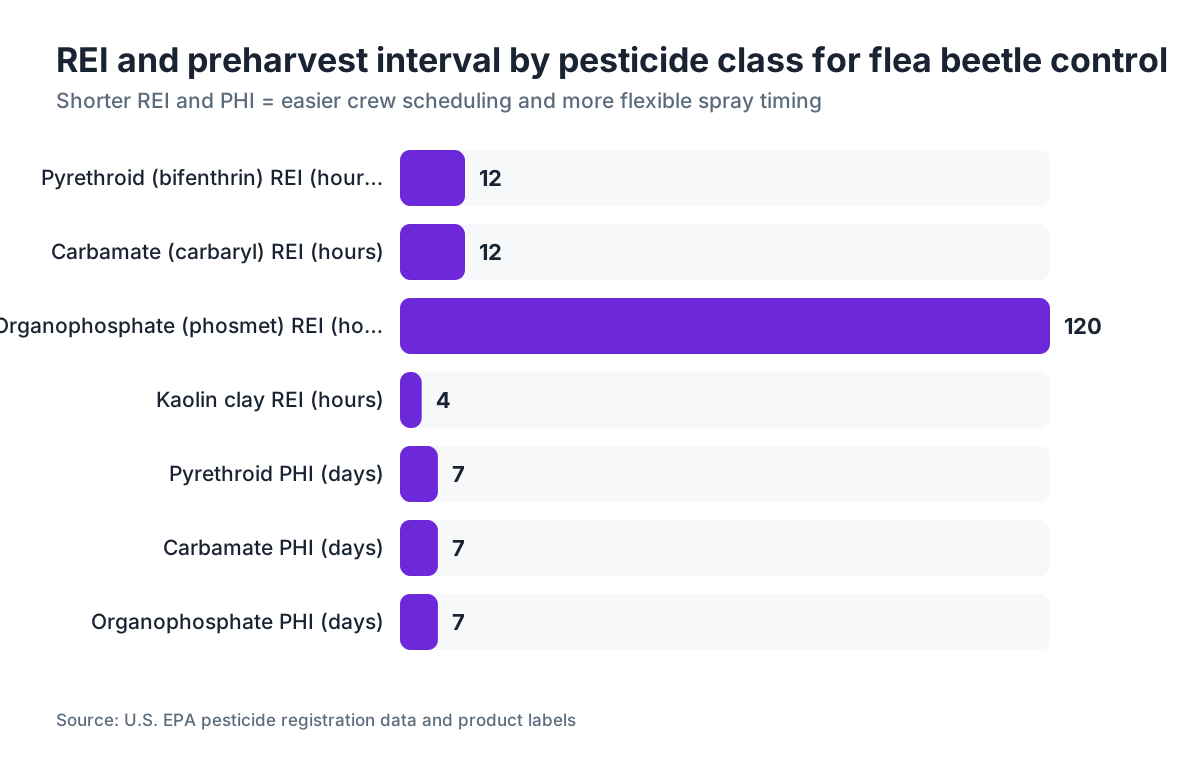
The chemistry that works falls into three groups: pyrethroids, carbamates, and organophosphates. Kaolin clay is the main non-toxicant option. Here's the straight comparison.
| Chemistry class | Common active ingredients | REI (hours) | PHI (days) | Notes |
|---|---|---|---|---|
| Pyrethroid | bifenthrin, zeta-cypermethrin, lambda-cyhalothrin | 12 | 7-30 (varies by label) | Fast knockdown, low use rates, broad grape label |
| Carbamate | carbaryl (Sevin) | 12 | 7 | Long track record, cheap, toxic to bees, watch pollinator timing |
| Organophosphate | malathion, phosmet | 24-120 (varies) | 3-7 | Effective but higher worker exposure; check current labels |
| Kaolin clay | Surround WP | 4 | 0 | Physical barrier, not a toxicant; needs full coverage and reapplication after rain |
For most operations, a pyrethroid is the practical first pick. Bifenthrin is registered on grapes in most states and holds a 7 to 10 day residual in dry weather, which helps if a second flush of beetles moves in from the woods. Carbaryl (Sevin) works and it's cheap, but its toxicity to honeybees is a real problem if you've got hive rentals in or near the vineyard during the same stretch.
Kaolin clay (Surround WP) is worth knowing if you farm organically or want to cut synthetic chemistry. UC trials show Surround reduces flea beetle feeding when you apply full coverage before adults emerge, but it needs reapplication after rain and its efficacy runs lower than conventional chemistry under heavy pressure [3]. It's a fine tool for low-to-moderate pressure blocks, especially if beneficial insect impact worries you.
Confirm state registration before you buy. Registrations change every year. The EPA's pesticide label system and your state department of agriculture are the authoritative sources, and the label is the law [4].
How do you scout for flea beetles to confirm the spray window is open?
Scouting flea beetles is simple. Walk the vineyard perimeter, especially the north and east sides if you have woodland next door, starting when the first bud swell shows on your earliest varieties. In the East that's usually Chardonnay, Pinot Noir, and early Vitis labrusca types.
Look at 10 to 20 vines spread across the block, focusing on buds that are just pushing. Count any bud with feeding holes or a hollow center. One or two damaged buds per vine at that early stage, together with visible adult beetles, is enough to spray, because populations build fast. Adults are about 5 to 6 mm, and they jump when you disturb them. That jump is where the name comes from. Move slowly and you'll see them.
Scout again 3 to 4 days after you spray to check knockdown. If adults are still active at shoot lengths under 4 inches, a second application may be worth it, though one well-timed spray does the job most years. Cornell's IPM guidelines note repeat applications are rarely necessary when the first spray hits the correct growth stage [1].
What does flea beetle damage look like, and how do you tell it apart from frost damage?
This one trips up a lot of people in spring, because flea beetle feeding and late frost injury show up at the same growth stages and both kill buds.
Flea beetle feeding leaves ragged, irregular holes or cavities in bud tissue, often on the sunny side of the bud where beetles like to feed during the warm part of the day. Surrounding tissue may look brown and dry, but not uniformly. Sometimes you'll spot frass (excrement) near the feeding site.
Frost kills tissue more evenly. The primary shoot inside a frost-killed bud turns black, and if you slice a bud open with a razor blade, the browning runs all the way to the center. Frost-damaged buds often collapse as they dry out. Frost also follows topography, hitting low spots and frost pockets, while flea beetle damage clusters along vineyard edges next to beetle habitat.
You can have both at once in the same vineyard. If you're inside the damage window and can't tell which is which, scout for adult beetles. See the insects, treat the block.
How do flea beetle pressure levels vary by vineyard region?
Flea beetle pressure is not the same everywhere. The pest is worst in the northeastern U.S., the mid-Atlantic, the Great Lakes region, and parts of the upper Midwest, where forest edges are common and the beetle's native host range overlaps with wine grape production [8].
In California's major wine regions, the grape flea beetle is generally a non-issue, and you'll rarely see it in UC Cooperative Extension spray guides [7]. Pacific Northwest growers in Washington and Oregon run into it now and then, but it isn't a top concern there either. Move east and the pest gets more relevant.
New vineyard manager in New York, Pennsylvania, Virginia, Michigan, or Ohio? Put flea beetle on your early-season scouting list every year [11][12]. Farming in Sonoma or Napa? You can likely skip this one and spend the time on other spring pests.
Growers who farm near big woodlots, or who converted forested ground to vines, tend to see higher, steadier pressure year over year. Mowed buffer strips between the woods and the vine rows help slow beetle movement into the canopy, though the evidence there is mostly observational rather than from controlled trials.
What application equipment and coverage do you need for a good flea beetle spray?
At the 1 to 4 inch shoot stage, there's basically no canopy. You're hitting small buds on canes, and the beetles sit right at the base of the shoot or on the bud itself. This is one of the few spray jobs in viticulture where full airblast canopy coverage isn't the point, because the canopy hasn't grown yet.
A directed spray from a handgun or low-volume boom that covers the bud zone and the cordons works fine for small operations. Running an airblast for a larger block? Keep ground speed down and aim the air at the lower canopy zone. Fast passes at this stage just fling product into the sky.
Water volume per acre runs lower than mid-season. Many labels allow reduced volumes (20 to 50 gallons per acre, or even less with concentrate spraying) at this tight window because there's so little surface area to wet. Check your product label for the minimum water volume.
Wind is a bigger headache now than later, because a small shoot gives droplets nothing to land on. Spray when wind is under 10 mph, and under 5 mph if you're near non-target areas. The EPA Worker Protection Standard requires treated-area signs posted during the REI and requires that any worker doing early-entry activities has the correct PPE [5]. That holds even at early growth stages.
How do you keep accurate spray records for flea beetle applications?
Federal law and most state rules require pesticide application records for any restricted-use pesticide, and for any application by a certified applicator. Even with general-use pyrethroids, most state departments of agriculture want records, and your Good Agricultural Practices (GAP) audit will ask for them.
At minimum, your flea beetle spray record needs: application date and time, product name and EPA registration number, target pest, application site (block or APN), crop and growth stage, rate per acre, total product used, total acres treated, applicator name and license number (if applicable), and weather at spray time (wind speed and direction, temperature, relative humidity).
The growth stage note earns its keep here. Recording "buds at 2-inch shoot stage" beats logging only the date, because it ties the application to the biological window instead of the calendar. That record becomes your evidence of proper timing if anyone ever questions efficacy, or if you need to rebuild your season for a wine certification audit.
Tools like VitiScribe make this easier by attaching growth stage to the spray event at the moment you enter it, so you're not reconstructing it from memory in December. A paper spray log works too. What doesn't work is keeping it in your head or on a whiteboard that gets wiped.
Keep records at least two years for most state requirements, though some states want up to five and some third-party certifications ask for longer. Check your own state agricultural department for the exact number.
What is the re-entry interval (REI) for flea beetle sprays, and how does it affect crew scheduling?
The REI is the stretch after application when workers can't enter the treated area without specific PPE for early-entry activities. For common flea beetle products, REIs run 12 to 24 hours for most pyrethroids and carbaryl, and up to 120 hours for some organophosphates.
At budbreak and early shoot stage, field work is thin, but don't assume it. Spring crews doing suckering, wire work, or soil jobs may be moving through blocks right after you spray. The EPA Worker Protection Standard (40 CFR Part 170, revised 2015) requires treated-area posting with application information visible at every block entry during the REI, and requires workers be notified of applications before entry [5].
On a small operation where you're the applicator and the only hand, this can feel like paperwork for its own sake, but the WPS applies regardless of farm size if you have any agricultural worker under the definition. University extension programs treat REI compliance as non-negotiable, not a judgment call [6].
Schedule your flea beetle spray the day before a no-entry day when you can, especially with carbamate or organophosphate options that carry longer REIs. With a pyrethroid on a 12-hour REI, an early morning spray means the crew is back in the block the next morning.
Can you use organic or reduced-risk options for flea beetle control?
Yes, if you go in with honest expectations about efficacy. The two options you'll see cited most are kaolin clay (Surround WP) and pyrethrin-based products. Pyrethrin is the botanical compound from chrysanthemum flowers, not the synthetic pyrethroids.
Kaolin clay lays down a physical barrier that makes the plant surface harder to grip and less pleasant to feed on. UC research shows it reduces feeding damage, but it demands very thorough coverage, has to go on before or at the earliest bud swell, and needs reapplication after rain [3]. In a wet spring you may be reapplying every 5 to 7 days, and that labor can match or beat the cost of one conventional spray.
Botanical pyrethrin (products like PyGanic) has contact activity but very short residual, measured in hours to a day. It knocks down adults you hit directly, but it won't give you the 7 to 10 day residual of a synthetic pyrethroid. If you're CCOF or USDA Organic certified, pyrethrin is usually allowed with documentation, but confirm with your certifier.
Spinosad is registered on grapes for some other pests, but it has limited activity on grape flea beetle and isn't typically recommended for this target. The honest answer: organic flea beetle control is harder, more labor-intensive, and less reliable than one well-timed conventional spray. For a high-pressure organic site, starting kaolin at first bud swell (before you see beetles) and scouting hard gives you the best shot.
What happens if you miss the flea beetle spray window?
Missing the window hurts most in young vineyards and in blocks with a history of heavy pressure. In an established vineyard with good vigor, losing 10 to 15% of primary buds to flea beetle feeding usually doesn't cost real yield, because secondary and tertiary buds push and make up the difference. Some varieties compensate better than others: Vitis vinifera types with low secondary bud fruitfulness (Pinot Noir, Chardonnay) are more exposed than varieties with fruitful secondaries.
In a young vineyard where you're building a cordon or training trunk structure, the math flips. Every bud counts. Flea beetle damage to a first-leaf or second-leaf vine can push establishment back a full season.
If you realize you've missed the window and shoots are already past 4 to 6 inches, don't spray. The beetles are less active on fully emerged shoots, the economic injury risk has dropped hard, and you'd burn an application for almost nothing. Put that block at the top of your scouting list next spring, and add it to your pre-season spray calendar.
Document the damage you saw, even after the fact. That record helps you calibrate pressure for next year and justifies earlier timing to yourself, your partner, or a certifier.
Frequently asked questions
What shoot length triggers a flea beetle spray application?
Apply when shoots are 1 to 4 inches long, which corresponds to BBCH growth stages 07 to 12. Below 1 inch, beetles usually aren't feeding hard enough to justify treatment. Above 4 to 6 inches, the vine has enough shoot mass that further feeding rarely causes economically significant yield loss. Confirm timing by scouting for actual adult beetle presence, not shoot length alone.
How many flea beetle spray applications per season do most vineyards need?
One well-timed spray is usually enough. Cornell's IPM guidelines say repeat applications are rarely needed when the first spray hits during the 1 to 4 inch shoot window. High-pressure sites next to large woodlots may occasionally need a second spray 7 to 10 days later if beetle numbers stay high and shoots haven't passed 4 to 6 inches. Scout after your first spray before deciding.
Is bifenthrin registered for grape flea beetle control?
Bifenthrin is registered on grapes in most U.S. states and is widely used for flea beetle at budbreak. It gives fast knockdown and a 7 to 10 day residual. The REI is 12 hours, and the preharvest interval varies by product but typically runs 7 to 30 days depending on formulation. Verify current state registration and read the label before each season, since registrations change.
Do flea beetles damage all grape varieties equally?
Beetle feeding targets swelling buds on any variety. The economic impact varies by how fruitful the secondary buds are. Vitis vinifera types with low secondary bud fruitfulness, like Pinot Noir and Chardonnay, lose more yield from primary bud damage than varieties with fruitful secondaries. Young vines of any variety are more exposed, because every growing point matters for training and establishment.
Can flea beetle damage be confused with spring frost damage?
Yes, and it happens regularly. Flea beetle feeding leaves ragged, irregular holes in bud tissue, often on the sun-exposed side. Frost kills tissue more evenly, turning the bud interior black when you cut it open. Frost also follows topography, concentrating in low spots, while flea beetle damage clusters near woodland edges. When you're unsure, look for adult beetles in the block.
What is the REI for the most common flea beetle pesticides?
For pyrethroids (bifenthrin, lambda-cyhalothrin, zeta-cypermethrin), the REI is typically 12 hours. Carbaryl (Sevin) also carries a 12-hour REI. Some organophosphates like phosmet run 24 to 120 hours depending on formulation and application method. Confirm the REI on the specific product label. EPA Worker Protection Standard posting and notification requirements apply during the entire REI period.
Does kaolin clay (Surround WP) work for flea beetle control in vineyards?
It works, with limits. UC research shows Surround reduces feeding when applied at thorough coverage before adults emerge. It needs reapplication after rain (often every 5 to 7 days in a wet spring), and its efficacy under heavy pressure runs lower than conventional chemistry. For certified organic operations or low-pressure sites, it's reasonable. For high-pressure blocks in wet springs, it gets expensive and labor-intensive fast.
When should I start scouting for grape flea beetles?
Start when you see the first bud swell on your earliest varieties, usually when daytime temperatures sit consistently above 50 degrees F and soil temps approach that level. Scout vineyard edges and blocks next to woodlots first, since beetles move into vines from surrounding habitat. You're hunting for adult beetles (small, shiny, blue-green, about 5 to 6 mm) and feeding holes on swelling bud tissue.
Are there any natural predators or biological controls for grape flea beetles?
Some generalist predators (ground beetles, parasitic wasps) eat flea beetle eggs and larvae, but biological control isn't a practical primary strategy given the narrow damage window at budbreak. Diverse groundcover and reduced soil disturbance can support predators over time, but nobody has good quantitative data showing this reliably cuts flea beetle damage in commercial vineyards. Treat it as a complement, not a replacement.
What spray records do I need to keep for flea beetle applications?
At minimum: application date and time, product name and EPA registration number, target pest, application site, crop and growth stage, rate per acre, total product and acres treated, applicator name and license number, and weather conditions. Most states require records for at least two years. Third-party audit programs (SQF, USDA GAP) may require longer. Recording the growth stage, more than the date, makes the record far more useful for future planning.
Is flea beetle a problem in California wine grape vineyards?
Generally no. The grape flea beetle isn't considered a significant pest in California's major wine grape regions. UC Cooperative Extension spray guides for Napa, Sonoma, and the Central Valley don't typically list it as a primary target. It's mainly a concern in the northeastern U.S., mid-Atlantic, Great Lakes, and upper Midwest, where forest habitat overlaps with vineyard production. In those regions, add it to your spring scouting list.
What is the economic threshold for flea beetle in vineyards?
No firm economic threshold exists for grape flea beetle in wine grapes. Washington State University Extension recommends starting control at the first sign of bud damage rather than waiting for a specific beetle count, because the damage window is so short and populations spike quickly. For established vineyards with fruitful secondary buds, you might tolerate light feeding (1 to 2 damaged buds per vine) before spraying. For young vines, act faster.
How do I time flea beetle sprays without missing the window in a warm spring?
Tie the spray decision to shoot length, not the calendar. Monitor your earliest-pushing blocks or varieties starting at first bud swell. Carry a ruler or use a marked stake while scouting. Once you see shoots at 1 inch with any adult beetle activity, the window is open. In warm springs that window can close in 5 to 7 days. Set a reminder to scout every 2 to 3 days from bud swell as your safeguard.
Sources
- Cornell University Integrated Pest Management Program, grape flea beetle guidance: Flea beetles do the most damage from tight cluster through the 4-inch shoot stage, with economic injury typically in the first week or two of shoot emergence; repeat applications are rarely necessary when the first spray hits the correct growth stage.
- Washington State University Extension, Grape Pest Management: WSU Extension recommends beginning control measures at first sign of bud damage rather than waiting for a specific population threshold, as thresholds for wine grapes have not been rigorously established.
- University of California Agriculture and Natural Resources, Grape Pest Management Guidelines: Kaolin clay (Surround WP) can reduce flea beetle feeding when applied at full coverage rates before adult emergence but requires repeat applications after rain and is generally less effective than conventional chemistry in high-pressure situations.
- U.S. EPA, Pesticide Registration: The pesticide label is the law; product registrations must be verified by state before purchase and application.
- U.S. EPA, Agricultural Worker Protection Standard (40 CFR Part 170, revised 2015): EPA WPS requires treated area posting with application information at field entries during the REI, and worker notification of applications before entry; applies regardless of farm size when agricultural workers are present.
- U.S. EPA, Pesticide Worker Safety: Worker Protection Standard re-entry interval requirements are mandatory and apply to all covered agricultural establishments.
- University of California Agriculture and Natural Resources, Integrated Viticulture: Grape flea beetle is not considered a significant pest in California's major wine grape regions; the pest is primarily a concern in northeastern and mid-Atlantic U.S. production areas.
- Penn State Extension, Grape Disease and Pest Management Guide: Flea beetle pressure is highest in northeastern U.S., mid-Atlantic, Great Lakes, and upper Midwest regions where forest edges and woodland habitat overlap with commercial wine grape production.
- U.S. EPA, Pesticides: Bifenthrin is registered on grapes in most U.S. states with a 12-hour REI; preharvest interval varies by specific product formulation (typically 7-30 days).
- USDA National Agricultural Library: Grape flea beetle adults are approximately 5-6 mm, shiny blue-green, and overwinter as adults in leaf litter and woodland edges; adults emerge in early spring and feed on swelling grape buds.
- Virginia Cooperative Extension: Flea beetle is a significant early-season pest in Virginia vineyards; adults feeding on primary buds before and at budbreak are the primary damage mechanism.
- Michigan State University Extension: Flea beetle is consistently problematic in Michigan wine grape production; single well-timed applications at the 1-4 inch shoot stage are the standard management recommendation.
Last updated 2026-07-09