Best trellis system for Concord grapes: a grower's evaluation guide
TL;DR
- For most commercial Concord growers, the Geneva Double Curtain (GDC) or a single high-cordon system gives the best mix of yield, canopy control, and mechanical harvest fit.
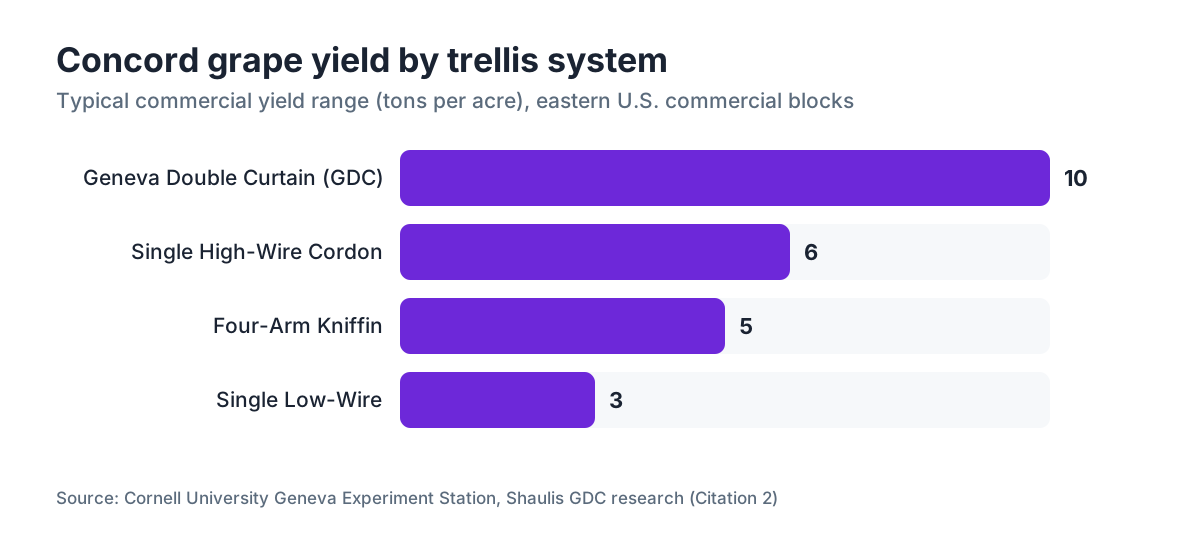
- GDC runs 8 to 12 tons per acre in New York blocks versus 4 to 7 on single-wire low systems.
- Post spacing, wire height, and cordon load matter more than most first-time builders expect.
Why does trellis choice matter so much for Concord grapes specifically?
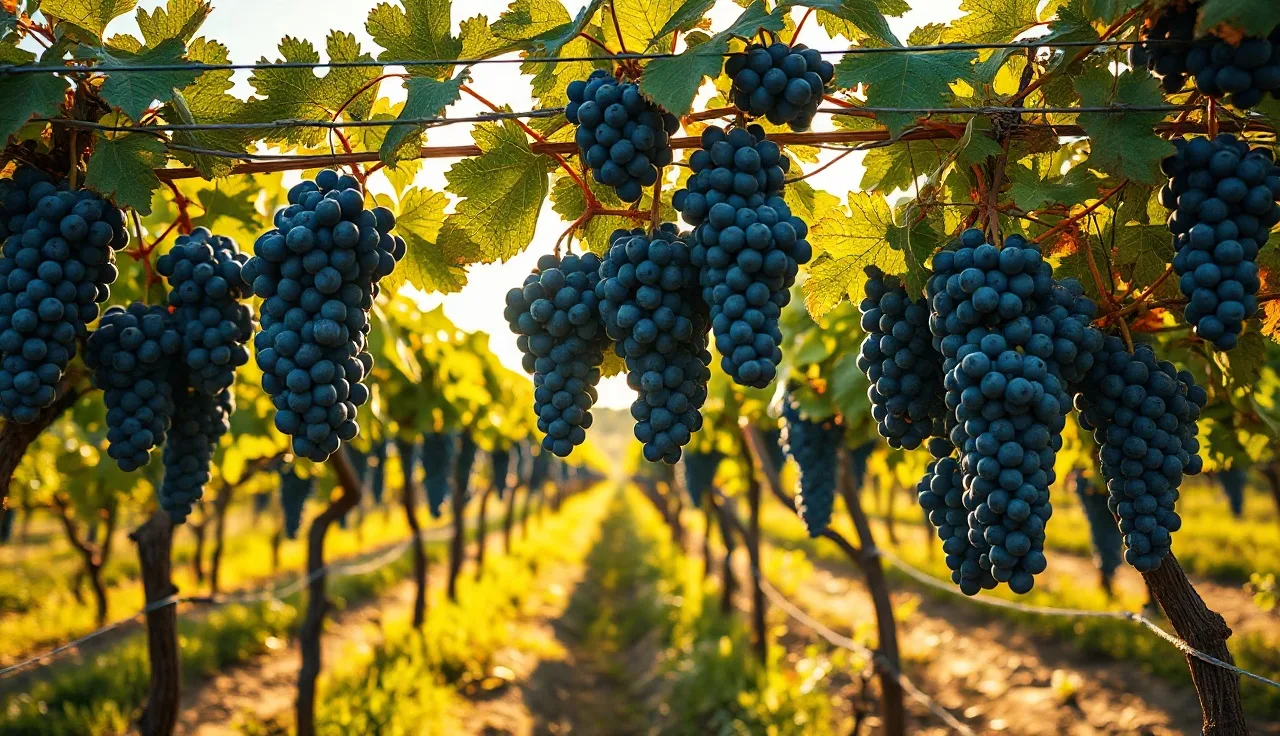
Concord is a Vitis labrusca cultivar, and it behaves nothing like a European wine grape. It's vigorous and sprawling. The vine wants to grow up and hang its shoots down. Put it on a low two-wire system built for vinifera and Concord crams too much canopy into too little space, which drives up disease pressure, cuts fruit quality, and makes harvest a slog. [1]
The trellis is more than a support. It sets canopy microclimate, spray penetration, harvest method, and long-term vine health. Cornell's viticulture program documented Concord yields under a Geneva Double Curtain averaging roughly 8 to 12 tons per acre in New York commercial blocks, against 4 to 7 tons under a single-wire low system on the same site conditions. [2] That gap is not marginal.
Concord also overcrops if you let it. A trellis that spreads more shoots into sunlight balances fruit load against vegetative growth, which is exactly what high-divided canopy systems do well.
Choose wrong and you'll spend years fighting vigor, poor color, and disease. Get it right and the vine mostly runs itself.
What are the main trellis systems used for Concord grapes?
Four systems show up in real commercial Concord production. Each has a genuine profile of strengths and costs.
Single High-Wire Cordon (Kniffin variants)
The traditional single high-wire sits at 54 to 60 inches. It's simple, cheap, and familiar to any experienced crew. You train a permanent cordon along the wire and let shoots hang freely below. Training labor stays low once the vine is established. The weakness is that all the canopy ends up in one dense curtain, which limits spray penetration and caps yield on high-vigor sites. [3]
Geneva Double Curtain (GDC)
Nelson Shaulis developed GDC at Cornell's Geneva, NY station in the 1960s. It uses a crossarm on top of each post, typically 48 to 54 inches wide, with a wire along each end. Two parallel cordons run the length of the row, about 4 feet apart. Shoots hang down from both curtains, which doubles the exposed leaf area per linear foot of row. [2] This is the system most large New York Concord processors specify because it pairs mechanical harvestability with high yield.
Four-Arm Kniffin
Two wires at roughly 36 and 60 inches, with two canes trained each direction at each height. Common in older New England and Mid-Atlantic plantings. It suits lower-vigor sites or home-scale production better than commercial Concord. Spray coverage through the inner canopy is poor.
Single-Wire Low Trellis (36 to 42 inches)
You mostly see this in older backyard plantings, or where hand harvest and small scale justify minimal infrastructure. Yields are the lowest of any system under Concord, and disease pressure in humid climates runs high. Skip it for commercial production.
| System | Typical wire height | Cordon type | Mech. harvest compatible | Relative yield potential | Installed cost per acre (est.) |
|---|---|---|---|---|---|
| Single high-wire cordon | 54-60 in | Bilateral permanent | Yes | Moderate | $2,000-$3,500 |
| Geneva Double Curtain | 54 in + crossarms | Bilateral x2 | Yes | High | $3,500-$5,500 |
| Four-Arm Kniffin | 36 + 60 in | 4 renewal canes | Limited | Moderate-low | $1,800-$3,000 |
| Single low-wire | 36-42 in | Bilateral or cane | No | Low | $1,200-$2,000 |
Cost ranges are estimates for materials and installation in the northeast U.S. as of 2024; labor markets vary. Post, wire, and hardware pricing moves with steel and lumber markets, so get local quotes before you budget.
Is Geneva Double Curtain really the best system for commercial Concord production?
For most commercial Concord growers in the eastern U.S., yes. Cornell's work in the Finger Lakes and Lake Erie regions repeatedly shows GDC beating single-curtain systems on yield and fruit quality when vine vigor is moderate to high. [2] The divided canopy improves light interception, moves more air through the fruit zone (which matters a lot for botrytis and downy mildew control in humid New York and Pennsylvania summers), and opens up spray coverage compared to a dense single curtain.
Mechanical harvesters straddle a row and shake canes or catch falling clusters. GDC's geometry is almost purpose-built for that. The two hanging curtains drop fruit into the catch frame with less bruising than you get shaking one dense wall of canopy. For juice operations shipping to Welch's or Mott's, that feeds straight into contract acceptance and Brix targets.
GDC is not automatically right for every situation. On low-vigor soils, or with rootstocks that don't push hard, GDC can leave you with two thin, underperforming curtains instead of one adequate one. Washington State University's viticulture extension notes that divided canopy systems need enough vine vigor to fill both cordons, and that under-vigorous vines on GDC actually do worse than the same vines on a simpler high-cordon system. [3] If your site runs low on vigor, seriously look at single high-wire cordon first.
The other honest caveat: GDC costs more to build. The crossarms add hardware cost and install time. Figure $1,000 to $2,000 per acre more than a basic single-wire system, depending on post spacing and materials.
How do you build a Concord grape trellis from scratch?
The build sequence is simple. The details are what decide longevity. A trellis that fails at year 8 because your end posts weren't anchored right means you're rebuilding exactly when your vines hit peak production.
Step 1: Layout and post spacing
Row spacing for mechanically harvested Concord runs 9 to 11 feet between rows, with 8-foot vine spacing within the row. Nine-foot rows are tight for modern harvesters; 10 to 11 feet is more comfortable. Line posts go every 20 to 24 feet. Closer spacing costs more but gives better wire support, which matters for GDC and its wider crossarms. [2]
Step 2: End-post anchoring
This is where most DIY trellises fail. End posts take enormous tension from wire load, especially after a snow or ice event. Use 4-inch diameter treated wood posts (6-inch for GDC) or equivalent steel pipe, set at least 3.5 feet deep, ideally 4. Brace them with a diagonal brace post or a deadman anchor buried at a 45-degree angle into the row. Cornell's extension guidance calls for end posts sized to resist at least 1,200 pounds of wire tension per strand. [2]
Step 3: Line posts
Southern yellow pine, cedar, or locust all work. Many commercial growers run 7-foot steel T-posts at line positions because they go in fast, cost less over the long haul, and don't rot. Set them 48 to 54 inches above grade for a high-wire single system, or high enough to place your crossarm at 54 inches for GDC.
Step 4: Wire selection and tensioning
Use 12.5-gauge high-tensile galvanized wire. Skip soft-drawn wire; it stretches under load and your cordon drifts over time. High-tensile wire needs proper ratchet strainers or tensioning anchors at each end. Tighten to roughly 150 to 200 pounds per strand. [4] For GDC, run the two cordon wires along the outer edges of each crossarm, 48 to 54 inches apart.
Step 5: Crossarms for GDC
Crossarms are usually pressure-treated 2x4 or 2x6 lumber, or galvanized steel channel, 48 to 54 inches wide. They bolt to the top of each line post or attach with a U-bracket. Wire clips or eye-bolts at each end hold the cordon wires. The crossarm is the one structural piece that separates GDC from a simple high-wire system, and it isn't complicated. Pre-drill in a covered area before installation and you save real time.
If you're tracking material quantities, build schedules, and crew hours across a large planting, a digital field log helps. VitiScribe has trellis build and vineyard infrastructure logs in its field operations module, which makes the cost-per-acre math and future replant decisions much easier to reconstruct.
What post material and spacing actually hold up long-term?
Treated wood and steel each have defenders, and both carry real tradeoffs.
Treated wood (CCA or ACQ pressure-treated pine) is the traditional pick. It handles easily, takes staples and nails, and feels familiar. The honest downside is that ground-contact treated posts in wet eastern soils usually last 15 to 25 years before real rot at the soil line. That's fine for most commercial plantings, which expect a 25 to 35-year productive life from the vine.
Steel T-posts at line positions are increasingly the commercial choice. They last essentially forever, go in faster with a pneumatic driver, and carry no disposal worry around preservative chemicals near food crops. The catch is that T-posts aren't ideal for end assemblies; they don't resist tension the way a heavy wood post does. Hybrid systems, wood ends with steel line posts, are what most extension guides now recommend at commercial scale. [2]
Post spacing swings your material cost hard. At 20-foot spacing, a 1,000-foot row needs 50 line posts. At 24-foot spacing, you need 42. On 100 acres that difference stacks up. WSU's viticulture extension notes that wire support and post spacing should account for the weight of a full crop plus expected snow load; eastern Concord regions regularly catch ice and wet snow that add hundreds of pounds to a fully loaded trellis. [3]
How does trellis design affect spray coverage and disease management in Concord?
Concord is susceptible to powdery mildew, downy mildew, black rot, and botrytis. All four are fungal, and canopy density directly controls how well your spray program works. [5]
A dense single-curtain trellis forces every spray pass to punch through a wall of overlapping shoots and leaves to reach the inner canopy and cluster zone. Cornell's IPM program shows air-blast sprayer penetration dropping sharply once canopy leaf area index passes roughly 4 to 5. [5] Most high-vigor Concord blocks on single-wire systems blow past that threshold by early July.
GDC and other divided canopy systems solve this structurally. Each hanging curtain runs thinner, so a spray pass from one side can carry all the way through to the other. You get better fungicide coverage with the same or less material, which helps both efficacy and your pesticide cost per acre.
For any commercial operation, spray records tie straight into EPA Worker Protection Standard (WPS) compliance, which requires posting field reentry intervals and keeping application records accessible to workers and their representatives. [6] The trellis you choose affects which fungicides you need and how often, which flows right into those records.
Can you use a mechanical harvester with a Concord grape trellis?
Yes, and it's one of the main reasons commercial Concord growers care so much about trellis geometry. Concord is almost entirely machine-harvested at commercial scale in the U.S. Hand picking a juice grape at $200 to $300 per ton contract prices doesn't pencil out.
Over-the-row harvesters need your row width and trellis height to fall inside specific tolerances for the machine. Most modern New Holland, Korvan (now part of Oxbo), and similar harvesters run header widths built for 9 to 11-foot row spacing and cane zones between roughly 36 and 72 inches off the ground. GDC sits cleanly in that range, which is partly why Shaulis built it that way. [2]
The practical build requirement is consistent wire height. A GDC cordon that sags from 54 inches to 46 over a poorly supported mid-span makes the harvester miss clusters or tear canes. Consistent post height and wire tension matter more for machine harvest than for hand harvest. Measure your wire heights every year and re-tension sagging spans before harvest.
Single high-wire cordon also machine-harvests fine when row and wire geometry are in spec. Four-arm Kniffin, with canes on two heights, is much harder to harvest by machine without losing a real slice of the crop to the two-wire obstruction.
What wire height and cordon height work best for Concord?
For GDC, the cordon wires sit at 54 inches above the soil. That height puts the cluster zone, where shoots emerge and fruit develops, at a working height you can reach for canopy management and keeps hanging shoots off the ground. The 48-inch crossarm width is the most common in New York commercial plantings. [2]
For single high-wire, 54 to 60 inches is the standard range for the cordon wire. Below 54 inches you get shoot tips dragging the ground by midsummer on vigorous sites. Above 60 inches the cordon climbs past most workers' comfortable reach for tucking and shoot positioning.
One thing surprises a lot of first-time builders: the right wire height is measured from finished soil grade, not from the post. If your site has real slope or grade changes, your post lengths have to compensate so the wire stays level across the block. Obvious in theory. Less obvious when you're setting posts on a 12 percent grade and realizing every post needs to be a different length.
How does trellis system affect vine training and pruning labor?
Labor is the second-largest recurring cost in Concord production after spray programs. Trellis design decides how much pruning and training time you spend per acre.
Four-arm Kniffin needs annual cane selection at each renewal spur on two separate wire heights. Experienced crews handle it, but training new workers is harder because there are more decisions per vine. In the northeastern U.S., custom pruning for Concord cane systems runs roughly $150 to $300 per acre, with wide variation by region and labor pool. (These are informal industry estimates; actual contract prices swing by location and season.)
GDC is spur-pruned to permanent cordons. Once the cordons are set, usually year 3 to 4 after planting, annual pruning is simple: shorten each spur to 2 buds, cut out dead wood, keep the cordon. Crews with minimal training work GDC efficiently. Cornell's decades of Concord research suggest spur-pruned cordon systems cut pruning labor compared to cane systems when vine density and spacing are otherwise equal. [2]
The tradeoff is that establishing GDC cordons takes longer than running a single cane to a wire. Years 1 through 3 need deliberate training to fill both arms of the double curtain. Rush it and you get permanent gaps in the cordon.
What does it cost to install a Concord grape trellis per acre?
Real cost turns on your region, material prices when you buy, crew wage rates, and post spacing. The components, though, are well understood.
For a single high-wire cordon with wood end posts, steel T-post line posts at 24-foot spacing, and high-tensile wire, materials alone typically run $1,500 to $2,500 per acre in the eastern U.S. as of 2024. Installation labor adds $500 to $1,200 per acre depending on whether you contract it out or run your own crew with a post pounder.
GDC adds crossarm hardware, which runs $8 to $20 per line post depending on material choice. On 24-foot spacing with 200 line posts per acre, that's $1,600 to $4,000 in additional material. Total installed GDC cost commonly lands between $3,500 and $5,500 per acre in New York and Pennsylvania, though the wide range reflects real differences in local labor and steel prices.
USDA NRCS has historically offered cost-share for trellis infrastructure through the EQIP program, which can offset 50 percent or more of installation cost for qualifying operations. Check your local NRCS service center for current availability; these programs run on annual signup cycles. [7]
The best way to protect that investment is records: when posts went in, wire tensions, any repairs. VitiScribe's infrastructure logging lets you attach costs and dates to specific block equipment records, which helps when you're estimating replacement timelines or documenting improvements for a lender.
How do you choose a trellis system for a small or backyard Concord planting?
GDC is overkill for a dozen vines in a backyard. At home scale, a simple single high-wire or a modified four-arm Kniffin is all you need. The economics that make GDC worth the extra build cost at 10-plus acres don't apply when you're planting 10 vines.
For a backyard planting, here's a reasonable approach. Set 4x4 treated wood posts at 8-foot intervals, at least 3 feet in the ground, standing 6 feet above grade. Run two strands of 12.5-gauge galvanized wire, one at 54 inches and one at 36. Train two canes per direction at each wire level (four-arm Kniffin) or run a single bilateral cordon on the top wire. Material cost for a 20-vine backyard planting runs $150 to $400 depending on post material and whether you buy wire by the coil or the spool.
The one thing even backyard growers shouldn't skip is end-post anchoring. A diagonal brace or a deadman anchor at each end post costs almost nothing in materials and keeps the whole trellis from leaning inward under wire tension. A collapsed end assembly takes the whole run down with it.
If you're also looking at commercial vineyard operations at various scales, these principles carry over, though site-specific vigor and climate always drive the final call.
What are common mistakes when building a Concord grape trellis?
Skipping end-post engineering is the most common and most expensive mistake. Under-built end assemblies fail slowly, usually in year 5 to 8 when the vines reach full vigor and crop load. By then you're rebuilding in a mature vineyard, which is far more disruptive than getting it right at installation.
Second common mistake: setting posts before finalizing row orientation. Orientation drives sun exposure and air drainage. In humid northeastern Concord regions, north-south rows running downslope generally drain air better and cut disease pressure compared to east-west rows. Cornell's viticulture guides consistently favor north-south orientation on sloped sites. [2]
Using soft-drawn wire instead of high-tensile is another mistake with compounding costs. Soft wire stretches under crop load and temperature swings, sagging worse each season. High-tensile wire costs about the same per foot and holds tension across a 25-year vine life.
And many growers underestimate consistent wire height across the block. A cordon wire that varies 6 to 8 inches from post to post forces crews to work at uneven heights, drags on mechanical harvest, and produces uneven shoot development. Set every post to a consistent height relative to grade, not to a fixed post length.
Frequently asked questions
What is the best trellis system for Concord grapes in New York or Pennsylvania?
Geneva Double Curtain (GDC) is the most widely recommended system for commercial Concord production in New York and Pennsylvania. Cornell research from the Finger Lakes and Lake Erie regions shows GDC yields of 8 to 12 tons per acre, which consistently beats single-wire low systems on comparable sites. For small or home plantings, a single high-wire cordon at 54 to 60 inches is a simpler and fully adequate choice.
How high should the trellis wire be for Concord grapes?
For GDC, the cordon wires sit at 54 inches above finished grade, mounted on crossarms roughly 48 to 54 inches wide. For a single high-wire cordon, 54 to 60 inches is standard. Below 54 inches and vigorous Concord shoots drag the ground by midsummer. The exact height matters less than keeping it consistent across the block, which helps mechanical harvest and crew efficiency.
What post spacing should I use for a Concord grape trellis?
Commercial Concord blocks typically use line posts every 20 to 24 feet. Closer spacing (20 feet) costs more but gives better wire support, which matters for GDC's wider crossarms and for blocks in regions with heavy snow or ice load. End posts should be heavier-gauge (at least 4-inch diameter treated wood or equivalent steel) and set at least 3.5 feet deep with diagonal brace support.
Can Concord grapes be harvested mechanically?
Yes, nearly all commercial Concord production in the U.S. uses mechanical harvest. GDC is built with harvester geometry in mind; its two hanging curtains fit inside standard over-the-row harvester head widths for 9 to 11-foot row spacing. Single high-wire cordon is also machine-harvest compatible. Four-arm Kniffin with two wire heights is harder to harvest by machine without significant fruit loss.
How does Geneva Double Curtain differ from a single high-wire system?
GDC uses a horizontal crossarm (typically 48 to 54 inches wide) at the top of each post, with a cordon wire running along each end. This creates two parallel canopy curtains instead of one, roughly doubling exposed leaf area per row foot. A single high-wire cordon has one wire and one curtain. GDC costs more to build but yields more and lets spray penetrate better on high-vigor sites.
What wire gauge should I use for a Concord grape trellis?
Use 12.5-gauge high-tensile galvanized wire. Skip soft-drawn wire, which stretches under crop load and temperature cycling. High-tensile wire holds tension across a 25-year vine life without constant re-tensioning. Tighten to roughly 150 to 200 pounds per strand using proper ratchet strainers or in-line tensioners at each end assembly.
Is four-arm Kniffin a good system for Concord grapes?
Four-arm Kniffin works for home-scale or low-vigor Concord plantings but is rarely the best choice for commercial production. Spray penetration through the double-wire canopy is poor. Mechanical harvest is difficult with canes trained to two different wire heights. Cornell and most northeastern extension programs now recommend GDC or single high-wire cordon over four-arm Kniffin for commercial Concord blocks.
What row spacing should I use for Concord grapes on a GDC trellis?
For mechanically harvested commercial Concord on GDC, 10 to 11-foot row spacing is standard. Nine-foot rows are workable but tight for modern harvesters and limit air circulation. Within-row vine spacing is typically 8 feet. Wider row spacing improves equipment access and canopy air drainage, which helps disease management in the humid climates where most Concord grows.
How much does it cost to trellis an acre of Concord grapes?
A single high-wire cordon system runs roughly $2,000 to $3,500 per acre installed in the eastern U.S. (2024 estimates). GDC runs $3,500 to $5,500 per acre due to crossarm hardware and added install time. USDA NRCS EQIP cost-share can offset 50 percent or more of installation cost for qualifying farms. Get current local quotes before budgeting; steel and lumber prices shift a lot year to year.
How does trellis type affect fungal disease pressure in Concord vineyards?
Trellis design directly controls canopy density, which is a primary driver of fungal disease pressure. Divided canopy systems like GDC cut leaf area index per curtain, improving air circulation and spray penetration through the cluster zone. Cornell's IPM research shows spray coverage drops sharply once canopy leaf area index passes roughly 4 to 5, a threshold common in high-vigor single-wire Concord blocks by midsummer.
When should I start training Concord vines on a GDC trellis?
Training toward a GDC cordon begins in year 1 by selecting the strongest shoot and tying it to a stake headed toward the cordon wire. Year 2 typically sets the trunk and starts cordon development along the wire. Both arms of the double curtain should be substantially filled by years 3 to 4. Rushing cordon development by leaving too many buds too early causes permanent gaps; be patient through establishment.
Do I need a trellis permit or compliance documentation for a new vineyard block?
Trellis construction itself usually doesn't require permits in agricultural zones, but check with your county planning office if you're in an area with farm structure regulations. Ongoing compliance in Concord vineyards relates more to spray records, EPA Worker Protection Standard posting requirements, and any cost-share documentation from NRCS. Keep installation records (costs, materials, dates) for tax depreciation and any future lender or program documentation.
What is the expected lifespan of a Concord grape trellis?
Well-built end assemblies with treated wood or steel posts, high-tensile wire, and proper anchoring routinely last 25 to 35 years, which matches a commercial Concord block's productive life. Line post lifespan varies by material: steel T-posts last indefinitely, treated wood line posts typically last 15 to 25 years in ground contact in wet eastern soils. Budget for partial replacement of wood line posts around year 15 to 20.
Can I build a Concord grape trellis myself, or should I hire a contractor?
Straightforward single high-wire systems are well within reach of a grower with basic equipment: a post-hole digger or post driver, a come-along or ratchet strainer for wire tensioning, and a level for consistent post heights. GDC adds crossarm fabrication and installation, which adds time but isn't technically hard. End-post assembly and anchoring are the steps most worth getting right; mistakes there cascade into problems years later.
Sources
- Cornell University College of Agriculture and Life Sciences (Cornell AgriTech): Concord (Vitis labrusca) is a high-vigor cultivar that requires canopy management suited to its growth habit to reduce disease pressure and maintain fruit quality.
- Cornell University, New York State Agricultural Experiment Station, Geneva Double Curtain Trellis System research (Nelson Shaulis): GDC system developed at Cornell Geneva station consistently shows Concord yields of 8-12 tons per acre vs. 4-7 tons on single-wire systems; specifies 54-inch cordon height, 48-inch crossarm width, 20-24-foot post spacing, and end-post tension requirements.
- Washington State University Extension: Divided canopy systems require sufficient vine vigor to fill both cordons; under-vigorous vines perform worse on GDC than on simpler high-cordon systems. Post spacing and wire support must account for snow and ice load.
- Penn State Extension: High-tensile 12.5-gauge galvanized wire tensioned to 150-200 pounds per strand is recommended for commercial grape trellis construction.
- Cornell University Integrated Pest Management Program: Spray penetration drops sharply once canopy leaf area index exceeds 4-5; Concord susceptibility to powdery mildew, downy mildew, black rot, and botrytis makes canopy management critical to spray program effectiveness.
- U.S. EPA, Agricultural Worker Protection Standard (WPS): WPS requires posting field reentry intervals and maintaining application records accessible to workers and their representatives on agricultural establishments.
- University of California Agriculture and Natural Resources (UC ANR): Canopy management and trellis system selection are primary drivers of fruit quality, disease management, and labor efficiency in commercial grape production.
- USDA Farm Service Agency, Farm Loan and Infrastructure Programs: USDA programs available for agricultural infrastructure investment; growers should check with local FSA and NRCS service centers for current cost-share opportunities.
- Cornell Cooperative Extension viticulture guidance on row orientation: North-south row orientation on sloped sites improves air drainage and is consistently recommended over east-west orientation for disease management in Concord vineyards.
Last updated 2026-07-09