Y trellis system for grapes: how it works and when to use it
TL;DR
- A Y trellis (also called a lyre or open-lyre system) splits the vine canopy into two diverging arms at roughly 45-60 degrees, improving light penetration and air circulation compared to a vertical shoot positioning system.
- It suits high-vigor sites and varieties prone to dense canopies.
- Setup costs run $3,000-$6,000 per acre more than a standard VSP trellis, but yield and quality gains can justify the investment on the right site.
What is a Y trellis system in grapes?
A Y trellis gets its name from the cross-sectional shape of its support structure. Instead of a single vertical cordon wire, the system carries two bilateral arms angled outward from the top of each post, spreading the canopy into a wide V or Y shape. Shoot growth fills both arms, so you end up with two separate curtains of leaves and fruit rather than one wall.
The design goes by several names in the literature: lyre, open-lyre, and GDC (Geneva Double Curtain) are all close relatives, though GDC specifically trains the canopy downward rather than upward. For this article, "Y trellis" refers to the upward-growing, split-canopy configuration where shoots are trained vertically up from each arm, which is the most common form in commercial vineyards today. [1]
The system traces back to work done at Cornell's New York State Agricultural Experiment Station in the 1960s, where researcher Nelson Shaulis developed the GDC as a way to manage high-vigor Concord vines. Later refinements for vinifera varieties and upward shoot positioning produced the modern Y or lyre configuration now used in Bordeaux, Australia, and high-vigor sites across California and Washington. [2]
Strip away the hardware and a Y trellis is one thing: an answer to a canopy problem. Dense canopies shade interior fruit, slow ripening, trap moisture, and raise disease pressure. The Y trellis pulls the fruit zone apart horizontally, giving every cluster more direct sunlight and more air moving around it.
How does a Y trellis differ from VSP and other wire trellis systems in grapes?
Vertical shoot positioning (VSP) is still the most common wire trellis system in grapes worldwide. In a VSP system, a single trunk carries two bilateral cordons along one fruiting wire, and all the shoots grow straight up between two or three pairs of foliage wires. It's simple to build, easy to mechanize, and works well on moderate-vigor sites with decent natural canopy division.
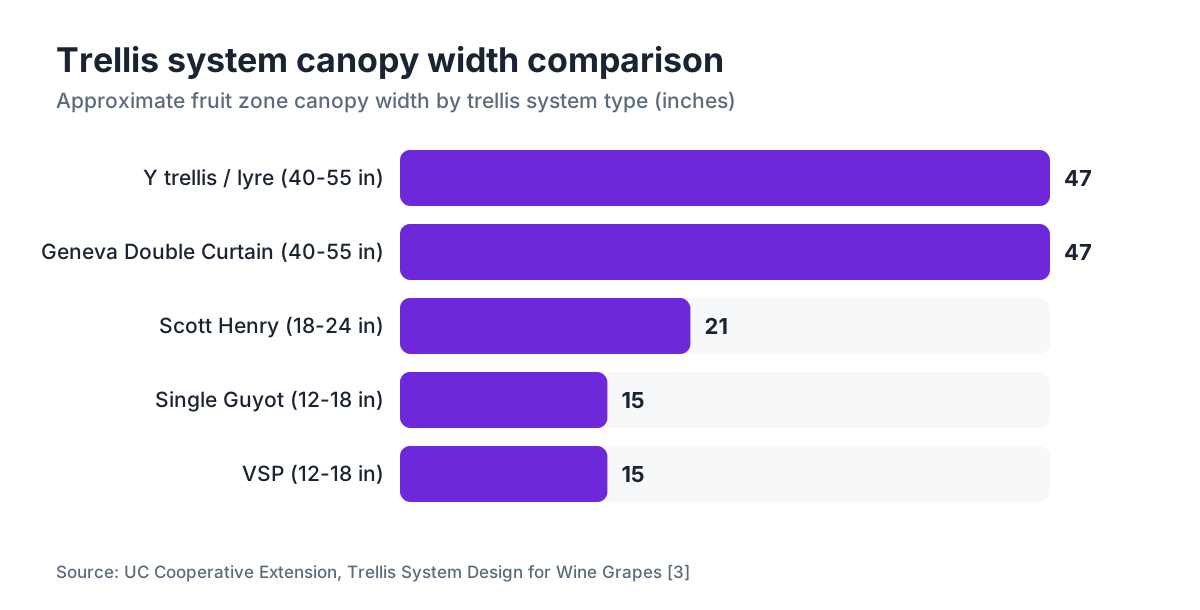
The Y trellis doubles that canopy surface. Instead of one fruiting wire at roughly 30-36 inches, you have two fruiting wires diverging outward, each carrying its own cordon. Canopy width at the top can reach 40-55 inches compared to 12-18 inches for a well-managed VSP. [3] That extra spread is the whole point. More leaf area in direct sun means more photosynthesis, more even ripening, and less disease from shade and trapped humidity.
The table below shows how the main systems compare on the metrics that matter most for vineyard planning.
| System | Canopy width (in) | Relative labor | Best vine vigor | Mechanization ease |
|---|---|---|---|---|
| VSP | 12-18 | Baseline | Low to moderate | High |
| Y trellis / lyre | 40-55 | +20-30% | Moderate to high | Moderate |
| Geneva Double Curtain (GDC) | 40-55 | +15-25% | High | Moderate-high |
| Scott Henry | 18-24 | +25-35% | Moderate | Low-moderate |
| Single Guyot | 12-18 | Baseline | Low to moderate | Moderate |
Scott Henry is worth mentioning because people confuse it with the Y system. Scott Henry divides shoots into upward and downward curtains on a single cordon plane; the Y trellis divides them laterally into two separate planes. They solve the same problem through different geometry. [4]
One real limitation of the Y trellis is that it needs more room between rows, typically 10-12 feet minimum versus 7-8 feet for VSP. That cuts vine density per acre and matters a lot if you're replanting an existing vineyard. Check your actual row spacing before you commit.
What are the real benefits of a Y trellis system?
More sunlight into the fruit zone is the main lever. Research from UC Davis and WSU consistently shows that grape berries exposed to more diffuse light accumulate higher anthocyanins, better tannin structure, and more even sugar development than shaded fruit. [5] The numbers aren't small. One WSU study found that lifting fruit zone light exposure from under 30% to over 50% of ambient raised anthocyanin concentration in Cabernet Sauvignon by roughly 40%. [5]
Airflow matters almost as much. The open center of a Y trellis lets air move through the canopy freely, drying leaf surfaces faster after rain or morning dew. That translates to lower botrytis and powdery mildew pressure, which means fewer spray passes and lower fungicide costs on susceptible varieties. Some growers report cutting fungicide applications by one to two passes per season after switching from a dense VSP on high-vigor sites, though that's site- and variety-specific enough that I'd treat it as a possibility rather than a promise.
Yield can go up too. Because each vine carries two separate fruiting zones, you can hang more buds per vine without the shading penalty that would crush quality in a VSP at the same bud count. Cornell extension research suggests properly managed split-canopy systems can produce 20-30% more tons per acre than VSP at equivalent quality on high-vigor sites. [2]
Spray coverage is genuinely better. With the canopy split open, a standard airblast sprayer penetrates both curtains more evenly than it penetrates a dense VSP wall. If you're meeting EPA Worker Protection Standard requirements and keeping detailed spray records, better penetration also means you can potentially cut application volume per acre while holding effective coverage, which is worth tracking in your pesticide use records. [6]
What are the downsides and real costs of a Y trellis?
Let's be honest about the drawbacks, because they're real.
Material and installation costs are higher than VSP. Each post needs a Y-shaped or V-shaped crossarm, plus the extra wire runs for the second set of fruiting and foliage wires. Vineyard establishment costs in California run roughly $15,000-$25,000 per acre for VSP depending on region and labor market. [7] Adding a Y trellis system to that typically adds $3,000-$6,000 per acre for the extra hardware and installation labor, based on figures from UC Cooperative Extension farm budgets. [7] Exact costs vary a lot by region, post material, and current steel prices, so get local contractor bids before you plan a budget.
Labor during the season goes up. Tucking shoots into two separate curtains takes more time than tucking one. Mechanical tuckers and foliage lifters built for VSP don't always adapt to the Y configuration without modification. Some custom-designed Y-trellis cultivators exist, but they're specialized equipment with limited resale value.
Low-vigor sites should not use a Y trellis. If your vines can't fill one VSP canopy well, they certainly can't fill two arms. Under-filling the Y produces wispy, thin curtains with poor fruit set and no real quality advantage. The system is for vigor management, not vigor creation.
Row spacing is a hard constraint. You need that 10-12 foot minimum. Retrofitting an existing vineyard with 8-foot rows means either a narrow Y that doesn't open the canopy or pulling out every other row, which is basically a replant decision.
What varieties and regions are the Y trellis system best suited for?
High-vigor varieties on fertile or irrigated soils are the sweet spot. Cabernet Sauvignon, Merlot, Zinfandel, Sangiovese, and Grenache are common candidates in the western US because they tend toward vigorous growth on the deep soils typical of valley floor vineyards. In the Pacific Northwest, WSU extension recommends split-canopy systems for Concord and other high-vigor hybrid varieties on deep loamy soils. [8]
In cooler regions, the Y trellis earns its extra cost through the added sun exposure it puts on the fruit. Burgundy's lyre system, developed in the 1980s, was largely a response to the challenge of ripening Pinot Noir and Chardonnay in years with cloudy, wet autumns. Pulling the canopy open raised berry temperature during ripening by 1-3°C in some measurements, which is significant when you're chasing full phenolic maturity in marginal weather. [1]
In very hot regions like the San Joaquin Valley floor, splitting the canopy can backfire, exposing fruit to direct afternoon sun in a way that causes sunburn rather than better ripening. A Y trellis oriented north-south, with afternoon shade falling on the west-facing curtain, can soften that, but it takes careful design. Ask your local UC Cooperative Extension farm advisor before you commit. [9]
If you grow wine grapes at a destination property or estate winery, the visual drama of a Y-trellised vineyard is a real marketing asset too. Visitors at places like Ponte Winery or Gervasi Vineyard notice and comment on trellis systems in ways that matter to agritourism operations.
How do you build a Y trellis system, step by step?
Start with post selection. End posts carry the most tension and typically need to be treated wood or steel at 8-10 feet long, set at least 3 feet in the ground. Line posts can be lighter, typically 7-8 feet long, set every 20-25 feet depending on row length and wire tension. [3]
The Y crossarm is the defining element. Steel crossarms welded or bolted to the post top are the most durable option. Typical crossarm spread at the outer wire positions runs 24-40 inches, depending on how open you want the canopy. Wider spread gives more light penetration but needs more row spacing. Most commercial installations land at 30-36 inches total crossarm spread.
Wire configuration for a standard upright Y trellis:
- Two fruiting wires at cordon height, one per arm, roughly 30-36 inches from the ground.
- Two pairs of foliage catch wires on each arm, positioned 8-12 inches apart going up the arm, for a total of four foliage wire positions.
- Total wires per row: 10 (two fruiting plus eight foliage). Compare that to VSP's typical six wires and you see where the added material cost comes from.
Post spacing and wire tension are the most common mistakes. Undertensioned wires sag under fruit load and let the canopy collapse, which defeats the whole purpose. Use inline strainers or ratcheting tensioners on each wire run, and set tension before the first growing season. Plan for wire replacement at 15-20 years.
For a full vineyard design, the WSU Viticulture and Enology extension program has published detailed trellis construction guides with post specifications and wire gauges worth downloading before you order materials. [8] UC Davis Viticulture and Enology publishes similar establishment budgets with itemized cost breakdowns that help you compare system options side by side. [7]
If you're tracking installation dates, material costs, and worker hours for each block, keeping that in one place saves you real time at tax season and during compliance reviews. That's where a field operations tool like VitiScribe can replace the scattered spreadsheets most managers use.
How do you train vines onto a Y trellis system?
Training takes two to three seasons from planting, same as VSP, but the goal is different.
In year one, you're growing a single trunk. Get it to cordon height (30-36 inches) before worrying about arms. Pinch lateral growth to keep energy in the main shoot. Stake the trunk to the post so it grows straight up to the Y's split point.
In year two, select two shoots from the top of the trunk, one for each arm. Tie them down along the fruiting wires in opposite directions, holding them to about half the intended cordon length so the vine doesn't overextend. These become your permanent cordons.
In year three, extend the cordons to full length and begin spur positioning. Space spurs every 4-6 inches along the cordon, leaving two to three buds per spur at dormant pruning. This is where Y trellis pruning differs most from VSP. You're maintaining two full cordons per vine, which means roughly twice as many spurs and twice as many pruning cuts per vine.
Shoot positioning during the growing season is the labor-intensive part. Shoots from each arm need tucking upward between the foliage wires as they grow. On a dense, vigorous vineyard this might happen two or three times per season. Hedging at the top of the canopy once shoots climb above the top foliage wire keeps the system tidy and prevents mutual shading between adjacent vines.
What does a Y trellis system cost per acre?
Total establishment cost for a Y trellis vineyard in California, including land prep but not land purchase, typically runs $18,000-$31,000 per acre depending on region, vine spacing, and whether you're contracting labor or using your own crew. [7] That range comes from UC Cooperative Extension sample cost studies, the most reliable public benchmarks available and updated periodically.
Break out just the trellis and training component and UC's Napa/Sonoma wine grape cost studies put VSP trellis material and installation at roughly $4,500-$6,500 per acre. [7] A Y trellis system adds about $3,000-$6,000 per acre on top of that, driven by crossarm hardware, additional wire, and the extra labor to install and tension more wires per row.
Steel prices have been volatile since 2021, so those numbers can shift meaningfully year to year. Get current quotes from at least two vineyard contractors before budgeting. Wire gauge, post material (wood versus steel), and whether you're installing in an existing operation or a greenfield site all move the final cost.
Annual maintenance runs higher than VSP too. Extra tucking, hedging the second curtain, and holding tension on more wires adds roughly 15-20% to annual canopy management labor costs per acre, based on extension survey data from California and Washington. [7] That's a real number to fold into your per-ton cost of production.
How does a Y trellis affect spray applications and pesticide records?
Better spray penetration is one of the underappreciated advantages of the Y trellis. An airblast sprayer aimed at an open-canopy system deposits pesticide more evenly on both leaf surfaces and both sides of each cluster than it does against a dense VSP wall. University trials have documented 20-30% better canopy penetration in split-canopy versus dense single-curtain VSP systems under typical airblast conditions. [3]
That matters for compliance as much as efficacy. Under the EPA Worker Protection Standard, agricultural employers must keep accurate pesticide application records including application date, product name, EPA registration number, active ingredient, target pest, location, total area treated, and amount applied. [6] "Amount applied" tracks with canopy penetration: if you're getting the same coverage with less product, your records should reflect that reduction rather than carry the default label rate.
For growers in California, the county Agricultural Commissioner requires Pesticide Use Reports (PURs) for all restricted-use pesticides, and the Department of Pesticide Regulation maintains a database of all PUR submissions. [10] Canopy architecture doesn't change your filing obligations, but it can legitimately change the volume you apply per acre. Documenting your reasoning for rate adjustments in your spray records is good practice.
WSU Extension's integrated pest management work for wine grapes addresses canopy architecture in the context of disease management, noting that improved air circulation and sunlight penetration from divided canopy training can significantly reduce Botrytis bunch rot infection. [8] That's a strong reason to consider the Y trellis if botrytis has been a recurring problem in your blocks.
Tie spray records to specific trellis blocks rather than the whole vineyard and you can actually test whether the Y-trellised sections perform differently. If you're managing multiple trellis systems across a property, block-level record keeping in a platform like VitiScribe makes that comparison straightforward instead of forcing you to reconstruct it from paper logs at season's end.
What are the most common Y trellis installation and management mistakes?
Undersized end posts are the most expensive mistake. The two-arm wire configuration creates far more lateral tension than a VSP run of the same length. Growers who spec end posts for VSP and then switch to Y trellis mid-project often find their end posts pulling out of the ground in the first year under wire tension and fruit load. Go heavier on end posts than you think you need.
Not enough row spacing is the second most common mistake, and it's the one you can't fix after planting without serious replant cost. Plant on 9-foot rows thinking you'll squeeze a Y trellis in and you end up with either a very narrow Y that doesn't deliver the canopy opening you wanted, or interrow canopy collision that negates the whole system.
Inconsistent pruning on the two cordons is a management trap. It's easy to accidentally favor one arm over the other during dormant pruning, which leads to vigor imbalance over time. Keep detailed pruning records by arm if you notice one side consistently outgrowing the other.
Using the Y trellis on low-vigor vines or low-fertility sites because you've seen it work elsewhere. The Y trellis is a vigor management tool, not a fix for everything. On a site where vines already struggle to fill a single VSP canopy, splitting the canopy just gives you two underfilled arms and no practical benefit over a simpler, cheaper system.
Skipping shoot positioning early in the season. The split canopy only works if shoots stay in their designated arm and grow upward. Let them flop or cross over from one arm to the other in late spring and you get the worst of both worlds: a dense, tangled canopy sitting on expensive hardware.
Is a Y trellis system worth it for small or boutique vineyards?
For a small estate winery growing high-quality vinifera on a vigorous site, the Y trellis can be genuinely worth the extra investment. The quality gain from better light and airflow is real, the disease pressure drop is real, and if you're farming a variety where berry quality drives bottle price, the per-ton economics work out.
For a small grower selling to a winery at commodity contract prices, the math is harder. Getting paid $1,500-$2,500 per ton for a commodity variety and spending an extra $4,000-$6,000 per acre on the trellis plus higher annual labor stretches the payback out to ten years or more. That's not crazy for a perennial crop with a 30-year production life, but it deserves a genuine budget model built on your actual contract prices.
The one scenario where I'd always say yes: if you've had persistent botrytis or powdery mildew in a block and you're already spending extra on fungicide plus eating crop loss, the Y trellis's disease pressure reduction can pay back faster than the raw numbers suggest. Calculate what two extra fungicide passes per season cost you, add any yield loss from bunch rot, and compare that to the amortized cost of the trellis upgrade.
For destination vineyard properties and agritourism operations, look at how established estate operations manage their vineyard infrastructure, since the visual appeal and the wine quality story both feed the visitor experience.
Frequently asked questions
What is the difference between a Y trellis and a lyre trellis?
They're essentially the same system. "Lyre" is the French term, used heavily in Bordeaux and Burgundy. "Y trellis" is the more common term in American viticulture. Both describe a split-canopy upward-shoot-positioned system where the cordon divides into two arms at the top of the trunk, forming a Y or lyre shape in cross section. Some sources distinguish the lyre as having a slightly narrower arm angle, but in practice the terms are interchangeable.
Can I retrofit an existing VSP vineyard with a Y trellis?
Sometimes, but only if row spacing allows. You need at least 10 feet between rows, ideally 11-12 feet, to fit the canopy spread without interrow collision. If your rows are 8 feet apart, retrofitting isn't practical. If spacing allows, you can add crossarms to existing posts, run additional wires, and retrain cordons over two to three seasons. Inspect the post gauge and end post anchoring carefully before you invest in hardware.
Does a Y trellis system work for Pinot Noir?
Yes, on vigorous sites. Pinot Noir is naturally lower-vigor than Cabernet Sauvignon, so on moderate or poor soils a VSP is usually enough. But on deep, fertile soils with irrigation, Pinot can develop dense canopies that trap humidity and shade fruit, which worsens both disease pressure and color development. The Y trellis is a reasonable solution in those conditions. In cooler climates, the extra sun exposure from the open canopy also helps reach full phenolic maturity.
How far apart should posts be in a Y trellis system?
Line post spacing of 20-25 feet is standard for most Y trellis configurations, same as VSP. End posts and anchor posts should be set at least 3 feet deep and braced against the additional lateral pull from two wire runs per arm. If your rows run longer than 400 feet, consider intermediate brace posts. WSU Extension recommends 4-inch diameter round posts or equivalent for line posts in split-canopy systems.
What wire gauge should I use for a Y trellis system?
The fruiting wires, which carry the cordon and fruit weight, typically use 12.5-gauge high-tensile galvanized steel wire. Foliage catch wires can be lighter, often 14-gauge. High-tensile wire handles the added tension of a longer wire run better than softer mild steel and lasts significantly longer before needing replacement. Check tensioning requirements for your specific post spacing with your wire supplier, since longer post spans need higher initial tension settings.
How does a Y trellis system affect mechanical harvesting?
Most Y trellis configurations work with modified or purpose-built over-the-row mechanical harvesters, but standard VSP harvesters don't fit without adjustment. The wider canopy footprint needs a machine with a wider picking head. Some California and Australian operations using Y trellis do harvest mechanically, but the equipment options are narrower and the setup cost for adapted machinery is higher than for VSP. If mechanical harvest is a priority, confirm machine availability in your region before committing to the Y design.
How many buds per vine should I leave on a Y trellis at dormant pruning?
Bud load varies by variety, vine vigor, and target yield, but Y trellis vines typically carry 40-70 buds per vine compared to 20-40 for VSP, because the expanded canopy supports more shoots without shading. Calibrate through yield estimation: count buds, estimate average cluster weight for your variety and site, and work backward from your target tons per acre. Cornell extension recommends adjusting bud load annually based on the previous season's vine balance data rather than using a fixed number.
Does the Y trellis reduce the need for leaf pulling?
Partially. The open canopy structure naturally improves light exposure and airflow in the fruit zone, which reduces but rarely eliminates leaf pulling. On very vigorous vines, lateral growth from the cordons can still shade fruit by veraison even in a Y trellis. Most growers still do at least minimal leaf removal on the east-facing side of each arm in high-humidity regions. The reduction in leaf pulling is a genuine time savings on moderate-vigor sites.
What is the Geneva Double Curtain and how does it differ from the Y trellis?
The Geneva Double Curtain (GDC), developed at Cornell in the 1960s, also divides the canopy into two curtains but trains shoots downward rather than upward. The GDC runs two cordons parallel to each other about 4 feet apart, with shoots hanging down from each. The Y trellis splits the two cordons outward on diverging arms, with shoots growing upward. GDC suits very high-vigor sites and is easier to mechanize for harvesting, but the downward shoot orientation means reduced light interception compared to upright Y trellis arms.
Are there any studies comparing Y trellis quality to VSP quality in vinifera grapes?
Yes. UC Davis researchers have found that Cabernet Sauvignon grown on split-canopy systems had significantly higher anthocyanin concentrations and better tannin extraction than matched VSP blocks on high-vigor sites. WSU viticulture research has documented similar light exposure and berry composition improvements for red varieties grown in Washington. Cornell extension publications summarize multiple trials showing yield and quality advantages for split-canopy systems on vigorous sites across many varieties and regions.
Do I need a special sprayer for a Y trellis vineyard?
Not necessarily, but sprayer adjustment helps. A standard airblast or turbine sprayer can cover a Y trellis canopy, but you may need to adjust nozzle angle and air volume to direct spray into both curtains effectively. Some growers use cross-flow nozzle configurations or run a second pass from the opposite side. Newer precision sprayers with adjustable air deflectors are better suited to open-canopy systems and can reduce per-acre product use by targeting spray more accurately.
What EPA record-keeping requirements apply to pesticide applications in a Y trellis vineyard?
The requirements are the same regardless of trellis system. Under the EPA Worker Protection Standard (40 CFR Part 170), agricultural employers must keep records of each pesticide application including the product name, EPA registration number, active ingredient, amount applied, application date, location, and total area treated. These records must be kept for two years and be available for inspection. California also requires submission of Pesticide Use Reports to county Agricultural Commissioners for all restricted-use pesticide applications.
How long does it take for a Y trellis vineyard to reach full production?
Full canopy development and production typically takes three to four years from planting, same as VSP. Year one builds the trunk. Year two establishes the two cordon arms. Year three develops spur positions and produces a partial crop. Year four generally delivers the first full commercial crop. The Y trellis does not speed this timeline compared to VSP; it changes the architecture of what you're building, not the biological pace of vine establishment.
Can the Y trellis system help reduce botrytis in susceptible varieties?
Yes, meaningfully. WSU Extension notes that divided canopy training systems reduce botrytis bunch rot infection through improved air circulation and sunlight penetration. Varieties with tight cluster architecture, like Pinot Gris, Gewurztraminer, and Sauvignon Blanc, benefit most because botrytis exploits the humid microclimate inside dense clusters. The Y trellis addresses one of the key environmental conditions that favor botrytis, though variety and weather still dominate the overall disease risk picture.
Sources
- UC Davis Viticulture and Enology, Canopy Management for Wine Grapes: Y trellis and lyre system origins, canopy division mechanics, and temperature effects on ripening in cooler climates
- Cornell University, New York State Agricultural Experiment Station, Viticulture Extension: Nelson Shaulis's development of the Geneva Double Curtain and split-canopy yield and quality advantages on high-vigor sites
- UC Cooperative Extension, Trellis System Design for Wine Grapes: Canopy width comparisons between trellis systems, post spacing recommendations, and spray penetration in split-canopy versus VSP
- Washington State University, Viticulture and Enology, Wine Grape Canopy Management: Scott Henry versus Y trellis distinction, GDC applicability for high-vigor Pacific Northwest varieties, and botrytis reduction from divided canopy training
- Washington State University, Viticulture and Enology Program, Light Exposure and Berry Composition Research: Improved fruit zone light exposure from 30% to over 50% of ambient raised anthocyanin concentration in Cabernet Sauvignon by roughly 40%
- EPA, Worker Protection Standard for Agricultural Pesticides (40 CFR Part 170): Pesticide application record-keeping requirements: product name, EPA registration number, active ingredient, amount applied, date, location, area treated; records retained two years
- UC Cooperative Extension, Sample Costs to Establish a Vineyard and Produce Wine Grapes, Napa and Sonoma Counties: VSP trellis material and installation at $4,500-$6,500 per acre; total vineyard establishment $18,000-$31,000 per acre; Y trellis adds $3,000-$6,000 per acre
- WSU Extension, Trellis Construction and Training Systems for Washington Vineyards: Post specifications and wire gauges for divided canopy systems; botrytis reduction from improved air circulation and sunlight penetration in divided canopy training
- University of California Agriculture and Natural Resources, Viticulture Resources: Recommendations on Y trellis applicability in hot San Joaquin Valley conditions and sunburn risk from open canopies
- California Department of Pesticide Regulation, Pesticide Use Reporting: California county Agricultural Commissioner Pesticide Use Report requirements for restricted-use pesticides in agricultural operations
Last updated 2026-07-09