Biodynamic viticulture: what it actually takes to farm this way
TL;DR
- Biodynamic viticulture applies Rudolf Steiner's 1924 agricultural lectures to the vineyard: farm as a self-sustaining organism, follow a lunar planting calendar, and use nine specific herbal and mineral preparations.
- Demeter certification takes a minimum of three years.
- Scientific evidence is mixed but serious trials at UC Davis and in Germany show real soil biology gains.
- It costs more to farm and to certify, but market premiums are real.
What is biodynamic viticulture, and where did it come from?
Biodynamic viticulture grows grapes by treating the vineyard as a closed, self-regulating biological system. No synthetic pesticides, no synthetic fertilizers, a strong emphasis on soil health and biodiversity, and nine specific preparations made from herbs, minerals, and animal materials that growers apply at particular times. It sits above organic in terms of restrictions and adds a philosophical layer that some growers find meaningful and others find hard to square with conventional agronomy.
The origin is specific. In 1924, Austrian philosopher Rudolf Steiner delivered a series of eight lectures to farmers in Koberwitz, Germany (now Kobierzyce, Poland), responding to requests from agricultural communities that had watched soil fertility and crop health decline after decades of chemical inputs [1]. Those lectures became the foundation. Steiner died in 1925, so he never refined the ideas into a finished system, and interpreting what he actually meant has kept practitioners arguing ever since.
The Demeter Association, founded in 1928, is the primary international certifying body that turned Steiner's principles into standards growers can be audited against [2]. Biodynamic is more than a philosophy. It is a certification with written standards, inspections, and fees.
Think of biodynamic as organic-plus. Everything organic certification prohibits is also prohibited under biodynamic. Then biodynamic adds the preparations, the calendar, and the whole-farm organism concept on top of that.
What are the nine biodynamic preparations and how are they used in the vineyard?
The preparations are numbered 500 through 508 and are the part of biodynamic farming that most confuses newcomers. They fall into two categories: field sprays (500 and 501) and compost preparations (502-507), with one additional preparation (508) used for plant disease.
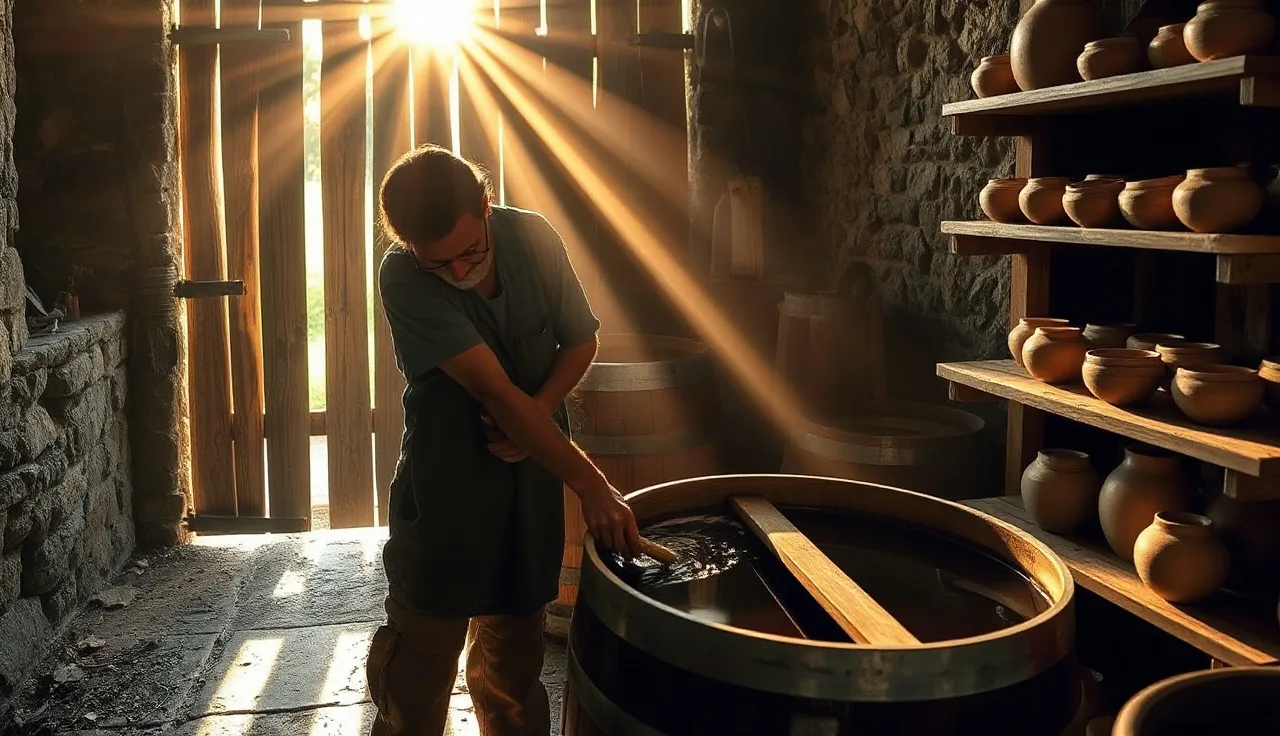
Preparation 500, called horn manure, is cow manure fermented over winter inside a buried cow horn, then diluted in water at roughly 25-30 grams per 250 liters, stirred vigorously for one hour in alternating directions, and sprayed on the soil surface in autumn or spring [3]. It is the most commonly used preparation in vineyards and the one with the most replicated trial data. The goal is stimulating soil microbial life and root growth.
Preparation 501, horn silica, uses finely ground quartz crystal packed into a cow horn and buried over summer. It is applied as an ultra-fine mist directly onto plant foliage, typically in the morning during the growing season. Proponents say it improves light metabolism and disease resistance. The mechanistic evidence here is thinner than for 500.
Preparations 502 through 507 are inserted into compost piles in small doses and consist of: yarrow flowers (502), chamomile flowers (503), stinging nettle (504), oak bark (505), dandelion flowers (506), and valerian juice (507). These are each prepared in specific animal organs or materials, a process that takes months. Most small vineyards buy these prepared from suppliers rather than making them from scratch, which is legal under Demeter standards.
Preparation 508 is equisetum (horsetail) tea, brewed and sprayed as a fungal disease suppressant, particularly for downy mildew. Its actual efficacy relative to approved organic sulfur and copper is not well documented in peer-reviewed literature, and most biodynamic growers use it as a supplement to copper and sulfur rather than a replacement.
The stirring process, called dynamization, is central to biodynamic practice. You stir the preparation in water for one hour, alternating the direction of stirring to create and collapse a vortex. Skeptics argue the mechanism is not plausible. Practitioners argue that the hour of physical agitation is at minimum a good reason to actually look at what you are putting on your vines.
Does biodynamic farming actually work? What does the research say?
Honest answers diverge from marketing copy here. The evidence is genuinely mixed, and anyone telling you it definitely works or definitely does not work is oversimplifying.
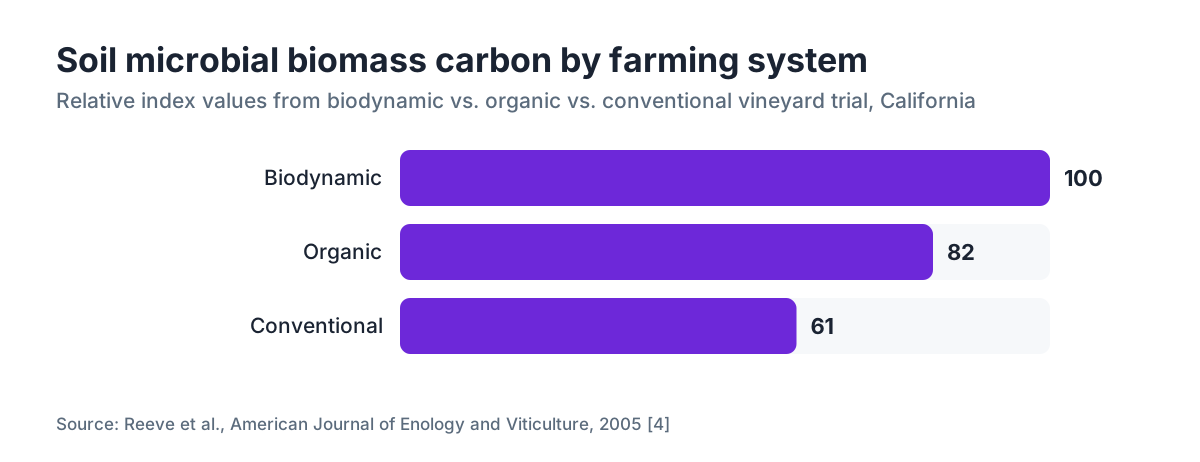
The strongest evidence is for soil biology. A long-running trial at Geisenheim University in Germany, tracking paired biodynamic and conventional plots over 12 years, found significantly higher earthworm counts and microbial biomass in biodynamic plots [4]. A frequently cited study by Reeve et al. found that biodynamic vineyard plots, compared to conventional, showed higher soil organic matter and aggregate stability. The authors reported that "biodynamic plots had significantly greater soil microbial biomass carbon than conventional plots" [4].
UC Davis has published extension materials acknowledging that organic and biodynamic soil management can improve long-term vine nutrition and disease suppression through biological pathways, though the university stops well short of endorsing the preparations specifically [5]. Cornell's extension viticulture program notes that the calendar-based planting schedule lacks rigorous controlled trial support, while acknowledging that the overall farming system (cover crops, compost, no synthetics) matches well-supported soil health research [6].
The lunar calendar has the weakest scientific support. Biodynamic practitioners plant, prune, harvest, and even taste wine on specific days designated as root, flower, fruit, or leaf days based on the moon's position relative to the zodiac. A frequently cited Swiss study (Thun, 2003) claimed to show wine tasted better on fruit days. Independent replications have produced inconsistent results, and a 2012 blind tasting study published in the Journal of Wine Research found no statistically significant effect of biodynamic calendar day on wine sensory scores [7].
Nobody has good data on whether the preparations themselves, isolated from the rest of the farming system, are doing the measurable work. Most trials that show biodynamic benefits have not disentangled the preparation effect from the no-synthetic-inputs effect. That is a real methodological problem.
Here is the honest summary. The overall farming system (compost, cover crops, biodiversity, no synthetics) has solid support. The preparations have some interesting microbiology data but need more rigorous trials. The lunar calendar is on very shaky scientific ground. If you farm biodynamically and see results, you probably are seeing results, but you may not be able to pin them on the horn manure specifically.
How does Demeter certification work, and how long does it take?
Demeter USA is the certifying body in the United States, and its standards require a minimum three-year transition period before you can use the Demeter Biodynamic trademark [2]. During transition years one and two, you farm under the standards but cannot label product as certified. In year three, an annual inspection confirms compliance, and certification is granted at year end if everything passes.
The core requirements include: all Demeter-listed preparations must be applied at least once per year; at least 10% of the farm's total acreage must be set aside for biodiversity (hedgerows, cover crops, natural areas); compost must be the primary fertility input; and the farm must move toward using its own livestock manure rather than importing fertility, though this last point has flexibility for smaller operations.
Demeter US annual certification fees are structured by acreage. As of 2024, farms under 5 acres pay a base fee around $375 per year, with larger acreage tiers running higher (fees are on the Demeter USA fee schedule; confirm current rates directly as they adjust annually) [2]. The inspection itself, conducted by a Demeter-approved inspector, adds several hundred dollars for travel and time.
The transition cost that really hurts is not the certification fee. It is the yield and quality adjustment period while your soil biology shifts from conventional management, plus the labor of applying preparations and keeping the documentation Demeter requires. Plan on two to four years of detailed record-keeping before your first certification inspection.
For growers in the EU, Ecocert and CAAE also certify biodynamic operations against Demeter international standards. Regulatory recognition varies: in the US, biodynamic certified vineyards still need separate USDA organic certification if they want to use the USDA Organic seal, since Demeter certification does not substitute for USDA NOP certification [8].
How does biodynamic compare to organic and conventional vineyard farming?
The table below puts the three systems side by side on the dimensions that matter most for a vineyard manager making an actual decision.
| Factor | Conventional | USDA Certified Organic | Demeter Biodynamic |
|---|---|---|---|
| Synthetic pesticides | Allowed | Prohibited | Prohibited |
| Synthetic fertilizers | Allowed | Prohibited | Prohibited |
| Copper/sulfur for disease | Allowed | Allowed (limits apply) | Allowed (limits apply) |
| Specific preparations required | No | No | Yes (500-508) |
| Lunar calendar use | No | No | Encouraged, not audited |
| Biodiversity set-aside required | No | No | Yes (10% of farm) |
| Certification body (US) | None | USDA NOP accredited certifier | Demeter USA |
| Transition period | None | 3 years | 3 years |
| Annual audit required | No | Yes | Yes |
| Typical price premium at retail | Baseline | 10-20% (USDA data) | 15-30% (trade estimates) |
Organic and biodynamic overlap completely on prohibited inputs. The real separation is that biodynamic adds positive requirements: you must use the preparations, you must set aside biodiversity land, you must work toward farm self-sufficiency. Organic just tells you what you cannot do. Biodynamic tells you what you must do.
The market premium question is real but murky. USDA Economic Research Service data on organic price premiums covers organic broadly, not biodynamic specifically [9]. Trade surveys from Demeter and Wine Business Monthly suggest biodynamic-labeled wines command premiums in the 15-30% range in the US market, but this data is self-reported and mixes the biodynamic practices with the high-reputation producers who tend to adopt them. You cannot reliably conclude that biodynamic certification caused the premium rather than producer reputation.
What does the biodynamic planting calendar actually require you to do?
The biodynamic calendar, most commonly Maria Thun's annual Biodynamic Sowing and Planting Calendar (published yearly by Floris Books), divides each day into four types based on which zodiac constellation the moon passes in front of: root days (earth signs, for root crops), flower days (air signs), fruit days (fire signs, considered ideal for harvesting grapes and pressing), and leaf days (water signs, considered less favorable for wine work) [10].
For vineyard operations, practitioners try to schedule harvest on fruit days, prune on root days, and avoid major cellar work on leaf days when wine is thought to taste flat. Many biodynamic producers report this practice meaningfully improves their wine quality in informal tastings. The independent research does not support it, as noted above, but the calendar practice costs nothing except scheduling flexibility, so many growers use it without staking their entire justification for biodynamic farming on it.
Demeter certification does not audit your compliance with the calendar. You will not lose your certification for harvesting on a leaf day. The calendar is part of biodynamic philosophy but not part of the certification standard. That distinction matters for managers who want certification but are skeptical of the lunar scheduling piece.
Managing harvest timing around both optimal grape maturity and a biodynamic calendar creates real operational complexity, especially in a short harvest window or during unexpected weather. Experienced biodynamic growers generally say grape maturity wins when the two conflict.
How do you manage pests and disease biodynamically, including under EPA rules?
Biodynamic vineyards rely on the same approved organic inputs as certified organic operations for conventional disease and pest pressure: copper-based fungicides for downy mildew and botrytis control, sulfur for powdery mildew, kaolin clay for certain insects, and insecticidal soaps or spinosad for insect pests. The critical difference from conventional farming is that you cannot reach for synthetic fungicides when the organic toolkit is not keeping up.
Copper limits matter here. The EU caps copper applications at 28 kg of copper metal per hectare over any seven-year rolling period (4 kg/hectare/year on average), revised downward from an earlier 6 kg limit [11]. The US has no equivalent cap under NOP, but Demeter US standards push growers to reduce copper use over time. High-disease-pressure seasons in biodynamic vineyards with copper limits genuinely stress growers.
EPA's Worker Protection Standard (WPS) applies to biodynamic vineyards exactly as it does to any agricultural employer. You must train workers annually, post pesticide application records, maintain the Application Exclusion Zone during applications, and provide personal protective equipment as specified on each product label, including labeled organic products. Spinosad, copper hydroxide, and sulfur all carry WPS requirements. The WPS has no carve-out for organic or biodynamic materials [12].
Every pesticide application in a biodynamic vineyard needs the same spray records as any other operation: applicator name, product name and EPA registration number, rate, total amount applied, target pest, date, time, and treated acreage. Demeter's annual audit will also ask for these records to confirm only approved materials were used. Keeping your EPA-compliant spray records and your Demeter documentation in the same place saves time. This is exactly where a field records platform like VitiScribe earns its keep, letting you log sprays once and pull the Demeter-required summary at audit time without rebuilding records from scratch.
WSU Extension has published specific recommendations for managing powdery mildew and downy mildew in organic systems, covering timing and thresholds that apply directly to biodynamic vineyards [13].
What are the real costs of transitioning a vineyard to biodynamic farming?
The cost picture has several layers. Some costs are hard, some are soft, and some are investments that pay back through soil improvement.
Hard costs include Demeter certification fees (roughly $375 to $1,500 per year depending on acreage, plus inspection fees), preparation materials (buying prepared 500-508 from suppliers costs approximately $150-400 for a season's supply for a 10-acre vineyard; costs scale with acreage and sourcing), and the labor to apply preparations, manage biodiversity set-asides, and keep certification documentation current.
The biodiversity set-aside requirement is land that is not producing grapes. On a 20-acre vineyard, 10% means 2 acres minimum. If that land was previously planted to vines, you are looking at the opportunity cost of lost production, more than the cost of establishing hedgerows.
Yield changes during transition are real but unpredictable. Some vineyards see yield dips of 10-30% in the first two to three years as the soil biology adjusts and the crutch of synthetic nitrogen is removed. Others see minimal change, especially if they were already farming with significant organic matter additions. There is no reliable industry average because the variables (soil starting condition, climate, variety, pre-transition management) are too different.
The soft cost that kills many transition attempts is management complexity. Biodynamic farming needs more observation, more decisions, and more calendar awareness than conventional farming. For a manager already stretched across multiple properties or a large estate, the added cognitive load is real.
What biodynamic viticulture books are worth reading?
A few books stand out for vineyard managers who want depth rather than philosophy-lite.
Nicolas Joly's "Wine from Sky to Earth" (1999, Acres USA) is the single most influential book on biodynamic wine growing written by a practicing vigneron. Joly farms Coulée de Serrant in the Loire Valley, one of the most cited biodynamic estates in the world. The book is opinionated, sometimes mystical, but grounded in actual vineyard experience. Read it to understand why serious growers take this seriously.
Rudolf Steiner's original lecture series, "Agriculture" (1924, translated and published by the Biodynamic Association), is the source text. It is dense and sometimes baffling, but reading it directly beats relying on second-hand summaries if you want to understand what practitioners are actually arguing about.
Anne-Marie Hartkemeyer and Pierre Masson's "A Biodynamic Manual" (2013, Floris Books) is the most practically useful entry point for the preparations themselves, written for farmers rather than philosophers.
Jeff Cox's "From Vines to Wines" is not specifically biodynamic but covers vine physiology in the kind of detail that makes biodynamic practice more legible. Once you understand how roots interact with soil biology, the logic behind preparation 500 at least becomes mechanistically plausible.
For data-oriented managers, the peer-reviewed literature is more useful than any book. Start with the Reeve et al. (2005) study in the American Journal of Enology and Viticulture, which compared biodynamic, organic, and conventional management in a California vineyard over multiple years and found meaningful soil biology differences [4].
Which American wine regions have the most biodynamic vineyards?
California dominates US biodynamic production by number of certified farms and total acreage. Sonoma County and Mendocino County have the highest concentrations of Demeter-certified vineyards in the country, with Demeter US reporting California as home to a majority of its certified wine grape producers (Demeter US publishes its member farm list annually at demeter-usa.org) [2].
Oregon's Willamette Valley has seen strong growth in biodynamic interest, partly driven by producers who were already farming with low intervention approaches and found Demeter certification a natural next step. Washington State has fewer certified biodynamic vineyards but significant interest, particularly in the warmer eastern regions where lower disease pressure makes the copper/sulfur restrictions less burdensome.
In California's central coast, Paso Robles wineries have seen growing interest in biodynamic principles, though formal Demeter certification remains relatively rare there compared to the North Coast. The warmer, drier climate reduces fungal disease pressure, which makes the transition economically easier.
Internationally, France's Loire, Alsace, and Burgundy regions have the highest density of biodynamic estates outside California. Germany's Rheingau and Mosel have notable certified producers. The biodynamic certification rate in France is meaningfully higher as a share of total vineyard area than in the US, partly because French agricultural policy has included biodynamic in sustainability subsidy frameworks.
How do you keep compliant records for a biodynamic vineyard?
Demeter's annual audit requires documentation across three main categories: input records (what materials were applied, their source, and that they are on the Demeter approved materials list), preparation records (which preparations were applied, when, and how they were prepared or sourced), and the farm plan (a map showing the biodiversity set-aside areas and their management).
On top of that, your EPA WPS obligations and any state pesticide regulatory requirements add their own record-keeping layers. In California, for instance, the County Agricultural Commissioner requires Pesticide Use Reports (PURs) for all pesticide applications, including organic-listed materials (check your county agricultural commissioner's current requirements as rules vary). Other states have comparable requirements.
The overlap between these systems is big enough that keeping parallel but separate records is a waste of effort. The application date, product, rate, acreage, and applicator that you log for your EPA WPS file is almost identical to what Demeter needs and what your state pesticide reporting requires. One clean entry per spray event, with the right fields, satisfies all three.
VitiScribe was built around exactly this problem: vineyard managers who need to satisfy multiple compliance audiences from a single set of field records. A 60-day free trial is worth running during your first biodynamic transition season so your record-keeping habits form correctly from the start rather than getting reconstructed from memory at audit time.
Store your Demeter farm plan, your input approval documentation, and your preparation sourcing invoices in the same organized location as your spray records. Auditors move faster when everything is in one place, and you will find your own records more useful when you can cross-reference application timing with crop outcomes.
Is biodynamic viticulture actually worth it for a small vineyard?
The honest answer depends on what you are trying to achieve and what your current farming system looks like.
If you are already farming organically, the incremental cost to go biodynamic is moderate. You are already doing the hard work on inputs. Adding the preparations, the biodiversity set-aside, and the Demeter audit adds cost and complexity but not a wholesale operational overhaul.
If you are transitioning from conventional farming, biodynamic is not the right first step. Transition to organic first, stabilize your soil biology and your yield expectations, then layer biodynamic practices on top. Trying to do both at once while running a business is a lot.
The market premium argument is real for the right channels. Restaurants, specialty wine retailers, and direct-to-consumer buyers in urban markets respond to biodynamic certification, particularly in markets like New York, Los Angeles, and San Francisco. It is less clear that the premium holds in bulk or commodity channels.
What nobody tells you clearly enough: many of the most respected biodynamic vineyards in the world are farmed by people who genuinely believe the preparations work and who find the philosophy personally meaningful. That matters. Farming is a long-horizon activity, and internal motivation drives consistency. If the philosophy fits how you already think about land stewardship, biodynamic certification will feel natural. If you are doing it purely for the price premium, the operational complexity will feel like punishment.
The soil biology benefits from the overall system (no synthetics, heavy compost, cover crops, biodiversity) are real and accrue whether or not you believe in preparation 500. That part of biodynamic is worth doing independent of the certification question.
Frequently asked questions
How is biodynamic viticulture different from organic viticulture?
Both prohibit synthetic pesticides and fertilizers. Biodynamic adds positive requirements: nine specific herbal and mineral preparations must be applied, at least 10% of the farm must be set aside for biodiversity, and the farm should move toward self-sufficiency in fertility. Organic certification (USDA NOP) just specifies what you cannot use. Biodynamic certification through Demeter also specifies what you must do.
What is preparation 500 and does it actually work?
Preparation 500 is cow manure fermented inside a buried cow horn over winter, then diluted in water at about 25-30 grams per 250 liters, stirred for one hour, and sprayed on soil. Multiple controlled trials, including studies at Geisenheim University in Germany, have found higher earthworm populations and microbial biomass in plots treated with preparation 500 compared to untreated controls. The mechanism is not fully explained, but the soil biology outcomes have been replicated.
How long does Demeter biodynamic certification take?
Demeter requires a minimum three-year transition period. Years one and two you farm under the standards but cannot label product as certified biodynamic. At the end of year three, after a successful inspection, you receive certification. If you already hold USDA organic certification with a documented three-year history of organic management, Demeter may accept that toward the transition period. Check directly with Demeter USA for current transition credit policies.
Can I use copper and sulfur in a biodynamic vineyard?
Yes. Copper-based fungicides and sulfur are approved for use in both certified organic and Demeter biodynamic vineyards. The EU limits copper to 28 kg of copper metal per hectare over any seven-year period. US Demeter standards do not set a numeric cap but require growers to demonstrate they are working to reduce copper use over time. All copper and sulfur applications still require EPA WPS-compliant records and, in applicable states, pesticide use reports.
Do I need USDA organic certification if I have Demeter biodynamic certification?
Yes, if you want to use the USDA Organic seal. Demeter biodynamic certification does not substitute for USDA NOP certification in the United States. They are separate programs with separate audits and fees. Many biodynamic producers hold both certifications at once. If you only want the Demeter Biodynamic trademark and do not need the USDA Organic seal, Demeter alone is sufficient.
What is the biodynamic lunar calendar and do I have to follow it?
The biodynamic calendar, based on Maria Thun's research, designates each day as root, flower, fruit, or leaf based on the moon's position in the zodiac. Fruit days are considered ideal for harvest and wine work, leaf days less favorable. Demeter certification does not require or audit calendar compliance. The independent scientific evidence for wine quality effects of the calendar is weak. Many certified biodynamic producers use the calendar informally while acknowledging it lacks rigorous proof.
How much does it cost to get biodynamic certified?
Demeter USA annual fees range from approximately $375 for farms under 5 acres to higher tiers for larger operations, plus inspection costs. Materials for the nine preparations, if purchased from a supplier, run roughly $150-400 per season for a 10-acre vineyard. The bigger cost for most growers is the transition period yield and revenue uncertainty, plus the labor of preparing and applying materials and maintaining audit-ready documentation.
What biodynamic viticulture books should I read first?
Start with Nicolas Joly's "Wine from Sky to Earth" for a practitioner's perspective, then Anne-Marie Hartkemeyer and Pierre Masson's "A Biodynamic Manual" for preparation how-to. Rudolf Steiner's original "Agriculture" lectures (1924) are worth reading as primary source, even if they are difficult. For science-minded growers, the peer-reviewed literature, particularly Reeve et al. in the American Journal of Enology and Viticulture, is more useful than most popular books.
Does biodynamic farming improve wine quality?
Several comparative studies show biodynamic vineyards produce grapes with measurably different fruit chemistry and soil biology compared to conventional vineyards. Whether that translates to better wine is harder to isolate in blind tastings. A 2012 study in the Journal of Wine Research found no statistically significant effect of the biodynamic calendar day on sensory scores. Most evidence suggests the overall farming system improves fruit quality, but crediting the gain specifically to biodynamic versus organic management is methodologically difficult.
What EPA requirements apply to biodynamic vineyards?
All of them. The EPA Worker Protection Standard applies to any agricultural establishment using pesticide products, including organic-listed materials like copper hydroxide, sulfur, and spinosad. You must train workers annually, maintain application records with product name and EPA registration number, post application information, and provide required PPE per label. Biodynamic certification does not change your EPA obligations. State pesticide use reporting requirements also apply in full.
Is biodynamic viticulture better for soil health than conventional farming?
The evidence for soil biology improvements is the strongest part of the biodynamic research literature. Multiple multi-year trials, including Geisenheim University's long-term study and Reeve et al.'s California vineyard comparison, show higher earthworm counts, higher microbial biomass carbon, and better soil aggregate stability in biodynamic plots versus conventional. These gains appear driven by the combination of no synthetic inputs, heavy compost use, and cover crops, not necessarily by the preparations alone.
Can biodynamic practices be applied without full certification?
Yes, and many growers do this. You can apply preparations 500-508, follow the planting calendar, maintain biodiversity corridors, and use all-organic inputs without ever pursuing Demeter certification. You just cannot use the Demeter trademark or describe your wine as certified biodynamic in marketing. Some growers call this approach biodynamic-inspired farming. The practices themselves are not legally protected, only the certification marks.
How do I find Demeter-approved input materials for my vineyard?
Demeter USA maintains an approved materials list on their website at demeter-usa.org. For the core preparations (500-508), several US suppliers including the Josephine Porter Institute in Virginia sell prepared materials. For other inputs, the OMRI (Organic Materials Review Institute) listed products generally match Demeter approval, but confirm each product directly against the Demeter materials list before use, since Demeter has specific restrictions that go beyond OMRI listing in some cases.
Sources
- Demeter USA, Certification Standards and Fee Schedule: Demeter requires a minimum three-year transition period and annual inspection; certification fees begin around $375 for farms under 5 acres
- Josephine Porter Institute, Preparation 500 usage guide: Preparation 500 is applied at 25-30 grams per 250 liters of water, stirred for one hour by alternating directions, and sprayed on soil in autumn or spring
- Reeve, J. et al., American Journal of Enology and Viticulture, 2005, biodynamic vs conventional vineyard comparison: Biodynamic plots showed significantly greater soil microbial biomass carbon than conventional plots in a multi-year California vineyard trial
- UC Davis Cooperative Extension, Organic Viticulture publications: UC Davis extension acknowledges organic and biodynamic soil management can improve vine nutrition and disease suppression through biological pathways
- Cornell Cooperative Extension, Viticulture Program, organic and sustainable vineyard management: Cornell extension notes that biodynamic planting calendar lacks rigorous controlled trial support while the overall farming system matches soil health research
- Journal of Wine Research, 2012, biodynamic calendar day and wine sensory evaluation study: A 2012 blind tasting study found no statistically significant effect of biodynamic calendar day designation on wine sensory scores
- USDA National Organic Program, Organic Regulations: Demeter biodynamic certification does not substitute for USDA NOP certification; growers wanting the USDA Organic seal must obtain separate NOP certification
- USDA Economic Research Service, Organic Market Overview: USDA ERS data on organic price premiums indicates organic agricultural products command 10-20% price premiums over conventional equivalents on average
- Maria Thun, Biodynamic Sowing and Planting Calendar (annual, Floris Books): The Thun biodynamic calendar classifies days as root, flower, fruit, or leaf based on the moon's position relative to earth and fire, air, and water zodiac constellations
- European Commission, Regulation (EU) 2018/1981, copper compound maximum amounts: EU Regulation 2018/1981 caps copper applications at 28 kg of copper metal per hectare over any seven-year period for organic and biodynamic operations
- Washington State University Extension, Organic and Sustainable Viticulture: WSU Extension publishes organic-approved disease management recommendations for powdery mildew and downy mildew applicable to biodynamic vineyard operations
Last updated 2026-07-09