Black Hamburg grape vine pruning: the complete seasonal guide
TL;DR
- Black Hamburg (Schiava Grossa) is a high-vigor table and wine grape.
- Cut it back to 2-3 bud spurs on a permanent bilateral cordon in late winter, right before bud swell.
- Target 40-60 total buds per mature vine, more on deep soils.
- Summer shoot thinning and cluster-zone leaf pulling do the real work of controlling botrytis in this loose-clustered variety.
What is Black Hamburg and why does its pruning differ from other varieties?
Black Hamburg is Vitis vinifera 'Schiava Grossa', one of the oldest cultivated grapes still in commercial and home-vineyard use. You'll find it in Victorian glasshouses across England, in Mediterranean kitchen gardens, and in small-lot table-grape and wine plantings across the American Southwest and Pacific Coast. It grows fast. Really fast. Leave it unpruned and it turns into an unmanageable thicket inside two or three seasons.
What sets it apart from something like Pinot Noir or Grenache is cluster shape. The bunches are big, sometimes over 500 grams, with loosely packed berries on long peduncles. That reads like a botrytis nightmare in wet climates, and in a neglected canopy it is exactly that. Managed right, the loose structure works for you: berries don't crack and rot the way tight-clustered varieties do, as long as air keeps moving through the fruit zone.
The vine leans hard toward long-shoot growth. Annual shoots of 2 meters or more are common in good soil with steady water. So your pruning strategy has to manage energy, more than count buds. Cornell's viticulture extension notes that high-vigor cultivars do better under spur pruning than cane pruning because spur systems spread vegetative energy evenly across a fixed cordon framework [1].
For most growers, the right setup is a bilateral cordon with short spurs, two to three buds each, renewed every two to three years. Guyot cane pruning has its place in cool climates where vigor runs low on its own. For greenhouse culture or a warm site, cordon-spur is more forgiving and far easier to repeat year after year.
When should you prune Black Hamburg vines?
Prune in late winter, close to bud swell, not in the dead of winter. For Black Hamburg that means late February through mid-March in USDA zones 6-8, or whenever your last hard-frost risk sits within two to three weeks. The instinct to cut everything back in January makes sense for other deciduous plants and hurts you here.
Prune too early, say January in a zone 7 climate, and fresh cut wounds sit exposed to sustained cold that can push dieback into the spur base. Prune too late, after buds have broken, and you mechanically tear off the emerging shoots. The window is real but it isn't razor-thin. You get roughly three to four weeks between buds showing silver-green and shoot tips reaching 2 cm, when cuts heal fast and frost risk is manageable.
Greenhouse culture is where Black Hamburg has its longest run. Hampton Court Palace houses a vine planted in 1768 that still crops [2]. Under glass the timing shifts with your heating schedule. Traditionally heat went on in January for an early crop, and pruning happened before that cycle began. Most modern glasshouse growers in the UK prune in late November to December, which works because they control the indoor temperature.
For outdoor plantings on California's Central Coast or similar Mediterranean sites, February is the sweet spot. Washington State University's viticulture program advises scheduling dormant pruning when mean daily temperatures stay consistently above freezing and vines show no green tissue [3], which for most Pacific Northwest and California sites lands between late January and early March depending on elevation.
How many buds should you leave on a Black Hamburg vine?
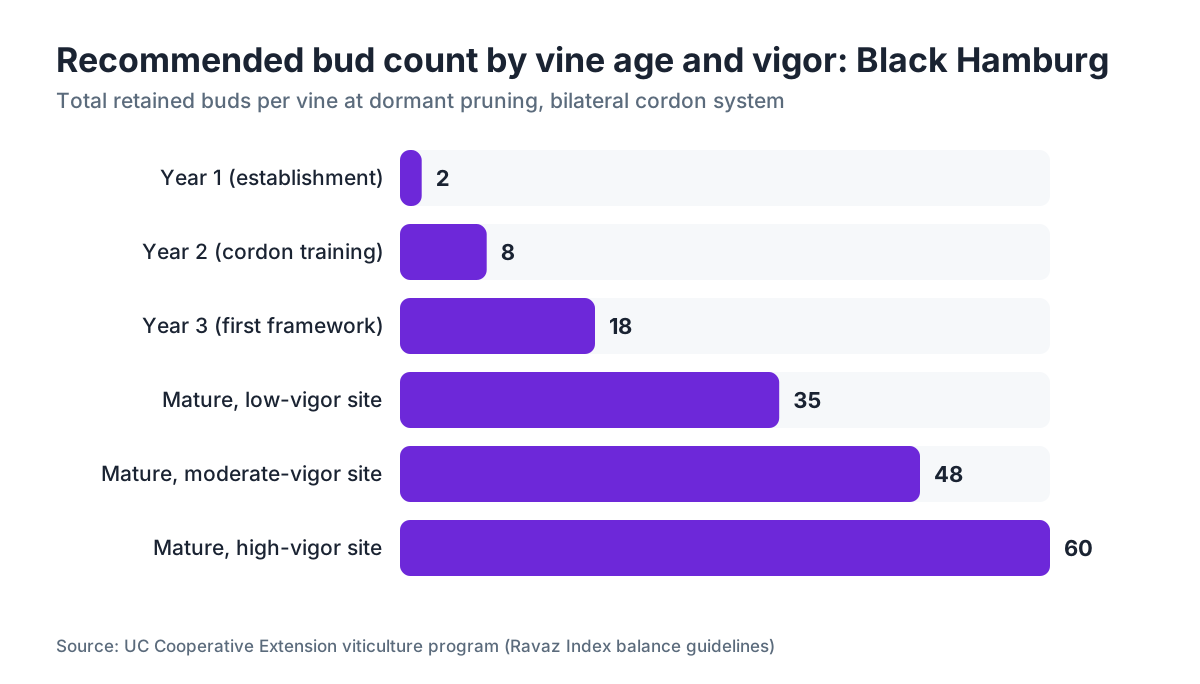
Target 40-60 total buds on a mature vine, and lean toward the high end on vigorous sites. This is the question every grower obsesses over, and honestly, the right number moves around more than any single rule can pin down. Here are the working numbers anyway.
For a mature vine (four years or older) trained to a bilateral cordon in a warm climate, split that 40-60 across spurs of two to three buds each. If your cordon arms run 60-80 cm long, you have room for six to eight spurs per arm, so 12-16 spurs total. At two buds per spur that's 24-32 buds, which suits a moderate-fertility site. At three buds per spur on a vigorous vine you land at 36-48, right for deep soils and heavy water.
UC Davis Cooperative Extension recommends calibrating bud load against last season's pruning weight using the Ravaz Index: divide fruit yield in kg by cane pruning weight in kg. For table grapes, a Ravaz Index of 3-6 signals a balanced vine; below 3 suggests over-pruning, above 10 suggests overcropping [4]. Black Hamburg runs vigorous, so if your pruning weight after dormant cuts stays above 0.5 kg per linear meter of cordon, bump the bud count next season to steer energy into fruit instead of wood.
Young vines throw all those numbers out. Year one: cut everything to a single two-bud spur. Year two: pick the two strongest shoots, train them as future cordon arms, remove the rest. Year three: set the cordon arms at wire height, allow shoots every 15-20 cm, and strip every flower cluster. Skipping the crop in year three buys you a longer-lived, more productive vine.
What is the right training system for Black Hamburg?
The bilateral cordon (also called the horizontal or Royat cordon) is the default, and for good reason. You build a trunk to wire height, usually 60-90 cm outdoors and 120-150 cm in glasshouses to keep fruit at eye level, then train two permanent arms in opposite directions along the wire. Spurs grow up from those arms each season.
Vertical Shoot Positioning (VSP) pairs well with this outdoors. Train the fruiting shoots up between two pairs of movable catch wires and the canopy opens itself to light and air. Black Hamburg takes to VSP nicely because its loose clusters mean you don't need heavy leaf pulling to dodge rot the way you would with Muscat of Alexandria.
In glasshouses the traditional British approach uses a single long rod, essentially one cordon, trained along the roof or a back wall with fruiting spurs at 30-45 cm intervals. This is the rod-and-spur system, and it's how Hampton Court's vine is managed. Shoots grow downward or angled toward the light. It looks backward to outdoor growers, but it works because glass diffuses light more evenly than direct sun.
Cane pruning (Guyot) is a real alternative for outdoor plantings in cool, short-season climates like the UK outdoors or high-elevation sites in Oregon and Washington. You replace the whole fruiting cane each year, keeping one cane of 6-10 buds plus a two-bud renewal spur. It gives you more room to respond to uneven dormancy or frost damage, but it demands sharper decisions every winter. For most commercial table-grape operations, cordon-spur wins on speed and consistency.
How do you prune Black Hamburg step by step?
Here's the actual workflow, in the order you do it.
Walk the row before you pick up your pruners. Look at each vine and find the permanent cordon arms, the older spurs you'll keep, and any water sprouts or misplaced wood you already know is coming off. Five minutes of looking before cutting saves you from mistakes you can't undo.
Remove all last season's long canes, cutting them back to their base spur. Work from the outside of the cordon inward. Anything hanging, tangled, or growing away from the wire plane comes off first.
Evaluate each base spur. A healthy spur is 1-3 cm long, carries two to four visible dormant buds, and sits 15-20 cm from its neighbors. If a spur has grown into a knotted, thick stub (some growers call it a dog leg), remove it entirely and let a well-placed shoot from the cordon arm renew it next season. Renewing spurs every three to four years keeps the arm clean and productive.
Make your final cuts. Cut 5-8 mm above the top retained bud, angled slightly away from it. Cut too close and you risk drying out the bud. Leave more than 1 cm of stub and it dies back into a disease entry point. WSU Extension recommends clean bypass-style cuts over anvil cuts to keep tissue crushing at the wound to a minimum [3].
Clear the brush promptly. For powdery mildew and botrytis, shredding and composting is fine if your pile reaches 140 degrees F or higher. For Eutypa dieback or any visible canker wood, burn it or landfill it. Never shred diseased wood.
Protect cuts larger than 1 cm across. Bordeaux paste or a labeled fungicidal wound sealant (Topsin-M at label rates, for one) cuts Eutypa and Botryosphaeria infection risk in humid climates. Skip it in dry regions if you want. Do it in anything east of the Cascades or across the Eastern U.S.
What summer pruning does Black Hamburg need after dormant cuts?
Dormant pruning sets the structure. Summer pruning manages the energy. For Black Hamburg, summer work is where you control fruit quality and disease risk, and it isn't optional.
Shoot thinning comes first, usually two to three weeks after bud break. Each spur wants one productive shoot. When several shoots push from a single bud, pull the weaker one early. If you kept two-bud spurs, you may have two shoots competing; keep the one better placed against the wire and canopy, and snap the other off with your fingers. Green shoots snap clean at this stage and the wound is nothing.
Sucker and de-spur next. Strip every shoot growing from the trunk below the cordon arms. These water sprouts burn energy without setting fruit, and they clutter the base of the vine where airflow matters most.
Tip or pinch the fruiting shoots once they've set a cluster and are running well past it. Tip two leaves beyond the last cluster. Black Hamburg carries one, sometimes two clusters per shoot, and tipping pushes lateral growth that shades the fruit lightly and slows ripening just enough to build flavor.
Pull three to five leaves from the cluster zone on the morning-sun side of the canopy after fruit set. Not before. Pre-set leaf removal can trigger a flush of lateral growth that costs you more work than it saves. UC Davis research on table-grape canopy management found post-fruit-set leaf removal in the cluster zone cut botrytis incidence by 22-38% versus unpruned controls in varieties with moderate cluster density [4].
Hedge the canopy tops if shoots run more than 15-20 cm past the top catch wire. Use a sickle bar or hand hedger. Finish hedging at least four weeks before your expected harvest so you don't spark a late growth flush that stalls sugar accumulation.
How do you manage botrytis and disease pressure through pruning in Black Hamburg?
Black Hamburg's loose clusters give it more natural resistance than tight-clustered varieties like Muscat Blanc, but more resistant is not immune. In wet springs and humid summers, botrytis (Botrytis cinerea) colonizes the cluster stem (rachis) and spreads fast once berries start to color.
Pruning is your first line of defense, ahead of sprays. A canopy with 10-20% light penetration through the leaf wall (you should see flickering patches of sun on the ground under the vine at noon) dries faster after rain and holds lower humidity around the clusters. No fungicide program fixes a dense, badly pruned canopy.
Spur renewal matters here too. Old, knotted spur bases trap moisture and debris that shelter botrytis and powdery mildew overwintering structures (cleistothecia). Clean spurs renewed on a three-to-four-year cycle strip out that reservoir.
Eutypa dieback (Eutypa latiflora) is the other disease to think about at pruning time. It enters through fresh wounds, mainly cuts larger than 1 cm across. Symptoms, a wedge-shaped canker in cross-section of older wood plus stunted, chlorotic shoots, show up two to five years after infection. The pathogen releases spores during winter rain, which is exactly when you tend to be pruning. In wet climates, cut during dry spells or apply a labeled fungicide wound protectant (thiophanate-methyl is the best-documented) right after cutting [5].
If you keep formal spray records, log every protectant you apply at pruning time: product name, EPA registration number, rate, and target pest. The EPA Worker Protection Standard at 40 CFR Part 170 requires those records be kept and made available to workers and handlers [6]. Managing several blocks makes this messy on paper. VitiScribe's field log captures application date, REI, PHI, and applicator in one entry so your records stay current without a second pass of paperwork.
What tools do you need and how should you maintain them?
Two tools cover 95% of Black Hamburg pruning: bypass hand pruners and loppers. Bypass pruners (Felco 2 or Bahco P160 are the standards) handle wood up to about 1.5 cm across. Bypass loppers take older spurs and cordon renewal cuts up to 3-4 cm.
Keep them sharp. A dull blade crushes wood instead of slicing it, and crushed tissue heals slower and hands more surface area to pathogens. Sharpen at the start of every season and touch up with a diamond file every few hours in cold weather, when steel dulls faster.
Sanitize between vines if you see any disease in the block. A 10% bleach solution (sodium hypochlorite, one part bleach to nine parts water) or 70% isopropyl alcohol both kill Eutypa and most fungal pathogens on tool surfaces. Bleach corrodes steel, so rinse and oil tools before storage. Alcohol evaporates clean. For blocks with diagnosed Eutypa or crown gall, sanitizing every cut earns its time.
On large operations pruning tens of thousands of vines, pneumatic and electric pruners (Felco 880, Infaco Electrocoup) cut hand fatigue and repetitive stress injury. OSHA's agricultural injury data ranks hand and wrist injuries from repetitive cutting among the top injury types in vineyard pruning crews [7]. Powered tools drop the force per cut by roughly 60-70%.
Keep a pruning saw for cordon arm removal or trunk work. A curved Silky Gomboy or similar cuts clean without crushing. Those big wounds are worth protecting with wound paste in wet climates.
How does pruning strategy change for Black Hamburg in a greenhouse versus outdoors?
Greenhouse culture changes two things: vigor and timing.
In a heated glasshouse, Black Hamburg pushes shoot growth of 3-4 meters a year on a well-established rod. The traditional method lets one shoot per spur run to full length through the season, tips it at two leaves past the last cluster, then removes it entirely at dormant pruning, restoring the spur to its two-to-three-bud base. The rod itself, the equivalent of an outdoor cordon arm, is permanent and can run 4-8 meters in a big structure.
Timing differs from outdoors. Dormant pruning usually happens in November or December (Northern Hemisphere) before supplemental heat goes on for the coming season. Because the vine sits in an artificial environment, you control the dormancy length. Many glasshouse growers hold dormancy at least six weeks after leaf drop so the vine finishes its chilling requirement. Black Hamburg's chilling need is modest, roughly 800-1000 hours below 45 degrees F, which it hits easily even in a mild UK winter [2].
One practical wrinkle: under glass, every cut wound stays wet longer because air moves less and humidity runs higher. Wound protectant after dormant pruning is close to mandatory here, not optional. A Bordeaux paste application on any cut over 0.5 cm across is standard in commercial UK glasshouse operations.
Outdoors in Mediterranean climates, where Black Hamburg is increasingly grown as a fresh-market table grape, run standard VSP-cordon as described above. The main adjustment for warmer sites is to lean toward higher bud counts (50-60 per vine) to push the extra vigor into fruit instead of runaway shoots.
What does a full-year pruning and canopy calendar look like for Black Hamburg?
A calendar puts the whole strategy in one place. The month ranges below assume a USDA zone 7 outdoor planting; move two to four weeks earlier for warmer zones, two to four weeks later for cooler ones.
| Month | Task | Notes |
|---|---|---|
| Nov-Dec | Remove fallen leaves, assess vine health | Note canker symptoms, plan cordon renewals |
| Jan | Continue dormancy, sharpen tools, order wound protectant | Do not prune yet in zones 6-7 |
| Feb-Mar | Dormant spur pruning | Time within 3 weeks of bud swell; apply wound paste on large cuts |
| Mar-Apr | Shoot thinning, suckering | Remove competing shoots, all trunk suckers |
| Apr-May | Cluster thinning (if overcropped) | Reduce to 1-2 clusters per shoot for table-grape quality |
| May-Jun | Leaf removal, cluster zone | Post-fruit-set; morning-sun side first |
| Jun-Jul | Shoot tipping, hedging | 2 leaves past last cluster; hedge tops above catch wire |
| Aug | Minimal intervention | Avoid stimulating late growth; check for botrytis |
| Sep-Oct | Harvest, post-harvest leaf pull | Leave foliage for photosynthesis until natural senescence |
| Oct-Nov | Post-harvest fertilization assessment | Do not prune; let vine harden off |
One thing growers miss: the post-harvest period shapes next year's pruning outcome. Strip leaves aggressively after harvest and you cut the vine's ability to move carbohydrate reserves back into the roots and cordons. Those reserves power next spring's bud break and early shoot growth. Let the vine yellow and drop on its own unless disease pressure forces early defoliation.
How do worker safety rules apply to vineyard pruning operations?
Pruning by itself isn't a pesticide application. Pruning near recent sprays, or applying wound protectants while you prune, pulls you under EPA Worker Protection Standard jurisdiction. The WPS at 40 CFR Part 170 applies to any agricultural establishment that uses pesticides and employs workers or handlers [6].
The key obligation during pruning: workers re-entering a treated field have to wait out the Restricted Entry Interval (REI) posted on the pesticide label. For copper-based wound protectants (Bordeaux paste, copper hydroxide), the REI usually runs 24-48 hours. For thiophanate-methyl fungicides used as wound sealants, check the specific label, but 12-24 hours is common. REI information has to be posted at a central location and passed to workers before they enter the treated area.
Personal protective equipment during pruning with protectant applications means chemical-resistant gloves for mixing or applying, plus eye protection when handling concentrated material. The WPS requires employers to provide and maintain PPE at no cost to workers and to train workers annually on its use [6].
OSHA's agricultural standard (29 CFR 1928) matters for large pruning crews on repetitive-motion hazards. OSHA has cited vineyard operations for ergonomic hazards in pruning work, mainly repetitive forceful gripping without enough breaks or tool rotation [7].
Keep a pruning-activity log noting which blocks were worked, which products went on during the process, REIs, and applicator names. Cornell's viticulture extension recommends keeping this log at least two years and having it ready for state pesticide inspection on request [1]. VitiScribe's spray and field-activity log captures exactly this data in the field on a phone or tablet, so nothing gets transcribed between the vineyard and your compliance file.
What are common pruning mistakes with Black Hamburg and how do you fix them?
Over-pruning to a low bud count is the most frequent error, especially for growers coming from Pinot Noir, where 20-30 buds per vine is normal. Black Hamburg's vigor needs more buds to absorb the vegetative energy. Under-budded vines answer with explosive shoot growth, poor fruit set, and clusters with heavy lateral branching that's a pain to manage. If you end up with 3-meter shoots and weak set, raise your bud count 20-30% next season.
Skipping spur renewal is the slow-motion mistake. Cut back to the same stubs year after year and the cordon ends up looking like a row of arthritic knuckles. Old spur bases pile up dead wood, disease inoculum, and damaged vascular tissue. Plan to remove and renew at least a quarter of your spurs every three to four years.
Pruning into wet wood during rain. Eutypa spore release tracks rainfall, so cutting on a wet January afternoon maximizes your infection risk. It isn't always avoidable, but if you have to prune wet, get wound protectant on within an hour of cutting.
Stripping too much green tissue in summer. Heavy hedging after veraison pulls leaves that are still photosynthesizing and feeding the ripening cluster. Hedge shoot tips that run well past the catch wires, sure, but scalping the canopy top in August delays ripening and holds back sugar. Cut conservatively after mid-summer.
Ignoring water sprouts. Trunk and cordon suckers left all season grow into thick, wasteful canes that fight you at dormant pruning. Snap them off in spring when they're small. Thirty seconds per vine now. Real time saved in February.
Frequently asked questions
When is the best time of year to prune a Black Hamburg grape vine?
Prune in late winter, roughly two to three weeks before bud swell. In USDA zones 6-7 that's typically late February to mid-March. Pruning too early in January risks frost damage to exposed cuts; pruning after bud break tears off emerging shoots. In heated glasshouses, dormant pruning usually happens in November or December before supplemental heat is applied for the growing season.
How many buds should I leave on a Black Hamburg vine?
On a mature vine four years or older trained to a bilateral cordon, target 40-60 total retained buds at two to three buds per spur. High-vigor sites and deep soils push toward the upper end. Use the Ravaz Index (fruit yield in kg divided by pruning weight in kg) to calibrate: a ratio of 3-6 indicates good balance. Young vines in years one through three carry far fewer buds so they build structure instead of crop.
Is spur pruning or cane pruning better for Black Hamburg?
Spur pruning on a bilateral cordon suits most situations. Black Hamburg's high vigor makes spur pruning more manageable because it spreads energy evenly across the cordon. Cane pruning (Guyot) works on cool, low-vigor sites like the UK outdoors or high-elevation Pacific Northwest plantings, but it demands sharper annual decisions and doesn't scale as cleanly to commercial operations.
How do I prune a Black Hamburg vine grown in a greenhouse?
Use the traditional rod-and-spur system: a permanent single rod (cordon) trained along the roof or back wall with fruiting spurs at 30-45 cm intervals. Prune in November or December before starting supplemental heat. Cut all the previous season's lateral shoots back to the two-to-three-bud base spur. Apply wound protectant on any cut larger than 0.5 cm, since glasshouse humidity raises Eutypa infection risk above outdoor levels.
What causes dead arms and cankers on Black Hamburg and is pruning to blame?
Dead arm disease comes from Eutypa latiflora, a fungal pathogen that enters through pruning wounds. Pruning itself isn't the culprit; pruning during or right after rain, when spore release peaks, is. Apply thiophanate-methyl or a copper-based wound protectant on cuts larger than 1 cm within an hour of cutting, and avoid pruning when rain is falling or imminent.
How do I rejuvenate an old, neglected Black Hamburg vine?
Rejuvenation takes two to three seasons. Year one: remove all dead wood, diseased spurs, and crossing canes. Cut back to the best-positioned, healthiest permanent wood you have. Year two: select the shoots that will form new cordon arms or renew existing ones. Year three: establish a clean spur-pruned framework. Skip a heavy crop during rejuvenation; the vine needs its energy reserves to rebuild productive wood.
Does Black Hamburg get powdery mildew and how does pruning help?
Black Hamburg is moderately susceptible to powdery mildew (Erysiphe necator). Pruning helps mainly by building a canopy that dries quickly and lets fungicide sprays reach the cluster zone. A well-pruned cordon-VSP canopy with 10-20% light penetration dries faster after rain and cuts the humid microclimate mildew needs. Pruning does not remove the need for a fungicide program in susceptible climates.
What's the right spacing between spurs on a Black Hamburg cordon?
Space spurs 15-20 cm apart along the cordon arm. Tighter spacing crowds the canopy; wider spacing leaves cordon real estate unproductive. On a typical 60-80 cm cordon arm, that gives you six to eight spurs per arm, or 12-16 per vine. Adjust for vigor: high-vigor vines can carry slightly wider spacing without losing yield because each spur throws vigorous shoots.
Can I grow Black Hamburg as a standard bush vine instead of on a trellis?
Technically yes, but it's not practical for quality production. Bush-vine systems suit low-vigor, drought-stressed Mediterranean cultivars that make short, self-supporting canes. Black Hamburg's vigorous, long-shoot growth turns into a tangled, unmanageable bush without trellis support. Air circulation around the large clusters also drops sharply in bush form, raising botrytis risk. Trellis it on a bilateral cordon, or at minimum a single-wire Guyot.
How much pruning weight should I expect to remove from a mature Black Hamburg vine?
A mature, vigorous Black Hamburg vine in good soil typically yields 0.5-1.0 kg of pruning wood per linear meter of cordon, sometimes more on fertile, irrigated ground. If you consistently remove more than 1.0 kg per meter, your bud count is probably too low and the vine is over-extending vegetatively. Raise bud count 15-20% next season to channel that energy into fruit.
What records do I need to keep for pruning and spray applications in a vineyard?
At minimum, keep a dated field log of blocks pruned and any pesticide or wound protectant applied during pruning (product name, EPA registration number, rate, REI, and applicator name). The EPA Worker Protection Standard at 40 CFR Part 170 requires pesticide application records to be available on demand. Cornell Extension recommends keeping these records at least two years. State agriculture departments may require longer retention.
Is Black Hamburg a good variety for a first-time vineyard grower?
It depends on your goals. As a table grape or novelty glasshouse vine, Black Hamburg is rewarding and fairly forgiving of moderate pruning errors, because its vigor masks mistakes. As a commercial wine grape, it's not widely planted for good reason: yield swings, and the market for varietal Schiava Grossa wine is thin. For a first block aimed at wine, better-documented varieties with more extension support and real market demand are worth a look.
How does altitude or climate affect Black Hamburg pruning decisions?
Higher elevations and cooler climates cut vine vigor, so you can work with lower bud counts (30-45 per vine) and may find cane pruning more appropriate than cordon-spur. Cooler sites also delay bud break, which pushes your dormant pruning window later. On hot, low-elevation sites, vigor climbs and you'll push bud counts toward 55-65 while managing shoot growth hard through summer tipping and hedging.
What happens if I skip summer pruning on Black Hamburg?
Shoot growth runs unchecked, the canopy closes, and humidity in the cluster zone climbs fast. Botrytis pressure jumps in any climate with summer humidity or rain. Fruit set drops on interior shoots that get no light. Berry quality suffers because photosynthesis happens in shoots far from the clusters rather than in leaves near the fruit. And dormant pruning the following winter turns into a slower, harder job.
Sources
- Cornell University College of Agriculture and Life Sciences, viticulture extension: High-vigor cultivars benefit from spur pruning over cane pruning; pesticide application and pruning-activity records should be retained at least two years and made available for state inspection.
- Historic Royal Palaces, Hampton Court Palace Great Vine: Hampton Court Palace houses a Black Hamburg vine planted in 1768 that still produces fruit.
- Washington State University Extension, Viticulture and Enology: WSU Extension recommends scheduling dormant pruning when mean daily temperatures stay consistently above freezing and vines show no green tissue, and using clean bypass cuts over anvil cuts.
- UC Davis, Agriculture and Natural Resources (UC Cooperative Extension), viticulture program: The Ravaz Index (fruit yield kg / pruning weight kg) of 3-6 indicates a balanced vine; post-fruit-set cluster-zone leaf removal reduced botrytis incidence by 22-38% in moderate-density varieties.
- UC Davis Plant Pathology / UC Integrated Pest Management, Eutypa dieback of grapevine: Eutypa latiflora enters through pruning wounds and releases spores during winter rain events; thiophanate-methyl is a documented wound protectant option.
- U.S. Environmental Protection Agency, Worker Protection Standard 40 CFR Part 170: The EPA Worker Protection Standard requires pesticide application records be maintained and available to workers and handlers, and that employers provide PPE at no cost and train workers annually.
- U.S. Occupational Safety and Health Administration, Agricultural Operations: OSHA agricultural injury data shows hand and wrist injuries from repetitive cutting rank among the top injury types in vineyard pruning crews, and OSHA has cited operations for ergonomic hazards in pruning work.
- USDA National Agricultural Statistics Service, Grape Acreage Report: Reference source for U.S. grape variety acreage and regional production benchmarks used in context of Black Hamburg's limited commercial plantings.
Last updated 2026-07-09