Grape vine pruning mistakes that cost you yield and vine health
TL;DR
- The costliest grape vine pruning mistakes are over-pruning (too few buds for the vine's carbohydrate reserves), cutting perennial wood without sanitizing tools between vines, pruning too early in cold climates, and ignoring trunk disease entry points.
- Fix timing, bud load, and sanitation first.
- Those three changes prevent most yield loss and slow structural decline.
Why pruning mistakes matter more than almost any other vineyard decision
Pruning is the management act with the longest tail. A bad spray choice costs you one season. A bad pruning choice can deform a vine's trunk architecture for a decade, or open a wound that lets Eutypa lata or Botryosphaeria spp. colonize the wood and slowly hollow out your cordons over five to fifteen years [1]. That's not hyperbole. UC Davis plant pathologist Kendra Baumgartner's work on trunk diseases finds that large pruning wounds on mature vines are the main infection pathway for the pathogens behind the grapevine trunk disease complex, a group now estimated to cost California growers around $260 million per year in lost production [1].
Most pruning errors are quiet. Nobody walks a vineyard with a chainsaw and hacks off the wrong limbs. The mistakes hide in plain sight: a few too many or too few buds, cuts made at the wrong angle, tools that never got wiped down between vines. They add up. A vineyard pruned mediocre for ten straight years looks worse at year twelve than one that had a rough season and then corrected. That compounding is what makes this worth learning properly.
This guide works through the mistakes in the order you actually hit them: timing decisions before you pick up the loppers, bud-load math while you work the row, wound management after the cut, and the sanitation habits that stop pathogen spread. It's written for the people doing the work or supervising it directly.
What is the right time to prune grapevines, and what happens if you get it wrong?
Prune during true dormancy, after the vines have fully hardened off but, in cold climates, as late as you can manage before budbreak. That tension between fully dormant and as late as possible is real, and it drives most timing mistakes.
Pruning too early, say November or early December in the northern hemisphere, strips off the acclimated cane tissue that insulates the vine's trunk and permanent structure from temperature swings. Washington State University extension recommends delaying pruning until late winter where temperatures regularly drop below -15°C (5°F), because canes left on the vine buffer temperature extremes around the bud zone [2]. Growers who prune early to beat labor bottlenecks pay for it in frost years with higher primary bud kill.
Pruning too late is the other error. Once shoots push past an inch or two, you break them off during pruning, waste the carbohydrate the vine spent on them, and leave green tissue wounds that heal slower than dormant wood cuts. The target for most regions: fully dormant wood, no green showing at the bud tip, but after the coldest nights have passed.
In warm climates where frost isn't the driver, timing becomes a disease question. Wet weather during pruning sharply raises Eutypa infection risk. UC Davis extension advises scheduling major cuts during dry periods, and if you must prune in the rain, applying a wound sealant containing boric acid or a registered fungicide paint right after cutting [1].
So here's the rule. In cold climates, prune late to dodge frost. In wet mild climates, prune inside a dry window. They pull opposite directions. Knowing which constraint runs your region is step one to getting timing right.
How does over-pruning damage vines, and how do you calculate the right bud load?
Over-pruning means leaving fewer buds than the vine can productively support. It's one of the most common mistakes in newly planted or recently bought vineyards, and it usually comes from good intentions. Tight cluster counts, clean canopies, concentrated flavors. The logic sounds right.
The physiology says otherwise. A vine's roots store carbohydrates through winter in proportion to the canopy it carried last season. Prune heavily and you leave that big reservoir with almost no shoot growing points to feed. The vine answers by pushing secondary and tertiary buds, throwing out excessive, disorganized shoot growth that shades itself, wrecks canopy management, and feeds botrytis and powdery mildew. Cornell University's viticulture program calls this pushing growth: the vine over-compensates for a small bud load by dumping reserves into vigor instead of fruit [3].
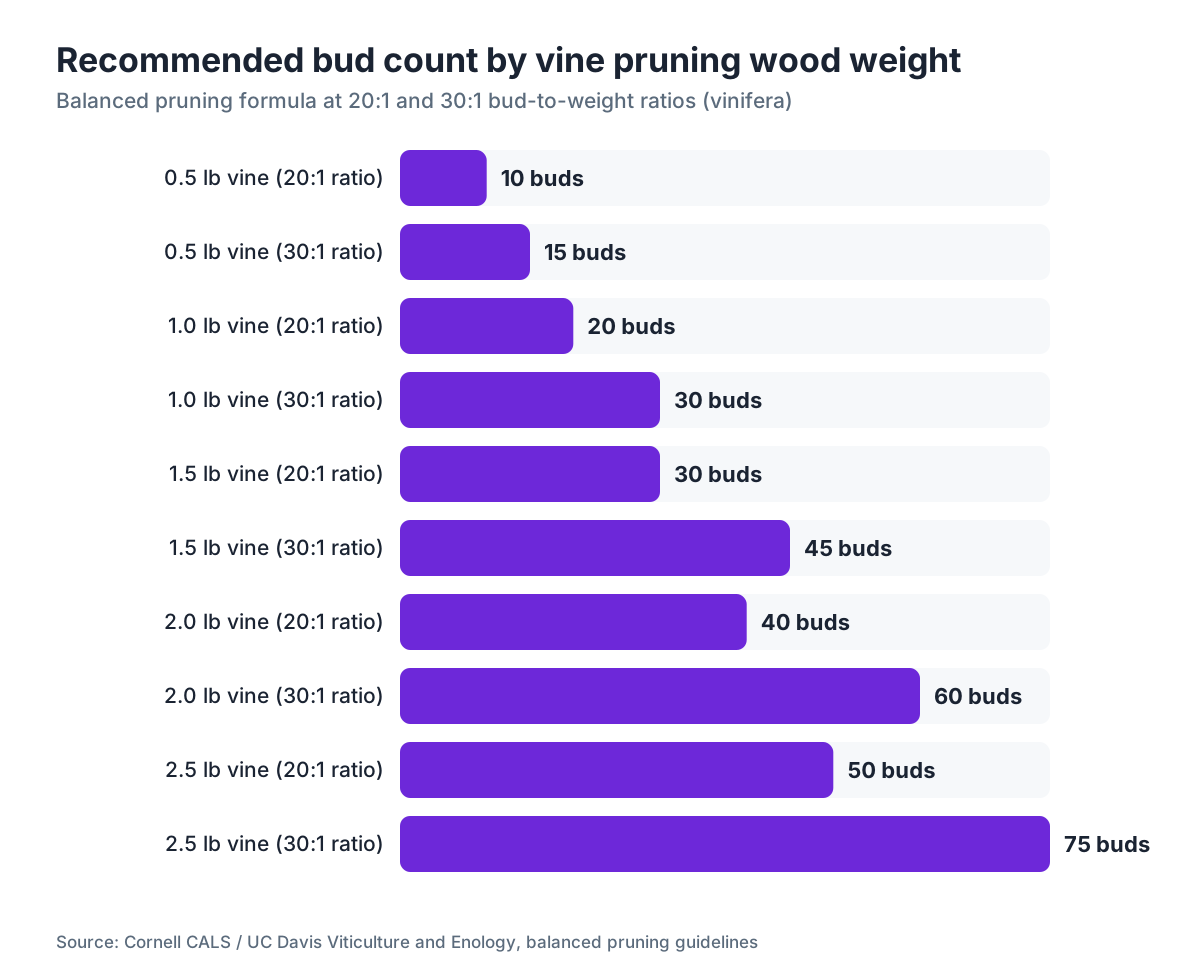
The standard fix is the balanced pruning formula developed by extension researchers and adopted across the industry. You weigh the dormant pruning wood removed from a vine (in pounds or kilograms) and set bud load from that number. The general guideline is 20 to 40 buds per pound of cane pruning weight (roughly 44 to 88 buds per kilogram), though the exact ratio shifts by variety and training system [3][4].
Here's what balanced pruning looks like on the row:
| Pruning wood weight (lbs) | Retained buds (20:1 ratio) | Retained buds (30:1 ratio) |
|---|---|---|
| 0.5 | 10 | 15 |
| 1.0 | 20 | 30 |
| 1.5 | 30 | 45 |
| 2.0 | 40 | 60 |
| 2.5 | 50 | 75 |
If you've never weighed pruning wood by vine, do it for one pass through a block. It takes fifteen minutes and hands you real data instead of a guess.
Under-pruning is the mirror mistake. Leave too many buds and you get overcropped vines, poor fruit quality, thin canopies that ripen unevenly, and root reserves running on empty into winter. Both errors share one cause: pruning by feel instead of by vine capacity.
What are the worst cuts you can make, and how should pruning cuts actually look?
Cut placement and angle matter more than most growers believe, right up until they start seeing dieback trace back to sloppy cuts.
The worst cut is the long stub. Leaving two inches or more past your target bud protects nothing. It creates dead wood that desiccates back toward live tissue, drags viable buds down with it, and opens a long drying column for fungi to follow. Cut close. Leave a quarter inch or less past the bud you keep.
Angle counts too. The cut face should tilt slightly away from the retained bud so water runs off instead of pooling against it. A flat perpendicular cut isn't terrible, but a slight outward angle is better. Avoid cutting into the bud itself (obvious) and avoid slicing so steeply that you expose a needlessly large wound face.
On spur-pruned systems like cordon-trained Grenache or Cabernet, cuts that step back too far on the spur build dead arm sections year after year. Each cut should sit just above the base node of the current spur, taking the fruiting cane and holding the spur position steady. When spurs creep outward an inch or two annually because cuts land above the old cut rather than at the base, you grow long woody arms that carry the fruiting zone away from the cordon. After ten years that's a structural problem.
On cane-pruned systems like Guyot or head-trained with replacements, the error is usually saving the wrong cane. The best replacement cane is basal, close to the head or cordon, moderate diameter, with well-spaced nodes you can see. Growers who grab the nearest long cane instead of the best-positioned one end up with vines whose head migrates upward and outward over time.
Tools matter here. Dull blades crush instead of cut. Crushed wood cells die back further, leave larger necrotic zones, and take up infection more easily. Sharpen or swap blades often. A new bypass pruner blade costs almost nothing against the damage a dull one does across a season.
How does skipping pruning tool sanitation spread trunk disease between vines?
This mistake gets the least attention and probably causes the most long-term structural damage across the industry.
Eutypa lata, Botryosphaeria species, and Phomopsis viticola all ride pruning tools, carrying infected wood residue from one vine to the next. Research from UC Davis and international viticulture programs confirms pathogen transmission on pruning blades as a documented, significant infection pathway [1]. It isn't theoretical. Prune a vine showing dieback, then move straight to a healthy one without sanitizing, and you've physically inoculated the fresh cut.
The fix is a sanitation solution in a small spray bottle or dip bucket on your pruning belt. The two options extension guidance cites most are a 10 percent bleach solution (sodium hypochlorite) and 70 percent isopropyl alcohol. Bleach kills most fungal pathogens more effectively but corrodes metal faster, so tools need oiling more often. Alcohol is gentler on tools and still cuts inoculum meaningfully. Either one, applied between vines or at minimum between any symptomatic vine and the next, beats nothing by a wide margin.
The EPA's Worker Protection Standard (WPS) matters here if you manage employees sanitizing with bleach concentrations. Early entry and handling protections apply when workers handle pesticide-containing materials, and bleach at sanitation strength may trigger PPE requirements depending on your state's reading [5]. Check with your state department of agriculture, because the answer varies.
Wound sealants are a related tool. UC Davis recommends pruning wound protectants containing boscalid or tebuconazole for cuts larger than a centimeter across, applied right after cutting during high-disease-pressure periods [1]. You don't need them on every cut in a dry climate, but in wet regions or on vines with known trunk disease history, they earn their time.
If you flag vines with disease symptoms during pruning, a simple per-row field log stops the classic problem where you prune a symptomatic vine in March and can't remember which one it was by August. VitiScribe has a field log module built for this, where you tag vines by GPS during pruning and filter to symptomatic plants before the next operation.
Does removing too much old wood too fast damage vine structure?
Yes, and it shows up most when a grower takes over a neglected vineyard or tries to correct years of bad spur positioning in a single season.
Vines carry a vascular architecture built up over years. The phloem and xylem in the permanent structure (trunk, cordons, arms) follow paths set by where the fruiting wood has lived. Rip out large sections of perennial wood all at once and you sever those paths, leaving big wound surfaces the vine may not callus over before the next season.
The recommended approach for corrective pruning on neglected vines is to phase it over two to three seasons. First season: remove the worst wood, set your intended framework, accept that the vine looks transitional. Second season: clean up secondary structure. Third season: you're on the training system you wanted. Try to do all of it in one pass with a pruning saw and you cut wounds covering a large share of the vine's circumference. A wound that girdles more than about a third of the trunk's circumference will badly impair water and nutrient movement above that point [4].
WSU extension covers corrective pruning for over-trellised and neglected Concord vineyards in detail, and the same staged approach carries over to vinifera [2]. The patience it takes to phase the work is real. The alternative is shock-pruned vines that yield poorly for two seasons, then grow new structural problems out of the big wounds you made.
What pruning mistakes are specific to young vines in their first three years?
Young vine management sets the permanent structure of the whole planting. Mistakes here compound every year after.
The most common one is letting too many shoots grow in year one without selection. A newly planted vine pushes several shoots from the graft union or rootling top. Growers who let all of them run because more growth seems better end up with a handful of weak shoots instead of one strong central leader. Pick the best one early, usually once it's three to four inches tall, and remove the rest. You want root energy building one vigorous trunk, not spread across four competing stems.
In year two, the mistake shifts to being too timid with the trunk development cut. You want to cut back to two or three buds that will become the cordon or head arms, and the cut should land at the wire height you're training to, not wherever the vine happens to be. If a vine grew to 36 inches but your first wire is at 30 inches, you cut at 30 inches even though you're tossing six inches of growth. The training structure is worth more than the wood.
Fertility mistakes also concentrate in young vines. Over-fertilizing with nitrogen in years one and two drives showy shoot growth that doesn't turn into vine structure. The vine needs root mass and trunk caliper. Excess nitrogen pushes top growth at the expense of that foundation [3].
Cordon positioning errors in year two or three are among the most permanent. A cordon that isn't tied down horizontally, that's left to grow at an upward angle, produces uneven spur positions and inconsistent budbreak along its length for the vine's entire life. Take the time to tie it properly, and re-tie through the training season.
How do grape vine pruning techniques differ by variety, and does getting that wrong matter?
It matters, and the direction of the mistake tracks each variety's bud fruitfulness pattern.
The core split is between varieties with fruitful basal buds and those without. Concord and most American and hybrid varieties carry fruitful primary buds in nodes one and two of the cane. Most vinifera also has basal fruitfulness, but some varieties don't. Riesling is the textbook case: its fruitful buds sit at positions four through eight, not at the base [3]. Cane pruning Riesling beats spur pruning it for exactly this reason. Growers who spur-prune Riesling because the neighboring Cabernet block is spur-pruned see lower fruit set and uneven cluster development year after year, often without connecting it to the pruning choice.
Grenache and Carignan have notably fruitful basal buds and take spur pruning well, sometimes preferring short two-bud spurs. Chardonnay is usually cane-pruned in quality programs because long canes with eight to twelve nodes reach the fruitful bud zone and give more room to balance crop load. Cabernet Sauvignon works with either system in most climates.
Cold-hardy hybrids like Frontenac, Marquette, and La Crescent often show different bud mortality after winter injury than vinifera, and the pruning response has to account for it. WSU and University of Minnesota extension materials on cold-hardy cultivars both note that you sometimes delay pruning to let dead bud tissue reveal itself before you decide what to keep [2][8].
The takeaway is plain. Know your variety's fruitfulness pattern before you commit to spur versus cane, or to where along the cane you make cuts.
What record-keeping do you actually need for pruning operations?
Most growers under-record pruning, and it costs them in two places: agronomic continuity and regulatory compliance.
On the agronomic side, capture per block the date pruned, the pruner or crew, bud count per vine or spur average, any vine health flags (dieback, trunk disease symptoms, missing cordons), and pruning weight if you're calibrating balanced pruning. None of this is hard to write down, but it's rarely done systematically. When you want to diagnose why a block underperformed three seasons after an odd pruning year, that record is the only thread connecting the dots.
On the compliance side, pruning itself isn't a pesticide application, so it doesn't trigger the WPS or state pesticide record rules that spraying does. But wound sealants containing a registered fungicide (boscalid, tebuconazole, or similar) do require a pesticide use record in most states. California's Department of Pesticide Regulation requires a pesticide use report within set timeframes for any registered pesticide, and wound sealants with registered active ingredients fall under it [6].
Training records for workers running powered pruning equipment (pneumatic or battery-assisted shears) come into play under OSHA general industry standards for power tool operation, and under WPS if those same workers handle pesticide-treated equipment during the operation [5]. Keep it simple: a per-block log with date, crew, and any material applied covers both.
For operations juggling multiple varieties across multiple blocks, a structured field log like the one VitiScribe provides keeps pruning records beside spray records in one system, which simplifies end-of-year compliance reports and makes the agronomic history searchable.
How do you recognize and respond to trunk disease damage found during pruning?
Pruning season is when you see it. A cane or cordon cross-section with brown-black discoloration radiating from the center (Esca complex), a wedge-shaped sector of dead wood in the cut face (Eutypa), or dark streaking in the xylem (Botryosphaeria) tells you what's been happening in that vine's vascular system [1].
When you find it, three questions decide the response: how far has it progressed, is remediation viable, and do you need to flag the vine for removal?
For early-stage Eutypa or Botryosphaeria confined to one cordon, surgical removal works. Cut back into clean white wood with no discoloration, typically well behind the visible margin of the infected zone, and let the vine regrow that arm from a sucker or water shoot positioned below the infection. This is the standard remediation in UC Davis extension guidance [1]. It sets the vine back two to three years structurally but keeps the root system.
For extensive Esca damage, the prognosis is harder. Esca involves multiple pathogens, including Phaeomoniella chlamydospora and Phaeoacremonium species, that colonize sapwood broadly. By the time you see the tiger-stripe leaf symptom in summer, the vascular damage is often too dispersed for surgical removal. Some growers report success with trunk surgery techniques developed in Italy and Spain, where infected wood is mechanically removed and the wound treated. The evidence base for those methods in North American conditions is still thin.
What you don't want is to prune past it without flagging the vine. Carry flagging tape and mark every vine where you see dieback or discolored wood. Map it against block records. If 20 percent of a block shows early trunk disease signs, you have a different problem than if it's 2 percent, and the response should differ. See our broader guide on vineyard health assessment for how to build that into season-long monitoring.
Can mechanical or power pruning cause different mistakes than hand pruning?
Mechanical pre-pruning with a double-sided hedging machine is now standard practice on high-wire and VSP systems in larger operations. It's fast and it works. It also brings its own error patterns.
The machine doesn't select. It cuts at a fixed height and width, which means it leaves random stubs, slices through internodes rather than just above nodes, and can't tell a well-positioned spur from a water shoot. Mechanical pre-pruning almost always needs a hand-detailing pass to remove stubs, position spurs, and clean up what the machine missed. Skip or rush that pass and you get the worst of both: machine speed without machine-friendly architecture, hand-pruning selectivity applied only to whatever the machine left obvious.
Pneumatic and battery-powered hand pruners cut fatigue and lift cuts-per-hour, which is genuinely useful. The ergonomic benefit is real and lowers repetitive strain injury rates in crews. OSHA's general industry standards on hand tool safety apply, and some operations add tool-specific training documentation under worker safety programs [5]. The pruning quality issues with power hand tools are mostly the same as with bypass loppers: dull blades, wrong cut placement, no sanitation between vines.
One mistake is specific to machines. Running a hydraulic knife hard on head-trained old-vine systems usually does more harm than good, because the machine strips out structural wood that took decades to build. On gnarly head-trained Zinfandel or Grenache, hand pruning is worth the cost.
Frequently asked questions
How many buds should I leave per vine when pruning grapevines?
It depends on vine vigor. The balanced pruning method ties bud count to pruning wood weight: roughly 20 to 30 buds per pound of cane removed. A vine that yields 1.5 pounds of pruning wood should carry 30 to 45 buds. UC Davis and Cornell extension both publish this ratio as the standard calibration approach. Weigh your pruning wood for one block to get real numbers before setting a blanket bud count.
What time of year should grapevines be pruned?
Prune during true dormancy, after the coldest nights have passed but before budbreak. In cold climates, late winter (February to March in the northern hemisphere) beats early winter because retained canes buffer temperature extremes around the bud zone. In wet mild climates, prioritize a dry-weather window to cut Eutypa infection risk at fresh wounds. Avoid pruning actively growing tissue whenever you can.
What causes dieback after pruning grapevines?
Dieback after pruning usually traces to one of three causes: large wounds left open to infection by Eutypa lata or Botryosphaeria species, long stubs that dry back into live tissue, or frost damage to inadequately protected buds. UC Davis research identifies pruning wounds as the primary entry point for grapevine trunk disease pathogens. Applying wound sealants on cuts over 1 cm during wet weather significantly reduces infection rates.
Should I sanitize pruning tools between vines?
Yes. Eutypa and Botryosphaeria pathogens can transfer on blade residue from infected to healthy wood. A 10 percent bleach solution or 70 percent isopropyl alcohol applied between vines (or at minimum after pruning any symptomatic vine) meaningfully reduces transmission risk. UC Davis confirms tool-to-tool spread as a documented pathway. Bleach corrodes blades faster, so oil tools more frequently if that's your choice.
What is over-pruning and how does it affect the following season?
Over-pruning means leaving fewer buds than the vine's carbohydrate reserves can support. The vine responds by pushing secondary buds and producing excessive, disorganized vegetative growth. Cornell viticulture research calls this pushing. The result is a dense, shaded canopy with poor airflow and higher disease pressure, not the clean concentrated crop the pruner intended. Balanced pruning calibration prevents it.
Does the type of pruning cut (angle, position) affect disease risk?
Yes. Cuts should sit close to the retained bud (a quarter inch or less of stub), angled slightly away from the bud so water drains off the cut face. Long stubs desiccate back toward live tissue and create dead wood channels where pathogens colonize. Perpendicular cuts are acceptable; steep cuts that maximize wound face area increase infection surface unnecessarily.
How do I fix a grapevine with trunk disease found during pruning?
For early-stage Eutypa or Botryosphaeria confined to a cordon, cut back well into clean white wood, past all visible brown-black discoloration, and allow regrowth from a sucker below the infection. UC Davis extension recommends treating the cut surface with a registered fungicide wound sealant immediately after. Flag symptomatic vines during pruning so you can track disease spread across the block by season.
What are the pruning differences between spur-pruned and cane-pruned systems?
Spur-pruned systems leave short two-to-three-bud spurs on permanent cordons. Cane-pruned systems remove all previous-year wood and tie down one or two new canes. The choice depends on variety fruitfulness: Riesling and some varieties have fruitful buds four through eight on the cane and perform poorly on short spurs. Most vinifera tolerates either system, but cane pruning gives more flexibility in balancing bud load year to year.
What pruning mistakes are most common in young vines?
Allowing multiple competing shoots in year one rather than selecting one strong leader, cutting back to the wrong height relative to the training wire, and over-fertilizing with nitrogen are the most frequent. Young vine pruning sets permanent structure, so errors here compound every season. Cut to wire height even if it means removing more shoot than feels comfortable, and select one trunk early.
Do I need to keep records of pruning operations for compliance purposes?
Pruning alone doesn't trigger pesticide record requirements, but any wound sealant containing a registered fungicide active ingredient (boscalid, tebuconazole, etc.) does require a pesticide use report in most states, including California under CDPR rules. Worker training records for power pruning equipment are relevant under OSHA general industry tool standards. Track date, crew, block, and any material applied at minimum.
How does delayed pruning affect frost risk in grapevines?
Later pruning delays budbreak by one to two weeks, which reduces primary frost risk in spring. WSU extension recommends late-winter pruning in regions with temperatures regularly below -15°C for this reason. The tradeoff is compressed labor scheduling if you have large acreage. Some growers pre-prune mechanically in early winter and do the final cut late, separating the frost-protection timing from the labor bottleneck.
Does variety affect how I should prune grapevines?
Significantly. Riesling is the classic example: basal buds (positions one and two) are often unfruitful, so spur pruning it produces poor yields. Cane pruning to retain buds four through eight is standard. Grenache and Carignan have good basal fruitfulness and perform well on short spurs. Chardonnay is typically cane-pruned in quality-focused programs. Understand where on the cane your variety's fruitful buds concentrate before choosing a system.
What is balanced pruning and why does it matter?
Balanced pruning is a calibration method where bud load retained at pruning is set proportional to the vine's pruning wood weight from the previous season. The ratio is typically 20 to 30 buds per pound of cane removed. Developed by UC Davis researchers, it prevents the over-pruning and under-pruning extremes that cause excessive vigor or overcropping. Weighing pruning wood per vine or per block average takes minutes and produces a number you can actually use.
Sources
- UC Agriculture and Natural Resources (UC ANR), Grapevine Trunk Diseases: Pruning wounds are the primary infection pathway for Eutypa lata and Botryosphaeria spp.; trunk diseases cost California growers approximately $260 million per year; wound sealants with registered fungicides reduce infection risk; surgical removal into clean wood is the recommended remediation for early-stage infections.
- Washington State University Extension, Viticulture: Late-winter pruning recommended in regions with temperatures below -15°C to buffer primary bud kill; staged corrective pruning approach for neglected vines; cold-hardy cultivar pruning considerations including delayed timing to assess bud mortality.
- Cornell University, College of Agriculture and Life Sciences, Viticulture and Enology: Balanced pruning bud-load formula of 20 to 40 buds per pound of pruning wood; pushing growth described as vine response to over-pruning; Riesling basal bud fruitfulness considerations and cane pruning preference; nitrogen over-fertilization effects on young vine structure.
- UC Davis Department of Viticulture and Enology: Balanced pruning ratios for vinifera varieties; wound girdle effects when cuts exceed approximately one-third of trunk circumference; phased corrective pruning recommendations over multiple seasons.
- US EPA, Agricultural Worker Protection Standard (WPS): WPS early entry and handling protections apply when workers handle pesticide-containing materials; PPE requirements relevant to bleach-based sanitation solutions and fungicide wound sealant application; worker training documentation requirements.
- California Department of Pesticide Regulation, Pesticide Use Reporting: Registered pesticide applications including fungicide wound sealants require a pesticide use report within specified timeframes under California DPR rules; applies to both restricted and unrestricted materials.
- UC Agriculture and Natural Resources (UC ANR), Balanced Pruning Guidance: Balanced pruning formula and 20:1 to 30:1 bud-to-pruning-weight ratio as the standard calibration method for vinifera vineyards.
- University of Minnesota Extension, Cold-Hardy Grape Varieties: Cold-hardy hybrid varieties including Frontenac, Marquette, and La Crescent have different bud mortality patterns after winter injury requiring delayed pruning to assess viable tissue before making cuts.
Last updated 2026-07-09