Mid-season grape vine pruning: what to cut, when, and why
TL;DR
- Mid-season grape vine pruning covers shoot thinning, hedging, leaf removal, and lateral trimming done between bud break and veraison.
- Done right, these cuts improve fruit exposure, airflow, and canopy balance.
- Done wrong or too late, they stress vines and cut next year's bud fruitfulness.
- Most blocks need 2 to 4 passes between shoot emergence and fruit set.
What does mid-season pruning actually mean in a vineyard?
Mid-season pruning is every cut you make on a vine during the growing season, from shoot emergence in spring through veraison in midsummer. It's a different animal from dormant cane or spur selection. Different goals, different timing windows, and a different set of consequences if you get it wrong.
Most people hear 'pruning' and picture winter work. But the summer cuts matter just as much.
Mid-season pruning is an umbrella for several practices: shoot thinning (removing excess shoots at or shortly after emergence), shoot positioning (tucking shoots into the trellis wires), hedging (trimming shoot tips mechanically or by hand), leaf removal (pulling leaves from the fruiting zone), and lateral management (trimming the secondary growth that shades the canopy). Some growers add summer trunk or cordon work for disease control, though that's less common.
The reason to think about all of them together is that they feed off each other. Thin shoots hard and early, and you may not need to hedge as aggressively later. Skip leaf removal, and you fight disease pressure you could have prevented. Over-hedge at the wrong moment, and the vine answers with a burst of lateral growth that leaves the canopy messier than before you touched it. The sequence matters as much as any single cut.
When should you start shoot thinning after bud break?
Shoot thinning works best when shoots are 4 to 8 inches long, roughly 2 to 4 weeks after bud break depending on your region [1]. At that length you can read the shoot: which ones are fruitful (visible flower clusters), which are coming from the wrong spot on the spur or cane, and which are doubles or water shoots you'd pull anyway. Wait until shoots hit 12 inches or more and you lose some of that information while doing more physical damage when you snap them off.
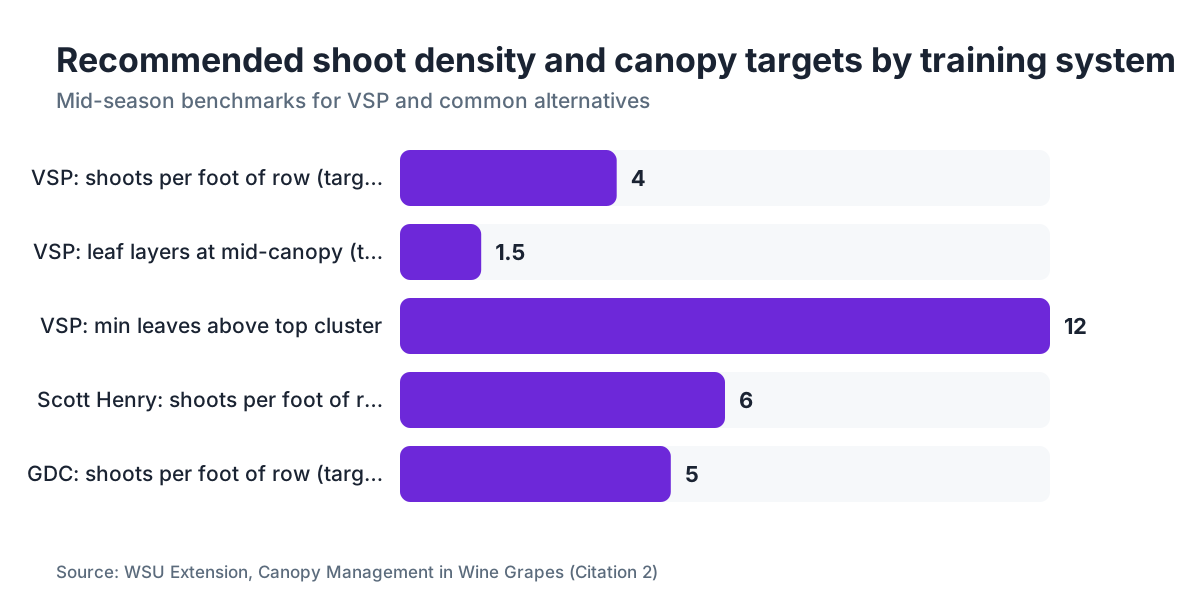
Target shoot density for most VSP (vertical shoot positioning) systems is 3 to 4 shoots per foot of row, or roughly 15 to 20 shoots per vine at 5-foot spacing. WSU Extension recommends 4 to 6 inches of spacing between shoots at the head or cordon as an in-field benchmark [2]. Anything crowded tighter than that is usually a candidate for removal.
What do you pull? In rough priority: shoots growing downward or through the trellis the wrong way, non-fruitful shoots from unintended positions, double shoots from a single bud where one will do, and water shoots off old wood below the cordon. Leave the strongest, most upright, best-positioned shoot from each spur.
Say this part plainly: shoot thinning eats labor. A skilled worker thins roughly 150 to 250 vines an hour in a low-density planting. In high-density blocks or complex training systems, that number falls fast. Budget for it before you promise yourself you'll thin the whole block in an afternoon.
How does hedging (shoot topping) affect vine balance and bud fruitfulness?
Hedging, sometimes called topping or shoot trimming, cuts the growing tips to a uniform height above the trellis. Growers hedge to keep shoots from flopping over and shading each other, to keep the canopy compatible with machinery, and to slow a vine that's running too vigorous.
Timing is where people get burned. Hedge before bloom and you tend to cut fruit set, because you're stripping the apical dominance that drives elongation and pushing the vine to spend its energy somewhere else [3]. Most extension guidance puts the first hedging pass at post-fruit-set, roughly 2 to 3 weeks after full bloom, when you can take shoot tips without touching berry set. Cornell's viticulture program notes that heavy early topping stimulates lateral shoot growth, building a denser, shadier canopy than you started with, which is the opposite of the goal [3].
The rule most experienced growers follow: don't hedge below 16 to 18 inches above the top fruiting wire, and leave at least 12 to 15 leaves above the top cluster. That leaf area is what fills the berries. Cut into it too hard and you'll see smaller berries and, in some varieties, less sugar.
Hedging runs off a tractor-mounted attachment (common over roughly 20 acres) or off hand shears. Mechanical is faster and blunter. It takes tips, not laterals. Manual hedging, or a hedge followed by a lateral-removal pass, gives you more control and takes 2 to 4 times longer per acre.
One more thing. Hedging almost always triggers some lateral regrowth. Plan a follow-up pass 10 to 14 days after the first hedge on vigorous vines, and put that labor on the calendar rather than scrambling for it later.
When and where should you remove leaves from the fruiting zone?
Leaf removal in the cluster zone (usually from the lowest wire to about 6 inches above the clusters) is one of the highest-return moves in mid-season management. Done right, it opens up airflow, cuts disease pressure (botrytis and powdery mildew especially), puts direct sun on the fruit, and can improve berry chemistry [4].
UC Davis research found that leaf removal at or shortly after fruit set, often called 'early leaf removal,' tends to produce smaller, looser clusters than removal done later in the season. Looser clusters resist bunch rot far better because there's less berry-to-berry contact where moisture sits. UC Davis Cooperative Extension specifically recommends early leaf removal (fruit set to 2 weeks post-fruit-set) for botrytis-prone varieties like Pinot noir, Chardonnay, and the Muscat families [4].
How much comes off? Most guidance says 1 to 4 leaves per shoot on the exposed side, usually the east or morning-sun side in warm climates. In hot country like the Central Valley or parts of Paso Robles, pulling too much on the afternoon side burns the fruit. You want dappled light, not direct western afternoon sun on the clusters. In cooler places (Willamette Valley, Finger Lakes, parts of Sonoma), heavier removal on both sides is usually fine and often helps ripening.
Tools run from your hands (pinching or pulling) to pneumatic leaf removers (compressed-air devices) to tractor-mounted mechanical units with adjustable air pressure and shields. Pneumatic removal is faster and well-documented to work without more vine damage than hand removal when it's set correctly [5]. Tractor-mounted removers work for large plantings but need calibration to avoid taking too much and to match the row direction.
One practical note: pull leaves in the morning when shoots are turgid and leaves come away cleanly. Hot afternoons cause tearing and leave stub wounds that dry slowly.
What's the right way to manage lateral shoots during the season?
Laterals are the secondary shoots that grow from axillary buds on your primary shoots. In vigorous vines, or after any hedge, they turn into a real problem by mid-season. They shade the cluster zone and choke off the airflow you worked to build with leaf removal.
Standard practice is to cut laterals back to 1 to 2 leaves, enough tissue to protect the node without adding shade [2]. A hedging pass handles the ones poking past the canopy edge. Interior laterals usually need hand snipping. Taking them off entirely is defensible in very vigorous situations, though it's aggressive and can push energy into whatever laterals remain.
Lateral work usually follows the first hedge, so roughly 3 to 5 weeks after fruit set in most climates. In a dry year with moderate vigor, laterals may not need touching at all. In a wet year with heavy nitrogen or a badly balanced irrigation program, you might make 2 to 3 passes. There's no fixed schedule. Read the vine.
Worth flagging for compliance: if you've got hand crews doing lateral work in warm weather, federal and state worker protection rules apply. EPA's Worker Protection Standard (WPS) requires heat illness prevention measures and field sanitation [6]. And if you're keeping pesticide application records (you should be), log these labor passes too. Keeping it all in one place, paper or software like VitiScribe, makes end-of-season reporting and year-over-year comparison much easier.
How does mid-season pruning affect next year's bud fruitfulness?
This is the piece most growers underestimate. The buds that carry next year's crop are differentiating right now, inside the developing nodes, from roughly bloom through veraison. What you do this season, especially heavy hedging or aggressive leaf removal that drops the vine's carbohydrate status, changes how fruitful those buds turn out [7].
WSU research on bud fruitfulness (measured as the number of inflorescences initiated per bud) shows that shade inside the canopy from bloom to 6 to 8 weeks post-bloom is one of the main drivers of low fruitfulness the following year [7]. That's the whole case for good canopy management. You're protecting this year's fruit and setting up next year's at the same time.
So what hurts next year? Heavy hedging at or before bloom. Sustained deep shade on the developing nodes during the 6-week window after bloom. Severe water stress in that same window (irrigation is its own topic). What helps? Open canopies with light reaching the node zone, and decent vine reserves going into veraison.
This is also why summer pruning belongs in your records. If a block took unusually hard cuts and the next year's fruitfulness came in low, you want to know that. Track the cut date, the amount removed, and the crop at harvest, and you've got the data to decide better next season.
What pruning passes should you plan for, and when?
Here's a calendar that maps to most wine grape regions in the northern hemisphere. Shift the timing 10 to 14 days earlier for warmer climates (Central Valley CA, Paso Robles) and 1 to 3 weeks later for cooler ones (Finger Lakes NY, Willamette Valley OR).
| Pass | Timing | Operation | Goal |
|---|---|---|---|
| 1 | 2-4 weeks post-bud break | Shoot thinning | Target shoot density, remove mispositioned shoots |
| 2 | At or 1-2 weeks post-fruit set | Leaf removal (cluster zone) | Airflow, disease prevention, fruit exposure |
| 3 | 2-3 weeks post-fruit set | First hedge | Contain canopy height, improve light |
| 4 | 4-5 weeks post-fruit set | Lateral management | Remove or reduce laterals stimulated by hedge |
| 5 | 6-8 weeks post-fruit set (pre-veraison) | Second hedge if needed | Final canopy sizing before veraison |
Not every vineyard needs every pass. A low-vigor block on sandy soil planted to Syrah might need only passes 1, 2, and 3. A high-vigor block on heavy clay with Cabernet Sauvignon in a wet year could need all five. The chart is a framework, not a checklist.
Stop summer pruning at veraison. Once the berries start to color, big cuts are more likely to stress the vine than help it. Exceptions exist: pull a badly diseased shoot, deal with a broken cane. As a rule, though, your mid-season pruning should be done before veraison begins.
Does summer pruning carry worker safety and pesticide record requirements?
Yes, and plenty of small operations let it slip. If you're spraying pesticides alongside your canopy passes (fungicide sprays are common right around leaf removal and hedging), EPA's Worker Protection Standard covers every agricultural worker in that treated area [6]. WPS requires that workers can get pesticide application information, have been trained, and have decontamination supplies when working in areas treated within the last 30 days for most pesticides.
The WPS regulation at 40 CFR Part 170 puts the core duty this way: agricultural employers must provide workers and handlers with information about pesticide applications to protect them from pesticide exposures. It doesn't exempt small farms in most cases.
Beyond WPS, if your state runs its own agricultural safety rules, those apply to your mid-season crews. California's Cal/OSHA heat illness prevention standard is the most demanding, requiring shade and drinking water access when the temperature is above 80 degrees Fahrenheit [8]. That reaches nearly every summer crew doing shoot thinning, leaf removal, and hedging in the state.
For record-keeping, states generally require you to log pesticide applications within a set window after the application. California requires growers to file pesticide use reports with the County Agricultural Commissioner monthly, and restricted-material applications carry their own notification rules [9]. But logging your field operations, including non-spray work like shoot thinning and leaf removal, also helps you trace disease outbreaks, benchmark labor costs, and clear third-party audits.
If your fruit goes to a winery under a contract with sustainability or Good Agricultural Practices (GAP) requirements, the audits will often ask about canopy management records. Paper logs work, and they're easy to lose. A digital record that links field operations to spray records and block maps saves real hours at audit time.
What tools and equipment do you actually need for mid-season pruning?
For small operations (under 5 acres), hand tools are the baseline. A good pair of bypass pruning shears (Felco and ARS are the two brands you see most in commercial vineyards), a pruning saw for any summer trunk work, and a bag or bucket for debris. Ergonomic handles matter more than most growers admit. Repetitive strain injuries from shears are real, and they sideline workers mid-season when you can least spare them.
Over 5 to 10 acres, pneumatic shears or pruning systems change the math. Pneumatic shears on a backpack compressor lift individual worker throughput by 25 to 40 percent over manual shears across a full day, with less fatigue. A setup costs roughly $600 to $1,200 depending on compressor size and tool brand, and it pays back quickly at current labor rates.
For shoot thinning and lateral work at scale, some large operations run mechanical shoot thinners off a tractor, but these need uniform training and fairly flat ground to work. Trial results have been mixed: mechanical thinning is faster but less selective than hand work, and it can damage young shoots at the base [5].
For hedging, a tractor-mounted mechanical hedger is standard over roughly 30 acres. These run $8,000 to $30,000 or more depending on reach, cutting width, and whether one machine handles both sides plus the top. Custom operators are available in most wine regions if you'd rather not own the iron.
Leaf blowers and dedicated pneumatic leaf removers are worth a look for any operation selling to a winery with botrytis concerns. A basic leaf blower setup costs $200 to $400. Purpose-built pneumatic removers like the Collard or Oxbo units run $5,000 to $15,000 new, though used ones turn up regularly at vineyard equipment auctions.
How do you know if your mid-season pruning is working?
The Ravaz Index is the standard number for vine balance: crop weight divided by pruning weight from the following dormant pruning [10]. A balanced vine lands between 5 and 10 (some sources say 4 to 8 for premium wine grapes), meaning for every kilogram of dormant pruning weight you harvested 5 to 10 kilograms of fruit. Above 10, the vine is over-cropped for its capacity. Below 4, it's too vegetative.
In-season, canopy checks are less precise but still useful. The point quadrat method is the standard: push a skewer or dowel through the canopy at mid-height, perpendicular to the row, and count how many leaves it hits. A well-managed VSP canopy averages 1 to 1.5 leaf layers, with no more than 2 to 3 contacts per measurement [2]. More than that means you're shading fruit and nodes.
Light tells you a lot too. In a well-managed canopy at mid-morning with the sun at a moderate angle, you'll see dappled light on the ground through the leaves. A solid shadow means too much shade.
Disease scouting is the honest feedback. If powdery mildew is setting up in the canopy interior by mid-season despite a sound fungicide program, the canopy is too dense. That's a direct signal that your shoot thinning and leaf removal either didn't go far enough or came too late.
What do different grape varieties need from mid-season pruning?
Variety matters, and the differences are big enough to change your whole approach. Here are patterns that show up consistently in extension literature, though your clone, rootstock, and site will move them.
Pinot noir and Chardonnay are both botrytis-prone. Early, aggressive leaf removal on the east side is close to universal advice. Both respond well to shoot thinning toward the low end of density targets (3 to 4 shoots per foot of row). Hedge moderately: in marginal climates these varieties can struggle to reach adequate sugars if you strip too much leaf area [4].
Cabernet Sauvignon is vigorous and builds dense canopies on fertile soil. It tolerates and often rewards aggressive shoot thinning, two-sided leaf removal in warm climates, and multiple hedging passes. The thick-skinned berries shrug off botrytis far better than Pinot, so leaf removal here is about light for color and tannin, not disease.
Zinfandel ripens unevenly (the famous raisining problem), and mid-season pruning can help. Keeping tight cluster areas open to air and light evens ripening. Shoot thinning is the priority because Zinfandel overcrops, and excess clusters need fruit thinning (a related but separate operation from shoot thinning).
Muscat and other very tight-clustered varieties (Viognier, some Grenache clones) run high botrytis risk. Treat them like Pinot noir: early, aggressive leaf removal, and don't let the canopy close back up after the first hedge.
Riesling is the interesting one. Many Riesling growers, in Germany and Alsace but also the Finger Lakes and Pacific Northwest, deliberately keep somewhat denser canopies to hold back excessive sugar in warm years. The approach shifts a lot with climate and style target.
How do you track and record mid-season pruning operations for compliance and planning?
Good records for mid-season work do two jobs: they satisfy regulators and buyers, and they tell you what you actually did so you can compare year to year.
At minimum, for each pass record the date, the block or parcel, the operation, the crew or individual, the approximate growth stage (use a standard scale like BBCH or Eichhorn-Lorenz), and the weather [11]. If pesticides went on alongside the canopy work, those records are required under state and federal law and must include the product, EPA registration number, application rate, and applicator information.
For sprays tied to canopy management (fungicides around leaf removal, say), California requires growers to submit pesticide use reports to the County Agricultural Commissioner monthly, with additional notification rules for restricted materials [9]. Other states set their own windows, so check with your state department of agriculture.
The practical problem is that mid-season is chaos. Three or four passes across multiple blocks, sometimes contract crews, sometimes in-house, sometimes both, and the records stack up fast. VitiScribe is built to log spray records, canopy passes, and field observations by block, date, and growth stage, which makes end-of-season summaries and GAP audit prep a lot less painful.
The operational payoff is real. Look back and see that Block 12 needed four hedging passes in 2024 from excess vigor, and you've got a reason to adjust fertilization or irrigation in 2025. See that Block 7 had zero botrytis in a wet year and trace it to an early aggressive leaf removal on May 15, and you've got a protocol worth repeating. Paper logs can hold all of this. They just make retrieval and comparison hard. See the vineyard section for more on field operations organization.
Frequently asked questions
Can you prune grape vines in summer without hurting the plant?
Yes, within limits. Shoot thinning, leaf removal, and moderate hedging are standard summer practices that don't harm a healthy vine if timed correctly. The key constraints: avoid heavy cuts within 2 weeks of bloom (can reduce fruit set), stop major cutting at veraison, and don't remove so many leaves that you leave fewer than 12 to 15 above the top cluster. Properly timed summer pruning improves vine balance and fruit quality.
How is mid-season pruning different from dormant pruning?
Dormant pruning sets the vine's structure: how many buds remain, which canes or spurs carry next year's crop. Mid-season pruning manages the canopy that grows from those buds during the current season. Mid-season work improves light, airflow, and balance without changing the permanent structure. The two are complementary: poor dormant pruning creates problems that mid-season work can only partly fix.
What is shoot thinning in viticulture and when should it be done?
Shoot thinning removes excess or mispositioned shoots early in the season, ideally when shoots are 4 to 8 inches long (about 2 to 4 weeks after bud break). You take non-fruitful shoots, doubles from a single bud, and shoots growing the wrong direction. Target density in most VSP systems is 3 to 4 shoots per foot of row. WSU Extension recommends 4 to 6 inch spacing between shoots as a field guide.
Does leaf removal help prevent powdery mildew and botrytis?
Yes, and the evidence is solid. Leaf removal in the cluster zone improves airflow and light, which drops humidity around the fruit and makes fungicide sprays more effective. UC Davis Cooperative Extension recommends early leaf removal (at or shortly after fruit set) for botrytis-prone varieties like Pinot noir and Chardonnay because it builds looser clusters with less berry-to-berry contact, a major botrytis risk factor.
How many times should you hedge grape vines during the growing season?
Most vineyards need 1 to 3 hedging passes between fruit set and veraison. The first comes 2 to 3 weeks after fruit set. Vigorous sites or wet years may need a second pass 3 to 4 weeks later, sometimes a third before veraison. Stop hedging at veraison. Every hedge tends to stimulate lateral regrowth, so build a follow-up lateral management pass into the schedule roughly 10 to 14 days after each hedge.
What is the Ravaz Index and why do vineyard managers use it?
The Ravaz Index measures vine balance by dividing fruit yield at harvest by the weight of dormant cane prunings from the same vines. A balanced wine grape vine typically scores between 5 and 10. Above 10 suggests over-cropping; below 4 suggests excessive vegetative growth. It's one of the few quantitative balance tools you can calculate with a scale and a few hours, and it gives you a year-over-year benchmark pure yield numbers don't.
When should you stop summer pruning grape vines?
Stop mid-season pruning at veraison, when berries begin to change color (red varieties) or soften (white varieties). After veraison, the vine shifts carbohydrates from vegetative growth into berry ripening and root and trunk reserves. Big cuts then can stress the vine and disrupt ripening. Minor work (removing a diseased shoot, fixing a broken cane) is fine, but planned canopy management should wrap up before color change.
Do I need to keep records of non-spray canopy management operations?
Legally, most states only require records for pesticide applications, not for physical canopy work like shoot thinning or leaf removal. But if you sell to a winery with GAP, sustainability, or third-party certification requirements, their audit protocols often do ask for field activity logs. Keeping those records costs little extra time if you're already logging sprays, and they pay off for troubleshooting disease or yield problems year over year.
Can mechanical hedgers replace hand pruning for all mid-season work?
No. Mechanical hedgers take shoot tips efficiently across the top and sides of the canopy, but they don't selectively remove mispositioned shoots, thin cluster zones, or clean up interior laterals. Hand or pneumatic work is still needed for shoot thinning, leaf removal, and lateral cleanup. Most commercial operations over 30 acres run mechanical hedging for speed and hand labor for the precision work, as separate passes.
How does excessive shade in the canopy affect next year's crop?
Shade during the 6 to 8 week window after bloom directly reduces bud fruitfulness by interfering with inflorescence initiation inside developing nodes. WSU research shows this is one of the primary drivers of low-fruitfulness buds in the following season. So this year's canopy decisions shape next year's yield potential. Opening the canopy before and during this window with shoot thinning and early leaf removal is one of the most forward-looking moves a grower can make.
What worker safety rules apply to crews doing mid-season canopy work?
EPA's Worker Protection Standard (40 CFR Part 170) applies when workers are in areas treated with pesticides within the restricted-entry interval. California's heat illness prevention standard (Cal/OSHA) requires shade and drinking water when temperatures exceed 80°F, which reaches essentially all mid-season vineyard labor in the state. Workers doing leaf removal, shoot thinning, or hedging need WPS training if pesticide-treated areas are involved, and employers must provide decontamination supplies.
Is early leaf removal better than late leaf removal for fruit quality?
Research at UC Davis and in European trials generally supports early leaf removal (at or just after fruit set) over late removal (pre-harvest). Early removal builds looser clusters, better disease resistance, and often improved berry chemistry with less heat stress than removal done after the canopy fully closes. The main caveat is sunburn in hot climates: there, remove leaves on the morning-sun side only and stay conservative on the afternoon side.
What grape varieties need the most aggressive mid-season pruning?
High-vigor varieties on fertile soil need the most attention: Cabernet Sauvignon, Merlot, and Zinfandel are common candidates for aggressive shoot thinning and multiple hedging passes. Botrytis-prone tight-clustered varieties like Pinot noir, Chardonnay, Viognier, and Muscat need early aggressive leaf removal regardless of vigor. Low-vigor varieties on thin soil (some Grenache, Mourvedre) may need little or no hedging and conservative leaf removal to preserve enough leaf area.
Can mid-season pruning reduce the need for fungicide sprays?
Partly. An open canopy from shoot thinning and early leaf removal improves spray penetration and coverage, so you often get better results from the same number of applications. Some growers report stretching spray intervals or cutting rates in well-managed canopies. It doesn't replace fungicides where disease pressure is high, but it makes them work better. Think of canopy management as complementary to a sound spray program, not a substitute for one.
Sources
- UC Cooperative Extension, Shoot Thinning in Grapevines: Shoot thinning is most effective when shoots are 4 to 8 inches long, roughly 2 to 4 weeks after bud break
- Washington State University Extension, Canopy Management in Wine Grapes: WSU Extension recommends 4 to 6 inches of spacing between shoots at the head or cordon; point quadrat analysis target of 1 to 1.5 leaf layers at mid-canopy
- Cornell Cooperative Extension, Viticulture and Enology, Shoot Topping and Hedging: Excessive early topping can stimulate lateral shoot growth, creating a denser, shadier canopy; hedging before bloom tends to reduce fruit set
- UC Davis Cooperative Extension, Leaf Removal Timing and Botrytis Management: Early leaf removal (at fruit set to 2 weeks post-fruit-set) recommended for botrytis-susceptible varieties; produces smaller, looser clusters less susceptible to bunch rot
- American Journal of Enology and Viticulture, Mechanical vs. Manual Leaf Removal Trials: Pneumatic leaf removal documented to work without significantly more vine damage than hand removal when set correctly; mechanical shoot thinning is faster but less selective
- U.S. EPA, Worker Protection Standard, 40 CFR Part 170: EPA WPS requires agricultural employers to provide workers and handlers with information about pesticide applications; applies to workers in treated vineyard areas
- Washington State University, Bud Fruitfulness and Canopy Management Research: Shade inside the canopy during bloom to 6 to 8 weeks post-bloom is a primary driver of reduced bud fruitfulness the following year
- California Department of Pesticide Regulation, Pesticide Use Reporting: California requires growers to submit pesticide use reports to the County Agricultural Commissioner monthly, with additional notification rules for restricted materials
- Cornell Cooperative Extension, Vine Balance and the Ravaz Index: A balanced vine should have a Ravaz Index (crop weight divided by pruning weight) in the range of 5 to 10 for most wine grape varieties; above 10 indicates over-cropping
- UC Davis Viticulture and Enology, BBCH and Eichhorn-Lorenz Phenological Stages: Standard phenological scales (BBCH, Eichhorn-Lorenz) used for recording vine growth stage at time of field operations
Last updated 2026-07-09