California viticulture: a complete guide to growing grapes in the state
TL;DR
- California has roughly 600,000 acres of wine grapes planted across more than 140 American Viticultural Areas, making it the fourth-largest wine producer in the world.
- The state's climates run from fog-cooled coastal valleys to hot interior basins, and they support nearly every Vitis vinifera variety.
- Growers have to handle CDFA licensing, EPA Worker Protection Standard rules, and county pesticide reporting.
What makes California such a significant wine grape growing state?
California makes roughly 80 percent of all U.S. wine [1]. That dominance comes from climate, soils, and a long unbroken chain of investment stretching back to the mid-1800s. The state sits between about 32°N and 42°N latitude, which puts it squarely in the temperate Mediterranean band where Vitis vinifera does well: warm dry summers with no harvest-season rain, mild wet winters, and enough daily temperature swing to hold acid in the fruit.
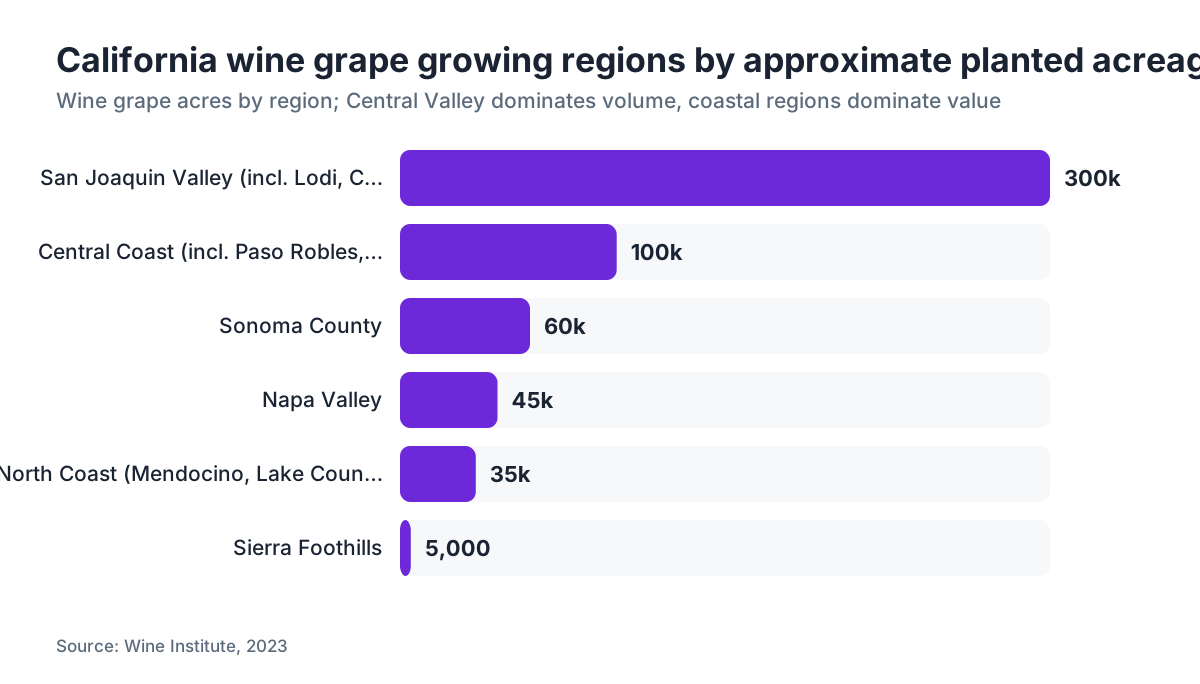
Grape acreage has held near 600,000 planted acres of wine grapes in recent years, though the Wine Institute reports steady replanting pressure as the market shifts [1]. The San Joaquin Valley alone holds well over half that acreage, growing mostly Central Valley varieties at high yield. The coastal counties make a much smaller share of the volume but the majority of the premium value.
The geographic range is what sets California apart from any other single wine region on earth. Drive four hours from Paso Robles up through the Santa Cruz Mountains, then east to the Sierra Foothills, and you pass through a dozen soil series, three USDA hardiness zones, and temperature differences of 30°F or more on the same calendar date. That's an opportunity and a headache at once. Growers in Lodi deal with 95°F harvest weeks and Pierce's Disease pressure from glassy-winged sharpshooters. Growers in the Anderson Valley worry about botrytis off the coastal fog and frost as late as April.
So there is no single California approach. County farm advisors, UC Cooperative Extension, and the UC Davis viticulture program are your most reliable local sources, because conditions vary enough that statewide generalities will lead you wrong [2].
Who is considered the father of California viticulture?
Agoston Haraszthy is the name most historians attach to that title. He founded Buena Vista Winery in Sonoma in 1857, imported an estimated 100,000 cuttings of roughly 300 European varieties from a collecting trip in 1861, and wrote a widely read 1858 report to the California State Agricultural Society arguing that California's climate beat any European wine region. The report carried enough weight that the state legislature funded his European vine-collecting trip [3].
The "father" label is contested. Charles Kohler and John Frohling ran a sizable commercial operation in Los Angeles before Haraszthy's Sonoma venture, and Spanish missionaries planted the first California wine grapes at Mission San Diego de Alcalá in 1769, nearly a century earlier. Those Mission grapes were Criolla (also called Listán Prieto), brought north from Baja California, and they supplied communion wine and brandy across the mission system for decades.
Haraszthy earned the title mostly because he pushed California viticulture off subsistence-scale mission grapes toward commercial European varietals and made a systematic, public case for the state. His 1862 book, "Grape Culture, Wines, and Wine-Making," still turns up in California wine history curricula. Whether or not you buy the full "father" credit, his variety-importation work genuinely changed the genetic foundation of California vineyards.
What are the main California wine regions and their AVAs?
The TTB has approved more than 140 American Viticultural Areas inside California [4]. They range from the enormous (the California AVA itself covers essentially the whole state) to the tiny (Calistoga, a few thousand acres in northern Napa Valley). The table below breaks out the major growing regions by approximate vine acreage.
| Region | Key AVAs | Primary Varieties | Approx. Planted Acres |
|---|---|---|---|
| Napa Valley | Napa Valley, Oakville, Rutherford, Stags Leap | Cabernet Sauvignon, Merlot, Chardonnay | ~45,000 |
| Sonoma County | Sonoma Coast, Russian River Valley, Dry Creek | Chardonnay, Pinot Noir, Zinfandel | ~60,000 |
| Central Coast | Santa Barbara, Paso Robles, Monterey, Santa Cruz Mts | Chardonnay, Pinot Noir, Cabernet Sauvignon | ~100,000+ |
| San Joaquin Valley | Lodi, Clarksburg, generic Central Valley | Zinfandel, Cabernet Sauvignon, Chardonnay | ~300,000+ |
| Sierra Foothills | El Dorado, Shenandoah Valley, Amador | Zinfandel, Barbera, Syrah | ~5,000 |
| North Coast | Mendocino, Lake County, Anderson Valley | Pinot Noir, Chardonnay, Cabernet Sauvignon | ~35,000 |
Paso Robles is worth watching right now. It has the most active new planting of any coastal county, driven by lower land costs and a climate that handles both Rhône and Bordeaux varieties well. Our overview of paso robles wineries goes deeper on the AVA structure there.
The Sonoma Coast and Santa Rita Hills AVAs have been the center of interest in Burgundian varieties for two decades, mostly because fog-driven cool temperatures let Pinot Noir ripen over a long hang time without losing acidity. The Santa Ynez Valley and Happy Canyon sub-AVAs in Santa Barbara County, by contrast, get warm enough for full Cabernet ripeness. That within-county spread is exactly why AVA designations matter for marketing, and why you need to understand them for compliance labeling.
What climate zones and soil types do California growers work with?
The climate zonation system most California growers still reference came out of UC Davis in 1944, developed by Amerine and Winkler [2]. It uses heat accumulation (degree-days above 50°F from April 1 to October 31) to sort growing areas into five regions, from Region I (coolest, below 2,500 degree-days) to Region V (hottest, above 4,000 degree-days). Carneros and the Anderson Valley sit in Region I or barely into II. Most of Napa Valley's best Cabernet country is Region II or III. The San Joaquin Valley runs Region IV and V.
The Winkler scale is a good starting framework with real limits. Two sites can share the same degree-day total and behave nothing alike if their diurnal swing, fog timing, or elevation differ. Growers now track growing degree-days alongside chilling hours, last frost date, and soil temperature at rootzone depth.
Coastal California soils are famously varied and often tied straight to seismic and uplift history. Napa Valley's alluvial fans on the valley floor have deep, well-drained soils that push vigor. The benchlands have thinner, rockier soils that hold yields down and drive smaller berries. Monterey County runs sandy loams over decomposed granite in some spots and heavy clays in others. The Sierra Foothills has decomposed granite and volcanic basalt. Pull a proper soil survey with the NRCS Web Soil Survey overlay [5] before you plant or replant. It is not optional. Planting Pinot Noir into high-vigor alluvial soil with no yield-control plan is how you end up with 8 tons per acre of flat, dilute fruit.
Rainfall across California wine regions runs from about 14 inches a year in Paso Robles to over 50 inches in parts of western Sonoma County. That spread sets your whole irrigation strategy. Drip is standard across most California vineyards. Regulated deficit irrigation protocols, developed largely through UC Davis research, are the baseline for premium fruit [2].
What licenses and permits does a California vineyard operation need?
A California vineyard touches at least three regulatory agencies before you pick your first grape. Get these lined up early, because a few of them gate your planting decisions.
The California Department of Food and Agriculture (CDFA) runs the Nursery, Seed & Cotton Bureau, which matters if you're buying vine material, and the plant quarantine system, which matters enormously if you're bringing certified stock in from out of state or from a county with different pest exclusion zones [6]. Napa County's Nursery Stock Ordinance, for one, adds quarantine requirements beyond the state baseline.
County Agricultural Commissioners (CAC) are where day-to-day pesticide compliance lives. Any grower who applies a restricted materials pesticide (which covers many fungicides and essentially all fumigants) needs a permit from the local CAC. Conditions vary by county and by material. Spraying mancozeb or captan needs no permit, but applying chlorpyrifos (now effectively phased out under CDFA action), sulfur as a fumigant, or anything on the Restricted Materials list does [6]. You also owe an annual pesticide use report to the CAC by January 31 for the prior calendar year. Plenty of small growers miss this, and the fines for late or absent reporting are real.
The State Water Resources Control Board and the Regional Water Quality Control Boards regulate vineyard discharges, stormwater, and in some regions groundwater pumping through the Sustainable Groundwater Management Act (SGMA) [7]. If your operation sits in a critically over-drafted basin, SGMA may cap how much you can pump for irrigation. That's already hitting growers in parts of the San Joaquin Valley and is starting to reach some coastal counties.
Running a winery on top of the vineyard adds ABC licensing, TTB basic permit requirements, and often local use permits through county planning. Those sit outside the viticulture scope here, but the overlap means many small estate owners juggle all of it at once.
What does the EPA Worker Protection Standard require for California vineyards?
The EPA Worker Protection Standard (WPS) applies to any agricultural establishment that uses pesticides and has employees or handlers. California layers on its own rules, some stricter than the federal WPS, but the federal framework is the floor [8].
Here's the core of what a California vineyard owes under WPS. Post pesticide application information at a central spot workers can reach. Train every worker on pesticide safety before they enter a treated area, or within their first five days of employment, with immediate training for early-entry. Give workers access to the pesticide labeling and safety data sheet. Keep application records workers can request. The federal WPS also bars workers from entering a restricted-entry interval (REI) zone during the REI, and California's REI rules through the CAC permit system can set intervals stricter than label minimums.
California's Agricultural Worker Safety regulations under Cal/OSHA Title 8 add heat illness prevention (which matters a lot given harvest-season temperatures), pesticide exposure monitoring records, and Injury and Illness Prevention Program (IIPP) documentation. Those aren't WPS, but they run right alongside it.
The record-keeping load is heavy. A vineyard applying 8 to 12 pesticide products a season across a split schedule needs records that capture product name, EPA registration number, rate, total amount applied, application date and time, target pest, applicator name, and REI. A spreadsheet holds up until you're audited or until you sit down to file your annual pesticide use report to the CAC, at which point organized digital records save you hours. This is the record-keeping workflow VitiScribe was built around, if you're weighing software.
The EPA's 2015 WPS revision requires employers to name a pesticide safety person and hold WPS records for two years. California's CAC permit system requires pesticide use records for three years [6][8].
What are the major vine diseases and pests California growers face?
Pierce's Disease is the single biggest pest problem in California viticulture, and it's non-negotiable in the Central Valley and Southern California. The bacterium Xylella fastidiosa causes it, and sharpshooter leafhoppers spread it, mainly the glassy-winged sharpshooter (Homalodisca vitripennis), which arrived in California in the 1990s from the southeastern U.S. [9]. Once a vine is infected, there's no cure. The CDFA runs a Pierce's Disease Control Program with research and regulatory arms.
Powdery mildew (Erysiphe necator) is the most widespread fungal disease in the state, and sulfur programs anchor most spray calendars. The catch in cooler coastal regions is that sulfur applied above about 90°F burns the vine, so you switch to alternate chemistries (DMIs, strobilurins, or biologicals) during heat events. UC Davis and UC Cooperative Extension publish spray-timing models tied to phenological stages that are genuinely useful and free [2].
Leafroll virus complex, particularly GLRaV-3, has turned into a major issue in Napa and Sonoma over the past 20 years. Mealybugs and soft scale spread it. It cuts sugar accumulation and delays ripening, which is a disaster for a premium Cabernet program. The only management is planting certified virus-indexed material and controlling the vectors. Once a block is heavily infected, the math on removal usually beats continued spraying.
Phylloxera is the historical threat that never fully leaves. The second big phylloxera wave in California, through the 1980s and 1990s, came from the biotype B breakdown of the AxR1 rootstock that UC Davis had recommended, and it cost hundreds of millions of dollars in replanting across Napa Valley [10]. Most new plantings now go on phylloxera-resistant rootstocks (110R, 101-14, St. George for some dryland sites), though growers on their own roots in the Sierra Foothills or in certain sandy soils argue the risk is low enough to accept there.
Down in the Temecula Valley and other Southern California regions, south coast winery operations face Pierce's Disease pressure that's different in character from the North Coast, and their spray program design shows it.
How does UC Davis support California viticulture research and education?
UC Davis is the center of gravity for viticulture and enology research and teaching, in California and worldwide [2]. Its Department of Viticulture and Enology offers B.S., M.S., and Ph.D. programs and runs research that feeds straight into grower practice: rootstock-variety interactions, water use efficiency, clonal selection, cover crop management, and smoke taint chemistry from wildfire.
The UC Cooperative Extension (UCCE) system is the farm advisor network that turns UC Davis research into county-level guidance. Every major California wine county has at least one farm advisor with viticulture expertise, and their free publications, field trial data, and pest management guidelines are often the best single source of calibrated, locally relevant advice anywhere. The UC ANR (Agriculture and Natural Resources) catalog holds hundreds of free downloadable viticulture publications [2].
Foundation Plant Services (FPS) at UC Davis is where certified, virus-tested vine material originates in California. Every commercially sold certified grapevine cutting in the state traces back through FPS-registered mother blocks. That's more than a quality program. It's a disease exclusion program. Buying certified FPS-indexed material is the main tool growers have against introducing new virus strains or phylloxera biotypes into clean ground.
Growers outside California have their own centers. Cornell's viticulture and enology program (especially its Lake Erie and Finger Lakes work on cold-hardy varieties) and Washington State University's program are the comparable institutions. WSU's work on wine grape irrigation in semi-arid eastern Washington carries over to some California interior sites, even where the climate profiles diverge.
What do California's sustainable viticulture certifications actually require?
California has a layered set of sustainability certifications, and knowing what each one actually requires matters for both marketing claims and your real management program. Pick the wrong one and you either overpromise on a label or commit to a farming system you didn't want.
California Sustainable Winegrowing (CSW) is run by the California Sustainable Winegrowing Alliance (CSWA). It's a self-assessment plus third-party verification framework built on the California Code of Sustainable Winegrowing workbook, which covers over 200 practices across vineyard and winery operations. The certified level (Certified California Sustainable Winegrowing) requires third-party verification and a minimum score across the workbook categories. It does not ban synthetic pesticides, which is a meaningful split from organic or biodynamic programs.
Certified Organic under the USDA National Organic Program bans synthetic pesticides and fertilizers but allows copper and sulfur, both of which carry their own environmental trade-offs at high rates. In California, USDA organic rules run through CDFA-accredited certifiers.
Demeter-certified Biodynamic requires the full biodynamic system: the preparations, cover crops, on-farm composting, and the biodynamic planting calendar. It's the most prescriptive certification and the hardest to hold at scale in drought years, when soil moisture management and timing flexibility get squeezed.
LIVE (Low Input Viticulture and Enology) is a Pacific Northwest-originated certification used by some California operations, focused on biodiversity, ecosystem function, and reduced pesticide use. It's less common here than CSW or organic.
Honest read: CSW is the easiest path and the most market-neutral. Organic opens some distribution channels and carries a price premium in direct-to-consumer sales. Biodynamic is a genuine commitment that changes how you farm, more than what you spray. Don't pick a certification for the marketing first. The farming system has to fit how you actually want to work the land.
How are California vineyards managing water scarcity and drought?
California's drought stretches from 2012 to 2017 and again from 2020 to 2022 pushed water from a best-practice concern to a survival one for many operations. The Sustainable Groundwater Management Act (SGMA), signed in 2014, requires local groundwater sustainability agencies in critically over-drafted basins to bring groundwater back to sustainable levels by 2040 [7]. The practical result for vineyards in those basins: pumping allocations shrink.
Regulated Deficit Irrigation (RDI), built on UC Davis research, targets vine water status instead of a fixed applied-water volume. It uses midday stem water potential, measured with a pressure chamber, to decide whether vines need water and how much. UC Davis and UCCE trials have shown RDI can cut applied water 20 to 40 percent versus full-replacement irrigation without a real yield hit in many varieties, though the response is variety- and rootstock-specific [2].
Cover crops, especially permanent covers with deep-rooted species, cut erosion and build soil organic matter but compete for water in the top 24 inches of the profile. In drought years many growers mow or kill the cover in spring and run bare ground in the vine row to ease that competition. It's a real trade-off with no universal right answer.
Recycled water use for irrigation is rising where the infrastructure exists, notably in Sonoma County. State rules on recycled water quality tiers and use restrictions apply [7].
For a look at how one region ties water management to destination hospitality, the allegretto vineyard resort in Paso Robles sits in one of the most water-stressed AVAs in the state.
What spray record-keeping do California growers need to keep, and for how long?
California has the most detailed pesticide record-keeping rules of any state, and none of it is optional [6]. If you spray it, you record it.
Every pesticide application needs a written record covering the site name and county, the commodity or site treated, the pesticide brand name and EPA registration number, the amount used, the total area or units treated, the application date, the applicator name, and the target pest. Restricted materials applications also need the permit number in the record. These feed the annual Pesticide Use Report (PUR) to the County Agricultural Commissioner, due by January 31 for the prior calendar year.
The CDFA aggregates all California PUR data and publishes it. That's genuinely useful. You can look up what other growers in your county are applying, get a feel for regional norms, and audit your own program against them.
Retention runs like this. California requires pesticide use records for three years from the date of application [6]. The EPA Worker Protection Standard requires WPS-related records (posted application information, training records) for two years [8]. If you're in an organic program, your certifier will want five years of records to show continuity of the organic system.
A 50-acre vineyard with 12 spray events a season generates 600 or more individual application records a year, across multiple blocks and sometimes multiple applicators. Paper holds up until you hit a compliance audit or need to reconstruct a spray history for a contract winery negotiation. VitiScribe keeps these records in a format that exports straight to the CAC's reporting templates, which saves real time at year-end.
If you run multiple properties or blocks across county lines, the permit and reporting rules can diverge a lot, and tracking which permit covers which block is a steady source of error.
What does it cost to establish a new California vineyard, and what financial support is available?
Establishment costs swing hard by region, variety, trellis system, and whether you're on irrigated or dryland ground. USDA National Agricultural Statistics Service (NASS) data and UC Cooperative Extension cost studies give the most reliable ranges [11].
UC Cooperative Extension budgets for wine grape establishment in Napa Valley have run $35,000 to $60,000 per acre for full establishment through Year 3, covering land prep, trellis, irrigation, vine material, and labor. Central Coast figures come in lower, roughly $25,000 to $45,000 per acre. San Joaquin Valley dry-farmed or minimal-trellis plantings can land under $10,000 per acre [11]. Those are all pre-land-cost numbers. Napa Valley AVA ground itself runs from roughly $150,000 to over $500,000 per planted acre depending on location and water rights, which makes establishment cost almost a rounding error against the total.
Federal support runs through USDA. The Environmental Quality Incentives Program (EQIP) through NRCS has funded vineyard-specific practices including cover cropping, drip conversion, and pollinator habitat. The Specialty Crop Block Grant Program through CDFA has funded disease-management research and extension. Both are competitive and vary by region, so calling your local NRCS service center [5] is the only way to know what's funded in your county in a given year.
For small estate operations in the $200,000 to $2 million revenue range, the FSA (Farm Service Agency) Microloan program (up to $50,000) and its Operating Loan program are worth knowing, though both need FSA eligibility documentation.
One cost new growers routinely underestimate is water infrastructure. A drip system for 20 acres, including a pump station, pressure regulation, filtration, and mainline, can run $5,000 to $12,000 per acre. Getting it right at installation beats retrofitting by a wide margin.
How do wildfire smoke and climate change affect California grape growing?
The 2017 and 2020 wildfire seasons created a viticultural hazard nobody had a protocol for: smoke taint. The compounds behind it, mainly guaiacol and its glycoside-bound precursors, get absorbed through grape skins during long smoke exposure and can throw smoke, ash, and Band-Aid flavors into finished wine even when smoke stayed below visible or sensory thresholds around bloom and véraison [12].
The science moved fast after 2020. UC Davis researchers and Australian Wine Research Institute (AWRI) studies established that free-form volatile phenols show up in lab analysis, but the bound glycoside forms (the real problem, since they release during fermentation and aging) need hydrolysis-based testing. A handful of California commercial labs now offer it. Smoke taint analysis runs roughly $100 to $200 per sample, and the call on whether to harvest or dump a crop in a high-exposure vintage is one of the most financially consequential a California grower ever makes.
Climate change is shifting phenology across the state. A 2022 study in PNAS found California harvest dates across multiple varieties have moved roughly 25 days earlier over the past 50 years, driven mainly by warming [12]. Earlier ripening compresses the season, raises the odds of heat spikes during ripening, and shoves harvest deeper into peak fire season.
Some growers in warmer regions are trialing later-ripening varieties, higher-elevation sites, and north-facing slope plantings. Others are planting heat-tolerant rootstocks. The honest answer is nobody has a full playbook for a 1.5°C warmer California. The UC Davis viticulture and enology program has ongoing climate adaptation research, but turning it into specific vineyard decisions is still a work in progress.
Frequently asked questions
How many acres of wine grapes are planted in California?
California has roughly 600,000 planted acres of wine grapes, per Wine Institute data. The San Joaquin Valley holds the majority of that acreage, with coastal counties contributing a smaller share of volume but the majority of premium wine value. Exact figures shift year to year as operators pull underperforming blocks and replant, and the Wine Institute publishes updated statistics annually.
What are the most planted wine grape varieties in California?
Cabernet Sauvignon is California's most planted wine grape by acreage, followed by Chardonnay and Pinot Noir. In the Central Valley, Cabernet Sauvignon and Chardonnay dominate volume. Zinfandel stays the historical signature variety of regions like Dry Creek Valley and Lodi. Pinot Gris, Merlot, and Syrah together cover big acreage across the North and Central Coast.
Do I need a pesticide use permit to spray my California vineyard?
It depends on what you're applying. Restricted Materials pesticides require a permit from the County Agricultural Commissioner before use. Sulfur, copper, and many common fungicides need no permit but must still be recorded and reported in the annual Pesticide Use Report filed by January 31. Call your county CAC office before spraying a new block to confirm which materials on your planned program need permits.
What is the Winkler scale and how do California regions rank on it?
The Winkler scale classifies wine grape growing regions by heat accumulation in degree-days above 50°F from April through October. Region I (under 2,500 degree-days) covers cool sites like Carneros and Anderson Valley. Napa Valley's best Cabernet zones are Region II-III. The San Joaquin Valley runs Region IV-V. Amerine and Winkler developed it at UC Davis in 1944, and it remains the standard regional framework in California.
How long do California growers have to keep pesticide records?
California law requires pesticide use records for three years from the date of application. The EPA Worker Protection Standard requires application information available to workers and kept for two years. Under organic certification, expect your certifier to want five years of records. The safest move is to keep everything for five years and store it in a format you can actually retrieve under audit.
What rootstocks are recommended for California vineyards?
Rootstock choice depends on soil type, phylloxera risk, nematode pressure, and irrigation access. 110R suits shallow, dry soils with moderate phylloxera pressure. 101-14 Mgt fits heavier, wetter soils and holds vigor down for Pinot Noir programs. St. George (Rupestris du Lot) works in dryland situations with very low vigor needs. Avoid AxR1, which failed against biotype B phylloxera in the 1980s-90s replanting crisis. Ask UC Cooperative Extension farm advisors for county-specific picks.
What is Pierce's Disease and where in California is it a problem?
Pierce's Disease comes from the bacterium Xylella fastidiosa, spread by sharpshooter leafhoppers including the glassy-winged sharpshooter. Infected vines decline and die within a few years, and there's no curative treatment. It's most severe in Southern California, the San Joaquin Valley, and the Sacramento Valley, and less common in coastal North Coast regions. The CDFA runs an active Pierce's Disease Control Program funded by a grower assessment.
What does California Certified Sustainable Winegrowing certification involve?
Certified California Sustainable Winegrowing (CCSW) requires growers to complete a self-assessment using the California Code of Sustainable Winegrowing workbook, covering over 200 practices across vineyard and winery operations, followed by third-party verification. It does not ban synthetic pesticides. The California Sustainable Winegrowing Alliance (CSWA) administers it. The workbook itself works as a self-audit tool even for growers not chasing formal certification.
What financial programs help cover California vineyard establishment costs?
USDA's EQIP program through NRCS offers cost-share funding for specific practices like drip irrigation, cover cropping, and wildlife habitat. The CDFA Specialty Crop Block Grant Program funds research and outreach. FSA operating and microloan programs are open to eligible farming operations. UC Cooperative Extension publishes annual cost-of-production budgets by region and variety, free and genuinely useful for business planning and loan applications.
How does smoke taint from wildfires affect California wine grapes?
Smoke taint comes from volatile phenols, mainly guaiacol and related compounds, absorbed through grape skins during smoke exposure. The bound glycoside forms are the real problem because they release during fermentation, creating smoke, ash, and medicinal off-flavors in wine. Commercial lab testing for both free and bound forms runs around $100 to $200 per sample. Extended smoke exposure from véraison through harvest is the highest-risk window.
What is the role of UC Davis in California viticulture?
UC Davis houses the leading viticulture and enology academic program in the country, offering undergraduate through doctoral degrees. Its Foundation Plant Services program produces and certifies virus-tested vine material used statewide. UC Cooperative Extension farm advisors in every California wine county turn UC research into local practical guidance. UC Davis publishes free pest management guidelines, irrigation protocols, and varietal trial data that stand as the standard reference for California growers.
When did viticulture start in California?
Spanish missionaries planted the first California wine grapes at Mission San Diego de Alcalá in 1769, using the Criolla (Listán Prieto) variety brought from Baja California. Commercial viticulture with European Vitis vinifera varieties took hold in the mid-1800s, accelerating after Agoston Haraszthy imported an estimated 100,000 cuttings of roughly 300 European varieties in 1861 and spread them across the state.
How does SGMA affect California vineyard water use?
California's Sustainable Groundwater Management Act (2014) requires local groundwater sustainability agencies in critically over-drafted basins to reach sustainable groundwater levels by 2040. For vineyards in affected basins, that means pumping allocations shrink over the coming decade. Growers in the San Joaquin Valley and some coastal basins already face allocation limits. Surface water contracts and recycled water infrastructure matter more as groundwater access tightens.
What is the Paso Robles AVA and why is it growing so fast?
Paso Robles is a large AVA in San Luis Obispo County split into eleven sub-appellations. Its pull for new planting comes from lower land costs than Napa or Sonoma, a climate that suits both Rhône varieties (Grenache, Syrah, Mourvèdre) and Bordeaux varieties (Cabernet Sauvignon, Merlot), and an established direct-to-consumer wine tourism market. See our guide to paso robles wineries for full detail on the sub-AVAs.
Sources
- Wine Institute, California Wine Statistics: California accounts for roughly 80 percent of U.S. wine production and has approximately 600,000 planted acres of wine grapes
- UC Agriculture and Natural Resources (UC ANR), viticulture publications and UC Cooperative Extension guidelines: UC Cooperative Extension publishes viticulture pest management guidelines, irrigation protocols including RDI research, and the Winkler scale regional classification system developed at UC Davis
- California State Library, California History Room, Haraszthy report to the California State Agricultural Society, 1858: Agoston Haraszthy imported an estimated 100,000 cuttings of approximately 300 European varieties from Europe in 1861 after a California legislature-funded collecting trip
- TTB (Alcohol and Tobacco Tax and Trade Bureau), American Viticultural Areas: The TTB has approved more than 140 American Viticultural Areas within California
- California Department of Pesticide Regulation (CDPR), Pesticide Use Reporting: California requires pesticide use records for three years; annual Pesticide Use Reports to the County Agricultural Commissioner are due by January 31; Restricted Materials require a county permit prior to use
- California State Water Resources Control Board, Sustainable Groundwater Management Act: California's SGMA (2014) requires groundwater sustainability agencies in critically over-drafted basins to achieve sustainable levels by 2040, constraining irrigation pumping for affected vineyards
- EPA, Worker Protection Standard for Agricultural Pesticides: The 2015 revised EPA Worker Protection Standard requires pesticide application records accessible to workers, pesticide safety training before field entry, and retention of WPS records for two years
- CDFA, Pierce's Disease Control Program: Pierce's Disease is caused by Xylella fastidiosa and spread by the glassy-winged sharpshooter (Homalodisca vitripennis); the CDFA operates an active control program funded by grower assessment
- UC Davis, Department of Viticulture and Enology (phylloxera and rootstock research): The biotype B phylloxera breakdown of the AxR1 rootstock in the 1980s-90s resulted in hundreds of millions of dollars in vineyard replanting costs in Napa Valley
- UC Cooperative Extension, Sample Costs to Establish a Vineyard and Produce Wine Grapes (cost studies): UC Cooperative Extension cost studies show Napa Valley vineyard establishment costs of $35,000-$60,000 per acre through Year 3; Central Coast costs run $25,000-$45,000 per acre
- Proceedings of the National Academy of Sciences (PNAS), climate and harvest date shifts in California viticulture: A 2022 PNAS study found California harvest dates have shifted roughly 25 days earlier over the past 50 years, driven primarily by warming temperatures
Last updated 2026-07-09