Cane pruning grape vines: the complete how-to guide
TL;DR
- Cane pruning keeps one or two canes from last season's growth and ties them to the trellis wire as the coming year's fruiting wood.
- Every other cane comes off.
- It suits varieties with poor basal bud fertility like Pinot Noir and Riesling.
- Most vineyards prune in late dormancy, roughly 30 to 60 days before budbreak.
- Spur pruning is faster and cheaper but fails on the wrong cultivar.
What is cane pruning and how does it work?
Cane pruning means picking one or two canes that grew during the past season and tying them along the trellis wire to carry next year's fruit. Every other cane comes off. You also keep a short renewal spur, usually two buds, close to the head of the vine, and that spur grows the replacement cane for the following season.
The logic is simple. A cane is a one-year-old shoot that hardened into brown, woody tissue over winter, and its buds hold the embryonic clusters for next season. On varieties where the basal buds (the ones nearest the base of the cane) are poorly fertile, you keep a longer section of wood so the productive buds further out actually end up on the vine.
A typical cane carries 8 to 15 buds, and most growers leave 8 to 12 of them when tying out [1]. How many depends on the variety, your yield target, and the vine's own vigor. Leave too many and you overload the vine. Leave too few and you starve it of productive shoots. Getting that number right is the real skill in cane pruning, and good pruners develop an eye for vine balance that's hard to shortcut.
The renewal spur is easy to neglect and almost always matters more than it looks. Skip it and you're hunting for usable canes from worse and worse positions the next year, and the fruiting zone drifts away from the head of the vine. Keep the spur close. Two buds is plenty.
Cane pruning vs spur pruning: which method fits your vineyard?
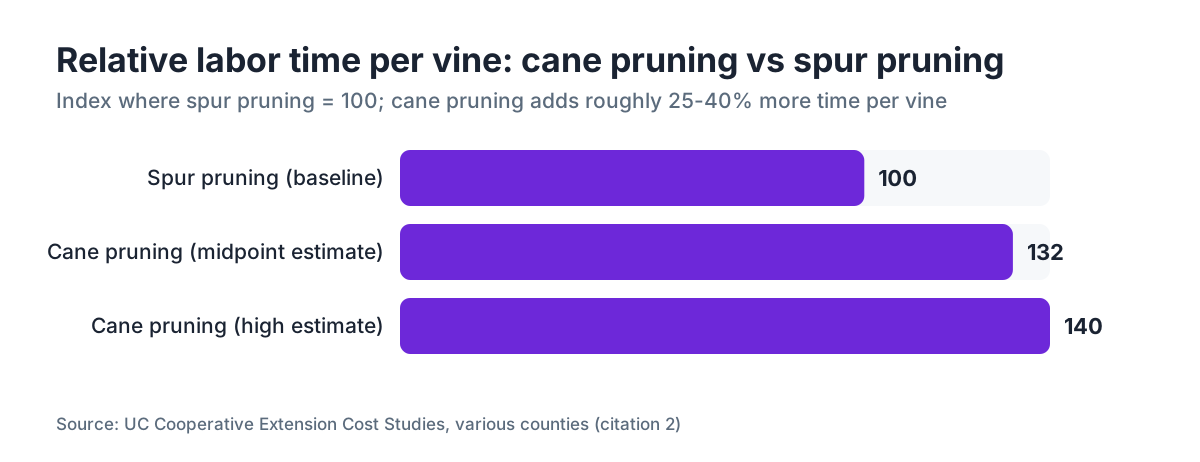
Spur pruning keeps short spurs (two to three buds) at fixed spots along a permanent cordon arm. It's faster, easier to teach a crew, and cheaper per vine in labor. In well-run operations, spur pruning runs roughly 25 to 40 percent faster than cane pruning per vine, though the exact number moves with crew experience and row spacing [2]. If your variety and site support it, spur pruning is usually the right call.
Cane pruning is the answer when spur pruning fails, and that happens two ways. Some varieties have naturally low basal bud fertility. Pinot Noir, Riesling, Gewurztraminer, and Grenache are the usual suspects: the buds at the base of a cane just don't set good clusters. Spur prune those and you get leafy shoots and almost no fruit. The other case is cordon disease, mainly Botryosphaeria and Eutypa canker, that steadily kills spur positions. Switching to cane pruning lets you renew the whole above-ground structure every year, which is one of its real advantages.
| Feature | Cane Pruning | Spur Pruning |
|---|---|---|
| Fruiting wood age | 1-year-old cane | 2-year-old spur |
| Buds retained per vine | 8-15 | 4-10 (2-3 per spur x 2-4 spurs per cordon arm) |
| Labor speed | Slower | 25-40% faster [2] |
| Disease wood renewal | Annual | Difficult, accumulates dead wood |
| Best for | Low basal-bud-fertility varieties | Varieties with fertile basal buds |
| Common varieties | Pinot Noir, Riesling, Grenache | Cabernet Sauvignon, Zinfandel, Syrah |
| Trellis system | VSP, High wire cane | VSP cordon, Scott Henry |
Cordon pruning versus cane pruning is the same comparison framed differently. A cordon system uses spur pruning: the cordon is the permanent arm, the spurs hang off it. Cane pruning throws out the cordon idea and rebuilds the fruiting wood every year. Hybrids exist, like the Pendelbogen system, but for most American growers it's a binary choice driven by variety.
For a wider picture of how pruning fits the year's operations, see our overview of vineyard management practices.
Which grape varieties require cane pruning?
Pinot Noir is the textbook case. Its basal buds are nearly always infertile, so spur pruning it produces almost no fruit. Washington State University Extension documents this plainly, noting that Pinot Noir "requires cane pruning to maintain adequate yields because of poor basal bud fertility" [3]. Riesling, Gewurztraminer, Pinot Gris, and Grenache sit in the same bucket [10].
Varieties that take spur pruning well include Cabernet Sauvignon, Merlot, Malbec, Zinfandel, Syrah, Tempranillo, and most of the Italian reds. Their basal buds are fertile enough that leaving two or three buds on a spur reliably makes fruiting shoots.
Chardonnay is the swing case. Many Chardonnay clones have acceptable basal bud fertility, and plenty of California and Washington operations spur prune it fine. Some clones and some sites push you toward cane pruning. If your Chardonnay yields poorly on spurs, run a quick bud fertility test in late winter: cut five representative canes, slice through a dozen or so basal buds under magnification, and count what percentage show a green embryonic cluster. Below roughly 30 percent fertility in the first two buds and you're probably better off cane pruning [10].
American hybrids like Marquette, Frontenac, and Vidal Blanc are often spur pruned fine, but check Cornell's viticulture guidance before committing [4]. Cold-climate breeding programs have generally held onto basal bud fertility, because those varieties have to work well with minimal pruning through hard winters.
When should you prune: autumn pruning versus late dormancy?
Prune in late dormancy, roughly 30 to 60 days before budbreak. That's the standard advice, and the reasoning holds up. By late winter the vine has already moved most of its stored carbohydrates down into the root system. Prune too early, in October or November, and you strip off wood that still holds reserves the vine hasn't finished banking. Cornell research on cold-climate viticulture finds that early pruning can reduce cold hardiness in a bad winter, because you remove tissue the vine might have used as a buffer [4].
Autumn pruning has real operational upside, though. On a large estate, or where spring comes fast and crew time in the narrow late-dormancy window is tight, a rough cut in autumn plus a cleanup pass in late February or early March is a fair compromise. The two-pass approach buys you the labor flexibility of autumn while letting you make final calls closer to budbreak, once you can read winter injury.
Warm-winter climates change the math. In California's Central Valley or parts of Texas, the dormancy window is shorter and blurrier. UC Davis recommends keying timing to growth stage rather than the calendar, finishing before buds swell past roughly 1 cm of green tissue [5]. Once the shoot elongates, pruning wounds callus poorly and you bleed vine resources fast.
Frost risk matters too. Prune early, then take a hard frost while shoots are just emerging, and you lose the whole season's crop. Delaying pruning as long as practical, or double pruning, is a known frost tool in marginal climates. The first pass takes most of the wood but leaves long stubs. The second pass waits until frost danger passes.
How do you actually select and tie canes?
Walk the row before you cut anything. Look for canes with good diameter (roughly pencil-thick, about 7 to 10 mm), moderate internode length, and solid wood. Flattened or very thick canes, the so-called bull canes, tend to have low bud fertility. Very thin canes throw weak shoots. Color should be medium brown, not greenish (immature) or very dark (possibly diseased).
Position matters as much as quality. The best cane comes from near the head of the vine, so the fruiting zone doesn't creep out. If you've been cane pruning for years and the head has already climbed, you may need a two-year plan to bring it back down.
Once you've picked it, bend the cane gently toward the fruiting wire. Bending increases budbreak uniformity by cutting apical dominance, the tendency of the outermost buds to break earliest and strongest. A soft bow along the wire, not a sharp kink, spreads hormones more evenly down the cane and gives you more even shoot emergence [1].
Tying materials run from traditional grafting tape to paper ties and wire wraps. Avoid anything that girdles the cane as it thickens in spring. Many growers in California and the Pacific Northwest use biodegradable paper ties on the cane itself and more durable ties on the cordon or head of the vine. If your ties don't break down on their own, change them every year.
Save the renewal spur close to the base of the cane you just tied out, leaving exactly two buds. Mark it, mentally or physically, so next year's pruner doesn't read it as a stub and cut it off. A missing renewal spur is one of the most common and most fixable errors in cane-pruned vineyards.
How many buds should you leave per vine?
Bud load, the total buds you leave on a vine, sets a ceiling on yield and drives canopy density. Too high and the vine can't ripen the fruit. Too low and you leave money on the ground while the vine pushes excess vegetative growth to make up the difference.
A practical starting point for most medium-vigor Vitis vinifera varieties is roughly 50 to 60 shoots per plant, which on a cane-pruned vine with normal budbreak works out to about 10 to 14 buds per cane once you account for buds that never break [1]. Vigor matters a lot here. A young, high-vigor vine in rich soil may need more buds to balance growth. An old, low-vigor vine in rocky ground may do best with fewer.
The Ravaz Index is a useful calibration tool. Weigh the fruit you harvest, divide by the weight of dormant prunings from that same vine. A ratio of 5 to 10 is generally considered balanced [1]. Below 5 says the vine is overcropped. Above 10 says it's too vegetative. Run Ravaz checks on a sample of vines each season for two or three years and you get real numbers to refine bud loads.
University of California Cooperative Extension recommends setting baseline bud loads by variety and site through small replicated trials, not a universal number, because soil, rootstock, and clone interact in ways that make vineyard-to-vineyard comparisons unreliable [5].
What tools do you need and how should you maintain them?
The standard cane-pruning kit is a pair of bypass hand pruners (secateurs), loppers for heavier canes, and a pruning saw for cordons or old wood if you're making structural cuts. Pneumatic pruners cut repetitive-stress injuries hard and earn their keep on any operation pruning more than a few hundred vines. A basic pneumatic setup runs roughly $300 to $600 per unit, not counting the air hose and compressor.
Sharpness and sanitation matter more than most growers think. Blunt pruners crush instead of cut, and ragged wounds invite infection. Sharpening at the start of each pruning day is a floor, not a goal. Stopping to sharpen mid-row is better.
Disinfecting between vines is standard where trunk diseases are a concern. The two common options are a 10 percent bleach solution (one part household bleach to nine parts water) or a 70 percent isopropyl alcohol solution. Neither is perfect. Bleach corrodes metal. Alcohol evaporates fast in the cold. Some operations use commercial products based on sodium hypochlorite or quaternary ammonium. The habit that counts is dipping or wiping the blade before moving to a new vine, more than between rows.
Under the EPA Worker Protection Standard, workers who apply or handle pesticides in vineyards get specific protections, and pruning itself is an agricultural task covered by the WPS's general rules on training and access to first aid [6]. If you're spraying a disinfectant product that carries a pesticide registration number on the label, check the label requirements before crew applies it.
For keeping pruning records, wound treatment logs, and WPS training documentation in one place instead of scattered across clipboards, a field operations tool like VitiScribe is built for exactly that.
How do trunk diseases change your cane pruning approach?
Eutypa dieback and the Botryosphaeriaceae complex (Bot canker) are the two diseases that most often reshape pruning decisions. Both enter through pruning wounds. Eutypa lata, the pathogen behind Eutypa dieback, infects wounds during wet weather and slowly kills the cordon or cane over three to seven years [7]. Bot canker pathogens move faster and hit harder in warm climates.
Cane pruning's annual wood renewal is a genuine structural edge over spur pruning in diseased vineyards. Because you remove and replace the fruiting wood every year, you slow the buildup of infected wood in the vine's permanent structure. Spur-pruned vines keep adding to the cordon every year, and dead spur positions become permanent entry points for secondary pathogens.
The practical response on wound timing is settled: prune when wounds dry fast. In California, UC Davis researchers have found infection risk peaks when pruning coincides with rain, and they recommend pruning in dry weather or applying a wound protectant right after the cut [7]. Registered wound sealants based on Trichoderma atroviride (like Vintec) or boric acid have evidence behind them. Standard latex paint does not.
If Eutypa symptoms are showing up, a corrective cane-pruning approach helps. Pick a low cane rising from near the base of the vine, train it as a new trunk, and remove the diseased old trunk over two seasons. It's slow work, but it extends vine life a lot compared to just pruning around the damage.
What are the most common cane pruning mistakes?
Leaving too many buds is probably the most common error in young vineyards. Growers fear under-producing and compensate by loading up buds. The payoff is a dense, shaded canopy, poor fruit quality, and a vine that runs itself down. Err toward fewer buds in years one through three and use the Ravaz Index to calibrate from there.
Removing the renewal spur comes second. A crew moving fast can clean up a vine so thoroughly the renewal spur disappears. Next year's pruner has no well-placed cane to work with. Train your crew to find and protect the spur before they start cutting.
Selecting canes too far from the head is a mistake that compounds. Each season the fruiting zone inches further from the trunk, and eventually you're tying a cane that starts a foot or more out on an arm that's now semi-permanent. Mark the maximum acceptable distance from the head at training and enforce it.
Cutting too close to a retained bud leaves a stub so short the wound interrupts vascular flow to that bud. Leave a small stub, roughly one internode long, above the bud you're counting on. Cutting into the final bud you meant to keep is an obvious error, but it happens when blades are dull or the pruner is cold and tired.
Pruning in wet weather without disease management piles on your disease pressure every year. If your calendar forces wet-weather pruning, at minimum apply a registered wound protectant right after the cut.
How does cane pruning interact with trellis systems?
Vertical shoot positioning (VSP) is the most common trellis for cane-pruned vinifera in cool-climate regions. The cane ties to the lowest fruiting wire, usually 24 to 36 inches off the ground, and shoots grow up through moveable catch wires. It works well with cane pruning because the cane sits horizontal, which spreads budbreak evenly and simplifies tying.
High-wire cane systems, used a lot for Concord and other American varieties in New York and Michigan, tie the cane to a single high wire and let shoots hang down. Cornell's viticulture program has detailed guidance on this system [4]. Shoot positioning is less precise than VSP, but the system is simpler and cheaper to install and works well for large-scale table and juice grape production.
Guyot training is the European name for what most American growers just call cane pruning on VSP. Single Guyot keeps one cane. Double Guyot keeps two canes tied in opposite directions from the head. Double Guyot is common for Pinot Noir in Burgundy and increasingly used in Oregon and California's cooler appellations.
The Geneva Double Curtain (GDC), developed at Cornell, uses two cordon arms but is generally spur pruned [11]. Don't confuse it with cane pruning just because it's a multi-wire trellis. If you're weighing GDC for high-vigor varieties, spur pruning is standard for that system.
For a look at how quality wine estates in different regions apply these practices, the Paso Robles wineries and Ponte Winery operations offer contrasting examples from California's interior and coastal growing areas.
How do you prune for vine balance and long-term vine health?
Vine balance is the ratio between vegetative growth and reproductive growth, held in a range where both perform. A balanced vine ripens fruit reliably, keeps good canopy light distribution, and builds reserves each season. An imbalanced vine, too vigorous or too weak, produces poorly and ages faster.
The single most useful tool for tracking balance over time is consistent bud load records paired with annual harvest weights and pruning weights. You don't need software to start. A paper log per block with those three numbers per vine (or per row average) gives you a trend line within three seasons. As the records pile up, keeping them organized and searchable is where a tool like VitiScribe earns its keep, turning scattered field notes into data you can actually query.
Rootstock choice changes how hard you should cane prune. High-vigor rootstocks like 3309C or 5C Teleki push more shoot growth, which may let you leave slightly more buds, but also raises the cost of overcropping mistakes. Low-vigor rootstocks like Riparia Gloire leave less room for error the other way. Washington State University's viticulture extension has published rootstock trial data showing yield and vigor differences of 20 to 40 percent between rootstocks on the same scion in similar soils [3][9].
Vine age matters. Young vines (years one through three) should be pruned hard, sometimes to just two buds, to build trunk and root mass. The pull to load a young vine for early yield is real, especially on the balance sheet, but it delays mature vine performance. Extension recommendations from UC Davis, Cornell, and WSU agree: sacrifice yield in years one and two to invest in vine structure [3][4][5].
What records do you need to keep for pruning compliance?
Pruning itself isn't a pesticide application, so most spray record compliance doesn't touch it directly. But several compliance threads run through pruning season that vineyard managers often miss.
Apply any wound sealant that carries an EPA registration number (a pesticide registration number on the label) and you must keep application records that match your state's pesticide record-keeping rules, which generally mirror federal standards: product name, EPA registration number, amount applied, date, applicator, and target pest [8]. Some wound treatments are classified as biological pesticides and still carry full label requirements.
Worker Protection Standard compliance applies to anyone working in the vineyard during or after pesticide applications. If you sprayed a dormant spray before pruning, the re-entry interval (REI) on that product's label controls when your pruning crew can safely enter [6]. The EPA's WPS rule, updated in 2015, requires that workers have access to pesticide application information, including the safety data sheet and label, before entering treated areas.
Employee training records for pesticide safety are required under WPS for agricultural workers, and pruning crews count. Training has to happen before workers enter treated areas and has to be documented [6]. Oregon, Washington, and California each add state-level requirements that in some cases exceed federal minimums, so check with your state department of agriculture.
Pruning date and crew records also earn their keep for liability in disease management programs. If a trunk disease outbreak later has a neighbor or insurer asking when you pruned and in what weather, a log is what answers that.
Frequently asked questions
What is the difference between cane pruning and spur pruning grape vines?
Cane pruning keeps one or two full-length shoots from last season as next year's fruiting wood, then removes them entirely the following year. Spur pruning keeps short two- or three-bud stubs on a permanent cordon arm. Cane pruning suits varieties with poor basal bud fertility like Pinot Noir. Spur pruning is faster and works well for Cabernet Sauvignon, Syrah, and Zinfandel.
When is the best time to prune grape vines?
Late dormancy, roughly 30 to 60 days before expected budbreak, is the standard recommendation from UC Davis, Cornell, and WSU. This timing lets the vine move carbohydrates into root storage before pruning removes wood. In frost-prone climates, delaying pruning or using a two-pass double-pruning method reduces the risk of losing emerging shoots to a late frost.
Can you prune grape vines in autumn?
Yes, with caveats. Autumn pruning removes wood while the vine still holds some carbohydrate reserves, which may slightly reduce winter cold hardiness. In large operations where the spring window is too narrow for a single pass, a rough cut in autumn followed by a final pass in late winter is a practical compromise that most extension programs consider acceptable.
How many buds should you leave when cane pruning?
Most medium-vigor vinifera varieties perform well with 8 to 12 buds per cane, accounting for the fact that not every bud will break. The Ravaz Index, which is harvest weight divided by pruning weight, helps calibrate over time: a ratio of 5 to 10 suggests the vine is balanced. Younger vines should be pruned harder, often to just two buds, to build root and trunk mass.
What grapes require cane pruning?
Pinot Noir, Riesling, Gewurztraminer, Pinot Gris, and Grenache consistently require cane pruning because their basal buds have low fertility. Spur pruning those varieties typically produces vegetative shoots with little fruit. Washington State University Extension documents this for Pinot Noir specifically. Some Chardonnay clones also benefit from cane pruning depending on the site.
How does cane pruning help with trunk diseases like Eutypa?
Cane pruning removes and replaces all fruiting wood every year, which slows the buildup of Eutypa-infected wood in the vine's permanent structure. Spur-pruned vines add to the cordon each season, and dead spur positions provide entry points for secondary pathogens. Pruning in dry weather and applying a registered wound sealant reduces infection risk in both systems.
What is a renewal spur and why does it matter in cane pruning?
A renewal spur is a short two-bud spur left near the head of the vine when you tie out the main cane. Its buds grow into shoots during the season, and you select one of those shoots as next year's cane. Without a well-positioned renewal spur, the fruiting zone gradually migrates away from the head of the vine, making pruning harder and vine structure worse each year.
What is the Ravaz Index and how do you use it for cane pruning?
The Ravaz Index divides the weight of harvested fruit by the weight of dormant prunings from the same vine. A ratio of 5 to 10 is generally considered balanced. Below 5 suggests overcropping, above 10 suggests excessive vegetative growth. Running Ravaz checks on a sample of vines over two or three seasons gives you real data to adjust bud loads rather than relying on rules of thumb.
How do you disinfect pruning tools between vines?
The two standard options are a 10 percent bleach solution (one part household bleach to nine parts water) or 70 percent isopropyl alcohol. Dip or wipe the blade before moving to a new vine, more than between rows. Bleach corrodes metal blades over time; alcohol evaporates fast in cold weather. Commercial quaternary ammonium products are another option. Check labels for any pesticide registration requirements.
What trellis systems work best with cane pruning?
Vertical shoot positioning (VSP) is the most common trellis for cane-pruned vinifera. The cane is tied to the lowest fruiting wire, usually 24 to 36 inches off the ground, and shoots grow upward through moveable catch wires. High-wire cane systems are common for Concord and other American varieties. Double Guyot, which uses two canes tied in opposite directions, suits varieties like Pinot Noir in cooler climates.
Does cane pruning or spur pruning produce better wine quality?
Neither method inherently produces better quality; the match between method and variety does. Cane pruning a variety with poor basal bud fertility, like Pinot Noir, produces dramatically better quality than spur pruning it. For varieties with fertile basal buds, spur pruning typically produces equivalent quality with less labor. Getting the bud load right in either system matters far more than the pruning style itself.
What are the EPA Worker Protection Standard requirements for pruning crews?
Pruning itself is not a pesticide application, but WPS requires that workers entering treated areas have completed safety training and have access to the pesticide application information including labels and safety data sheets. If a dormant spray was applied before pruning, the product's re-entry interval governs crew entry timing. Training must be documented before workers enter treated areas, per the 2015 updated WPS rule.
How do you correct a vine with a damaged or poorly positioned head from years of cane pruning?
Select a low-growing shoot arising near the base of the vine and train it as a new trunk over two seasons, while removing the old damaged structure progressively. The process takes at least two full growing seasons. It's slow but genuinely extends vine life. Keep detailed records of which vines are in the renovation process so pruning crew treat them differently from production vines during that transition period.
What pruning records should vineyard managers keep for compliance?
If any wound sealant carries an EPA registration number, keep application records with product name, EPA registration number, amount applied, date, applicator name, and target pest. Maintain WPS training records for all crew before entry into treated areas. Pruning dates and weather conditions are worth logging for disease management liability purposes. Oregon, Washington, and California each have state rules that may exceed federal minimums.
Sources
- University of California Agriculture and Natural Resources, Grape Pest Management (Third Edition), pruning and training chapter: Typical cane-pruned vines retain 8 to 15 buds per cane, and the Ravaz Index of 5 to 10 indicates vine balance
- University of California Cooperative Extension, Sample Costs to Establish a Vineyard and Produce Wine Grapes, various counties: Spur pruning runs roughly 25 to 40 percent faster per vine than cane pruning in cost study labor comparisons
- Washington State University Viticulture and Enology, grape variety and rootstock information: Pinot Noir requires cane pruning to maintain adequate yields because of poor basal bud fertility; rootstock trials show 20 to 40 percent yield and vigor differences between rootstocks on the same scion
- Cornell University, Grapes and Wine (Cornell CALS) cold climate viticulture resources: Early pruning in cold climates can reduce cold hardiness; high-wire cane systems are detailed for American varieties including Concord; American hybrid variety pruning guidance provided
- UC Davis Department of Viticulture and Enology, vineyard management resources: UC Davis recommends timing pruning to growth stage rather than calendar date, finishing before buds swell past roughly 1 cm of green tissue, and establishing bud loads through site-specific trials
- U.S. EPA, Agricultural Worker Protection Standard (40 CFR Part 170), updated 2015: WPS requires documented training before workers enter treated areas and access to pesticide application information including labels and safety data sheets; 2015 rule update details
- UC Statewide Integrated Pest Management Program, Eutypa Dieback of Grape: Eutypa lata infects pruning wounds during wet weather; infection risk is highest when pruning coincides with rain; registered wound protectants including Trichoderma atroviride products have evidence behind them
- U.S. EPA, pesticide recordkeeping requirements for agricultural producers: When wound sealants carry an EPA registration number, application records must include product name, EPA registration number, amount applied, date, applicator, and target pest
- Washington State University Viticulture and Enology, rootstock trial resources for Washington: WSU rootstock trial data showing yield and vigor differences of 20 to 40 percent between rootstocks on the same scion variety in similar soils
- UC Statewide Integrated Pest Management Program, winegrape variety and basal bud fertility notes: Riesling, Gewurztraminer, Pinot Gris, and Grenache consistently require cane pruning due to low basal bud fertility; Chardonnay clone performance varies by site
- Cornell University, Grapes and Wine (Cornell CALS), Geneva Double Curtain trellis system documentation: Geneva Double Curtain uses two cordon arms and is generally spur pruned, not cane pruned; developed at Cornell for high-vigor varieties
Last updated 2026-07-09