Do grape vines need pruning, and what happens if you skip it?
TL;DR
- Grape vines need pruning every winter, full stop.
- Skip it and the vine pours energy into excess wood, fruit quality drops, and disease pressure climbs inside two or three seasons.
- Most training systems cut off 85 to 95 percent of last year's growth.
- The right system depends on your variety, trellis, and climate.
- Not pruning is never an option for a production block.
Why do grape vines need pruning every year?
A grapevine wants to grow. Left to itself it pushes hundreds of shoots, sets thousands of small clusters that never ripen, and burns so much energy on leaves and wood that the fruit turns nearly worthless. This is overcropping, and it gets worse every year because unpruned wood piles up into a tangle of old arms and dead shoots.
Pruning works because it forces balance between vegetative growth and fruit. UC Davis viticulture research has shown for decades that the weight of cane wood you cut off at dormant pruning should match the trunk and root capacity of the vine [1]. A vine that grew 1 pound of cane wood last season has the reserves to ripen roughly 8 to 12 buds worth of crop this year, following the Ravaz Index framework. Leave too much wood and the vine either overcrops or slides into permanent decline.
There's a disease argument too. Dense, unpruned canopies trap humidity, choke off airflow, and hand powdery mildew, botrytis, and eutypa dieback exactly the conditions they want. Eutypa, caused by the fungus Eutypa lata, enters through pruning wounds but spreads through dead wood left on the vine. A vine you never prune builds up dead wood faster than it can ever heal it [2].
Skip one year and you can recover. Skip three or four on a mature vine and you'll spend a whole season doing corrective pruning just to get back to a canopy you can work with.
How much of a grape vine should you prune off each season?
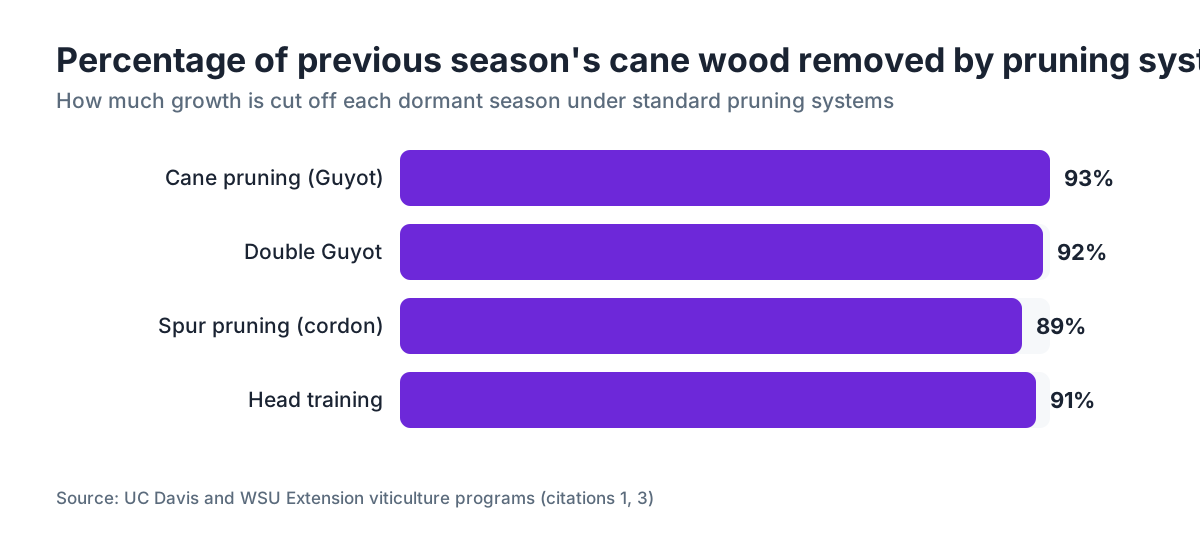
More than you'd guess. A properly pruned vine keeps somewhere between 5 and 15 percent of the cane wood it grew last season. So 85 to 95 percent of last year's growth gets cut off and hauled out of the block [1].
The working framework most growers use is balanced pruning, developed at University of California cooperative extension and refined at Cornell and Washington State over the last 50 years. You weigh the dormant prunings from a set of sample vines, then calculate how many buds to leave per pound of pruned wood. The common rule of thumb: 20 to 30 buds for the first pound of prunings, then 10 more buds for each additional pound, capped at whatever your trellis can carry [1][3].
Here's what that looks like in the field. A mature Cabernet Sauvignon vine on a vertical shoot positioning trellis in a moderate climate might drop 0.8 to 1.5 pounds of cane prunings. That vine carries roughly 30 to 40 buds under balanced pruning rules. A vigorous vine on deep fertile soil might drop 3 or 4 pounds of prunings, so balanced pruning would let you leave 50 to 60 buds. But you'd also want to find out why that vine is running so hot, because high vigor usually points to a rootstock mismatch, too much irrigation, or a nitrogen imbalance.
| Pruning system | % of cane wood removed | Typical bud count retained | Common varieties |
|---|---|---|---|
| Cane pruning (Guyot) | 90-95% | 8-16 canes x 10-12 buds | Pinot Noir, Riesling, Chardonnay |
| Spur pruning (cordon) | 85-92% | 2-3 buds per spur, 12-20 spurs | Cabernet, Zinfandel, Syrah |
| Head training | 88-93% | 4-6 spurs of 2 buds | Old-vine Zinfandel, Grenache |
| Double Guyot | 90-94% | 2 canes x 8-12 buds | Cool-climate varieties |
Those percentages come from extension trial data, and real-world variation is wide. A low-vigor vine on shallow rocky soil sits at the high end of removal. A high-vigor valley-floor vine lands at the low end [3].
What is double pruning grape vines and when does it make sense?
Double pruning, also called mechanical pre-pruning or two-pass pruning, is a two-step workflow: you run a mechanical hedge cutter over the vines soon after harvest to rough-cut the canopy, then come back in late winter with hand shears to make the final cuts and clean up the structure.
Big commercial operations in California and Australia adopted it for one reason: it staggers labor. Mechanical pre-pruning right after leaf drop pulls off 60 to 70 percent of the season's wood fast and cheap. The detail pruning happens in late winter when crews are free and when you can actually judge cane quality, bud count, and spur placement [3].
Small operations without machines can still use the idea by hand. Some growers rough-cut in November, taking out the obvious excess wood and clearing shoots off the cordon, then come back in February to make precise spur cuts to two buds each. The two-pass approach cuts the mental load of each pass and often gives cleaner spur positioning, because the winter pass happens on a vine that's no longer a mess.
The risk with mechanical double pruning is cutting into wood you meant to keep for spur renewal. That risk climbs on varieties with irregular cane placement like old-vine Zinfandel or Grenache. Use mechanical pre-pruning on cordon-trained, spur-pruned blocks. Stay with hand pruning for cane-pruned varieties where you're picking specific canes.
Timing the final pass has a disease angle. Eutypa lata spore release on California's Central Coast peaks during wet weather from November through April [2]. Some growers hold the final pruning to late February or March, when dry weather is more likely and spore pressure is lower, accepting the small risk of pushing growth a bit closer to bud break.
When is the right time to prune grape vines?
Dormant pruning happens after leaf drop and before bud swell, a window that runs roughly from late November through early March depending on your region and variety. The vine is physiologically dormant during this stretch, and cuts heal fairly well.
The calendar fight most growers have is early-winter versus late-winter pruning. Early pruning (November to December) is easy on labor scheduling and clears a big job before the holidays. Late pruning (February to March) delays bud break by one to two weeks, which matters on frost-prone sites [4]. Cornell's viticulture extension team has documented that vines pruned later in the dormant season push bud break several days to two weeks behind early-pruned vines of the same variety. That delay is real money if a hard April frost is your main yield risk.
In eutypa country there's a genuine trade-off. Late pruning shrinks the wound exposure window during peak spore release, but it also crams crews into a tight schedule right before bud break.
Green pruning is a separate summer job. It removes shoots, leaves, or lateral growth during the growing season to manage canopy density. It's not dormant pruning, but it's related: if your dormant pass left too many buds and the canopy is now a wall, summer shoot thinning and leaf removal are your corrective tools. Green pruning costs more per acre than dormant pruning because the work is slower and hotter, which is one more reason to get the dormant pass right.
What happens to vines that are never pruned?
Unpruned vines don't die fast. That's exactly why neglect goes unnoticed for so long. A well-managed vine that goes unpruned for one season overcrops moderately, ripens unevenly, and gives fruit with lower sugar and higher titratable acidity than its properly pruned neighbors. You'll see it at crush, but plenty of growers blame the weather instead of the pruning.
Two to three seasons without pruning and the vine settles into semi-permanent overcropping. Shoot count explodes. Cluster count goes up while cluster size and berry quality go down, and the canopy gets too dense to spray effectively. Fungal disease pressure, downy mildew and powdery mildew especially, gets much harder to manage in that thicket.
Four or more seasons unpruned and you're dealing with dead wood buildup, eutypa-infected arms, and an architecture so tangled that restorative pruning means removing whole cordons or canes that took years to train into place. Recovery is possible, but it takes two to three more seasons after the corrective work is done, and the stress of hard corrective cuts can open the door to more trunk disease.
Wild vines, the kind scrambling up trees in abandoned sites across Europe or along California fence lines, live for decades without pruning because they carry a mature root system and eventually reach a rough equilibrium. Trellised production vines never get there. The trellis constrains growth in ways that speed up decline under neglect.
Do grape vines need full sun to grow and produce well?
Grape vines need a lot of direct sun. They're among the most light-hungry perennial crops in agriculture. Full sun, usually defined as 6 or more hours of direct light per day, is the floor for reasonable fruit production. Most premium wine grape regions aim for 8 to 10 hours during the growing season [5].
The photosynthesis math drives it. Ripening depends on sugar, and sugar comes from carbohydrate production in the leaves. Shaded leaves photosynthesize at a fraction of the rate of sun-exposed leaves. Shaded clusters ripen unevenly, holding onto methoxypyrazines (the green, herbaceous compounds of unripe fruit) and building less anthocyanin in red varieties.
Leaf removal, shoot thinning, and hedging are all ways to get sunlight into the fruit zone and down to the lower leaves. UC Davis viticulture research has documented that clusters getting less than 60 percent of full sunlight develop noticeably worse color in reds and stronger herbaceous character in both reds and whites [1].
The sun question starts at site selection. South-facing slopes in the Northern Hemisphere catch more direct sun hours and more intense radiation than flat ground or north-facing slopes. In marginal cool climates like the Finger Lakes or parts of Oregon, a south or southwest aspect can decide whether a late-season variety ripens at all.
Shade from trees, hills, or buildings that blocks the morning sun is worse than afternoon shade in most climates. Morning shade keeps dew and humidity on the canopy longer, which feeds disease through the rest of the day.
Do grape vines need a lot of water, or do they prefer dry conditions?
Vines are famously drought-tolerant once established, and most premium regions deliberately run mild to moderate water stress through the growing season to hold down vigor and concentrate fruit flavor. But drought-tolerant doesn't mean water-free, especially for young vines or in regions where summer rain is basically zero.
A mature vine in a Mediterranean climate like coastal California or South Australia can get by on as little as 12 to 18 inches of annual rainfall if the timing is right and the soil is deep enough to store it [5]. Put that same vine in a hot inland valley with sandy, shallow soil and it may need supplemental irrigation to avoid severe stress that shuts down photosynthesis and rushes ripening in a way that wrecks fruit quality.
Moderate water deficit, roughly a stem water potential of -8 to -12 bars at midday measured with a pressure bomb, is the target zone for many red wine varieties in California. Below -14 bars, vines start closing stomata hard and can stop laying down sugar in the fruit. Growers call this stuck ripening, and it's a serious problem at harvest [5].
Young vines in their first two to three seasons need irrigation in most Western U.S. climates. Their root systems are shallow and can't reach deeper soil moisture. Let a first-year vine hit severe drought stress and you can set establishment back a full season.
Rainfall timing matters as much as total volume. Wet weather during flowering and fruit set causes shatter, meaning poor berry development. Rain in the final four to six weeks before harvest brings berry splitting and botrytis. Dry summers with irrigation-controlled delivery hand growers a level of control that rainfall never will. That's why drip irrigation now dominates California and keeps spreading through the Pacific Northwest, despite the capital cost.
If you track irrigation events next to spray records and canopy notes, keeping those logs in one place saves real time at a compliance audit. VitiScribe's field record system handles irrigation scheduling alongside spray records for exactly that reason, worth knowing if your operation still runs paper logs.
What pruning tools and safety practices do you need?
Hand shears (secateurs) are the core tool. Bypass shears cut cleaner than anvil types and crush less wood at the cut, which helps wounds heal on larger wood. For cordons and older arms, loppers with 18 to 24 inch handles cut hand fatigue. A pruning saw handles anything over about an inch in diameter.
Blade hygiene is genuinely important and genuinely ignored on most operations. Several trunk disease pathogens, including Botryosphaeria species and Phomopsis viticola, ride from vine to vine on contaminated shears. WSU extension recommends disinfecting blades between vines when working known infected blocks, using a 10 percent bleach solution or 70 percent ethanol [7]. In practice most crews only sanitize between rows or when they spot visible symptoms, but in a block with known eutypa or Botryosphaeria pressure, vine-to-vine sanitation pays for itself.
Mechanical pre-pruning gear (cane choppers, hedgers, under-vine cutters) falls under EPA Worker Protection Standard rules when it runs near pesticide residue in the field. Under WPS 40 CFR Part 170, workers entering treated areas to run equipment must follow restricted-entry interval requirements, and employers must provide specific information about pesticides applied in the past 30 days before workers go in [6]. Crews pruning early in the season before any sprays have gone out usually fall outside the WPS restricted-entry context. But the moment dormant sprays like copper or oil hit the block, WPS applies.
Protective gear for hand pruning: cut-resistant gloves rated at least ANSI Level A4 (shear blades absolutely lacerate hands), eye protection when cutting upward through the trellis wire zone, and knee pads if your system involves any kneeling.
Recording which blocks got pruned, by whom, on what date, and with what sanitation protocol sounds like paperwork overkill. It's the minimum documentation a vineyard manager wants if a trunk disease claim ever surfaces against a labor contractor.
How does pruning system choice affect vine longevity and wine quality?
The training and pruning system you pick in year one is hard to change later without major vine stress and a two to four year production gap. It's the most consequential operational call made at vineyard establishment, and you make it before the vines have set a single cluster.
Spur-pruned cordon systems (sometimes called VSP with cordon) are low on labor per acre once established, easy to mechanize for the pre-pruning pass, and work well for varieties with well-placed basal buds. Cabernet Sauvignon, Merlot, Syrah, and Grenache are reliable cordon spur varieties. The catch: spurs deepen with each renewal cycle, and old-spur arms build up dead wood that opens trunk disease entry points over 15 to 20 years [8].
Cane pruning (Guyot in single form, double Guyot in bilateral form) strips off the entire previous year's bearing wood and replaces it with fresh canes. It suits varieties with poor basal bud fruitfulness, Pinot Noir and Riesling most of all, where bud break at the base of the cane gives few or no clusters and fruiting sits further up [3]. Cane pruning takes more labor than spur pruning because you're selecting, positioning, and tying two to four new canes per vine each season instead of just cutting spurs to two buds.
Head-trained, own-rooted old vines use minimal trellising and get pruned to short spurs or selected canes radiating from a central trunk. This system, still common in old Zinfandel and Grenache blocks in California and Spain, is close to impossible to mechanize, but it produces fruit from low-vigor, deeply rooted vines that many winemakers prize for complexity. Those vines are harder to spray evenly, which is a legitimate pest management concern.
On quality: winemaker preference surveys and sensory studies suggest that balanced, well-pruned vines carrying 3 to 6 tons per acre for most red varieties beat both undercropped vines (which can taste overextracted and jammy) and overcropped vines (underripe and dilute). The exact number shifts with variety, clone, rootstock, and site, but balanced pruning supporting quality holds across production systems [1][10].
If you run multiple blocks with different training systems and want to track pruning dates, bud counts, and cane weight over time, that multi-block record is exactly what a tool like VitiScribe handles. Building the habit of logging it gives you the longitudinal data you need to actually tune balanced pruning formulas to your own vines.
What are the signs that a vine was pruned incorrectly or too aggressively?
Over-pruning, meaning too few buds, shows up at bud break and early shoot growth. The vine pushes shoots from every spare secondary bud and trunk wound, growth looks weak and thin-caned, and fruit set can run low because there isn't enough leaf area to support the clusters. Severely under-crop a variety that prefers a moderate load, like Merlot, and you can trigger excess vigor, where the vine dumps reserves into leaves and wood instead of fruit.
Under-pruning, meaning too many buds, is more common and its symptoms arrive later. Shoot count runs high, the canopy closes early, fruit zone shading sets in by July, and clusters ripen unevenly or fall short of target sugar before your harvest window. Bunch rot pressure climbs in a dense under-pruned canopy.
Bad cut placement leaves stubs. A stub (a cut end left more than a centimeter above the intended bud) desiccates and dies, creating dead wood right at the base of the spur. That dead tissue turns into a eutypa and Botryosphaeria entry point over time [2]. Clean cuts just above the retained bud, angled slightly away from it, heal better and leave less dead wood behind.
Aggressive corrective pruning on a diseased or stressed vine can push it into a state where it simply fails to break bud normally. This is rare, but it happens, mostly on old vines that have had one cordon removed during canopy restructuring. The vine redirects reserves unpredictably, and the season after a major structural cut is often an uneven, low-yield year worth planning around.
Check the cross-section of your pruning cuts. Healthy wood is green-white inside. Eutypa infection shows as brown or black vascular discoloration. Find that discoloration in cane wood at pruning time and you know where the pathogen front has reached in your vines.
Do young vines need pruning differently than mature vines?
Young vine training in years one through three isn't really about crop. It's about building root and trunk infrastructure. During establishment you're not stripping off large amounts of bearing wood, because there isn't much. Instead you're picking the single strongest shoot to become the future trunk, cutting out every competitor, and letting that shoot run up to trellis height.
Year one: most vineyard managers strip off all the flower clusters that form, because any fruiting in year one pulls carbohydrate reserves away from root development. A vine that tries to ripen fruit in year one establishes slower and takes longer to reach full production than one that gives its first two seasons entirely to growth. UC Davis extension recommends removing all clusters for the first one to two seasons, depending on vine vigor [1].
Years two and three: the trunk is set, and you start selecting the permanent cordon or the first fruiting canes based on your training system. Some light cropping is fine in year three on vigorous vines if the canopy can ripen a small crop. The big mistake in young vine management is letting a weak second-year vine carry any crop at all. It sets the establishment clock back a full season.
The other young-vine concern is staking and tying, which ties back to pruning because you're always selecting the most upright shoot for the trunk. Lateral shoots and tendrils get removed regularly through the growing season in year one, which is a form of summer pruning even though it looks nothing like the dormant pruning most people picture.
Frequently asked questions
Do grape vines need pruning every year without exception?
Yes, every year. Even one skipped season leads to measurable overcropping, weaker fruit quality, and higher disease pressure. Two or more consecutive unpruned seasons cause structural problems that take years to correct. The only arguable exception is year one of establishment, when vines aren't producing yet and management focuses on trunk development rather than dormant pruning of bearing wood.
How much does it cost to prune a vineyard per acre?
Hand pruning runs roughly $150 to $400 per acre depending on region, vine spacing, and training system, based on recent Western U.S. labor market data. Mechanical pre-pruning (the double pruning first pass) adds $40 to $80 per acre for equipment operation but cuts hand-pruning labor 30 to 50 percent. Total annual pruning costs for spur-pruned blocks with mechanical pre-pruning usually land in the $180 to $280 per acre range.
What is the Ravaz Index and why does it matter for pruning?
The Ravaz Index is the ratio of fruit yield to pruning weight: fruit weight in kilograms divided by dormant pruning weight in kilograms. Values between 5 and 10 are generally considered balanced for most wine grape varieties. Below 5 means the vine is over-pruned or undercropped relative to its vigor; above 10 means overcropping. Cornell extension uses the Ravaz Index as a standard tool for calibrating balanced pruning targets to individual vine capacity.
Can you prune grape vines in summer instead of winter?
Summer pruning (removing shoots, leaves, laterals, or suckers during the growing season) is a useful canopy management tool, but it doesn't replace dormant pruning. Dormant pruning restructures the permanent vine architecture and sets next season's bud count. Summer pruning only addresses the current season's canopy density. Do summer pruning without annual dormant pruning and you still get cumulative wood buildup and all the problems that follow.
Do grape vines need full sun or can they grow in partial shade?
Vines need at least 6 hours of direct sun daily for acceptable production, and 8 to 10 hours for premium fruit quality. Partial shade cuts photosynthesis, delays sugar accumulation, raises herbaceous flavor compounds in the fruit, and worsens disease pressure by extending morning humidity. South-facing aspects and open canopy management maximize sun exposure in most Northern Hemisphere production regions.
Do grape vines need a lot of water or are they drought-tolerant?
Mature vines are genuinely drought-tolerant, and most premium regions target mild to moderate water stress through the growing season to control vigor and concentrate flavor. Young vines in their first two to three seasons still need regular irrigation in dry climates. Severe stress, below about -14 bars stem water potential, can stop sugar accumulation in the fruit and create harvest-timing problems. Rainfall timing matters as much as total volume.
What is double pruning grape vines?
Double pruning uses two passes: a mechanical or rough hand-cut soon after harvest that removes most of the season's growth, followed by a precise dormant pruning pass in late winter. The method staggers labor, cuts peak crew demand, and can lower total pruning costs 30 to 50 percent on cordon-spur blocks suited to mechanical pre-pruning. It works best on regularly-structured varieties; hand pruning both passes makes more sense for cane-pruned varieties with irregular architecture.
When is the best time to prune grape vines to avoid frost damage?
Late dormant pruning, from February through early March depending on region, delays bud break by one to two weeks compared to early-winter pruning. Cornell viticulture extension has documented this delay as a practical frost-avoidance strategy in cold climates like the Finger Lakes and Hudson Valley. The trade-off is compressed labor scheduling and, in some regions, higher exposure to eutypa spore release during wet winter weather.
Does pruning wound treatment with sealants actually prevent trunk disease?
The research is mixed. Some biological wound protectants containing Trichoderma species have shown modest reductions in eutypa infection rates in UC extension trials. Physical sealants alone show inconsistent results. The most effective documented practice is timing final pruning cuts during dry weather when eutypa spore release is low, combined with blade sanitation between vines in known infected blocks, rather than relying on wound sealants as the primary control.
How do you prune old-vine head-trained vines without damaging them?
Old head-trained vines need conservative pruning with minimal large-cut removal. Select spurs with wood originating from the healthiest arms, and avoid removing entire arms unless they show clear trunk disease symptoms confirmed by cross-section inspection. Large cuts on old vines heal slowly and create big dead-wood entry points. Many growers of old-vine Zinfandel or Grenache prefer tipping over hard-cutting, leaving slightly longer spurs to give the vine flexibility in bud push.
Are there pruning records I need to keep for compliance purposes?
Pruning records aren't federally mandated the way pesticide application records are, but they matter for several compliance contexts: EPA Worker Protection Standard documentation when crews enter blocks with recent pesticide applications, GAP (Good Agricultural Practices) audits that ask for field activity logs, and organic certification records that require documentation of all cultural practices. Many vineyard managers log pruning dates and bud counts alongside spray records in the same field operations system.
What pruning tools should I sanitize and how?
Bypass hand shears, loppers, and pruning saws should all be sanitized when moving between vines in disease-infected blocks. WSU extension recommends either a 10 percent bleach solution (1 part household bleach to 9 parts water) or 70 percent ethanol. Bleach works better but corrodes metal faster; ethanol is gentler on tools. Dip the blade for at least 30 seconds, or wipe thoroughly with a saturated cloth. Dry blades before storage to limit rust.
Can you over-prune a grape vine and hurt production?
Yes. Leaving too few buds relative to vine capacity under-crops the vine, which wastes production potential and, in some varieties, triggers compensatory vigor that makes canopy management harder all season. On high-vigor sites, under-pruning to force stress can be deliberate strategy. But as a general rule, pruning below the balanced pruning bud target for that vine's measured cane weight doesn't improve fruit quality and does reduce yield.
How does pruning affect wine quality, more than yield?
Balanced pruning supports quality by keeping crop load inside the vine's capacity to ripen fruit fully. Overcropped vines from under-pruning give dilute, underripe fruit with low sugar and color. Severely undercropped vines can give overconcentrated, jammy fruit with elevated alcohol. Multiple viticulture studies through UC Davis and WSU find crop loads in the 3 to 6 ton per acre range for most red varieties correlate with the best balance of fruit chemistry and sensory complexity.
Sources
- UC Davis Department of Viticulture and Enology, UC Cooperative Extension: Balanced pruning formula: 20-30 buds per first pound of prunings plus 10 per additional pound; clusters receiving less than 60% of full sunlight develop worse color and higher herbaceous character; remove all clusters for first one to two seasons in young vine establishment
- UC Davis Viticulture and Enology, Eutypa Dieback of Grapevines: Eutypa lata enters through pruning wounds; spore release peaks November through April during wet weather on California's Central Coast; blade sanitation between vines in infected blocks is recommended
- Washington State University Extension, Viticulture and Enology Program: Balanced pruning calibration, mechanical pre-pruning (double pruning) reduces labor costs 30-50% on cordon-spur blocks; cane pruning required for varieties with poor basal bud fruitfulness like Pinot Noir and Riesling
- Cornell Cooperative Extension, Viticulture Program: Late dormant pruning delays bud break by one to two weeks compared to early-winter pruning, used as frost-avoidance strategy in Finger Lakes and Hudson Valley
- UC Cooperative Extension, Irrigation Management for Wine Grapes: Mature vines in Mediterranean climates can survive on 12-18 inches annual rainfall; target stem water potential -8 to -12 bars for red varieties; below -14 bars stomatal closure can halt sugar accumulation
- U.S. EPA Worker Protection Standard, 40 CFR Part 170: Workers entering treated areas must follow restricted-entry interval requirements; employers must provide information about pesticides applied in the past 30 days before agricultural workers enter
- WSU Extension, Grapevine Trunk Disease Management: Botryosphaeria and Phomopsis viticola can be spread on contaminated pruning shears; sanitation between vines with 10% bleach or 70% ethanol recommended in known disease-infected blocks
- UC Cooperative Extension, Viticulture Series: Training and Trellising: Spur-pruned cordon systems accumulate dead wood over 15-20 years creating trunk disease entry points; cane pruning removes entire previous year's bearing wood annually reducing this accumulation
- Cornell Cooperative Extension, Balanced Pruning of Grapevines: Ravaz Index (ratio of fruit weight to pruning weight) between 5 and 10 considered balanced for most wine grape varieties; used to calibrate pruning targets to individual vine capacity
- WSU Extension, Managing Vigor and Crop Load in Wine Grapes: Crop loads in the 3 to 6 ton per acre range for most red wine varieties correlate with best balance of fruit chemistry and sensory complexity
Last updated 2026-07-09