Catch wire positioning records for mechanical harvester compatibility
TL;DR
- Mechanical harvesters need catch wires within tight tolerances, usually the lower wire 30 to 42 inches off the ground and the upper wire 48 to 60 inches, depending on the machine.
- Recording those heights, plus post-season drift, protects yield, prevents wire and header damage, and gives you defensible data if a custom harvester disputes berry loss.
Why do catch wire records matter for mechanical harvesting?
A mechanical harvester punishes trellis geometry that a hand crew never noticed. That's the whole reason to keep these records.
Most vineyard managers treat trellis notes as a one-time setup scribble, filed and forgotten. Fine for hand harvest. A striker-bar or rod-and-brush head is calibrated to shake one specific fruit zone, and it does not forgive drift. If the catch wire that defines the bottom of that zone has dropped three inches from the height your operator programmed, fruit goes to the ground instead of the catch pan. If the top wire has crept up, the machine misses the upper cluster zone or snaps the wire mid-pass. Both cost money, and a large loss usually ends in a fight with your custom harvest contractor about whose fault it was.
A written catch wire log, taken at the same point every year (most operators pick post-pruning, before shoot growth), gives you a baseline.
When the contractor pulls in and you hand over a document showing current wire heights, row by row, you've done your job. When something goes wrong, you have data instead of a memory. That difference is the entire value of the record.
What wire heights and tolerances do mechanical harvesters actually need?
There's no universal spec. Manufacturers publish different target zones, and the right numbers shift with your training system. Most guidance still clusters around a few well-documented ranges.
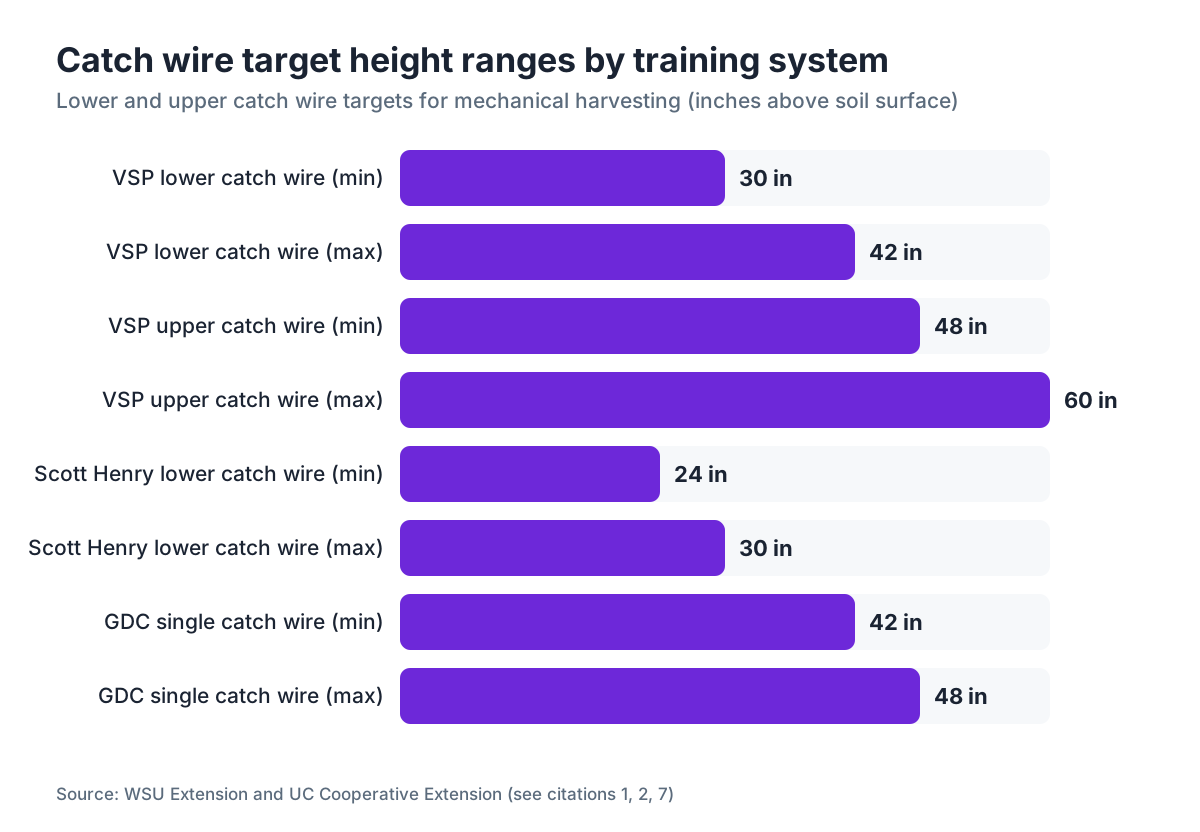
For VSP (Vertical Shoot Positioning) vines harvested with a striker-bar machine, University of California Cooperative Extension grape production guidance recommends the lower catch wire sit between 30 and 36 inches above the soil [1]. Washington State University Extension's mechanical harvest work puts the lower catch wire for striker-bar and rod systems at 30 to 42 inches, with the upper wire at 48 to 60 inches [2]. The gap between the two wires, the fruit zone the machine is built to work inside, usually runs 18 to 24 inches.
Tolerance is where records stop being optional. Most harvester manufacturers say the head handles wire-height variation of plus or minus 2 to 3 inches within a block before the operator has to stop and reset the header [2]. Sounds generous. In practice, a wire installed at 34 inches three seasons ago may sit at 30 or 37 inches today after frost heave, post-replacement tension changes, or plain metal fatigue in staples and clips. You won't know unless you measured.
| Training system | Lower catch wire target | Upper catch wire target | Typical fruit zone height |
|---|---|---|---|
| VSP (striker-bar) | 30-36 in | 48-54 in | 18-24 in |
| VSP (rod/brush) | 32-42 in | 50-60 in | 18-22 in |
| Scott Henry (lower zone only) | 24-30 in | 42-48 in | 18-20 in |
| GDC (Geneva Double Curtain) | 42-48 in (single catch) | N/A | N/A |
These ranges come from WSU Extension and UC Davis Cooperative Extension sources [1][2]. GDC figures vary a lot by machine, so confirm with your specific harvester manufacturer's manual before you use them as targets.
For GDC blocks, the geometry is different enough that I'd pull the manufacturer's spec sheet and file it with your trellis records rather than trust a generic table.
What should a catch wire position record actually include?
A record that protects you in a dispute and actually helps a harvester operator is specific. "Catch wires at standard height" helps nobody. It's a shrug in writing.
Each row-level entry should capture, at minimum:
- Block ID and row number (or GPS coordinates if your vineyard uses them)
- Date of measurement
- Lower catch wire height, measured from soil surface at the post, and at midspan
- Upper catch wire height, same two points
- Wire tension category (slack, normal, tight) if you don't have a tensiometer
- Any anomalies: broken clips, replaced staples, wire splices, heaved posts
- Who took the measurement
Midspan matters because wires sag between posts. A wire clipped at 34 inches at the post can sag to 30 inches at midspan across an 18-foot bay, especially on high-cordon or older wooden-post systems that have settled. If your harvester head is set for 34 inches, that 4-inch midspan sag is enough to make the head hit the wire.
You don't need expensive gear. A measuring stick marked in inches (some operators paint a story pole in 2-inch bands) plus a clip-on plumb bob for slope will do it. On steep blocks, always measure straight down from the wire to the ground, not along the post.
Build the record in a format your whole crew can fill out the same way every time. Cornell Cooperative Extension's viticulture team has flagged inconsistent measurement method across crew members as one of the biggest sources of error in trellis records [3]. If one person measures at the post and another at midspan, your year-over-year comparison is worthless.
How often should you measure and record catch wire positions?
Once a year is the floor, not the target.
Most seasoned managers take a full trellis measurement at three points: post-harvest (to catch damage the machine caused), post-pruning (to catch winter frost heave and settling before shoots start), and pre-harvest (to confirm nothing moved during the season). Three data points a year, and the pre-harvest one is what goes to your harvester operator.
Newer vineyards need more. If your trellis went in less than five years ago, measure more often. Fresh wooden posts settle, anchors shift, and tension changes hard in the first few seasons. WSU work on trellis longevity found wire position drift is highest in years two through four after installation [6].
After a big weather event, frost heave, a windstorm, or a wet winter that soaks the soil around your anchor posts, take an extra pass off-schedule. A single heaved end post can pull the bottom catch wire 4 to 6 inches out of spec across an entire row.
What is the right way to measure catch wire height on sloped ground?
Slope is where informal trellis records fall apart. On flat ground, soil surface to wire is straightforward. On a 10-percent slope (common in Paso Robles or coastal Sonoma blocks), measuring along the post instead of straight down adds 2 to 3 inches of error per point [4].
Measure the vertical distance from the soil directly below the wire up to the wire itself. On a slope, that means holding your stick or pole plumb, not parallel to the post. A line level or a plumb bob clipped to the wire makes it quick.
In your records, note whether the block has meaningful slope and which side of the row you measured from. Uphill and downhill sides carry slightly different effective wire heights relative to the vine's root zone. Most harvester operators work off the downhill measurement, since that's where the catch pan is most likely to lose fruit, but confirm this with your contractor before harvest.
Blocks at Paso Robles wineries and similar hillside sites in California hit this constantly. Build a slope-correction note straight into your record template so nobody skips it.
How do catch wire records connect to other compliance and spray records?
Trellis records don't live alone. They tie to your pesticide application records through one thing that matters: re-entry interval (REI) compliance under the EPA Worker Protection Standard.
The EPA Worker Protection Standard (40 CFR Part 170) requires that workers doing hand-trellis tasks, including measuring, adjusting, and repairing wires in recently sprayed blocks, either wait out the posted REI or wear the required personal protective equipment [5]. If your catch wire crew walks rows right after a sulfur or fungicide application, they belong in your records the same way a pruning crew would.
So date your trellis records precisely, and make sure those dates don't land inside an active REI for that block without the matching PPE note. An inspector reading your spray records and your trellis records side by side will catch a mismatch fast.
The records also feed equipment documentation. If a harvester head gets damaged in your block and the contractor claims the wire was out of spec, your pre-harvest measurement is your primary defense. Some crop insurance policies covering mechanical harvest require trellis-condition documentation as part of a claim, so read your policy language.
For operations that want spray records, trellis records, and harvest activity in one place, VitiScribe is built around exactly that kind of field-operations documentation. Worth a look if you're running these in separate spreadsheets right now.
What happens when catch wires are out of spec at harvest time?
Out-of-spec wires create two problems: yield loss and equipment damage. How bad it gets depends on how far off, and which direction.
Wires too low. If the lower catch wire has dropped below the harvester's minimum clearance, the shaker head or striker bars hit the wire. That can bend or snap it mid-pass and stops harvest for the row until you splice or replace. Most mechanical runs happen after dark to keep fruit cold, so that repair is by headlamp at 1 a.m. A low wire also drops the catch pan below its designed height, and fruit from the lower cluster zone falls past the pan lip to the ground.
Wires too high. A lower catch wire risen above spec shrinks the machine's entry gap, and you risk the head jamming against the wire on approach, especially where posts aren't perfectly aligned. An upper wire too high leaves the shaker working below the top of the fruit zone, so upper-canopy clusters don't get enough agitation and hold their fruit. Your harvest efficiency drops.
Cornell's grape research program has documented that trellis geometry deviations of 4 inches or more from the machine's target zone can cut mechanical harvest efficiency by 10 to 20 percent and leave more fruit on the vine [3]. That's a real yield hit on a variety with tight cluster attachment like Cabernet Sauvignon.
The fix is simple. Walk your blocks with a measuring stick after your pre-harvest check, flag every post where the wire is outside tolerance with tape, and adjust before the machine shows up. Adjusting after the machine is already in the block is expensive and slow.
How should records be stored and shared with custom harvest contractors?
A record that lives only in your office does a contractor no good at 2 a.m. mid-run.
The format that works best is a block-by-block summary, one page or screen per block, that the contractor can pull up on a phone or print for the cab. It should show:
- Block ID
- Training system
- Lower catch wire height (post and midspan)
- Upper catch wire height (post and midspan)
- Date of last measurement
- Any flagged rows or anomalies
- Your cell number for the night of harvest
Some operators add a photo of a sample row taken during the pre-harvest measurement, which gives the contractor's setup crew a visual reference before they calibrate the head.
Electronic sharing is faster and creates a timestamp. A shared folder of PDFs works fine. If you run a field operations platform like VitiScribe, you can generate a contractor-ready trellis summary straight from your block records and send it as a link.
For multi-block operations or vineyards spread across sites (common for custom crush setups tied to city wineries and similar models), keep records sorted by block and vintage year. It's worth the extra structure. Blending records from different sites without clear block IDs creates the exact ambiguity that costs money in a dispute.
What do university extension programs say about trellis record-keeping?
UC Davis, WSU, and Cornell have all published guidance touching mechanical harvest compatibility, though none has a single publication devoted just to catch wire records. You pull from several.
UC Davis Cooperative Extension's viticulture publications, especially the vineyard establishment guides and mechanical harvest adaptation work, tell growers to document trellis specs as part of block management records, with wire positions measured to the nearest inch [1]. Their harvest mechanization research, focused heavily on winegrape varieties common in California's Central Valley, shows consistent trellis geometry is the single biggest factor in mechanical harvest success, ahead of variety or machine type [7].
WSU Extension's Pacific Northwest work addresses the specific problem of managing trellis records across seasons with heavy frost heave risk [2]. It recommends post-freeze inspection of catch wire positions as standard practice in eastern Washington blocks.
Cornell Cooperative Extension's Lake Erie and Finger Lakes programs have published on the link between VSP trellis geometry and harvester head adjustment, particularly for Concord and other labrusca varieties harvested almost entirely by machine [3]. Their work is the most practical on record-keeping, recommending a standardized measurement form that travels with the crew rather than getting filled out later from memory [8].
Here's the honest gap. None of these programs publish a ready-to-use catch wire record template. Growers actually need one, so build your own from their measurement guidance and field-test it with your harvester contractor before the first mechanical pass of the season.
What are common mistakes in catch wire documentation?
Measuring only at the post. The most common error by far. Post height is easy to read but doesn't tell you what the machine hits. Midspan takes two extra minutes per row and matters enormously.
Using inconsistent reference points. Some crews measure from soil surface, some from the top of the berm, some from the crown of the vine row. If your blocks have real between-row soil variation, pick one reference and write down which one.
Skipping the date. A wire-height reading with no date is close to useless for year-over-year comparison or for defending against a contractor dispute. Every entry gets a date.
Not noting anomalies. A wire splice mid-row changes local tension. A replaced clip behaves differently from the original. A heaved post shifts wire height for the whole bay on either side. These are the details that bite you at harvest.
Treating the vineyard as uniform. Block-to-block and even row-to-row variation is normal past ten years of age. One average number for the whole property is a guess, not a record.
Ignoring slope's effect on effective wire height (see the sloped-ground section above). Common in hillside blocks where the crew works on grade all day and instinctively measures parallel to the post instead of straight down.
A mountain winery or hillside operation should bake slope correction into every record template from day one, not after the first ugly harvest teaches the lesson.
Can catch wire position data improve future trellis decisions?
Yes, and hardly anyone does it.
Record catch wire positions consistently over three or more seasons and you start seeing drift patterns. Which blocks have posts that settle? Which end-posts lose tension fastest? Where do clips fail before staples? That tells you where to spend your trellis maintenance budget before a problem turns into a harvest-day emergency.
A few things worth tracking over time beyond current wire height:
- Rate of drift per season (how many inches a year does this block's lower catch wire drop?)
- Which rows keep needing re-tensioning
- Which post types (wood, steel, concrete) show the most height change
WSU trellis longevity research found wooden posts in high-moisture soils showed wire height change of up to 1.5 inches per year over a five-year study, while steel posts in the same conditions showed under 0.5 inches per year [9]. That data justifies post-material decisions when you replace sections.
The record also earns its keep when you weigh variety switches. Thinking about converting a block from hand-harvested Pinot Noir to a mechanically harvested variety? Your existing trellis records tell you right away whether current wire geometry is within spec for machine harvest or whether you need a trellis modification project first.
Frequently asked questions
What is the standard catch wire height for mechanical grape harvesting?
There's no single universal standard. WSU Extension guidance puts the lower catch wire at 30 to 42 inches above soil and the upper at 48 to 60 inches for VSP-trained vines, giving an 18-to-24-inch fruit zone. The right target for your vineyard depends on your harvester model, training system, and variety. Confirm with your contractor's machine manual before setting targets.
How do I measure catch wire height correctly on sloped ground?
Measure the vertical distance from the soil directly below the wire, not along the post. On any slope over about 5 percent, measuring parallel to the post adds meaningful error. Use a plumb bob or level to keep your measuring stick truly vertical. Record which side of the row you measured (uphill or downhill) and the approximate slope percentage so year-over-year comparisons stay consistent.
What tolerance do mechanical harvesters allow for catch wire position?
Most manufacturers specify plus or minus 2 to 3 inches from the target height before the operator has to stop and reset the header. Beyond that, you risk lower harvest efficiency, fruit loss to the ground, or wire-contact damage. Pre-harvest measurement and flagging of out-of-tolerance rows lets you fix problems before the machine arrives instead of during the run.
Do I need to record catch wire positions for compliance or legal reasons?
No specific federal or state regulation currently mandates catch wire records for vineyards. But records protect you in contractor disputes, may be required by some crop insurance policies covering mechanical harvest, and connect to EPA Worker Protection Standard compliance when trellis crews work in recently sprayed blocks. Treat them as risk management documentation, not a regulatory obligation.
How does catch wire height affect fruit loss during mechanical harvest?
Cornell's grape research found trellis geometry deviations of 4 inches or more from the harvester's target zone can cut mechanical harvest efficiency by 10 to 20 percent and leave more fruit on the vine. Both directions cause trouble: wires too low let fruit fall past the catch pan, wires too high leave upper-canopy clusters under-agitated. Consistent documentation lets you find and fix these before harvest.
What should I share with my custom harvest contractor before they enter a block?
Share a block summary showing lower and upper catch wire heights (post and midspan), the training system, date of your last measurement, any flagged rows with anomalies, and your contact number for the night of harvest. A photo of a representative row from your pre-harvest measurement helps their head-calibration crew. Provide it before they arrive, not while they're staging equipment.
How often should catch wire positions be measured and recorded?
At minimum once a year at post-pruning, before shoot growth. Best practice is three times: post-harvest, post-pruning, and immediately pre-harvest. Vineyards under five years old warrant more frequent measurement because posts are still settling. After significant weather events like frost heave or windstorms, take an extra pass even if you're between scheduled checks.
What is the difference between measuring at the post versus midspan for catch wires?
Post measurements capture the height where the wire is clipped or stapled to the support. Midspan captures the actual wire height between posts, where sag happens. A wire at 34 inches at the post can sag to 30 inches at midspan over an 18-foot bay, enough to make the harvester head hit the wire. Record both points; midspan is the number that matters most for machine clearance.
What training systems work best with mechanical harvesting, and does the catch wire setup differ?
VSP is the most common system adapted for mechanical harvest. GDC (Geneva Double Curtain) was designed with machine harvest in mind and uses a single higher catch wire, typically 42 to 48 inches. Scott Henry has a lower fruit zone and needs a lower catch wire target, often 24 to 30 inches. Each system has different wire geometry, so make the training system a required field in your record template, not an assumption.
Can I use catch wire position records to make trellis renovation decisions?
Yes. Multi-season records reveal drift patterns: which blocks lose tension fastest, which post types shift most, which rows need annual re-tensioning. WSU research found wooden posts in high-moisture soils can shift wire height up to 1.5 inches per year versus under 0.5 inches for steel. That longitudinal data gives you an actual evidence base for post replacement or trellis modification projects.
Does catch wire positioning affect pesticide application or re-entry intervals?
Not directly, but the two records interact. Under the EPA Worker Protection Standard (40 CFR Part 170), workers measuring or adjusting trellis wires in recently sprayed blocks must observe posted re-entry intervals or use required PPE. Date your trellis measurement records precisely and cross-check those dates against your spray records to confirm no crew entered a block during an active REI without proper protection.
What should I do if catch wires are out of tolerance right before mechanical harvest?
Walk the block with flagging tape and mark every post where the wire is outside the tolerance band. Adjust by re-clipping, re-tensioning, or replacing damaged clips before the machine arrives. If you can't adjust in time, document the out-of-tolerance rows in your pre-harvest record, tell the contractor specifically, and let them decide whether to skip those rows or change their head setting. Don't let the machine enter without that conversation.
How do I create a catch wire record template that field crews will actually use?
Keep it simple and physical. A single-page form with block ID, row number, date, lower wire height at post and midspan, upper wire height at post and midspan, anomaly notes, and crew initials is enough. Laminate a story pole (a painted measuring stick) and keep it in the tractor. Cornell's viticulture team recommends the form travel with the crew rather than getting completed later from memory. Crews fill out what's in front of them.
Sources
- UC Agriculture and Natural Resources (UC Cooperative Extension), Viticulture: UC Cooperative Extension recommends documenting trellis wire positions to the nearest inch as part of block management records, and identifies consistent trellis geometry as the leading factor in mechanical harvest success
- Washington State University Extension, Mechanical Harvesting of Wine Grapes: WSU Extension guidelines put the lower catch wire at 30 to 42 inches and upper at 48 to 60 inches for VSP vines; harvester heads generally accommodate plus or minus 2 to 3 inches of variation; post-freeze wire inspection is a recommended standard practice
- Cornell University College of Agriculture and Life Sciences, Viticulture and Enology: Cornell research documented that trellis geometry deviations of 4 inches or more from the harvester's target zone can reduce mechanical harvest efficiency by 10 to 20 percent; Cornell recommends a standardized measurement form that travels with the crew
- UC Agriculture and Natural Resources, Vineyard Establishment and Development: On sloped terrain, measuring along the post rather than vertically can introduce 2 to 3 inches of error per measurement point in trellis wire height readings
- EPA, Agricultural Worker Protection Standard, 40 CFR Part 170: The EPA Worker Protection Standard requires that workers performing hand-trellis work in recently sprayed fields observe posted re-entry intervals or wear required PPE
- WSU Extension, Trellis Systems for Wine Grapes in Washington: Wire position drift is highest in years two through four after trellis installation; WSU recommends increased measurement frequency in new vineyards
- UC Agriculture and Natural Resources, Mechanical Harvest of Winegrapes: UC harvest mechanization research covers VSP trellis geometry requirements, with fruit zone height for striker-bar machines typically set at 18 to 24 inches between lower and upper catch wires
- Cornell University College of Agriculture and Life Sciences, Trellis Design for Mechanically Harvested Vineyards: Cornell's program identifies inconsistent measurement method across crew members as one of the primary sources of error in vineyard trellis records
- WSU Extension, Vineyard Trellis Longevity: WSU five-year trellis longevity research found steel posts in high-moisture soils showed less than 0.5 inches of wire height change per year, versus up to 1.5 inches per year for wooden posts
- EPA, Agricultural Worker Protection Standard (WPS): The WPS applies to workers and handlers on farms producing agricultural plants, including vineyards, and requires re-entry interval compliance for all field tasks including trellis inspection and adjustment
Last updated 2026-07-10