Consultant viticulture: what a vineyard consultant actually does and costs
TL;DR
- A vineyard consultant is an independent viticulturist you hire by the hour or the season to diagnose problems, design spray programs, guide canopy work, and keep your records clean.
- Rates run roughly $75 to $250 per hour depending on region and specialty.
- Small operations get the most value during establishment, before a replant, or when disease pressure spikes without warning.
What does a vineyard consultant actually do day to day?
A good consultant is the person you call before you make the expensive mistake, not after. The scope is wide. A vineyard consultant monitors vine health across growth stages, scouts for pests and disease, designs and adjusts spray programs, recommends cover crop and irrigation strategies, and writes the field records you need for compliance. Some specialize narrowly, say powdery mildew pressure modeling or regulated deficit irrigation. Others run the entire agronomic program for an estate.
What separates a consultant from a farm advisor or a pesticide dealer's rep is independence. A consultant's only product is advice. They don't make an extra dime when you buy more sulfur. That independence matters a lot when you're deciding whether to spray a fourth time in a wet May, or whether that yellowing block needs a $12,000 soil amendment or just better drain tile.
Day-to-day work often means weekly or biweekly vineyard walks through the growing season, tissue and petiole sampling in late summer, irrigation scheduling, and detailed written scouting reports. Before harvest, many consultants also help set picking decisions against Brix, pH, and TA targets tuned to the winery's style. Off-season, the work shifts to pruning level recommendations, dormant spray planning, and budget inputs for the coming year.
For a vineyard without a full-time viticulturist on staff, which describes most properties under about 50 acres, a consultant is the technical director of the farming operation in everything but title. [1]
How much does a vineyard consultant cost?
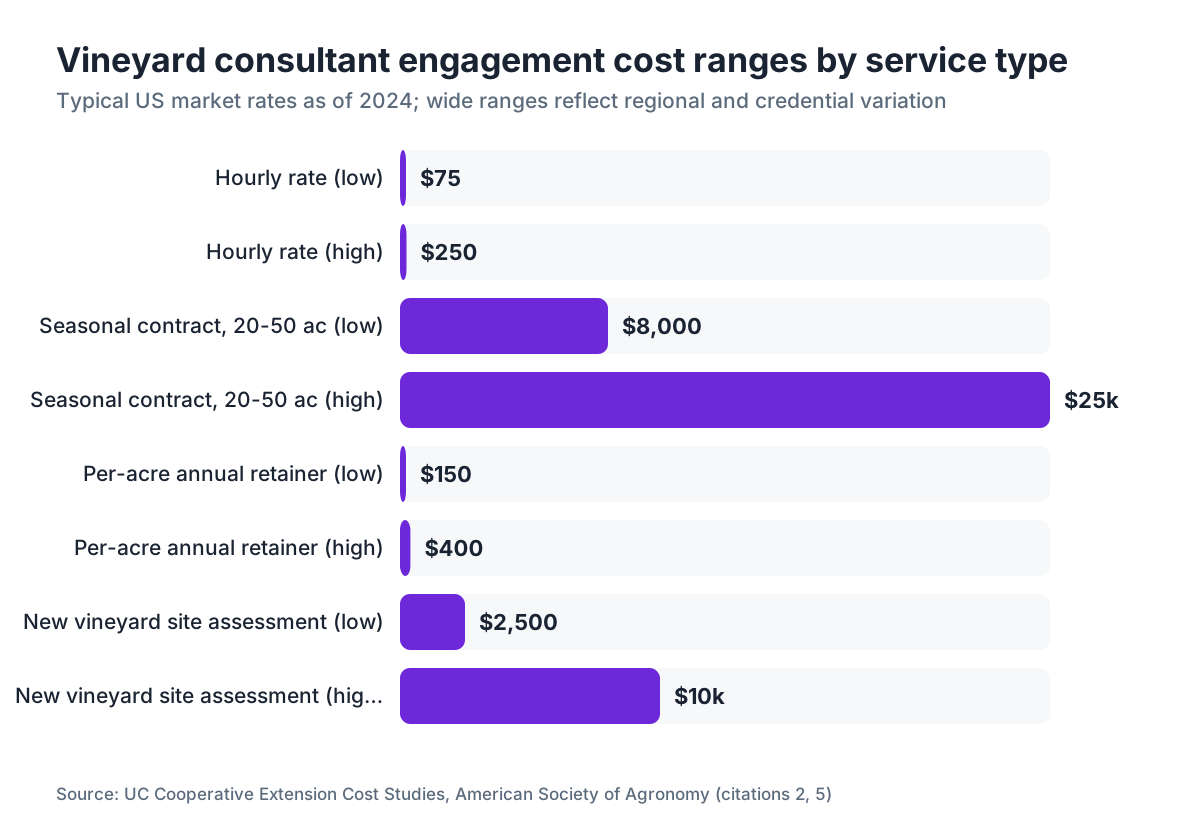
Rates run roughly $75 to $250 per hour. Seasonal contracts for a 20 to 50 acre block usually land between $8,000 and $25,000. The spread is wide and geography explains only part of it. Here is the realistic picture from published extension surveys and industry salary data as of 2024.
| Service type | Typical rate range |
|---|---|
| Hourly consultation | $75, $250 per hour |
| Seasonal contract (20 to 50 ac) | $8,000, $25,000 per season |
| Per-acre annual retainer | $150, $400 per acre |
| New vineyard design / site assessment | $2,500, $10,000 flat |
| Expert witness / regulatory work | $200, $400 per hour |
Credential and demand drive most of the rest. A consultant who holds a Certified Crop Adviser (CCA) credential, has 20 years in one appellation, and is fought over by multiple estate clients charges toward the top. A newer consultant building a book of business charges at the bottom to earn a track record. Neither is automatically the better fit for you.
For a small vineyard of 10 to 30 acres, a seasonal contract costs far less than a full-time hire. A full-time vineyard manager in California runs $60,000 to $90,000 in base salary plus benefits, before you count the truck and equipment. [2] A consultant at $15,000 per season leaves a lot of budget for the actual farming.
Scope creep is the cost people underestimate. Spell out the number of site visits per month, what counts as a "visit" (a written report or just a phone call?), whether travel time bills at the same rate, and who pays for lab work. Ambiguity here is where the relationship sours.
For paso robles wineries or any multi-estate operation in a warm inland appellation, the strongest consultants often get shared across several properties. That drives their rates up. It also keeps them sharp on what's actually moving through your specific ground that week.
When should you hire a vineyard consultant vs. handle it in-house?
Hire a consultant before you plant, when a new disease shows up, or when you're facing a decision you can't take back. Handle it in-house once you have a seasoned farm manager who knows your specific varieties and soils cold. Most operations end up somewhere in the middle. Here's the honest breakdown.
Site selection and variety-rootstock matching are decisions you live with for 25 to 40 years. A UC Davis extension cost study puts a new planting at $20,000 to $35,000 per acre in California, depending on trellis and irrigation infrastructure. [3] Getting those calls wrong is not recoverable without spending another $20,000 an acre. A $5,000 pre-plant consultation is cheap insurance against that.
Disease pressure is the other clear trigger. If your region picks up a new pathogen, Xylella, vine mealybug, a fresh Botrytis strain, your existing farm manager may have never managed it. Leaning on a specialist for one season while your team learns beats hoping for the best.
Handle it in-house when your manager has run your specific varieties and soils for more than five or six seasons. By then they probably know your land better than any consultant could from periodic visits. A consultant is most useful at that point as a second set of eyes once a year, not a weekly presence.
The middle ground most operations settle into: a light annual retainer for strategic questions and regulatory review, paired with a strong full-time or part-time crew manager for day-to-day execution. [4]
For a vineyard moving to organic or Biodynamic certification, a consultant with that specific certification track record is close to required. The record-keeping demands alone earn the fee back.
What credentials and qualifications should you look for in a vineyard consultant?
No single license lets you call yourself a vineyard consultant in the United States. The market runs from genuine experts to people who grew up near wine country and read a few books. Look for a recognized credential, direct experience with your conditions, and liability insurance. Here's how to sort it.
The Certified Crop Adviser (CCA) credential, run by the American Society of Agronomy, is the most widely recognized general standard. [5] It takes a two-part exam covering agronomy, pest management, soil and water, and nutrient management, plus ongoing continuing education. Roughly 13,000 CCAs are active in the US. Some states layer a local endorsement on top.
California goes further. Licensed Pest Control Advisers (PCAs) are required to sign off on pesticide use recommendations under the California Department of Pesticide Regulation framework. [6] If your consultant is writing spray programs in California, they need a PCA license. This is not optional, and the distinction lands on you: acting on a spray recommendation from someone without a PCA license can create liability for your operation.
A master's degree or PhD in viticulture, enology, or plant pathology from a program like UC Davis, Cornell, or Washington State University signals research-based problem-solving. Credentials alone don't tell you whether someone has hands-on experience with your dirt. Ask for three client references who farm similar acreage, similar varieties, and similar climate. Then call them.
Ask one more thing: does the consultant carry professional liability (errors and omissions) insurance? If a bad spray recommendation costs you a crop, who pays? Most established consultants carry the coverage. The ones who don't are a risk you're absorbing for free.
How do vineyard consultants handle spray records and pesticide compliance?
This is where consulting and compliance paperwork touch directly, and a lot of small operations are more exposed here than they realize. The consultant's written recommendation becomes part of your legal paper trail, so it has to match what actually goes in the tank.
Under the EPA's Worker Protection Standard (WPS), agricultural employers must keep records of pesticide applications including the product name, EPA registration number, application date, location, rate, and restricted-entry interval. [7] The WPS applies to any agricultural establishment that uses EPA-registered pesticides and employs agricultural workers. A vineyard with a single employee qualifies.
California reporting goes further. All agricultural pesticide applications get reported monthly to the county Agricultural Commissioner under the California Department of Pesticide Regulation, and records must be kept for three years. [6] Most other major wine states have similar reporting, usually less extensive.
A competent consultant does more than write recommendations. They help make sure what gets applied matches what gets recorded. A gap between the spray log and the PCA's written recommendation is a red flag in any regulatory audit.
A spreadsheet or a paper binder works until it doesn't. Once you're juggling multiple blocks, multiple products, several applications a season, and a mix of restricted-use and general-use materials, a dedicated system saves hours. That's where field operations software like VitiScribe earns its keep: it ties the consultant's recommendation to the spray record, the block map, and the compliance report without you retyping the same numbers four times.
Washington State University Extension has published integrated pest management record-keeping guidance worth reading even if you're nowhere near the Pacific Northwest, because the organizational logic travels. [8]
What does a vineyard consultant's scouting report include?
A scouting report is the main deliverable from most vineyard visits, and the quality range is enormous. A bare-minimum report is three sentences in an email. A thorough one runs two to four pages and gives you everything you need to make this week's farming decisions.
What a good scouting report covers:
- Date, blocks visited, and growth stage (using a standard like the E-L (Eichhorn-Lorenz) scale)
- Pest observations: species, counts or severity rating, location within the block
- Disease observations: incidence, severity, affected tissue
- Vine physiological notes: shoot growth rate, water stress signs, nutrient deficiency symptoms
- Current spray recommendation with product, rate, timing window, and PHI (pre-harvest interval)
- Any follow-up actions required before the next visit
The pre-harvest interval note carries legal weight. If your consultant recommends a fungicide with a 7-day PHI and you apply it 5 days before harvest, you have a residue compliance problem whether or not anyone catches it. A consultant who doesn't flag PHI in every recommendation during the 30 days before harvest is cutting corners.
The Cornell University viticulture extension program, one of the best resources in the country for this, publishes model scouting forms small operations can adapt. [9] UC Davis Cooperative Extension offers block monitoring protocols that California consultants often use as a baseline. [10]
For operations with multiple blocks or estate vineyards tied to destination properties like gervasi vineyard or allegretto vineyard resort, the scouting report does double duty. It tells the winery team what's happening in the field, so farming decisions and harvest timing stay in step.
How is a vineyard management company different from an independent consultant?
An independent consultant gives advice and leaves you in control. A management company takes the farming over. That single difference drives everything else, so get it clear before you sign.
An independent consultant is an individual or small firm you hire for advice. You keep operational control. Your employees take direction from you. The consultant recommends.
A vineyard management company takes operational control. They supply the crew, the equipment, and the agronomic supervision. You pay a management fee plus the cost of labor and materials. The trade is that you give up day-to-day control for a turnkey operation.
For absentee owners, small wineries without farming infrastructure, or new vineyards in their establishment years, a management company often makes more sense. For an owner-operator who wants to stay hands-on, an independent consultant fits better.
Cost structure differs too. A management company bills you for every labor hour, every piece of equipment, and every material, plus their management margin. In a high-cost region you can spend $1,500 to $3,000 per acre per year with one. [2] An independent consultant costs a fraction of that, but sourcing labor, equipment, and materials is on you.
Some operations run both: a management company for the physical farming and a separate independent consultant for a technical second opinion. That works well when the management company has a financial stake in a particular approach (they earn more on a heavier spray program, say) and you want unbiased oversight.
What questions should you ask before hiring a vineyard consultant?
Skip the generic "tell me about your experience" opener. These seven questions actually tell you what you need to know.
- How many vineyard properties do you currently advise, and what's the total acreage? This tells you whether they're spread too thin. More than 1,000 total acres under consultation is common for experienced advisors, but if they're a solo practitioner, ask how many hours a week they realistically give each property.
- Have you managed [specific variety] on [specific rootstock] in conditions like mine? Generic viticulture knowledge doesn't translate cleanly. Merlot in a cool coastal climate has completely different pressure timing and canopy challenges than Zinfandel in a hot interior valley.
- Do you hold a PCA license (California) or the equivalent in this state? (See the credentials section above.)
- What does your written recommendation look like? Ask to see a sample scouting report and a sample spray recommendation from a real engagement, with client-identifying info redacted. If they hesitate, that's your answer.
- How do you handle a situation where you're not sure? This might be the most revealing question. A good consultant says "I'd pull a tissue sample and send it to the lab before we do anything" or "I'd call a plant pathologist I know at the extension program." Overconfidence in a gray area is a red flag.
- What's your emergency availability? If you get a hail event or a disease outbreak on a Friday in August, can you reach them over the weekend?
- Who covers your clients when you're traveling or unavailable? Solo consultants without a backup relationship can leave you stranded at the worst possible moment.
How do university extension programs support vineyard consultants and growers?
UC Davis, Cornell, and Washington State University run the three largest viticulture extension programs in the country, and their free resources are genuinely excellent. Most experienced consultants cite one or more of these programs as a working reference, more than something they read in school.
UC Davis Cooperative Extension covers California's spread of growing regions and publishes research-based guidelines on pest management, irrigation, soil health, and canopy work, updated as new research lands. [10] The UC Integrated Pest Management (UC IPM) program is one of the best online pest management resources for any crop, and the viticulture section is strong on modeling spray timing windows.
Cornell's viticulture and enology program covers the Northeast and publishes on cold-climate grape growing, Botrytis management, and organic production, widely referenced even outside the region. [9] Their Lake Erie and Finger Lakes regional work is the standard for anyone growing in similar climates.
Washington State University Extension is the primary resource for Pacific Northwest growers and has strong material on wine grape pest management, particularly leafhoppers, mites, and the powdery mildew pressure timing peculiar to eastern Washington and Oregon. [8]
All three programs offer online courses, webinars, and published guidelines at little or no cost. A consultant who can't name the extension resources relevant to your region is one who hasn't kept up.
The programs also run trial data on new varieties, rootstocks, and management practices. When a consultant recommends something, asking "is there extension trial data on this in our region?" is a fair question, and a good one.
What records should you keep from consultant interactions to stay compliant?
Records from consultant work fall into a few categories, and the gaps carry real consequences. Pesticide use records, written PCA recommendations, and scouting reports are the three that matter most.
Pesticide use records are the most regulated. Under the EPA WPS, application records must include the product name, EPA registration number, active ingredient, application date, location, and any restricted-entry interval. [7] In California, those records go to the county Ag Commissioner monthly. Keep them at least three years; some states require five.
Written recommendations from your PCA (in California) are required before a restricted-use pesticide can legally go on the vines. The written recommendation must match the application record. Consultants who fire off a quick "go ahead and spray X at Y rate" without a written recommendation are creating liability for both of you.
Scouting reports aren't legally required in most states, but they're your best defense in a crop loss dispute or an audit. If you argue that a disease outbreak wasn't foreseeable, the scouting report showing no observable disease five days out is your evidence.
For organic or sustainable certification, field activity logs, input records, and consultant recommendations become part of your certification file. The National Organic Program requires certified operations to keep records for five years that, in the program's words, "fully disclose all activities and transactions of the certified operation." [11]
This is exactly the point where a system that connects the consultant's recommendations to your spray records, block maps, and compliance exports earns its keep. VitiScribe is built for it: keeping the paper trail coherent across the season without manual re-entry, so an audit or certification review isn't a week of hunting through emails and notebooks.
What are realistic outcomes to expect after hiring a vineyard consultant?
Results depend heavily on what problem you hired them to solve. Set the expectation against the job, not against a brochure.
For a new vineyard, a good consultant will likely change your variety-rootstock selection and your irrigation design, often in ways you'd have regretted skipping. The five-year outcome is a vineyard that performs more predictably with fewer replant-forcing problems. Hard to put a single number on, but the cost-benefit runs strongly positive.
For an established vineyard with a disease pressure problem, a consultant who knows your specific pathogen in your specific climate should cut spray costs by tightening the program rather than piling on materials. UC IPM guidelines document that model-based spray timing for powdery mildew can reduce fungicide applications by 30 to 40 percent compared to calendar-based programs while holding equivalent disease control. [10] That's a real budget line.
For compliance, a consultant with strong record-keeping habits shrinks your audit exposure. Selling to a major retailer that requires sustainability certification, a winery with specific farming standards, or just staying clean with your county Ag Commissioner, the paper trail protects you.
What a consultant can't fix is chronic underinvestment in the vineyard itself. If the trellis is failing, the irrigation lacks coverage, or the vine spacing made sense 30 years ago and doesn't now, advice alone won't solve it. A good consultant tells you this straight instead of billing you for years of remediation on a fundamentally broken system.
For operations tied to destination hospitality like south coast winery or ponte winery, the consultant's work also feeds the story the tasting room tells. Guests walking the vineyard like knowing someone with real credentials is watching these vines closely. That's not the reason to hire a consultant. It's a real bonus.
Frequently asked questions
How many acres do you need before a vineyard consultant makes financial sense?
There's no hard threshold, but the math usually works at 5 acres and up. Below that, the per-acre cost of a consultant often beats what the consultant saves, unless you're facing a high-stakes problem like disease establishment or a replant decision. At 10 acres or more, a seasonal consultant almost always pays for itself in avoided errors and tighter spray programs.
Can a vineyard consultant write a spray program for an organic operation?
Yes, but confirm they have direct experience with organic-approved inputs. An organic spray program differs from a conventional one: the approved material list under the National Organic Program is restricted, many products have different application windows and efficacy, and the record-keeping ties to your certification. Ask specifically whether they've managed other certified organic vineyards and can hand you a reference from one.
What is a PCA license and why does it matter for vineyard consulting in California?
A Pest Control Adviser (PCA) license is required in California to legally make written pesticide use recommendations for agricultural operations. The California Department of Pesticide Regulation issues it after an exam covering pest management, pesticide law, and safety. If your California consultant writes spray recommendations without a PCA license, you have a compliance problem. Every written recommendation should carry their PCA license number.
How often should a consultant visit the vineyard during the growing season?
Most contracts specify biweekly visits from budbreak through harvest, with weekly visits during high-risk periods like flowering or when disease pressure climbs. That's roughly 12 to 20 site visits per season. Off-season visits for dormant spray planning and pruning guidance add one to three more. Less than biweekly during active growth usually isn't enough to catch fast-moving disease or pest problems in time to respond.
What's the difference between a vineyard consultant and a viticulturist?
A viticulturist is anyone who studies or practices the science of grape growing. A vineyard consultant is a viticulturist (or agronomist) who works independently on contract rather than as a full-time employee. The distinction is employment structure, not expertise. Some full-time estate viticulturists outclass independent consultants, and the reverse happens too. When people say 'hire a consultant,' they mean someone off your payroll.
Do vineyard consultants help with grape contracts and pricing negotiations?
Some do, some don't. Agronomic consultants typically focus on farming and compliance, not commercial negotiations. A handful with deep appellation knowledge advise on fair-market pricing and contract terms, drawing on current grower surveys and regional price trends. If that's what you need, ask explicitly during initial conversations. It's a separate skill set from pest management.
What software do vineyard consultants typically use for record-keeping?
Practices vary widely. Some consultants use spreadsheets or general farm management software. Others use vineyard-specific platforms that generate compliant spray records, block maps, and audit-ready reports. The key question for you is whether the consultant's format integrates with your own system, or whether you'll spend hours each month re-entering data. Ask what format their recommendations and scouting reports come in before you sign.
Can a vineyard consultant help with a new planting site selection?
This is one of the highest-value uses of a consultant. Site assessment for a new planting covers soil profile, drainage, frost risk, wind exposure, water availability, and variety-rootstock matching to local conditions. UC Davis extension cost studies put new planting establishment at $20,000 to $35,000 per acre in California. Getting variety, rootstock, or trellis calls wrong at planting means living with them for decades. The pre-plant fee is almost always justified.
How do I check if a vineyard consultant's credentials are legitimate?
For CCA credentials, the American Society of Agronomy maintains a public lookup at certifiedcropadviser.org. For California PCA licenses, the California Department of Pesticide Regulation has a public license lookup on its site. For academic credentials, ask for the institution and graduation year and verify it yourself. References from current clients who farm similar conditions are the most reliable signal of all.
What liability does a vineyard consultant carry if their recommendation causes crop loss?
A consultant with professional liability (errors and omissions) insurance carries the primary financial liability for advice-related losses. Without it, you'd pursue a civil claim directly against the individual, which is slow and uncertain. Before hiring, ask for proof of E&O coverage and check the limit. For a 20-acre estate with a potential crop value in the hundreds of thousands, a consultant carrying only $100,000 in coverage is underinsured.
Are there vineyard consultants who specialize in specific wine regions or varieties?
Yes, and for complex situations, regional specialization matters. A consultant who's spent 15 seasons in one appellation knows the local disease pressure timing, the microclimate quirks, the rootstocks that work in local soils, and often the buyers and winery relationships too. That knowledge is worth paying for. For unusual varieties or emerging regions, look for consultants with trial or research experience with those specific varieties, often found through university extension programs.
How does the EPA Worker Protection Standard affect what a vineyard consultant must document?
Under the WPS (40 CFR Part 170), employers must keep records of each pesticide application including the product name, EPA registration number, active ingredient, application rate, date, and location, plus the restricted-entry interval. A consultant writing the recommendation is not the employer of record and not directly responsible for keeping your records, but their written recommendation is the document your records must match. Discrepancies between the two are a compliance problem.
What should a vineyard consulting contract include to protect both parties?
At minimum: scope of work (number and frequency of visits, deliverables per visit), fee structure (hourly, retainer, or per-acre, and what's included), billing for travel and lab work, term and termination provisions, who owns the records and recommendations at contract end, and a clear description of what's not included. Without written scope, disputes about "I thought you were handling that" are close to inevitable. Have a local ag attorney review it before you sign.
Sources
- UC Cooperative Extension, Sample Costs to Establish a Vineyard and Produce Wine Grapes: Vineyard labor, management, and per-acre cost ranges for California wine grape production
- UC Cooperative Extension, Vineyard Establishment Cost Studies: New vineyard planting costs of $20,000 to $35,000 per acre in California depending on trellis and irrigation system
- Cornell Cooperative Extension, Viticulture and Enology Program: Vineyard management structures and advisory models for small-to-medium wine grape operations
- American Society of Agronomy, Certified Crop Adviser Program: CCA credential requirements, examination structure, and active credential holder count
- California Department of Pesticide Regulation, Pest Control Adviser Licensing: PCA license requirements for making written pesticide recommendations in California agriculture, and monthly pesticide use reporting requirements
- U.S. EPA, Worker Protection Standard (40 CFR Part 170): WPS requirements for pesticide application records including product name, EPA registration number, application date, location, rate, and restricted entry interval
- Washington State University Extension, Wine Grape Production and IPM: Integrated pest management record-keeping guidance and wine grape spray program management for Pacific Northwest vineyards
- Cornell Cooperative Extension, Vineyard Scouting and Monitoring Resources: Model scouting forms and vineyard monitoring protocols for Northeast wine grape operations
- UC IPM, Grape Pest Management Guidelines: Model-based spray timing for powdery mildew can reduce fungicide applications by 30 to 40 percent compared to calendar-based programs while maintaining equivalent disease control
- USDA Agricultural Marketing Service, National Organic Program: NOP requires certified operations to maintain records for five years that fully disclose all activities and transactions related to the operation
Last updated 2026-07-09