Cover crops for vineyard soil types: Zamora and alluvial soils
TL;DR
- Zamora soils are heavy clay adobe that compacts easily and waterlogs in wet winters, so low-growing, drought-tolerant mixes like sub clover and blando brome do the structural work in the row middles.
- Alluvial vineyard soils drain well and run fertile, which pushes vine vigor, so competitive grasses like cereal rye or tall fescue are the smarter pick to pull down nitrogen and water before bloom.
What are Zamora soils and why do they matter for cover cropping?
Zamora soils are a fine-loamy, mixed, superactive thermic Typic Haploxeralf series mapped across the inner Coast Ranges and Sacramento Valley floor of California. They're a benchmark series in USDA soil surveys and show up again and again in Yolo, Colusa, and Napa County vineyard blocks. The texture is usually a clay loam or silty clay loam, with a restrictive argillic horizon sitting anywhere from 8 to 30 inches below the surface. [1]
That argillic layer is the whole story. Water perches on it during winter rains, and tractor traffic compacts the clay surface hard enough that a penetrometer reads above 300 psi in a dry summer, well past the 200 psi threshold where root elongation slows for most crops. [2] Run conventional tillage between rows on Zamora and you make this worse every year.
Cover cropping on Zamora is less about adding nutrients and more about holding soil structure together. The clay particles aggregate when they get continuous organic matter and biological activity from roots. Without it, the surface seals, runoff climbs, and you get sheet erosion on anything with more than a 2 percent slope. The cover crop is doing structural work here, not green mulch work.
What are alluvial vineyard soils and how do they differ from Zamora?
Alluvial vineyard soils are young, unconsolidated deposits laid down by rivers and streams, often mapped under series like Hanford, Yolo, Rincon, or Bale depending on the county and the watercourse that dropped them. They drain well to somewhat poorly, run sandy loam to loam in texture, and lack the restrictive subsoil horizon that defines Zamora. [1]
The catch is that alluvial soils are often too good. High base saturation, good aeration, deep rooting depth, and reasonable water-holding capacity all add up to vines that grow hard. Too hard. Excess shoot growth shades the fruit zone, raises disease pressure, and makes harvest timing a constant fight. UC Davis viticulture work in the Sacramento and San Joaquin valleys flags alluvial fan vineyards as high-risk for overcropping and canopy management problems precisely because the soil hands the vine everything it wants. [8]
Cover cropping on alluvial soils is a competition strategy. You want the cover crop drawing down available nitrogen and soil water in the late-spring window before flowering, when excess vegetative growth locks in. You're not building tilth. You already have tilth. You're managing a resource that's too available.
Here's a quick comparison of the two soil types and what you're solving for:
| Characteristic | Zamora (clay loam, argillic) | Alluvial (sandy loam to loam) |
|---|---|---|
| Drainage | Restricted, seasonal waterlogging | Well to moderate, rarely waterlogged |
| Compaction risk | High, especially when trafficked wet | Moderate, recovers faster |
| Vine vigor tendency | Low to moderate | Moderate to high |
| Cover crop primary role | Structural, erosion control | Competitive, N and water drawdown |
| Tillage risk | High (destroys aggregates) | Lower, but still real |
| Seeding challenge | Surface sealing limits germination | Rapid germination, fast growth |
Which cover crop species work best on Zamora clay soils?
The species that win on Zamora tolerate wet winters, hang on through a dry spring, and don't demand a perfect seedbed. Zamora's surface sealing means germination goes patchy if you're careless about timing and seedbed prep.
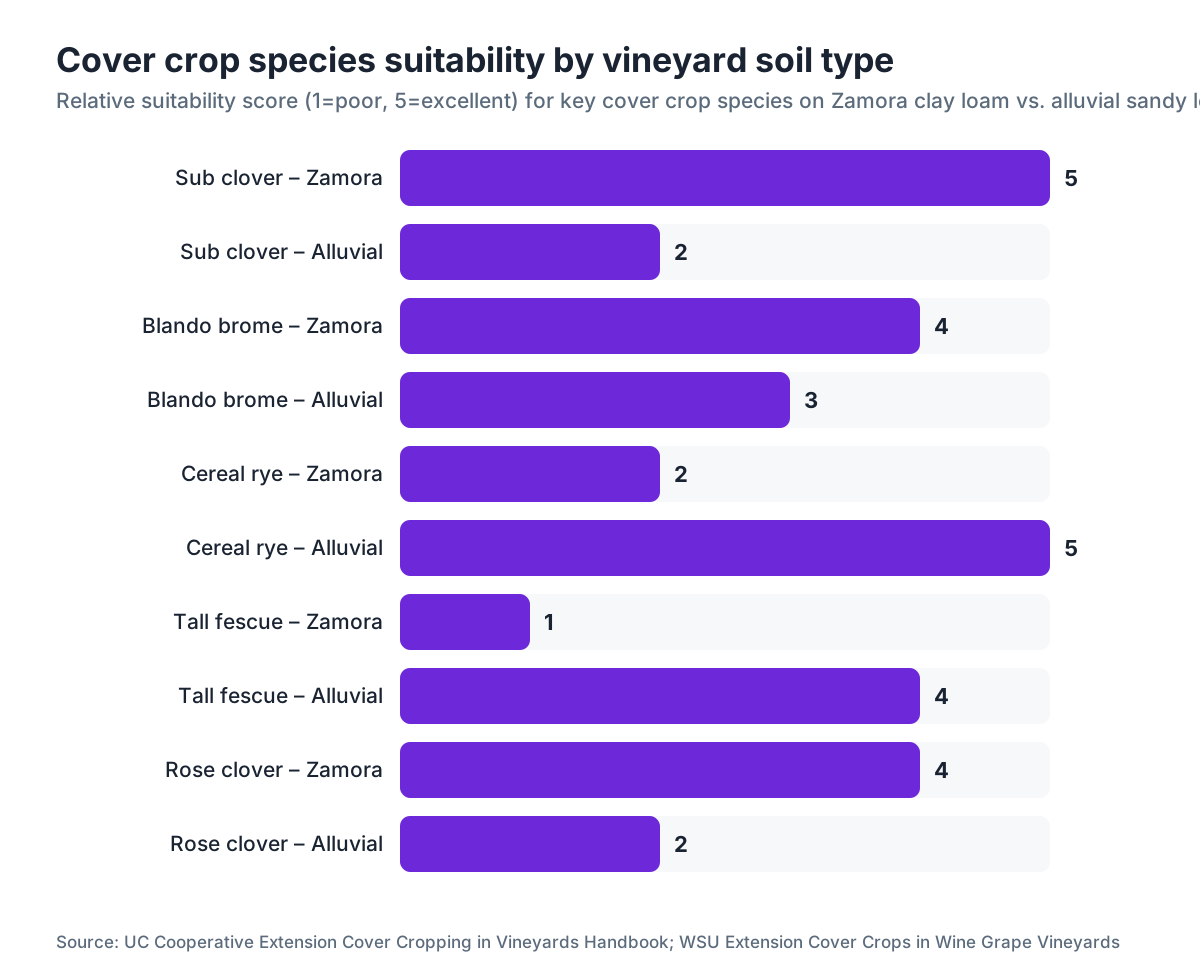
Subterranean clover (Trifolium subterraneum) is probably the single most field-tested option for California clay soils. It sets seed underground, so it reseeds itself year after year without new seed cost after establishment, and it handles moderate waterlogging without rotting out. UC Cooperative Extension trials in Lake and Mendocino counties found self-reseeding sub clover held 70 to 80 percent groundcover through the third season with no added inputs, on soils with clay fractions like Zamora. [3]
Rose clover (Trifolium hirtum) is another strong pick, especially on the drier interior sites where Zamora slides toward adobe. It germinates in loose, rough seedbeds and takes the long dry summers better than most legumes.
For grass, soft chess (Bromus hordeaceus) and blando brome both fit the clay loam texture range and don't need a firm seedbed the way ryegrass does. They establish from rough surface scratching, which matters on Zamora because aggressive tillage to build a perfect seedbed just destroys the aggregate structure you're trying to protect.
Skip perennial ryegrass on heavy Zamora blocks. It stays competitive too late into spring, and its water demand in a warm April can stress young vines before you get a chance to mow. Annual ryegrass fits better. It's easier to terminate and backs off late-season competition. [2]
A practical Zamora mix: 8 lb/acre sub clover, 6 lb/acre blando brome, 2 lb/acre rose clover, drilled into the row middle in October after the first half-inch rain. Seed cost at current market runs roughly $40 to $65 per acre, and the reseeding sub clover claws most of that back over years two and three.
Which cover crop species work best on alluvial vineyard soils?
On alluvial soils you want competitive, fast-establishing species that pull nitrogen from the profile and cut plant-available water in late spring. That means grasses, not legumes, as the dominant component. A pure legume cover on fertile alluvial ground can spike your spring nitrogen pool right when you least want it, pushing shoots past 12 inches before bloom and setting up a canopy management nightmare.
Cereal rye (Secale cereale) is your workhorse. It establishes in poor seedbeds, grows aggressively through winter and spring, carries a high nitrogen demand, and lays down allelopathic residue that suppresses weeds after mowing. WSU extension research in Washington's Columbia Valley documented cereal rye pulling 40 to 80 lb/acre of nitrogen from the top 24 inches of alluvial soil in a single season when left to head out before termination. [4]
Tall fescue (Festuca arundinacea), a perennial, earns its place on alluvial soils where you want year-round competition and aren't worried about vine stress in dry years. It won't reseed annually like sub clover, but it shows up every spring competing hard. Watch the young vines. Tall fescue around vines under three years old on alluvial soils can stress them enough to delay establishment.
Barley (Hordeum vulgare) is a fast, cheap option for single-season competitive cover where vine age or variety makes you nervous about tall fescue's persistence. Seed at 60 to 80 lb/acre broadcast, or 40 to 50 lb/acre drilled. It terminates cleanly when you mow it in late April, and the residue breaks down fast enough that it doesn't tie up nitrogen long enough to matter.
A reasonable alluvial mix: 30 lb/acre cereal rye plus 5 lb/acre annual ryegrass. If you want perennial cover, run 20 lb/acre cereal rye plus 4 lb/acre tall fescue. Seed in October here too, but you don't need to wait for rain the way you do on Zamora, because the soil drains well enough to let you work it. [3]
How does vine row location change your species choice?
Most growers treat the row middle and the vine row as separate zones, and they should. The row middle is where cover crops live. The vine row (within 18 to 24 inches of the trunk) usually stays clean with herbicides, mechanical mowing, or a mix of both.
On Zamora, you might push the cover crop mix right to the edge of the vine row zone on sloped blocks, because bare clay erodes fast. Just plan to mow or roll it before it gets tall enough to compete with shallow feeder roots.
On alluvial soils, keeping the vine row clean matters more, because the soil already gives the vine too much. A competitive cover crop at the base of the vine on a fertile alluvial fan stresses young vines measurably, especially in a dry spring. Cornell viticulture research documented vine trunk cross-sectional area drops of 10 to 20 percent in young vines grown with under-vine cover versus clean cultivation on well-drained loam, though the effect leveled off by year four of establishment. [5]
In older alluvial vineyards, under-vine competition can be a useful check on vigor. Some San Joaquin Valley growers run a narrow strip of fescue or clover right under the wire to hold down excess shoot growth without the cost of summer hedging. That's an advanced move. Get your row middles right first.
What seeding rates and timing work for each soil type?
Timing is the variable most growers blow. You're aiming for germination after the first real rain (at least half an inch in a single event) but before late November, when cooler soil slows establishment. Soil temperature at 2-inch depth should sit above 50°F for most legumes and above 40°F for cereal rye. [4]
On Zamora, surface sealing after rain is a real risk. Broadcasting seed? Do it right before an expected rain so the seed washes into cracks instead of sitting on a sealed surface. A shallow disc pass or verticutter before seeding helps, but don't go deep. Roughen the surface, don't invert it.
Alluvial soils give you more room. The seed finds a good spot. Broadcast seeding works fine. Drilling at 1 to 1.5 inch depth is a little better for uniform establishment, but the gain on alluvial loam isn't worth the extra pass if you're broadcasting across a lot of acres.
Recommended seeding rates by species and soil type:
| Species | Zamora (clay loam) | Alluvial (sandy loam/loam) | Seeding method |
|---|---|---|---|
| Sub clover | 8-10 lb/acre | 5-8 lb/acre | Broadcast or drill |
| Rose clover | 2-4 lb/acre | 2-3 lb/acre | Broadcast |
| Blando brome | 6-8 lb/acre | 4-6 lb/acre | Broadcast or drill |
| Cereal rye | 30-40 lb/acre | 40-60 lb/acre | Drill preferred |
| Annual ryegrass | 8-12 lb/acre | 6-10 lb/acre | Broadcast or drill |
| Tall fescue | N/A (avoid on heavy clay) | 8-12 lb/acre | Drill |
| Barley | Not ideal | 50-70 lb/acre broadcast | Broadcast or drill |
Sources: UC Cooperative Extension cover crop guides for Central Valley and North Coast wine grapes, and WSU viticulture extension. [3][4]
How do you manage cover crops through the growing season on each soil type?
First mow on Zamora usually lands in March, when the cover crop hits 8 to 12 inches, before it sets seed if you want to terminate, or right at early flowering if you want the legume to reseed. The real question is whether you're running a self-reseeding system or buying new seed every year. Sub clover is the clearest case for self-reseeding: mow it high (leave 3 to 4 inches) after pods form but before they shatter, and the seed drops into the duff layer for fall germination.
On alluvial soils, mowing is really a termination question. You want the cereal rye or barley cover dead by late April in most regions, before it pulls water from the profile during the pre-bloom stretch. That's doubly true in years with below-average winter rain on sites without drip. Kill it chemically or mow it to the ground. In an organic program, mow twice: once at boot stage, once two weeks later. A single mow on vigorous cereal rye can leave enough live crowns to regrow and compete through May. [4]
Fall reseeding: on Zamora with sub clover, check stand density in late September by counting seedlings per square foot. UC Cooperative Extension recommends a target of 10 to 15 plants per square foot for good groundcover. Below 5, reseed. Above 8, you probably don't need to. [3] On alluvial with cereal rye, you're reseeding every fall anyway, so just budget for it.
How do cover crops interact with vineyard spray programs and worker safety?
Cover crops change spray programs two ways: they affect equipment access, and they affect where the spray lands.
On Zamora in a wet winter, a good cover crop can decide whether you can get a tractor into the vineyard at all for dormant sprays. The root matrix and surface biomass hold the clay together well enough to carry tractor traffic at moisture levels where bare soil would rut badly. This is one of the strongest practical arguments for cover crops on Zamora, and nobody talks about it enough.
For spray records and worker protection, cover crops don't change your restricted-entry interval (REI) obligations under the EPA Worker Protection Standard, but they do change how workers re-enter the field. Tall, wet cover crops in early spring soak clothing during re-entry, which matters if there's pesticide residue on foliage. EPA WPS requires you to post treated fields and respect REIs whether the treated surface is vine foliage or ground cover. [6]
Keeping spray records in a digital system? Some states want the growth stage of the cover crop recorded when herbicides go on in the vine row. California's DPR-required Pesticide Use Reports don't specifically require cover crop growth stage, but they do require the target site description, and a cover crop that's also a target for a contact herbicide changes your label obligation. [9] Read the label. Always.
VitiScribe's spray record module flags REI windows automatically by application date and lets you attach field notes about cover crop status at time of spray, which makes state audit responses a lot faster.
For workers entering alluvial blocks with tall cereal rye in February or March: that material gets wet. Spray inside the REI and the wet biomass becomes a contact exposure route. Train your re-entry crew on this. The WPS revised rule (effective January 2, 2017) explicitly covers contact with treated surfaces, not only airborne residue. [6]
What does soil organic matter and water infiltration data show about cover crop impacts?
Nobody has clean, long-term replicated data comparing cover crop effects on Zamora versus alluvial series side by side. That study doesn't exist as of this writing. What does exist is a body of work on cover crop effects across California wine grape soils broadly, and you have to triangulate.
A UC Cooperative Extension study on Napa and Sonoma vineyards over six years found permanent cover crop middles raised soil organic matter in the top 6 inches from a baseline of 1.2 percent to 1.8 percent, while tilled middles stayed flat. [3] Zamora soils in the Central Valley typically start at 0.8 to 1.4 percent organic matter, so the size of the change lands in the same range.
Water infiltration is more dramatic. UC Davis work cited in the cover crop handbook found final infiltration rates 2 to 4 times higher in covered versus tilled row middles on clay loam soils after five years. [3] For Zamora, where surface sealing is the root problem, that kind of infiltration gain means a real drop in runoff and a longer window for rain to soak in before the profile saturates.
On alluvial soils, the organic matter story is weaker because you start higher and the soil already has structure. The number that matters more is soil water content at pre-bloom. WSU work on Columbia Valley alluvial vineyards found row middles with cereal rye ran 15 to 20 percent lower volumetric water content in the top 24 inches at bloom versus clean-cultivated middles, which lined up with 10 to 15 percent shorter shoot lengths at harvest. [4] That's the number alluvial growers should care about.
What does a cover crop program actually cost, and is it worth it on both soil types?
On Zamora, the economics beat most growers' expectations, mainly because self-reseeding sub clover front-loads cost into year one and cuts it sharply in years two and three. Year one on a Zamora block runs roughly $80 to $120 per acre, including seed, a shallow disc pass, and the seeding operation. By year three, a self-reseeding stand costs you one mow and maybe a spot reseed in thin areas, call it $20 to $35 per acre annually. Over a ten-year horizon, that's cheap structure insurance for clay ground that would otherwise need $300 to $500 per acre in mechanical deep ripping every few years to fight compaction.
On alluvial soils with an annual cereal rye program, recurring cost runs higher: seed is $15 to $25 per acre for cereal rye, plus seeding and two mow operations. Call it $60 to $100 per acre annually depending on your equipment and labor. Whether it pays depends entirely on how much vigor is costing you in hedging, thinning, and disease control. Hedging twice a summer and still fighting powdery mildew because of dense canopies on an alluvial block? The cover crop math gets better fast.
Before you commit to any species mix, confirm your soil type through USDA Web Soil Survey. Zamora and alluvial soils often sit right next to each other on the same property, especially on transition zones between fans and valley floor. A 20-acre block might carry four soil series. [1] Treating them all the same is how you end up with a cover crop that's perfect in half the rows and wrong in the rest.
If you're tracking these costs against your block records and spray calendar, VitiScribe's block management tools let you log per-block input costs and attach soil type notes to each block, so you're not relearning the same lesson next planting season.
How do you set up a cover crop trial on your vineyard to find what works?
You don't need a formal replicated trial. You need two or three row sections, a notebook, and consistent harvest data for the block. Here's a practical approach.
Pick three representative row middles in the same block. Plant them with different mixes in October: mix A (your current practice or bare), mix B (species recommended for your dominant soil type from this guide), and mix C (a variant with a higher grass fraction if you're worried about vigor, or a higher legume fraction if you're worried about nutrition). Mark them with a painted stake and photograph them monthly.
Measure three things in late April: shoot count per vine, shoot length at two weeks post-budbreak, and soil penetrometer readings at 6 and 12 inches in the row middle. These are cheap measurements that connect straight to outcomes. By harvest, note disease incidence in each row section and fruit weight per vine if you're hand-picking. Run it three seasons and you've got a dataset worth having.
UC Davis and UC Cooperative Extension both offer free soil interpretation help through local farm advisors, and USDA NRCS offices run soil health assessments at no cost for qualifying producers. [1][10] These aren't marketing services. They're real technical resources that most small vineyard operators leave on the table.
Cornell's viticulture extension group has published good cover crop trial templates for small wine grape operations you can adapt without reinventing the wheel. [5] Look for their viticulture publications through the College of Agriculture and Life Sciences site.
Frequently asked questions
Can I use sub clover on alluvial vineyard soils?
You can, but it's usually the wrong choice. Sub clover fixes nitrogen, and alluvial soils in most California wine regions are already fertile enough that adding nitrogen pushes vine vigor further the wrong way. If your alluvial block has a documented nitrogen deficiency confirmed by petiole analysis, a partial legume mix might make sense. Otherwise, stick with grasses to draw nutrients down rather than add to the pool.
How deep does the Zamora argillic horizon typically sit, and does that affect root competition?
The argillic horizon in Zamora soils sits at roughly 8 to 30 inches depth, depending on the mapped phase and the site. Cover crop roots mostly stay in the top 12 to 18 inches anyway, so they compete in the same zone as shallow vine feeder roots. On Zamora, that works in your favor: cover crop roots cut channels through the clay surface and upper argillic that improve drainage and give vine roots a path through.
Do cover crops increase frost risk in vineyard row middles?
Yes, a dense green cover crop can slow radiant heat release from soil at night and raise frost risk slightly compared to bare, dark soil. The effect is real but modest, roughly 0.5 to 1.5 degrees Fahrenheit in most studies. On blocks with existing frost risk, mow the cover crop to 2 to 3 inches before the expected frost window and leave the residue in place. That keeps most of the erosion benefit without the full temperature penalty.
What's the best cover crop for a vineyard block that has both Zamora and alluvial soils in the same block?
Use a mix that leans grass-dominant, since the alluvial portions respond poorly to excess legume nitrogen. A cereal rye plus blando brome blend at moderate rates is a reasonable compromise. In the Zamora-dominant rows, the rye still gives erosion control. In the alluvial rows, it competes for water. You lose some of the self-reseeding advantage of sub clover, but that beats a split management nightmare.
When should I terminate a cover crop on alluvial soils to avoid stressing the vines?
On well-drained alluvial soils without drip, terminate cereal rye or barley by late April in most California and Pacific Northwest wine regions. With drip, you have more room and can push termination to early May. The trigger is bloom: you don't want a competitive cover crop pulling soil water at bloom, when the vine's root system is under the highest carbohydrate demand. Check volumetric soil moisture if you have sensors.
Is there a risk that cover crops on Zamora clay will compete too strongly with vines in dry springs?
Yes, especially with legumes and annual grasses in years where spring rain stops early. Zamora clay holds a reasonable amount of available water, but once that reservoir draws down it won't refill without rain. If you're in an unirrigated block on Zamora and April is dry, mow your cover crop as low as possible by mid-April. Leaving it standing past that point in a drought year stresses vines measurably, especially in their first five years.
Do I need to inoculate legume seed before planting in a vineyard with no legume history?
Yes. If sub clover or rose clover hasn't grown on that ground in the last three to four years, inoculate with the right Rhizobium strain (Group C for most annual clovers) before seeding. Uninoculated sub clover germinates fine but won't fix nitrogen well, which defeats one reason for using it on nitrogen-deficient blocks. Inoculant adds about $2 to $5 per acre to seed cost. It's worth it.
Can I use a native bunch grass cover crop mix on Zamora or alluvial vineyard soils?
You can, and some North Coast California growers are doing it as part of habitat programs. Purple needlegrass and blue wildrye are the most common species tried. The hard part is establishment: native bunchgrasses are slow, and in a Zamora clay row middle with heavy weed pressure in year one, you'll spend real labor managing competing annual weeds. On alluvial soils, native grasses establish a bit easier but still lag cereal rye. Budget two full seasons before you judge stand success.
What cover crops should I avoid on Zamora soils with poor drainage?
Avoid perennial ryegrass, tall fescue, and any cover crop that needs a firm, well-prepared seedbed. Perennial ryegrass gets crown rot in waterlogged conditions, and tall fescue persists too aggressively once established on clay. Skip crimson clover on heavy Zamora clay too: it's less tolerant of waterlogging than sub clover and tends to develop root rots in wet winters. Stick with blando brome and sub clover as your core.
How does cover cropping affect my pesticide application records and compliance obligations?
Cover crops don't change your REI obligations or label requirements. California Pesticide Use Report records require a target site description, so if you're applying a contact herbicide in the vine row that touches the cover crop edge, note it. EPA WPS (revised 2017) requires that workers re-entering treated areas be protected from contact with treated surfaces including ground cover. Train workers accordingly and meet the label PPE requirements for re-entry into blocks with wet, treated cover crop biomass.
Does USDA NRCS offer cost-share for cover crop establishment in vineyards?
USDA NRCS EQIP (Environmental Quality Incentives Program) does offer payment for cover crop establishment under practice standard 340, and vineyards are eligible in most states. Payment rates vary by state and year. In California, cover crop practice payments through EQIP have ranged from $70 to $130 per acre depending on the practice version (seeded versus interseeded). Contact your local NRCS field office for current payment schedules and application windows.
How many years does it take for cover crops to meaningfully improve soil organic matter on Zamora clay soils?
Meaningful change in soil organic matter (more than 0.2 percentage points in the top 6 inches) usually takes three to five years of consistent cover cropping on clay loam soils like Zamora. UC Cooperative Extension data from Napa and Sonoma county vineyards found average increases from 1.2 to 1.8 percent over six years of permanent cover in row middles. Don't expect results from a single season. Soil carbon builds slowly and is easily lost to one aggressive tillage pass.
Can I use a cover crop to replace herbicide applications under the vine row on alluvial soils?
Under-vine cover crops on alluvial soils work in established vines with adequate irrigation but are risky on young vines or dry-farmed blocks. The cover competes directly with vine roots and can meaningfully cut vine size in the first four years. Some growers use low-growing annual clovers under the wire in mature alluvial blocks to drop one or two herbicide applications per year, but you have to manage it aggressively and accept that vine response varies by variety and site.
Sources
- USDA Natural Resources Conservation Service, Web Soil Survey: Zamora soils are classified as fine-loamy, mixed, superactive thermic Typic Haploxeralf with an argillic horizon from 8 to 30 inches; alluvial series include Hanford, Yolo, and Bale depending on county and watercourse
- UC Cooperative Extension, Soil Management and Cover Crops for Vineyards: Root elongation slows at penetrometer readings above 200 psi; perennial ryegrass is not recommended for heavy clay row middles due to late-season water competition
- UC Cooperative Extension, Cover Cropping in Vineyards: A Grower's Handbook: Self-reseeding sub clover maintained 70-80 percent groundcover through year three; permanent cover middles increased soil organic matter from 1.2 to 1.8 percent over six years; final infiltration rates 2-4 times higher in covered vs. tilled row middles on clay loam
- Washington State University Extension, Cover Crops and Soil Management in Wine Grape Vineyards: Cereal rye removed 40-80 lb/acre nitrogen from the top 24 inches of alluvial soil in a single season; alluvial row middles with cereal rye had 15-20 percent lower volumetric water content at bloom compared to clean-cultivated middles, correlating with 10-15 percent shorter shoot lengths
- Cornell University College of Agriculture and Life Sciences, Viticulture Extension, Under-Vine Cover Crops: Vine trunk cross-sectional area reductions of 10-20 percent documented in young vines with under-vine cover versus clean cultivation on well-drained loam soils, with effect leveling off by year four of establishment
- U.S. Environmental Protection Agency, Worker Protection Standard for Agricultural Pesticides: EPA WPS revised rule effective January 2, 2017 explicitly covers contact with treated surfaces including ground cover during re-entry; treated fields must be posted and REIs respected regardless of treated surface type
- UC Davis Department of Viticulture and Enology: Alluvial fan vineyards in Sacramento and San Joaquin valleys identified as high-risk for overcropping and canopy management problems due to soil fertility and rooting depth
- California Department of Pesticide Regulation, Pesticide Use Reporting: California Pesticide Use Report records require target site description when pesticides are applied; contact herbicides applied where cover crop edge is contacted require accurate site notation
Last updated 2026-07-09