What is veraison? The grape ripening stage every vineyard manager needs to know
TL;DR
- Veraison is the start of grape ripening.
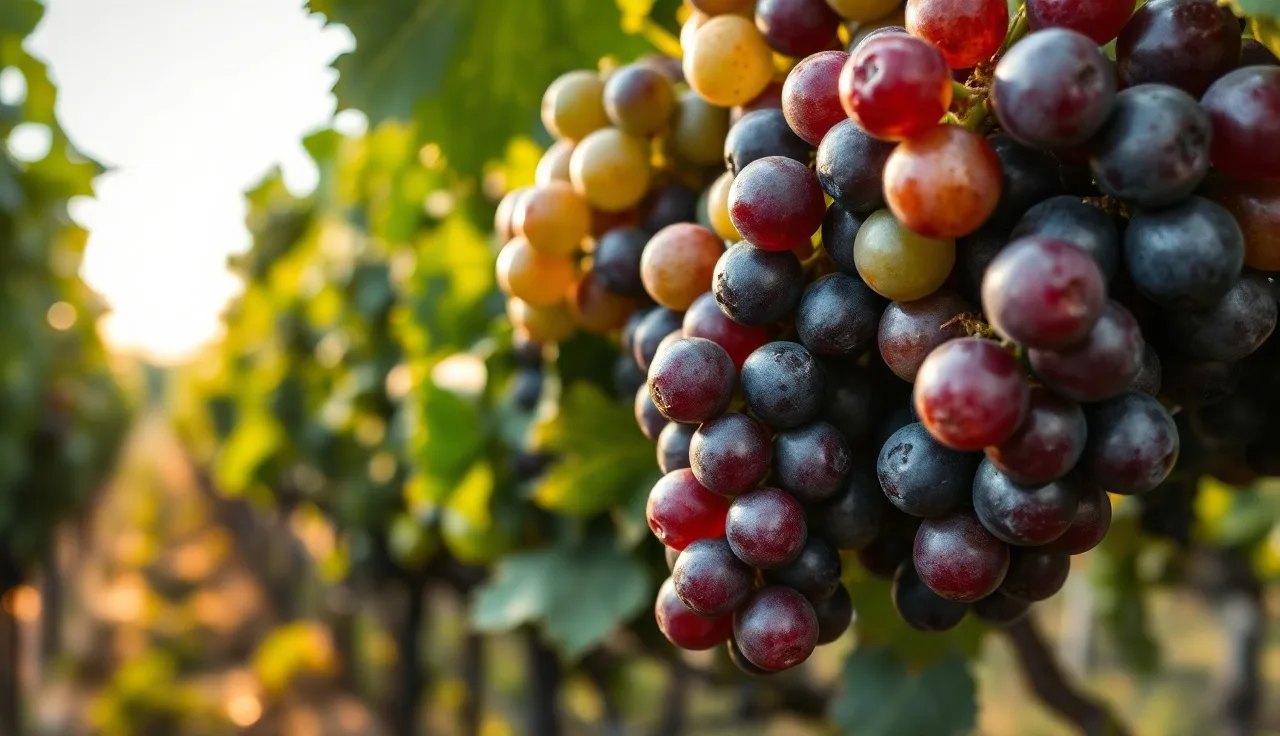
- Berries soften, change color (red varieties turn green to purple; whites go green to translucent gold), and load sugar fast while acids drop.
- It runs 2 to 6 weeks depending on variety and climate.
- Canopy work, spray timing, irrigation cutoffs, and bird netting all hinge on knowing exactly when it starts.
What does veraison mean, and where does the word come from?
Veraison comes from the French "véraison," from the Old French "verer," meaning to turn or change. French viticulturalists codified the term in the 19th century, and it passed straight into English grape-growing vocabulary. You'll see it spelled "véraison" in European texts, but most American extension programs drop the accent.
In plain operational terms, veraison is the point when berries stop enlarging through cell division and shift into ripening driven by sugar loading, water uptake, and color development. The International Organisation of Vine and Wine (OIV) defines it as BBCH growth stage 81, the moment berry color begins to change in red varieties or berries begin turning translucent in whites [1].
It's one of the most watched events on the calendar. Not because it's dramatic to look at, though it is, but because it resets your decision clock for everything: harvest timing, late-season sprays, irrigation cutoffs, and bird netting.
What are the visible signs that veraison has started in the vineyard?
The first sign is a handful of berries on the most sun-exposed clusters shifting color. In Cabernet Sauvignon, Merlot, or Syrah that means individual berries going from firm waxy green to a translucent pinkish-red, then deepening to purple-black over the next few days. In Chardonnay or Sauvignon Blanc you're watching for a golden translucency replacing the hard opaque green.
Softening is the other dead giveaway. A pre-veraison berry resists when you squeeze it. At veraison, it yields like a tiny water balloon. The cell walls loosen as sugar and water pour in.
Cluster by cluster, the timing is never uniform. Low-vigor vines and sun-exposed clusters start first. Shaded interior clusters lag. In a big block you can see a two-week spread from the earliest cluster to the latest, and that spread is worth marking in your records if you're chasing an even harvest.
One practical rule. Don't call veraison "complete" at the first berry change. Convention marks "50% veraison" as the milestone worth recording, because that's the point where the block has clearly committed, more than a few outlier clusters [2].
What is happening physiologically inside the berry at veraison?
The short answer: everything changes at once.
Before veraison the berry sits in a growth phase called the lag phase, or green phase. Sugar is low, malic and tartaric acids build up, and the berry is hard and full of harsh tannins. At veraison a hormonal shift, driven mainly by abscisic acid (ABA), triggers the phloem to start moving sugars from the leaves into the berry at high rates [3]. Glucose and fructose flood in. Brix, the dissolved solids you measure in the field, can climb 0.5 to 1 degree a day during the peak ripening window.
Acids don't vanish. They dilute. Malic acid degrades fast through respiration, especially in heat. Tartaric acid is more stable. That's why harvest timing in a hot year looks nothing like a cool one: in heat the acid drop can outrun the sugar gain, and you end up with ripe fruit but flat, flabby juice.
Anthocyanins, the pigments behind red color, build up in the skin cells at veraison. Light exposure and cooler temperatures push their production, which is why opening the fruit zone matters so much through this window. UC Davis research confirms that berry skin anthocyanin content tracks the light environment around the cluster during and after veraison [4].
Seeds shift too. Before veraison they're green and astringent, their tannins harsh and herbaceous. After veraison, seed tannins polymerize and soften. That's one reason a harvest call based on Brix alone can miss badly for premium reds.
When does veraison typically occur during the growing season?
In the Northern Hemisphere, veraison generally falls between early July and late August, depending on variety and region. In California's warmer valleys, early-ripening varieties like Pinot Noir can hit it in late June. In cooler regions like Oregon's Willamette Valley or New York's Finger Lakes, later varieties like Riesling or Cabernet Franc often wait until mid-August [5].
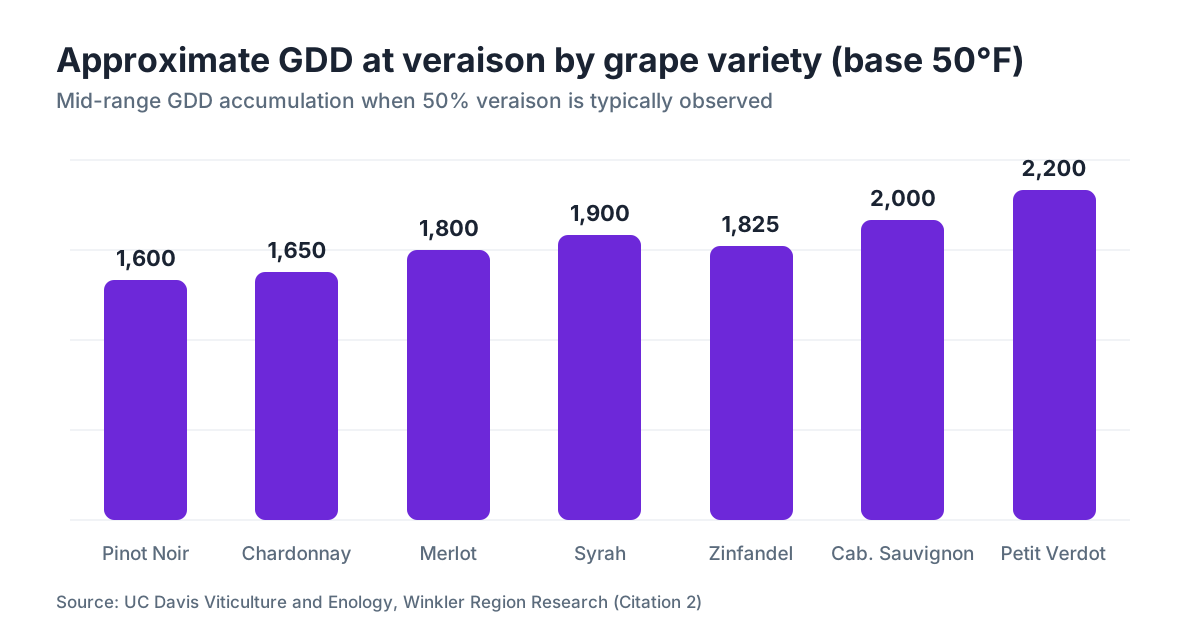
Growing degree days (GDD) predict better than any calendar date. UC Davis and the classic Winkler work set the GDD benchmarks for most Vitis vinifera varieties. Pinot Noir usually reaches veraison around 1,500 to 1,700 GDD (base 50°F). Cabernet Sauvignon tends to need 1,900 to 2,100 GDD before color break [2].
From veraison to harvest runs 45 to 55 days for most varieties in moderate climates, though hot vintages can crush that to 35 days and cool ones can stretch it past 65. This window is the tightest planning period you have. Your last fungicide date and your harvest crew schedule both flow from a credible veraison date.
Track it every year. Even a rough note like "first color on Block 4 Cab, July 21" turns into real predictive data over three to five seasons.
How does veraison affect your spray program and pesticide records?
This is where veraison stops being a botany lesson and becomes a compliance problem. Fungicide and insecticide labels carry pre-harvest intervals (PHIs) measured in days before harvest. Count harvest back from veraison and you can find the latest legal application date for any product. Spray past a PHI and you've got a possible residue violation and a destroyed crop. The math is simple, but it needs a precise veraison date to work.
The EPA Worker Protection Standard (WPS), 40 CFR Part 170, also ties restricted-entry decisions to field conditions, including the warm, humid canopy that develops as dense fruit fills out after veraison [6]. Clean, dated spray records from this window on are what an audit lives or dies by.
Botrytis is the main disease pressure that spikes at and after veraison. Tight-clustered varieties like Pinot Gris and Pinot Noir are most at risk because skin-to-skin berry contact traps moisture. Powdery mildew pressure usually drops after veraison as the skin toughens, but it doesn't disappear if conditions stay warm and dry. Washington State University Extension recommends a veraison-timed application of Botrytis-targeted fungicides (cyprodinil plus fludioxonil, or fenhexamid) as a high-priority spray, especially in years with rain in the 40-day ripening window [7].
Record every spray with block name, date, product, rate, and PHI. VitiScribe's spray log flags products when your projected harvest date falls inside the PHI window. That's the kind of guardrail that earns its keep in a busy August.
One more thing. After veraison, birds find your fruit fast, so netting goes up. Log the install date in your field notes, because netting changes canopy airflow and can trap humidity, which feeds Botrytis.
What vineyard management tasks should be completed before veraison?
Treat veraison as a deadline, not a starting gun. Most canopy work that shapes fruit quality has to be done before color break, not after.
Leaf pulling in the fruit zone should be finished well before veraison. Exposing clusters to direct morning sun starting 3 to 4 weeks ahead improves anthocyanin development and cuts Botrytis risk. Pull leaves late, after veraison, and you can sunburn berries that are now vulnerable. Cornell's viticulture extension cites studies showing that fruit-zone leaf removal before bloom, or shortly after, gives better color and tannin results than post-veraison intervention [8].
Green harvest, dropping excess clusters to concentrate the vine's resources, has to happen before veraison for full effect. Once sugar loading is underway, thinning does little, because the remaining clusters are already locked onto their ripening curve.
Shoot positioning and hedging should be done, with the canopy in its final shape. Late hedging after veraison strips leaf area right when the vine needs it to drive sugar into fruit.
Irrigation shifts at veraison. Common guidance tapers water in the two to three weeks before color break to signal mild stress, which can even out berry size and concentrate flavor. Then irrigation stops or holds at deficit levels through ripening, depending on your style and soil [4].
Fertilizer is largely locked in by veraison too. Nitrogen after veraison can push late vegetative growth, delay maturity, and raise Botrytis risk.
How do you monitor and record veraison accurately in your vineyard blocks?
The standard field method is a 200-berry sample per block. Walk a consistent transect, pull one or two berries from 50 to 100 clusters, and count the share that have started color change. Record the date when 50% of sampled berries show veraison. That's your official block veraison date [2].
Do the count the same way every year. Use the same transect or GPS-marked sampling points. That's what makes your data comparable season to season. A one-week shift in your 50% veraison date from one year to the next is a real climate signal, not noise.
White varieties are harder to eyeball. You're looking for translucency and softening instead of an obvious color flip. A handheld refractometer on 20 berries per block gives you a Brix reading to anchor the call. A jump to 4 to 6 Brix, up from the 2 to 3 Brix of the lag phase, confirms sugar loading has kicked in.
Recording the exact date and a block-by-block breakdown, in your notebook or a digital log, builds vintage comparisons over time. Platforms built for vineyard operations, including VitiScribe, keep this field data next to your spray records for when an audit shows up.
For Paso Robles wineries and other warm-climate sites, the veraison window can be fast and compressed. Weekly checks may not cut it. In a heat wave, monitor every two to three days.
Does veraison timing and intensity vary by grape variety?
Yes, and the spread is big. Variety is one of the two largest factors, alongside climate.
Early-ripening varieties like Pinot Noir, Chardonnay, and Muscat reach veraison 3 to 6 weeks before late ones like Cabernet Sauvignon, Petit Verdot, or Mourvèdre. In a mixed vineyard that spread forces you to run overlapping management calendars that fight each other. Block A's last fungicide window opens just as Block B's green harvest has to close.
Clone selection matters too. Within Pinot Noir, Dijon clones (115, 667, 777) reach veraison and harvest earlier than older heritage selections like Pommard under the same conditions.
Rootstock shifts timing as well. Vigor-reducing rootstocks like 3309C or 101-14 tend to nudge veraison earlier by limiting shoot growth and sending more carbohydrate to fruit. High-vigor stock like 1103P can delay it.
The table below shows approximate veraison timing for common varieties in a moderate California coastal climate. Your site will vary.
| Variety | Approx. Veraison Window (N. Hemisphere) | GDD at Veraison (base 50°F) |
|---|---|---|
| Pinot Noir | Late June to mid-July | 1,500-1,700 |
| Chardonnay | Late June to mid-July | 1,550-1,750 |
| Merlot | Mid to late July | 1,700-1,900 |
| Cabernet Sauvignon | Late July to mid-August | 1,900-2,100 |
| Syrah | Late July to mid-August | 1,800-2,000 |
| Zinfandel | Mid-July to early August | 1,700-1,950 |
| Petit Verdot | Mid to late August | 2,100-2,300 |
These ranges come from UC Davis Winkler region research and WSU extension variety guides [2][7]. Baselines, not guarantees.
How does climate and weather affect veraison?
Temperature runs the show. Accumulated heat units (GDD) predict veraison better than anything else. A cool spring that delays budbreak shifts everything downstream. Early heat can pull veraison forward by two to three weeks against a cool vintage.
Water stress before veraison can advance it slightly and shrink berry size. Severe stress can make veraison uneven, or stall it entirely in extreme cases.
Heat spikes right at veraison, above 95 to 100°F for several days running, can disrupt anthocyanin synthesis even after color has begun. Berries that were turning red can bleach or stall, because the enzyme system behind anthocyanin production is temperature-sensitive. It's a documented problem across inland California, and one reason coastal appellations with marine influence command a premium for reds [4].
Cool nights during ripening (below 55°F) preserve acidity and drive deeper color. The diurnal range, the gap between daytime highs and overnight lows, is one of the strongest quality signals in premium red regions.
Climate change is moving veraison earlier. A 2020 analysis in Nature Climate Change found veraison dates in European wine regions advanced by 18 days on average between 1981 and 2019 [9]. American data show the same drift, with UC Davis documenting earlier veraison and harvest across California over the same period.
What does veraison mean for harvest planning and crop estimation?
Harvest planning starts at veraison. Almost everyone in the industry uses the veraison date plus a regional day-count to project harvest, then adjusts as real Brix, pH, and TA numbers come in.
The veraison-to-harvest interval for most varieties in moderate climates is 45 to 55 days [5]. Hot inland sites can see 35 to 42 days. Cool coastal sites and late varieties may run 60 to 70 days. Write your projected harvest range into your records the day you confirm 50% veraison.
Crop estimation happens alongside it. After veraison is the right time for a cluster count and weight estimate, because cluster architecture is set and berry sizing is settling. Multiply clusters per vine by estimated cluster weight by vine count and you have a tonnage projection. It's never exact, but a 10 to 15% margin is reachable with a decent sampling protocol.
Your winery relationships ride on this number. If you have a grape contract with a tonnage expectation, your buyer needs a realistic figure by early August at the latest to plan cellar capacity. Good veraison records feed your harvest call, which feeds your buyer's planning, which feeds the relationship.
Visitors to Gervasi Vineyard and similar estate wineries often get to watch the veraison-to-harvest window up close. The change from veraison through harvest, over just six to eight weeks, is hard to appreciate from a distance.
Are there any disease or pest issues that are specific to the veraison period?
Botrytis cinerea is the big one. The fungus exploits the softening, sugar-rich skin that develops at veraison. Tight-clustered varieties carry the highest risk, because berries press together, trapping humidity and giving spores a bridge from berry to berry. Any wound, from grape berry moth feeding, hail, or earlier spray damage, becomes an entry point. WSU Extension recommends a preventive Botrytis spray at 100% veraison for high-risk varieties [7].
Grape berry moth (Lobesia botrana in some regions, Endopiza viteana in the eastern U.S.) completes its second or third generation right around veraison. The larvae bore into berries and open wounds that invite Botrytis and secondary rots. Degree-day models for berry moth hatch run on the same GDD stream you already track for veraison prediction [8].
Powdery mildew (Erysiphe necator) risk shifts at veraison. Berries turn largely resistant once they reach about 8 Brix, but the rachis stays susceptible. Under heavy pressure, don't drop your program just because veraison hit.
Sour rot, a complex of bacteria and yeasts that produces acetic acid in damaged clusters, spikes after veraison, especially in wet ripening years. There's no reliable fungicide for it. Prevention means fewer berry wounds and better airflow through the cluster zone [11].
Birds find ripe fruit fast. Starlings and robins can eat a real chunk of a small block within days of visible sugar loading. Netting or propane cannons need to be in place at or before 50% veraison.
How should veraison be documented in vineyard records and compliance files?
At minimum, record the date and the block or row. If you run multiple varieties, log them separately. The 50% veraison date is the industry-standard milestone to document [2].
Good practice adds more: the method (visual count, refractometer, or both), the sample size, notes on uniformity or outlier vines, and who did the observation. That gives you something defensible if a question ever comes up about your spray timing relative to harvest.
Some certification programs, including SIP (Sustainability in Practice) and CCOF organic certification, ask for phenological records including veraison dates as part of farm plan documentation. Having the records already in your notebook or system means you're not rebuilding them under deadline pressure.
The EPA WPS requires pesticide application records that include the application date and the product, and those records connect to your veraison and projected harvest dates when you establish PHI compliance [6]. Keeping veraison dates in the same system as your spray log makes the link between the two visible and auditable.
A paper field notebook works. A shared digital log works better for multi-person operations, where the vineyard manager, the winemaker, and the owner all need the same data without playing telephone. Either way, consistency beats sophistication.
Frequently asked questions
What exactly is veraison in simple terms?
Veraison is the moment grapes switch from growing to ripening. Red varieties change from green to red or purple; white varieties turn golden and translucent. Berries soften, sugar starts loading fast, and acids begin to drop. It's a physiological turning point more than a color change, and it resets the entire management calendar for the rest of the season.
How long does veraison last?
Across a single cluster or block, veraison typically spans two to six weeks from first berry color change to full color throughout. The individual berry transition takes a few days, but because different clusters and vines start at different times, the block-level window stretches longer. The standard milestone to record is when 50% of sampled berries show color change.
Does veraison happen at the same time every year?
No. Veraison timing shifts with heat accumulation each vintage. Cool springs delay it; warm springs advance it. The same block can vary by two to four weeks from one year to the next. A 2020 study in Nature Climate Change found veraison dates in European regions advanced by an average of 18 days between 1981 and 2019, a trend that also shows up in California data.
Can you eat grapes at veraison?
You can, but you won't enjoy it. At veraison, Brix is roughly 6 to 10 degrees, malic acid is high, and red-variety tannins are still harsh. The berries are just starting sugar accumulation. Most table grapes are picked at 16 to 22 Brix and wine grapes at 20 to 26 Brix or higher. Veraison-stage fruit is sour and tannic.
What is the difference between veraison and harvest?
Veraison marks the start of ripening; harvest marks the end. The window between them runs 45 to 55 days in moderate climates but can range from 35 to 70 days depending on variety, climate, and style targets. During that interval, grapes gain sugar, lose acid, develop color and aroma compounds, and polymerize tannins. Harvest happens when those parameters hit target.
How do I know when veraison is complete in my vineyard?
Veraison is conventionally complete when 100% of berries on 100% of clusters show color change and softening. In practice, full uniformity rarely happens. Most viticulturalists treat a block as through veraison at 80 to 90% colored berries. A refractometer reading consistently above 8 to 10 Brix across a random cluster sample confirms sugar loading is well underway across the block.
Should I irrigate during or after veraison?
Most guidance tapers irrigation in the two to three weeks before veraison to induce mild water stress, which can improve berry uniformity and concentrate flavor. After veraison, deficit irrigation at 25 to 50% of full evapotranspiration replacement is common for quality-focused production. Full cutoff varies by site and soil; sandy soils may need continued minimal irrigation to prevent vine shutdown. Check your local extension guidelines for site-specific targets.
What sprays are safe to apply after veraison?
It depends entirely on the product's pre-harvest interval (PHI). Some Botrytis fungicides carry PHIs as short as 0 to 7 days; others run 14 to 30 days. Calculate your projected harvest date from veraison plus your expected interval, then work backward to the last legal application date for each product. Always read the current label. The label is the law, and PHIs can change between registrations.
Does veraison timing affect wine quality?
Indirectly, yes. Earlier veraison, all else equal, usually gives a longer ripening window, so flavors develop at lower sugar accumulation rates and often produce more structured wine. Very late or compressed veraison can force a rushed ripening period where sugar spikes before flavor and tannin catch up. Extreme heat at or just after veraison can bleach anthocyanins in reds, dropping color intensity in the finished wine.
How does veraison differ between red and white grape varieties?
In reds, veraison is obvious: berries shift from green to red or purple as anthocyanins build in the skin. In whites, the change is subtler, from hard opaque green to a softer translucent golden-yellow. The underlying physiology is identical; whites just don't make anthocyanins, so the visual signal is fainter. A refractometer helps confirm white-variety veraison when visual checks are ambiguous.
What causes uneven or delayed veraison in a block?
Uneven vigor is the most common cause. High-vigor vines pour resources into shoot growth and delay fruit ripening. Shaded clusters lag sun-exposed ones. Nutrient imbalances, especially excess nitrogen, can delay veraison, and rootstock choice affects uniformity too. If uneven veraison is a persistent block problem, audit your vine balance, soil nutrition, and irrigation uniformity across the block.
When should bird netting go up relative to veraison?
At or just before 50% veraison. Birds locate ripe fruit by color and sugar scent, so once color break shows across the block, pressure builds fast. European starlings in particular can devastate a small block within days of peak veraison. Waiting until you see damage to install netting is almost always too late. Budget the labor into your veraison-week calendar every year.
How do I predict veraison date for crop planning purposes?
Track growing degree days (GDD, base 50°F) from budbreak. Use published GDD thresholds for your variety, roughly 1,500 to 1,700 for Pinot Noir and 1,900 to 2,100 for Cabernet Sauvignon as UC Davis benchmarks, and project forward with historical climate data or seasonal forecasts. Your own three-plus years of actual veraison dates against actual GDD is the most accurate predictor for your specific site.
Is veraison the right time for a crop estimate?
Yes. After veraison is the best window because cluster count is set and berries are sizing toward final weight. Count clusters on a representative sample of vines, estimate average cluster weight for the variety and season's set, then multiply by vine count. Expect 10 to 15% error even with a good protocol, but the estimate is credible enough for winery contract communication.
Sources
- OIV, BBCH growth stages of grapevine: Veraison corresponds to BBCH growth stage 81, the onset of berry coloring or translucency in grapevine phenology
- UC Davis Viticulture and Enology, Grapevine Growth Stages: 50% veraison is the standard phenological milestone; GDD thresholds at veraison vary by variety from roughly 1,500 GDD for Pinot Noir to 2,100 for Cabernet Sauvignon (base 50°F)
- Plant Cell and Environment, Abscisic acid and grapevine berry ripening (Coombe & McCarthy, 2000): Abscisic acid (ABA) is the primary hormonal signal that triggers the shift from lag phase to rapid sugar loading at veraison
- UC Davis Department of Viticulture and Enology, Canopy Management and Berry Quality: Berry skin anthocyanin content correlates directly with fruit-zone light exposure during and after veraison; heat above 95-100°F disrupts anthocyanin synthesis
- Oregon State University Extension, Vineyard Calendar for Western Oregon: Veraison-to-harvest interval in moderate climates is typically 45 to 55 days; cool coastal sites may extend to 60-70 days
- EPA Worker Protection Standard, 40 CFR Part 170: The EPA Worker Protection Standard governs pesticide application records including dates and restricted-entry intervals relevant to vineyard spray programs near harvest
- Washington State University Extension, Grape Disease Management: WSU Extension recommends a veraison-timed Botrytis fungicide application as high-priority for susceptible varieties; powdery mildew berry risk drops after about 8 Brix
- Cornell University Cooperative Extension, Viticulture Resources: Fruit-zone leaf removal before bloom or shortly after gives better color and tannin outcomes than post-veraison intervention; grape berry moth GDD models align with veraison prediction tools
- Nature Climate Change, Sotiriou et al., 2020, Earlier harvest dates in wine regions: Veraison and harvest dates in European wine regions advanced an average of 18 days between 1981 and 2019, driven primarily by warming temperatures
- UC Cooperative Extension, Irrigation of Winegrapes in California: Deficit irrigation at 25-50% of full ET replacement after veraison is common practice for quality-focused wine grape production in California
- USDA National Agricultural Library, Integrated Pest Management for Grapes: Sour rot complex spikes after veraison in years with rain during ripening; no reliable fungicide exists and prevention requires minimizing wounds and maintaining airflow
Last updated 2026-07-09