Diseases of grapevine in Illinois: the complete field guide
TL;DR
- Illinois vineyards fight six main fungal and oomycete diseases: black rot, powdery mildew, downy mildew, Botrytis bunch rot, Phomopsis cane and leaf spot, and anthracnose.
- The state's humid summers give it some of the highest disease pressure in the eastern U.S.
- Resistant hybrid varieties and a spray program that starts at budbreak are your two best defenses.
Why is Illinois such a tough state for grapevine disease?
Illinois grows grapes in the humid continental belt, which is another way of saying the weather works against you all season. Warm wet springs. Oppressive summer humidity. Enough late-season heat to keep pathogens cycling right through harvest. Summer relative humidity across central and southern Illinois runs 70-80% during the hours grapes are most exposed, and rain from May through August averages 15-20 inches depending on the year and the site. [1]
Napa gets less than an inch of rain in that same window. The three big killers here, powdery mildew, black rot, and downy mildew, all need free moisture or very high humidity to sporulate and infect. Illinois hands them both, every season, on schedule.
That has two practical consequences. You cannot skip a spray interval and make it up later. A five-day gap during a wet bloom can cost you 50-80% of a block to black rot before you even see the first symptom. [2]
The second consequence is about variety. Vinifera like Chardonnay or Cabernet Sauvignon planted in Illinois without a rigorous spray program will fail, full stop. Hybrid varieties bred for eastern disease pressure are not a compromise. For most Illinois growers they are the rational choice, and the wine can be very good.
What are the most common grapevine diseases in Illinois?
Six diseases cause almost all the economic loss in Illinois vineyards. Here is how they sort out by tissue at risk and worst timing:
| Disease | Pathogen | Primary tissue at risk | Worst season timing |
|---|---|---|---|
| Black rot | Guignardia bidwellii | Berries, leaves | Bloom through veraison |
| Powdery mildew | Erysiphe necator | Leaves, shoot tips, berries | Pre-bloom through lag phase |
| Downy mildew | Plasmopara viticola | Leaves, shoots, fruit clusters | Cool wet periods, spring and fall |
| Botrytis bunch rot | Botrytis cinerea | Berries, flower clusters | Harvest, periods of high humidity |
| Phomopsis cane and leaf spot | Phomopsis viticola | Canes, leaves, fruit pedicels | Wet budbreak, early shoot growth |
| Anthracnose | Elsinoe ampelina | Leaves, shoots, berries | Early season, wet and cool |
Black rot and powdery mildew are the two diseases Illinois extension plant pathologists name first when they talk about spray priorities. [2] Botrytis is the one that ambushes growers in a tight-canopy, high-yield block right before harvest, when there is almost nothing left to do about it.
How do you identify black rot on grapevines?
Black rot teaches Illinois growers humility. The fungus (Guignardia bidwellii) overwinters in mummified berries and old cane lesions, then fires spores during rain from budbreak on. The worst part is the delay: infections stay invisible for weeks.
On leaves, look for roughly circular tan or light brown spots, 1/4 to 1/2 inch across, ringed by a dark brown border. Within a week or two the dead center fills with tiny black dots. Those are the pycnidia, the spore factories, and they confirm black rot. Young shoots get dark elongated lesions. Fruit is the real damage: infected berries first look slightly off-color and soft, then shrivel fast into hard black wrinkled mummies that either cling to the cluster or drop. Those mummies are next year's inoculum, sitting right there in your rows.
The infection window that matters runs from 50% bloom through four to five weeks past bloom. University of Illinois Extension leans on a temperature-and-wetness model: at 60 degrees F, black rot needs about 24 hours of continuous wetting for primary infection; at 77 degrees F, that drops to 9 hours. [2] So a two-day warm rain during bloom is close to a guaranteed infection event if nothing protectant is on the vines.
Pull the mummies during winter pruning. Every one you take out of the vineyard cuts inoculum a measurable amount. It won't replace fungicides. But it's free, and it works.
How do you identify and manage powdery mildew in Illinois vineyards?
Powdery mildew (Erysiphe necator, formerly Uncinula necator) is an obligate parasite that lives only on living tissue. It breaks the usual fungal rule: it doesn't need free water to infect. It just needs humidity above 40% and temperatures between 70 and 85 degrees F, which describes most of the Illinois growing season. [3]
It starts as white to grayish powdery patches on either leaf surface of young leaves. Badly infected young berries crack and expose their seeds, and the cracked skin browns. Older berries past the lag phase get a russet or net-like scarring. A heavily infected cluster smells faintly of mushrooms.
Berries are most vulnerable from just before bloom through about three weeks after set. That pre-bloom to fruit-set stretch is the spray window you do not skip on any susceptible variety.
Sulfur is the workhorse. Wettable sulfur at 3-6 lb per 100 gallons of water, on a 10-14 day schedule, gives solid control as long as you start early. [3] Sterol-inhibiting (DMI) fungicides like myclobutanil (Rally) add a systemic kick during high-pressure stretches. Rotate your modes of action. Erysiphe necator has developed resistance to QoI fungicides (strobilurins) in several eastern regions, and Illinois is not exempt from that. [4]
One warning on sulfur and heat. Don't apply it within 2 weeks of a horticultural oil spray, and read the forecast. Sulfur applied above 90 degrees F can burn leaves and tender shoot tips.
What does downy mildew look like and when does it hit Illinois vines?
Downy mildew (Plasmopara viticola) is an oomycete, not a true fungus, and that distinction has teeth: fungicides built for true fungi, like the DMIs, barely touch it. The classic sign is an oily pale green to yellow "oil spot" on the upper leaf surface, with matching white downy growth on the underside, easiest to spot early in the morning while dew is still on. When infection hits a young shoot tip hard, the whole tip collapses into what growers call a shepherd's crook. Berries infected early turn grayish-white and shrivel, a symptom called gray rot of berries that you can tell apart from Botrytis.
Infection needs rain and temperatures above 50 degrees F. The "10-10-10" rule of thumb used across eastern viticulture extension holds that primary risk climbs when shoots are at least 10 cm long, temperatures reach 10 degrees C (50 degrees F), and at least 10 mm of rain falls within 24 hours. [5] Illinois springs tick all three boxes on a regular basis from late April on.
Phosphonate fungicides (phosphorous acid products like Aliette or ProPhyt) and mancozeb-based products anchor most downy programs. Mancozeb is a multi-site contact material with no known resistance issues, but it carries a 66-day pre-harvest interval for wine grapes in most labeled uses, so front-load it. [6] Copper hydroxide or copper sulfate also suppress downy well and come in OMRI-listed options for organic growers.
Cornell's IPM guidelines, some of the best material anywhere for eastern viticulture, say to start downy sprays when shoots reach 4-6 inches and continue on a 7-14 day schedule through veraison. [5]
How serious is Botrytis bunch rot in Illinois?
Botrytis cinerea is everywhere. In the soil, on dead tissue, on harvested fruit, on nearly every surface in a winery. The fungus infects grape flowers and sets up latent infections that wake up when berries hit maturity and sugar climbs. Anything that traps moisture in the cluster zone speeds it up: tight berry clusters, dense canopy, split or insect-damaged skins, overhead irrigation.
In Illinois the triggers are late-season humidity and the odd August or September rain event. A wet week in mid-September in a tight-cluster Marquette or Chambourcin block can wipe out 20-40% of a crop that looked clean two weeks earlier.
The best Botrytis control is cultural. Position shoots and pull leaves in the fruit zone to move air and drop humidity. Do that first. Fungicides like Elevate (fenhexamid), Switch (cyprodinil plus fludioxonil), or Scala (pyrimethanil) at bloom and again at veraison add protection, but they do not replace canopy work. [7] Botrytis also builds fungicide resistance fast, so rotate classes every two to three sprays.
One honest caveat. Pre-harvest intervals on Botrytis fungicides swing a lot by product. Switch, for example, runs a 7-day PHI for grapes in most states. Read the current label every year, because registrations change.
What is Phomopsis cane and leaf spot and why does it matter at budbreak?
Phomopsis viticola is a wound pathogen, and its primary window is the first few weeks of shoot growth, when cold wet weather slows everything down and new tissue stays wet for hours on end. On canes it produces small dark brown to black lesions, often in a pattern of alternating infected and clean internodes on the same cane. Heavily infected canes go brittle and snap during training. Leaves get tiny spots with yellow halos. Infected pedicels cause berry drop and rachis dieback.
Growers underestimate this one because the cane damage doesn't fully show until harvest or winter pruning. A badly infected cane is weaker and more prone to winter injury, which stacks onto the cold losses Illinois already deals with after polar vortex events.
Spray early. Applications at 1-3 inches of shoot growth and again at 6-12 inches give the best control. Mancozeb and ziram both work. [2] Cutting out infected wood during dormant pruning is your best cultural tool. Don't leave infected canes draped on the trellis wire, because spores wash off and reinfect new growth from the same source.
Does anthracnose affect Illinois grapevines?
Anthracnose (Elsinoe ampelina) used to be a bigger problem than it is now, partly because many hybrid varieties in the Illinois planting mix carry moderate to good resistance. On susceptible varieties though, including most vinifera and some older American hybrids, it's still a real early-season threat.
Symptoms are small circular lesions with gray centers and dark brown to purple margins on leaves, shoots, and berries. On shoots, multiple lesions merge into elongated cankers that can girdle and kill the whole shoot. On berries the lesions look like bird's-eye rot: sunken gray-centered spots with dark purple rims.
Anthracnose spores splash during rain, and primary infections come during cool wet spring stretches. A lime-sulfur dormant spray at 1-2% solution just before budbreak cuts overwintering inoculum a lot. [2] In-season, captan and mancozeb give adequate control if you start at budbreak.
Which grapevine varieties are most disease-resistant in Illinois?
This is probably the single biggest decision an Illinois grower makes, and it happens before the first vine goes in the ground.
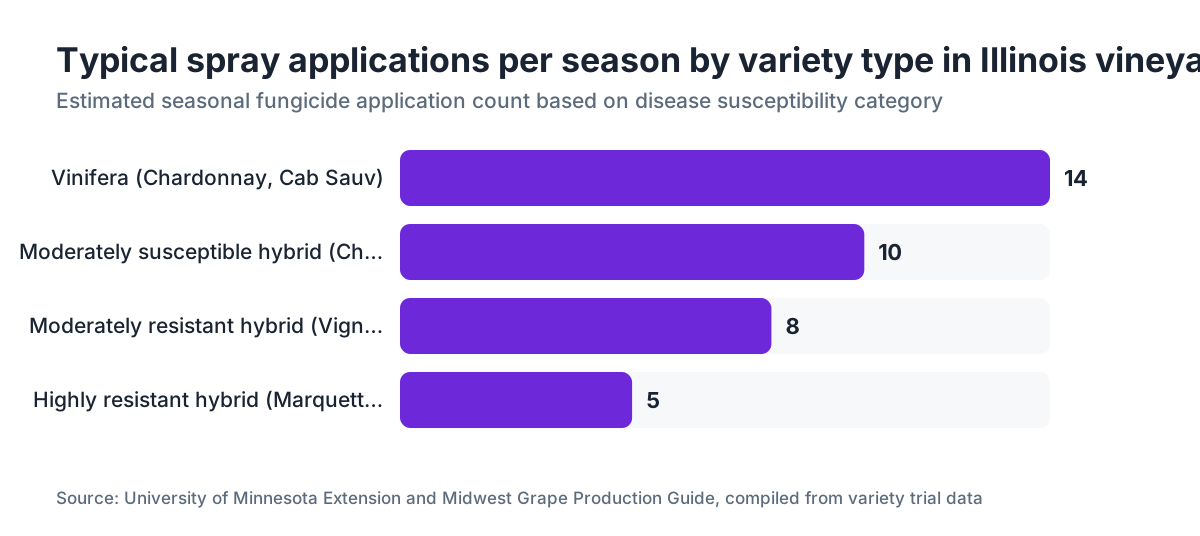
The University of Minnesota and Cornell have released hybrid varieties with real disease resistance drawn from Vitis species native to the eastern U.S. These aren't "almost as good" as vinifera. In the right market, with a thoughtful winemaker, they make excellent wine and they survive Illinois without a 12-spray season.
Here are the varieties with the best overall resistance profile for Illinois, based on Midwest extension trial data: [8]
| Variety | Disease resistance | Notes |
|---|---|---|
| Marquette | High (black rot, PM, downy) | Red, cold-hardy to -32F |
| Frontenac | High (black rot, PM) | Red, very cold-hardy |
| La Crescent | Good to high | White, aromatic |
| Itasca | Good | White, newer release |
| Crimson Pearl | Good | White, high sugar potential |
| Chambourcin | Moderate | Red, widely planted in IL |
| Vignoles | Moderate | White, Botrytis-susceptible |
| Chardonel | Moderate | White, requires full program |
Chambourcin and Vignoles are the two most widely planted varieties in Illinois, per Illinois Grape Growers and Vintners Association survey data. [9] Both need a real spray program. They aren't as tough as Marquette or Frontenac, but they make wines that sell in the Illinois market.
Vinifera can work in southern Illinois, especially on well-drained sites with good air movement. Just budget for 12-15 fungicide applications a season and accept that some years the disease pressure wins no matter what you do.
What does a practical spray program look like for an Illinois vineyard?
There is no universal schedule, because pressure moves with variety, site, and weather. What follows is a framework built on University of Illinois Extension and Midwest Grape Production Guide recommendations. [2]
Budbreak to 6 inches of shoot growth. Target Phomopsis and anthracnose. Mancozeb or captan at labeled rates. Add a phosphonate if downy pressure is expected.
6 inches through pre-bloom. The downy and powdery windows open. Start sulfur for powdery. Keep mancozeb going. 10-14 day interval at minimum, 7 in wet seasons.
Bloom through fruit set. The most important stretch for black rot. Do not skip. Add myclobutanil or another DMI for systemic black rot and powdery kick. 7-10 day intervals if it's wet.
Fruit set through veraison. Keep rotating. A Botrytis-specific product at early bunch closure if your varieties or site carry the risk. Start watching PHI windows as harvest nears.
Post-veraison through harvest. Mind residue, respect PHI. Sulfur for powdery, copper for downy if needed. Most contact fungicides get hard to use inside 30 days of harvest.
Post-harvest. One application of copper or lime-sulfur after harvest knocks down overwintering inoculum on leaves and canes before the vine drops them. Underused and undervalued.
Spray records are not optional in Illinois. State pesticide regulations require records for commercial applications, and EPA Worker Protection Standard rules require specific documentation of application details and worker re-entry intervals. [10] Past a few acres, keeping that paperwork straight is a genuine operational chore. VitiScribe is built to track applications, active ingredients, PHI windows, and WPS records in one place, which is exactly what you want on hand when an inspector shows up or a residue question comes back down the chain.
One resistance note. Rotate between fungicide classes, more than product names. A different trade name in the same FRAC group buys you zero resistance-management benefit.
Are there EPA Worker Protection Standard requirements for Illinois vineyard spray records?
Yes, and they matter more than most small growers realize until an inspector is standing in the shop.
The EPA Worker Protection Standard (WPS), updated in 2015 with the current rule in effect since 2017, applies to any agricultural establishment that uses pesticides and employs agricultural workers or pesticide handlers. [10] Any Illinois vineyard using hired labor during applications, or asking workers to re-enter treated areas, has to comply. That means posting application information at a central location, training workers before they enter treated areas, supplying personal protective equipment, and keeping application records with specific fields: product name, EPA registration number, active ingredient, location, date and time, and REI.
EPA guidance is blunt about retention: "employers must keep records of all pesticide applications for 2 years." [10] Illinois law under the Illinois Pesticide Act (415 ILCS 60/) also holds commercial applicators to a minimum 2-year retention. [11]
Restricted-use pesticide (RUP) records carry extra rules. Only certified applicators, or people working under a certified applicator's direct supervision, may buy and use RUPs, and purchase records have to be kept. Several fungicides common in grape disease work, including some mancozeb formulations and certain copper products at certain concentrations, may carry RUP status depending on the exact formulation, so check the label.
WSU Extension's pesticide education resources and Cornell's IPM program both publish solid guidance on WPS recordkeeping for vineyards. [5][12]
What grapevine diseases also affect Illinois vines through non-fungal causes?
The big six get most of the attention, but the non-fungal problems can end a vine just as dead.
Grapevine leafroll virus is present in Illinois. It reddens-to-purples the interveinal leaf tissue in red varieties (yellow in whites), delays ripening, and cuts sugar accumulation. Infected vines never fully recover, and there is no chemical cure. It spreads through infected planting material and soft scale insects. Buy certified virus-tested plant material and scout for mealybugs and soft scales. [13]
Crown gall (Agrobacterium vitis) is a bacterial disease that throws large tumor-like galls at the graft union or at wounds near the vine base. Freeze injury sets it off: when tissue freezes and cracks, the bacterium moves in. Illinois winters make this a live concern, especially up north. There is no chemical cure. Prune infected wood below the gall, retrain a sucker from below ground, and think about cold-hardy rootstocks or own-rooted cold-tolerant vines on high-risk sites.
Pierce's disease, caused by Xylella fastidiosa and spread by sharpshooter leafhoppers, is present in southern Illinois. It scalds leaves from the margins inward, and infected vines usually die within 1-5 years. There is no treatment. Vinifera is highly susceptible; most hybrids run moderate to high tolerance. The range of efficient vectors has historically kept Pierce's disease in the southernmost counties, but the climate trend is worth watching. [14]
Where can Illinois growers find reliable up-to-date disease management resources?
The best printed reference for Midwest viticulture disease management is the Midwest Fruit Pest Management Guide, published every year by a consortium of Midwest land grant universities. [2] It runs fungicide and insecticide recommendations by crop and pest, with current resistance notes and PHI data. Order or download it annually, because registrations change and a guide from three years back may list a product with no current registration.
For scouting and forecasting online, the Grape Disease Risk Assessment Index (GRAPEX) and similar weather-station tools give real-time infection risk estimates. They come through extension networks and can stretch your intervals in low-pressure spells, then pull them tight when risk spikes.
University of Illinois Extension keeps a grape IPM page with Illinois-specific recommendations. Cornell's viticulture and enology extension program has the deepest library of grape disease research in the eastern U.S. [5] Washington State University Extension focuses on the Pacific Northwest but publishes excellent fungicide resistance guidance that applies anywhere. [12]
For spray record compliance, VitiScribe tracks application data by block, generates WPS-compliant records, and flags approaching pre-harvest intervals, which saves time during audits and during the harvest scramble.
The Illinois Grape Growers and Vintners Association runs annual pest management clinics and connects growers with the state plant diagnostic laboratory at the University of Illinois, which can put a name on a disease from a submitted sample for a modest fee. [9] When you can't tell what you're looking at in the field, submit a sample before you assume, and before you spend money spraying at the wrong target.
Frequently asked questions
What is the most damaging grapevine disease in Illinois?
Black rot (Guignardia bidwellii) causes the most consistent economic damage in Illinois vineyards because infection happens invisibly during bloom, the critical fruit-set window, and can destroy 50-80% of a crop before symptoms are obvious. Powdery mildew is a close second, particularly on vinifera and less-resistant hybrid varieties. Both diseases require active fungicide programs starting at budbreak.
Can you grow Chardonnay or Cabernet Sauvignon in Illinois without major disease problems?
It's possible on favorable sites, particularly in southern Illinois with well-drained, air-draining slopes and good canopy management, but plan for 12-15 fungicide applications per season and accept crop loss in high-pressure years. Most commercial Illinois growers use hybrid varieties with built-in disease resistance for the bulk of their acreage and grow vinifera only where site conditions and market premiums justify the added cost and risk.
How do I tell black rot apart from Botrytis bunch rot on my grapes?
Black rot berries shrivel into hard black mummies, often staying attached to the cluster. They feel firm and dry. Botrytis bunch rot produces soft, mushy, gray-brown berries with visible gray fuzzy spore masses (the diagnostic sign) and a musty smell. Black rot mummification usually happens before or around veraison; Botrytis is most common near harvest when humidity is high and berries are ripe.
What spray schedule works for organic Illinois vineyards?
Organic Illinois grape growers rely on copper-based fungicides (copper hydroxide, copper sulfate) for downy mildew control and sulfur for powdery mildew. Copper at low per-application rates on a 7-10 day schedule during the high-risk period gives reasonable downy and black rot suppression. No organic product controls black rot as consistently as synthetic fungicides in high-pressure years, so resistant variety selection matters even more for organic operations.
When should I start spraying for grapevine diseases in Illinois?
Start at budbreak or very close to it. The first application targets Phomopsis and anthracnose, which infect the first emerging tissue. Many experienced Illinois growers apply a dormant lime-sulfur spray just before budbreak to knock down overwintering inoculum, then make the first in-season spray at 1-3 inches of shoot growth. Waiting until bloom because the vines look healthy is the most common timing mistake in Illinois vineyards.
Does Botrytis bunch rot affect wine quality even if it looks minor?
Yes. Even 5-10% Botrytis infection in a load of wine grapes can introduce laccase enzymes that oxidize wine and cut color stability in reds. Infected grapes also carry elevated acetic acid and gluconic acid. If you see any Botrytis at harvest, sort aggressively in the field before the fruit reaches the crusher. Minor visual infection understates the enzyme load already in the juice.
Is Pierce's disease a concern in Illinois vineyards?
Pierce's disease is present in southern Illinois but has historically been limited by the geographic range of efficient leafhopper vectors. Most hybrid varieties grown in Illinois carry good tolerance. Vinifera growers in the southernmost Illinois counties should monitor for symptoms, especially in vineyards near water sources where vector populations run higher. There is no chemical treatment; affected vines die within one to five seasons.
What records do Illinois vineyard owners need to keep for pesticide applications?
Illinois state law requires commercial pesticide applicators to keep records for at least 2 years. The EPA Worker Protection Standard requires records of each application including product name, EPA registration number, active ingredient, site, date, time, and re-entry interval. Restricted-use pesticide purchases require separate purchase records. Both sets of records must be available for inspection. The Illinois Department of Agriculture enforces these requirements under the Illinois Pesticide Act.
Does grapevine leafroll virus occur in Illinois and how do I manage it?
Grapevine leafroll virus is present in Illinois vineyards. It causes red or purple interveinal discoloration in fall, delayed ripening, and reduced sugar levels. Infected vines cannot be cured. Management means removing infected vines, sourcing only certified virus-tested planting material, and controlling soft scale and mealybug populations that spread the virus. Do not propagate cuttings from symptomatic vines.
What is the difference between downy mildew and powdery mildew on grapes?
Downy mildew (Plasmopara viticola, an oomycete) produces oily yellow spots on upper leaf surfaces and white downy sporulation on the underside; it needs rain to infect. Powdery mildew (Erysiphe necator, a true fungus) produces white powdery patches on either leaf surface and needs only high humidity, not free water. They call for different fungicide chemistries: phosphonates for downy, sulfur and DMIs for powdery mildew.
How does canopy management reduce grapevine disease pressure in Illinois?
Open canopies dry faster after rain and dew, cutting the leaf wetness hours fungal pathogens need to infect. Shoot positioning, leaf removal in the fruit zone, and avoiding excess nitrogen that drives dense growth all lower humidity inside the cluster zone. Well-managed canopies also let fungicide penetrate, so the same product does more work. University of Illinois Extension recommends fruit-zone leaf removal at or just after fruit set for Botrytis-prone varieties.
What diagnostic resources are available for Illinois growers who can't identify a disease?
The University of Illinois Plant Clinic accepts samples from Illinois growers and provides diagnoses for a modest fee, typically $20-30 per sample depending on the test. Submit fresh symptomatic tissue in a sealed bag with a description of the problem. For quick field guidance, the Midwest Grape Production Guide includes color photos of the major diseases. The Illinois Grape Growers and Vintners Association can also connect growers with regional specialists.
How do I reduce fungicide costs without sacrificing disease control?
Use disease forecasting tools tied to local weather station data to extend intervals during dry low-risk spells and tighten them before forecasted rain. This risk-based scheduling can cut 2-4 applications per season without raising disease pressure. Treat bloom through fruit set as the non-negotiable high-spend window. Post-veraison, scale back to lower-cost contact products where PHI allows. Resistant varieties are the biggest long-term cost reducer.
Sources
- NOAA National Centers for Environmental Information, Illinois Climate Summary: Average summer relative humidity and precipitation data for central and southern Illinois
- Purdue University Extension, Midwest Fruit Pest Management Guide (Midwest Grape Production Guide): Black rot infection model, spray timing windows, and fungicide recommendations for Midwest vineyards including Illinois
- UC Agriculture and Natural Resources, Grape Powdery Mildew Management: Powdery mildew infection conditions (temperature 70-85F, humidity above 40%) and sulfur fungicide application rates
- UC Agriculture and Natural Resources, Fungicide Resistance in Grape Powdery Mildew: QoI fungicide resistance development in Erysiphe necator populations in eastern U.S. vineyards
- Cornell University College of Agriculture and Life Sciences, Integrated Pest Management for Grapes: Downy mildew 10-10-10 infection rule and 4-6 inch shoot spray start; WPS recordkeeping guidance for vineyards
- U.S. EPA, Pesticide Product and Label System (mancozeb wine grape label): Mancozeb pre-harvest interval of 66 days for wine grapes as stated on registered product labels
- Cornell University College of Agriculture and Life Sciences, Botrytis Bunch Rot Management: Botrytis fungicide options (fenhexamid, cyprodinil plus fludioxonil, pyrimethanil) and bloom and veraison timing
- University of Minnesota Extension, Cold-Hardy Grape Variety Evaluation for the Midwest: Disease resistance ratings and cold hardiness data for Marquette, Frontenac, La Crescent, Itasca, and other hybrid varieties
- Illinois Grape Growers and Vintners Association, Illinois Viticulture Industry Overview: Chambourcin and Vignoles as most widely planted grape varieties in Illinois; annual pest management clinics
- U.S. EPA, Agricultural Worker Protection Standard: WPS requirement that employers keep records of all pesticide applications for 2 years; application record required fields
- Illinois General Assembly, Illinois Pesticide Act 415 ILCS 60: Illinois commercial pesticide applicator record-keeping requirement of minimum 2 years
- Washington State University Extension, Pesticide Resistance Management in Vineyards: Fungicide FRAC group rotation guidance for resistance management in vineyard operations
- University of California Integrated Pest Management, Grapevine Leafroll Disease: Grapevine leafroll virus symptoms, lack of cure, and spread by soft scale and mealybug insects
- USDA Agricultural Research Service, Pierce's Disease of Grapevines: Pierce's disease presence in southern Illinois; vinifera susceptibility and typical vine death within 1-5 years
Last updated 2026-07-09