Grapevine diseases every backyard grower needs to know
TL;DR
- Backyard grapevines face eight major diseases.
- Powdery mildew and black rot are the top killers in humid climates.
- Most are fungal, most are preventable with correct spray timing, and most growers catch them too late.
- This guide covers ID, treatment, and safety for every major pathogen so you stop losing fruit before it starts.
Why do backyard grapevines get so many diseases?
Grapevines are disease-prone. They're not forgiving plants. A rose bush shrugs off years of neglect. A grapevine in a humid summer with zero sprays can go from healthy to 80% defoliated in six weeks, and that's not an exaggeration.
The core problem is history. Most of the pathogens attacking vines, mainly fungi and oomycetes, evolved alongside Vitis vinifera in Europe and spread fast once American wild species like Vitis labrusca started crossing with European varieties. You end up with a plant carrying a long disease record and pathogens well-adapted to infecting it.
Backyard growers face extra hurdles a commercial vineyard doesn't. You're often working with ornamental varieties picked for looks, not resistance. Your vines may sit next to plants that harbor inoculum. You don't scout every three days the way a vineyard manager does. Nobody handed you a spray calendar when you planted.
Here's the good news. Most backyard vine diseases are preventable rather than curable. Once you know what you're looking at and when to spray, the whole picture gets manageable. [1][2]
What are the most common grapevine diseases in home gardens?
Eight diseases cover almost everything you'll realistically hit, depending on where you live. Four are the heavy hitters that show up nearly everywhere.
Powdery mildew (Erysiphe necator, formerly Uncinula necator) is probably the most widespread grapevine disease on earth. It looks exactly like the name: a white to gray powdery coating on leaves, young shoots, and clusters. Unlike most fungi, it doesn't need free water to germinate. It actually prefers moderate humidity (40-70%) and temperatures between 70-85°F (21-29°C), so it hits hardest on warm days after cool nights. See powder on berries before veraison and those berries crack and rot. See it after veraison and infected berries often just fail to ripen. [1]
Black rot (Guignardia bidwellii) turns clusters into hard, wrinkled, black mummies. The first tell on leaves is small tan or light-brown circular lesions with dark borders. The fungus overwinters in those mummified berries and in infected canes, then splashes spores during spring rains. Infections happen mostly during wet periods when temperatures sit between 60-85°F. Black rot can destroy 80% of a crop in a wet year if you miss the sprays from budbreak through three to four weeks after bloom, according to Cornell's New York State IPM Program. [2]
Downy mildew (Plasmopara viticola) shows up as oily, yellow "oil spots" on the top of leaves, with white cottony sporulation on the undersides. It's an oomycete, not a true fungus, which matters because some fungicides don't touch it. It needs free water and temperatures above 50°F to sporulate. Humid, rainy springs make it explode. [3]
Botrytis bunch rot (Botrytis cinerea) is the gray mold that hits ripening clusters, worst in tight-clustered varieties. It gets in through wounds, insect damage, or powdery mildew lesions. It's also the organism behind noble rot in Sauternes-style wines, which is cold comfort when it's wrecking your Concord crop.
The less common but still serious ones are Phomopsis cane and leaf spot, Eutypa dieback, crown gall, and Pierce's disease. Each gets its own section below.
How do you identify powdery mildew vs downy mildew on grapes?
People mix these two up constantly. They're different pathogens that need different treatments, so getting the ID right actually matters. The fast rule: powder on top means powdery mildew, fuzz underneath means downy mildew.
Powdery mildew lives mostly on the upper surface of leaves and on berry surfaces. The coating is white to gray and looks dusty. Infected young shoots may look stunted or twisted. It spreads in dry, moderate weather and needs no rain at all.
Downy mildew starts as yellow oil spots on the upper leaf surface, angular because leaf veins bound the spots. Flip a leaf during high humidity and you'll see dense white cottony growth on the underside, right where the oil spots sit. It needs wet conditions and warm temperatures. If it rained last week and you see yellow patches, check the underside. White and fuzzy means downy mildew.
Table: Powdery vs Downy Mildew Side by Side
| Feature | Powdery Mildew | Downy Mildew |
|---|---|---|
| Pathogen type | True fungus (Erysiphe necator) | Oomycete (Plasmopara viticola) |
| Leaf symptom | White powder, upper surface | Yellow oil spots upper, white fuzz below |
| Needs free water? | No | Yes |
| Favored temp | 70-85°F | 59-77°F |
| Hits berries? | Yes, cracks and fails to ripen | Yes, brown rot of cluster |
| Effective chemistry | Sulfur, DMI fungicides, strobilurins | Copper, phosphonate, mancozeb |
| Copper controls it? | No, copper does little for powdery mildew | Yes, copper works |
Sulfur is the classic powdery mildew control and has been for over 150 years. Don't apply it above 90°F or you'll burn leaves. Copper is the backbone of downy mildew control and covers black rot too. Plenty of backyard growers do fine with a copper-sulfur combination program timed around rain events. [1][3]
What does black rot look like and how do you stop it?
Black rot is a Midwest and Eastern US problem more than a Western one, because it wants wet springs. In California's Central Valley, or dry climates generally, you may never see it. In Virginia, Ohio, or the Carolinas, it can be the most destructive disease you face.
Leaf symptoms come first: circular tan spots 1/8 to 1/4 inch across with a dark reddish-brown border. Look for tiny black dots inside those spots. Those are pycnidia, the spore-producing bodies of the fungus. See the dots and your ID is confirmed.
Fruit symptoms are dramatic. Young berries turn light brown, then shrivel into hard, black, wrinkled mummies that either hang on the cluster or drop. Those mummies are the main inoculum source for next season, so sanitation pays off big. Pull every mummified berry you can find during dormant pruning.
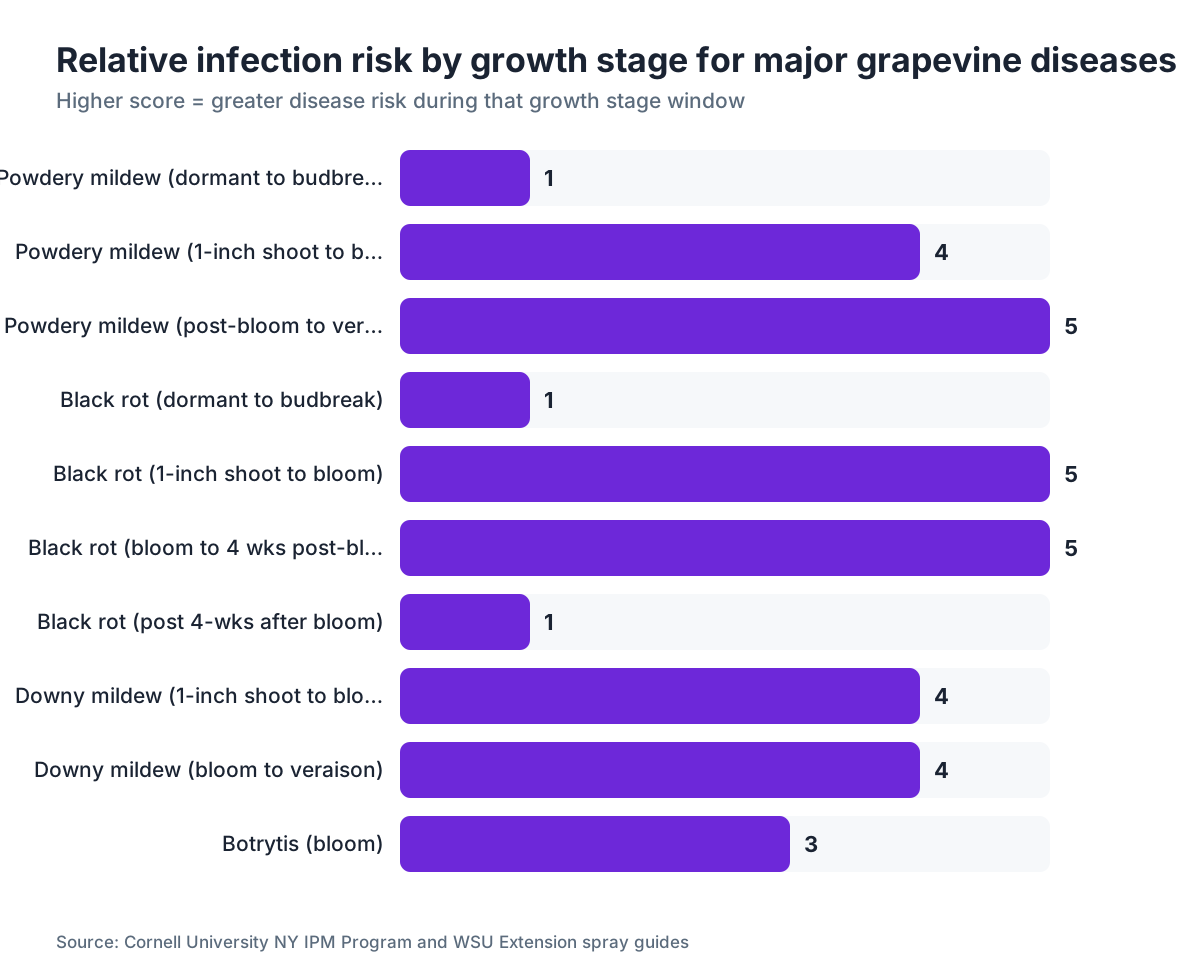
The spray window is tighter than most growers realize. Washington State University Extension puts the highest-risk period from budbreak through three to four weeks post-bloom. [4] Once berries hit about 4-5% sugar (early summer in most climates), they turn resistant. Spray during that window and black rot stays manageable. Miss it and you're watching mummies form.
Mancozeb, myclobutanil (Immunox is the common homeowner formulation), and captan all work well. Copper works too, especially early. Rotate modes of action if you spray several times a season, because resistance builds.
What causes Botrytis bunch rot and can you prevent it?
Botrytis (Botrytis cinerea) is everywhere. It's in your soil, on your pruning tools, on the bark of your vines. It turns into a problem when conditions line up: high humidity, cool temperatures around bloom, and any wound or opening on the berry.
Tight-clustered varieties like Chardonnay and some table grapes take the worst of it because moisture gets trapped inside the cluster. A quiet, low-grade infection that hid all season can explode during a rainy stretch just before harvest and destroy 30-50% of a crop in days.
Honest prevention has two parts. First, manage the canopy so air moves through it. Leaf removal in the fruiting zone, especially on the east side of the row, drops humidity around clusters and speeds drying after rain. For a backyard grower who isn't going to spray every seven to ten days, this beats most fungicide programs. Second, if you spray, time it at bloom and again pre-harvest, not mid-summer when it barely matters.
For homeowners, captan and some biocontrol products (Bacillus subtilis-based, like Serenade) give acceptable control. Serenade is OMRI-listed for organic programs. Skip copper for Botrytis. It does little against this pathogen. [5]
What is Phomopsis cane and leaf spot, and should you worry about it?
Phomopsis viticola causes cane bleaching, dark spots at the base of shoots, and small dark spots with yellow halos on leaves. The big tell is on the canes. Infected sections turn white or bleached after the leaves drop in fall, with small black pycnidia set into the bleached tissue.
It does the most damage when wet, cool weather hangs around during early spring shoot growth. Infection happens in the first few weeks after budbreak. In dry climates it rarely becomes serious, but in wetter regions it can weaken canes enough to cause poor fruit set.
Control runs on two things. Pruning sanitation (remove infected canes, don't leave them on the ground under the vine) and a dormant copper spray before budbreak. One well-timed copper application in early spring does most of the work. If you're already spraying copper for downy mildew, you're covering Phomopsis too.
What is Eutypa dieback and how do you spot it on old vines?
Eutypa lata is a wood pathogen, not a foliar one, and it's a slow killer. You won't see symptoms for two to three years after infection. By the time you do, the fungus has colonized a big chunk of the vine's permanent wood.
Symptoms show in spring on infected arms or cordons: stunted shoots with small, cupped, yellowed leaves. These shoots grow a few inches and then just stop. Cut into the cordon below them and you'll find a wedge-shaped dark stain in the wood. That's the signature.
Eutypa gets in through pruning wounds. The fungus releases spores during rain and infects cuts made during dormant pruning, especially the large cuts on older vines. The risk window runs roughly from pruning until budbreak, while fresh wounds stay open to infection. Delayed pruning (cutting later in dormancy, closer to budbreak) shortens that exposure and is probably the single most effective move a backyard grower can make. You can also paint large wounds with a fungicidal pruning paste, though the evidence on how much it helps is mixed. [6]
There's no chemical cure once a vine is infected. You either cut back below the infected wood (if you catch it early) or lose that arm. On badly infected vines, some growers retrain a new shoot to replace the infected cordon entirely.
What is Pierce's disease and where does it kill grapevines?
Pierce's disease comes from the bacterium Xylella fastidiosa, and it's a different animal from the fungal diseases above. No spray controls it. Sharpshooter leafhoppers spread it, especially the glassy-winged sharpshooter (Homalodisca vitripennis) in California.
The bacterium colonizes the xylem (the water-conducting tissue) and eventually blocks water movement. Leaves show a symptom called "scorching": tissue browns from the margins inward while the petiole (the stem joining leaf to cane) stays green and attached to the dead blade. That green petiole hanging on to a dead blade is diagnostic. Berries shrivel. Vines decline over two to five years and die.
Pierce's disease is mainly a California problem (Southern California and the Central Valley especially), plus the Gulf Coast states and Florida. In northern climates with cold winters, the bacterium is naturally limited because Xylella can't survive hard freezes. UC Davis runs deep research on Pierce's disease, and their work on resistant rootstocks and varieties is the most practical long-term fix for affected regions. [7]
In a high-pressure area, plant resistant varieties. UC Davis updates its variety recommendations regularly. Almost all Vitis vinifera varieties are highly susceptible. Some American species and hybrids carry good resistance.
What is crown gall and what causes those weird knobs on grapevine trunks?
Crown gall comes from the bacterium Agrobacterium vitis and produces large, rough, tumor-like growths on trunks, arms, and roots. The galls themselves aren't always the worst part. The damage comes from the bacterium's interference with vascular tissue and from galls physically girdling the trunk.
The bacterium is soil-borne and systemic inside infected vines. There's no chemical cure. Once a vine is infected, it's infected for life. Cold injury makes crown gall much worse, because freeze damage opens wounds that the bacterium colonizes aggressively in spring.
For backyard growers in cold climates, that makes variety selection your best tool. Pick varieties rated for your hardiness zone with real cold tolerance. Avoid deep planting, which reduces trunk winter injury. If galls appear, the vine often stays productive for years. Remove galls that are girdling, then decide whether to replace the vine based on its overall vigor. [8]
When should you spray, and what spray schedule works for backyard vines?
The most common backyard mistake is spraying on a calendar instead of on disease risk. Commercial spray programs assume a manager walks the vineyard every few days and tracks weather. You can run a simplified version of the same idea.
The highest-risk period for most foliar diseases runs from one inch of shoot growth through about three to four weeks after bloom. That's a six-to-eight-week window. After it, disease pressure usually drops, though Botrytis stays a risk right up to harvest.
A simple program that works for most backyard situations in humid climates:
- Dormant (before budbreak): copper hydroxide or Bordeaux mix. Covers Phomopsis, some black rot overwintering, and general sanitation.
- 1-inch shoot growth through bloom: copper plus sulfur every 10-14 days (shorten the interval during rainy stretches). Covers downy mildew, early black rot, and powdery mildew.
- Bloom: add a Botrytis-specific spray if you grow tight-clustered varieties.
- Post-bloom through four weeks after bloom: keep up copper/sulfur to finish black rot. Powdery mildew pressure runs all season, so sulfur or a DMI fungicide stays in play.
- Pre-harvest (two weeks out): Botrytis spray if the weather turns wet.
WSU Extension publishes strong spray guides for both conventional and organic programs that backyard growers can adapt. [4] UC Davis IPM guidelines cover California conditions specifically. [7] For the Northeast and Mid-Atlantic, Cornell's New York State IPM Program has climate-specific recommendations. [2]
For keeping spray records (which you should keep, for your own reference and safety), software like VitiScribe logs product names, rates, weather, and application dates without you building a spreadsheet from scratch.
One practical note. Read every label before you mix. The label is the law under FIFRA. Some products can't be tank-mixed, some carry preharvest intervals you have to respect, and some are restricted to certain users. This isn't optional fine print.
Are the fungicides for grapevine disease safe for home use, and what do labels require?
For homeowners, the usual products are sulfur dust or wettable sulfur, copper-based products (copper hydroxide, copper sulfate, Bordeaux mix), captan, and myclobutanil (sold as Immunox or similar). All of these are on garden center shelves or available online.
Safety requirements depend on the product. The EPA's Worker Protection Standard (WPS), 40 CFR Part 170, applies mainly to agricultural workers and handlers on farms, not to homeowners treating their own residential property. [9] But homeowner labels still spell out personal protective equipment (PPE), re-entry intervals, and storage rules. Those requirements are on the label for a reason.
Basic precautions that apply no matter who you are:
- Wear chemical-resistant gloves, long sleeves, and eye protection when mixing and applying.
- Don't spray when it's windy.
- Respect the preharvest interval (PHI) on every label. Sulfur, for instance, usually carries a zero-day PHI, so you can spray right up to harvest. Myclobutanil has a longer PHI depending on formulation.
- Keep children and pets out of the sprayed area until it dries.
- Copper builds up in soil with repeated use. On a small backyard area this is rarely a problem, but it's worth knowing. [10]
If you want organic-approved options, OMRI-listed products include sulfur, copper, Bacillus subtilis (Serenade), and neem oil (though neem does little against grapevine diseases compared to sulfur and copper). The USDA National Organic Program (NOP) governs what's allowed in certified organic production. For home use you can apply whatever the label allows, but organic materials give you flexibility if you grow for food. [11]
Which grapevine varieties resist disease best for a backyard planting?
This is the highest-leverage decision you make. A disease-resistant variety needs far fewer sprays, tolerates neglect better, and gives you a crop in years when a vinifera vine would be toast.
For the Eastern US and humid climates, go with the interspecific hybrids developed at Cornell, the University of Minnesota, and USDA programs. Marquette, La Crescent, Frontenac, Itasca, and Crimson Pearl offer strong disease resistance with acceptable fruit quality. Concord and Niagara are older American varieties with solid resistance and long track records.
On the West Coast the disease profile is different (powdery mildew and Botrytis more than black rot or downy mildew), and many vinifera varieties grown on minimal spray programs do fine in dry-summer climates. Even in California, Grenache and Carignan show noticeably less powdery mildew susceptibility than Chardonnay or Cabernet Franc.
Cornell's viticulture and enology program and the USDA-ARS breeding programs have released new disease-resistant varieties in recent years. Cornell's viticulture extension program keeps the most current list. [12]
No variety is immune to everything. "Disease resistant" means fewer sprays needed, not zero sprays needed. Even Marquette can pick up powdery mildew in a bad year.
How do you track grapevine disease treatments and spray records properly?
Growing grapes for personal use, your record-keeping duties are minimal next to a licensed farm. But keeping records is still smart. You'll know what worked, you'll know what you applied and when if a health question ever comes up, and if you sell fruit or wine later you'll have documentation.
At minimum, write down: product name and EPA registration number, rate applied, date, growth stage at application, and weather conditions. That's the whole list.
Running a larger backyard operation or moving toward commercial production, VitiScribe handles spray record logging, tracks preharvest intervals, and stores product labels alongside records. That matters when you're juggling multiple blocks or varieties on different spray programs. For four vines, a notebook works fine. For twenty vines across a few variety blocks, digital records save real time.
Commercial producers have to comply with state pesticide application record-keeping laws (they vary by state) and potentially with the EPA Worker Protection Standard if they employ workers. Most states require records for two to three years. Check your state department of agriculture for specifics. [9]
What should you do if you think your vine is diseased but you're not sure?
Get a lab diagnosis before you do anything drastic. Many university extension programs run plant disease diagnostics for a small fee, often $15-40 per sample. These labs confirm what you're actually dealing with instead of leaving you to guess from a photo.
Cornell's Plant Disease Diagnostic Clinic, UC Davis's plant pathology department, and WSU's plant diagnostic lab all accept samples from home growers in their states. [2][7][4] Most post submission instructions on their websites.
To collect a good sample: take several affected leaves (some with heavy symptoms, some with early ones), include cane tissue if you suspect a wood disease, put samples in paper bags (not plastic, which causes decay), and ship overnight or early in the week so samples don't cook in a hot postal facility over the weekend.
Photo-based diagnosis is faster but less definitive. Your local county cooperative extension office often runs a master gardener program or has a farm advisor who can help. Photo quality and diagnostic accuracy vary a lot by person, but it's a reasonable first move while you wait on a lab result.
Don't let perfect be the enemy of good. If it's mid-season and you see active spread of something powdery and white, a copper-sulfur spray won't hurt while you sort out the exact pathogen. Starting a spray program on a plausible diagnosis is reasonable. Just document what you did.
Frequently asked questions
Can powdery mildew on grapes spread to other garden plants?
Grape powdery mildew (Erysiphe necator) is host-specific. It infects Vitis species but won't spread to your roses, squash, or other vegetables. Other plants in your garden carry their own powdery mildew species, and those won't infect your grapevines either. No cross-contamination between grapes and the rest of the garden from this particular pathogen.
What is the white powder on my grape leaves?
Almost certainly powdery mildew (Erysiphe necator). It's a white to gray dusty coating on upper leaf surfaces, young shoots, and berries. It thrives in moderate humidity and warm temperatures (70-85°F) without needing rain. A sulfur-based spray applied early is the most effective treatment. Remove heavily infected shoot tips and open up the canopy to slow the spread.
Why are my grapes turning brown and shriveling before harvest?
Several causes are possible. Black rot turns berries into hard black mummies. Botrytis bunch rot causes gray fuzzy mold and brown shriveling, worst in tight clusters during humid weather. Heat or water stress can also shrivel berries without any disease. Check for gray fuzz (Botrytis), hard black texture (black rot), or review your watering if there are no pathogen signs. The pattern within the cluster helps too: Botrytis often starts on one side.
Can you eat grapes from a vine that has powdery mildew?
Yes, if the berries themselves aren't heavily infected. Mildew on leaves doesn't automatically mean mildew on fruit. Lightly infected berries are generally safe to eat but may taste off. Heavily infected berries crack and develop secondary rot, so discard those. Wash all fruit thoroughly regardless. The main concern with powdery mildew on fruit is quality and off-flavor, not food safety the way bacterial pathogens are.
How do you treat black rot on grapevines organically?
Copper-based fungicides (copper hydroxide or Bordeaux mix) are OMRI-listed and give reasonable black rot control, especially applied before infection periods. Timing matters more than the product: spray during wet periods from budbreak through four weeks post-bloom. Sanitation is just as important: remove all mummified berries during dormant pruning, since they're the primary overwintering source. No organic product cures an active black rot infection once berries are affected.
Do wild grapevines spread disease to cultivated vines?
Yes, they can. True wild Vitis species can harbor black rot, powdery mildew, and other pathogens (Virginia creeper isn't actually a grape). Wild vines on a fence or treeline near your cultivated vines can act as an inoculum source. Removing wild vines within a reasonable distance (50-100 feet if practical) lowers background disease pressure, especially for black rot and powdery mildew.
What kills grapevine diseases in the soil?
Most grapevine diseases are aerial pathogens (they attack leaves and fruit) rather than soil-borne, so soil treatments rarely help much. Crown gall (Agrobacterium vitis) is soil-borne and systemic, and no soil treatment eliminates it reliably. Phytophthora root rot is a genuine soil pathogen but uncommon in well-drained backyard soils. For most foliar diseases, spray timing and canopy management do far more than anything you'd do to the soil.
How often should you spray grapevines for disease in a backyard setting?
Every 10-14 days during the critical period from one-inch shoot growth through four weeks after bloom. Shorten to 7-10 days during rainy stretches or when temperatures sit in the disease's optimal range. After that window closes, monthly or bi-monthly applications (or none at all in dry climates) may be enough. The most common backyard mistake is spraying too late in the season, after disease pressure has already peaked.
What does Eutypa dieback look like on grapevines?
Stunted spring shoots with small, cupped, yellowish leaves growing from an arm or cordon that otherwise looks normal. These short, distorted shoots are often called 'stunts.' Cut into the affected cordon and you'll see dark wedge-shaped staining in the wood cross-section. Symptoms appear two to three years after infection through pruning wounds. By the time you see them, significant wood is already affected. There's no chemical treatment; cutting out the infected wood is the only option.
Can baking soda stop powdery mildew on grapevines?
It works as a temporary knockback on early infections but protects poorly compared to sulfur. Baking soda (sodium bicarbonate) raises pH on the leaf surface, making it less hospitable to the fungus. The problem is it washes off fast and leaves no residual protection. Potassium bicarbonate (sold as MilStop and similar) is more effective and a bit more persistent. For serious powdery mildew pressure, sulfur or a DMI fungicide is a better call.
Is Pierce's disease a problem for backyard growers in Northern states?
Generally no. Xylella fastidiosa, the bacterium behind Pierce's disease, doesn't survive hard winters well. USDA research indicates sustained temperatures below about 23°F (-5°C) kill the bacterium. In northern climates with reliable cold winters, Pierce's disease is rarely a real threat. It's mainly a concern in California (Southern California and the San Joaquin Valley especially), the Gulf Coast, and Florida, where winters stay mild enough for the bacterium to persist.
What is the difference between grape leaf rust and other grapevine diseases?
True grape rust (Phakopsora ampelopsidis) is uncommon in most North American vineyards and looks like orange-yellow powdery pustules on leaf undersides. Most growers see it rarely if ever. What gets mistaken for rust is usually downy mildew sporulation (white, not orange), leaf scorch from Pierce's disease, or spray damage. If you genuinely see orange pustules, contact your county extension office for confirmation before treating, since management differs from the more common diseases.
Should you remove infected leaves from grapevines?
It helps somewhat for black rot (pulling early lesions lowers spore load) and for Botrytis (leaf removal in the fruit zone improves air circulation). For powdery mildew, removing heavily infected shoot tips can slow spread, but it isn't practical once the disease covers a canopy. For downy mildew, leaf removal helps less than spray timing. Removing infected fruit does more than removing leaves for most diseases.
Sources
- UC Davis IPM Program, Grape Powdery Mildew: Powdery mildew (Erysiphe necator) thrives at 70-85°F without free water and can infect berries before veraison, causing cracking and failure to ripen
- Cornell University New York State IPM Program, Grape Disease Management: Black rot can destroy 80% of a crop in a wet year if sprays are missed during the critical window from budbreak through three to four weeks after bloom
- UC Davis IPM Program, Grape Downy Mildew: Downy mildew (Plasmopara viticola) requires free water and temperatures above 50°F to sporulate; symptoms appear as oily yellow oil spots on upper leaf surfaces with white sporulation below
- Washington State University Extension, Grape Disease Management: WSU Extension identifies budbreak through three to four weeks post-bloom as the highest-risk period for black rot infection and publishes spray guides for backyard and commercial growers
- UC Davis IPM Program, Grape Botrytis Bunch Rot: Botrytis bunch rot is worst in tight-clustered varieties; canopy management and leaf removal in the fruiting zone reduce cluster humidity, and copper is not effective against this pathogen
- UC Davis Department of Plant Pathology, Eutypa Dieback: Eutypa lata infects through pruning wounds during rain events; symptoms appear two to three years after infection; delayed pruning closer to budbreak reduces wound exposure time
- UC Davis Pierce's Disease Research Program: Xylella fastidiosa colonizes grapevine xylem and is transmitted by sharpshooter leafhoppers; UC Davis research on resistant rootstocks and varieties offers the primary long-term management solution in affected regions
- Cornell University Plant Disease Diagnostic Clinic, Crown Gall of Grapevine: Crown gall is caused by Agrobacterium vitis, is soil-borne and systemic within infected vines, and has no chemical cure; cold injury significantly worsens outbreaks
- US EPA, Worker Protection Standard (WPS) 40 CFR Part 170: The EPA Worker Protection Standard applies to agricultural workers and handlers on farms; homeowners applying products to their own residential property have separate label-based requirements
- UC Cooperative Extension, Copper Use in Organic Farming: Copper accumulates in soil with repeated application; in small backyard areas this is rarely a problem but is a documented concern in larger-scale organic programs
- USDA National Organic Program, Allowed and Prohibited Substances: USDA NOP governs organic-approved pesticides; sulfur, copper, and Bacillus subtilis-based products are among the OMRI-listed options for grape disease management in certified organic production
- Cornell University Viticulture and Enology, Disease-Resistant Grape Varieties: Cornell's viticulture program has developed and released interspecific hybrid varieties including Marquette, Frontenac, and Itasca with strong disease resistance suitable for humid eastern climates
Last updated 2026-07-09