Dormant pruning grape vines: the complete field guide
TL;DR
- Dormant pruning sets your whole season.
- Do it after hard frost risk drops below about 50% but before buds hit woolly stage (roughly 10% budbreak).
- Remove 85-95% of last year's growth.
- Timing, cut placement, and the system you pick decide your yield, vine balance, and long-term disease load more than anything else you'll do all year.
Why does dormant pruning matter so much for grapevines?
Grapevines fruit only on current-season shoots that grow from buds set the previous year. Leave too many of those buds and the vine over-produces, burns through its stored carbohydrates, and heads into the next winter weak. UC research shows that vines left unpruned for even one season can take two to three years to get their balance back [9].
The math is simple. A healthy vine ripens fruit at a ratio of roughly 10-15 leaves per cluster, depending on variety and site. Dormant pruning sets that ratio before the season starts. Every later fix, shoot thinning, cluster thinning, hedging, just corrects a decision you got wrong at pruning time.
Then there's disease. Pruning wounds are the main door for Eutypa lata and the botryosphaeria fungi behind trunk diseases. The cuts you make, and when you make them, shape whether a vine lives 30 years or dies at 12. You can't half-do this one.
When is the right time to prune dormant grapevines?
The window opens once the vine has banked enough chilling to satisfy dormancy (typically 900-1200 hours below 45°F for most Vitis vinifera, though published numbers spread wide by variety) [2]. It closes at woolly bud burst, when green tissue first shows and frost damage gets easy.
Most California coastal growers prune from late January through March. Pacific Northwest growers often run February into early April. The date matters far less than the bud stage. Watch your vines, not the calendar.
Here's a field rule worth knowing: later pruning delays budbreak, which helps in frost-prone sites. Washington State University Extension puts the delay at roughly 5-7 days of budbreak per 2-3 weeks of delayed pruning [3]. The catch is that late pruning squeezes your crew's schedule and often lands in wetter weather that slows wound healing.
For Eutypa, UC Cooperative Extension recommends pruning in dry weather and applying wound protectant within 24 hours of cutting [1]. Rain within a week of pruning sends spore germination and infection rates up sharply. Nobody gets perfect weather. Build some slack into the crew schedule so you can hold off through a sustained wet spell.
One clarification: "dormant pruning" and "fully dormant" aren't the same thing. Vines move carbohydrates in late dormancy, and bleeding sap from fresh cuts is normal and harmless. The vine isn't losing anything worth worrying about through those wounds.
Spur pruning vs. cane pruning: which system should you use?
This is the foundational call, and your variety and training system mostly make it for you before you pick up shears.
Spur pruning works with varieties that carry fruitful buds near the base of the cane, usually positions 1 through 3. You leave short 2-bud spurs on permanent cordon arms. Cabernet Sauvignon, Syrah, Grenache, and Zinfandel get spur-pruned in most regions. Work goes faster per vine once the structure's set, and the permanent cordon makes mechanization practical.
Cane pruning is right for varieties with low basal bud fruitfulness, where the first 3-4 buds are essentially blind or throw only leafy shoots. Pinot Noir, Chardonnay, Riesling, and Gewurztraminer fall here, which is why Burgundian and Alsatian systems lean on Guyot (single or double cane). You pick one or two vigorous canes off last year's growth, tie them down, and cut the rest. A renewal spur gives you next year's cane.
Flame grape pruning runs on the same logic as other table grapes on arbor or overhead trellis. Flame Seedless gets spur-pruned at 2 buds per spur because its basal buds are fruitful, and the arbor gives you wide cordon arms to space spurs 4-6 inches apart. The difference from wine grapes: table programs chase higher yields, so growers often run longer spurs or blend spurs with short canes to hit pack-out targets.
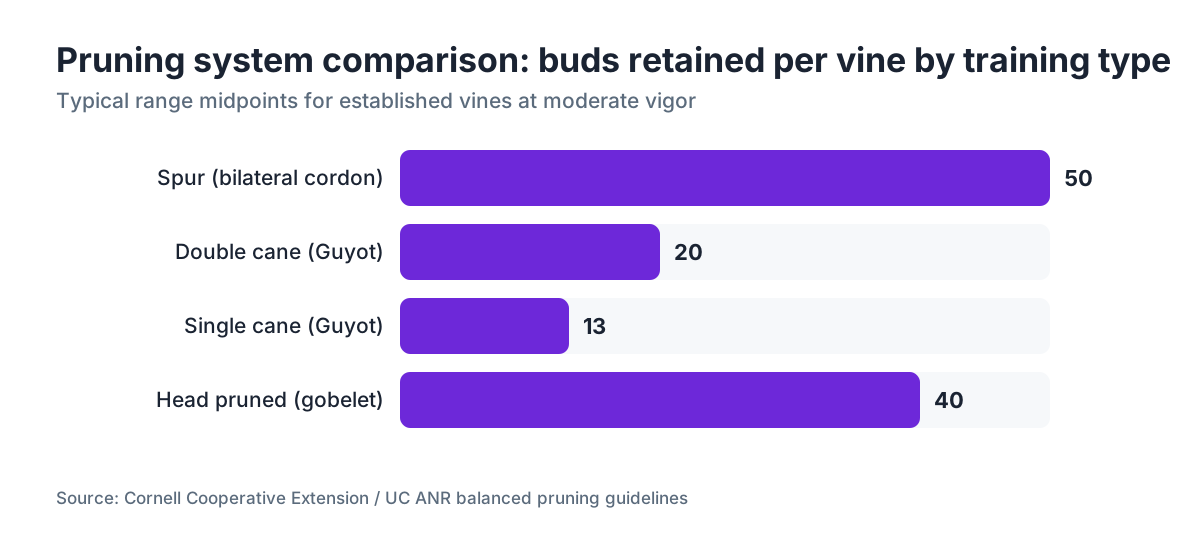
| System | Best varieties | Buds left per vine | Mechanization potential |
|---|---|---|---|
| Spur (bilateral cordon) | Cab Sauv, Syrah, Zin, Grenache, Flame | 40-60 | High |
| Single cane (Guyot) | Pinot Noir, Chardonnay, Riesling | 10-16 | Low |
| Double cane | Chardonnay, Pinot Gris | 16-24 | Low |
| Head pruned (gobelet) | Old-vine Zin, Grenache | 30-50 | Very low |
No system wins on paper. The one that matches your variety's fruitfulness zone and your trellis geometry is the right one.
How many buds should you leave per vine?
The framework in extension literature is balanced pruning, worked out decades ago and refined at Cornell and UC Davis: weigh the prunings from a sample of vines, then use a table to set the retained bud count [4].
The original formula (Ravaz-derived, later formalized in North American research) suggests leaving 20-30 buds per pound of pruning weight removed, up to a threshold, then 10 more buds per additional pound beyond that. Most extension resources simplify it: if pruning weight comes in under 0.5 lb, the vine is too weak, and you should chase down canopy, soil, or rootstock problems instead of trying to crop it back to health.
A medium-vigor vine leaving 0.5-1.0 lb of prunings can take 30-50 retained buds as a starting range. High-vigor vines on fertile soils with aggressive rootstocks like 1103 Paulsen or Freedom handle 50-70 buds if your canopy management holds.
The honest answer: the right bud number is site- and variety-specific, and you find it by measuring pruning weights across your blocks for 2-3 seasons and lining them up against harvest data. That's what makes record-keeping tools pay off. VitiScribe, for one, logs pruning weights by block and pulls them next to yield records, so the pattern shows up over seasons instead of living in one person's head.
Don't chase a single-season answer. Trend data across 3-5 years beats any formula run against one harvest.
What tools and cuts do you actually use in the field?
Bypass hand shears (not anvil) are the workhorse for cuts under about 3/4 inch. Felco 2 and Felco 8 are the standards for good reasons: replaceable parts, decent ergonomics, adjustable spring tension. Loppers take the bigger wood. A folding hand saw handles anything over 1.5 inches, which mostly means corrective work on old spurs or trunk renewal.
On large operations, pneumatic shears (usually running off a tractor-mounted compressor) cut labor time by 30-50% versus hand shears, per UC Cooperative Extension cost-of-production studies [5]. The upfront cost is real, roughly $3,000-$8,000 for a full pneumatic setup, but it pays back fast in a block of any size.
Mechanical pre-pruners (rotary or reciprocating machines that rough-cut the canopy ahead of hand crews) are common on large estates now. They cut hand-labor time hard but still need a finishing pass for accurate spur or cane selection.
Cut placement matters. On a spur system, cut just above the second bud, leaving about a 1/4-inch stub. Too long and the wood dies back into a disease entry point. Too close and you nick the bud. On a cane system, tie the selected cane before you cut the renewal spur, because it's easy to remove the wrong wood once the alternatives are gone.
Sterilize tools between vines around known Leafroll or Crown Gall sites. A 10% bleach solution or 70% isopropyl alcohol both work. It slows a crew down. In an infected block it's worth it.
How do trunk diseases change how you should prune?
This is where vineyard practice has shifted most in 20 years, and plenty of old habits turned out to do real harm.
Eutypa dieback, bot canker, and Esca (a complex of fungal pathogens) all enter through pruning wounds, colonize the wood, and eventually kill cordons and trunks. UC Cooperative Extension puts the cost of trunk diseases to California vineyards at tens of millions of dollars a year in lost productivity and replanting [1].
A few practices now have solid backing. Prune as late as your frost and schedule allow, since Eutypa spore release peaks in wet winter weather and late pruning shrinks the high-risk wound-exposure window. Apply a wound protectant (a fungicidal paint or paste with an active ingredient like thiophanate-methyl or boscalid) to cuts over about 1 cm within 24 hours. And remove and destroy infected wood instead of leaving it on the ground.
Double pruning, rough-cutting long in December or January and finish-pruning to final bud count in February or March, has extension support as a way to shrink large-wound exposure during the wettest weeks [1]. Your crew makes the high-risk big wounds in the drier part of dormancy. It costs more in labor.
For vines with severe trunk disease, trunk renewal (removing the old trunk and training a fresh shoot from near the graft union) is the only real cure. It sets the vine back 2-3 years and can add decades to its productive life. Growers under-use it because cutting a vine to the ground hurts to look at.
What are the worker safety requirements for a pruning crew?
Pruning is low-chemical-exposure work next to spray operations, but you still carry regulatory duties that vary by state and crew size.
The federal EPA Worker Protection Standard (WPS) covers ag workers entering treated areas and handling pesticides. If you apply wound protectants with registered fungicides right after pruning, those applications fall under WPS training, labeling, and PPE rules [6]. The applicator has to be trained and the label followed to the letter. "The WPS requires that workers and handlers receive pesticide safety training before working in pesticide-treated areas," per EPA guidance [6].
The pruning work itself falls under OSHA's agricultural standards (29 CFR Part 1928), which cover hand tools, ergonomic risk, and handling sharp equipment. Repetitive-strain injuries from sustained shear use are common and a real liability. Ergonomic shears with better spring tension, tool rotation, and scheduled breaks all help.
California adds more. If your crews work piece-rate, the state's piece-rate compensation law (AB 1513 and related regulations) shapes how you structure pruning pay, and Cal/OSHA heat illness prevention rules can apply even on an unseasonably warm winter day [7].
Keep training records. With three or more workers, keep a pesticide safety training log for every person on the crew, whether or not they personally apply anything, because the WPS requires it and state ag inspectors do check.
How do you handle old vines and head-pruned systems differently?
Head-trained, own-rooted old vines (common in Lodi, Paso Robles, and parts of the Central Valley for Zinfandel and old-vine Grenache) need a different approach, because there's no permanent cordon to steer by.
On a head-trained vine, you select spurs around the head and hold a roughly even spread of fruiting wood. Over years, spurs tend to migrate outward and upward, because growers keep cutting above the uppermost bud, which is the most vigorous. Fighting that drift takes discipline. Keep spurs close to the head and cut off any that have crept out to unmanageable spots.
On very old vines (40+ years), you're also deciding whether to attempt trunk renewal or cordon replacement on individual arms showing disease. This is more art than science. No extension formula tells you "how much diseased wood is too much to save." You judge it by how much healthy wood sits below the canker and whether the vine has enough basal shoots to work with.
Machine head-pruning is basically impossible, which is one reason old-vine blocks carry a labor premium and why they don't always pencil out for smaller operations unless the wine commands a price premium. See our vineyard section for more on managing mixed-age blocks.
For Paso Robles operations with real old-vine acreage, the local UC Cooperative Extension office publishes region-specific guidance worth tracking down for your site conditions.
How do you build a pruning record-keeping system that satisfies auditors?
Too many vineyard managers track pruning data on paper that vanishes before harvest, or in phone notes nobody ever transfers. Then a sustainable winegrowing audit, a buyer questionnaire, or a state inspection lands, and the scramble starts.
A usable pruning record holds, at minimum: block ID, date pruned, crew leader, the system and bud count applied, weather conditions (for disease-risk documentation), any wound treatments with product name and EPA registration number, and who applied them. If you're collecting pruning weights for balanced pruning, log those by sub-block.
Most sustainable winegrowing certifications, including the California Code of Sustainable Winegrowing and Lodi Rules, ask for pruning documentation as part of canopy management records [8]. Some want it linked to your pest and disease strategy. Auditors aren't chasing perfection. They want a consistent system that someone actually uses.
Digital tools help because they timestamp and index the record for you. VitiScribe is built for this kind of field record, tying pruning notes, spray records, and yield data together so you pull a full block history in minutes instead of digging through binders. That said, a well-kept spreadsheet beats a digital tool you never open. The format matters less than the habit.
What are common dormant pruning mistakes that cost you at harvest?
Leaving too many buds is the most common error, and it's understandable. Nobody likes staring at a vine they've over-thinned. But a vine that struggles to ripen 6 tons per acre struggles harder at 8, and the quality hit shows up at harvest.
Cutting to the wrong wood runs a close second. On a spur system you want last year's growth (one-year-old wood, lighter brown and flexible), not two-year-old wood, which is darker and stiffer. It's easy to get turned around in a dense canopy, especially with new crews. Slowing down to trace the wood back to its origin saves real mistakes.
Ignoring spur position compounds year over year. Spurs that walk outward eventually throw shoots that hang below the wire, shade each other, and dodge the mechanical hedger. Fixing it means cutting the errant spur entirely and waiting a season for a replacement, which costs you a fruiting position.
Skipping wound treatment on large cuts because the crew's flying is a false economy. Eutypa infection of an unprotected 2-inch wound can kill a cordon arm in 5-8 years, and replacing that arm costs a full season's production from that vine. UC Cooperative Extension puts wound protectant product cost at roughly $10-$30 per acre for a full application [5]. That's cheap insurance.
One more: pruning in the wrong order when you have both infected and clean blocks. Work the clean blocks first, or sterilize tools hard between blocks. Crown Gall and some viral diseases hitch a ride on cutting tools.
How do you train new pruners to work accurately and fast?
Most skilled pruners build their eye over two to three full seasons. There's no shortcut, but you can speed the learning and cut down on expensive mistakes.
Start with a demonstration vine you've pre-marked with flagging tape on the wood you'd keep. Walk the new pruner through exactly what you're after: cane diameter (pencil-thick, roughly 6-10mm, for most varieties), bud count, spur spacing, and the cuts to make on misplaced or weak spurs. Then have them prune the demo vine while you watch and correct in real time.
The Cornell Cooperative Extension viticulture program publishes extension-level pruning training materials worth printing and laminating for field use [4]. WSU Extension has region-specific guides for Pacific Northwest varieties [3].
Quality control during the first week beats speed. Walk behind the new crew daily and point out every bad cut. That first-week investment pays back all season. Pruners corrected early make fewer errors than ones left to build bad habits.
Piece-rate pay can push speed over quality. Pay by the vine with no quality checks and you'll get fast bad pruning. Either build a quality component into the pay structure or run regular spot-checks with real consequences for repeat errors.
UC Cooperative Extension farm advisors in most California counties will do on-farm consultations, often at no cost. Use them, especially when you're establishing a new block or switching training systems. Most growers leave that resource on the table.
Frequently asked questions
When exactly should I start pruning dormant grapevines?
After full dormancy is satisfied (usually after the coldest weeks of January in most of California, or mid-February in the Pacific Northwest) but before woolly bud burst. For frost-prone sites, hold off as late as mid-March or even April, since each week of delayed pruning pushes budbreak back 5-7 days and lowers frost risk. Watch bud stage, not the calendar.
How much wood should you remove when pruning grapevines?
Remove 85-95% of the prior year's growth. The wood you leave is governed by the vine's demonstrated capacity, estimated with the balanced pruning formula: roughly 20-30 buds retained per pound of pruning weight removed. A vine leaving under 0.5 lb of prunings is too weak and needs investigation, not more fruit load.
What is the difference between spur pruning and cane pruning?
Spur pruning leaves short 2-bud stubs on a permanent cordon arm and works best for varieties with fruitful basal buds (Cabernet, Syrah, Zinfandel). Cane pruning selects one or two whole canes from the previous season and is required for varieties like Pinot Noir and Chardonnay, whose first few buds produce only leaves, not fruit.
How do you prune Flame Seedless grape vines?
Flame Seedless is typically spur-pruned at 2 buds per spur on an overhead arbor or trellis, since its basal buds are fruitful. Spurs sit about 4-6 inches apart on cordon arms. Table grape programs often target higher yields than wine grapes, so some growers run 3-bud spurs or mix spurs with short canes to lift cluster count.
How do you prevent trunk diseases when pruning grapevines?
Prune in dry weather when you can, apply a registered wound protectant (thiophanate-methyl or boscalid-based paste) to cuts over 1 cm within 24 hours, and haul infected wood out of the vineyard. Double pruning (rough-cut in December, finish in drier February or March) shrinks large-wound exposure during the highest spore-pressure weeks.
What are the signs that a grapevine was pruned incorrectly the previous season?
Overcrowded spurs throwing too many shoots at one point, spurs that have walked far off the cordon wire, excess vigor (shoots over 4 feet with heavy lateral growth) pointing to too few buds left, or the opposite (weak, stunted shoots) pointing to too many buds for the vine's capacity. Bad cane selection on cane-pruned vines shows up as poor trellis fill.
Can you prune grapevines in the fall?
Most extension sources advise against it. The vine hasn't fully hardened off, reserves are still moving into permanent wood, and fall wounds stay open through the whole wet season before any callusing happens. A few narrow cases (severe canker removal, say) justify fall cuts, but as a general program, wait for full dormancy after leaf drop.
What PPE and safety rules apply to vineyard pruning crews?
For the pruning itself, cut-resistant gloves and eye protection for debris are minimum sensible PPE. If wound protectant fungicides go on right after pruning, EPA Worker Protection Standard training and label-mandated PPE apply to those applicators. California growers also follow Cal/OSHA ergonomics and heat illness prevention standards, even during winter pruning.
How do you prune a neglected or unpruned grapevine back into shape?
Start by cutting out all dead wood and obvious disease. Then reduce the vine to its intended structure (cordons or head), cutting back to healthy wood. Expect to leave more fruiting wood than normal in year one to hold some yield while you rebuild, then correct to target bud count over 2-3 seasons. Fixing everything in one cut usually shocks the vine.
What records do I need to keep for dormant pruning to satisfy sustainable winegrowing audits?
At minimum: block ID, pruning date, crew leader, system and bud count, weather conditions, and any wound treatments (product name and EPA registration number). Most California and Pacific Northwest sustainable winegrowing certifications want canopy management records including pruning logs. If you're collecting pruning weights for balanced pruning, log those by sub-block.
How does pruning timing differ between wine grapes and table grapes?
The biology is the same, but table grape programs in California's San Joaquin Valley often prune earlier (late December through January) to time girdling and gibberellin treatments for berry sizing later on. Wine grape programs usually have more flexibility. Variety-specific fruitfulness also differs, which drives whether a spur or cane approach fits.
How do you train new crew members to prune accurately?
Pre-mark a demonstration vine with flagging tape on the wood you'd keep, walk the new pruner through the decision criteria, then have them prune it while you watch and correct. Run daily quality-control walks the first week. Speed comes with experience; accuracy has to come first. Cornell and WSU Extension both publish printable field training guides you can laminate for crew use.
Sources
- UC Cooperative Extension (UC ANR), Trunk Disease Management in Vineyards: Eutypa and botryosphaeria fungi enter through pruning wounds; double pruning and wound protectants reduce infection; trunk diseases cost California vineyards tens of millions annually in lost productivity.
- UC Integrated Viticulture (UC ANR), Grapevine Dormancy and Chilling Requirements: Most Vitis vinifera varieties require approximately 900-1200 hours below 45°F to satisfy dormancy requirements.
- Washington State University Extension, Grapevine Pruning and Training: Delayed pruning pushes back budbreak by roughly 5-7 days per 2-3 weeks of pruning delay, useful as a frost avoidance strategy.
- Cornell University Cooperative Extension, Viticulture Program, Balanced Pruning: The balanced pruning formula recommends retaining 20-30 buds per pound of pruning weight removed to match retained bud count to vine capacity.
- UC Agriculture and Natural Resources, Cost and Return Studies for Wine Grape Production: Pneumatic shear systems reduce pruning labor time by 30-50% compared to hand shears; wound protectant product cost is approximately $10-$30 per acre.
- U.S. EPA, Worker Protection Standard for Agricultural Pesticides: "The WPS requires that workers and handlers receive pesticide safety training before working in pesticide-treated areas"; fungicidal wound protectant applications after pruning are subject to WPS requirements.
- California Department of Industrial Relations, Cal/OSHA agricultural and piece-rate (AB 1513) rules: Cal/OSHA agricultural standards and AB 1513 piece-rate compensation rules apply to vineyard pruning crews in California.
- California Sustainable Winegrowing Alliance, California Code of Sustainable Winegrowing: Sustainable winegrowing certification in California requires documentation of canopy management practices including pruning system, timing, and wound treatment records.
- UC Agriculture and Natural Resources (UC ANR), Vine balance and carbohydrate reserves: Vines left unpruned for even one season can take two to three years to recover full carbohydrate balance and fruit quality.
- Pacific Northwest Pest Management Handbooks (Oregon State, WSU, University of Idaho), Grapes: Region-specific pruning and pest management guidance for Pacific Northwest wine grape varieties including Pinot Noir, Riesling, and Chardonnay.
Last updated 2026-07-09