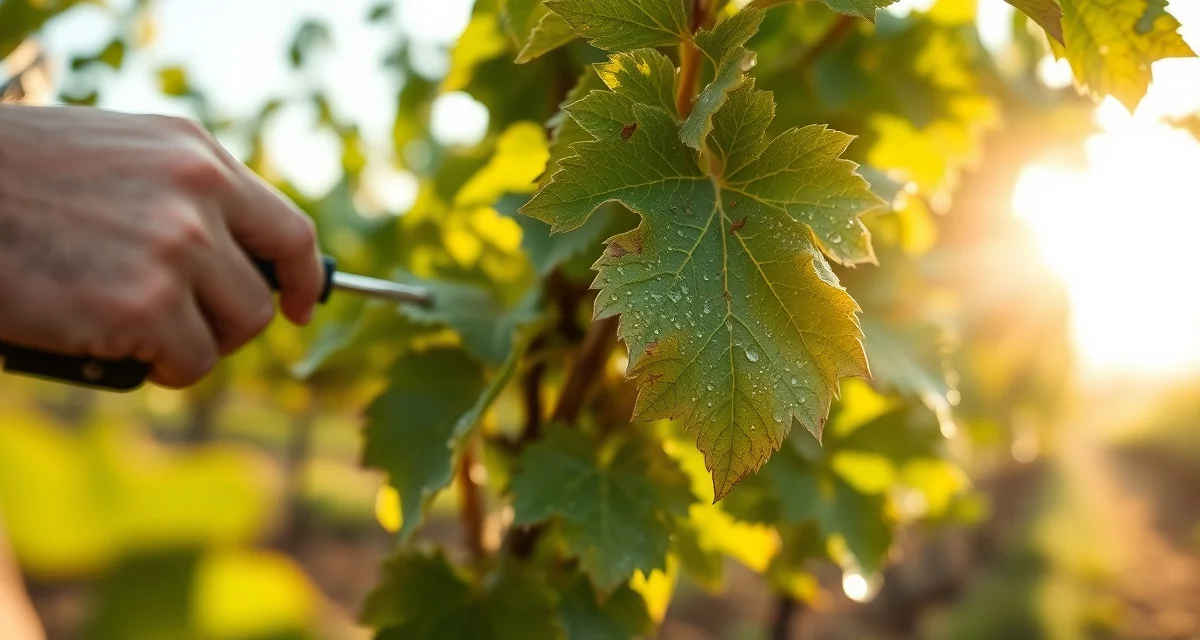
Organic Downy Mildew Control for Vineyards
Copper is the primary organic tool for downy mildew, but it has EU-style annual rate limits that you need to track carefully if you're managing a certified organic vineyard. Many organic certifiers in the US are now adopting or recommending copper rate restrictions modeled on European regulations -- typically 1.5-2.5 lbs metallic copper per acre per season -- to reduce soil accumulation. If you're applying copper throughout the season for both downy mildew and botrytis suppression without tracking cumulative inputs, you can easily exceed program limits without realizing it.
TL;DR
- Many US organic certifiers are adopting copper rate guidance modeled on the EU limit of 2.5 kg metallic copper per hectare per year (approximately 2.2 lbs/acre/year) -- applying copper for downy mildew and botrytis suppression without tracking cumulative inputs can exceed program limits without warning
- Copper is a contact protectant with no curative activity for downy mildew -- applied before rain provides effective protection, applied after rain during a wetting event is far less effective
- Apply copper when the 10-10-24 infection criteria are forecast within 72 hours; after notable rain (greater than 25mm), re-apply within 3-5 days to restore surface coverage
- Phosphonate products (Phostrol, ProPhyt) are not consistently OMRI-listed -- their organic approval varies by certifier; verify status with your certifier before any application in organic blocks
- Most copper-based fungicides carry a 0-day PHI, making them useful up to harvest, but late-season copper applications can leave visible residue on berry skin that some wineries object to at delivery
- VitiScribe tracks cumulative copper inputs per block using the metallic copper equivalent for each registered product, displaying a running season total before each application decision
VitiScribe tracks cumulative copper applications automatically across all blocks so you can see your running season total before making the next application. You don't need a separate spreadsheet or manual tally.
Understanding Downy Mildew in Organic Vineyards
Downy mildew (Plasmopara viticola) is primarily an eastern US problem, but coastal California, Oregon, and wet Washington regions deal with it too. The pathogen infects through stomata on the underside of leaves and young berries, requiring free moisture and warm temperatures. The "10-10-24" infection model -- 10mm rain, minimum 10°C temperature, 24-hour incubation -- defines the primary infection conditions.
Organic management is harder for downy mildew than for powdery mildew because the synthetic materials most commonly used against downy mildew -- phenylamides (Ridomil, Presidio), QoI strobilurins in combination, phosphonates (Phostrol) -- have no approved organic equivalent. Copper is your primary tool, and it's predominantly a protective material. Applied before an infection event, copper prevents spore germination on plant surfaces. Applied after infection has occurred, copper does very little.
This makes timing more critical in organic programs than in conventional ones. You're not catching up with a rescue systemic -- you're preventing infection with a contact protectant.
Copper Products and Formulations
Several copper formulations are registered for organic use in vineyards. They differ in copper content, solubility, residue characteristics, and compatibility with other materials.
Copper hydroxide (Kocide 3000, Kocide Opti, Champion WP): High metallic copper content per unit weight. Kocide 3000 is 46.1% metallic copper equivalent. OMRI-listed formulations available. Good rainfastness after 4-6 hours dry time. Can cause phytotoxicity at high rates or under stress conditions.
Copper sulfate (Copper sulfate pentahydrate, Bordeaux mixture): Traditional organic standard. Bordeaux mixture (copper sulfate + lime) has the longest history of downy mildew control. Less commonly used in modern programs due to phytotoxicity concerns and formulation variability, but still valuable in some operations.
Cuprous oxide (Nordox 75 WG): High copper content (84% metallic copper equivalent). Excellent rainfastness. OMRI-listed. Slightly different solubility characteristics than copper hydroxide -- read label for rate adjustments.
Copper octanoate (Cueva, Previsto): Lower metallic copper content per unit. OMRI-listed. Lower phytotoxicity risk but shorter residual activity. Often used at shorter spray intervals or when phytotoxicity is a concern on sensitive varieties.
Calculated as metallic copper: When tracking cumulative inputs, convert all product applications to metallic copper equivalent using the product's label copper content percentage. VitiScribe does this calculation automatically for registered copper products in its library.
Timing Applications to Infection Events
The most efficient use of copper in organic downy mildew management is pre-infection application -- applying copper before a wetting event that will create infection conditions.
Rule of thumb: Apply copper when the 10-10-24 infection criteria are forecast within 72 hours. If your weather station shows an incoming rain event with temperatures above 50°F (10°C), a pre-rain copper application that dries on tissue before rain provides the best protection. Copper applied after rain during a wetting event is far less effective -- the material can't form a protective deposit on already-wet tissue.
This is where weather integration in VitiScribe pays off for organic programs. When your connected weather station shows conditions approaching the downy mildew infection threshold, you get an alert that flags the spray window. You can make an application decision before the infection event rather than scrambling after the fact.
Spring timing: Start copper applications at 4-6 inch shoot growth in wet-spring regions (Oregon, New York, eastern states). This corresponds to early susceptible tissue exposure. In drier regions (California interior), you may be able to delay copper until the first notable wetting event, but in high-risk regions, erring toward earlier protection is the right call.
Interval: Copper residue on leaf surfaces breaks down through weathering, especially after rain events. After notable rain (>25mm), re-apply copper within 3-5 days to restore surface coverage. In dry periods, copper residue may remain effective for 10-14 days.
Late-season: Continue copper through bunch closure in high-risk regions. After bunch closure, berry susceptibility to direct infection declines substantially, and you can typically extend intervals or reduce rates. However, late-season leaf protection matters for photosynthesis and vine ripening, so don't abandon the program too early.
Managing Cumulative Copper Rates
Copper accumulates in soil over time, and excessive soil copper creates toxicity problems for soil biology and for grapevine roots. The EU limits copper applications to 2.5 kg metallic copper per hectare per year (approximately 2.2 lbs/acre/year) averaged over 7 years, with no more than 4 kg/ha in any single year. Many US organic certifiers are adopting similar guidance.
If your CCOF or other certifier has adopted copper rate guidelines, you need to track cumulative inputs by block across the season. This calculation requires knowing the metallic copper content of each product and converting applied rates accordingly.
VitiScribe tracks cumulative copper inputs per block using the metallic copper equivalent for each registered product. Your block dashboard shows the running season total so you can see where you are relative to program limits before making each application. See how VitiScribe handles organic certification record keeping.
At the end of the season, you can export block-level copper input reports that show total metallic copper per acre for each block -- the format your CCOF auditor will ask for when reviewing your organic input records.
Non-Copper Options for Organic Downy Mildew
Copper isn't your only option, though it's the most reliable.
Phosphorous acid / phosphonate products: Phostrol, ProPhyt, Rampart. Not OMRI-listed as of current status -- their organic approval is contested and varies by certifier. Check with your certifier before use.
Copper + lime (Bordeaux): Bordeaux mixture has a long history and is OMRI-listed. The lime component adds coverage and helps prevent copper phytotoxicity. Formulation preparation takes more effort than pre-mixed copper hydroxide products.
Biological options: Research on biological agents for downy mildew control in organic vineyards is ongoing, but no biological product currently offers reliable standalone control equivalent to copper. Trichoderma-based products have some suppressive activity. Bacillus amyloliquefaciens (Double Nickel) has limited downy mildew suppression data. These are best used as supplements to a copper program, not replacements.
Cultural practices: Canopy management that improves airflow and reduces humidity in the bunch zone helps reduce the duration of wetting events and the conditions favorable for downy mildew infection. Shoot positioning, hedging, and leaf removal are documented cultural IPM practices that support your organic program's IPM rationale. See how to connect cultural practices to spray records in VitiScribe.
CCOF Documentation Requirements
For CCOF organic certification, every copper application needs:
- Product name and OMRI listing status
- Application date and weather conditions (especially whether applied before or after rain)
- Rate applied and metallic copper equivalent calculated
- Total product used and block treated
- Target pest (downy mildew, Plasmopara viticola)
- IPM rationale -- what triggered the application (rain forecast, wetting event, symptom observation)
Your CCOF auditor will review cumulative copper totals across the season and compare them to program guidelines. If you've exceeded copper rate guidance, you'll need to explain why -- which requires having documented the infection conditions that drove your decisions.
Frequently Asked Questions
What organic materials are approved for downy mildew in certified organic vineyards?
Copper-based fungicides are the primary OMRI-listed organic option for downy mildew. Registered formulations include copper hydroxide (Kocide 3000, Champion WP), cuprous oxide (Nordox 75 WG), copper sulfate (Bordeaux mixture), and copper octanoate (Cueva). Potassium bicarbonate has some incidental suppressive activity. Biological products (Bacillus amyloliquefaciens, Trichoderma spp.) have limited efficacy data as standalone materials. Always verify OMRI listing status for the specific formulation you're purchasing -- generic copper formulations may not be OMRI-listed even though the active ingredient (copper) is an approved organic material.
How do I track cumulative copper applications for organic certification compliance?
Track the metallic copper equivalent applied per acre for every block, every season. Each copper product has a different metallic copper percentage listed on its label -- for example, Kocide 3000 is 46.1% metallic copper equivalent. Calculate the metallic copper per application: rate in lbs product per acre multiplied by the metallic copper percentage. Add these across all applications per block per season. VitiScribe performs this calculation automatically for copper products in its library and displays a running season total per block. Export block-level copper input reports at season end for your CCOF auditor.
What are the PHI values for copper-based downy mildew products?
Most copper-based fungicides registered for use in grapes carry a 0-day PHI (pre-harvest interval). This makes copper products useful right up to harvest for late-season downy mildew and botrytis suppression in organic programs. However, late-season copper applications can leave visible residue on berry skin, which some wineries object to at delivery. Discuss your copper application program -- especially timing of the last application before harvest -- with your winery buyer. Copper octanoate (Cueva) may leave less visible residue than copper hydroxide formulations at typical application rates, which can make it a better choice for the last pre-harvest application.
What should I document if I need to use more copper than my certifier's rate guideline allows in a high-pressure year?
If exceptional disease pressure in a wet year drives copper use above your certifier's seasonal rate guideline, document the extraordinary conditions that necessitated the additional applications. Your record should include: the weather data showing the number and severity of qualifying infection events during the period, any scouting data showing disease progression despite previous applications, and an explanation of why your standard program was insufficient given the conditions. Notify your certifier proactively before exceeding the guideline rather than disclosing it at audit time -- most certifiers can work with growers on documented exceptional circumstances when notified in advance. VitiScribe's weather data, block scouting records, and cumulative copper tracking provide exactly the evidence package you'd need to support this conversation.
Can I use potassium bicarbonate alone for organic downy mildew control, or does it need to be combined with copper?
Potassium bicarbonate has some activity against powdery mildew but very limited efficacy against downy mildew as a standalone material. It is not an adequate replacement for copper in organic downy mildew programs in high-risk regions. Some growers include it as part of a rotation with copper to slightly extend effective coverage, but it should be understood as a supplement rather than an alternative. In lower-risk situations (dry years in California coastal vineyards with historically low downy mildew pressure), a combined canopy management plus potassium bicarbonate program may be sufficient. In the Willamette Valley, Finger Lakes, or Virginia, copper remains the required backbone of any organic downy mildew program with current available materials.
What is Organic Downy Mildew Control for Vineyards?
[FAQ_ANSWER_PLACEHOLDER: This answer needs to be generated by AI with specific data, examples, and actionable advice relevant to Organic Downy Mildew Control for Vineyards. Target 50-150 words.]
How much does Organic Downy Mildew Control for Vineyards cost?
[FAQ_ANSWER_PLACEHOLDER: This answer needs to be generated by AI with specific data, examples, and actionable advice relevant to Organic Downy Mildew Control for Vineyards. Target 50-150 words.]
How does Organic Downy Mildew Control for Vineyards work?
[FAQ_ANSWER_PLACEHOLDER: This answer needs to be generated by AI with specific data, examples, and actionable advice relevant to Organic Downy Mildew Control for Vineyards. Target 50-150 words.]
What are the benefits of Organic Downy Mildew Control for Vineyards?
[FAQ_ANSWER_PLACEHOLDER: This answer needs to be generated by AI with specific data, examples, and actionable advice relevant to Organic Downy Mildew Control for Vineyards. Target 50-150 words.]
Who needs Organic Downy Mildew Control for Vineyards?
[FAQ_ANSWER_PLACEHOLDER: This answer needs to be generated by AI with specific data, examples, and actionable advice relevant to Organic Downy Mildew Control for Vineyards. Target 50-150 words.]
How long does Organic Downy Mildew Control for Vineyards take?
[FAQ_ANSWER_PLACEHOLDER: This answer needs to be generated by AI with specific data, examples, and actionable advice relevant to Organic Downy Mildew Control for Vineyards. Target 50-150 words.]
Related Articles
- Downy Mildew Fungicide Resistance Management for Vineyards
- Downy Mildew Infection Events and Spray Timing in Vineyards
Sources
- Oregon Department of Agriculture (ODA)
- UC Cooperative Extension Viticulture
- American Vineyard Foundation
- American Society for Enology and Viticulture (ASEV)
- Wine Institute
Get Started with VitiScribe
Organic downy mildew control requires copper timing precision, cumulative rate tracking, and IPM rationale documentation that paper systems and general-purpose spreadsheets can't provide efficiently. VitiScribe's automated metallic copper equivalent tracking, weather-integrated infection event alerts, and CCOF-formatted organic input reports give organic vineyard operators the tools to manage copper inputs precisely and document every application for certifier review. Try VitiScribe free and see your running copper input total for each block from your first application forward.