Gabbro and diorite soil characteristics in vineyards
TL;DR
- Gabbro and diorite are dark, coarse-grained igneous rocks that weather into rocky, low-fertility, well-drained vineyard soils with high magnesium-to-calcium ratios and moderate clay.
- They stress vines in a useful way, limiting vigor and pushing small, concentrated berries.
- Paso Robles and parts of the Sierra Foothills are the best-known gabbro vineyard regions in California.
What exactly are gabbro and diorite soils?
Gabbro and diorite are both coarse-grained igneous rocks that cooled slowly deep in the earth's crust, which gives them large mineral crystals you can see with the naked eye. The difference is composition. Gabbro is mafic, meaning it's rich in magnesium and iron-bearing minerals like pyroxene and olivine. Diorite is intermediate, sitting between gabbro's dark chemistry and the lighter, silica-rich granite. Both belong to the family of intrusive igneous rocks that form the basement geology under many California wine regions.
When these rocks weather over thousands of years, they produce soils that share a few consistent traits. They're low in organic matter, often stony or gravelly near the surface, and they drain freely without going bone-dry the way pure sand does. The clay minerals that form from weathered plagioclase feldspar and pyroxene tend to be shrink-swell types like montmorillonite, which means gabbro soils can hold water in winter and then crack open in summer heat [1].
Gabbro sits close to ultramafic geology on the spectrum. True ultramafic soils (serpentinite) are toxic to most plants, but gabbro soils carry elevated magnesium, chromium, and nickel without crossing into plant-hostile territory. The magnesium-to-calcium ratio is often inverted compared to normal farm soil, which stresses vines and limits shoot growth. That's not a problem. That's the point.
What are the specific physical and chemical characteristics of gabbro and diorite vineyard soils?
Here are the main properties in one place.
| Property | Gabbro-derived soil | Diorite-derived soil | Typical vineyard loam (for reference) |
|---|---|---|---|
| Texture | Clay loam to silty clay | Sandy clay loam to clay loam | Loam to clay loam |
| pH range | 6.0 to 7.5 | 6.0 to 7.2 | 5.5 to 7.5 |
| Organic matter | Very low (0.5 to 1.5%) | Low to moderate (1 to 2.5%) | Moderate (2 to 4%) |
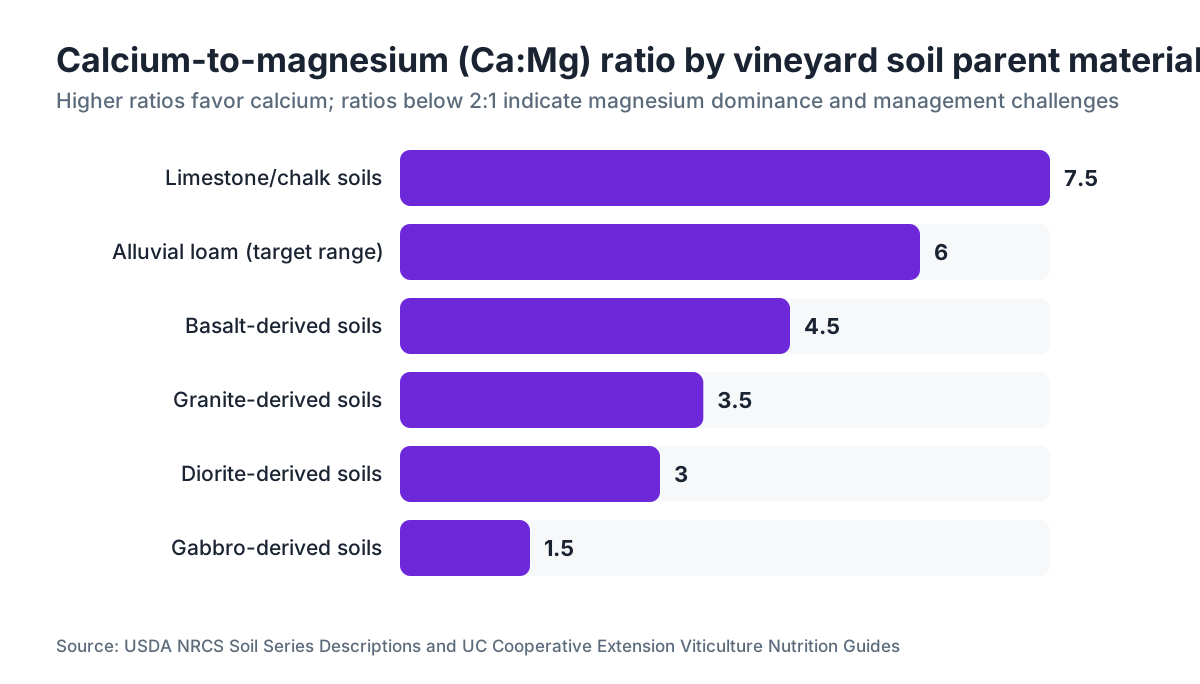
| Ca:Mg ratio | Often less than 2:1, sometimes 1:1 | 2:1 to 4:1 | 4:1 to 8:1 (target) |
| Drainage | Well to somewhat excessively drained | Well drained | Variable |
| Depth to bedrock | Often shallow (12 to 36 inches) | Moderate (24 to 48 inches) | Variable |
| Cation exchange capacity | Moderate (10 to 25 meq/100g) | Moderate | Variable |
| Trace elements | Elevated Cr, Ni, Co | Moderate Cr, Ni | Background levels |
The pH range of 6.0 to 7.5 puts gabbro soils right in the zone where phosphorus availability is decent and most micronutrients stay accessible to vine roots. The inverted Ca:Mg ratio is the real management challenge. Grapevines need calcium for cell wall integrity and Botrytis resistance, and they need magnesium for chlorophyll production. When magnesium dominates, vines can show magnesium toxicity symptoms, but more often the problem runs the other way: the vine gets plenty of magnesium while the soil's physical structure suffers because high magnesium causes clay to disperse and lose aggregation [2].
The shallow depth to bedrock at many gabbro sites is a feature, not a defect. Roots that hit fractured bedrock at 18 to 30 inches are forced to chase deep moisture through cracks in the rock instead of sitting in a thick, comfortable soil profile. That's exactly how you get vines that produce small clusters with intense flavor. UC Davis viticulture research has long held that vine stress from restricted rooting depth is one of the most reliable pathways to quality concentration [3].
Where in the US do vineyards actually grow on gabbro and diorite soils?
Paso Robles is the most prominent example. The Adelaida District on the western side of the appellation sits on a limestone and calcareous shale mix, but significant gabbro outcrops appear in the transition zones and in neighboring areas toward the Santa Lucia Range. Some of the oldest and most respected Rhône-varietal vineyards in Paso Robles grow on rocky, shallow soils with gabbro-influenced parent material, including parts of the El Pomar and Willow Creek districts [4].
The Sierra Foothills AVA in California's Gold Country runs heavily on intrusive igneous rock: gabbro, diorite, and granite. El Dorado County has documented gabbro and gabbrodiorite outcrops that directly parent vineyard soils. These soils are shallow, rocky, and well-drained, and they explain the firm structure and aging potential that El Dorado wines often show.
Outside California, the Applegate Valley in southern Oregon has pockets of intrusive igneous geology including gabbro-associated soils. The Walla Walla Valley in Washington sits mostly on loess and basalt, but the Blue Mountain foothills contain older intrusive igneous exposures. WSU Extension has documented the volcanic and intrusive igneous geology of eastern Washington wine country, though gabbro is far less dominant there than basalt-derived soils [5].
For a closer look at how Paso Robles producers work with these difficult soils, the paso robles wineries overview covers the major players and their vineyard philosophies. And if you want context on how California's mountain-site vineyards intersect with igneous geology, mountain winery covers elevation and soil interactions.
Why do winemakers seek out gabbro and diorite vineyard sites?
Stress is the honest answer. Winemakers who chase concentration and structure want vines that work hard, not vines that grow fast and easy.
Gabbro and diorite soils create stress in three overlapping ways. Low fertility keeps nitrogen and phosphorus at levels that limit canopy size. A vine that can't push six feet of shoot growth per cane has to put its energy somewhere, and some of it goes into berry ripening. The shallow rocky profile limits water availability by midsummer, inducing mild water deficit that concentrates sugars and phenolics. And the elevated Mg and trace metal chemistry, while not toxic, creates a suboptimal nutrient environment that keeps the vine from going into luxury consumption mode.
The result tends toward small clusters, small berries, high skin-to-juice ratios, and wines with genuine structural tannin. Soil type alone guarantees none of this. Canopy management, irrigation decisions, and harvest timing all matter enormously. But starting with a naturally limiting soil removes a lot of the work that growers on rich valley-floor soils have to do artificially through cover crops, controlled deficits, and shoot thinning.
Cabernet Sauvignon, Syrah, Grenache, and Zinfandel all perform well on gabbro-influenced sites in California. Phenolic ripeness tends to arrive ahead of overripe sugar accumulation on these low-vigor sites, which is the winemaker's dream. It's why some of the most discussed single-vineyard bottlings in Paso Robles come from gabbro and gabbro-adjacent terrain, and why south coast winery and ponte winery have explored similar rocky, low-vigor ground in Temecula's igneous-influenced zones.
What grapevine varieties perform best in gabbro and diorite soils?
No definitive varietal trial specifically compares gabbro against other soil types under controlled conditions. Nobody has good data on this in a rigorous replicated-block sense. What exists is decades of practitioner observation and a handful of region-level studies.
Rhône varieties have the most track record on gabbro soils in California. Syrah, Grenache, Mourvèdre, and Roussanne all show well. Syrah in particular seems to thrive in the mix of rocky drainage and elevated magnesium, producing wines with pepper and iron-tinged character that many tasters read as minerality, though soil-to-wine mineral transmission is still argued over in the scientific literature [6].
Zinfandel on gabbro-derived soils in the Sierra Foothills produces the firm, structured style that separates Foothills Zin from the softer, jammier version grown on valley-floor loam. Cabernet Sauvignon on these sites makes wines with more angular tannin and higher acid retention than Cab from warmer, richer alluvial soils.
Approach these carefully: Chardonnay and Pinot Noir both need adequate calcium for skin integrity, and the inverted Ca:Mg ratio on true gabbro soils can show up as looser-skinned berries that are more Botrytis-vulnerable. White Bordeaux varieties like Sauvignon Blanc can work if irrigation is available to soften extreme summer stress. The principle holds: heat-tolerant, thick-skinned red varieties do best, while delicate cool-climate varieties need site-specific evaluation before you commit a block.
How does gabbro soil compare to limestone, granite, and basalt in vineyards?
| Soil parent rock | pH tendency | Drainage | Vigor effect | Key chemistry | Famous wine regions |
|---|---|---|---|---|---|
| Gabbro | Neutral (6.0-7.5) | Well drained | Low to moderate vigor | High Mg, elevated Cr/Ni | Paso Robles, Sierra Foothills |
| Limestone/chalk | Alkaline (7.5-8.5) | Variable; chalk drains fast | Low vigor | High Ca, low Mg, high pH | Burgundy, Champagne, Willamette Valley |
| Granite | Acidic (5.0-6.5) | Excellent drainage | Low vigor | Low nutrients, sandy-gritty | Beaujolais, Rhône Valley north, Priorat |
| Basalt | Neutral to slightly alkaline | Moderate | Moderate vigor | Iron-rich, loamy | Walla Walla, Columbia Valley, Etna |
| Alluvial loam | Variable | Moderate to poor | High vigor | Rich nutrients, balanced Ca:Mg | Many valley-floor AVAs |
Gabbro's closest neighbor in vine terms is granite. Both are low-fertility, well-draining igneous rocks that produce low-vigor vines with concentrated fruit. The main difference is pH. Granite soils run acidic, which shifts micronutrient availability and bacterial activity in the soil. Gabbro sits closer to neutral, which is generally friendlier to nutrient uptake across the board.
Limestone soils get the most press for "minerality," but the chemistry of limestone is the opposite of gabbro: high calcium, alkaline pH, sometimes too-good drainage that starves vines of water in dry summers. Gabbro reaches a similar quality outcome (low vigor, concentrated fruit) through completely different chemistry.
Basalt is the Pacific Northwest's dominant volcanic parent material, and it produces reliable, moderate-vigor sites that support many varieties. Gabbro is more extreme in its mineral makeup and tends to push more varietal specificity in the wines it suits. Neither is objectively better. They're different tools.
What soil management practices work best for gabbro vineyard blocks?
The first instinct many growers have when they see inverted Ca:Mg ratios on a soil test is to apply lime. That's usually the right move, but the calcium source matters here. Gypsum (calcium sulfate) is often preferred over agricultural lime on gabbro sites because it delivers calcium without raising pH on soils that are already near-neutral. Add ag lime to a 7.2 pH soil and you can push it alkaline and start locking up micronutrients [7].
Cover crop selection matters a lot on gabbro. The shrink-swell clay behavior these soils show means aggressive tillage creates a compaction layer right where the clay starts to stabilize in late spring. Permanent mid-row cover crops of grasses or legume-grass mixes beat annual tilled covers here. Root activity from perennial covers improves aggregate stability and cuts the summer cracking that makes surface irrigation inefficient.
Water management on gabbro is tricky because the shallow bedrock and good internal drainage can combine to drive dry-farmed or minimally irrigated sites deeply deficit by August in a dry year. Many growers on gabbro blocks run regulated deficit irrigation (RDI) protocols rather than either full irrigation or complete dry farming. The goal is controlled stress, not accidental vine death.
Foliar magnesium applications, counterintuitive as they seem on high-magnesium soils, can turn out necessary if the inverted Ca:Mg ratio creates antagonism at the root level. The soil holds plenty of magnesium, but calcium dominance can sometimes flip in ways that restrict magnesium uptake through certain clay chemistries. Pull a petiole sample at bloom and at veraison. Don't guess this one from soil data alone [2].
Keeping good records of soil amendments, cover crop species, and irrigation calls by block is exactly where a field operations tool like VitiScribe earns its keep. Gabbro blocks behave differently from each other depending on depth to bedrock and local clay percentage, and year-over-year records are the only way to see patterns across a rocky, uneven site.
What rootstocks work well in gabbro and diorite soils?
Rootstock selection on gabbro comes down to drought tolerance and magnesium handling, with phylloxera resistance as the baseline requirement in most California wine regions.
110R (Richter) is probably the most-planted rootstock on shallow, rocky, drought-prone vineyard soils in California, gabbro sites included. It's deep-rooting, highly drought-tolerant, and handles clay soils reasonably well. Its scion/rootstock combination tends toward moderate to low vigor, which suits gabbro's already-limiting fertility.
140Ru (Ruggeri) is another drought-tolerant choice with similar deep-rooting behavior, often recommended for limestone and calcareous soils but also performing well on rocky gabbro. It handles magnesium imbalance somewhat better than 110R in some trials, though head-to-head data on gabbro specifically is thin.
1103P (Paulsen) offers high drought tolerance and nematode resistance, useful in gabbro-adjacent sites where the rocky soil transitions to sandier pockets that harbor root-knot nematodes. UC Cooperative Extension rootstock trials in Paso Robles have documented performance of 110R, 1103P, and 140Ru under the region's dry summers, which is the closest published reference to gabbro-site rootstock data we have [3]. Cornell viticulture guidance also recommends prioritizing deep-rooting, drought-tolerant genotypes on low-fertility rocky soils [11].
Avoid high-vigor rootstocks like SO4 or 5C Teleki on pure gabbro. These soils are already limiting. Put a high-vigor rootstock under a site that naturally suppresses growth and you get a vine that's confused rather than balanced.
What are the nutrient and soil chemistry challenges you'll face managing these soils?
The Ca:Mg imbalance is the starting point, not the whole story.
Phosphorus is usually adequate on gabbro soils given their near-neutral pH, but the elevated iron content of mafic minerals can bind phosphate in some conditions. Run a Mehlich-3 or Olsen extraction rather than a standard Bray P1, which underperforms on neutral soils, to get an accurate read.
Potassium is typically low on gabbro-derived soils because the parent rock is poor in potassium-bearing feldspars. Grapevines have a big potassium demand for berry development and osmotic regulation, so plan for regular potassium applications. Here's the tricky part: potassium and magnesium compete for uptake, so adding potassium on an already high-magnesium soil can paradoxically worsen magnesium status in the vine even while soil Mg tests read high. Petiole testing is the only way to sort this out [7].
Boron deficiency shows up more on rocky, low-organic-matter soils than on richer loams. Gabbro sites are prime candidates for boron shortfalls, especially in dry years when leaching is minimal but the organic matter decomposition that normally releases boron runs slow. A small foliar boron application at bloom can pay off in set percentage and cluster uniformity.
Trace elements, specifically chromium and nickel, are worth watching on true gabbro soils. California's State Water Resources Control Board has guidance on elevated trace metals in soils derived from ultramafic and mafic parent materials, and some growers in gabbro-heavy areas have been asked to characterize trace metal levels in soil and water as part of Irrigated Lands Regulatory Program compliance [12]. This is uncommon but real. Check with your regional water quality control board if you're developing a new site on gabbro parent material.
How do you evaluate a new vineyard site on gabbro or diorite for suitability?
Start with the USDA Web Soil Survey. It covers most California wine regions with mapped series data down to the map unit level, and many gabbro soils are specifically named series (Los Gatos, Okiota, and Dubakella series in California are mafic/ultramafic-influenced, and gabbro-derived units appear under various names in Paso Robles and Sierra Foothill counties) [9].
Order a full soil profile description, more than a surface sample. Hire a soil scientist or certified crop adviser to dig a pit to 48 inches or to bedrock, whichever comes first. You need depth to bedrock, depth to any restrictive layer, clay percentage by horizon, and coarse fragment content. A site with 18 inches to fractured gabbro bedrock and 60% coarse fragments in the upper horizon behaves nothing like a site with 36 inches to weathered gabbro and 30% coarse fragments.
Run a complete soil chemistry panel at a certified lab: pH, buffer pH, organic matter, nitrate, phosphorus (Olsen), potassium, calcium, magnesium, sodium, CEC, boron, zinc, manganese, iron, copper, and trace metals (Cr, Ni, Co) on a mafic site. University of California Cooperative Extension has published guidance on interpreting soil test results for wine grapes in California, including critical levels for Ca:Mg ratios [3].
Then run a water test if you'll be irrigating. Gabbro weathering feeds magnesium, calcium, and trace metals into groundwater in some areas. Irrigating a high-Mg soil with high-Mg water compounds the imbalance faster than soil weathering alone.
Finally, read the existing vegetation. Native species adapted to serpentine or gabbro soils, like leather oak (Quercus durata), Sargent cypress, or endemic manzanita species, tell you you're on genuinely mafic/ultramafic-influenced parent material. That's your signal to take the trace metal assessment seriously before planting.
What's the long-term vine performance story on gabbro and diorite soils?
Old vines and gabbro soils go well together. The same traits that make gabbro difficult in a vineyard's early years, low fertility, shallow bedrock, poor nutrition, turn into assets as vines age.
Young vines on gabbro often establish slowly. Roots have to find cracks in the bedrock rather than run freely through a deep soil profile. Establishment irrigation budgets tend to run higher than on comparable loam sites, and foliar nutrition programs need to start early to make up for low organic matter and weak mineralizing capacity. Growers who expect the same first-three-year establishment trajectory as a valley-floor planting are in for frustration.
By years seven to twelve, vines that have worked their way into fractured bedrock usually settle into the low-vigor, high-quality production the site promises. Root systems that reach deep into fractured rock tap moisture reserves that never show up in surface soil water-holding calculations. These vines can often be farmed on less supplemental irrigation than the surface soil analysis suggests.
Vines thirty years and older on good gabbro sites tend to produce some of the most interesting fruit in a region. The deep-cracked root systems are essentially immune to surface drought. Cluster counts drop as the vine self-regulates. Berry size keeps shrinking slowly with age on low-fertility soils. If you're looking at buying or leasing a vineyard with old-vine blocks on gabbro or diorite terrain, that's the math: difficult establishment, slow adolescence, excellent maturity.
Recording block-by-block performance from planting through maturity is how you learn which gabbro blocks reach potential and which ones have subsurface hardpan or drainage problems that choke root penetration. A field operations platform that captures vine performance, irrigation logs, and soil amendment history by block makes those thirty-year patterns visible. VitiScribe was built for exactly this kind of multi-year, multi-block record-keeping.
What should you know about worker safety and chemical applications on rocky gabbro vineyard terrain?
Rocky, steep gabbro terrain adds worker safety considerations on top of the standard EPA Worker Protection Standard (WPS) requirements, though the WPS baseline applies to every spray application regardless of terrain [10].
The WPS requires agricultural employers to provide pesticide safety training, notify workers of pesticide applications and restricted entry intervals, provide decontamination facilities, and ensure access to emergency medical care. None of that changes on gabbro sites, but the terrain changes how you implement it. Spray drift on sloped rocky ground behaves unpredictably. Thermal inversions common in mountain foothill areas (where much gabbro vineyard land sits) can trap spray residue longer than open valley floors do. Application timing should account for local airflow patterns specific to the site, more than the label's wind speed limit [10].
Equipment access on rocky gabbro terrain raises risk for tractor operators. Shallow bedrock creates uneven surface conditions, and the coarse fragment content that defines these soils means rocks get shoved around with every tillage pass. Confirm rollover protection structures (ROPS) are functional on all equipment used on sloped gabbro blocks.
For pesticide use records in California, the county agricultural commissioner's office requires Pesticide Use Reports (PURs) for all restricted material applications. On gabbro sites near waterways, the elevated trace metal content of the soil means any product carrying additional copper (common in organic disease programs) deserves extra scrutiny for cumulative soil loading. California's Department of Pesticide Regulation tracks copper accumulation in agricultural soils and has been tightening guidance on copper application limits for organic vineyards [8].
Frequently asked questions
Is gabbro soil the same as serpentine soil in vineyards?
No, they're related but different. Serpentine soils come from ultramafic rocks like serpentinite and peridotite and are often toxic to most plants due to extreme Mg:Ca ratios and high nickel and chromium. Gabbro is also mafic but less extreme. It carries elevated magnesium and trace metals without reaching the plant-hostile levels of true serpentine. Vines grow well on gabbro soils with proper management. True serpentine sites are generally unsuitable for commercial viticulture.
What is the pH of gabbro soil and how does it affect vines?
Gabbro-derived soils typically run pH between 6.0 and 7.5, which is the favorable range for grapevine nutrient uptake. Unlike acidic granite soils or alkaline limestone soils, gabbro's near-neutral pH keeps most macro and micronutrients soluble and accessible. The bigger chemistry issue isn't pH but the inverted calcium-to-magnesium ratio, which can affect cell wall integrity and soil structure independent of pH.
Can you dry-farm a vineyard on gabbro soil?
Yes, in the right rainfall zone, but it takes patience. Gabbro's shallow-to-bedrock profile limits water-holding capacity in the surface soil, but vines that reach fractured bedrock through deep roots tap moisture reserves that surface measurements miss. In Mediterranean climates receiving at least 14 to 16 inches of annual rainfall, mature vines on gabbro can often sustain dry farming after year seven or eight. Young vines almost always need supplemental irrigation during establishment.
What wine regions are known for gabbro and diorite vineyard soils?
Paso Robles (particularly the El Pomar and Adelaida transition zones), the Sierra Foothills in El Dorado County, and parts of southern Oregon's Applegate Valley are the best-documented US examples. In Europe, parts of the northern Rhône Valley and Priorat in Spain have diorite and gabbro-adjacent geology. Etna in Sicily sits on volcanic basalt rather than gabbro but shows similar mineral and low-fertility characteristics.
How does gabbro affect wine minerality and flavor?
The link between gabbro soil chemistry and wine flavor is real but mechanistically complex. Soil mineral ions don't transfer directly into wine in measurable quantities. What gabbro does reliably is create low-vigor, stressed vines that produce small, concentrated berries with high skin-to-juice ratios. The wines tend to show firm tannin, high phenolic concentration, and iron-tinged savory character. Whether that's "minerality" from the soil or simply a stress-concentration effect is still argued over in viticulture science.
How deep should I plant vineyard posts and trellises on rocky gabbro terrain?
Standard vineyard end post installation assumes three to four feet of depth for adequate anchorage. On gabbro sites with bedrock at 18 to 24 inches, that's often impossible without drilling. Rock drills or pneumatic rock stakes are common. Some growers use shorter posts set shallower and compensate with deadman anchors or longer guy wires. Get a soil probe or backhoe test hole before you finalize trellis design on an unfamiliar gabbro block.
What rootstocks are recommended for gabbro vineyard soils?
110R and 140Ru are the most commonly used rootstocks on shallow, rocky, drought-prone gabbro sites in California. Both are deeply rooting and highly drought-tolerant. 1103P works well where nematode pressure is a concern in sandy pockets adjacent to gabbro outcrops. Avoid high-vigor rootstocks like SO4 or 5C Teleki, which create vigor imbalance on naturally limiting gabbro soils rather than working with the site's characteristics.
How does gabbro soil drainage compare to clay vineyard soils?
Gabbro-derived soils often contain montmorillonite clay, a shrink-swell type that behaves very differently from sandier vineyard soils. In winter, these clays hold water and swell. In summer, they crack and drain fast. The coarse fragment content (rock and gravel) from weathered gabbro parent rock keeps macropore drainage open even when the clay fraction swells. Overall drainage is good to excellent on most gabbro sites, far better than pure clay valley-floor soils.
Do gabbro soils need lime applications in vineyards?
Usually not for pH correction, since gabbro soils often sit near-neutral and don't need it. The reason to add calcium to gabbro soils is to correct the inverted Ca:Mg ratio, and gypsum (calcium sulfate) is typically preferred over agricultural lime for this because it adds calcium without raising pH further. Always base lime or gypsum decisions on a current soil test rather than applying as routine practice.
What cover crops work best in gabbro vineyard mid-rows?
Permanent grass-legume mixes are generally preferred over annual tilled covers on gabbro soils. The shrink-swell clay in these soils is vulnerable to tillage-induced compaction. Good options include hard fescue, perennial ryegrass, or a mix with small-flowered clover. Avoid aggressive nitrogen-fixing legumes like crimson clover in quantity if canopy control is already a challenge; on gabbro's low-fertility sites, excessive nitrogen input can temporarily push unwanted vigor.
How do I read a USDA Web Soil Survey report for gabbro vineyard suitability?
Start at websoilsurvey.sc.egov.usda.gov and define your area of interest. Look for the soil map unit names, then check the component data for parent material (look for 'mafic igneous rock' or 'gabbro' or 'diorite' in the parent material field). The 'Land Capability Classification' and 'Farmland Classification' tabs give agricultural suitability ratings. The 'Soil Data Explorer' tab lets you pull depth to bedrock, available water capacity, and drainage class for each map unit.
Are there trace metal concerns with farming on gabbro soils near waterways?
Yes, and this is worth taking seriously. Gabbro-derived soils naturally carry elevated chromium, nickel, and cobalt from the parent rock. Adding copper-based fungicides (standard in organic programs) to soils that already carry elevated background metals can trigger regulatory review in California's Irrigated Lands Regulatory Program. Check with your regional water quality control board before developing a new site on gabbro parent material near a waterway, and document baseline soil trace metal levels before you start farming.
What grapevine varieties perform best in gabbro soil?
Syrah, Grenache, Mourvèdre, Zinfandel, and Cabernet Sauvignon all have documented track records on gabbro-influenced sites in California. Heat-tolerant, thick-skinned red varieties handle the mineral stress and summer water deficit gabbro soils create. Delicate varieties like Pinot Noir and Chardonnay are riskier because the inverted Ca:Mg ratio can compromise skin integrity and raise Botrytis susceptibility. White Rhône varieties like Roussanne and Viognier are the best white options on these sites.
Sources
- USDA Natural Resources Conservation Service, Web Soil Survey: Gabbro-derived soils form montmorillonite shrink-swell clays from weathered pyroxene and plagioclase feldspar, with variable depth to bedrock and moderate CEC
- UC Cooperative Extension, Sonoma County, Soil and Nutrient Management for Vineyards: Inverted Ca:Mg ratios in mafic soils can cause soil structure degradation through clay dispersion and create antagonism between calcium and magnesium uptake in grapevines
- UC Davis Department of Viticulture and Enology, Rootstock and Site Evaluation Resources: Restricted rooting depth is one of the most reliable soil-based pathways to fruit concentration in grapevines; UC Cooperative Extension Paso Robles rootstock trials document 110R, 1103P, and 140Ru performance under dry conditions
- Paso Robles Wine Country Alliance, Appellation and District Maps: The El Pomar, Willow Creek, and Adelaida districts of Paso Robles contain documented gabbro and mafic intrusive igneous geology influencing vineyard soil parent material
- Washington State University Extension, Wine Grape Viticulture in the Pacific Northwest: Eastern Washington wine country geology is dominated by basalt-derived loess soils; older intrusive igneous exposures occur in the Blue Mountain foothills of the Walla Walla Valley
- American Journal of Enology and Viticulture, Soil Mineral Transmission to Wine: Review Article: Direct transmission of soil mineral ions to wine flavor is not supported by current isotopic evidence; the association between 'minerality' and specific soil types is likely mediated by vine stress and secondary metabolite production rather than direct mineral uptake
- UC Cooperative Extension, Fertilization of Wine Grapes in California: Potassium and magnesium compete for root uptake, and gypsum is preferred over agricultural lime for calcium addition on near-neutral mafic soils to avoid pH elevation; petiole testing at bloom and veraison is recommended for nutrient diagnosis
- California Department of Pesticide Regulation, Copper Use in Agriculture: California DPR tracks cumulative copper soil loading in agricultural settings and has tightened guidance on copper fungicide application limits, with particular relevance to organic vineyards on mafic soils near waterways
- USDA Natural Resources Conservation Service, Web Soil Survey: Named California soil series including Los Gatos, Okiota, and Dubakella are mapped as mafic/ultramafic-influenced; gabbro-derived map units appear in Paso Robles and Sierra Foothill counties
- US EPA Worker Protection Standard for Agricultural Pesticides, 40 CFR Part 170: The EPA Worker Protection Standard requires pesticide safety training, application notification, restricted entry interval compliance, decontamination facilities, and emergency medical access for all agricultural pesticide applications regardless of terrain type
- Cornell University, College of Agriculture and Life Sciences, Viticulture Program: Rootstock selection for low-fertility, drought-prone rocky soils should prioritize deep-rooting, drought-tolerant genotypes; high-vigor rootstocks create imbalance on naturally limiting vineyard soils
- California State Water Resources Control Board, Irrigated Lands Regulatory Program: Vineyards on mafic and ultramafic parent material near waterways may be required to characterize baseline trace metal levels including chromium and nickel as part of Irrigated Lands Regulatory Program compliance
Last updated 2026-07-09