Powdery mildew on grape vine shoots: causes, timing, and control
TL;DR
- Powdery mildew (Erysiphe necator) infects grape vine shoots from bud break onward, with the highest risk window running 2 to 6 weeks after bud break.
- Shoot infections set the season's primary inoculum.
- Stopping it means timed sulfur or DMI fungicides starting at 1-inch shoot growth, canopy work to cut humidity, and clean spray records to stay compliant.
What is powdery mildew on grape vine shoots and why does it matter?
Powdery mildew on grapes comes from the obligate biotrophic fungus Erysiphe necator (formerly Uncinula necator). It is the most economically damaging fungal disease of Vitis vinifera on the planet. Shoot infections are more than an eyesore. They are the season's inoculum engine: colonized shoot tissue throws millions of conidia that go on to infect leaves, clusters, and berries all summer. Get the shoots wrong in spring and you spend the rest of the year chasing the disease.
The fungus overwinters two ways. Chasmothecia (sexual fruiting bodies) sit in bark and on dormant wood, releasing ascospores during spring rain. Flag shoots, which grow from buds that were colonized inside the previous season, emerge already coated in white mycelium and throw conidia the moment they push at bud break [1]. WSU research found flag shoot incidence tracks closely with how bad the previous season's epidemic was. That's a good reason to take fall records seriously.
Shoot tissue is most vulnerable during rapid cell division. The cuticle hasn't fully hardened, so the fungus penetrates with almost no effort. Fully lignified internodes from mid-season are far less susceptible, though never immune. That's why the first 6 weeks after bud break set the trajectory for the whole growing season.
The money at stake is real. For a grower running a vineyard, uncontrolled outbreaks have cut yield by 30 to 50% in susceptible varieties, and berry infections that land before fruit set are almost always permanent and unsalvageable [2].
When does powdery mildew first appear on shoots each season?
Temperature accumulation drives the timing, not the calendar. Erysiphe necator needs roughly 50°F (10°C) minimum to germinate and grow, with an optimum around 68 to 77°F (20 to 25°C). Chasmothecia release spores during spring rain when temperatures top 50°F, usually with 0.1 inch of rain or more [1].
UC Davis and UC Cooperative Extension built degree-day models for exactly this risk. The Gubler-Thomas model, developed at UC Davis, sorts daily risk into three buckets: high risk when temperatures hold between 70°F and 85°F on consecutive days, moderate risk otherwise, and low risk only when temperatures stay above 95°F (extreme heat suppresses conidial germination) [3]. That 95°F line fools growers who figure summer heat kills the problem. It doesn't. The moment temperatures fall back into the sweet spot, the fungus wakes up on any green tissue that grew during the hot stretch.
Flag shoots usually show up 1 to 2 weeks after bud break in vineyards with a history of the disease. Walk your rows at 5% bud break. Look for shoots carrying white, powdery mycelium at the base near the soil line, especially on suckers. Those are almost always flag shoots, not secondary infections. If you're finding flag shoots, your spray program needed to start yesterday.
Most North Coast growers should be scouting by Chardonnay bud break, which can hit as early as late February in a warm year. In Washington and the Finger Lakes, mid-April is more typical. The Gubler-Thomas model still applies regardless of where you farm [3].
What does powdery mildew look like on vine shoots vs. leaves and clusters?
On shoots, mildew shows as a white to grayish powdery coating on young internodes and the undersides of petioles. Early colonies can look like plain dust. Press a finger to a suspect patch: if it smears and smells faintly of mushroom or rotting vegetation, it's mildew. Dust doesn't smear.
As the infection runs, the shoot surface under the mycelium often turns dark gray to black, a symptom growers call russeting or blighting. Badly infected internodes crack and scar, which opens the door to Botrytis and other opportunists. Very early infection can also stunt internode elongation.
On leaves, mildew hits both surfaces but favors the upper side, forming circular colonies that merge into larger patches. The leaf tissue above a colony often yellows.
Cluster damage is where the real money leaks out. Early berry infections, before 4 to 5 weeks after bloom, cause the worst outcomes. Berries infected that early crack as they grow, either from internal pressure or from scarring that robs the skin of elasticity. Late infections (after veraison) do less structural harm but can still taint wine flavor. Cornell research found that even under 3% berry infection can be detected as off-flavors in finished wine [4].
The white powder itself is external mycelium and conidia, not spores in the classic sense. The fungus feeds on the surface of living epidermal cells and never penetrates deeply. That surface habit is exactly why contact fungicides with good coverage still work.
What are the highest-risk conditions for shoot infections?
Temperature carries the most weight, but humidity, canopy shape, and varietal susceptibility all stack on top of it. The fungus does not need free water to germinate, which sets it apart from most other grapevine pathogens. Relative humidity above 40% helps germination, but rain isn't required. Foggy mornings, heavy dew, and overhead irrigation that wets foliage all build favorable conditions with zero rainfall [1].
The risk window on shoots stretches longest under these conditions: temperatures between 65°F and 85°F for extended runs, moderate to high overnight humidity, a dense canopy that chokes airflow, and shoot growth above 1 inch per day during spring flush. That last point matters because spray intervals often track shoot growth rate, not time. If shoots grow an inch a day, a 10-day interval leaves 10 inches of new, unprotected tissue.
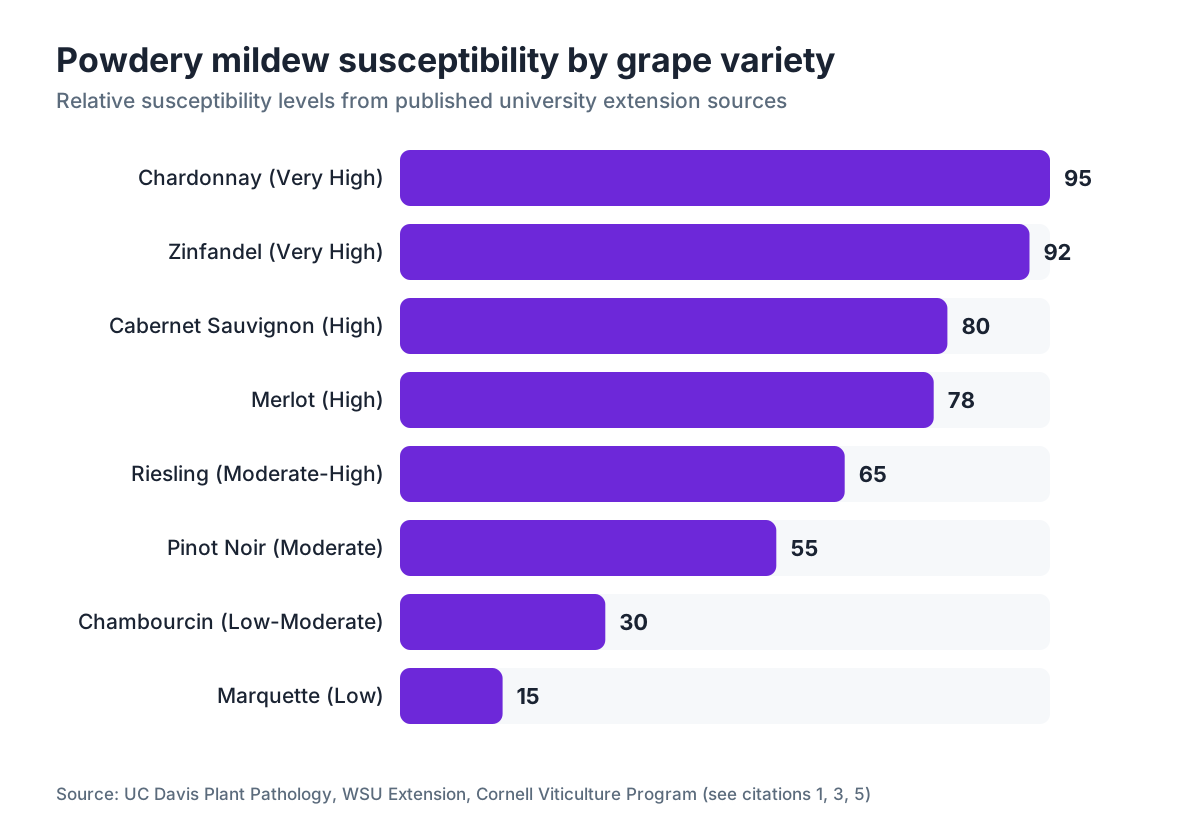
Varietal susceptibility runs a full range. Chardonnay, Cabernet Sauvignon, Merlot, and Zinfandel all rate highly susceptible. Chenin Blanc, Muscat, and Viognier are high-risk too. Some hybrids (Norton, Chambourcin, Marquette) carry partial resistance from native American Vitis parentage, which shrinks but never erases the need for a program [5]. Pinot Noir is moderately susceptible. No commercial V. vinifera variety is completely immune.
| Variety | Susceptibility Level | Notes |
|---|---|---|
| Chardonnay | Very High | Protect from bud break |
| Zinfandel | Very High | Flag shoots common |
| Cabernet Sauvignon | High | Berry cracking risk |
| Merlot | High | Canopy work matters here |
| Pinot Noir | Moderate | Earlier harvest window helps |
| Riesling | Moderate-High | Cluster architecture traps humidity |
| Chambourcin | Low-Moderate | Hybrid partial resistance |
| Marquette | Low | Heavy native Vitis genetics |
How do you prevent powdery mildew on grape vines from the start of the season?
Prevention is the only strategy that pays. Curative sprays after you can see mycelium cost more, work worse, and burn through your resistance management budget. Growers who come out of harvest with clean fruit year after year started their programs at 1-inch shoot growth, sometimes earlier.
Dormant-season sulfur: A delayed-dormant lime sulfur spray (1 to 3% solution) before bud swell knocks back chasmothecia viability in bark and suppresses early mycelium on dormant wood. It earns its keep in vineyards with a history of severe mildew or high flag shoot counts. UC Cooperative Extension recommends this for high-risk blocks [3].
First spray timing: The opening application should land at 1-inch shoot growth (BBCH stage 11), before flag shoots start pumping out secondary inoculum. Missing this timing is the single most common mistake in California and Pacific Northwest mildew management. Plenty of seasoned growers set a hard rule: if shoots are pushing and you haven't sprayed, spray today, forecast be damned.
Spray interval: During spring flush, hold your interval at 7 to 10 days max for sulfur, 10 to 14 days for DMI (sterol inhibitor) fungicides. Once shoot growth slows after bloom and temperatures climb, you can often stretch to 14 days, but reassess after any run of optimal temperature (65 to 85°F) and moderate humidity.
Canopy management timing: Canopy work doesn't replace a fungicide program, but it cuts the microclimate the fungus wants. Shoot positioning, fruit-zone leaf removal (after bloom), and hedging all improve airflow and spray penetration. A dense, unmanaged canopy can cut spray efficacy by 30 to 50% by blocking coverage [6]. Here the labor pays for itself.
If you're tracking applications, timing, and pre-harvest intervals across multiple blocks, a record system like VitiScribe keeps the spray logs that pest management advisors and compliance auditors expect, which matters most when you're rotating chemistries block by block and need to see your intervals at a glance.
What fungicides actually work on powdery mildew in vineyards?
The fungicide toolbox for grape powdery mildew is one of the deepest in specialty crop pathology, but resistance is a live problem, documented in California, Washington, and Oregon.
Sulfur: Still the backbone of most programs. It's a protectant, it's cheap, and it has no documented resistance in Erysiphe necator. Apply 3 to 4 lb/acre (wettable or dry flowable) on a 7 to 10 day interval during shoot growth. Two hard limits: don't spray sulfur above 95°F (phytotoxicity), and observe the 10-day pre-harvest interval on most labels. Micronized sulfur gives better coverage and lower burn risk at the same rate [10].
DMI (demethylation inhibitor) fungicides: FRAC Group 3, including myclobutanil (Rally, Sonoma) and tebuconazole. DMIs work as protectants and carry some post-infection activity (up to 72 to 96 hours after infection for some products). They're effective, but reduced sensitivity is documented in California populations. Rotate with other FRAC groups and cap DMIs at 3 to 4 sprays per season [7].
QoI (strobilurin) fungicides: FRAC Group 11, including azoxystrobin (Abound) and trifloxystrobin. Highly effective, but resistance builds faster here than in DMIs. Many California vineyards already carry QoI-resistant populations. Cap it at 2 applications per season and never apply QoIs back-to-back [7].
SDHI fungicides: FRAC Group 7 (boscalid, fluxapyroxad). Newer class, good efficacy, resistance emerging. Same discipline: rotate and limit.
Kaolin clay: An OMRI-listed physical barrier for organic programs. Works best as a preventive coating on shoots and berries. Needs thorough coverage and reapplication after rain or a growth flush. It supplements sulfur rather than replacing it.
For organic programs, the core is sulfur plus kaolin plus canopy work. Some growers add potassium bicarbonate products (Armicarb, Milstop) to burn down light infections, though residual activity runs only 3 to 5 days.
| FRAC Group | Example Products | Max Apps/Season | Notes |
|---|---|---|---|
| M2 (Sulfur) | Microthiol, Kumulus | No limit | Backbone; no resistance |
| 3 (DMI) | Rally (myclobutanil) | 3 to 4 | Partial resistance in CA |
| 11 (QoI) | Abound (azoxystrobin) | 2 | High resistance risk |
| 7 (SDHI) | Endura (boscalid) | 2 | Rotate strictly |
| 19 (Anilinopyrimidine) | Vangard (cyprodinil) | 2 | Good for Botrytis overlap |
| M (Kaolin) | Surround | No limit | Organic; physical barrier |
How do you build a spray program that actually prevents shoot infections?
A spray program is a chain of decisions, not one product pick. The programs that hold up combine a risk model (Gubler-Thomas or similar), a chemistry rotation plan, and a record system that tells you exactly what went out and when.
Here's how I'd build one for a high-risk V. vinifera block.
Dormant to bud swell: Lime sulfur if last season carried heavy mildew pressure. Optional, but worth it.
1-inch shoot growth through bloom (BBCH 11 to 69): Sulfur on a 7 to 10 day interval. If Gubler-Thomas flags consecutive high-risk days, add a DMI at the start of each 3-week rotation, never two DMI sprays back-to-back. You should land 2 to 3 DMI applications in this window, no more.
Bloom through 4 weeks post-bloom: The highest-stakes cluster protection window. Hold tight intervals (7 to 10 days sulfur). In a strobilurin-naive vineyard (rare now), a single QoI here gives excellent control. Don't bank on QoIs if you've run them on the block before without resistance testing.
Post-fruit set to veraison: As shoot growth slows, stretch to 10 to 14 days on moderate-risk days. Keep rotating. Don't relax because the canopy looks clean. The fungus can sit below visual threshold and rebound fast when conditions shift.
Post-veraison to harvest: Weigh actual pressure against how many applications remain before pre-harvest intervals (PHIs) close your window. Sulfur's PHI runs about 10 days; most DMIs run 7 to 14 days by product. Plan backward from your expected harvest date. WSU's Pacific Northwest spray guidelines are a solid practical reference for timing and rotation [8].
Record every application: product, EPA registration number, rate per acre, total volume, applicator, and interval since the last spray. These records are required under the EPA Worker Protection Standard for agricultural workers and handlers, which mandates posting application information and providing access to safety data [9].
Does canopy management actually reduce powdery mildew on shoots?
Yes, meaningfully, but not as a standalone fix. Canopy management changes the microclimate the fungus has to work with. Shoot positioning, fruit-zone leaf removal, and vine spacing all shift temperature, humidity, and light in the fruit zone.
Light penetration matters more than most growers think. The Gubler-Thomas model ignores canopy density, but direct sun on shoots and clusters pushes tissue temperature above the optimal germination range during peak radiation and dries dew faster. UC Davis research showed light-exposed berries carry significantly lower mildew incidence than shaded fruit in the same block [3].
Fruit-zone leaf removal, done right (at or just after berry set, not at bloom), opens the canopy for both spray penetration and airflow. Shoot positioning on VSP (vertical shoot positioning) systems should happen early, when shoots run 12 to 18 inches, to cut shoot-to-shoot overlap.
The catch is labor. Across a large operation, shoot positioning on every block is a real cost. Put your labor on high-risk varieties and blocks with a mildew history before low-risk hybrids. The return isn't equal across every situation.
Summer hedging pulls off the succulent, most-susceptible shoot tips, but push it too hard and you trigger a flush of lateral growth. Those laterals throw up fresh, highly susceptible tissue right when growers are stretching intervals. If you hedge, plan a spray within 5 to 7 days in a high-pressure season.
What spray records do you need to stay compliant under EPA regulations?
The EPA Worker Protection Standard (WPS), 40 CFR Part 170, sets the minimum recordkeeping and posting rules for pesticide applications on agricultural establishments, vineyards included. EPA revised the WPS in 2015 and updated it in 2016; establishments with more than 10 workers carry specific training and posting requirements [9].
Required records under the WPS include the product name and EPA registration number, the active ingredient, the location and description of the treated area, the date and time of application, and the restricted-entry interval (REI) that applies. Keep these for 2 years after the application. The regulation directs that agricultural employers keep records of all pesticide applications made to agricultural plants, including the required elements above [9].
Beyond federal WPS, most states layer on more through their department of agriculture or department of food and agriculture. California requires county agricultural commissioner filing for restricted materials. Washington requires records available for inspection. Check your state's pesticide regulatory agency for the specifics.
For building these records the same way across blocks, spray dates, and rotations, VitiScribe gives vineyard managers a structured place to log applications with PHIs, REIs, and FRAC group tracking built in. That kind of running record is very hard to reconstruct from scattered notes at the end of a busy season.
Even if you track everything on paper or in spreadsheets, the minimum system is three parts: a per-block spray log with all the WPS fields, a master rotation tracker showing which FRAC groups you've used and how many times, and a harvest window planner that counts PHI cutoff dates backward from your target harvest date.
How do you manage resistance to powdery mildew fungicides in the vineyard?
Fungicide resistance in Erysiphe necator isn't a future worry. It's here, it's documented, and it's manageable if you stay disciplined. Research through UC Cooperative Extension confirmed reduced sensitivity to QoI fungicides (FRAC Group 11) and DMI fungicides (FRAC Group 3) in commercial vineyard populations [7].
The core rule is rotation by FRAC group, not by product name. Two products with different trade names but the same FRAC number are the same fungicide as far as the fungus is concerned. Rally followed by another Group 3 product is no rotation at all.
The practical rules: never apply the same FRAC group twice in a row. Cap QoIs at 2 applications per season, total. Cap DMIs at 3 to 4. Run sulfur (FRAC Group M2, no possible resistance) as the backbone to dilute selection pressure on the at-risk chemistries.
If you suspect resistance (you're applying a proven product at label rate on a proper interval and still seeing breakthrough), send samples to your state plant pathology lab for sensitivity testing. UC Davis Plant Pathology runs diagnostic services, and Cornell's Plant Disease Diagnostic Clinic does as well [4]. Don't assume resistance without a test. The same symptoms can come from thin coverage, wrong timing, or a product mixed and applied badly.
You can't beat resistance by bumping the rate. Most resistance mechanisms are metabolic: the fungus detoxifies the compound no matter the concentration. Higher rates just cost more and pile up residue without fixing anything.
What's different about managing powdery mildew in organic vineyards?
Organic powdery mildew management is genuinely harder than conventional, and anyone telling you otherwise is selling something. The tools available under OMRI (Organic Materials Review Institute) listing work, but they run in narrower windows, shorter residual, and lean hard on perfect timing and coverage.
Sulfur is the anchor. It's OMRI-listed, cheap, and carries no resistance, so organic programs lean on it hard. The problems: phytotoxicity above 95°F, which in warm wine regions leaves coverage gaps during heat spikes; a short 7 to 10 day interval; and essentially no post-infection activity once you can see mycelium.
Potassium bicarbonate products (Armicarb, Milstop) carry protectant and limited curative activity, working by wrecking the fungus's pH balance. Residual runs 3 to 5 days max, so they go out more often than sulfur. They shine as a burndown on light early-season infections before inoculum builds.
Neem-based products (clarified hydrophobic neem oil) have some protectant activity and are OMRI-listed. The efficacy data for powdery mildew specifically is weaker than sulfur and potassium bicarbonate in most trials, but some growers slot them in as a rotation option.
Kaolin clay (Surround WP) applied as a physical barrier shows real efficacy in trials, especially for berry protection when coverage is thorough. It's labor-heavy to apply at adequate coverage, washes off with rain, and needs reapplication after any significant rain or irrigation.
The honest read: a disciplined organic program hits acceptable control in moderate-pressure seasons on low-to-moderate susceptibility varieties. In high-pressure seasons on highly susceptible V. vinifera, organic programs get pushed hard and sometimes fail. Set realistic expectations and scout aggressively.
How to prevent powdery mildew on grapes long-term, season to season?
Long-term prevention is about managing overwintering inoculum and improving the growing environment, more than spraying harder every year.
Your overwintering inoculum level is partly a function of how well you controlled last season's epidemic. A season where mildew ran loose means heavier chasmothecia loads in the bark and more flag shoots the following spring. Document your pressure each season, block by block. Blocks with high pressure in year N should get lime sulfur dormant sprays and an earlier first spray in year N+1.
Canopy architecture decisions carry over year to year too. Vine spacing, trellis design, and training system all set the baseline microclimate. High cordon systems with good sun on the cluster zone consistently beat crowded, low-wire systems for mildew, all else equal [6]. If you're planting or replanting, weigh this at the design stage.
Varietal selection in new plantings is a real lever. If your region carries reliably high pressure and you have flexibility on variety, hybrids with partial native resistance (Marquette, Frontenac, Chambourcin in cold-climate regions; Regent, Solaris in European programs) cut the fungicide intensity you need. That's off the table for most paso robles wineries and North Coast operations locked into specific V. vinifera for market reasons, but it's worth real thought for new plantings in high-pressure areas.
Season-end cleanup matters. Pull mummified clusters, collect and dispose of badly infected pruning wood, and think about whether a cover crop in the row middles shifts canopy humidity. Some low-growing covers drop humidity compared to clean cultivation; tall, dense covers can raise it. Judge your own situation.
Keep records that let you compare year over year. If you can say "Block 3 ran moderate pressure in week 6 of 2024, and we had 12 days between sprays during a cool, humid stretch," you can make a specific fix in 2025. Without records, you're guessing.
Frequently asked questions
When should I start my powdery mildew spray program on grape vines?
Start at 1-inch shoot growth (BBCH stage 11), no later. In high-risk vineyards with a history of severe mildew, a delayed-dormant lime sulfur spray before bud swell adds another layer. Missing that first spray timing is the most common reason early-season infections take hold. In California's North Coast, that can mean starting as early as late February in a warm year.
Can powdery mildew infect grape vines without rain?
Yes. Unlike most fungal pathogens, Erysiphe necator doesn't need free water to germinate and infect. It thrives with relative humidity above 40% and temperatures between 65°F and 85°F. Fog, heavy dew, and overhead irrigation that wets foliage are enough. That's what makes it so tough in Mediterranean climates where summer rain is rare but mildew pressure stays severe.
What does powdery mildew on vine shoots look like early on?
Early colonies show as white to grayish powdery patches on young internodes and petioles. Smear a patch with a finger: mildew smears and smells faintly of mushroom or decay. As it runs, shoot tissue under the mycelium turns dark gray to black (russeting), and heavily infected internodes may crack or show stunted elongation.
How do flag shoots contribute to powdery mildew spread?
Flag shoots grow from buds that Erysiphe necator colonized internally the previous season. They emerge at bud break already coated in mycelium, throwing conidia right away, before most growers have made a single spray. Flag shoot incidence tracks with prior-season epidemic severity. Removing or treating them fast cuts the early-season inoculum load substantially.
Is sulfur effective against powdery mildew on grapes?
Sulfur is the most reliable and cost-effective tool available. It has no documented resistance in Erysiphe necator, is labeled for organic use, and costs far less per acre than DMI or QoI fungicides. Its limits are phytotoxicity above 95°F and a short 7 to 10 day interval during rapid shoot growth. Apply 3 to 4 lb/acre for wettable formulations and observe the 10-day pre-harvest interval.
How many times can I apply DMI fungicides per season for grape powdery mildew?
Most resistance management guidelines cap DMI (FRAC Group 3) applications at 3 to 4 per season, never consecutively. Reduced sensitivity to DMIs is documented in California vineyard populations. Use sulfur as the rotation backbone and save DMIs for the highest-risk windows: early season and around bloom. Never follow one DMI application with another.
Does canopy management reduce powdery mildew risk on grapes?
Yes, meaningfully. Shoot positioning, fruit-zone leaf removal after berry set, and appropriate vine spacing all improve airflow and spray penetration. Direct sun raises tissue temperature above the optimal germination range during peak radiation. A dense, unmanaged canopy can cut spray efficacy by 30 to 50% by blocking coverage. Canopy work doesn't replace a fungicide program, but it makes that program work better.
What records do I need to keep for pesticide applications in a vineyard?
The EPA Worker Protection Standard (40 CFR Part 170) requires records of product name and EPA registration number, active ingredient, treated area, date and time of application, and the applicable restricted-entry interval. Keep records for 2 years. Most states add requirements through their department of agriculture. Many California counties require filing for restricted-use materials with the county agricultural commissioner.
How do I manage fungicide resistance in my vineyard powdery mildew program?
Rotate by FRAC group, not by product trade name. Cap QoI (FRAC Group 11) fungicides at 2 applications per season and DMIs (FRAC Group 3) at 3 to 4. Never apply the same FRAC group consecutively. Run sulfur (FRAC Group M2) as the backbone, since resistance to sulfur isn't possible. If you suspect resistance, contact your state plant pathology diagnostic lab for sensitivity testing before you conclude a product has failed.
How do I prevent powdery mildew on grapes organically?
Organic programs rely on sulfur as the primary tool (OMRI-listed, 7 to 10 day intervals), potassium bicarbonate products (Armicarb, Milstop) for limited curative activity on light infections, kaolin clay (Surround WP) as a physical barrier especially on clusters, and canopy management to cut humidity. Organic programs work best in moderate-pressure seasons and with less susceptible varieties. In high-pressure seasons on V. vinifera, they get pushed harder than conventional ones.
At what temperature does powdery mildew stop infecting grapevines?
Erysiphe necator conidial germination is suppressed above 95°F (35°C). But once temperatures drop back below that line, the fungus resumes on any green tissue that grew during the hot period. The UC Davis Gubler-Thomas model defines high risk as consecutive days in the 70 to 85°F range, moderate risk otherwise, and low risk only when temperatures stay above 95°F. Heat doesn't clear the problem for the season.
What grape varieties are most susceptible to powdery mildew?
Among V. vinifera, Chardonnay, Zinfandel, Merlot, and Cabernet Sauvignon rate highly susceptible. Chenin Blanc, Muscat, and Viognier are also high-risk. Pinot Noir and Riesling sit at moderate. Hybrids with native American Vitis genetics (Marquette, Chambourcin, Frontenac) carry partial resistance that reduces but doesn't erase disease pressure. No commercially produced V. vinifera variety is immune.
Can I see powdery mildew on grape berries before harvest?
Berry infections before 4 to 5 weeks post-bloom often stay as russeted or scarred areas on the skin. Later infections may show visible white mycelium on the berry surface. Early berry infections cause cracking and splitting as the berry grows; late infections (after veraison) do less structural damage but can taint wine. Cornell research found that even below 3% infected berries, off-flavors show up in finished wine.
How does the Gubler-Thomas powdery mildew risk model work?
The Gubler-Thomas model, developed at UC Davis, sorts daily mildew risk by temperature range. High risk: temperatures hold between 70°F and 85°F on consecutive days. Moderate risk: temperatures outside that range but above 50°F. Low risk: temperatures stay above 95°F. Many California advisors use it to adjust spray intervals, tightening them during high-risk periods and stretching them during sustained heat. It doesn't account for canopy density or humidity.
Sources
- Washington State University Extension, Powdery Mildew of Grape: Erysiphe necator overwinters as chasmothecia in bark and as internally infected buds that produce flag shoots at bud break; chasmothecia release ascospores during spring rain events above 50°F
- UC Cooperative Extension, Grape Powdery Mildew Management: Uncontrolled powdery mildew outbreaks have been documented to reduce yield by 30-50% in susceptible varieties; berry infections before fruit set are unsalvageable
- UC Davis Department of Plant Pathology, Gubler-Thomas Powdery Mildew Risk Model: The Gubler-Thomas model defines high risk as consecutive days at 70-85°F, low risk when temperatures consistently exceed 95°F; UC Davis recommends delayed-dormant sulfur for high-risk blocks and starting sprays at 1-inch shoot growth
- Cornell University Plant Disease Diagnostic Clinic and Cornell Viticulture Program: Cornell research found that even below 3% infected berries, off-flavors from powdery mildew can be detected in finished wine; Cornell offers diagnostic sensitivity testing for fungicide resistance
- University of Minnesota Extension, Cold-Hardy Grape Varieties and Disease Resistance: Hybrid varieties including Marquette, Chambourcin, and Frontenac carry partial resistance to powdery mildew from native American Vitis parentage, reducing but not eliminating disease pressure
- WSU Extension, Canopy Management and Grape Disease: A dense, unmanaged canopy can reduce spray efficacy by 30-50% by preventing adequate coverage; high cordon systems with sun exposure on the cluster zone consistently outperform crowded low-wire systems for mildew management
- UC Cooperative Extension, Fungicide Resistance Management for Grape Powdery Mildew: Reduced sensitivity to QoI (FRAC Group 11) and DMI (FRAC Group 3) fungicides has been documented in California commercial vineyard Erysiphe necator populations; DMIs should not exceed 3-4 applications per season and QoIs should not exceed 2
- Washington State University Extension, Pacific Northwest Spray Guide for Grapes: WSU Extension publishes annual spray program guidelines for powdery mildew timing and chemistry rotation for Pacific Northwest vineyards
- EPA Worker Protection Standard, 40 CFR Part 170: The EPA WPS directs that agricultural employers keep records of all pesticide applications to agricultural plants including product name, EPA registration number, active ingredient, treated area, date and time, and REI; records must be retained for 2 years
- UC Integrated Pest Management Program, Grape Powdery Mildew: Sulfur is effective at 3-4 lb/acre on a 7-10 day interval; micronized sulfur formulations give better coverage and lower phytotoxicity risk; sulfur should not be applied when temperatures exceed 95°F
- Cornell Cooperative Extension, Organic Fungicide Options for Grape Powdery Mildew: OMRI-listed options for organic programs include sulfur, potassium bicarbonate products (Armicarb, Milstop), kaolin clay (Surround WP), and neem-based products; potassium bicarbonate residual activity is 3-5 days
- USDA National Agricultural Library, OMRI Product List: Kaolin clay (Surround WP) and sulfur are OMRI-listed materials approved for use in certified organic grape production
Last updated 2026-07-09