Best grapevine diseases books for vineyard managers in 2026
TL;DR
- The most-used reference is the Compendium of Grape Diseases, Disorders, and Pests (APS Press, 3rd ed., 2015), roughly $130 to $160.
- But WSU, UC Davis, and Cornell each publish free extension guides that cover regional diseases more precisely.
- Your best library is two or three targeted books plus the free extension PDFs, not one expensive catch-all.
Why does every vineyard manager need a grapevine disease reference book?
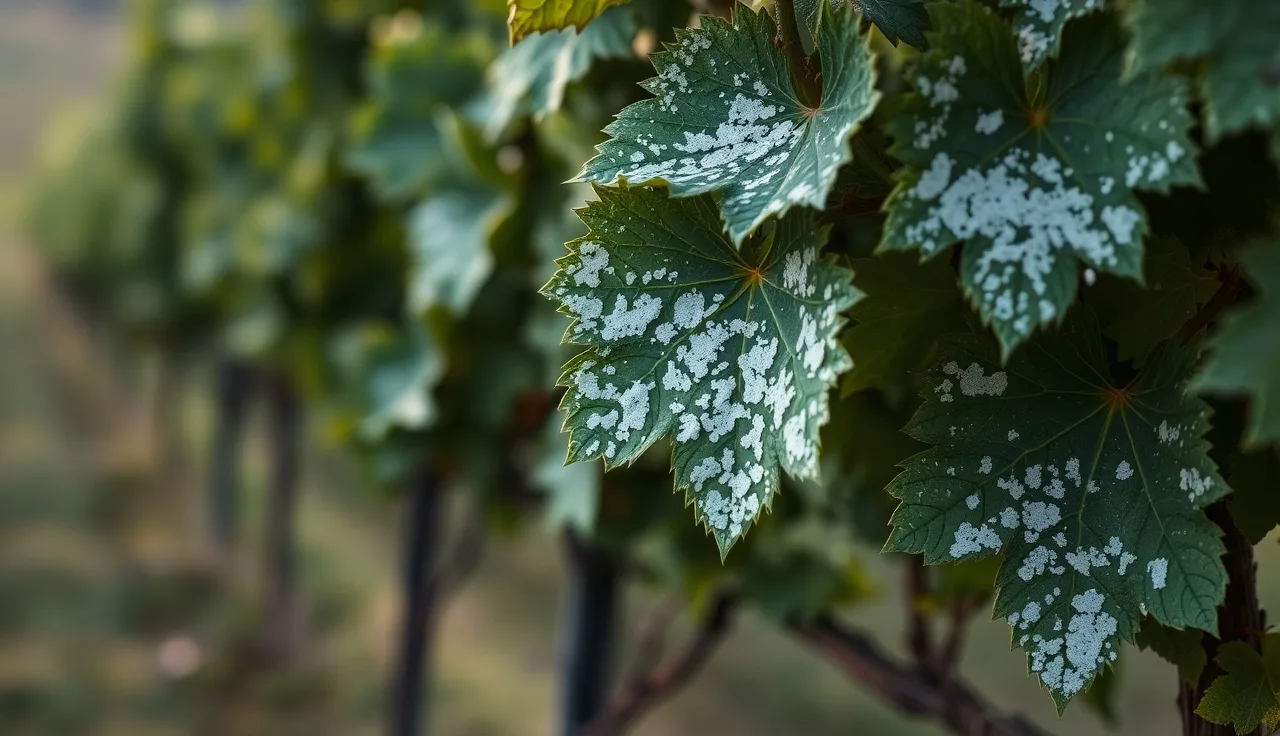
A misidentified disease costs real money. Powdery mildew alone causes estimated annual crop losses of 20 to 30 percent in unsprayed blocks in California, according to UC Davis Cooperative Extension [1]. Get the diagnosis wrong and you spray the wrong chemistry, miss the right window, or both. A good book puts a verified photograph next to a symptom description so you can confirm what you're looking at before you open the spray cabinet.
There's a compliance angle too. The EPA Worker Protection Standard requires that pesticide applications be justified by actual pest or disease presence, not by calendar scheduling alone [2]. A written scouting record tied to a specific identification, with a reference you can name, beats "I thought it might be downy mildew" in any audit.
Digital resources are getting better, but they have gaps. Extension websites go dark, URLs change, and a tablet screen in a wet vineyard row is a real annoyance. A physical book with a waterproofed cover still beats most apps for field ID when you're standing next to a symptomatic vine at 7 AM. Use both. Books for depth, extension PDFs for free regional updates.
What is the single most authoritative book on grapevine diseases?
The Compendium of Grape Diseases, Disorders, and Pests, published by the American Phytopathological Society, is the closest thing to an industry standard [3]. The third edition, released in 2015, covers fungal diseases, bacterial diseases, virus diseases, nematodes, abiotic disorders, and pests in one organized volume. Plant pathologists wrote it, but the structure works for a viticulturist doing field identification.
The book runs about $130 to $160 retail depending on the vendor, and APS members get a discount. Not cheap. The information density justifies it, though, and the disease cycle diagrams tell you when to spray, which matters more day to day than knowing exactly what you're staring at.
One honest limitation: this compendium covers grape-growing regions worldwide, so the regional specificity you need for your appellation gets spread thin. Grow in eastern Washington or the Finger Lakes and the extension publications from WSU or Cornell will give you sharper spray timing for your climate zone than the compendium alone [4][5].
APS also puts out supplements and updates through its journal Phytopathology, so buying the compendium isn't a one-time fix. New disease strains keep emerging, and staying current matters.
Which free extension guides are worth downloading right now?
Three university programs produce genuinely good grapevine disease publications, and every one of them is free.
WSU Extension's Pacific Northwest Plant Disease Management Handbook covers Botrytis, powdery mildew, downy mildew, Phomopsis, and crown gall with spray timing tables built for Pacific Northwest conditions [4]. It updates annually, which matters because registered fungicide options shift year to year. You get it through the WSU Extension website.
UC Davis IPM publishes the Grape Pest Management Guidelines, one of the most detailed free resources anywhere [1]. The disease sections include color photographs, degree-day models for infection risk, and tables of registered materials with their FRAC codes so you can track resistance management. If you grow in California, print this and binder-clip it into your spray records folder first.
Cornell Cooperative Extension publishes the Pest Management Guidelines for Grapes through its New York State IPM Program, written for humid-climate conditions where downy mildew pressure runs far heavier than in the West [5]. Cornell also runs the Network for Environment and Weather Applications (NEWA) forecasting system, which pairs cleanly with the written guidelines.
None of these replaces a good book. They're current, free, and regionally precise. Download them every year. The UC IPM guidelines refresh their registered materials lists each season, and a fungicide that was legal last year may have had its registration changed.
How do the major grapevine diseases compare by economic impact and spread risk?
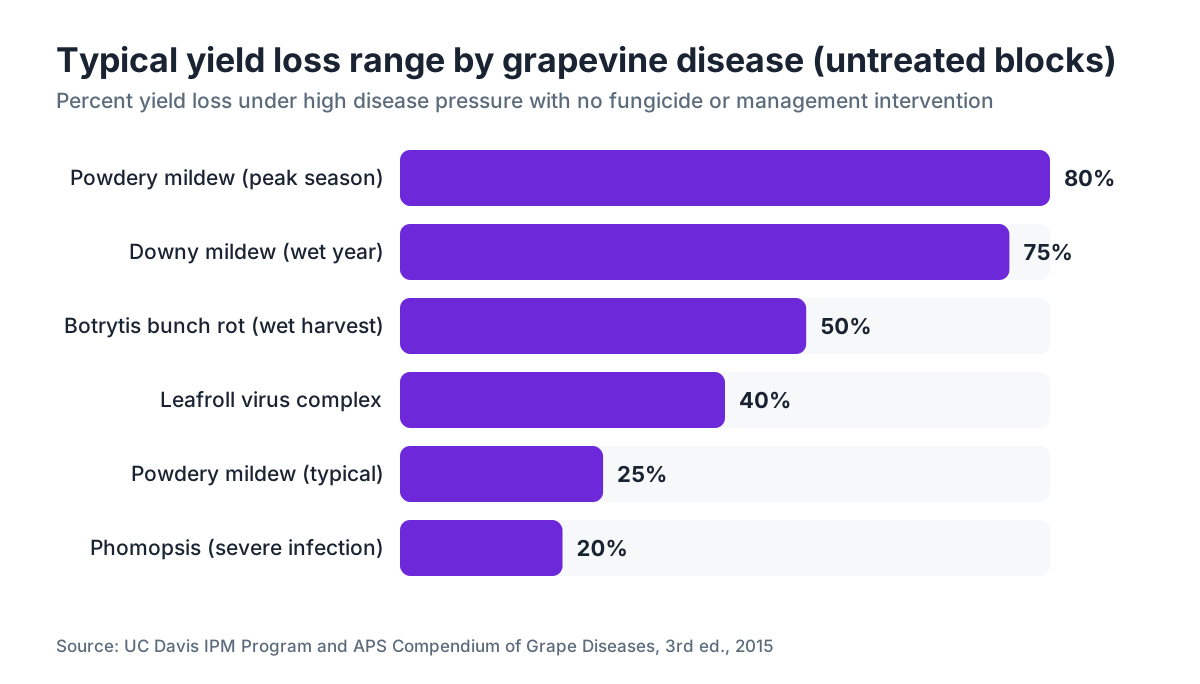
Here's a practical comparison of the diseases you'll hit most often in North American vineyards. Severity ratings and loss estimates come from UC IPM and APS compendium data [1][3].
| Disease | Pathogen type | Typical yield loss (untreated) | Primary spread mechanism | Key management window |
|---|---|---|---|---|
| Powdery mildew | Fungus (Erysiphe necator) | 20-80% | Wind-dispersed conidia | 1-inch shoot through bloom |
| Downy mildew | Oomycete (Plasmopara viticola) | Up to 75% in wet years | Splash/wind sporangia | After 10mm rain, 10°C+ |
| Botrytis bunch rot | Fungus (Botrytis cinerea) | 5-50% | Wind-dispersed conidia | Bloom and pre-harvest |
| Phomopsis cane & leaf spot | Fungus (Phomopsis viticola) | Variable; can be severe | Rainfall splash | Early shoot growth |
| Crown gall | Bacterium (Agrobacterium vitis) | Vine loss, long-term | Pruning wounds, freezing injury | Preventive only |
| Leafroll virus | Virus complex | 30-40% yield; quality loss | Mealybugs, grafting | Roguing, certified stock |
| Pierce's disease | Bacterium (Xylella fastidiosa) | Vine death within 2-5 years | Sharpshooter leafhoppers | No cure; regional risk |
The table collapses a lot of nuance, but it works as a triage tool. Crown gall and leafroll kill vines over a decade rather than hurting you in one season. The fungal diseases eat your crop right now.
Pierce's disease earns special mention because no chemical rescue exists once a vine is infected [6]. The best reference for PD management is still the UC Davis Pierce's Disease Research Program publications, which cover the biology, regional risk maps, and vector management in more detail than any general compendium can.
What books specifically cover powdery mildew and Botrytis management?
Both diseases carry enough economic weight that the dedicated compendium chapters are worth reading cover to cover. There are targeted resources too.
For powdery mildew, Doug Gubler's work at UC Davis produced the Gubler-Thomas disease risk index, a degree-day model in practical use since the 1990s [1]. The model is baked into many online decision tools now. Understanding the biology behind it, explained clearly in the UC IPM grape guidelines, makes you a better user of those tools instead of a button-pusher.
For Botrytis, the APS compendium chapter is solid, but the sharpest spray timing for eastern vineyards comes from Cornell's IPM publications [5]. Cornell pathologists have done extensive work on how canopy management interacts with Botrytis risk, and that research shapes their timing recommendations in ways a global compendium can't match regionally.
There isn't a great standalone book devoted entirely to powdery mildew or Botrytis in grapes. The gap is real. The closest thing sits in the technical summaries of USDA National Institute of Food and Agriculture funded research, but those are journal articles, not books. Want the deep pathology? You're reading primary literature. For practical management, the extension resources beat trying to stitch journal papers together.
Are there good books on grapevine viruses and leafroll disease specifically?
Leafroll gets underestimated more than any other disease by new vineyard managers. It cuts yield by 30 to 40 percent and suppresses sugar accumulation, so Brix at harvest on an infected vine can run two to four degrees below the block average [3]. The problem compounds because the virus spreads slowly through a vineyard via mealybug vectors over years, and vines don't always show classic red-leaf symptoms until they're deep into infection.
APS published a dedicated book, Grapevine Viruses: Molecular Biology, Diagnostics and Management, in 2017. It's a research-level text, not a field guide, and it runs over $200 in most formats. For a research viticulturist or a consultant, it earns its place. For a vineyard manager deciding whether to rogue a vine or buy clean stock, the UC Davis Foundation Plant Services website and the UC Cooperative Extension leafroll publications are more practical [7].
The core leafroll decision is binary. You either rogue infected vines aggressively and replant with certified clean material, or you live with yield loss and quality drag indefinitely. No spray program rescues a leafroll-infected vine. Extension publications from UC, Cornell, and WSU cover that decision framework well, no $200 book required.
What about books covering bacterial diseases and Pierce's disease?
Pierce's disease is geographically concentrated. It's a serious production threat in the southeastern United States, the Gulf Coast states, and in California's Central Valley and coastal areas where glassy-winged sharpshooter populations are established [6]. In the Pacific Northwest and most of the Northeast, it's a minor risk right now, though climate shifts have people watching.
The USDA Agricultural Research Service and UC Davis Pierce's Disease Research Program have produced the most thorough free publications on it. Searching UC ANR for Pierce's disease pulls up current fact sheets on biology, sharpshooter identification, and regional risk. These aren't books, and they're more current than any book chapter.
Crown gall, caused by Agrobacterium vitis, is the other bacterial disease that shows up in almost every vineyard given enough time. Freeze-thaw injury cycles favor it, which makes it common in the Finger Lakes, parts of Michigan, and the Columbia Valley. The APS compendium covers it well. No standalone book on crown gall in grapes exists, and none needs to: the biology is straightforward and management is almost entirely preventive (avoid pruning wound exposure, heat-treat cuttings, pick cold-hardy sites and varieties).
For both PD and crown gall, extension resources beat any book because the recommendations track local vector populations and climate data that a printed page can't keep up with.
How should you build a practical vineyard disease reference library?
Here's what I'd actually buy and download, in priority order.
First, get the APS Compendium of Grape Diseases, Disorders, and Pests (3rd edition, 2015). It's your authoritative baseline for identification [3]. Budget $130 to $160.
Second, download and print the UC IPM Grape Pest Management Guidelines from the UC ANR website, then re-download them every January when they update [1]. Free. Print the disease section and put it in a binder in the shop.
Third, grab the extension publication for your region: the WSU Pacific Northwest handbook if you're in the Northwest [4], Cornell IPM for New York and the East [5], UC Davis publications for California. These give you the spray timing tables and registered materials lists calibrated to your climate.
A fourth resource worth having is Wine Grape Varieties in California, published by UC ANR, which covers varietal susceptibility differences [8]. That matters enormously when you're deciding which blocks need more aggressive powdery mildew programs. Chardonnay and Zinfandel, for example, run significantly more susceptible than some other varieties.
What I wouldn't spend money on: the highly academic molecular pathology texts, unless you're also doing diagnostics work. For field identification and spray program design, the compendium plus the extension resources answer 95 percent of your questions. The other 5 percent is when you need to call your county farm advisor or the plant diagnostics lab anyway.
On the record-keeping side, which ties directly to disease management documentation, tools like VitiScribe are built for vineyard spray records and compliance logs, so your disease identification notes and your chemical application records live in one place.
What do spray records have to do with disease identification books?
More than most people think. The EPA Worker Protection Standard requires that early-entry exceptions and restricted-entry intervals be documented, and that pesticide use be justified [2]. A spray record that says "applied fungicide X on date Y at rate Z because I observed powdery mildew symptoms on block 3 at 15 percent incidence" is a defensible record. A record that just says "spray application" is not.
The California Department of Pesticide Regulation requires licensed pest control advisers to justify pesticide recommendations in writing [9]. Even in states without PCA requirements, that written justification protects you in any labor inspection or compliance audit. Your disease reference book is part of the documentation chain: it's how you prove your identification came from a credible source.
If a DPR auditor asks why you applied a restricted material, the answer you want to point at is a spray log that references observable disease symptoms, ties those symptoms to an identified pathogen via a named reference, and notes the application rate and equipment calibration. The APS compendium or your extension guidelines are the named references in that chain.
This is also why a field scouting log kept separate from your spray application records makes sense. Document what you saw, when you saw it, and where, before you make the application decision. The disease book is the tool that helps you name what you saw.
How do university extension programs stay more current than books on grapevine diseases?
Books are snapshots. The APS compendium came out in 2015, which means its registered materials lists are already stale in some states, and any disease strains that emerged since then aren't in there. Extension programs update their publications annually or more often, and they respond directly to new resistance issues, label changes, and outbreak reports.
WSU Extension, for one, updated its powdery mildew fungicide resistance guidance after surveys documented reduced sensitivity to some DMI (sterol inhibitor) fungicides in Washington vineyards [4]. That update landed within a season of the survey data publishing. A book can't do that.
Cornell's NEWA platform goes further by combining disease model forecasting with weather station data in real time [5]. The written extension guidelines explain the models; the platform runs them on your local weather data. That combination beats any static text for timing sprays, especially for downy mildew and Botrytis.
UC Davis Cooperative Extension farm advisors also publish local disease alerts through county newsletters and the UC ANR blogs during active pressure periods. Free, timely, based on local field observation. Following your farm advisor's communications gives you ground-level intelligence no book can replicate.
So here's the practical split. Books give you the deep biology that makes you a better diagnostician and decision-maker. Extension resources give you the current, regionally specific, actionable guidance. You need both.
Where can you find bilingual or multilingual grapevine disease resources for farm workers?
The EPA WPS requires that workers be able to understand safety information, and in many vineyards Spanish is the primary language of the field crew [2]. Disease identification materials are part of crop protection training, so having resources in Spanish matters practically and for compliance.
UC ANR publishes a number of pest management publications in Spanish, and its website has a language filter that surfaces them [1]. The UC IPM program also carries bilingual pest identification resources in its farmworker training materials.
WSU Extension has produced some Spanish-language pesticide safety materials, though the depth of coverage for plant disease specifically runs thinner than what UC offers [4]. USDA's National Agricultural Library and the National Pesticide Information Center maintain multilingual pesticide safety resources that overlap with disease management programs.
For field ID cards specifically, the most practical format for in-vineyard use, bilingual options are scarcer than you'd want. Some county agricultural commissioners have produced local Spanish-language pest identification resources. Ask your county commissioner's office. The gap for a genuinely bilingual, field-durable grapevine disease ID guide is real, and no major publisher has filled it yet.
At the crew-training level, pairing English disease references with bilingual pesticide label training through NPIC or your state extension program covers the compliance requirement while making sure your team actually understands what they're seeing in the vineyard [10].
Managing spray records across multilingual field teams? VitiScribe centralizes the scouting and application data so the documentation burden doesn't fall entirely on crew supervisors working between two languages.
What should you look for when evaluating any new grapevine disease book?
Four things matter most.
Photograph quality comes first. If the color plates don't show clear, high-resolution images of early-stage symptoms, the book loses most of its field value. Early powdery mildew on berries looks different from late-stage, and you need to catch it early. The APS compendium has good plates. Cheaper texts often have muddy photographs that make identification harder, not easier.
Publication date and update policy matter more for fungicide recommendations than for disease biology. The biology of Botrytis cinerea hasn't changed, but the list of registered fungicides and their resistance risk categories (tracked by FRAC codes) shifts regularly. A book published before 2020 will have incomplete FRAC resistance guidance for some currently important fungicide classes [12].
Regional specificity is the third filter. A book written mainly for European viticulture assumes different grape varieties, different climate, and may list fungicides that aren't registered in the United States. The APS compendium is written for North American conditions. Some European texts (Pearson and Goheen's older compendium, Emmett's Australian guides) are worth reading but operationally weaker for U.S. compliance.
Author credentials matter, and look for people with applied field research backgrounds over pure laboratory pathologists. The best grapevine disease texts come from people who spent time in actual vineyards during actual outbreaks. The contributor list in the APS compendium includes many extension specialists with exactly that background.
Frequently asked questions
What is the best single book on grapevine diseases for a working vineyard manager?
The Compendium of Grape Diseases, Disorders, and Pests, 3rd edition, published by APS Press in 2015, is the most complete and widely cited single reference. It covers fungal, bacterial, and viral diseases plus abiotic disorders, with color plates suitable for field ID. It costs $130 to $160. Pair it with your regional extension guidelines for current spray timing and registered materials.
Are there free grapevine disease identification resources from universities?
Yes. UC Davis IPM publishes free Grape Pest Management Guidelines updated annually at ipm.ucanr.edu. WSU Extension maintains the Pacific Northwest Plant Disease Management Handbook online. Cornell Cooperative Extension publishes free IPM guidelines for New York grapes. All three include color photographs, disease cycles, and spray timing tables. Download and print the disease sections each January when updates typically post.
How do I document grapevine disease identification for EPA compliance purposes?
The EPA Worker Protection Standard requires pesticide use to be justified by actual pest or disease presence. A field scouting log that records the date, block, symptom observed, percent incidence, and the reference you used for identification (for example, APS Compendium, 3rd ed., page 42) creates a defensible paper trail. Keep scouting records separate from but linked to your spray application records.
What grapevine diseases cause the most economic damage in North American vineyards?
Powdery mildew causes 20 to 80 percent yield loss in untreated blocks depending on conditions, making it the top economic priority in most regions. Botrytis bunch rot can reach 50 percent loss in wet harvest years. Leafroll virus complex cuts yield 30 to 40 percent and suppresses sugar accumulation chronically. Pierce's disease kills vines within two to five years in affected regions with no chemical rescue once established.
Is there a grapevine disease book specifically focused on powdery mildew?
No dedicated book exists for powdery mildew in grapes specifically. The best resources are the UC IPM Grape Pest Management Guidelines, which include the Gubler-Thomas degree-day risk model and current FRAC-coded fungicide recommendations, plus the powdery mildew chapter in the APS compendium. WSU Extension's handbook also covers Pacific Northwest-specific spray programs in useful detail.
What books cover grapevine leafroll virus and other virus diseases?
APS published 'Grapevine Viruses: Molecular Biology, Diagnostics and Management' in 2017. It's research-level and expensive (over $200), better suited to consultants and researchers than daily field use. For practical management decisions, UC Davis Foundation Plant Services and UC Cooperative Extension leafroll publications are more actionable and free. The core management question (rogue versus tolerate) is answered well in those extension documents.
How often should I update my grapevine disease reference library?
Re-download your extension guidelines every January. The APS compendium (2015) is still current on disease biology and identification but needs supplementing with current extension resources for fungicide resistance and registered materials lists. Watch for new APS publications or supplements. If a major new disease strain appears in your region, your local farm advisor's county newsletter or UC ANR alerts will flag it before any book does.
Are there grapevine disease resources available in Spanish for farm worker training?
UC ANR publishes selected pest management materials in Spanish, accessible through its website with a language filter. The UC IPM program includes bilingual farmworker training materials. The National Pesticide Information Center provides multilingual pesticide safety resources. Bilingual field ID cards for grapevine diseases specifically are limited; asking your county agricultural commissioner's office for locally produced materials is the best current option.
What's the difference between the older Pearson and Goheen compendium and the current APS edition?
The Pearson and Goheen Compendium of Grape Diseases (1988) was the standard for decades but is now well outdated on fungicide options, disease management strategies, and newly characterized viruses. The 2015 APS third edition incorporates three additional decades of research, new disease entries, revised taxonomy, and updated color plates. The 1988 edition has historical interest but shouldn't be your working field reference.
Do grapevine disease books cover organic spray programs?
The APS compendium covers disease biology thoroughly but isn't organized around organic versus conventional programs. The UC IPM guidelines have a dedicated organic materials section within each disease chapter, listing OMRI-listed products and their efficacy ratings. Cornell's IPM publications similarly flag organic options. For a full organic spray program design, the National Organic Program materials list and your certifier's guidance are required alongside any disease book.
What is the best resource for Pierce's disease identification and management?
UC Davis Pierce's Disease Research Program publications and UC ANR fact sheets are the most practical and current resources, covering Xylella fastidiosa biology, glassy-winged sharpshooter identification, regional risk maps, and management options. The APS compendium chapter on Pierce's disease gives good baseline biology. No standalone book on PD in grapes exists; extension resources are more useful because management guidance tracks closely with local vector monitoring data.
Can I use a grapevine disease book to justify a pesticide application to a state inspector?
A named reference (for example, the APS Compendium, 3rd ed.) is part of a defensible justification, but the justification needs your documented field observation combined with the reference. The book shows your identification was informed; your scouting log shows you actually observed the disease at a specific location, date, and incidence level. Together they support a documented pest management decision. The book alone is not a substitute for field scouting records.
How do FRAC codes in grapevine disease books help with fungicide resistance management?
FRAC (Fungicide Resistance Action Committee) codes group fungicides by mode of action. Rotating between FRAC groups is the primary tool to delay resistance, particularly for powdery mildew where resistance to FRAC 3 (DMIs) has been documented in some U.S. vineyards. The APS compendium introduces the concept; the UC IPM guidelines and WSU handbook list current registered products with their FRAC codes in tables you can use directly for spray program planning.
What grapevine disease book is best for someone new to viticulture?
Start with the UC IPM Grape Pest Management Guidelines (free, well organized, good photographs) and the WSU or Cornell equivalent for your region. Read the introduction sections before jumping to individual disease entries so you understand disease cycles before trying to manage them. Then buy the APS compendium once you're spending real time in the vineyard and need the deeper identification and biology detail. Don't buy the $200 molecular texts until you know you need them.
Sources
- UC Davis IPM Program, Grape Pest Management Guidelines: Powdery mildew causes estimated annual crop losses of 20 to 30 percent in unsprayed California blocks; the Gubler-Thomas degree-day risk model is described here.
- American Phytopathological Society, Compendium of Grape Diseases, Disorders, and Pests, 3rd ed., 2015: The APS compendium is the primary professional reference for grapevine disease identification in North America; leafroll virus reduces yield 30 to 40 percent per the compendium.
- WSU Extension, Pacific Northwest Plant Disease Management Handbook: WSU Extension annually updates fungicide resistance guidance and spray timing tables for Pacific Northwest grapevine diseases including powdery mildew and Botrytis.
- Cornell Cooperative Extension, New York State IPM Program, Pest Management Guidelines for Grapes: Cornell IPM publishes grape disease guidelines calibrated for humid eastern climates and operates the NEWA disease forecasting platform for spray timing.
- California Department of Food and Agriculture, Pierce's Disease Control Program: Pierce's disease (Xylella fastidiosa) kills vines within two to five years of infection; no chemical rescue exists once a vine is infected; glassy-winged sharpshooter is the primary vector in California.
- UC Davis Foundation Plant Services (FPS), Grapevine Certification Program: UC Davis FPS provides certified virus-tested planting material and publishes guidance on leafroll virus identification and roguing decisions.
- UC Agriculture and Natural Resources, Wine Grape Varieties in California: UC ANR documents varietal susceptibility differences to powdery mildew among California wine grape varieties.
- California Department of Pesticide Regulation, Pest Control Adviser Licensing: CDPR requires licensed pest control advisers to justify pesticide recommendations in writing, creating a documentation standard for California spray programs.
- National Pesticide Information Center (NPIC), Oregon State University and EPA: NPIC provides multilingual pesticide safety resources suitable for farmworker training under the EPA Worker Protection Standard.
- U.S. Environmental Protection Agency, Agricultural Worker Protection Standard: The EPA Worker Protection Standard requires pesticide use to be justified by pest or disease presence and requires documentation of restricted-entry intervals.
- Fungicide Resistance Action Committee (FRAC), FRAC Code List: FRAC publishes annual fungicide mode-of-action codes used for resistance management planning in grape disease spray programs.
Last updated 2026-07-10