Grapevine diseases in New Zealand: a field guide for vineyard managers
TL;DR
- New Zealand vineyards fight about a dozen diseases that actually cost money.
- Botrytis bunch rot, powdery mildew, downy mildew, Eutypa dieback, and grapevine leafroll-associated viruses do the most damage.
- Marlborough, Hawke's Bay, and Central Otago each carry a different pressure profile.
- Three things move the needle: spray timing, canopy work, and certified planting material.
What grapevine diseases are most common in New Zealand vineyards?
New Zealand's temperate maritime climate suits grapevines well. That same humidity keeps disease pressure high all season. The diseases that take the most money out of NZ growers' pockets, in rough order of economic impact, are:
- Botrytis bunch rot (Botrytis cinerea)
- Powdery mildew (Erysiphe necator)
- Downy mildew (Plasmopara viticola)
- Botrytis cane and leaf spot
- Eutypa dieback (Eutypa lata)
- Phomopsis cane and leaf spot (Diaporthe ampelina)
- Grapevine leafroll-associated viruses (GLRaV-1, -2, -3)
- Grapevine virus A (GVA)
- Rugose wood complex (including Rupestris stem pitting)
- Crown gall (Agrobacterium vitis)
That list is not the whole story. Armillaria root rot turns up in old orchard conversions in Hawke's Bay. Esca complex has been confirmed in a small number of South Island blocks. Black foot disease (Ilyonectria spp.) is an increasing concern in young vine establishment, especially in Marlborough. [1]
The split between fungal and viral disease shapes everything about how you respond. Fungal problems you manage in-season with sprays, canopy work, and variety choice. Viral problems you cannot. Once a vine has leafroll virus there is no cure. The block either comes out or you live with reduced yield and delayed ripening for the rest of its life. That asymmetry drives every replanting and purchasing decision a serious grower makes.
How bad is Botrytis bunch rot in NZ and when does it strike?
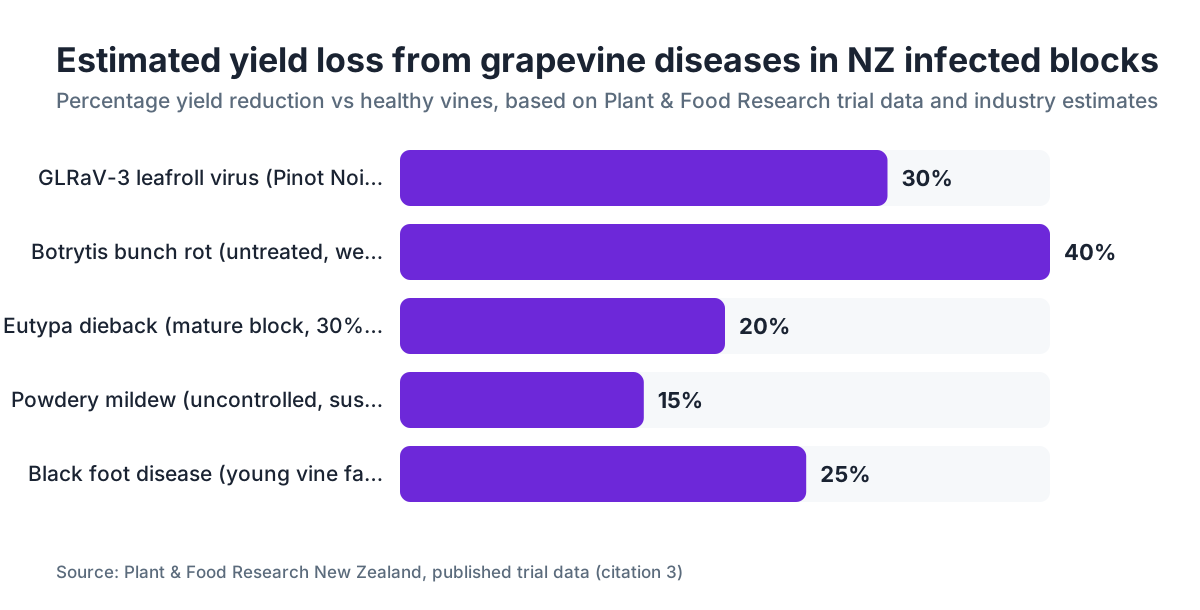
Botrytis is the single most expensive disease in New Zealand viticulture. In wet vintages, untreated Pinot Noir blocks in Marlborough and Central Otago can hit 30 to 60% bunch infection. The pathogen overwinters on dead cane tissue, mummified berries, and bark, then throws conidia across the whole season. Two windows matter most: flowering, when rachis infections set in silently as the caps fall, and véraison onward, when berry skin softens and sugar climbs. [2]
The conditions that drive Botrytis are well documented. Relative humidity above 90% for more than 15 hours straight, at 15 to 25°C, gives you epidemic conditions. Tight-clustered varieties like Pinot Gris and Riesling are structurally worse off than loose-clustered Sauvignon Blanc. That is one reason Marlborough Sauvignon blocks often carry lower Botrytis pressure than the Pinot Gris block over the fence in the same season.
Canopy management is not optional here. Plant & Food Research found that leaf removal in the bunch zone at or before flowering cut Botrytis incidence significantly and, in some trials, beat a full fungicide program in open-canopy blocks. [3]
Fungicides still earn their keep. The standard NZ program runs two to four applications, timed at cap fall, bunch closure (when the berries touch), véraison, and a pre-harvest window that has to respect the label PHI. Boscalid, fludioxonil, pyrimethanil, and iprodione (where it is still registered) are the main actives. Resistance is not theoretical. NZ B. cinerea populations under heavy fungicide pressure have shown reduced sensitivity to some SDHIs and anilinopyrimidines. Rotate modes of action every season, no exceptions.
Does powdery mildew cause serious losses in New Zealand?
Yes, and it catches out growers who assume only humid regions need to worry. Erysiphe necator does its best work in warm, dry weather and can finish a whole disease cycle without a drop of free water on the leaf. Central Otago's warm days and low rainfall are exactly the setup where flag shoot infections off overwintering cleistothecia run away from you if the early-season spray program slips. [4]
The damage comes two ways. Infected berries crack, Botrytis moves in behind, and losses compound. On red varieties, even 3 to 5% berry infection can taint wine with off-flavours tied to fungal metabolites. NZ Winegrowers' spray records show powdery mildew is the target of the largest share of fungicide sprays across all regions, usually 40 to 60% of fungicide applications by number. [5]
Sulfur is still the backbone of NZ powdery mildew programs. It is cheap and it has no practical resistance risk. Sterol inhibitors (DMIs like tebuconazole and myclobutanil) and the QoI group give you curative activity when the disease is already on the move. The window that counts runs from budburst through véraison. Post-véraison sprays add little if the canopy is open and airy. Skip sulfur when temperatures top 32°C or you will burn young tissue.
What is downy mildew and how does it differ from powdery mildew in NZ vineyards?
Downy mildew (Plasmopara viticola) is a water mould (an oomycete), not a true fungus, so sulfur does nothing to it. It thrives on the exact conditions that break powdery mildew programs: wet weather, overnight dews, and cool temperatures above 10°C. The old European "10-10-10" rule still works as a rough trigger. When the season has banked at least 10°C of overnight temperature, at least 10mm of rain in a 24 to 48 hour window, and shoots are at least 10cm long, your first copper or phosphonate spray is due. [4]
In New Zealand, downy mildew pressure runs highest in Hawke's Bay, Gisborne, Nelson, and the wetter Marlborough seasons. Central Otago growers often clear a whole season with barely any downy pressure thanks to the dry continental climate, though heavy irrigation and dense canopies can flip that.
Copper hydroxide and copper oxychloride are the main protectants. Phosphonate (phosphorous acid) products have systemic activity and sit well in tank mixes. Mancozeb used to be the other cornerstone protectant, but its HSNO status in NZ has been under ongoing review and some formulations carry restricted uses. Check the current Approved Handler requirements and MRL status for your export markets before you put mancozeb on late in the season. [6] For export-focused growers, copper and the phosphonates are the safer compliance call.
How does grapevine leafroll virus spread in NZ and can you stop it?
Leafroll disease is probably the most expensive long-term problem in NZ viticulture, even though it rarely shouts in any single season. The complex involves several virus species, but GLRaV-3 is the dominant one in NZ and the one most tied to crop and quality loss. On reds, infected vines throw the classic autumn tell: leaves roll downward, interveinal areas go red while the veins stay green. On whites the sign is yellowing with rolled margins, and it gets misread as nutritional stress or drought all the time.
The losses are measurable. Plant & Food Research trials found GLRaV-3 infected Pinot Noir vines in Marlborough dropped yield by 20 to 40%, ran 1 to 3 Brix lower at harvest, and ripened 10 to 21 days behind healthy vines in the same block. [3] In a cool region like Central Otago, that ripening delay is the difference between wine-grade and unsellable fruit.
The main spread pathway in NZ is mealybugs (Pseudococcus longispinus, P. calceolariae) and soft scale (Parthenolecanium persicae). They feed on an infected vine, pick up the virus, and carry it to a healthy one. Blocks next to infected ones face real spread risk, and letting mealybug populations run unchecked speeds the whole thing up. [7]
There is no spray for the virus itself. The framework is simple to state and hard to do well: plant certified virus-tested material, monitor for mealybug vectors with sticky traps and eyes on the vines, knock back mealybug populations with registered insecticides or biocontrol, and rogue infected vines the moment they are confirmed. NZ Winegrowers has a leafroll management plan framework that several regional bodies have folded into their own compliance documents. Buying vines from MPI-registered nurseries sourcing from certified mother blocks is the single biggest prevention step you can take.
What are Eutypa dieback and Phomopsis cane and leaf spot, and how serious are they?
Eutypa dieback (Eutypa lata) and Phomopsis cane and leaf spot (Diaporthe ampelina, once Phomopsis viticola) are both wood pathogens that get in through pruning wounds. They do cumulative structural damage and they are genuinely hard to reverse once they settle into a block.
Eutypa is the nastier of the two in mature vineyards. Infected wood throws a distinctive yellow-margined, cupped leaf on the spurs two to three years after infection, along with dead spurs and a V-shaped brown wedge in the cross-section of older canes. It shortens vine life and cuts yield per spur. Chardonnay and Grenache take it hardest worldwide, though it will infect any Vitis vinifera. [8]
Phomopsis shows earlier, as black lesions on young shoots and deformed, spotted leaves. Berries infected at or before bloom rot at harvest, and the rot looks different from Botrytis: darker, with harder lesion margins. Wet springs in Marlborough and Nelson push Phomopsis conidia around by rain splash.
You manage both the same way at the base level. Delay pruning until after the wettest winter stretch (in NZ, dodge June to August cuts where you can). Protect any cut larger than 1cm with a wound protectant, either a Trichoderma-based biofungicide or a chemical paste. Pull infected wood out of the vineyard rather than mulching it back in. Double-pruning, where you leave a long cane over winter and machine off the excess closer to budburst, shrinks the infection window and is now common in Marlborough operations.
What is black foot disease and why is it a growing problem in young NZ vines?
Black foot disease comes from several Ilyonectria species (once called Cylindrocarpon) and shows up as a black discolouration of the root crown and lower trunk, poor establishment, and vine death in the first five to eight years. It has gotten more visible in NZ over the past decade as Marlborough's replanting cycle sped up and nursery hygiene came under closer scrutiny. [1]
The pathogen survives in soil for years. It infects new vines through wounds or straight through young roots. Blocks planted on freshly cleared old vineyard ground carry higher risk because the soil inoculum is already loaded. Poor drainage makes all of it worse.
No in-soil fungicide reliably clears Ilyonectria once it is established on a site. Prevention is the whole game. Source certified clean nursery material. Plant on well-prepared, well-drained ground. Consider a two-year soil break between vine generations on high-risk sites. And inspect young vine root systems before you plant rather than taking condition on trust.
MPI's vine health inspection requirements for registered nurseries are the main regulatory backstop. The Grapevine Improvement Group (a joint NZ Winegrowers and industry effort) keeps clean vine libraries and testing protocols that feed the certified nursery programs.
How do NZ spray programs and records need to meet compliance requirements?
Spray record-keeping in New Zealand sits across several regulatory frameworks at once. The main ones:
HSNO Act 1996 and hazardous substances regulations: operators applying certain restricted substances (most organotin fungicides are gone now, but some copper and some insecticides still carry Approved Handler requirements) need the right certifications, and records have to reflect that. [6]
Food Act 2014 and MPI audits: export wineries and bulk wine exporters go through MPI's wine export approval process, which wants spray records proving withholding periods and MRLs were respected. Some markets (the EU and Japan in particular) run their own MRL standards, stricter than NZ domestic limits, and an export failure is expensive. [9]
Sustainable Winegrowing New Zealand (SWNZ): most commercial NZ wineries buy grapes under SWNZ certification or its equivalent. SWNZ wants a record for every application: product, rate, date, target pest, operator, weather conditions, and re-entry interval. Auditors read them. [10]
Worker health and safety (WorkSafe NZ, Health and Safety at Work Act 2015): spray operators need proper training, and re-entry intervals for treated blocks have to be posted and recorded.
The practical record a NZ vineyard manager keeps for every spray covers: date and time, block ID, product and active ingredient, rate and volume, water volume per hectare, target organism, operator name, weather at application (wind speed, direction, temperature), and the pre-harvest interval remaining at the time you sprayed. A paper clipboard works right up until your auditor wants a trend analysis, or your export documentation needs a two-year history pulled together in 24 hours. Tools like VitiScribe let you log spray records in the field on a phone and export audit-ready reports. That pays off most at the end of a wet season, when you have 20 sprays on record and a SWNZ audit two weeks out.
For US-market context, the EPA Worker Protection Standard (40 CFR Part 170) sets specific re-entry interval documentation and training requirements for agricultural pesticide handlers. Any NZ winery exporting to the US under a co-pack arrangement should understand it for their US-side partners. [11]
What are the regional disease pressure differences between Marlborough, Hawke's Bay, and Central Otago?
| Region | Botrytis pressure | Powdery mildew pressure | Downy mildew pressure | Leafroll virus risk | Main climate driver |
|---|---|---|---|---|---|
| Marlborough | High (wet harvests) | Moderate | Moderate-high | High (established mealybug) | Maritime, variable harvest rain |
| Hawke's Bay | Moderate-high | Moderate | High | Moderate-high | Warm, humid summers |
| Central Otago | Moderate (tight varieties) | High | Low-moderate | Moderate | Continental, dry summers |
| Nelson/Tasman | High | Moderate | High | Moderate | High rainfall |
| Gisborne | High | Low | High | Moderate | Tropical cyclone exposure |
| Martinborough/Wairarapa | Moderate | Moderate-high | Moderate | Moderate | Wind exposure reduces humidity |
The table is a generalisation drawn from published NZ Plant & Food Research disease monitoring data and regional industry reporting. [3] Individual block exposure (a frost hollow, irrigation design, row orientation against the prevailing wind) can shift any of these ratings a long way.
Marlborough runs the most intense Botrytis programs in the country, partly from the sheer area under Pinot Noir and Pinot Gris, partly because late April rain has historically triggered fast epidemic Botrytis in the fortnight before harvest. The Wairau Valley floor's frost-prone shape also traps cold humid air overnight, which keeps bunch-zone humidity up.
Central Otago's biggest fungal headache is powdery mildew, precisely because a grower fixated on Botrytis can let the sulfur program slide during a dry early-season stretch and then find flag shoot infections already established. The region's warming summers, some years running July and August temperatures well above 1980s averages, are stretching the powdery mildew window out further.
What certified planting material and vine health programs exist in New Zealand?
New Zealand runs one of the better vine health systems in the Southern Hemisphere. Not perfect, but it means there are real standards a grower can lean on. The key programme is the Grapevine Improvement Group (GIG), a joint effort between NZ Winegrowers and the nursery industry, which keeps a system of registered mother-block vines tested for the major viruses (leafroll 1, 2, 3, corky bark, fleck, rupestris stem pitting) and other pathogens. [12]
Nurseries registered under MPI's Grapevine Register have to source propagation material from GIG-approved mother blocks or equivalent tested sources. Plant passporting applies to grafted vines, and nurseries have to keep traceable records from mother vine to field plant. Buy from a registered nursery and you get a plant health declaration.
The system is not bulletproof. Asymptomatic virus carriage in mother vines, testing windows that miss a pathogen at low concentration, and plain human error in vine handling all mean certified material is much cleaner than uncertified, not guaranteed virus-free. If you pay the premium for certified vines, still watch your new plantings for leafroll symptoms in years three through six. That is the usual expression window if low-level infection was riding along at planting.
MPI also runs the biosecurity side, restricting grape scion and rootstock imports to keep out pathogens not yet here (Xylella fastidiosa, Pierce's disease, and various exotic mealybug and leafhopper vectors sit on the watchlist). Anyone importing vine material illegally, whatever the source, risks introducing a quarantine pest that could wreck the entire NZ wine industry. The penalties under the Biosecurity Act 1993 for unlawful plant imports are serious. [9]
What university and extension resources are most useful for NZ grapevine disease management?
Start local. Plant & Food Research (the Crown Research Institute with the most grape disease work) publishes grower bulletins and peer-reviewed papers and keeps extension links with the regional wine bodies. [3] NZ Winegrowers' Technical Review is the industry publication with the most useful seasonal disease summaries. The SWNZ website carries a spray guide and chemical registration updates.
For applied disease science with wider reach, UC Davis Viticulture & Enology is the strongest English-language extension source going. [13] Their Integrated Pest Management guidelines for grapes, through the UC IPM program, have been adapted by researchers worldwide, NZ included. The pathogen biology write-ups for Botrytis, powdery mildew, and Eutypa run deeper and stay more current than most NZ-produced extension material.
Cornell's viticulture extension program, based in New York and built around cool-climate regions, maps well onto NZ work with Pinot Noir, Riesling, and Gewürztraminer. Their grapes program publishes fungicide resistance management guidelines that line up directly with NZ resistance worries. [14]
Washington State University's wine and grape unit in Prosser covers Columbia Valley conditions that, in some ways, sit closer to Marlborough's maritime-influenced climate than California does. Their mildew and Botrytis timing model work has turned up in NZ Plant & Food Research references.
For the compliance paperwork side, logging records consistently matters as much as knowing the biology. VitiScribe is built for vineyard operations and keeps spray records in the format NZ SWNZ auditors and MPI export documentation ask for, which saves a lot of year-end reconstruction.
Frequently asked questions
What is the most damaging grapevine disease in New Zealand?
Botrytis bunch rot causes the biggest single-season crop losses, often 20 to 60% in untreated wet-vintage Pinot Noir. Grapevine leafroll virus causes the most long-term cumulative damage across a vine's life, cutting yield 20 to 40% and delaying ripening 10 to 21 days in confirmed Plant & Food Research trials. Both need very different responses.
How do I identify grapevine leafroll virus in my block?
On reds: leaves roll downward in late summer and autumn, interveinal areas go deep red while veins stay green, and the vine lags healthy neighbours in ripening. On whites: yellowing with rolled leaf margins, easy to confuse with potassium deficiency or drought. Confirm with ELISA or PCR testing through a lab like Plant & Food Research. Visual symptoms alone are not a reliable diagnosis.
Can powdery mildew survive in Central Otago's dry climate?
Yes. Erysiphe necator does not need free water to germinate, so Central Otago's dry summers do not suppress it the way they suppress downy mildew. The pathogen overwinters as cleistothecia in bark, then infects young shoots in spring. Warm days and moderate humidity, not rain, drive the epidemic. Early-season sulfur programs are essential in Central Otago, even in dry years.
What spray records do I legally need to keep in New Zealand?
SWNZ certification requires a record of every application: date, block, product and active ingredient, rate, target pest, operator, and weather conditions. MPI export approval requires proof that PHIs and export-market MRLs were respected. WorkSafe NZ requires re-entry interval records. Some products with Approved Handler requirements under HSNO also require operator certification documentation. Keep records at least seven years for export compliance.
Is mancozeb still registered for use in New Zealand vineyards?
Mancozeb's HSNO status in NZ has been under ongoing regulatory review. Some formulations stay registered but carry revised use conditions and Approved Handler requirements. Late-season use is complicated by EU and some Asian market MRL standards that are stricter than NZ domestic limits. Check the current ACVM register and your exporter's market requirements before applying mancozeb after véraison.
How do I manage Eutypa dieback in an established NZ vineyard?
No systemic fungicide clears Eutypa from infected wood. Management means cutting out and burning infected spurs and arms, cutting back to clean white wood, and protecting fresh cuts with a registered wound protectant (a Trichoderma-based biofungicide or thiram paste where registered). Delay major pruning cuts until drier periods, usually September in most NZ regions, to shrink the infection window during spore release.
What mealybug control options are registered in NZ for leafroll virus management?
Registered options include spirotetramat (systemic, good coverage under bark), chlorpyrifos (check current re-registration status and Approved Handler requirements), and buprofezin. Biological control with the parasitoid Acerophagus maculipennis is available in NZ and used in some organic and low-input programs. Timing sprays to the crawler stage, usually spring and again post-harvest, beats spraying adults under their waxy coatings.
Does crown gall affect NZ vineyards and how is it managed?
Crown gall (Agrobacterium vitis) is present in NZ and forms galls at the graft union and lower trunk, weakening vines especially after frost damage. It enters through wounds and cannot be cured chemically. Management: choose frost-tolerant rootstocks on frost-prone sites, avoid trunk damage during cultivation, remove and burn severely galled vines, and sanitise pruning tools between blocks. Certified clean planting material sharply cuts introduction risk.
How does double pruning help reduce Eutypa and Phomopsis infection in NZ?
Double pruning leaves a long spur or cane through winter, protecting the main cordon. That long wood, which leaves a smaller wound surface at its eventual removal point, gets machined off closer to budburst in late winter or early spring when rainfall is lower. The final, smaller cuts land in drier conditions when Eutypa and Phomopsis spore release drops. That shrinks the infection window without needing wound protectant on every cut.
What biosecurity rules apply to importing vines into New Zealand?
The Biosecurity Act 1993 prohibits importing Vitis propagation material without MPI approval. Approved imports need pre-export testing in the source country, post-entry quarantine growing, and testing for regulated pathogens including the Pierce's disease bacterium, Xylella fastidiosa, and exotic viruses. MPI must issue an Import Health Standard approval before any material enters. Unlawful importation carries significant civil and criminal penalties under the Act.
Is organic viticulture possible in NZ given the disease pressure?
Yes, and there is a growing certified organic sector, especially in Marlborough and Nelson. Copper and sulfur are the main fungicide tools under organic certification (BioGro NZ or equivalent). Copper rates are capped under NZ organic standards to limit soil buildup, typically a maximum of 6 kg copper per hectare per year under BioGro rules. Organic programs work well in drier years and in looser-clustered varieties, but they take a lot more canopy work to make up for fewer curative options.
What is black foot disease and how do I know if my new block has it?
Black foot disease (Ilyonectria spp.) shows as poor establishment in young vines, stunted shoot growth, and black to brown discolouration of the root crown and lower roots. Pull a struggling vine and check: healthy crowns are white to cream inside, infected crowns show a black vascular stain. The pathogen lives in soil and in infected nursery stock. There is no in-soil chemical fix. Clean planting material and well-drained site prep are the only reliable strategy.
How does NZ's Sustainable Winegrowing New Zealand (SWNZ) program handle disease management compliance?
SWNZ requires members to document every spray with product, rate, date, target, operator, and weather conditions. It also requires integrated pest management planning, fungicide resistance management through mode-of-action rotation, and chemical use reduction targets. Annual audits check spray records against the block programme. Most major NZ wineries make SWNZ certification a condition of contracting grapes, so it is effectively mandatory for commercial vineyards.
Sources
- Plant & Food Research, New Zealand: Grapevine Trunk Disease Overview: Black foot disease (Ilyonectria spp.) is an increasing concern in young vine establishment in Marlborough and other NZ regions
- New Zealand Winegrowers Technical Review: Botrytis bunch rot management: Botrytis cinerea overwinters on dead cane tissue and mummified berries; two main infection windows are flowering and véraison
- Plant & Food Research New Zealand: Grapevine Leafroll and Botrytis Research Publications: GLRaV-3 infected Pinot Noir vines showed yield reductions of 20-40% and ripening delays of 10-21 days; leaf removal at flowering reduced Botrytis incidence
- UC Statewide Integrated Pest Management Program: UC IPM Grape Pest Management Guidelines: Powdery mildew thrives without free water; downy mildew follows the 10-10-10 rule for first spray timing
- New Zealand Winegrowers: Annual Vineyard Survey and Spray Record Reporting: Powdery mildew accounts for 40-60% of fungicide applications by number across NZ regions
- Environmental Protection Authority New Zealand: HSNO Act 1996 and Hazardous Substances Regulations: HSNO Act 1996 and associated regulations govern Approved Handler requirements and use conditions for agricultural chemicals in NZ
- New Zealand Plant & Food Research: Mealybug Vectors and Leafroll Virus Spread: Pseudococcus longispinus and P. calceolariae are primary leafroll virus vectors in NZ vineyards
- UC Statewide Integrated Pest Management Program: Eutypa Dieback of Grapevines: Eutypa lata enters vines through pruning wounds; infected wood shows characteristic V-shaped brown wedge and cupped leaf symptoms 2-3 years post-infection
- Ministry for Primary Industries New Zealand: Biosecurity Act 1993 and Wine Export Approvals: MPI administers vine import health standards and wine export approval requiring spray record documentation and MRL compliance
- Sustainable Winegrowing New Zealand (SWNZ): Programme Standards and Audit Requirements: SWNZ requires spray records for every application including product, rate, date, target pest, operator and weather; records are subject to annual audit
- US EPA: Worker Protection Standard 40 CFR Part 170: EPA Worker Protection Standard mandates re-entry interval documentation and handler training requirements for agricultural pesticide use
- New Zealand Winegrowers: Grapevine Improvement Group (GIG) and Vine Health Programme: GIG maintains registered mother blocks tested for major viruses and feeds into certified nursery supply under MPI's Grapevine Register
- UC Davis Department of Viticulture and Enology: Extension Resources: UC Davis Viticulture & Enology provides IPM guidelines for grapevine diseases including Botrytis, powdery mildew, and Eutypa
- Cornell University: Grapes Program Extension Resources: Cornell viticulture extension publishes fungicide resistance management guidelines relevant to cool-climate NZ varieties
Last updated 2026-07-09