Grapevine diseases: a field guide to identification and control
TL;DR
- The costliest grapevine diseases are powdery mildew, downy mildew, Botrytis bunch rot, Eutypa dieback, and Pierce's disease.
- Each has distinct symptoms and a management window.
- Early identification, well-timed fungicide or bactericide applications, and accurate spray records are the foundation of control.
- Most losses are preventable if you catch infections in the early growth stages.
What are the most common grapevine diseases and why do they matter?
Grape growers face two kinds of disease: the ones that come back every season, and the ones that show up once and kill a block for good. Knowing which kind you're looking at changes your whole response.
The recurring seasonal diseases (powdery mildew, downy mildew, and Botrytis bunch rot) are fungal or fungus-like. They spread by spores, they need specific temperature and humidity windows, and they respond to well-timed chemistry. Miss the timing and you can lose 30 to 80 percent of a crop [1]. The chronic wood diseases (Eutypa dieback and Botryosphaeria canker) kill cordons and arms over years, and there's no cure once the wood is colonized. Then there are the systemic diseases (Pierce's disease and fanleaf degeneration) that kill vines outright and force replanting.
Pierce's disease costs California growers an estimated $56 million per year in lost production and management [2]. Powdery mildew is the single most sprayed-against pathogen in most U.S. wine grape regions, and it eats up a large share of every vineyard's fungicide budget.
Managing grapevine diseases as a group means accepting that you're fighting several overlapping threats at once, each with its own biology, its own timing, and its own paper trail. This guide covers the major ones, what they look like in the field, and what actually works.
What does powdery mildew look like on grapevines, and how do you control it?
Powdery mildew (Erysiphe necator, formerly Uncinula necator) is the disease almost every grower will see every year. The white or gray powdery coating on leaves, shoots, and berries is the most-photographed symptom in grapevine disease images online. By the time you see heavy sporulation, you're already behind.
Early symptoms are quieter. Look for small, diffuse white patches on the upper and lower leaf surface, often with a faint yellow halo on top. On young shoots, infected tissue turns brown and then black as the season runs on. Berry infection before fruit set does the worst damage. Skin cells stop dividing while the pulp keeps growing, and the berry splits. Infected fruit also pushes up volatile acidity in the finished wine.
The biology sets the timing. E. necator overwinters in dormant buds and in bark crevices as chasmothecia [1]. Primary infections happen in spring when temperatures sit between 50°F and 95°F and shoots are 1 to 6 inches long. The fungus doesn't need free water to germinate, which is exactly what separates it from downy mildew and Botrytis. Rain actually washes spores off surfaces and can slow spread for a while.
UC Davis and UC Cooperative Extension research is blunt on this point: the protection window runs from budbreak through about 4 to 5 weeks after bloom [1]. Miss applications during this stretch, especially around bloom when berries are most vulnerable, and that's where serious infections start.
Sulfur (wettable or dust) is still the workhorse, and it's allowed in organic programs. Apply it before infection and hold the interval at 7 to 14 days depending on pressure. FRAC Group 3 DMI fungicides (myclobutanil, tebuconazole) and Group 11 QoI/strobilurins work well but carry resistance risk. Rotate FRAC groups every two to three applications. WSU Extension's spray guides include resistance management charts tuned to Pacific Northwest conditions [3].
One thing worth burning into memory: sulfur causes phytotoxicity above 90°F. If you farm a hot inland site, read the label temperature restrictions and switch to a DMI or kaolin clay on heat events.
How is downy mildew different from powdery mildew in grapevines?
Downy mildew (Plasmopara viticola) is a water mold, not a true fungus, and it behaves nothing like powdery mildew. It needs free moisture and specific temperatures to sporulate and infect. A rain event of at least 0.1 inch, temperatures above 52°F, and shoots 4 or more inches long is the classic trigger, sometimes called the "10-10-10 rule" (10 mm rain, 10°C, 10 cm shoot growth), though local extension advisories refine those thresholds for your region [4].
On leaves, downy mildew produces oily, pale-green to yellow spots on the upper surface ("oil spots") with a matching white, cottony sporulation underneath in humid weather. Infected berries turn grayish and shrivel. Shoot tips curl and die in heavy infections, a symptom called "shepherd's crook."
Downy mildew is a bigger problem in the humid East (New York, Virginia, the Carolinas) than in the arid West, but California's North Coast and coastal blocks get hit in wet springs. Cornell's New York State IPM program runs some of the best downy mildew forecasting tools out there, and their extension resources are worth bookmarking if you farm east of the Rockies [4].
The chemistry is completely different from powdery mildew materials. Mancozeb, copper-based products, and phosphonate (phosphorous acid) materials are the common ones. FRAC group rotation still matters. Mefenoxam (FRAC Group 4) resistance is documented in P. viticola populations in the eastern U.S., so leaning on it alone is a mistake [4].
Table: comparing the two most common grapevine foliar diseases
| Feature | Powdery Mildew | Downy Mildew |
|---|---|---|
| Pathogen type | True fungus (Ascomycete) | Water mold (Oomycete) |
| Moisture need | Does NOT need free water | Requires rain or heavy dew |
| Primary symptom | White powder on both surfaces | Oil spots above, white fuzz below |
| Key infection window | Budbreak through 4-5 wks post-bloom | 10°C+, 10 mm rain, 10 cm shoot |
| Common organic option | Sulfur, potassium bicarbonate | Copper hydroxide |
| Resistance concern | FRAC 3 and 11 | FRAC 4 (mefenoxam) |
What is Botrytis bunch rot and when does it become a serious problem?
Botrytis cinerea is everywhere. The spores are in every vineyard, on dead plant tissue, in the soil, in the winery. It only turns into a problem when the weather and your canopy let it. High humidity, a dense canopy, rain near harvest, or berry damage from insects, birds, or powdery mildew are the triggers.
The gray, fuzzy sporulation on infected clusters is hard to mistake for anything else. In cool, wet years it moves through a whole cluster in days. Botrytis is also the fungus behind noble rot ("pourriture noble"), which concentrates sugars in Sauternes, Tokaji, and some late-harvest Rieslings. The difference between noble rot and gray rot is weather. Drying conditions produce the good kind; continued wetness produces the bad.
Control is mostly cultural. Open canopies, leaf removal in the fruit zone (usually done at or just after fruit set), and airflow cut infection rates hard. A study cited by WSU Extension found fruit zone leaf removal at fruit set reduced Botrytis incidence by 30 to 50 percent compared to untreated controls in Washington trials [3].
Fungicide timing for Botrytis lands in three windows: early bloom, full bloom, and pre-bunch closure. Missing the bunch closure spray is especially expensive in wet years. FRAC Group 17 (fenhexamid), Group 7 (boscalid), and Group 2 (dicarboximides like iprodione) are the main chemical tools, but Botrytis resistance to the dicarboximide class is widespread [1]. Biological options, particularly Bacillus subtilis products (Serenade), have real efficacy data and slot cleanly into a rotation that eases resistance pressure.
What are the main wood diseases of grapevines, and can you reverse them?
Wood diseases are where the news gets grim. Eutypa dieback (Eutypa lata), Botryosphaeria canker (various Botryosphaeriaceae species), Esca, and Petri disease are the players. None reverse once they're established in the vine's main structural wood.
Eutypa dieback infects through large pruning wounds, especially in wet weather within 2 to 3 weeks of pruning. The fungus creeps through the cordon over years. Infected arms eventually throw stunted, cupped leaves and dead shoots in spring ("dead arm" is the old name). Cut into an affected cordon and you'll find a wedge-shaped brown canker in cross-section [5].
Botryosphaeria canker species (including Lasiodiplodia theobromae, Neofusicoccum parvum, and others) also infect through pruning wounds, plus winter injury cracks and other stress openings. They often kill cordons faster than Eutypa.
Esca is one of the messiest disease syndromes in viticulture because several fungi are involved (Phaeomoniella chlamydospora, Phaeoacremonium minimum, and others). Leaf symptoms show up mid-season as pale-green interveinal chlorosis with a dark border, the "tiger stripe" on red varieties. Apoplexy, the sudden collapse of a whole vine in hot weather, is the dramatic form. There's no approved curative treatment in the U.S.
Prevention is the only real tool. Delay pruning until 6 to 8 weeks before budbreak, later in the dormant season, when wound susceptibility is lower [5]. Apply wound sealants with fungicidal activity (thiophanate-methyl or Trichoderma-based products) to cuts larger than a pencil in diameter. Regeneration pruning, cutting infected arms back to clean wood, can stretch a vine's productive life, but it's labor-intensive and only buys time.
If you manage a vineyard with established Eutypa pressure, track which blocks show symptoms so you can make replanting calls before yield loss gets ugly. That block-by-block record across seasons is where digital field records earn their keep.
What is Pierce's disease and which regions are most at risk?
Pierce's disease (PD) comes from the bacterium Xylella fastidiosa, which lives in the vine's xylem and physically plugs water and nutrient flow. There's no cure. Infected vines decline and die, usually within 2 to 5 years in highly susceptible varieties.
Sharpshooter leafhoppers spread it, most importantly the glassy-winged sharpshooter (Homalodisca vitripennis) in California. The blue-green sharpshooter (Graphocephala atropunctata) does more of the work in coastal California [2]. Vectors pick up the bacteria from infected plants (including many weed hosts) and pass it to grapevines while feeding.
Symptoms start mid-summer. Leaf edges dry out while the blade stays green, giving a scorched margin that mimics heat or drought stress. Here's the key tell: the leaf falls off but the petiole (leaf stem) stays attached to the cane. Berries shrivel. Canes mature unevenly, with green sections next to brown bark.
California's Pierce's Disease/Glassy-Winged Sharpshooter program, run through the CDFA, has put serious money into monitoring and biological control. The parasitic wasp Gonatocerus ashmeadi has cut GWSS populations in parts of Southern California since its release in the early 2000s [2].
For growers in the San Joaquin Valley and Southern California, this is one of the sharpest threats going. Neonicotinoid insecticides (imidacloprid, thiamethoxam) applied to soil reduce sharpshooter feeding on young vines and get used in replanting, but they don't cure existing infections and carry pollinator and water quality concerns that demand careful label compliance.
Resistant varieties exist. UC Davis has released several PD-resistant varieties through its breeding program, and some make good wine [2]. In high-pressure areas, that's the long game.
What other grapevine diseases should growers know about?
Past the big five, a handful of diseases come up often enough to know cold.
Black rot (Guignardia bidwellii) is a serious problem in the eastern U.S. and mid-Atlantic. It hits leaves, shoots, and berries, starting with small tan leaf lesions ringed in dark borders and finishing by wrecking whole clusters. Berries turn into hard, black, mummified fruit that overwinter and seed next year's infection. Mummy removal is a key cultural practice. Cornell's extension program has detailed management guides [4].
Anthracnose (Elsinoe ampelina) shows up in cool, wet springs with sunken, brown lesions on shoots, leaves, and berries. It's uncommon in well-run vineyards but can turn severe on neglected sites or after an unusually wet winter.
Crown gall (Agrobacterium tumefaciens) throws large, corky tumor-like growths at the base of vines or at graft unions. It enters through freeze injury and is basically untreatable. Planting certified clean nursery stock and picking cold-hardy rootstocks for frost-prone sites is the prevention.
Fanleaf degeneration, caused by Grapevine fanleaf virus (GFLV) and carried by the dagger nematode Xiphinema index, distorts leaf shape (leaves look like fans, hence the name) and causes irregular or absent fruit set. Once nematodes carrying the virus are in the soil, replanting without a long fallow (sometimes 5 or more years) or fumigation usually ends in reinfection [5].
Phytoplasma diseases, including Bois Noir and Flavescence dorée (the latter not yet established in the U.S. but a serious quarantine concern), cause "grapevine yellows": leaf rolling, yellowing or reddening, and failure to lignify. If you import planting material, know what's on the federal quarantine list.
How do you accurately identify grapevine diseases in the field?
Field identification is a skill, and photos only get you partway there. A lot of grapevine diseases look alike in images, especially early in infection. Trusting grapevine disease photos alone, without understanding the biology, leads to misdiagnosis and wasted spray money.
Start with location on the vine. Is the symptom on a leaf, a berry, the wood, or the root and crown? Then read the pattern. Powdery mildew is white and powdery on both leaf surfaces. Downy mildew has oil spots on top and fuzz on the bottom. Eutypa shows a wedge canker when you cut into the wood. Pierce's disease leaves petioles behind when the leaf drops.
Season narrows it further. Most foliar diseases appear between budbreak and veraison. Wood disease symptoms often surface in spring as vines leaf out. Pierce's disease and Esca symptoms usually appear mid-summer.
When you're unsure, send samples to your state's plant diagnostic laboratory. UC Davis Plant Pathology, Cornell's Plant Disease Diagnostic Clinic, and WSU's Plant Pest Diagnostic Clinic all take samples, with fee schedules posted on their sites. For viruses and phytoplasmas especially, PCR testing is the only reliable confirmation [1][4][3].
Keep a photo log with dates and GPS coordinates. If you run a field record system like VitiScribe, logging disease observations next to your spray records builds a multi-year dataset that ties infection events to weather, variety, and block-level decisions. That's information you can't rebuild from memory at the end of a season.
What does a good spray program for grapevine disease management look like?
A spray program that works has three things: timing tied to vine phenology and disease risk models, FRAC group rotation to slow resistance, and accurate records for every application.
For powdery mildew, start at 1- to 2-inch shoot growth and hold coverage through 4 to 5 weeks post-bloom. For downy mildew (where it's a factor), track rain events and run a forecasting model like UC Davis's Powdery Mildew Risk Index or Cornell's NEWA (Network for Environment and Weather Applications) [4]. For Botrytis, aim chemistry at bloom and bunch closure.
A simplified program looks like this:
| Growth Stage | Target Disease(s) | Common Material(s) |
|---|---|---|
| 1-2" shoot growth | Powdery mildew | Sulfur, DMI |
| 4-6" shoot growth | Powdery mildew, Downy mildew | Sulfur + copper or phosphonate |
| Pre-bloom | Powdery mildew, Botrytis | DMI, SDHI |
| Full bloom | Botrytis, Powdery mildew | Biocontrol + DMI, or QoI |
| Post-bloom (2-4 wks) | Powdery mildew, Downy mildew | Rotate FRAC groups |
| Bunch closure | Botrytis | FRAC 17 or 2 |
| Veraison | Botrytis, Powdery mildew | Biocontrol, sulfur |
The EPA Worker Protection Standard and most state pesticide rules require application records that include the pesticide name and EPA registration number, rate, date, target pest, and applicator information [6]. California's DPR piles on more, including Pesticide Use Reports (PURs) filed with county agricultural commissioners [7].
If your spray records still live in a spiral notebook or a spreadsheet nobody else can read, you're one audit away from a problem. Searchable records matter, and that holds whether you farm 10 acres or 1,000.
How do worker protection standard requirements apply to vineyard disease spraying?
The EPA's Worker Protection Standard (40 CFR Part 170) governs how you handle pesticide applications in agriculture, and vineyards are fully covered [6]. The core duties: train workers on pesticide safety before they enter treated areas, post field-specific information (pesticide name, EPA reg number, application date, REI) at a central location, provide decontamination supplies, and honor restricted-entry intervals (REIs) after each application.
REIs for common vineyard fungicides run from 4 hours (some sulfur products) to 24 hours (many DMIs and QoIs) to 48 hours for some of the more acutely toxic materials. The label is the law. If an REI is 24 hours and a scout walks into a block at 18 hours without PPE, that's a WPS violation whether or not anyone gets hurt.
The 2015 WPS revision (effective 2017) added designated representative access to application records, anti-retaliation provisions, and mandatory training for handlers and early-entry workers [6]. UC Davis's Statewide IPM Program posts plain-language WPS compliance guides online [1].
For organic operations, USDA National Organic Program (NOP) rules under 7 CFR Part 205 require every applied material to be on the National List of Allowed and Prohibited Substances [8]. Copper carries an NOP allowance (there's no explicit federal cap on cumulative rates, but some certifiers set limits over soil accumulation concerns). Sulfur is broadly allowed.
Track every entry into treated blocks, not only the spray itself. If an irrigation crew enters a block during an REI, document it. That's the detail that protects you in an inspection and protects your workers on the ground.
What does disease pressure cost growers, and is prevention actually cheaper than treatment?
The economics aren't close. Prevention wins, and it isn't a photo finish.
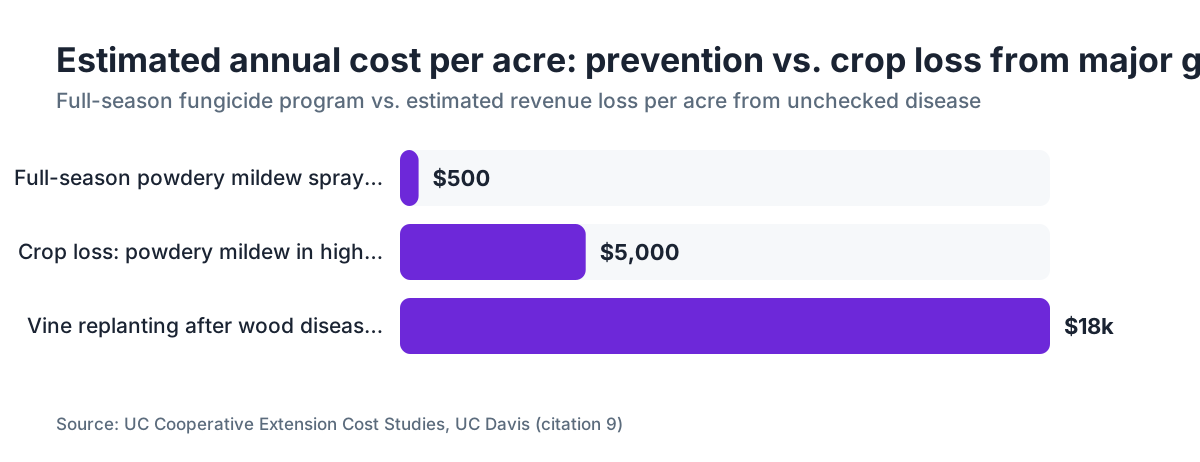
In a high-pressure powdery mildew year, a lost Cabernet Sauvignon crop at $2,000 per ton runs $5,000 to $10,000 in lost revenue per acre, depending on yield. A full-season powdery mildew program, materials and application, typically costs $300 to $700 per acre in the western U.S. per UC Cooperative Extension farm budget data [9]. Call it roughly 7:1 to 15:1 in favor of prevention.
Wood diseases hit harder, because the cost lands as vine removal and replanting, which runs $10,000 to $25,000 per acre for new vine establishment depending on region, trellis, and rootstock [9]. You wait 3 to 5 years after planting to see that money back.
Pierce's disease in high-pressure zones (Temecula, parts of the San Joaquin Valley) has pushed some growers to abandon whole varieties or blocks. UC Cooperative Extension farm advisor reports from Southern California document block removal costs in the hundreds of thousands of dollars for larger operations.
The honest caveat: nobody has clean data on average spray cost versus return across all U.S. wine grape regions, because conditions swing so widely. The UC figures are California-specific, Cornell has comparable budget tools for the Northeast, and WSU publishes enterprise budgets for Washington [3][9]. Pull the budget tools from your nearest extension program before assuming California numbers fit your site.
If you want to track spray costs by block and disease target, a record system that ties applications to variety and block lets you build real cost-per-ton data over time. VitiScribe is built around that block-level tracking, which makes pulling the actual numbers easier when replanting or chemistry budgets are on the table.
What resources are available for ongoing grapevine disease management?
The best free resources in the U.S. come from three university extension programs.
UC Davis's Agriculture and Natural Resources division (ucanr.edu) publishes the UC Pest Management Guidelines for grape, which cover every major disease with biology, monitoring protocols, and registered materials. For California growers, it's the most complete single reference out there [1].
Cornell Cooperative Extension's viticulture program covers the Northeast's specific pressure, especially black rot, downy mildew, and Botrytis, with guides written for Finger Lakes and Hudson Valley conditions. The NEWA weather-based disease modeling tool is genuinely useful for timing applications [4].
WSU Extension's viticulture program covers the Pacific Northwest, with guides calibrated to the dry Columbia Basin as well as the cooler, wetter conditions of western Washington and Oregon [3].
The American Journal of Enology and Viticulture (AJEV) publishes peer-reviewed disease research and is a reliable source for newer findings on resistance, biocontrol, and disease modeling.
For regulatory questions, the EPA's WPS page and your state department of agriculture are the authoritative sources. California growers also need the CDFA's Pierce's disease and GWSS monitoring resources [2][7].
If you manage multiple blocks with different varieties, disease histories, and spray programs, keeping those records in a searchable system matters more than any single fact in this guide. The best disease plan on earth won't help you in an audit, or next season, if you can't reconstruct what you did and when. Vineyards of every size benefit from that discipline, and the tools to do it are here now.
Frequently asked questions
What is the most common disease in grapevines?
Powdery mildew (Erysiphe necator) is the most widespread grapevine disease in U.S. vineyards. It affects nearly every wine grape region, spreads without free moisture (unlike downy mildew), and infects leaves, shoots, and berries. It's the most frequently sprayed-against pathogen in most programs and the one most likely to cause serious crop loss if you miss the bloom-period protection window.
How do I tell powdery mildew from downy mildew on grapevine leaves?
Powdery mildew looks like a white or gray powder on both upper and lower leaf surfaces and doesn't need rain to develop. Downy mildew makes pale, oily-looking spots on the upper surface with white, cottony fuzz underneath, and it only sporulates in wet, humid conditions. Flip the leaf over: fuzzy white growth means downy mildew. Powder on both sides with no associated wetness means powdery mildew.
Can you cure Eutypa dieback or Esca once a vine is infected?
No. There are no curative treatments for Eutypa dieback or Esca once the fungi are in the vine's structural wood. Regeneration pruning, cutting infected cordons back to clean wood, can stretch a vine's productive life and is worth doing on young infected vines or high-value blocks. Prevention through delayed pruning, wound sealants, and removing infected debris is the only reliable strategy.
What does Pierce's disease look like on grapevines?
Mid-summer symptoms include scorched leaf margins where the edge dries out while the center stays green. The diagnostic tell unique to Pierce's disease: when the leaf drops, the petiole (leaf stem) stays attached to the cane. Berries shrivel, and canes mature unevenly, with green sections next to brown bark. Symptoms usually start on a few leaves and spread through the vine over the following weeks.
What spray interval should I use for powdery mildew control?
Under moderate pressure, a 10- to 14-day interval with sulfur or a DMI fungicide is standard from budbreak through 4 to 5 weeks post-bloom. Under high pressure (hot dry weather, susceptible variety, a history of infection), shorten to 7-day intervals during bloom. After bunch closure, risk drops and you can usually extend intervals or stop most applications, though some programs run through veraison.
Are there organic-approved options for managing grapevine diseases?
Yes. Sulfur (wettable or dust) is the primary organic tool for powdery mildew and is broadly allowed under NOP rules. Copper hydroxide and copper sulfate are the main organic options for downy mildew. Bacillus subtilis (Serenade) has efficacy data for Botrytis and is NOP-allowed. Kaolin clay gives a physical barrier effect. Potassium bicarbonate works on powdery mildew. Always confirm materials are listed by your certifier before applying.
What records do I need to keep for vineyard pesticide applications?
Under the EPA Worker Protection Standard, keep records with the pesticide name, EPA registration number, application date, location, target pest, rate, and applicator information, and make them available to workers' designated representatives [6]. California growers also file Pesticide Use Reports with their county agricultural commissioner within a set period after each application. Most state ag departments have similar rules. Keep records at least 2 years; some states require longer.
How does weather affect grapevine disease risk?
Weather is the biggest driver. Powdery mildew thrives in warm, dry conditions between 50°F and 95°F with high humidity but no rain. Downy mildew needs rain events of at least 0.1 inch plus temperatures above 52°F. Botrytis spikes with high humidity around bloom and at harvest. Pierce's disease pressure tracks leafhopper vector populations, which peak in warm, irrigated landscapes. Use local forecasting tools like Cornell's NEWA to sharpen spray timing.
Which grapevine varieties are most susceptible to powdery mildew?
Cabernet Sauvignon, Chardonnay, Merlot, and Zinfandel are moderately to highly susceptible. Muscat varieties are among the most susceptible of all. Concord and other American (Vitis labrusca) grapes carry better natural tolerance because they co-evolved with the pathogen. Some interspecific hybrids bred from wild American Vitis species have meaningful powdery mildew resistance, but most Vinifera varieties are susceptible and need a full spray program.
When is the best time to prune to reduce wood disease infections?
Late dormancy pruning, 6 to 8 weeks before expected budbreak, consistently reduces Eutypa and Botryosphaeria infection rates compared to early-winter pruning. Spores that splash from rain and infected wood are less abundant late in winter, and wound susceptibility drops as the vine nears budbreak. Follow late pruning with wound sealant on cuts larger than a pencil in diameter for extra protection.
What is black rot of grapes and how do I manage it?
Black rot (Guignardia bidwellii) is a fungal disease common in eastern U.S. vineyards. It infects leaves, shoots, and berries, eventually mummifying fruit into hard, black masses that overwinter and spread the disease next season. Remove and destroy mummified berries before budbreak. Fungicide programs with myclobutanil, mancozeb, or captan, starting at budbreak and running through 3 to 4 weeks post-bloom, give good control. Cornell Extension has region-specific spray schedules.
What are the signs of Botrytis bunch rot versus other cluster diseases?
Botrytis (gray mold) produces gray, fuzzy sporulation on infected berries and clusters, often starting at a single berry injury and spreading through the bunch. In dry conditions it can appear as a brown, leathery rot with little visible sporulation. It's most common around bloom and near harvest after rain. Sour rot (a bacterial and yeast complex) smells strongly of vinegar. Aspergillus bunch rots produce black or green spore masses and favor hot climates.
Can grapevine diseases spread from vine to vine through tools or equipment?
Yes, though the risk varies by disease. Pruning tools can transmit crown gall (Agrobacterium tumefaciens) and potentially Eutypa spores on fresh cuts. Sanitizing shears between vines (a 10% bleach solution or commercial sterilants) is standard in blocks with known crown gall or wood disease pressure. Downy mildew, powdery mildew, and Botrytis spread mainly by airborne spores, not tools, though equipment moving wet plant material between blocks can carry inoculum.
What should I do if I suspect Pierce's disease in my vineyard?
First, confirm the diagnosis through your county farm advisor or UC Cooperative Extension. Look for the characteristic petiole staying attached after leaf drop. Send a sample to a diagnostic lab for PCR confirmation before removing vines. Contact your county agricultural commissioner, since many California counties have mandatory reporting or vector monitoring tied to the CDFA's PD-GWSS program. Remove and destroy confirmed infected vines to cut inoculum sources for vector insects.
Sources
- UC Agriculture and Natural Resources, UC IPM Pest Management Guidelines: Grape: Powdery mildew critical protection window runs from budbreak through 4 to 5 weeks after bloom; Botrytis FRAC rotation guidance; UC Statewide IPM Program WPS compliance resources
- California Department of Food and Agriculture, Pierce's Disease/GWSS Program: Pierce's disease costs California growers an estimated $56 million per year; glassy-winged sharpshooter vector biology; UC Davis resistant variety breeding program
- Washington State University Extension, Viticulture and Enology: FRAC group resistance management charts for Pacific Northwest; fruit zone leaf removal reduces Botrytis incidence by 30 to 50 percent in Washington state trials; WSU enterprise budgets for Washington vineyards
- Cornell Cooperative Extension, Viticulture and Enology Program: Downy mildew 10-10-10 infection rule thresholds; mefenoxam FRAC Group 4 resistance documented in eastern U.S. P. viticola populations; NEWA weather-based disease modeling tool; black rot management guides
- UC Davis Department of Plant Pathology, Grapevine Diseases: Eutypa dieback infection through pruning wounds; late dormancy pruning reduces wood disease infection; fanleaf degeneration nematode vector fallow period recommendation
- U.S. EPA, Worker Protection Standard (40 CFR Part 170): WPS requires application records with pesticide name, EPA reg number, date, REI, applicator; 2015 WPS revision effective 2017 added designated representative access and anti-retaliation provisions
- California Department of Pesticide Regulation, Pesticide Use Reporting: California growers must file Pesticide Use Reports with county agricultural commissioners; California pesticide record-keeping requirements beyond federal WPS
- USDA Agricultural Marketing Service, National Organic Program (7 CFR Part 205): NOP requires all applied materials to be on the National List of Allowed and Prohibited Substances; copper and sulfur are broadly allowed for organic grape production
- UC Cooperative Extension, Sample Costs to Establish and Produce Wine Grapes: Full-season fungicide program for powdery mildew runs approximately $300 to $700 per acre; new vine establishment costs $10,000 to $25,000 per acre depending on region and trellis system
Last updated 2026-07-09