Grapevine trellis systems: every major design compared
TL;DR
- A grapevine trellis system trains vines into a shape that controls canopy density, fruit exposure, and labor cost across 30 years.
- Most commercial blocks use one of five: VSP, Scott Henry, GDC, Geneva Double Curtain, or high-wire cordon.
- Choose wrong and you pay for it in years of corrective pruning.
- Vine vigor, row spacing, variety, and whether you'll mechanize harvest decide the right pick.
What is a grapevine trellis system and why does it matter?
A trellis system is the combination of posts, wires, and vine training pattern that holds a grapevine in a defined shape across its productive life. That shape controls almost everything downstream: how much sunlight hits the fruit zone, how air moves through the canopy, how crews or machines work the row, and how much the block costs to manage every year.
Get it wrong and you spend the next decade corrective pruning, fighting disease, and watching a block ripen unevenly that looked fine on paper. Get it right and a well-chosen system can trim spray passes, sharpen fruit composition, and cut hand-labor hours by 30 to 50 percent on high-vigor sites [1].
Cornell Cooperative Extension makes the point plainly: the best trellis system is the one that manages the canopy to optimize fruit and wine quality for a particular combination of variety, site, and training objectives [2]. That framing is exactly right.
This article walks through each major system, compares them on the dimensions that matter to field operations, and tells you what the real installation and maintenance costs look like.
What are the main types of grapevine trellis systems?
There are roughly a dozen named trellis configurations used commercially, but most growers pick from five or six. Here's the practical landscape.
Vertical Shoot Positioning (VSP) is the default in most cool-climate winegrowing regions and a large share of California coastal blocks. Canes or cordons grow horizontally, shoots train straight up between two or three sets of movable catch wires, and the canopy becomes a narrow vertical wall. It's the system most compatible with mechanical leaf removal, shoot thinning equipment, and over-the-row harvesters. VSP works best at moderate-to-low vine vigor. On high-vigor sites it produces a dense, shaded canopy that drives disease pressure and uneven ripening.
Scott Henry doubles the VSP shoot count by training alternating shoots upward and downward along the same cordon. That doubles the leaf area per vine without widening the row spacing. It's a good retrofit for a VSP block that turned out more vigorous than expected. The tradeoff is more hand labor at shoot positioning time and a slightly more complex pruning scheme.
Geneva Double Curtain (GDC) divides one vine's canopy into two downward-hanging curtains suspended from a wide T-top cross-arm, typically 48 to 60 inches wide [3]. Cornell developed GDC in the 1960s specifically for high-vigor American and hybrid varieties. It doubles canopy surface area relative to VSP on the same row spacing. It's close to mandatory for very high-vigor sites and works well with mechanical harvest, but it's nearly impossible to manage with a standard over-the-row harvester. You need a straddle machine.
High-wire cordon (also called high-wire Gobelet or hanging-cane systems in some regions) suspends cordons from a single top wire at 48 to 60 inches and lets shoots hang down. It's common in Zinfandel, Primitivo, and some Rhone varieties in warm climates. Post and wire costs are low. Shoot positioning is zero, which saves real labor dollars. The catch is that hanging shoots shade the fruit zone heavily, which is a feature in very hot regions (Lodi, San Joaquin Valley) and a problem in cooler ones [9].
Lyre (also called the U-system or open lyre) splits the cordon into two arms angled outward in a U-shape, creating two separate canopy walls per vine. It's a high-surface-area system that can sharply improve fruit quality on moderate-to-high vigor sites. The capital cost is the highest of any common system because of the specialized trellis hardware. It's more common in Bordeaux and some New Zealand operations than in most US vineyards, though Washington State University extension covers it for Pacific Northwest growers [4].
Single Guyot and double Guyot are cane-pruned systems where one or two canes replace the permanent cordon each year. Very common in Burgundy, Champagne, and increasingly in quality-focused US operations. Post and wire infrastructure is similar to VSP. Ongoing labor runs higher than cordon systems because you select and tie new canes every season, but many winemakers prefer the fruit character from cane pruning.
How do the main trellis systems compare on cost, labor, and performance?
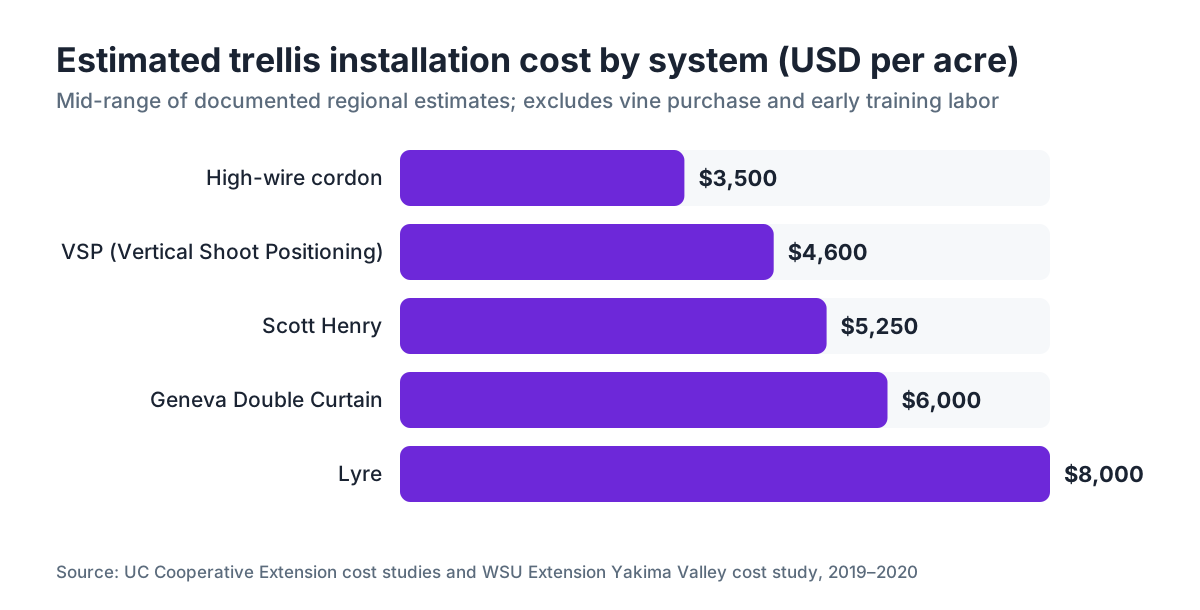
The five most commonly installed systems separate cleanly on the operational dimensions that matter. The table below summarizes them. Dollar ranges reflect US industry estimates from UC Cooperative Extension cost studies and WSU extension budgets [1][5]; actual costs vary by region, labor market, and terrain.
| System | Install cost (per acre, USD) | Wire tiers | Best vigor level | Mechanical harvest compatible | Relative hand-labor (post-install) |
|---|---|---|---|---|---|
| VSP | $3,500 to $6,000 | 4 to 6 | Low to moderate | Yes (over-row) | Moderate |
| Scott Henry | $4,000 to $6,500 | 6 to 8 | Moderate to high | Yes (over-row) | Moderate to high |
| Geneva Double Curtain | $4,500 to $7,500 | 2 (wide T-top) | High | Yes (straddle) | Moderate |
| High-wire cordon | $2,500 to $4,500 | 1 to 2 | Moderate to high | Yes (over-row or knocker) | Low |
| Lyre | $6,000 to $10,000+ | 4 to 6 per arm | Moderate | Limited | High |
Installation costs cover posts, end assemblies, anchor hardware, and wire, but not vine planting or training labor in the first two to three years. On steep terrain add 20 to 40 percent. Post spacing matters too. VSP blocks typically run line posts every 18 to 24 feet and end posts every 20 to 24 feet with proper bracing.
Skimping on end-post depth and bracing is the most common installation mistake. A poorly anchored end assembly pulls in within two to three vintages on a loaded cordon.
A 2019 UC Cooperative Extension cost study for North Coast wine grapes put VSP installation for a new Cabernet Sauvignon block at roughly $5,200 per acre for trellis materials and installation labor alone, before vine purchase or the first three years of training [5].
How do you choose the right trellis system for your variety and site?
Start with vigor. This one factor eliminates more options than anything else. If your soil is deep, water-holding clay and your rootstock is 110R or 1103P, you're likely growing a high-vigor vine. VSP will give you a wall of shade and a disease incubator. GDC, Scott Henry, or another divided canopy will do better.
Variety matters because vine architecture interacts with shoot growth habit. Pinot Noir is naturally semi-erect and behaves well in VSP. Zinfandel on deep valley floor soils can get wildly vigorous, which is why many Lodi growers run it on high-wire cordon: the system suits that growth habit and cuts labor [9]. Chardonnay is versatile enough to train nearly any way, so you see it in VSP in Sonoma, GDC in some upstate New York plantings, and Scott Henry retrofits in parts of Washington.
Climate is the other filter. In hot, high-radiation regions (Central Valley, southern Rhone equivalents), fruit shade is a quality asset. Hanging shoot systems and high-wire cordons deliver that shade naturally. In cool, cloudy climates (Willamette Valley, Finger Lakes, most of Germany), you want maximum light interception, which pushes you toward VSP or Scott Henry with a more open canopy.
Ask yourself honestly whether you'll mechanize at scale. If you're under 20 acres and plan to hand-harvest forever, the mechanical compatibility question is academic. But if there's any chance you'll own or contract an over-the-row harvester in the next ten years, design for it now. Changing trellis height or converting from a divided canopy to a single canopy after vines are established is expensive and hard on the vines.
Row orientation and spacing interact with trellis choice too. East-west rows with VSP in the northern hemisphere maximize afternoon shade on the fruit zone, which helps in hot climates but cuts total light interception in cool ones. North-south rows with VSP maximize midday sun on both sides of the canopy. WSU Extension's trellis planning resources walk through the geometry in detail for Pacific Northwest conditions [4].
What are the post and wire specifications for a standard VSP trellis?
VSP is the reference system most growers start from, so the hardware is worth spelling out. Line posts are typically 8-foot treated wood posts (6 to 8 pounds per cubic foot CCA or equivalent pressure treatment) or steel T-posts, set 24 to 30 inches in the ground and spaced 18 to 24 feet apart in-row. End posts need to be heavier: typically 10-foot treated posts set 36 inches deep, with a dead-man anchor, outrigger brace, or diagonal brace post.
Skipping proper end-post anchoring is the most expensive shortcut in vineyard establishment.
Wire gauge and type: the fruiting wire (lowest permanent wire, at 36 to 42 inches from the soil) is typically 12.5-gauge high-tensile wire (about 200,000 psi tensile strength). Catch wires above the fruiting zone are often 14-gauge or smooth-wire options, since they carry less load. High-tensile wire has to be tensioned properly. Too loose and wires sag under crop load; too tight and posts torque. Most suppliers recommend 150 to 200 pounds of tension on the fruiting wire.
A standard 4-wire VSP setup runs from the bottom up: one fruiting wire at 36 to 42 inches, then two sets of movable catch wires (a lower pair and an upper pair) at roughly 18-inch intervals above that, topping out around 72 to 78 inches total trellis height. Some growers add a fifth wire for shoot tips. Taller trellis heights raise labor cost at shoot positioning and topping but add leaf area per vine.
Aluminum wire shows up in some regions because it doesn't rust and handles easily, but it has lower tensile strength than high-tensile steel and stretches more over time. For the fruiting wire, most commercial operations stick with high-tensile galvanized steel.
How does trellis design affect disease pressure and spray coverage?
Canopy density is the most direct link between trellis design and disease management. Botrytis, powdery mildew, and downy mildew all thrive in dense, humid canopies. A poorly designed or overcropped VSP block in a wet year can create disease conditions that no spray program fully corrects.
A dense canopy also cuts spray penetration. If your airblast sprayer can't push droplets to the cluster zone because the shoot wall is too thick, fungicide coverage on the inner leaves and fruit is poor no matter the application rate. This matters directly for compliance. The EPA Worker Protection Standard requires you to keep spray records and re-entry interval documentation, but paperwork can't fix coverage lost to canopy architecture [6].
Open-canopy systems like GDC and Lyre tend to reduce fungicide requirements on susceptible varieties. Cornell canopy research links improved light distribution in divided-canopy systems to lower Botrytis bunch rot incidence compared to high-density VSP on the same site [2]. The mechanism is partly direct (better spray penetration) and partly indirect (drier microclimates in the cluster zone).
The system you're on also shapes how you read efficacy. If you're seeing breakthrough disease despite correct rates, check canopy density before you change your spray program. Leaf removal in the fruit zone is a partial fix, but it doesn't replace a genuinely open canopy on a high-vigor site.
This is where field records earn their keep. Tracking spray passes, application rates, REIs, and canopy events (shoot thinning dates, leaf removal records) in one place makes it far easier to correlate disease outcomes with canopy decisions across vintages. Tools like VitiScribe are built for exactly that kind of vineyard-level recordkeeping.
How do you train young vines onto a trellis in the first three years?
Year one is mostly root establishment. Most advisors recommend removing all flowers the first season and getting one or two strong shoots established as the future trunk. Tie a single shoot vertically to a bamboo stake or a string running to the fruiting wire. Keep it straight. Don't let it flop.
Year two, assuming a healthy vine, you're establishing the cordon or selecting canes. For a bilateral cordon system (VSP or high-wire), the goal is two cordon arms growing in opposite directions along the fruiting wire by the end of the second growing season. Some growers hit bilateral cordon establishment by end of year two; others need a third year, especially in cool climates or after a poor establishment year.
Year three in most commercial plantings is the first crop year, though many growers delay full crop load until year four to avoid stressing young root systems. In very short-season climates, trunk establishment alone can take three years before cordon training even begins.
A few operational points that trip up newer growers. Don't rush trunk height. The trunk height you set in year one is what you live with for 30 years. Think about your harvester head clearance, your under-vine management, and your back when you're tying canes. Most VSP systems target a trunk height of 30 to 42 inches to the fruiting wire. High-wire cordons typically run 48 to 54 inches.
Use proper tying material too. Soft biodegradable ties work fine for young shoot training. On permanent cordons, cross-wire ties or grafting tape beat tight synthetic twine that girdles the trunk over time. Girdled trunks from old ties are a surprisingly common problem in blocks that were well-established and then neglected.
Can you retrofit or convert an existing trellis to a different system?
Sometimes. The answer depends on what you're starting with and where you want to end up.
Converting from VSP to Scott Henry is the most common retrofit and the most practical. The existing posts and wire can often stay; you add wire tiers for the downward-trained shoots and retrain half the cordons downward. UC Cooperative Extension has documented successful conversions within two to three seasons [1]. It's disruptive but not vine-killing if you do it carefully.
Converting from a single-canopy system to GDC or Lyre is harder because it needs either new posts at different spacing or T-top cross-arm additions to existing posts. If your posts aren't positioned for the T-top geometry (usually centered on a wider row), you may have to add posts. That's not cheap, and it temporarily disrupts the vine training.
Going the other direction, from a divided canopy to VSP, usually means removing cross-arms or retraining from two cordons to one. You'll almost certainly need to trunk-chop or heavily rework the vine architecture, which sets you back a year or two of production.
Before any retrofit, run a realistic cost-benefit calculation. The labor and vine disruption cost of a full conversion runs $1,500 to $3,000 per acre before material changes. On a small block with only a few years of vine age, conversion is reasonable. On a mature 15-year-old block with significant cordon investment, the bar is higher.
What are the real installation and annual maintenance costs of a vineyard trellis?
Real numbers help. The UC Cooperative Extension 2019 cost study for a new North Coast Cabernet Sauvignon planting put trellis material and installation at roughly $5,200 per acre for a standard VSP system [5]. That figure includes treated wood posts, end assemblies, high-tensile wire, staples and clips, and installation labor, but not vineyard preparation or vine planting.
In the San Joaquin Valley, where labor costs run somewhat lower and terrain is flatter, similar studies put VSP trellis installation closer to $3,500 to $4,500 per acre. In Washington State's Yakima Valley, WSU Extension's 2020 wine grape cost study estimated trellis establishment at $3,800 to $5,500 per acre depending on system complexity [10].
Annual maintenance is harder to pin down because it swings so much with vine age and post quality. Budget $150 to $350 per acre per year for wire retensioning, broken post replacement, staple and clip replacement, and catch-wire management. Older vineyards on original untreated wood posts (pre-1990 blocks especially) often run higher, because post replacement becomes a recurring cost.
Wire alone is a real line item. A standard VSP block uses 1,000 to 1,500 feet of fruiting wire per acre (accounting for row length and multiple passes). At current prices for 12.5-gauge high-tensile galvanized wire (roughly $0.04 to $0.07 per foot in bulk), wire material for a new acre runs $50 to $110 just for the fruiting wire tier, before catch wires.
End-post assemblies are the expensive hardware. A properly braced end assembly with a dead-man anchor or tension brace runs $80 to $180 in materials per assembly. A typical acre has 8 to 12 end assemblies depending on row count.
How do trellis systems interact with mechanical harvest?
If you plan to mechanically harvest, trellis design is arguably the most important equipment compatibility decision you make at establishment.
Over-the-row harvesters straddle a single-plane canopy wall and shake the fruit free with oscillating rods or beaters. VSP and single-canopy high-wire systems work with this equipment as long as the trellis height clears the harvester head. Most modern over-the-row harvesters need a minimum clearance of about 72 to 84 inches from soil to top wire and a canopy width no wider than 18 to 24 inches. If your catch wires flare out too far, the rods miss fruit or tear up the trellis.
GDC and Lyre are divided-canopy systems, so they need straddle harvesters that work two separate canopy planes at once. These machines exist and work well, but they're less common and cost more to rent or own. Not all custom harvest contractors have them. In regions where custom harvesting is the norm (much of California's Central Valley), confirm your local contractors can actually handle your system before you build it.
Scott Henry works with over-the-row harvesters, though some operators report the downward-trained shoots drop more leaf and stem material into the picking bin. A good fan system on the harvester handles that.
Post and wire height decide harvester head clearance. If you establish trunks at 30 inches and a fruiting wire at 36 inches with a 42-inch total trellis height, no over-the-row harvester will fit. Plan for a minimum 72-inch total trellis height if mechanical harvest is a future option.
What record-keeping is required for trellis and vineyard infrastructure?
Trellis systems themselves don't carry direct regulatory paperwork the way pesticide applications do. But they sit inside a broader recordkeeping environment that vineyard operators have to manage.
For spray applications in the canopy, the EPA Worker Protection Standard under 40 CFR Part 170 requires that workers and handlers get specific information about pesticide applications, including re-entry intervals, and that application records be kept for two years [6]. Canopy architecture affects spray coverage and therefore REI compliance, as covered earlier.
Many states add their own pesticide use reporting on top of WPS. California requires a Pesticide Use Report filed with the county agricultural commissioner for every application, and the report has to include the crop stage and application equipment used [7]. Oregon and Washington run similar requirements under their state departments of agriculture.
GAP (Good Agricultural Practices) certification and organic certification audits often ask for vineyard maps that show trellis system type, post material (for CCA treatment records), and spray application records tied to block identifiers. Keeping these records in a structured format matters when audit time arrives.
For operators running multiple blocks across different trellis systems, a tool that ties block-level trellis data to spray records, canopy management notes, and harvest data is genuinely useful. VitiScribe is built around that field-operations and compliance workflow, and a trial is free if you want to see how it handles multi-block trellis documentation.
What are the common mistakes growers make when installing or managing a trellis?
The end-post anchoring mistake already came up, but it's worth repeating: inadequate end-post depth and bracing is the most common structural failure in new vineyard trellis installations. An end assembly that pulls in over three or four years cascades tension problems down an entire row.
Second most common: setting trunk height too low. First-time growers routinely underestimate how much clearance they need for equipment, under-vine management, and their own backs. Set it at 30 to 36 inches minimum. Forty-two inches is better if you'll ever run a mechanical weeder or harvester.
Third: choosing a system by what the neighbors do instead of what the site demands. VSP is the default across much of California because it works well on moderate-vigor coastal sites. Planting a high-vigor variety on deep valley floor soil and training it VSP because that's what the local contractor knows how to install is a path to expensive corrective work.
Fourth: using inadequate wire gauge or the wrong wire type on the fruiting wire. Standard low-carbon soft wire (the kind sold at general farm supply stores) doesn't have the tensile strength for a loaded fruiting wire and will stretch and sag under crop weight within a season or two. High-tensile wire rated for trellising is worth the premium.
Fifth: over-spacing posts on steep slopes. Post spacing that works fine on flat ground allows too much wire sag and lateral movement on hillside terrain. On slopes over 10 percent, tighten post spacing to 15 to 18 feet and increase post diameter. The extra material cost is small next to the cost of replacing a failed trellis on a hillside block.
Frequently asked questions
What is the cheapest grapevine trellis system to install?
High-wire cordon is usually the lowest-cost option, running $2,500 to $4,500 per acre installed in most US regions, according to UC and WSU extension cost studies. It uses fewer wire tiers than VSP and needs no catch-wire management. The tradeoff: it works best for high-vigor varieties in warm climates and casts heavy fruit-zone shade, which isn't right for every site or variety.
How long do vineyard trellis posts last?
Pressure-treated wood posts rated for ground contact (CCA or equivalent) typically last 20 to 30 years in most soil conditions, though wet, acidic soils shorten that range. Untreated posts rot in 10 to 15 years. Galvanized steel T-posts can last 30 to 50 years, though they corrode faster in high-salt coastal soils. Plan for periodic replacement as a maintenance budget line even in well-established blocks.
Can the same trellis system work for both Pinot Noir and Cabernet Sauvignon?
VSP works for both in most cool to moderate-vigor situations, which is why it dominates on the US West Coast and in the Northeast. The real variable is vigor, not variety. If you're growing Cabernet on a high-vigor rootstock in deep soil, you may need a divided canopy regardless of what Pinot Noir in the same region uses. Let site assessment drive the decision more than variety.
What trellis wire gauge should I use for the fruiting wire?
12.5-gauge high-tensile galvanized steel wire is the standard for fruiting wires in commercial vineyards. Its tensile strength runs around 200,000 psi, which handles a full crop without significant stretch. Heavier gauge (11 or 10 gauge) sometimes goes on very long rows or high-crop-load situations. Standard soft steel wire from farm supply stores is not appropriate for the fruiting wire position.
How does the Geneva Double Curtain trellis system differ from VSP?
GDC uses a wide T-top cross-arm (48 to 60 inches wide) to support two separate downward-hanging canopy curtains from one vine, roughly doubling canopy surface area per row. VSP trains all shoots upward in a single vertical wall. GDC performs best on high-vigor sites where VSP would create an unmanageably dense canopy. It needs a straddle harvester for mechanical harvest rather than the over-the-row machines that suit VSP.
What is Scott Henry trellis training and when should I use it?
Scott Henry is a divided-canopy system that trains alternating shoots upward and downward from a single cordon, doubling the shoot count in the same row spacing. It's the most practical retrofit for VSP blocks that turned out more vigorous than expected. Expect higher shoot-positioning labor than VSP. It works with over-the-row harvesters, which makes it more practical for larger operations than GDC or Lyre.
How deep should vineyard trellis end posts be set?
End posts should sit a minimum of 36 inches deep, with 42 inches preferred in sandy or friable soils. Line posts typically set 24 to 30 inches deep. End posts carry the entire tension load of the row, so depth and bracing matter far more than for line posts. A properly built end assembly with a dead-man anchor or diagonal compression brace beats post depth alone on soft soils.
Does trellis system choice affect wine quality or just yield?
Both, and the mechanisms connect. Canopy architecture sets how much direct sunlight reaches the fruit, which influences berry temperature, flavonoid synthesis, and acid metabolism. Cornell and UC Davis research both link open-canopy systems to improved fruit composition on moderate-to-high vigor sites [8]. The effect is strongest with red wine varieties where phenolic ripeness matters. On naturally low-vigor sites with well-managed VSP, the quality gap between systems narrows considerably.
How does row spacing interact with trellis system selection?
Wider row spacing gives you more room to use divided-canopy systems like GDC or Lyre, which need horizontal space for their cross-arms. VSP works from about 6 feet between rows upward. GDC typically needs 9 to 12 feet between rows to allow equipment access alongside the T-top structure. Very narrow spacing (under 5 feet) locks you into single-curtain systems. Row spacing is expensive to change once set, so plan trellis and spacing together.
What spray application records do I need to keep for a vineyard trellis operation?
The trellis itself requires no records, but every pesticide application in the canopy does. The EPA Worker Protection Standard (40 CFR Part 170) requires records kept for two years covering pesticide product, application date, treated area, and re-entry interval. California adds mandatory Pesticide Use Reports filed with the county agricultural commissioner. Oregon and Washington run similar state-level requirements. Organic-certified operations also need records of inputs used around posts and trellis hardware.
Can I use rebar or electrical conduit instead of T-posts for a small vineyard?
Rebar shows up in very small hobby plantings, but it rusts fast, has no flange for wire attachment, and is mechanically inadequate for any real crop load. Electrical conduit is worse. For any planting where you want a 20-plus year productive life, use proper treated wood posts or galvanized steel T-posts rated for agricultural fencing. The cost difference per post is small; the difference in trellis life is enormous.
How does trellis height affect mechanical harvesting compatibility?
Most over-the-row harvesters need 72 to 84 inches of clearance from soil to top wire and a canopy width no wider than 18 to 24 inches. If your total trellis height is under 72 inches, standard over-the-row harvesters won't fit. Divided-canopy systems like GDC need specialized straddle harvesters. Set trunk height and total trellis height at establishment with your likely harvest method in mind. Changing it after the fact is expensive.
What is the typical lifespan of a vineyard trellis system?
A properly installed trellis with treated wood posts should function for 25 to 35 years, roughly matching the productive lifespan of the vineyard itself. Wire lasts the full life of the vineyard if you use high-tensile galvanized steel and retension it periodically. Post replacement on a rolling basis starts around year 20 to 25. End assemblies, which bear the most mechanical stress, may need refurbishment or replacement at 15 to 20 years in high-tension configurations.
Sources
- UC Cooperative Extension, Sonoma County, Vineyard Canopy Management: Improved canopy management can reduce hand-labor hours by 30 to 50 percent on high-vigor sites; VSP to Scott Henry conversion documented within two to three seasons.
- Cornell Cooperative Extension, Training and Trellising Grapevines: No single system is universally superior; the best trellis is the one that manages canopy to optimize fruit and wine quality for a particular combination of variety, site, and training objectives. Divided canopies reduce Botrytis incidence relative to dense VSP.
- Cornell University, Geneva Double Curtain (GDC) development documentation: GDC T-top cross-arms are typically 48 to 60 inches wide; developed at Cornell in the 1960s for high-vigor American and hybrid varieties.
- Washington State University Extension, Vineyard Establishment and Trellis Systems: WSU Extension covers Lyre and other divided-canopy systems for Pacific Northwest conditions; row orientation and geometry guidance for trellis planning.
- UC Cooperative Extension, Sample Costs to Establish a Vineyard and Produce Wine Grapes, North Coast, 2019: Trellis material and installation for a VSP North Coast Cabernet Sauvignon block estimated at approximately $5,200 per acre.
- U.S. EPA, Worker Protection Standard (WPS) for Agricultural Pesticides, 40 CFR Part 170: WPS requires workers and handlers receive pesticide application information including re-entry intervals and that records be kept for two years.
- California Department of Pesticide Regulation, Pesticide Use Reporting: California requires Pesticide Use Reports filed with the county agricultural commissioner for every application, including crop stage and application equipment.
- UC Davis Viticulture and Enology, Trellis and Training Systems: Canopy architecture determines sunlight exposure to fruit, influencing flavonoid synthesis, berry temperature, and acid metabolism; open-canopy systems linked to improved fruit composition on moderate-to-high vigor sites.
- UC Cooperative Extension, High-Wire Cordon and Lodi Zinfandel production practices: High-wire cordon is common for Zinfandel in warm climates including Lodi and San Joaquin Valley; hanging shoot architecture reduces shoot-positioning labor.
- WSU Extension, 2020 Sample Costs and Returns for Establishing and Producing Wine Grapes, Yakima Valley: WSU 2020 wine grape cost study estimates trellis establishment at $3,800 to $5,500 per acre in the Yakima Valley depending on system complexity.
Last updated 2026-07-09