Grapevine trunk diseases: what they are, how they spread, and what actually works
TL;DR
- Grapevine trunk diseases are a group of fungal infections, mainly Eutypa dieback, Botryosphaeria dieback, Esca, and Phomopsis cane and leaf spot, that colonize woody tissue and progressively kill vines.
- They're the leading cause of early vine death worldwide, with no cure once established.
- Prevention at pruning time, when wounds are the entry point, is the only reliable strategy.
What are grapevine trunk diseases and why do they matter so much?
Grapevine trunk diseases are a complex of fungal and fungal-like infections that attack the permanent woody structure of the vine: the trunk, cordons, spurs, and arms. They don't behave like foliar diseases that come and go with the season. They move into wood, colonize vessels, produce toxins, and slowly (sometimes quickly) kill the vine from the inside out.
The economic toll is real. A 2014 study estimated losses to grapevine trunk diseases in California alone at roughly $260 million per year, counting lost production, replacement costs, and shorter vine life [1]. Global estimates run much higher. UC Davis Plant Pathology has described trunk diseases as the biggest threat to the long-term survival of established vineyards worldwide [2].
Four main disease complexes cause the bulk of the damage:
- Eutypa dieback (caused by Eutypa lata and related species)
- Botryosphaeria dieback (a family of Botryosphaeriaceae species)
- Esca / Petri disease (Phaeomoniella chlamydospora, Phaeoacremonium species, and wood-rotting Basidiomycetes)
- Phomopsis cane and leaf spot (Diaporthe ampelina)
They often occur together in the same vine, which makes diagnosis harder and management messier. A vine showing poor shoot growth on one arm could have Eutypa, Botryosphaeria, Esca, or some mix of all three. You won't know without cutting wood and reading the internal discoloration pattern.
The core problem is timing. By the time you see foliar symptoms like stunted shoots, yellow or brown leaf margins, or sparse berry set, the wood has been colonized for years. You're always reacting to an infection that happened two to five growing seasons ago [2].
What are the main trunk disease pathogens and how do they differ?
Each pathogen has its own biology, and the differences matter for management. Lumping them all together as "trunk disease" is fine for casual talk but too coarse for decisions in the vineyard.
Eutypa lata produces spores (ascospores) that release from fruiting bodies on infected wood during rain events, fall through spring. The spores travel on wind and water, land on fresh pruning wounds, germinate, and grow into the wood. From there the fungus creeps toward the crown, slowly choking off vascular function. Eutypa is the best-studied trunk disease pathogen; UC Davis researchers documented its spore release biology in detail starting in the 1980s [2]. Infected cordons show a distinct wedge-shaped internal necrosis when you cut across them.
Botryosphaeriaceae species (Neofusicoccum parvum, Lasiodiplodia theobromae, and about 30 others globally) are opportunists. They're common environmental fungi, often latent in bark, and they wake up under stress: drought, heat, freeze damage, or anything that weakens the vine's defenses. Their wood necrosis tends to be dark brown to black, often with a water-soaked margin. In warm-climate regions, Botryosphaeria dieback is frequently the dominant trunk disease, including in desert-adjacent viticultural areas like southeastern Arizona [3].
Esca is really two related syndromes. Petri disease is the young vine form, caused mainly by Phaeomoniella chlamydospora and Phaeoacremonium minimum, which colonize vessels and produce black gummy deposits that block water flow. Classic Esca in older vines brings in wood-rotting Basidiomycetes (mostly Fomitiporia mediterranea) that turn the interior wood into a soft, white spongy rot. Foliar symptoms in Esca are striking: interveinal chlorosis or necrosis in a very regular pattern that looks almost painted on. In severe cases, vines can collapse across all green tissue within a few days, a phenomenon called "apoplexy."
Phomopsis cane and leaf spot (Diaporthe ampelina) is the most common early-season trunk disease pathogen. It spreads during cool, wet springs and causes brown lesions on young shoots and leaves. In wet years it can wreck young plantings. Chronic Phomopsis infection contributes to internal cane necrosis and drops the vigor and longevity of infected cordons.
| Disease | Primary Pathogen | Main Entry Point | Visible Symptom Lag | Warm-Climate Risk |
|---|---|---|---|---|
| Eutypa dieback | Eutypa lata | Pruning wounds | 2-5 years | Moderate |
| Botryosphaeria dieback | Neofusicoccum spp. | Pruning wounds, stress | 1-3 years | High |
| Esca / Petri disease | Ph. chlamydospora | Pruning wounds, nursery | 3-7 years | Moderate-High |
| Phomopsis cane & leaf spot | Diaporthe ampelina | Young shoot tissue | Same season | Low-Moderate |
How do these diseases spread from vine to vine?
Pruning wounds are the primary infection court for all of the major trunk diseases except Phomopsis foliar infection. That single fact is the foundation of every management program that works.
Eutypa lata produces spore-releasing fruiting bodies (perithecia) on dead infected wood. Those fruiting bodies can persist and shed spores for years. Rain triggers spore release, and wind does the rest. A study by Trouillas and Gubler (2010) found Eutypa spores can travel more than 1,000 meters from a source, which means infected wood in a neighboring property (or in old posts and stakes) can seed your block [2].
Botryosphaeriaceae species produce both sexual and asexual spores that release during wet periods, but many of these fungi also sit asymptomatically in bark and bud tissue and activate when the vine is stressed. That's why Botryosphaeria dieback spikes after drought years, late freezes, or other pathogen damage. The stress doesn't have to be dramatic. A summer water deficit too mild to wilt leaves can still knock down the vine's ability to wall off a latent infection.
Esca pathogens enter almost entirely through pruning wounds, but infected nursery stock is a second route. Petri disease shows up in young vines that were never properly managed in the nursery, and there's good evidence that some of the worst Esca epidemics in Europe started with contaminated planting material rather than field spread [4].
Phomopsis spreads differently. The conidia (asexual spores) release from infected canes during wet spring weather and splash onto young green tissue. That's closer to a traditional foliar disease in its season-to-season spread, even though the underlying trunk infection is chronic.
What do trunk disease symptoms look like in the field?
Symptom recognition is harder than most references make it sound. Different diseases produce overlapping foliar signs, and the same vine often carries multiple pathogens.
The clearest diagnostic tool isn't foliar symptoms at all. It's cutting. Grab a hand pruner or saw, cut a symptomatic cordon cross-section, and read the wood inside. Eutypa produces a dark brown wedge-shaped necrosis, usually with a sharp margin and sometimes a yellowish zone around the dead area. Botryosphaeria produces dark brown to black necrosis, often more sector-shaped, sometimes with a water-soaked look at the advancing edge. Esca / Petri shows black gummy deposits in vessels, visible as dark streaks or spots on a cut surface. Fomitiporia-associated wood rot looks like white, spongy decay in older cordons or trunks.
Foliar symptoms by disease:
- Eutypa: stunted, chlorotic shoots with small, distorted leaves, sometimes cupped or scorched. Only some arms are affected while others grow normally. Berry set is poor on affected arms.
- Botryosphaeria: similar to Eutypa but often more sudden. Dead arm symptoms (black streaking up canes, poor shoot growth) are common.
- Esca: the "tiger stripe" pattern is classic, interveinal necrosis or chlorosis in very regular bands between veins, giving a striped or spotted look. Apoplexy (sudden total vine collapse) is dramatic when it happens.
- Phomopsis: dark elliptical lesions at the base of young shoots in spring, sometimes with a yellow halo. Infected internodes turn tan to brown. Leaves show small yellow spots with dark centers.
A vine can carry mild, non-specific symptoms for years before a grower investigates. If you see uneven growth across a block with no obvious irrigation or nutrition cause, cutting cordons is the fastest path to a real answer.
What conditions make trunk diseases worse, and is climate a factor?
Warm, wet winters plus extended pruning seasons create the highest infection risk for Eutypa and Botryosphaeria. The longer a wound stays fresh, the longer it's open to attack. UC Davis extension guidance notes that Eutypa wound susceptibility stays high for 24 to 72 hours after pruning under wet conditions, and wounds can stay partly susceptible for weeks in some environments [2].
Hot, dry climates don't wipe out trunk diseases. They shift the dominant pathogen. In regions with warm, dry summers and mild, wet winters, Eutypa is still the main threat during the wet season. But in desert-adjacent regions, Botryosphaeria dieback tends to dominate because the stress response it exploits is more common [3]. Research from southern Spain and from studies of California's Central Valley has consistently shown higher Botryosphaeria prevalence where summer temperatures run extreme.
The term "grapevine trunk diseases Tucson" isn't a formal research classification, but Arizona's warm desert climate does put southwestern vineyards at elevated Botryosphaeria risk. University of Arizona Cooperative Extension has flagged this in its vineyard management guidance [3].
Frost and freeze events pile on. A hard freeze that cracks bark creates new infection courts on wood that wasn't recently pruned. That's one reason severe winter damage in the Midwest and mountain west can trigger Botryosphaeria outbreaks even where pruning hygiene was good.
Nursery source matters more than most growers realize. Studies of young vines in Europe found that 80 percent or more of vines sourced from commercial nurseries carried at least one trunk disease pathogen before planting [4]. That's a problem you bring to the field, not one you pick up there.
How do you prevent grapevine trunk diseases at pruning?
Pruning is both the main infection event and the main prevention opportunity. Every cut is a potential entry point, and everything practical about prevention comes down to shortening how long that window stays open.
Timing. Delayed pruning cuts Eutypa infection risk because the vine's growth stage at pruning changes wound susceptibility. The more buds are pushing, the faster wounds dry and callus over. The WSU (Washington State University) extension program on grapevine trunk diseases recommends holding off until mid-dormancy has passed and bud swell is starting, accepting some operational hassle to cut infection risk [5]. Worth considering if you're in a region with wet springs.
Double pruning. Leave a longer cane than you need during winter pruning, then come back and make your final cut in spring after the risk period passes. The temporary cane tissue takes the infection hit, and you remove it before the pathogen advances into permanent wood. Research from UC Davis supports this as an effective reduction strategy, though it doubles your pruning labor on affected blocks [2].
Wound protectants. This is where the product picture gets muddy. Only a few materials have solid evidence behind them:
- Topsin-M (thiophanate-methyl) is the most studied and has documented efficacy against Eutypa and Botryosphaeria when applied right after cutting [6].
- Vitiseal and similar acrylic-based pruning sealants have variable data. Some trials show benefit for physical wound protection; they're not fungicidal but they narrow the window of exposure.
- Luna Experience (fluopyram + tebuconazole) has newer registrations and some positive trial data for trunk disease wound protection [6].
- Biological products like Serenade (Bacillus subtilis) have shown some efficacy in trials but consistently trail synthetic fungicides. Fine as a piece of a program, not as the only product.
The window matters as much as the product. A wound protectant applied the same day as pruning beats one applied 48 hours later by a wide margin, whatever product you use [2].
Pruning cut placement. Leaving a short stub (one to two nodes) instead of cutting flush with the cordon arm reduces the chance that advancing necrosis reaches permanent wood. Flush cuts look cleaner but hand the pathogen a shorter path to where it hurts.
If you track wound protectant applications as part of your spray records, keep a timestamped log tied to each pruning event. It's good compliance practice and it's the only way to judge what's working. Tools like VitiScribe can tie spray records directly to block-level pruning dates, so the evidence is there if a pesticide inspector asks or you want an efficacy review.
Can you treat an infected vine, or is it a write-off?
There is no systemic fungicide that cures established trunk disease. Once the pathogen is inside the wood, no spray program kills it. That's the hard truth, and it's why prevention is the only reliable approach.
What you can do is surgery.
Cordon removal and retraining is the standard corrective move when infection is limited to one cordon or arm. You cut below the visible necrosis, confirm you're in clean wood by reading the cut face, and retrain a new shoot from that point. This works if the infection hasn't reached the trunk. If trunk necrosis is present, you'll cut and keep finding dead tissue, and eventually you're looking at a vine that needs full replacement.
Trunk renewal goes further. You cut the trunk at or near the soil line, pick a vigorous sucker or basal shoot, and retrain from scratch. The root system is intact and can push rapid regrowth. It's more aggressive but often the right call when a vine is 10 to 15 years into a productive life with heavy trunk symptoms. A well-executed trunk renewal can add another decade or more.
"Curettage" is a technique developed in France and now practiced in some California and European vineyards, where infected wood is physically gouged out with specialized tools, leaving healthy wood behind. It sounds brutal, and it is, but some trials show that removing all visibly infected wood and letting the wound callus can reduce symptom expression in later seasons [7]. It's labor-intensive and not widely adopted in commercial U.S. vineyards, but it's worth knowing about.
One thing I'd say straight: don't keep an infected vine in the block past the point where it's paying its way. A vine with heavy trunk necrosis producing half a normal crop is also sitting there as a pathogen reservoir. Pull it, fumigate the hole if your local rules allow and the economics support it, and replant with certified material.
What pesticide labels and regulations apply to trunk disease products?
Wound protectants used for trunk disease prevention are registered pesticides under federal law, and their use falls under the EPA and state departments of agriculture. The EPA Federal Insecticide, Fungicide and Rodenticide Act (FIFRA) requires that you follow the label exactly. In the U.S., the label is the law [8].
For restricted-use pesticides, you need a licensed applicator or a certified private applicator license depending on your state. Most wound protectants used for trunk disease (thiophanate-methyl products, some triazoles) are general-use, but always check current label status in your state before buying.
Worker Protection Standard (WPS). The EPA's Worker Protection Standard (40 CFR Part 170) applies to any agricultural worker or handler who could be exposed to pesticides [9]. For pruning crews applying wound protectants or working in recently treated vineyards, the WPS requirements include:
- Providing safety training before work begins
- Posting treatment information (product name, REI, location) at a central location
- Providing required personal protective equipment (PPE) per the label
- Observing restricted entry intervals (REI) before workers re-enter treated areas
Thiophanate-methyl labels typically carry a 12-hour REI. Luna Experience has a 12-hour REI as well. Check the current registered label on the EPA's Pesticide Product Label System for exact figures, since REIs can change with label revisions [8].
Record-keeping requirements. Under California's Pesticide Use Reporting (PUR) system, all pesticide applications (including wound protectants) must be reported to your County Agricultural Commissioner within one month of application [10]. Most other states have their own record-keeping mandates. Federal regulations require commercial applicators to retain records of restricted-use pesticide applications for two years [8].
Accurate, timestamped spray records tied to block and date are not optional. They're a compliance requirement, and practically, they're the only way to judge whether your wound protection program is doing anything.
How widespread is this problem, and what does the research say?
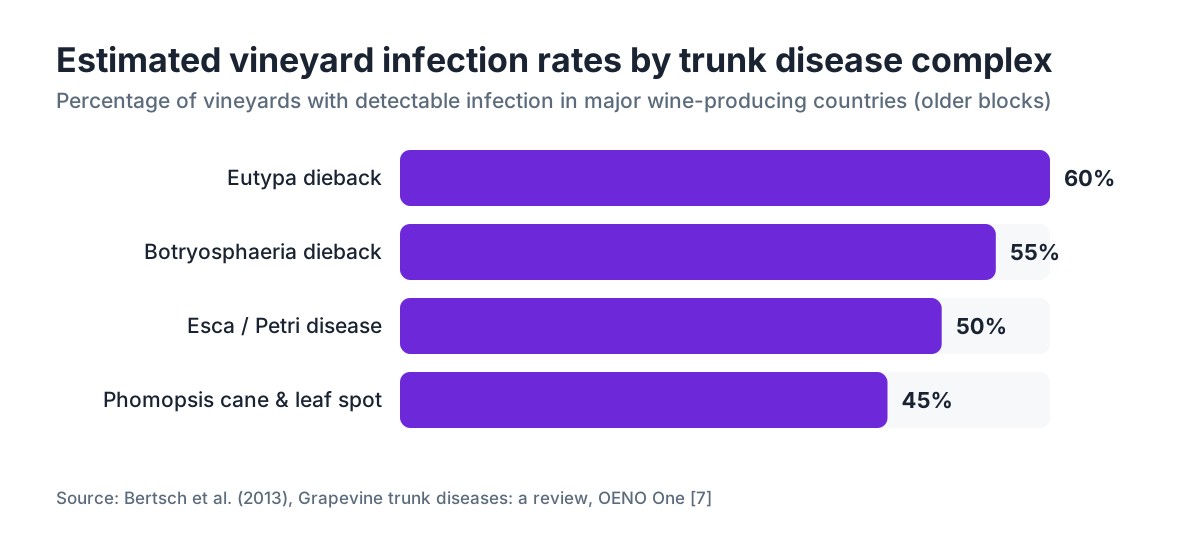
The research base on grapevine trunk diseases has grown a lot since the early 2000s. The widely cited review by Bertsch and colleagues (2013), "Grapevine trunk diseases: a review," pulled together global data and estimated that trunk diseases affect 60 percent or more of vineyards in most major wine-producing countries, with infection rates in older blocks often above 80 percent [7].
That number sounds alarming, and it is, though it measures incidence (how many vineyards have some infected vines) rather than severity (how many vines are so damaged they're economically dead weight). The trajectory is still worrying. A vineyard with 10 percent infected vines at year 10 that skips prevention will commonly see that climb to 40 to 60 percent by year 20, based on observed spread rates in monitored blocks [1].
The UC Davis Department of Plant Pathology runs one of the longest trunk disease research programs in the world, with work going back to W.D. Gubler's group in the 1980s and continuing through the current Trouillas lab [2]. Cornell's viticulture extension program has produced practical guidance for the Northeast, where Phomopsis is the leading concern thanks to wet spring conditions [11]. WSU extension covers the Pacific Northwest's pathogen complex, where Eutypa and Botryosphaeria both occur but Phomopsis is less dominant than in cool-wet eastern regions [5].
One thing the research agrees on: the gap between knowledge and adoption in the field is large. Studies find that many growers know about trunk diseases but don't consistently apply wound protectants, don't time pruning to reduce risk, and don't keep records that would let them judge their management over time. That's a solvable problem.
What does a practical trunk disease management program look like season by season?
Here's what an honest, evidence-based program looks like on a commercial vineyard. Not every operation can do all of this, and I'll say which steps give the most return.
Highest return on effort:
- Apply wound protectant on the day of pruning. Not the next day. The same day. If you're running a large crew and can't treat every wound same-day, treat the biggest cuts (cordons, trunks) the same day and follow up on smaller cane cuts within 24 hours.
- Remove and destroy infected wood. Don't leave diseased prunings in the row middles. Burn, chip, or haul them off-site. Left in place, they keep releasing spores.
- Consider delayed or double pruning on high-value blocks. The extra labor cost is real but justified on Cabernet Sauvignon or Chardonnay planted to last 25 years.
Worth doing if resources allow:
- Assess your nursery source. Demand certified clean stock and ask what testing the nursery does for Petri disease pathogens.
- Keep written records of every wound protectant application by block, date, and product. It's compliance, and it's the only way to know if your program is working.
- Walk problem blocks in summer and flag symptomatic vines with tape so you know where to focus corrective surgery in winter.
Lower priority:
- Curettage. Worth knowing about for individual high-value vines, not practical at scale.
- Biological controls as standalone treatments. They add marginal benefit if your synthetic program is solid.
For operations managing multiple blocks with different pruning dates and product applications, keeping all of this straight in a notebook gets old fast. VitiScribe was built for exactly this workflow: logging spray applications by block with date, product, and REI so the records are there when you need them for compliance or for your own season-to-season review.
One thing that often gets skipped: tell your crew why. A pruning employee who understands that a wound left untreated for 48 hours in a wet week is a five-year problem handles product application differently than one who thinks they're just doing extra work.
How do you know what's in your vineyard right now, and when should you test?
Visual assessment paired with wood sampling is the most practical diagnostic approach for most growers. You don't need a lab to know you have a trunk disease problem; the cut surface tells you a lot. But if you want to know exactly which pathogen is present, and that matters for some treatment decisions, lab identification is the only way to be certain.
The UC Davis Plant Pathology diagnostic lab accepts wood samples and identifies trunk disease pathogens by culture or PCR [2]. Cornell's Plant Disease Diagnostic Clinic does the same for eastern growers [11]. Turnaround runs two to four weeks for culture-based ID and faster for PCR panels.
When to test:
- When you have symptomatic vines but foliar signs don't match any known pattern clearly
- When you're planning a significant replanting and want to know what pathogen pressure the new vines will face
- When you're evaluating whether a new block purchase already carries a trunk disease problem
- When a product or treatment decision hinges on knowing whether you're dealing with Eutypa versus Botryosphaeria (management timing differs somewhat)
For routine monitoring, a systematic walk of each block in midsummer, when Esca tiger-stripe symptoms are most visible and Eutypa-related shoot stunting is obvious, is enough. Flag symptomatic vines, record location by vine number or GPS, and use that data to prioritize corrective surgery.
If you're seeing disease in young vines (under five years old), that's a red flag for nursery-source contamination, and lab ID is worth the cost to confirm Petri disease pathogens before you spend money on a program aimed at the wrong problem.
Frequently asked questions
What is the most common grapevine trunk disease in California?
Eutypa dieback, caused by Eutypa lata, has historically been the most thoroughly documented trunk disease in California, particularly in older vineyards in the North Coast and Central Valley. Botryosphaeria dieback has gained recognition as equally or more prevalent in some surveys. UC Davis estimates that both complexes affect a majority of mature California vineyards, with infection rates above 50 percent common in blocks older than 15 years [1][2].
Can you cure grapevine trunk diseases once the vine is infected?
No systemic fungicide cures an established trunk disease infection. The only corrective options are surgical: removing infected cordons or trunks and retraining new wood from below the necrosis, or in severe cases replacing the vine entirely. Trunk renewal from basal suckers can extend vine life significantly if infection hasn't reached the root system. Prevention at pruning wounds is the only reliable approach.
How do I tell Eutypa dieback apart from Botryosphaeria dieback in the field?
Foliar symptoms overlap considerably, so cutting wood is more reliable than looking at leaves. Eutypa produces brown wedge-shaped necrosis in cross-section, often with a yellowish discolored zone at the margin. Botryosphaeria produces darker brown to black necrosis, often sector-shaped, sometimes with a water-soaked advancing edge. Both cause stunted arm growth and poor shoot development. Lab culture or PCR testing from a university diagnostic lab is the only definitive answer.
What fungicides are labeled for grapevine trunk disease wound protection?
Thiophanate-methyl products (such as Topsin-M) have the longest track record and are labeled for wound protection after pruning. Luna Experience (fluopyram plus tebuconazole) has more recent registration data with positive efficacy results. Biological options like Bacillus subtilis (Serenade) provide some activity but consistently underperform synthetic materials in head-to-head trials [6]. Always check the current EPA-registered label for your state before applying any product.
What does Esca look like on leaves?
Esca produces a distinctive interveinal chlorosis or necrosis pattern sometimes called "tiger stripe," where the tissue between leaf veins turns yellow, then brown, in very regular bands. The veins stay green while the interveinal zones die. This pattern is fairly specific to Esca and Petri disease. In severe cases, apoplexy occurs: sudden total collapse of all green tissue on affected vines within a few days, often during summer heat.
How long after a pruning cut does the wound stay vulnerable to infection?
Wound susceptibility depends heavily on temperature and moisture. Under cool, wet conditions typical of California's North Coast winter, wounds can remain susceptible to Eutypa infection for several weeks. UC Davis research found the highest infection rates occur when wounds remain wet and unprotected for 24 to 72 hours after cutting [2]. Applying wound protectant the same day as pruning is the single most important timing factor in any prevention program.
Is double pruning actually worth the extra labor cost?
For high-value blocks where vine longevity is the priority, yes. Double pruning, where you leave a longer cane in winter and make your final cut in spring after peak spore release, has demonstrated efficacy in California trials by reducing the window when permanent wood is exposed to Eutypa spores. The labor cost is real: roughly double the pruning passes on those blocks. On blocks with a 20-plus year production horizon it's worth doing. On lower-value blocks with shorter planned cycles, the math is less clear.
Do grapevine trunk diseases spread more in warm climates like Arizona or New Mexico?
Warm desert climates don't eliminate trunk diseases; they shift which ones dominate. Botryosphaeria dieback is more prevalent in hot, dry regions because its pathogens exploit vine stress from heat and drought. University of Arizona Cooperative Extension notes elevated Botryosphaeria risk in southwestern vineyards [3]. Eutypa still infects during wet winters, and Phomopsis is less of a factor where springs are dry. Nursery-sourced Petri disease is climate-independent.
What are the EPA Worker Protection Standard requirements when applying trunk disease fungicides?
Under EPA's Worker Protection Standard (40 CFR Part 170), employers must train workers before they handle or work near pesticides, post treatment information at a central location, provide required PPE per the product label, and honor restricted entry intervals [9]. Thiophanate-methyl and Luna Experience both carry 12-hour REIs. Workers re-entering treated areas before the REI expires must have the same PPE as handlers and written authorization from the person who applied the product.
How should infected pruning wood be disposed of?
Burn it if local regulations and fire conditions allow. Chipping is a reasonable alternative if the chips are removed from the vineyard or composted at high temperature, but leaving chipped infected prunings in the row middles creates an ongoing spore source. Never leave diseased cordons or trunks in the vineyard. Eutypa lata fruiting bodies on dead wood remain viable and continue releasing spores for years after the wood is cut.
What's the best extension resource for trunk disease management by region?
UC Davis Plant Pathology produces the most detailed material for western growers, covering Eutypa, Botryosphaeria, and Esca with specific California data [2]. WSU Extension covers the Pacific Northwest [5]. Cornell Cooperative Extension covers the Northeast with emphasis on Phomopsis, which dominates in wet spring climates [11]. University of Arizona Cooperative Extension is the relevant resource for southwestern desert-climate vineyards [3]. All publish free, peer-reviewed management guides.
How do trunk diseases get into young vines?
Nursery contamination is the primary route into young vines. Studies have found that 80 percent or more of commercial grapevine planting material carries at least one trunk disease pathogen before it ever reaches the field [4]. Petri disease pathogens (Phaeomoniella chlamydospora and Phaeoacremonium species) are the most common nursery-borne culprits. Buying certified clean stock from nurseries that conduct pathogen testing reduces but does not eliminate this risk.
How do trunk diseases affect wine quality, more than yield?
Infected vines typically produce smaller clusters, lower berry weight, and uneven ripening across the block. In Esca-affected vines, fruit from symptomatic tissue can have elevated off-compound concentrations. At the block level, yield losses of 20 to 40 percent in heavily infected Eutypa blocks have been documented in California research [1]. Quality effects are harder to isolate in winery data but reduced vine vigor consistently correlates with less even ripening and smaller crop loads.
What record-keeping is required for trunk disease fungicide applications?
In California, all pesticide applications require reporting to the County Agricultural Commissioner within 30 days under the Pesticide Use Reporting system [10]. Federal regulations require licensed commercial applicators to retain restricted-use pesticide records for two years. Most other states have their own mandates. At minimum, records should include: product name and EPA registration number, application date and location (block/vineyard), rate and volume applied, applicator name, and weather conditions.
Sources
- Siebert, J.B. (2001) / American Vineyard Foundation, Economic impact of Eutypa dieback on California winegrape industry; subsequent UC extension estimates updated ca. 2014: Losses to grapevine trunk diseases in California estimated at roughly $260 million per year when accounting for lost production, replacement costs, and reduced vine longevity
- UC Davis Department of Plant Pathology, Grapevine Trunk Diseases Program: Trunk diseases described as the most significant threat to long-term sustainability of established vineyards; wound susceptibility and double-pruning efficacy data
- University of Arizona Cooperative Extension, Viticulture in Arizona: Elevated Botryosphaeria dieback risk in warm desert-climate vineyards of the southwestern United States including Arizona
- Gramaje, D. & Armengol, J. (2011), Fungal trunk pathogens in grapevine propagation material, Plant Disease: Studies examining young vines in Europe found 80 percent or more carried at least one trunk disease pathogen prior to planting
- Washington State University Extension, Grapevine Trunk Diseases in Pacific Northwest Vineyards: WSU recommends delayed pruning until bud swell is starting to reduce Eutypa infection risk; Pacific Northwest pathogen complex overview
- U.S. EPA, Federal Insecticide, Fungicide and Rodenticide Act (FIFRA) and Pesticide Product Label System: Under FIFRA, pesticide labels are legally binding; licensed applicators must follow label directions exactly including REIs
- U.S. EPA, Worker Protection Standard (40 CFR Part 170): WPS requires training, PPE, treatment posting, and REI observance for agricultural workers and handlers exposed to pesticides
- California Department of Pesticide Regulation, Pesticide Use Reporting: California requires all pesticide applications to be reported to the County Agricultural Commissioner within 30 days of application
- Cornell Cooperative Extension, New York State Integrated Pest Management, Grapevine Disease Management: Cornell Extension covers trunk disease management with emphasis on Phomopsis cane and leaf spot for northeastern cool-wet spring climates
Last updated 2026-07-09