Grapevine wood diseases: identification, spread, and management
TL;DR
- Grapevine wood diseases (Eutypa dieback, Botryosphaeria canker, Esca, and Petri disease) are fungal infections that colonize the permanent wood of a vine.
- There is no cure once a vine is infected.
- Management focuses on stopping new infections through pruning timing, wound protectants, and sanitation.
- In badly hit blocks, vine mortality can reach 60% within a decade.
What are grapevine wood diseases and why do they matter?
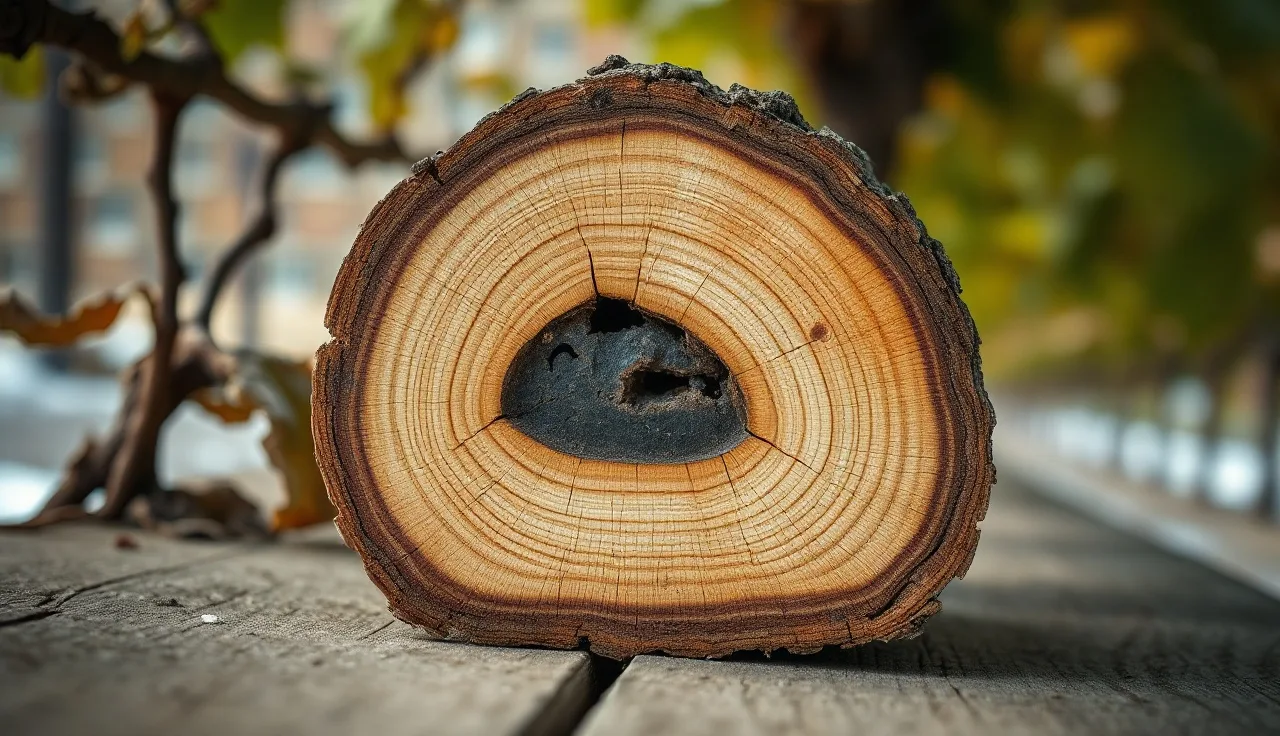
Grapevine wood diseases are fungal and fungal-like infections that colonize the cordon, trunk, and permanent cane wood of a vine rather than the leaves or fruit. The pathogens move through pruning wounds into the vascular tissue and kill it slowly over years. By the time you see symptoms above ground, the wood underneath has usually been decaying for two to five years.
That distinction changes everything in practice. A foliar disease like powdery mildew responds to a spray applied at the right moment. Wood diseases do not. No registered fungicide eliminates an established infection inside the trunk. What you can do is slow the fungus, protect fresh wounds, and cut out infected wood before it spreads.
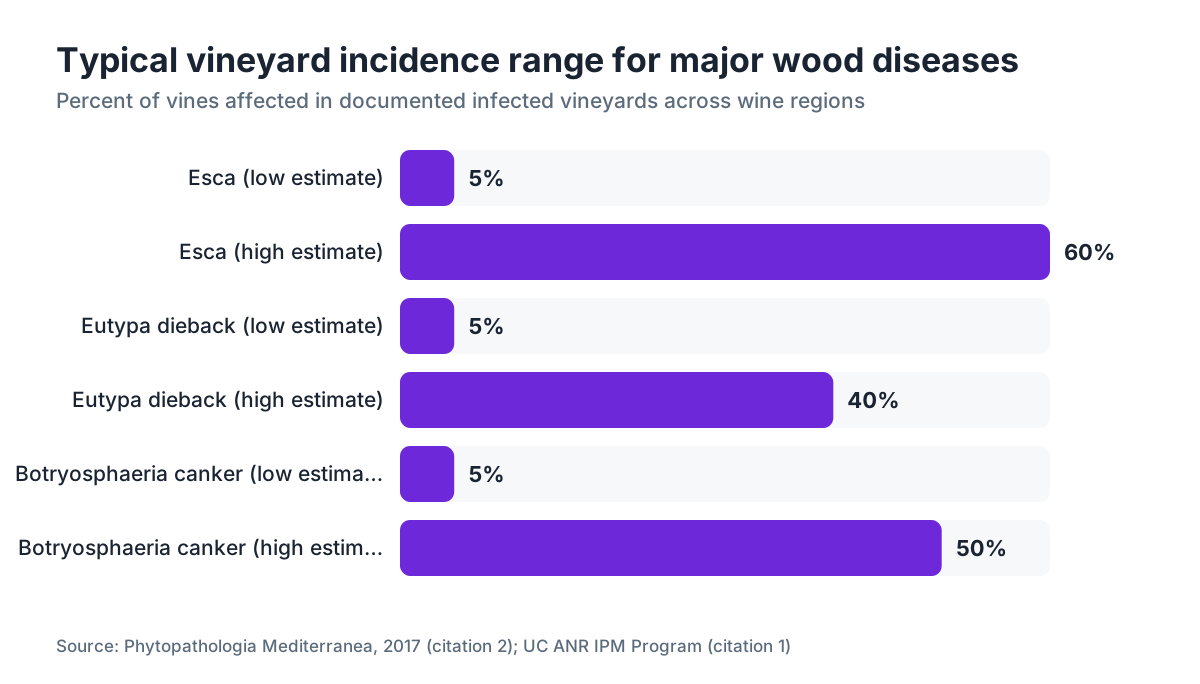
The money at stake is real. A 2013 UC Davis analysis put annual losses from trunk diseases in California's wine grape industry at roughly $260 million [1]. The global picture is worse. A 2017 review in Phytopathologia Mediterranea estimated that Esca alone affects between 5% and 60% of vines in infected vineyards across major wine regions [2]. Small and mid-size operators feel it hardest, because replanting runs $15,000 to $30,000 per acre depending on region and trellis, and replacement vines take three to five years to reach full production.
Manage a vineyard in a region with wet springs, or an old block of heavily trained Bordeaux vines, and this stops being background noise. It is the most expensive disease complex you will face over the life of a planting.
Which fungi cause wood diseases in grapevines?
"Trunk diseases" is a bucket term for several distinct pathogens that behave differently but share overlapping management. Here is what each one is and what it does.
Eutypa dieback comes from Eutypa lata, a wood-rotting ascomycete. It infects through pruning wounds, especially large cuts. Symptoms show as stunted, chlorotic shoot growth on one side of a vine, the classic "Eutypa arm." Cut into the wood and you find a wedge-shaped necrotic canker. Eutypa is most aggressive where cool, wet winters overlap the pruning window.
Botryosphaeria canker is a collective name for infections from multiple species in the family Botryosphaeriaceae, most often Neofusicoccum parvum and Diplodia seriata in California and the Pacific Northwest [3]. These hit hard in warm, dry climates where vines run heat-stressed. Internal symptoms are dark brown to black wedge-shaped cankers. Above ground you see wilting shoots, dead spurs, or whole cordon arms dying back.
Esca is the messiest of the group. It runs on a consortium of pathogens, mainly Phaeomoniella chlamydospora and Phaeoacremonium species, plus secondary colonizers like Fomitiporia mediterranea. Esca shows up two ways. The chronic form paints an interveinal leaf scorch that looks like a tiger stripe. The acute form, apoplexy, collapses an entire shoot or vine in summer, often during a heat spike. A vine can flip from chronic to apoplexy in one season.
Petri disease (also called young vine decline) comes from Phaeomoniella chlamydospora and Phaeoacremonium species, the same organisms behind Esca. It hits young vines in the first one to five years, usually arriving in infected nursery material. Cut the wood and you find brown to black discoloration and a gummy exudate.
Black foot comes from Cylindrocarpon-related species, now reclassified as Ilyonectria and Dactylonectria. It attacks the root crown and lower trunk of young vines and causes root rot and collapse. Like Petri disease, it usually rides in on infected nursery stock.
| Disease | Primary pathogen(s) | Typical first symptoms | Most affected vine age |
|---|---|---|---|
| Eutypa dieback | Eutypa lata | Stunted, chlorotic shoots | 5+ years |
| Botryosphaeria canker | Neofusicoccum parvum, Diplodia seriata | Dead spurs, arm dieback | 3+ years |
| Esca | Phaeomoniella chlamydospora, Phaeoacremonium spp. | Tiger stripe leaves, apoplexy | 8+ years |
| Petri disease | Phaeomoniella chlamydospora, Phaeoacremonium spp. | Brown wood streaking | 1-5 years |
| Black foot | Ilyonectria, Dactylonectria spp. | Root rot, vine collapse | 1-4 years |
How do wood disease pathogens spread and infect vines?
Pruning wounds are the main door in for Eutypa, Botryosphaeria, and Esca pathogens. Cut a cane or remove a cordon and you expose fresh wood that soaks up airborne spores for days to weeks. Eutypa lata spores release during wet weather from cankers on dead wood in the vineyard and surrounding trees. (Eutypa infects many woody hosts, not only vines.) UC Davis research shows that infection risk from a pruning wound stays significant for at least four weeks after cutting, especially when rain follows [1].
Botryosphaeria pathogens are just as opportunistic but favor drier weather. They sporulate from dead wood and bark and infect mainly through wounds, and stressed vines show symptoms faster.
Esca pathogens are largely soilborne and also persist in old infected wood left in the row. Cornell's viticulture extension team has summarized strong evidence that infected planting material is a primary route of introduction into new vineyards [4]. Petri disease and Black foot pathogens enter mostly through nursery stock, which makes clean, certified material a real management lever rather than a formality.
Once inside the wood, none of these fungi are reachable by a spray. They creep through the vascular tissue, sometimes five to ten years before symptoms surface. That lag is exactly why growers underestimate the problem. A block that looks fine today may have been infected at planting, or during a wet pruning season five years back.
How do you identify grapevine wood disease symptoms in the field?
Get the ID right before you make pruning or replanting calls, because the management response differs by pathogen and a wrong guess costs you either wasted surgery or a missed epidemic.
For Eutypa dieback, look for a shoot that is stunted and pale yellow-green, usually on one arm while the rest of the vine looks fine. The affected shoots run small, cupped, or necrotic leaves. Cut into the cordon at the base of that arm and you find a V- or wedge-shaped brown canker in cross-section. Wood outside the canker stays normal-colored.
For Botryosphaeria canker, the above-ground look is similar: dead spurs, dead arms, or fading shoot vigor. The internal canker is darker (black to dark brown), often more sector-shaped, and runs deeper into the trunk. In warm climates you may see resinous exudate on the bark over infected wood.
For Esca, the tiger stripe is the giveaway. Interveinal yellow or red patches follow the veins like a map and leave the veins themselves green. It usually shows in mid- to late summer. Apoplectic vines collapse fast, browning as if frost-killed but in summer heat. Internal wood carries a white rot (spongy, white-gray) deeper in the trunk, along with the dark streaking from Phaeomoniella and Phaeoacremonium.
For Petri disease, cut into the trunk of a young vine (one to five years) and look for dark brown streaking or a dark ring in cross-section, sometimes with a gummy exudate. Roots may be underdeveloped or necrotic.
For Black foot, dig young vines that fail to establish, run low on vigor, or collapse in the first few seasons. Dark necrosis at the root crown and crown root rot are the tells.
When you are not sure, send wood samples to a diagnostic lab. UC Davis Plant Pathology runs commercial diagnostic services, and Washington State University's Plant Disease Diagnostic Lab handles Pacific Northwest samples [5][6]. Molecular confirmation (PCR) earns its keep for Petri disease and Black foot, where visual symptoms overlap with other root problems.
When and how should you prune to reduce wood disease infection?
Pruning timing is your single biggest lever, and the research on it is fairly clear. Prune when conditions are least friendly to spore release and wound infection.
For Eutypa, spore release tracks rainfall. Wet stretches in winter and spring drive spore production and dispersal. So pruning in late winter or early spring, after the main rain events, cuts infection pressure compared to early-winter pruning. WSU's viticulture extension program recommends delaying pruning until close to budbreak in high-rainfall years, treating the extra labor as cheaper than the disease losses [7].
For Botryosphaeria, timing matters less because the pathogens sporulate in drier conditions, but the wound-susceptibility window still applies. Sealing cuts with a wound protectant (below) does more here than timing alone.
Double pruning is a practical strategy used more and more in California and the Pacific Northwest. You make a rough preliminary cut early in dormancy, leaving long canes, then come back for a final cut at the spur position closer to budbreak. The first cut absorbs the infection risk. The second cut removes the infected wood before it reaches the permanent cordons. The labor cost is real, running 15% to 30% higher per acre in most operations, but UC Cooperative Extension has documented meaningful drops in canker incidence in trial blocks using it [1].
Wound size matters too. Cuts over about 1 cm in diameter carry much higher infection risk than small spur cuts. Any operation that requires large cuts (removing whole arms, retraining after injury) should get wound protectant as routine, not exception.
What wound protectants actually work against trunk diseases?
No product zeroes out infection risk, but several registered materials cut it meaningfully. Three categories cover the field: fungicide paints, biocontrol agents, and physical sealants.
Fungicide wound paints. Thiophanate-methyl (Rally, Topsin) and tebuconazole are the most widely used registered fungicides for wound protection. They work best applied right after pruning, within hours if you can manage it, not days later. A 2019 UC Cooperative Extension field trial found thiophanate-methyl applied at pruning cut Botryosphaeria infection rates by roughly 50% against untreated controls [1]. Meaningful, but not complete.
Biocontrol agents. Trichoderma-based products, particularly Vinevax (Trichoderma atroviride strain SC1) and others registered in various states, colonize the wound surface and crowd out pathogen spores. Some trials show efficacy on par with thiophanate-methyl for Botryosphaeria. Results for Eutypa are more variable. Cornell's extension team has published trial data on Trichoderma products for New York conditions, with variable but generally positive results [4].
Physical sealants. Latex-based pruning sealers have no fungicidal action but put a physical barrier over the cut. Better than nothing on large wounds, generally weaker than the fungicide or biocontrol options.
Set your expectations honestly. Even a strong wound-protection program will not clear trunk disease from an infected vineyard. These products protect new wounds on healthy wood. They do nothing for existing infections. Anyone expecting a wound paint to reverse an established Esca or Eutypa problem is going to be let down.
Check current registrations in your state before you spray. The EPA Worker Protection Standard applies to most pesticide work in vineyards, covering re-entry intervals, PPE, and training for workers who enter treated areas [8]. Washington, California, and Oregon each run state pesticide registration databases that show which products are cleared for grapes right now. For crews handling these applications, keeping tidy spray records tied to each block saves you at inspection time.
Can you surgically remove wood disease from infected vines?
Yes, and for established vineyards with real value in the planting, surgery is often the most cost-effective short-term move. The goal is to remove every bit of visibly infected wood, cutting back past the canker margin into clean white wood.
The technique goes by remedial surgery or trunk renewal. You cut out infected cordons, arms, or in bad cases the whole trunk, then train replacement wood from suckers or young canes. For Eutypa, that usually means removing a whole cordon arm and retraining from a watersprout below the infection. For Botryosphaeria, similar arm removal is standard.
Three things to keep in mind. Cut generously. The fungus runs further into the wood than the visible brown discoloration shows, and UC Davis recommends cutting at least 5 to 10 cm past the last visible stain into clean wood [1]. The replacement cordon then takes two to four years to reach full production, so you are accepting a yield gap in the meantime. And if you leave the removed infected wood in the vineyard, you have just planted spore sources right where they will start new infections. Get it out of the block and destroy it, ideally by chipping or burning.
For vines with severe Esca or Petri disease through the entire trunk, the only real option is pulling and replanting. Bench grafting from infected vines keeps the problem alive if the budwood carries Phaeomoniella or Phaeoacremonium. Take propagation material only from visually healthy, confirmed clean vines.
How do you keep trunk diseases out of a new vineyard planting?
This is where your effort pays back best. Keeping the disease out is far cheaper than managing an established epidemic.
Start with nursery material. Petri disease and Black foot arrive mainly through infected rootstocks and grafted vines. The California Department of Food and Agriculture's Grapevine Registration and Certification Program sets phytosanitary standards for certified material, and buying from registered nurseries in that program lowers the risk (though it never zeroes it) [9]. Ask your nursery for documentation of pathogen testing. Some will hand it over. Some won't. The ones who test are worth a small premium.
Inspect every vine for internal discoloration before it goes in the ground. Five extra minutes per bin. Cull any vine with dark wood streaking in the cross-section at the graft union or above the roots.
Soil prep matters for Black foot, which lingers in old root debris. Full removal of old vine roots plus a fallow period of one to two seasons drops the inoculum load. Some operations fumigate replant sites, but it is expensive and the clearest benefit is nematode control, not Ilyonectria specifically.
Run wound protectant through the first three pruning seasons in a new vineyard. The vines are making large training cuts and building their permanent wood, and Eutypa or Botryosphaeria infections set now will not announce themselves until five to ten years later. Pay the small cost early.
How do you track and manage wood disease records across a vineyard block?
Trunk disease management is block-level and multi-year by nature. One scouting pass tells you almost nothing. You need maps, year-over-year incidence numbers, and records of which treatments went where and when.
At minimum, track: which rows and vine positions show symptoms, the disease type (Eutypa vs. Botryosphaeria vs. Esca, as far as you can call it), what remedial surgery got done and when, and what wound protectants went on during pruning. Simple to describe. Genuinely hard to keep straight on paper across several blocks with seasonal labor turning over.
Most managers are moving this data into field operations software. VitiScribe is built for exactly this: field activity logs, spray records tied to specific blocks, and compliance documentation covering EPA WPS training and re-entry tracking. Manage trunk disease history across more than a few blocks and a digital system that links pruning records to spray applications and scouting notes saves real hours at season's end. It also keeps your vineyard compliance paperwork audit-ready instead of scattered.
One workflow that works: at budbreak, walk every block and flag symptomatic vines with a colored flag or mark them in your phone. Photograph the tiger stripe or canker. That gives you a baseline incidence count you can compare year over year to know whether the disease is spreading, holding, or responding to your management.
What does wood disease management cost, and what is the return on investment?
The numbers here are scattered, but this is what we know with reasonable confidence.
Wound protectant materials (thiophanate-methyl or Trichoderma products) typically add $20 to $60 per acre per pruning season in materials, depending on product and method [3]. Hand application with a backpack sprayer after each pruner adds another $15 to $40 per acre in labor. Call it $35 to $100 per acre per year.
Double pruning adds roughly $150 to $300 per acre in extra labor in most operations, based on contractor rates in California's North Coast from 2022 to 2024.
Replanting an infected block runs $15,000 to $30,000 per acre all in (vine removal, site prep, planting, trellis, establishment irrigation), plus three to five years of below-normal revenue. Against that, $100 to $400 per acre per year in prevention looks like a bargain, especially in high-value wine grape blocks.
Remedial trunk surgery has a variable payoff. For young, otherwise healthy vines in high-value blocks, retraining is almost always worth doing. For vines over 20 years old with widespread systemic infection, the math gets murky. Nobody has great data on surgery efficacy in blocks over 30% incidence. At that point, block renovation deserves a hard look.
For growers running blocks across regions like Paso Robles wineries or the South Coast, where warm temperatures push Botryosphaeria pressure, the prevention spend is even easier to justify.
What does current research say about future management options?
The research pipeline is active. Few new commercial tools are close.
RNA interference (RNAi) is being tested as a way to suppress Eutypa lata and Botryosphaeria species by targeting fungal gene expression. Early stage. No commercial product exists. Work at UC Davis and in European programs looks promising but is probably five to ten years from the field.
Resistant or tolerant rootstocks and varieties are a long game. There is natural variation in susceptibility among Vitis vinifera varieties, and some rootstocks show reduced colonization by Phaeomoniella chlamydospora in greenhouse trials, but no commercial combination offers strong resistance [2].
Better biological control strains are the closest to market. Trichoderma atroviride strain SC1 (the active in Vinevax, registered in Europe and some U.S. states) has shown consistent results in European field trials, and similar strains are in development for the U.S. The EPA registration path for biocontrols is generally faster than for conventional fungicides, so this category may see new products within three to five years.
The phytobiome idea, managing the microbial community in wood tissue to suppress pathogens, is drawing research interest. The premise: healthy, diverse endophytic communities in grapevine wood may compete with trunk disease pathogens. A 2021 paper in Frontiers in Plant Science found fungal endophyte diversity was inversely correlated with Eutypa canker severity in sampled vineyards, though the relationship is correlational, not causal [10]. Interesting. Not actionable yet.
For now, the honest answer is that the best available management is still the mix of delayed or double pruning, wound protectants, and surgical removal. Research has refined these approaches for 20 years without producing a single breakthrough.
What resources and extension programs cover grapevine wood diseases?
Three university programs carry the deepest published resources on trunk diseases for U.S. growers: UC Davis, Cornell, and Washington State University.
UC Davis's Department of Plant Pathology has the most extensive applied research on California conditions. Their Integrated Pest Management guidelines for grapes include full trunk disease sections with photos and management calendars [1].
Cornell's viticulture extension team covers Eutypa, Botryosphaeria, and Esca for the northeastern U.S., where the fungal pressures and pruning windows differ from the West Coast [4]. Their material is especially useful for Concord, Vidal, and other varieties grown in the Finger Lakes and Lake Erie regions.
WSU's extension viticulture program handles trunk diseases through the lens of Pacific Northwest pruning-timing research and includes downloadable scouting guides [7].
The EPA Worker Protection Standard, 40 CFR Part 170, governs how you handle, apply, and document pesticide use in agriculture, including wound protectant fungicides applied during pruning [8]. If you have employees running these applications, WPS training is a legal obligation, not a suggestion. The revised WPS took effect in January 2017 and adds provisions on pesticide safety training, application exclusion zones, and emergency assistance.
For spray record compliance, VitiScribe's spray log module links product applications to field activity records and generates reports formatted for state ag department inspections.
The International Council on Grapevine Trunk Diseases (ICGTD) is the primary global scientific body coordinating trunk disease research across wine regions, and it publishes proceedings from its biennial symposia [11]. Its website is a good entry point to current work.
Frequently asked questions
Can you cure a vine that already has Eutypa or Esca?
No. Once Eutypa lata or Esca pathogens establish in the permanent wood, no systemic fungicide or treatment eliminates the infection. Management means cutting back past the infected wood into clean tissue and retraining new arms, or in severe cases removing the vine. Wound protectants only guard fresh cuts against new infections; they never reach existing infections inside the trunk.
How long do pruning wounds stay susceptible to Eutypa infection?
UC Davis research found fresh pruning wounds can stay susceptible to Eutypa lata for at least four weeks after cutting, with the highest susceptibility in the first week. Wet weather during that window is the main risk. Applying a wound protectant within hours of pruning, and finishing cuts before forecast rain, are the two most practical responses.
What is the difference between Esca and Eutypa dieback symptoms?
Eutypa dieback causes stunted, chlorotic, cupped leaves on one arm of a vine, with a wedge-shaped brown canker in the cordon wood. Esca paints a tiger-stripe or interveinal leaf scorch on otherwise normal-sized leaves, with white rot in the deeper trunk wood. Esca can also cause sudden vine collapse in summer (apoplexy), which Eutypa does not typically produce.
Does double pruning really reduce trunk disease, or is it just extra cost?
Field trial data from UC Cooperative Extension supports meaningful reductions in canker incidence with double pruning. The logic holds: the first rough cut takes on infection risk during the high-risk winter window, and the final cut removes that potentially infected stub close to budbreak. The extra labor of 15% to 30% per acre is real. For high-value blocks in wet climates, most agronomists consider it worth it.
Can infected nursery stock introduce trunk diseases into a brand-new vineyard?
Yes, and it is a primary introduction pathway for Petri disease and Black foot. Phaeomoniella chlamydospora and Ilyonectria species can ride in on vines that look completely normal. Buying from nurseries in certified, tested programs (like California's CDFA Grapevine Registration and Certification Program) and inspecting plant material before planting are the main safeguards.
Which grapevine varieties are most susceptible to wood diseases?
Among Vitis vinifera varieties, Cabernet Sauvignon, Chardonnay, and Grenache show relatively high susceptibility to Eutypa and Botryosphaeria in published trials. Muscat varieties and some Italian whites appear a bit more tolerant, though every vinifera variety is susceptible to some degree. No commercial variety is genuinely resistant. Rootstock choice has limited but documented effects on Phaeomoniella colonization in nursery and greenhouse studies.
How do I know if my vineyard block has a wood disease problem worth acting on?
Walk the block at budbreak and count symptomatic vines. Below 5% incidence, you are in early-detection territory where targeted surgery and wound protectant programs can hold the line. Between 5% and 20%, you need a full management plan. Above 20% to 30%, economic models generally favor weighing block renovation against the cost of ongoing remedial pruning and vine replacement.
What is apoplexy in grapevines?
Apoplexy is the acute, sudden-collapse form of Esca. A vine, or a single shoot, goes from apparently healthy to fully wilted and brown within days, usually during a summer heat event. It comes from the same Esca pathogen complex (Phaeomoniella chlamydospora, Phaeoacremonium species, and secondary colonizers) as the chronic tiger-stripe form. A vine may show chronic Esca for years before apoplexy, or collapse with no prior foliar warning.
Are there any organic-approved wound protectants for trunk disease management?
Trichoderma-based biocontrol products are generally compatible with organic certification, though you must check with your certifier and confirm the specific product is on the approved materials list for your program. Products based on Trichoderma atroviride are not synthetic fungicides and have shown meaningful efficacy in European field trials. Apply them immediately after pruning to be effective.
Do wood diseases spread vine to vine, or only through pruning wounds?
Spread is mostly airborne, with spores released from infected dead wood landing on fresh pruning wounds. Direct vine-to-vine spread through root contact is not a significant route for Eutypa or Botryosphaeria. Esca pathogens can persist in soil and old wood debris. Propagation from infected vines is a documented secondary route, especially for Petri disease and Black foot through infected cuttings.
What records should I keep for wood disease management?
Keep block-level incidence maps (vine position and symptom type), dated records of pruning dates and weather, wound protectant applications with product name, rate, and EPA registration number, remedial surgery dates and affected vine counts, and replanting records. These support EPA Worker Protection Standard compliance, let you judge management efficacy year over year, and are often required for crop insurance claims tied to disease losses.
How does climate and region affect trunk disease pressure?
Eutypa pressure is higher in cool, wet winter climates (coastal California, Oregon, New York) because wet conditions drive spore release. Botryosphaeria pressure is higher in warm, arid regions (Paso Robles, San Joaquin Valley) where heat stress weakens vines and the pathogen thrives. Esca is widespread across all wine regions but intensifies with vine age and extensive pruning wound history. Climate also sets the pruning window timing, the main management variable.
Is Petri disease the same as Esca?
Related but distinct. Petri disease and Esca share the same primary pathogens (Phaeomoniella chlamydospora and Phaeoacremonium species), but Petri disease hits young vines, typically under five years, and shows as vascular browning with vine decline or death. Esca is the chronic or acute expression in mature vines. Some researchers treat Petri disease as the precursor or nursery-stage infection that develops into Esca in older vines.
How do I dispose of prunings and infected wood to reduce disease spread?
Remove infected wood from the vineyard entirely. Do not leave infected cane or cordon debris in the row or on the floor where it keeps producing spores. Chipping and hauling off site, or burning where local air quality rules allow, are the accepted methods. Mulching infected wood in-row reintroduces spore sources. Clean pruning equipment between symptomatic and healthy vines to reduce mechanical transfer, especially grafting tools.
Sources
- UC ANR Statewide IPM Program, UC Davis - Grape Trunk Diseases: Annual losses from trunk diseases in California wine grapes estimated at roughly $260 million; wound susceptibility to Eutypa infection lasts at least four weeks; thiophanate-methyl reduced Botryosphaeria infection rates by roughly 50% in field trials
- Phytopathologia Mediterranea, 2017 - Esca of grapevine: a disease complex or a complex of diseases?: Esca affects between 5% and 60% of vines in infected vineyards across major wine regions; no commercially available variety offers strong resistance to trunk disease pathogens
- UC Cooperative Extension - Botryosphaeria Canker and Dieback of Grapevines: Neofusicoccum parvum and Diplodia seriata are the most common Botryosphaeriaceae species in California and Pacific Northwest vineyards; wound protectant materials add $20 to $60 per acre per pruning season
- Cornell Cooperative Extension - Viticulture and Enology, Trunk Diseases: Infected planting material is a primary route of Esca pathogen introduction into new vineyards; Trichoderma-based products show variable but generally positive results in New York field trials
- UC Davis Plant Pathology - Plant Diagnostic Services: UC Davis Plant Pathology offers commercial diagnostic services for grapevine wood disease identification including molecular confirmation
- Washington State University Plant Disease Diagnostic Laboratory: WSU Plant Disease Diagnostic Lab handles samples from Pacific Northwest vineyards for wood disease identification
- Washington State University Extension - Viticulture, Pruning and Trunk Disease Management: WSU extension recommends delaying pruning until close to budbreak in high-rainfall years to reduce Eutypa infection pressure
- U.S. EPA - Worker Protection Standard, 40 CFR Part 170: EPA Worker Protection Standard governs pesticide application, re-entry intervals, PPE requirements, and training for agricultural workers; revised WPS took effect January 2017
- California Department of Food and Agriculture - Grapevine Registration and Certification Program: CDFA Grapevine Registration and Certification Program sets phytosanitary standards for certified nursery material to reduce introduction of Petri disease and Black foot pathogens
- Frontiers in Plant Science, 2021 - Fungal endophyte diversity and Eutypa canker severity in grapevines: Fungal endophyte diversity was inversely correlated with Eutypa canker severity in sampled vineyards, though the relationship is correlational
- International Council on Grapevine Trunk Diseases (ICGTD): ICGTD is the primary global scientific body coordinating trunk disease research and publishes proceedings from its biennial symposia
Last updated 2026-07-09