Green harvest documentation for yield management and winery communication
TL;DR
- Green harvest documentation means recording when you dropped clusters, how many passes you made, the pre- and post-drop counts per vine, and why you made the call.
- A clean record lets you defend yield estimates to your winery buyer, supports contract compliance, and gives you real data to sharpen the decision next season.
- Most growers underestimate how much a single page of field notes changes that conversation.
What is green harvest and why does documenting it matter?
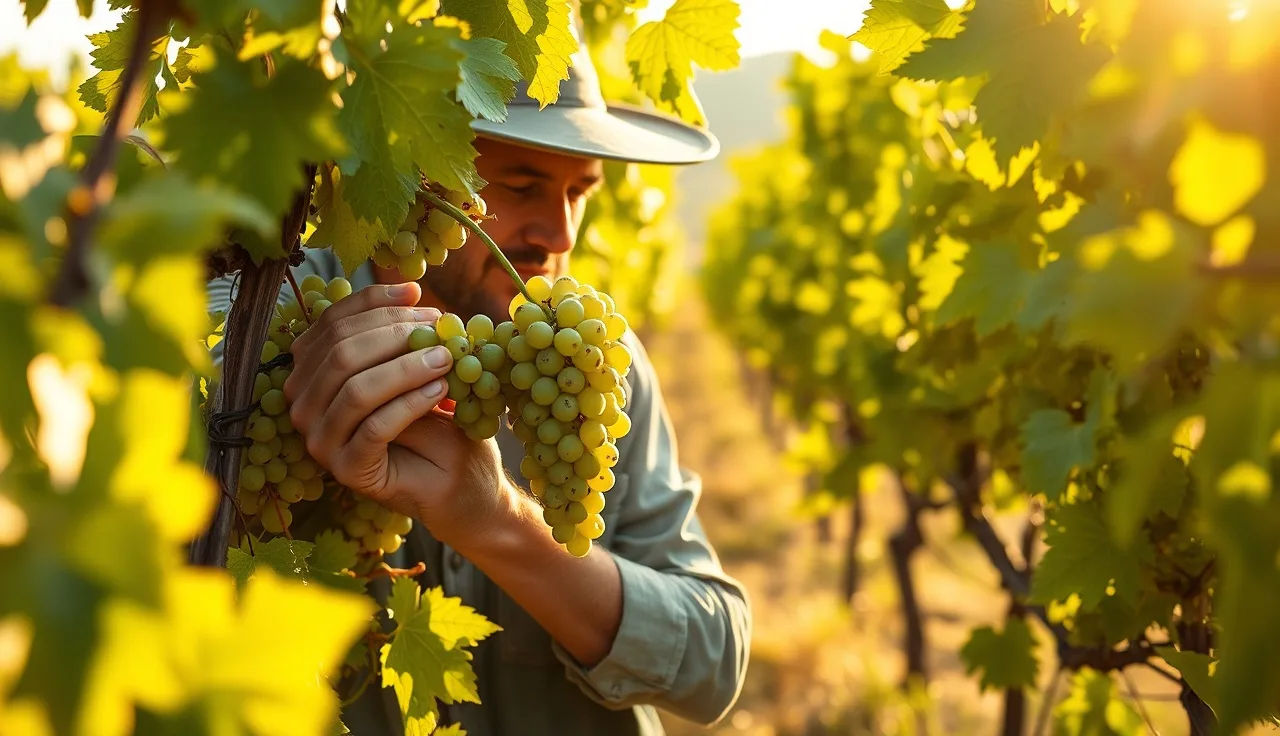
Green harvest, also called crop thinning or cluster thinning, is the removal of immature grape clusters during the growing season, usually between fruit set and veraison. The goal is to drop per-vine load so the remaining fruit ripens more evenly, reaches higher sugar concentration, or hits a specific yield target written into your grape purchase agreement. None of that is controversial. The paperwork gap that follows is what gets growers in trouble.
Say you thin 30 percent of your clusters. The winery later complains the fruit came in underripe, or disputes your tonnage estimate, or questions whether you actually did what you promised. Your memory is not evidence. A date-stamped field record is. When a contract specifies "clusters thinned to two per shoot" or "yield not to exceed three tons per acre," your documentation is the paper trail that proves you honored that term.
There's a second reason that gets less attention: your own data. Run the same block for ten years without recording what you dropped, when you dropped it, and what it yielded, and you're guessing every single time. Growers who keep consistent thinning records for three or more seasons start to see patterns. Early drops in certain blocks produce measurable Brix differences at harvest. Late drops in others do almost nothing. That knowledge is worth more than any consultant's blanket recommendation.
Green harvest also touches labor compliance. The workers doing the thinning are covered by the EPA Worker Protection Standard if your operation qualifies as an agricultural establishment [1]. If you sprayed anything with a restricted-entry interval before sending crews in, those intervals have to be respected and documented. The thinning work itself doesn't trigger a pesticide record, but its timing relative to your spray records does. Keeping thinning dates in the same system as your spray log makes it easy to check there's no overlap.
What information should a green harvest record include?
A workable green harvest record doesn't need to be elaborate. It needs to be specific enough that someone who wasn't there, including a winery QA manager reading it six months later, can understand exactly what happened. Here's what that means in practice.
Block and row identification. Use your internal block codes and, where relevant, the APN or legal description that maps to your grape contract. Vague entries like "the east block" create disputes. If your contract references specific tons from a named block, your record should use the same name.
Date and timing relative to phenological stage. Record the calendar date and the approximate growth stage using a standard reference. WSU Extension recommends the modified E-L (Eichhorn-Lorenz) staging system [2]. "Fruit set, E-L 27" is more defensible than "early July."
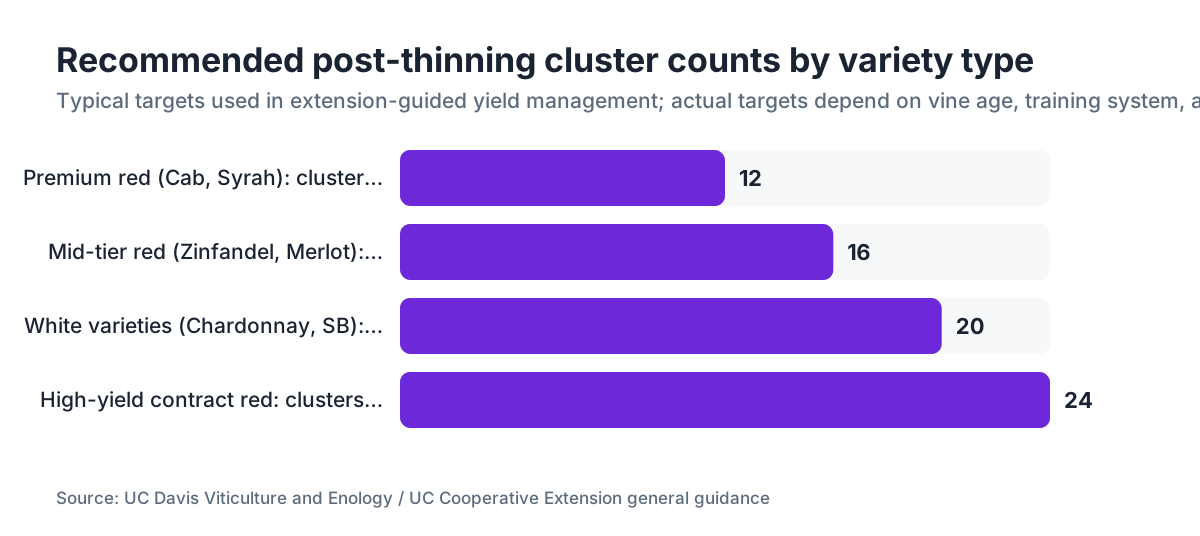
Pre-thinning cluster count. Count clusters on a defensible sample before you start. The standard approach used by UC Cooperative Extension is to count every cluster on every vine in a 10-vine sample per block, then average [3]. Record the raw counts, more than the average.
Clusters removed per vine (or per acre). If you're targeting a specific cluster number, record what you actually hit post-thinning on the same sample vines. This is where most growers skip a step and regret it later.
Labor crew and hours. You'll want this for cost tracking, and some winery contracts include a right to audit labor records to verify the work was done.
Reason for the decision. One sentence. "Block 4B was at 18 clusters per vine against a contract target of 12; dropped to average 11." That sentence, in writing, is what protects you if the winery disputes your approach.
Estimated yield projection after thinning. Use your standard yield formula: average cluster weight (from prior years or current estimates) times clusters per vine, times vines per acre. Document your inputs so the estimate is reproducible.
| Field | Why it matters | Minimum detail |
|---|---|---|
| Block ID | Maps to contract terms | Use contract block name exactly |
| Date | Timing disputes, WPS overlap check | Calendar date + E-L stage |
| Pre-thinning cluster count | Baseline for yield estimate | 10-vine sample, raw counts |
| Post-thinning cluster count | Confirms target was hit | Same sample vines |
| Clusters removed | Quantifies the decision | Absolute number or percent |
| Crew / hours | Labor cost, audit trail | Names or crew ID + hours |
| Decision rationale | Contract defense | One sentence minimum |
| Projected yield | Winery communication | Show your math |
When during the season should you do green harvest and record it?
Timing varies by variety, region, and what you're after, but the research points to a fairly consistent window. Cornell Cooperative Extension guidance on cluster thinning places the most effective window for red varieties between fruit set and about four weeks post-fruit-set [4]. Drops after that window still reduce yield but have a shrinking effect on quality metrics like Brix and anthocyanin concentration.
For your records, timing matters two ways. Earlier drops let the vine compensate by growing bigger berries in the remaining clusters. Miss that in your math and your post-thinning yield estimate comes out low. Second, some grape purchase agreements say thinning must happen by a certain date or at a specific growth stage. Thin outside that window and you may technically be in breach even if you hit the yield target.
Record the actual date of each thinning pass, not the planned date. If the forecast changed and you pushed the drop two weeks, write that down. Winery buyers who receive fruit that came in differently than expected will ask questions, and "we delayed because of a heat event" is a legitimate answer when it's on paper.
Multiple passes are common. Some growers do an initial drop at fruit set and a cleanup pass three to four weeks later. Treat each pass as its own record entry. The cumulative picture is what matters.
How do yield estimates from green harvest records translate into winery communication?
This is where the documentation pays off fastest. Your winery buyer needs a credible tonnage estimate weeks or months before harvest. Hand them a number with no supporting data and they have no reason to trust it and every reason to budget conservatively. Hand them a written projection showing your pre- and post-thinning cluster counts, your average cluster weight from the prior two vintages, and your calculation, and you're having a different conversation.
A one-page yield projection memo is enough. It should include block name, date of thinning, clusters per vine post-thinning, vines per acre, estimated cluster weight (cite your source year), projected tons per acre, and projected total tons for the block. Send it within a week of finishing the thinning work, not in the fall.
This matters more than most growers realize. Wineries doing crush planning lock in equipment schedules, tank allocations, and pick crew availability based on projected fruit volumes. Miss your estimate by 20 percent in either direction without a heads-up and you've created real operational problems for your buyer. You also erode trust that shows up in the next contract negotiation.
If you grow for multiple wineries, label each block's documentation clearly by contract. Sending Winery A's projections with Winery B's block names causes confusion that wastes everyone's time.
For growers running large operations across many blocks, tools that keep field records and generate yield summaries in one place cut out the translation step. VitiScribe is one option that ties thinning records to block-level yield projections and lets you export a clean summary for winery communication without hand-assembling spreadsheets.
See also vineyard management context for how block-level documentation fits into broader operational records.
What do grape purchase contracts typically require you to document?
Grape purchase agreements vary enormously. Some are a handshake and a price per ton. Others run multiple pages with specific cultural practice requirements, yield caps, cluster weight targets, and documentation obligations. If yours falls in the second bucket, read the cultural practice section carefully before you thin.
Common provisions that touch green harvest documentation include yield caps (tons per acre maximum), minimum Brix requirements at delivery that quietly push you toward thinning, specific cluster counts per shoot or per vine, and timing windows for thinning. Some contracts include a right-to-inspect clause that lets the winery send a viticulturist to verify cultural practices. If that clause exists and you didn't document your thinning, you're relying on the winery's field notes instead of your own.
A few contracts go further and require the grower to submit a written crop estimate by a specific date. If yours does, the green harvest record is your primary source for that submission. Without it, you're estimating from memory.
Contracts that don't mention thinning at all still benefit from documentation. If a dispute comes up about fruit quality at delivery, records showing you managed yield according to best practices give you a defensible position. Courts and arbitrators look at the totality of evidence.
Unsure what your contract requires? Read it again. Then talk to your county farm advisor or an agricultural attorney if the language is ambiguous. UC Cooperative Extension farm advisors can help interpret standard practice expectations even though they can't give legal advice [3].
How should you calculate and record a yield estimate after thinning?
The basic yield formula is simple: (clusters per vine) x (estimated cluster weight in pounds) x (vines per acre) / 2000 = tons per acre. The hard part is getting honest inputs.
Clusters per vine comes from your post-thinning count on your sample vines. Use the same sample vines you counted before thinning. Average cluster weight is the tricky input because you don't know it yet. You have three options.
First, use the actual average cluster weight from the same block in prior years. If you weighed clusters at harvest for the past three seasons, average those weights. This is the most defensible approach, and the reason to start weighing clusters at harvest if you aren't already.
Second, use published variety averages. UC Davis has published cluster weight ranges by variety through its viticulture and enology program [5]. These are rough. A Cabernet Sauvignon cluster might average 80 to 100 grams under normal conditions, but your site, vine age, and training system all move the actual number.
Third, weigh a sample of clusters at the time of thinning. The dropped clusters are a biased sample (you're pulling the worst ones), but they give you a rough scale for sizing.
Document which method you used and what number you plugged in. If your estimate turns out wrong, showing your math demonstrates good faith. Wineries sometimes push back on estimates that don't match their own field counts. When your documentation and theirs differ, having the methodology on paper moves the conversation to data rather than accusation.
Vines per acre is something you should already have. If you don't know your vine density, pace rows and count vines in a representative row. Record it.
What's the right way to store and organize green harvest records?
The format matters less than the consistency. A three-ring binder with dated field sheets works. A spreadsheet works. A dedicated field records app works. What doesn't work is scattered notes, calendar entries, and sticky notes you can't find when the winery calls in October.
A few practical rules regardless of format. Records should be dated when created, not backdated. If you have to reconstruct a record from memory because you forgot to write it down in the moment, note that it's a reconstruction. Backdated records that turn out to be inaccurate create liability you don't want.
Keep records for at least three years. California, Washington, and Oregon all have statutory periods for agricultural contract disputes, and federal programs like USDA NRCS cost-share agreements may require longer retention [6]. If you're not sure, keep everything for five years.
Organize by block and year, more than by year. When you're chasing a Block 7 problem in 2027, you want to pull all Block 7 records without sorting through everything from 2023.
Share block-level data with a winery? Keep a copy of what you sent and when. Email works. A paper letter works too. You want a record that the communication happened, more than that the data exists.
VitiScribe organizes records by block and season and lets you attach photos, which is underused but genuinely useful. A photo of a sample vine before and after thinning takes 30 seconds and tells a visual story that numbers alone don't.
How does green harvest documentation connect to spray records and worker safety compliance?
The EPA Worker Protection Standard requires agricultural employers to keep records of pesticide applications, including restricted-entry intervals (REIs) [1]. Green harvest sends crews into the vineyard, often within a few weeks of a fungicide or insecticide application. If any of those applications had an REI that hadn't expired, sending thinning crews into the block is a WPS violation.
The fix is to cross-reference your green harvest schedule against your spray log before the crew goes in. Keep both records in the same system and that check takes a minute. Keep your spray records in a binder in the barn and your thinning schedule in your phone calendar and you're relying on memory, which is how violations happen.
The WPS also requires workers to have access to pesticide application information in a central location and to receive training before working in treated areas [1]. Documentation of that training is a separate record, but review it at the same time you document thinning work. A crew thinning grapes on June 15 needs the same baseline WPS protections as any other hand-labor crew in a treated vineyard.
For labor records tied to green harvest specifically, track crew composition, hours worked per block, and the date of work. OSHA agricultural standards and state labor board requirements vary, but this level of detail protects you in a wage-and-hour dispute and satisfies most third-party audit requirements for sustainable winegrowing programs [7].
What are common mistakes growers make with green harvest records?
The biggest one is not counting before thinning. No pre-thinning cluster count means you can't calculate how much you dropped, and your post-thinning yield estimate has no calibration point. It takes about 20 minutes to count a 10-vine sample. Do it.
The second mistake is using a single sample point for a mixed block. If your block has real variation in vine age, rootstock, or soil type, one 10-vine sample misses a lot. Cornell recommends stratified sampling for blocks with known within-block variability [4]. At minimum, count from different zones of the block and record them separately.
The third mistake is conflating planned drops with actual drops. You planned to thin to 12 clusters per vine. The crew finished three rows before rain stopped work. You came back two weeks later. The record should reflect what actually happened, not the plan.
Fourth: recording the total but not the detail. "Dropped 30 percent of clusters in Block 4" is not a useful record. Thirty percent of what starting count? What's the post-thinning count? On what date? On which vines?
Fifth: sitting on the results until harvest is imminent. The yield estimate from your thinning records is valuable to your buyer the day you finish thinning. Not in September.
How do different wine regions approach green harvest documentation standards?
There's no federal standard for green harvest documentation the way there is for pesticide records. What exists is a patchwork of winery contract requirements, regional sustainable winegrowing program standards, and voluntary best practices from extension services.
California's Certified California Sustainable Winegrowing (CCSW) program, run by the California Sustainable Winegrowing Alliance, includes vineyard assessment criteria that touch on crop load management [8]. Participating growers are expected to document their yield management decisions, though the specific format is left to the grower. Paso Robles operations, for instance, often deal with warm-climate yield variability that makes thinning records especially useful for quality consistency. Paso Robles wineries that source from contract growers frequently require written yield estimates.
In Washington, the Washington State Wine Commission's sustainable winegrowing program has similar documentation expectations [9]. WSU Extension has published detailed cluster thinning methodology that many Washington growers use as their standard procedure [2].
Oregon Tilth and LIVE (Low Input Viticulture and Enology) certifications both require growers to keep crop management records that include thinning decisions [10]. For certified organic operations, the USDA National Organic Program requires records that demonstrate compliance with the organic system plan, which usually includes documentation of yield management practices [11].
Sell to a winery in any of these programs? Ask specifically what documentation they need from you. Don't assume your current format satisfies their auditors.
What should a green harvest summary document sent to a winery look like?
Keep it one page. Wineries receive a lot of paper and most QA managers are reading these summaries in the middle of harvest planning. Here's a format that works.
Header: Grower name, property name, contract number, date of report.
Block summary table: One row per block. Columns for block ID, variety, acres, thinning date, pre-thinning clusters per vine, post-thinning clusters per vine, estimated cluster weight and source year, projected tons per acre, and projected total tons. That table is the whole document for most practical purposes.
Notes section: Any unusual conditions. A late frost that affected cluster set. A disease pressure event that changed the drop decision. A block where you made two passes. One paragraph maximum.
Contact line: Who to call with questions.
That's it. Don't pad it with background on why green harvest works. Your buyer knows. Send this within a week of finishing work in each block, or send a consolidated version covering all blocks once thinning is complete. Either way, don't wait until veraison to share the data.
If your buyer uses a specific form, use their form. Don't make them translate your format into theirs. Ask at the start of the season what format they prefer and whether they want interim updates or a single end-of-thinning summary.
Frequently asked questions
Does a grape purchase contract legally require me to document green harvest?
It depends entirely on your contract. Some grape purchase agreements specify that growers must submit written crop estimates by specific dates or must document cultural practices like thinning. Others say nothing about it. Read your contract's cultural practice and crop estimate sections. Even if documentation isn't required, having it protects you in a quality dispute. An agricultural attorney can clarify your obligations if the language is ambiguous.
How many vines should I count when doing a pre-thinning cluster count?
UC Cooperative Extension recommends counting every cluster on every vine in a 10-vine sample per block as a minimum baseline. For blocks with real variability in soil type, vine age, or training system, use a stratified sample from multiple zones. Count the same sample vines before and after thinning so your pre- and post-thinning numbers are directly comparable. Record raw counts, more than the average.
When is the best time of season to do green harvest for quality improvement?
Cornell Cooperative Extension places the most effective window for red varieties between fruit set and roughly four weeks post-fruit-set. Thinning in this window has the greatest impact on berry size and concentration in remaining clusters. Drops after this window still reduce yield but with shrinking quality effects. Always record the calendar date and the E-L growth stage so your timing data is reproducible and comparable across seasons.
How do I calculate a yield estimate after thinning?
Use this formula: (average clusters per vine post-thinning) x (estimated cluster weight in pounds) x (vines per acre) / 2000 = tons per acre. The hardest input is cluster weight. Use actual weights from the same block in prior years if you have them. Document which method you used for the weight estimate and show your math. A projection with documented inputs is far more credible to a winery buyer than a bare number.
Does green harvest affect worker protection standard compliance?
Green harvest itself doesn't trigger a pesticide record, but it does send crews into the vineyard, which must be clear of any restricted-entry intervals from prior spray applications. The EPA Worker Protection Standard requires you to track REIs and keep crews out of treated areas until the REI expires. Cross-referencing your thinning schedule against your spray log before the crew goes in is the practical way to stay compliant.
How long should I keep green harvest records?
A safe minimum is three years, which covers most state agricultural contract dispute statutes in California, Washington, and Oregon. If your operation participates in USDA programs, federal grant or cost-share records may require five years or more. For USDA certified organic operations, the National Organic Program requires records sufficient to demonstrate compliance with your organic system plan. When in doubt, keep records for five years.
What's the difference between recording thinning by cluster count versus by weight?
Cluster count is the practical field measurement because you can do it without a scale during the thinning operation. Weight is the more useful input for yield projection because cluster number times average cluster weight is what produces a tonnage estimate. Ideally you track both: cluster count in the field during thinning, then cluster weight at harvest from the same block. After two or three seasons you'll have reliable weight benchmarks by variety and block to feed future estimates.
Can I use phone photos as part of my green harvest documentation?
Yes, and it's underused. A photo of representative sample vines before and after thinning takes 30 seconds and provides visual evidence that the work was done and what the vine load looked like. Metadata on phone photos includes a timestamp and often GPS coordinates, which adds another layer of verification. Store photos organized by block and date alongside your written records, not buried in your camera roll where they're hard to retrieve later.
How do sustainable winegrowing certifications affect what I need to document?
California's CCSW program, Washington's sustainable winegrowing standards, and Oregon certifications like LIVE all include crop load management in their assessment criteria. Participating growers are expected to document yield management decisions, though specific formats vary. If your winery buyer is certified or requires grower certification, ask at the start of the season exactly what records their auditors will review. Don't assume your current format satisfies their requirements.
What's the simplest field record format that actually works?
A one-page paper form per block per date. Fields for block ID, date, growth stage, pre-thinning cluster count (raw counts from sample vines), post-thinning cluster count, reason for decision, and crew. Fill it out in the field, not in the evening from memory. Scan or photograph it that night. Keep originals in a binder organized by block and year. Simple beats elaborate if you actually complete it every time.
Should I send the winery my raw field data or a summarized estimate?
Send a summarized estimate formatted as a block-level table with your projected tons per acre and total tons. Your raw field notes don't need to go to the winery unless they specifically request them. What the buyer needs is a credible, well-supported number. Offering to share the underlying data if they want to verify your methodology shows confidence and builds trust, but don't bury them in raw counts they have to interpret themselves.
What happens if my actual harvest tonnage differs significantly from my post-thinning estimate?
Some deviation is expected. Cluster weight at harvest is affected by late-season water stress, heat events, and berry sizing that your thinning-time estimate can't fully predict. A 10 to 15 percent variance is common. What protects you is documentation of your methodology and any documented weather or disease events that changed the outcome. Buyers who receive written estimates with supporting data are far more forgiving of variance than buyers who got a verbal promise.
How do multiple thinning passes affect my records?
Each pass should be a separate record entry. Record the date, growth stage, and cluster counts for each pass. The cumulative drop across passes is what matters for your final yield estimate, so make sure your records make it easy to add them up. Some blocks need an initial drop at fruit set and a cleanup pass a few weeks later to remove second-crop clusters. Treating each pass as a separate event gives you a better picture of your labor cost and the vine's response.
Sources
- EPA, Worker Protection Standard for Agricultural Pesticides: Workers performing hand labor in vineyards are covered by the EPA Worker Protection Standard; restricted-entry intervals must be respected before crews enter treated areas
- Washington State University Extension: WSU Extension recommends using the modified E-L (Eichhorn-Lorenz) staging system for recording phenological timing of vineyard operations including cluster thinning
- University of California Agriculture and Natural Resources (UC ANR): UC Cooperative Extension recommends counting every cluster on every vine in a 10-vine sample per block as the minimum baseline for cluster count assessment
- Cornell University College of Agriculture and Life Sciences: Cornell Cooperative Extension places the most effective cluster thinning window for red varieties between fruit set and approximately four weeks post-fruit-set
- UC Davis Department of Viticulture and Enology: UC Davis has published variety-level cluster weight ranges used as reference inputs for yield estimation
- California Sustainable Winegrowing Alliance, CCSW Program: California's Certified California Sustainable Winegrowing program includes vineyard assessment criteria that address crop load management documentation
- California Sustainable Winegrowing Alliance, Vineyard Self-Assessment: CCSW participating growers are expected to document yield management decisions including thinning practices as part of vineyard self-assessment
- Washington State Wine Commission, Sustainable WA Program: Washington State Wine Commission's sustainable winegrowing program includes documentation expectations for crop management decisions including cluster thinning
- LIVE Certification, Low Input Viticulture and Enology: LIVE certification in Oregon requires growers to maintain crop management records that include thinning decisions as part of annual audit documentation
- USDA Agricultural Marketing Service, National Organic Program: The USDA National Organic Program requires certified operations to maintain records sufficient to demonstrate compliance with their organic system plan, including yield management practices
Last updated 2026-07-10