Growing grapes in Ohio: a practical guide for the home vineyard and small farm
TL;DR
- Ohio's climate suits cold-hardy French-American hybrids and some Vinifera, especially near Lake Erie, where the lake moderates winter lows.
- Successful Ohio growers focus on variety selection, site drainage, aggressive canopy management for humidity, and disease spray programs timed to grape phenology.
- The state licenses commercial vineyards and wineries; personal-use plantings need no license.
Is Ohio a good place to grow grapes?
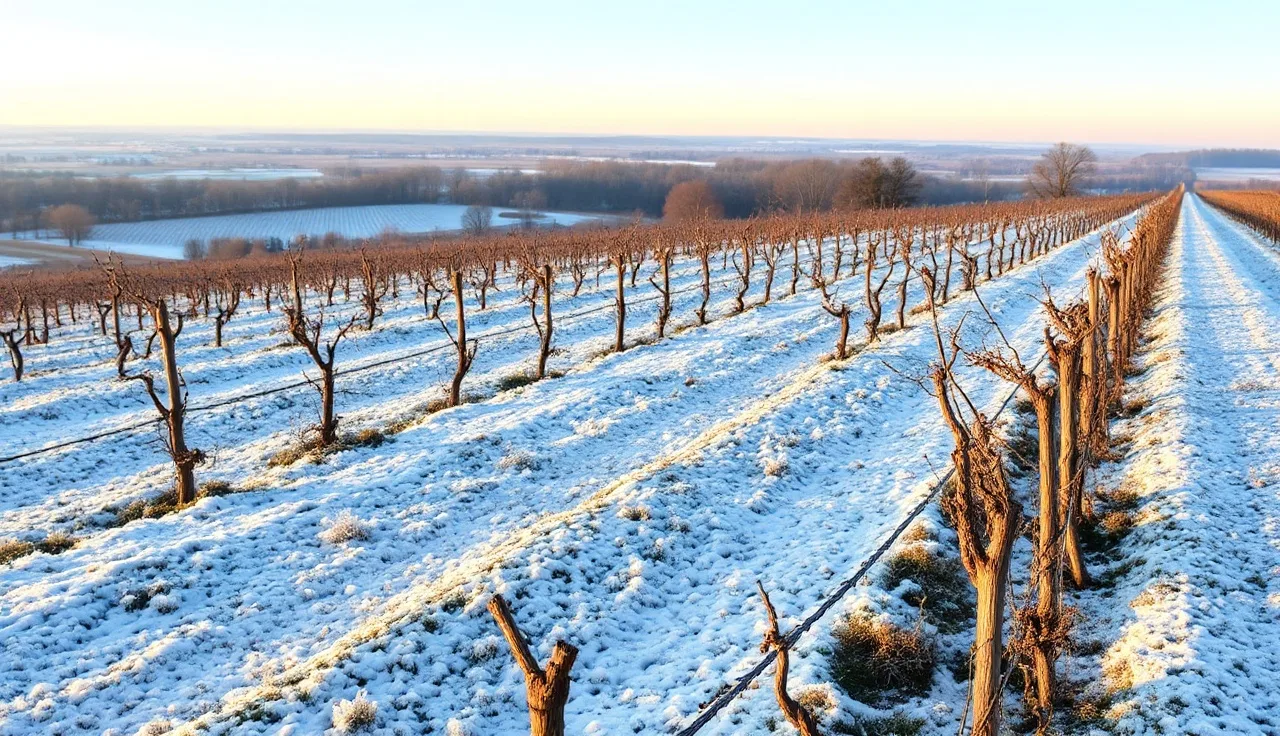
Yes, with real caveats. Ohio sits in USDA Hardiness Zones 5b to 6b across most of its grape-growing regions, and the Lake Erie shoreline in the northeast bumps to Zone 6a-6b because the lake delays spring frosts and moderates winter cold [1]. That lake effect is why the Lake Erie AVA, which stretches from northeastern Ohio through Pennsylvania and into New York, produces the most commercially significant grape acreage in the state.
Ohio had more than 330 licensed wineries as of the early 2020s, ranking it among the top ten wine-producing states by winery count [2]. Most of those wineries rely on hybrid varieties, not pure Vinifera, and that distinction matters a lot if you're planning new plantings.
Humidity is the real enemy. Hot, wet Ohio summers create ideal conditions for black rot, Botrytis, and especially downy mildew and powdery mildew. Growers in central and southern Ohio face a harder fight than those near the lake. That's not a reason to quit. It's a reason to pick the right varieties and spray on a real schedule.
Which grape varieties grow best in Ohio?
Cold-hardy hybrids are your safest bet. Vinifera is possible near the lake with good site selection, and native American varieties resist disease but often make low-quality wine.
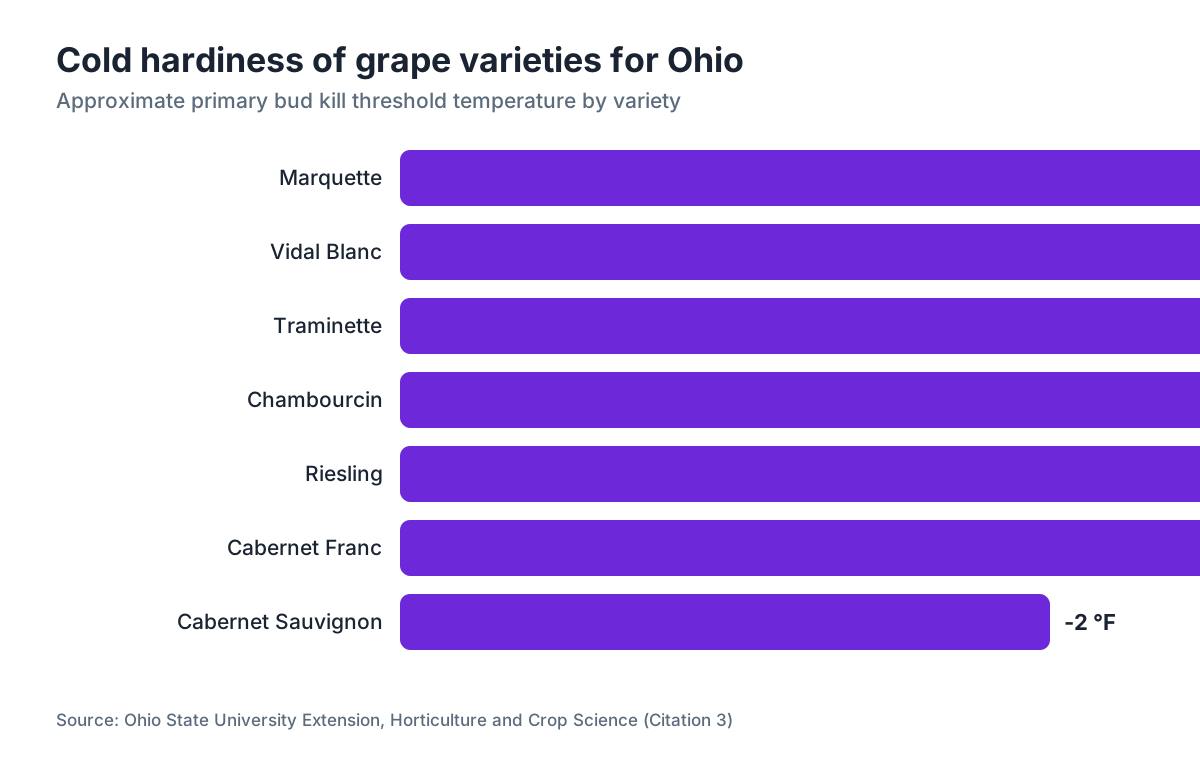
The Ohio State University Extension recommends Chambourcin, Traminette, Vidal Blanc, Noiret, and Marquette as commercially proven hybrids in Ohio conditions [3]. These tolerate winter temperatures as low as -10°F to -20°F (depending on the cultivar) and carry meaningful resistance to downy mildew and black rot, which cuts your fungicide inputs considerably.
For Vinifera, Riesling and Cabernet Franc have a real track record in the Lake Erie AVA. Chardonnay and Pinot Noir grow there too, though Pinot Noir is risky in inland sites. Cornell's viticulture program has long documented Riesling performance in the Great Lakes region, noting that the variety's tight cluster structure still demands fungicide cover in humid years [4].
Marquette deserves special mention. Developed at the University of Minnesota and released in 2006, it offers -36°F cold hardiness, good disease resistance, and wines that actually taste interesting. Ohio growers in zones 5b and inland 6a lean on it hard.
| Variety | Type | Cold Hardiness | Disease Resistance | Best Region in Ohio |
|---|---|---|---|---|
| Chambourcin | Hybrid | -5°F | Moderate | Statewide |
| Traminette | Hybrid | -10°F | Good | Statewide |
| Marquette | Hybrid | -36°F | Very Good | All zones |
| Vidal Blanc | Hybrid | -15°F | Moderate | Statewide |
| Riesling | Vinifera | -5°F | Low | Lake Erie AVA |
| Cabernet Franc | Vinifera | -5°F | Low-Moderate | Lake Erie AVA |
| Concord | Native | -25°F | High | Statewide |
Concord is the backbone of the Ohio grape juice and jelly industry around the Lake Erie shore, but it makes wine that most serious producers avoid for anything premium. If you're planting for a winery label, hybrids or Vinifera (in the right site) are the way to go.
What are Ohio's climate zones and where do grapes grow best?
Ohio's grape regions break into three practical tiers.
The Lake Erie corridor is the gold standard. Towns like Madison, Geneva, and Conneaut in Ashtabula County sit on lake-influenced slopes with well-drained, fine-loamy soils. The lake delays last spring frost and holds off first fall frost, giving a growing season of roughly 180-190 days. Ashtabula County alone accounts for a substantial share of Ohio's total bearing acreage for grapes [2].
The rolling hills of the Southeast, near the Ohio River in Gallia, Meigs, and Lawrence counties, have a different advantage. The river moderates temperature somewhat, soils drain well on slopes, and the growing season is slightly longer than the interior. The Hocking Hills sub-region draws small boutique producers. The trade-off is steeper terrain management and higher labor costs.
Central Ohio is the hardest zone. Columbus and surrounding counties have cold winters without lake moderation, heavy clay soils in many parcels, and the same humidity as the rest of the state. Growers here succeed with the most cold-hardy hybrids and on elevated, south-facing slopes with good air drainage. Air drainage matters as much as soil drainage: cold air settles in low spots and kills buds on nights that wouldn't be lethal on a hillside 30 feet higher.
The USDA plant hardiness zone map is a starting point, but local frost pocket mapping, prevailing wind data, and slope aspect should drive your final site decision. An Ohio State Extension viticulture specialist can help you read a specific parcel; their contact list is on the OSU Extension website [3].
How do you prepare soil and plant a vineyard in Ohio?
Grapes tolerate a wide pH range but do best between 5.8 and 6.5. Before you plant, pull a full soil sample, more than N-P-K but also micronutrients including boron, zinc, and copper, because grapes are sensitive to boron deficiency and copper builds up from years of fungicide use. Ohio State Extension's soil testing lab processes samples, and turnaround is typically two to three weeks [3].
Drainage is the make-or-break factor on Ohio sites. Grapes die in waterlogged root zones. If your water table sits within 18-24 inches during winter, plan on tile drainage before planting. Perforated tile at 30-foot spacing is common on flat northeast Ohio sites; the cost runs roughly $800 to $1,500 per acre depending on tile depth and contractor rates (this range is a general contractor estimate and varies significantly by region and current materials prices).
For row orientation, north-south rows optimize sun exposure on east and west-facing canopy surfaces. On slopes, run rows up-and-down the slope where possible to improve cold air drainage, even if it sacrifices a little sun efficiency.
Typical Ohio planting densities run 605 to 1,210 vines per acre (8x6 to 8x9 foot spacing). Closer spacing raises competition, which can restrain vigor on fertile Ohio soils, though trellis and labor costs scale up with density. Use own-rooted vines for most hybrid varieties; grafted vines onto phylloxera-resistant rootstocks make sense if your soil has a phylloxera history, which is more common in old-vineyard ground.
Year-one care is mostly weed control and training the main shoot. Don't let a cover crop establish before the vines are well-rooted. Grass drives come in year two once vines can compete. Expect no meaningful crop until year three, and a full commercial crop only by year four or five.
What diseases hit Ohio vineyards hardest and how do you manage them?
Ohio's warm summers and 35-45 inches of annual precipitation create almost textbook conditions for fungal disease. The four you'll fight every season are black rot (Guignardia bidwellii), downy mildew (Plasmopara viticola), powdery mildew (Erysiphe necator), and Botrytis bunch rot.
Black rot is the most common crop-wrecker for Ohio growers with weak spray programs. The pathogen overwinters in mummified berries and infected canes. The infection window opens at bloom and stays open until veraison. Cornell's integrated pest management program documents that preventive fungicide applied at 7-14 day intervals from shoot emergence through mid-summer is the standard control approach [4]. Once you see black rot lesions on berries, it's too late to save that fruit.
Downy mildew moves fast in wet springs. The classic "oily spot" on upper leaf surfaces precedes sporulation on the underside. Mancozeb, copper, or phosphonate-based materials are the backbone of control, though copper builds up in soil over time and should be tracked.
Powdery mildew pressure peaks when temperatures are 70-85°F with low rainfall. It doesn't need free moisture to germinate, which surprises growers who assume a dry week means low disease pressure. Sulfur, SDHI fungicides, and DMI materials rotate well for resistance management.
Botrytis becomes a problem at harvest on tight-clustered varieties. Site selection and canopy management that speeds drying after rain matters more than any single spray.
If you manage a commercial vineyard, every fungicide application has to be recorded: product, rate, EPA registration number, application date, pre-harvest interval (PHI), and the restricted entry interval (REI) for worker protection. The EPA Worker Protection Standard (WPS) at 40 CFR Part 170 requires that all agricultural workers and handlers receive WPS safety training and that pesticide application records be kept for two years and available for inspection [5]. Cornell's IPM resources and OSU Extension provide Ohio-specific spray timing calendars tied to phenological stages [3][4].
What trellis and training system should Ohio growers use?
High Cordon, VSP (Vertical Shoot Positioning), and Geneva Double Curtain (GDC) are the three most common trellis systems in Ohio commercial vineyards.
VSP is the default for lower-vigor Vinifera and moderate-vigor hybrids. Shoots train upward between catch wires, creating an open, well-exposed canopy that dries quickly after rain. Given Ohio's disease pressure, anything that speeds drying earns its keep.
GDC was developed at the New York State Agricultural Experiment Station specifically for high-vigor American and hybrid varieties in the humid Northeast and Midwest. It splits the canopy into two downward-hanging curtains, increasing the fruiting surface per vine and managing excessive vegetative vigor. For Chambourcin and Concord on fertile Ohio soils, it remains a practical choice.
High Cordon (or High Wire Cordon) suits Seyval Blanc and similar varieties prone to Botrytis; raising the fruit zone away from ground-level humidity helps a little. That said, it makes cluster thinning and harvest harder.
The trellis itself: use 8-foot cedar, locust, or pressure-treated pine end posts (avoid creosote-treated posts; the chemical can leach into soil and damage vine roots). Line posts every 20-24 feet, 7 feet tall, 2.5 feet in ground. Budget $1,500 to $2,500 per acre for trellis materials alone, based on current materials pricing. Labor to install doubles or triples that figure depending on whether you're doing it yourself or hiring a crew.
What are Ohio's licensing and compliance requirements for growing grapes commercially?
Grow grapes purely for home use and Ohio requires no license. The moment you sell fruit or produce wine for sale, licensing kicks in.
A commercial vineyard selling grapes to other wineries operates as an agricultural producer and needs no special grape license, but if you apply restricted-use pesticides, the applicator must hold an Ohio Department of Agriculture (ODA) Private Pesticide Applicator certification, or a commercial certification if applying for hire [6]. The ODA handles this and sets recertification continuing education requirements.
To make and sell wine, you'll need an Ohio wine manufacturer or A-2 permit through the Ohio Division of Liquor Control [7]. The Ohio Department of Commerce, Division of Liquor Control manages wine manufacturing permits. There's also a Farm Winery designation that lets producers with Ohio-grown grapes sell at retail and host certain events; it requires that a defined percentage of fruit be Ohio-sourced, though the exact threshold has changed over time and you should confirm current rules directly with the Division of Liquor Control.
Federally, a Bonded Winery Permit from the TTB (Alcohol and Tobacco Tax and Trade Bureau) is required before making any wine for sale, and every winery must file federal excise tax returns [8]. The TTB has a small producer tax credit that reduces the per-gallon excise tax rate for producers under 250,000 gallons annually.
Pesticide application records and spray records are more than good farming practice. They're a compliance requirement under the EPA WPS for any operation with agricultural workers. Clean, timestamped spray records protect you in the event of a worker illness claim or state inspection. A field operations platform like VitiScribe can log spray events, products, PHIs, and REIs in one place, which matters when a state inspector asks to see two years of records.
For operations that ship wine direct to consumers, Ohio's DTC shipping rules add another layer. Ohio allows direct-to-consumer wine shipments from Ohio wineries under specific license conditions; check the current Ohio Revised Code Chapter 4303 for the exact parameters [7].
How much does it cost to plant a vineyard in Ohio?
Honest answer: it's expensive and the range is wide. Establishment costs from bare ground to first harvest run roughly $10,000 to $20,000 per acre once you include land preparation, tile drainage (if needed), vine stock, trellis materials, installation labor, cover crop seeding, irrigation (if you install it), and first-three-year management inputs. This is a general industry estimate. Nobody has a single definitive Ohio-specific cost study, and actual costs vary significantly by site, variety, and what you're already set up with.
The closest published figure comes from Ohio State Extension's enterprise budget tools, which have historically put establishment costs in the $12,000-$16,000 per acre range for hybrids without major drainage work [3]. Vinifera on a site requiring tile, mounding, or other site work can push past $20,000 per acre without difficulty.
Operating costs once established run $1,500 to $3,000 per acre per year for hybrid varieties in Ohio, covering labor, pesticides, fuel, and equipment. Vinifera with denser spray programs and more intensive canopy work sits at the high end or above.
Revenue: grapes sold to other Ohio wineries fetch roughly $400 to $1,200 per ton depending on variety and quality (these are informal market rates; Ohio doesn't publish an official price report). Wine grapes grown for your own winery have higher effective value but require the capital and compliance cost of the winery operation itself.
Breakeven for a small Ohio farm winery generally needs a minimum of 5-10 acres in production plus a tasting room revenue stream, based on what operators in the Ohio Wine Producers Association have described publicly [2]. Pure grape sales to other wineries on small acreage rarely pencil out without diversified farm income.
What's the best time of year to prune and manage the Ohio vine cycle?
Ohio's vine calendar runs roughly as follows.
Dormant pruning happens between January and early March, after the worst cold snaps but before bud swell. Pruning too early risks exposing green wood to late cold. Pruning too late wastes stored energy and can cause excessive bleeding. In practice, most Ohio growers aim for late February to mid-March.
Before pruning, do a quick cold injury assessment: cut five to ten buds from representative vines and check primary bud survival. If primary bud kill is above 50%, you're looking at a severe crop loss year and you'll need to leave more nodes as insurance.
Bud break in northeast Ohio (Lake Erie AVA) typically falls in late April to early May. Central and southern Ohio can be a week earlier on warm slopes. First spray timing keys off bud break for downy and powdery mildew programs.
Bloom in Ohio lands in mid-June, roughly six to eight weeks after bud break. This is when black rot infection risk peaks. Your spray schedule needs to be running before bloom, not starting at bloom.
Veraison, when berries soften and color, hits in mid-August for early varieties, late August to mid-September for later ones. Stop applying most systemic fungicides at or before the pre-harvest interval specified on the label.
Harvest for early hybrids (Marquette, some Vidal) runs from mid-September to early October. Riesling and later Chambourcin push to October. Ohio autumns can bring heavy rains in September, so have a harvest plan with Brix and TA targets pre-set rather than waiting for perfect conditions that may not come.
How do you manage winter injury in Ohio vineyards?
Winter cold is the most binary risk in Ohio viticulture: a single bad night can destroy 70-100% of your primary buds. The polar vortex events of 2014 and 2019 killed primary buds across much of the state, with some Vinifera blocks losing the entire crop and suffering permanent cane damage.
The best protection is variety choice. Marquette and other University of Minnesota releases survive -30°F to -36°F with primary bud kill under 10% at those temperatures [3]. That's a different world from Cabernet Sauvignon, which starts showing significant bud kill around -5°F.
Beyond variety, technique matters. High-cordon training keeps the permanent wood above the coldest air layer near the ground. Healthy vine nutrition and avoiding late-season nitrogen, which can push growth too late into fall, help vines harden off properly before cold arrives. Potassium sufficiency correlates with better cold acclimation; soil and petiole testing mid-summer can flag deficiencies in time to correct them.
For Vinifera blocks in high-value situations, some Ohio growers use hilling-up: burying the graft union and lower trunk with soil in late November and uncovering in spring. It's labor-intensive but protects the most vulnerable part of the vine. Very few operations scale this economically beyond a small block.
After a damaging cold event, prune late and assess bud survival carefully before deciding how many nodes to leave. Leaving extra nodes on damaged vines (spur or cane pruning to more than usual) compensates for partial primary bud kill by allowing secondary or tertiary buds to produce a reduced but salvageable crop.
What resources and extension support exist for Ohio grape growers?
Ohio State University Extension is the primary public resource and it's genuinely useful. OSU's Department of Horticulture and Crop Science has published variety trial data, enterprise budgets, disease management guides, and spray timing calendars specific to Ohio conditions [3]. Their extension specialists offer farm visits in some regions; contact the local county extension office or the Columbus campus directly.
The Ohio Wine Producers Association (OWPA) represents commercial wineries and grape growers and runs educational events, an annual conference, and market data [2]. Membership is modest in cost and the networking with other Ohio producers is probably the best practical ROI.
Cornell University's viticulture and enology program is the most directly applicable outside resource for Ohio growers, because Cornell's work in the Finger Lakes (similar cold climate, similar humidity, similar hybrid/Vinifera mix) translates cleanly to Lake Erie and Southeast Ohio conditions [4]. Their Appellation Cornell publications are free online.
Washington State University's viticulture program, while focused on Washington's drier climate, publishes solid disease and pest management guides that Ohio growers use to fill in gaps [9].
For compliance record-keeping across spray logs, worker protection documentation, and harvest records, a dedicated vineyard operations tool beats spreadsheets once you're managing more than two or three acres. VitiScribe is built for vineyard compliance and field records, including spray event logging with PHI/REI tracking. Most small Ohio operators who use it say the time savings show up most during state or TTB inspection prep.
The USDA's National Agricultural Statistics Service publishes Ohio crop data including bearing acreage and grape production figures, though the detail on individual varieties is limited [10].
Frequently asked questions
Can you grow Cabernet Sauvignon in Ohio?
Only in the warmest Lake Erie sites, and even there it's risky. Cabernet Sauvignon buds die around -5°F, and Ohio gets there regularly in inland zones. Lake Erie shoreline blocks on south-facing slopes with good air drainage have produced Cab Sauv commercially, but experienced growers treat it as a high-risk gamble. Most commercial operators who want a red Vinifera reach for Cabernet Franc, which handles cold a few degrees better.
What is the Lake Erie AVA and why does it matter for Ohio grapes?
The Lake Erie American Viticultural Area spans the southern shore of Lake Erie across Ohio, Pennsylvania, and New York. Lake Erie's thermal mass delays spring frosts in the vineyard and extends fall harvest windows, adding roughly 20-30 growing degree days compared to inland sites at the same latitude. It's why Ohio's densest commercial grape acreage, concentrated in Ashtabula County, sits right on the lake shore.
Do I need a license to grow grapes in Ohio?
No license is required to grow grapes for personal or household use. Selling grapes commercially makes you an agricultural producer, which requires a Private Pesticide Applicator license from the Ohio Department of Agriculture if you apply restricted-use pesticides yourself. Making wine for sale requires an Ohio wine manufacturer permit plus a federal TTB Bonded Winery Permit before you process a single gallon.
How long before an Ohio vineyard produces a full crop?
Most Ohio vineyards reach a full commercial crop in year four or five after planting. Year one is establishment; you may see small clusters in year two but most growers remove them to direct energy into vine structure. A partial crop in year three is realistic. The initial capital outlay is absorbed over four to five years before meaningful fruit revenue arrives, which is why cash flow planning matters as much as agronomy.
What cover crop works best between vine rows in Ohio?
Most Ohio growers use a grass-legume mix in the row middles: fescue or orchard grass with a small amount of clover. The cover holds soil during heavy rain events, which Ohio gets plenty of, and the clover fixes a little nitrogen. Avoid establishing cover crops in the vine row itself until vines are well-rooted, usually year two. Mow to keep the cover from competing too hard during dry spells.
Is irrigation necessary in Ohio vineyards?
Generally no. Ohio receives enough annual precipitation (35-45 inches) that drip irrigation isn't a production necessity the way it is in California or Washington. But it helps in the establishment year to get vines through August dry stretches. Some high-value Vinifera blocks use drip for precision management. If you install it, budget $1,000-$2,000 per acre for drip lines and filters; overhead irrigation is rarely used in Ohio because it increases disease pressure.
What are the best hybrid grape varieties for Ohio wine quality?
Traminette produces aromatic whites with spicy character that Ohio consumers respond well to. Marquette makes structured reds with real tannin and berry fruit that are hard to grow in other humid-climate regions. Chambourcin is the reliable red workhorse, widely planted and predictable. Vidal Blanc makes solid dry whites and excellent ice wine when fall temperatures cooperate. OSU Extension's variety trial data backs all four as commercially proven in Ohio conditions.
How do Ohio growers handle black rot?
Prevention is everything; there's no cure once berries are infected. Remove mummified fruit and infected canes at pruning to reduce inoculum. Start fungicide applications at bud swell using mancozeb, captan, or myclobutanil on a 7-14 day schedule through bloom and four to six weeks after. Canopy management that opens clusters to air circulation helps. A missed spray window around bloom in a wet year can wipe out the whole crop on susceptible varieties like Vidal.
What does the EPA Worker Protection Standard require for Ohio vineyard operators?
Any Ohio vineyard that employs agricultural workers or pesticide handlers must comply with EPA WPS regulations under 40 CFR Part 170. Requirements include training all workers and handlers before they enter treated areas, posting WPS safety information, providing decontamination supplies, and keeping pesticide application records for two years. Records must include product name, EPA registration number, application date, location, rate, and re-entry interval. Violations can result in civil penalties.
How do I assess winter bud damage in an Ohio vineyard?
In late January or February, cut a representative sample of 50-100 buds from multiple vines and locations in the block. Slice each bud lengthwise and examine the primary bud with a hand lens: living tissue is bright green, dead tissue is brown or black. If primary bud kill exceeds 30%, plan to leave extra nodes at pruning to compensate. Above 70% kill, evaluate whether to delay harvest-year expectations entirely and focus on vine recovery.
Can you grow organic grapes in Ohio and manage disease without synthetic fungicides?
It's possible but much harder than in drier states. Copper and sulfur are the backbone OMRI-listed materials. Copper controls downy mildew and has some black rot activity; sulfur handles powdery mildew. The problem is copper builds up in soil over years and at high levels damages vine roots and soil biology, so USDA organic rules limit copper applications. Without synthetic DMI or SDHI fungicides, Ohio's disease pressure demands impeccable canopy management and planting only the most disease-resistant varieties.
How do I find a market for Ohio-grown grapes?
The Ohio Wine Producers Association is the best starting point for connecting with wineries seeking Ohio fruit. Most small transactions happen through direct relationships: contact local wineries in your region, attend the OWPA annual conference, and consider having your fruit professionally evaluated for Brix, pH, and titratable acidity before any sales conversation. Pricing is informal and negotiated; there's no public price report for Ohio wine grapes. Established quality reputation matters more than acreage in this market.
Sources
- USDA Agricultural Research Service, USDA Plant Hardiness Zone Map: Ohio's plant hardiness zones range from 5b inland to 6b along the Lake Erie shoreline
- Ohio Wine Producers Association, Ohio wine industry overview: Ohio has more than 330 licensed wineries and is among the top ten wine-producing states by winery count
- Ohio State University Extension, Horticulture and Crop Science, Viticulture resources: OSU Extension recommends Chambourcin, Traminette, Vidal Blanc, Noiret, and Marquette as commercially proven Ohio hybrids; establishment costs historically estimated at $12,000-$16,000 per acre
- Cornell University Viticulture and Enology, Appellation Cornell and IPM resources: Cornell documents preventive fungicide at 7-14 day intervals from shoot emergence through mid-summer as standard black rot and downy mildew control; Riesling's tight cluster structure demands fungicide cover in humid years
- U.S. Environmental Protection Agency, Worker Protection Standard (WPS) 40 CFR Part 170: EPA WPS requires agricultural workers and handlers receive safety training, pesticide application records be kept for two years, and records be available for inspection
- U.S. Alcohol and Tobacco Tax and Trade Bureau (TTB), Permits Online: A federal Bonded Winery Permit from TTB is required before making wine for sale; small producers under 250,000 gallons qualify for a reduced federal excise tax rate
- Washington State University, Viticulture and Enology program: WSU publishes disease and pest management guides used as supplementary resources by Ohio growers
- USDA National Agricultural Statistics Service, Ohio field office crop data: NASS publishes Ohio bearing grape acreage and production data; Ashtabula County accounts for a substantial share of Ohio's total bearing acreage
Last updated 2026-07-09