How water status impacts the timing of veraison in grapevines
TL;DR
- Water stress accelerates veraison.
- Moderate pre-veraison deficit can move berry color change 7 to 14 days earlier than well-irrigated vines, based on field trials from UC Davis and WSU.
- Severe stress delays or unevenly triggers it.
- The 4 to 6 weeks before veraison is where your irrigation decisions have the most pull on your harvest calendar.
What is veraison and why does its timing matter for vineyard management?
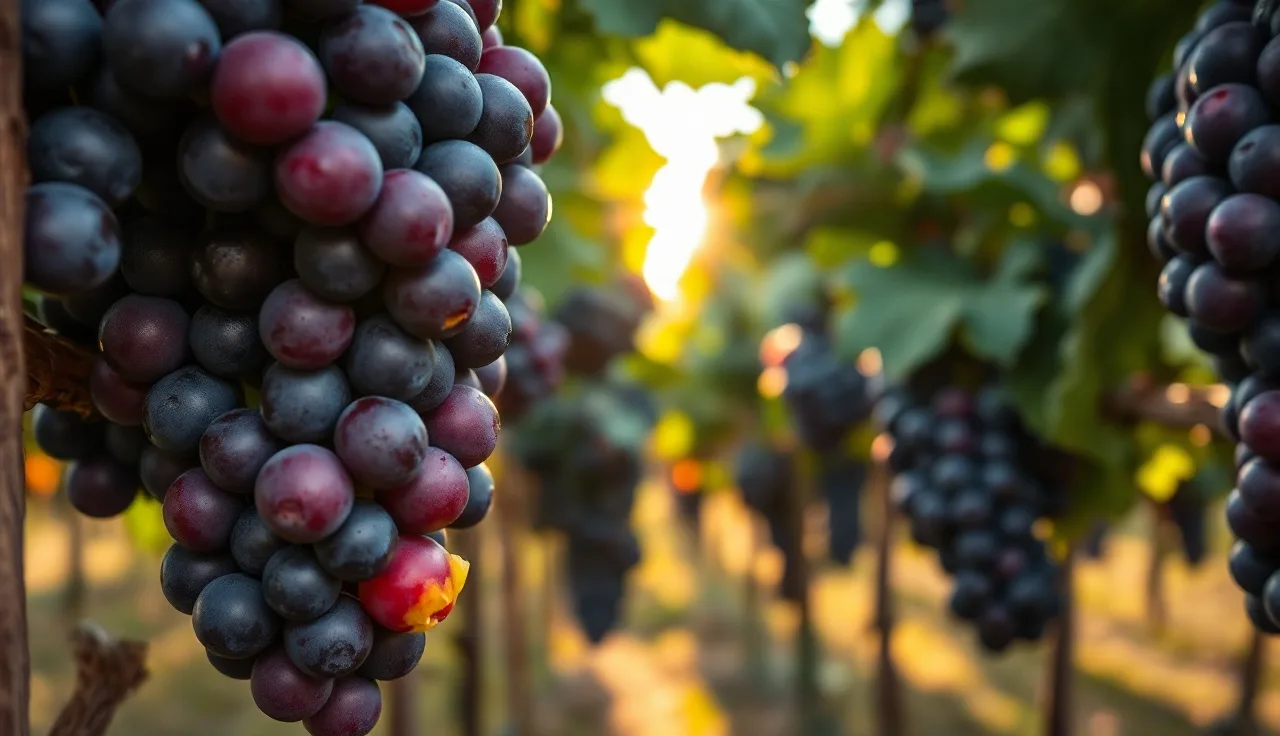
Veraison is the physiological turning point of berry development. Red varieties shift from green and hard to soft and colored; white varieties stay yellow-green but go through the same internal softening. Sugars begin accumulating rapidly, acids drop, and the berry switches from primarily importing water to primarily importing sugars from the phloem [1]. The whole process in a single cluster usually takes 1 to 3 weeks, though across a block it can look messier than that.
Why you care about timing: every week earlier or later at veraison cascades into harvest date, heat unit accumulation during ripening, disease pressure windows, and labor scheduling. If you're juggling multiple varieties or managing a custom crush program, a block that veraisons two weeks off from your model creates real problems. Understanding what drives that timing, rather than just watching and reacting, is what separates a proactive manager from one who's always scrambling.
How does pre-veraison water deficit accelerate berry color change?
The short answer: mild to moderate water stress in the 4 to 6 weeks before veraison consistently moves the date earlier, often by 7 to 14 days compared to well-watered controls [2]. The mechanism isn't fully resolved, but the working model involves abscisic acid (ABA). Water stress triggers ABA accumulation in leaves and berries, and ABA is a primary signal for the softening and color initiation that define veraison [3].
A 2007 study by Castellarin et al. published in Planta found that early water deficit increased anthocyanin accumulation and advanced color development in Cabernet Sauvignon, partly by upregulating the genes responsible for flavonoid biosynthesis [4]. The ABA pathway is the most consistent thread running through the research. UC Davis viticulture extension materials describe the pre-veraison window as one where vine water potential is a primary environmental modulator of ABA signaling in the berry, making it the most sensitive irrigation management period of the season [2].
So a block running at leaf water potential of minus 1.0 to minus 1.2 MPa (mild to moderate stress, as measured at predawn or midday) in June or early July will generally push veraison earlier than the same block kept at minus 0.4 to minus 0.6 MPa. The magnitude varies by variety, rootstock, soil water-holding capacity, and ambient temperature, so you can't just read a number off a chart and assume it will hold in your specific block.
Does severe water stress before veraison help or hurt timing?
This is where the nuance really matters. Moderate stress accelerates veraison. Severe stress, leaf water potential dropping below roughly minus 1.5 to minus 1.6 MPa at midday, can actually produce uneven or stalled veraison [5]. The vine starts prioritizing survival physiology. Stomata close hard, photosynthesis shuts down, and the berry never gets the consistent phloem signal it needs to trigger uniform initiation across all berries in a cluster.
What you see in the field with severe stress is "green back," where portions of clusters remain green and hard while others color normally. Once severe stress is broken by irrigation or rain, you often get a secondary flush of berries attempting veraison, which means you end up harvesting a block with berries scattered across many ripeness stages. That's a winemaking problem that no sorting table fully fixes.
WSU extension work on deficit irrigation in Washington State specifically flags that allowing water potential to drop below minus 1.4 MPa before veraison increases variability in berry development within clusters [5]. The practical takeaway: a controlled, moderate deficit is the tool; turning off water completely and hoping for the best is not irrigation management, it's irrigation neglect.
For paso robles wineries and other warm, low-rainfall growing regions, this distinction between intentional deficit and accidental severe stress is the difference between quality and a difficult harvest.
What are the best ways to measure vine water status before veraison?
You have a few real options, each with trade-offs.
Pressure bomb (pressure chamber): Still the industry standard. Predawn leaf water potential gives you a good proxy for soil water availability. Midday stem water potential, where you bag a leaf for 1 to 2 hours before measurement, gives you a tighter picture of vine stress level [2]. UC Davis recommends midday stem water potential as the most reproducible measure for irrigation scheduling decisions. Instruments from PMS Instrument Company run roughly $800 to $1,200 new; used units are available and work fine if calibrated.
Pressure plate or tensiometer arrays: Cheaper per unit, placed at root depth, give you soil water content but not direct vine response. You have to pair them with a vine response model for your soil type. More labor than a pressure bomb if you're doing it right.
Sap flow sensors: Research-grade, expensive ($500 to $2,000+ per vine installation), and not practical for most commercial operations. They're useful for understanding how a block is behaving under stress but rarely justified for routine scheduling.
Drone or remote sensing NDWI: Some operations now use drone-mounted multispectral imagery to identify spatially variable water stress across a block before it's visible to the naked eye. Nobody has a solid cost-per-acre figure for small operations, but the closest published data suggest meaningful stress differentiation is achievable at spatial resolutions of 5 to 10 cm/pixel [6].
For most vineyard managers, the pressure bomb plus a consistent measurement protocol (same time of day, same leaf position, same sample size) is the practical standard. The key is doing it consistently enough that you're tracking trends, more than single readings.
Which grapevine varieties are most sensitive to pre-veraison water status?
Variety sensitivity is real but the published data is thinner than you'd like. The clearest pattern from the literature is that thin-skinned red varieties with strong ABA-mediated color responses, Pinot Noir being the most studied, show pronounced advancement of veraison under mild deficit, sometimes 10 days or more [4]. Cabernet Sauvignon shows a meaningful response too, though the effect on anthocyanin concentration can sometimes be more dramatic than the timing shift itself.
White varieties are harder to quantify because you're not watching color change. You're watching berry softening, which requires either a texture meter or knowing your block well enough to feel the difference. Chardonnay and Sauvignon Blanc both respond to water status, but vineyard managers often don't track veraison timing as precisely in whites, so the data is sparse.
Rootstock matters as well. 110R and 140Ru are drought-tolerant rootstocks that buffer the vine against soil water deficits, which means a graft on these may show less veraison advancement under the same irrigation treatment than a graft on 3309C or Riparia Gloire. Cornell extension has documented rootstock-mediated differences in water uptake efficiency that directly affect how much stress a grafted vine experiences for a given soil water content [7].
The honest answer: you can't apply a published table directly to your block without knowing your variety-rootstock combination, your soil, and your normal base irrigation program.
How does post-veraison irrigation affect berry development and harvest timing?
Once veraison is underway, the rules change. The berry is now importing sugars through the phloem. The xylem connection is functionally interrupted in most varieties by the time berries soften, which means big irrigation events after veraison don't directly dilute berry sugars the way popular intuition suggests [3]. What post-veraison water primarily affects is berry size (through cell expansion and osmotic uptake), skin-to-pulp ratio, and disease susceptibility.
The relevant harvest timing effect is indirect. Heavy post-veraison irrigation can slow sugar accumulation by reducing vine stress and maintaining high canopy photosynthesis, but it also lowers the skin-to-pulp ratio and increases bunch weight. For red varieties where skin phenolic concentration matters, that dilution is a quality problem.
WSU's deficit irrigation research in Cabernet Sauvignon found that sustained moderate stress from veraison to harvest produced smaller berries with higher skin phenolic concentrations without a significant delay in reaching target Brix [5]. The harvest date held roughly constant; the wine quality metrics changed more than the calendar.
So: pre-veraison water status moves the harvest date. Post-veraison water status shapes berry composition more than it shapes timing. This is a useful mental model even if real blocks are messier than the model.
What is the relationship between water status, heat accumulation, and veraison date?
You can't talk about water status and veraison without talking about temperature. Growing degree days (GDD, base 50°F in the UC Davis system) accumulated from budbreak to veraison is the baseline predictor. Most varieties in California typically need roughly 1,350 to 1,700 GDD to reach veraison, depending on variety and clone [2]. Water stress compresses that requirement, or more precisely, it shifts berry ABA signaling at a lower GDD accumulation than would be needed in a well-watered vine.
In a warm year with moderate pre-veraison water stress, you might reach veraison 10 to 14 days earlier than the calendar average for the same variety. In a cool year with that same stress treatment, the effect is smaller because the temperature ceiling limits ABA synthesis and berry response regardless of water status. The interaction between heat and water stress is multiplicative, more than additive [3].
This matters for spray timing. If you're running a pre-veraison powdery mildew or botrytis program, veraison date is your hard cutoff for certain fungicide choices. Advancing it by two weeks under a water stress regime while still following a calendar-based spray schedule means you could be applying a product after veraison that was only registered for pre-veraison use. This is both a residue compliance issue and a worker protection concern under the EPA Worker Protection Standard, which requires accurate application records tied to crop growth stage [8].
Keeping tight records of water status measurements, irrigation events, and estimated veraison dates in each block is where a tool like VitiScribe earns its place in the operation, since those records also support your spray record and WPS compliance documentation.
How do soil type and water-holding capacity interact with irrigation timing before veraison?
Sandy loam soils hold roughly 1 to 1.5 inches of plant-available water per foot of depth. Clay loams hold 2 to 2.5 inches per foot [9]. This difference means the same irrigation interval produces very different vine water status curves depending on your soil texture. A block on coarse sandy soil can swing from mild stress to severe stress in 3 to 4 days without rain. A block on heavy clay may take two weeks to move through the same range.
For pre-veraison stress management, this means your irrigation triggering threshold needs to be calibrated to your soil, more than your variety. The same midday stem water potential target of minus 1.0 MPa implies very different irrigation scheduling on a sandy Paso Robles bench versus a silt loam in the Willamette Valley.
Soil variability within a single block is often the biggest source of uneven veraison that vineyard managers attribute to other causes. A low spot with clay accumulation will stay wetter and veraison later. A ridge or slope break with shallower soil will stress faster and veraison earlier. Spatial mapping of soil texture and depth in your blocks, even a rough one from a soil probe survey, pays off in understanding why you see the uneven berry development you do.
For vineyard managers dealing with mixed blocks or older plantings on diverse soils, running separate irrigation zones keyed to soil type rather than block boundary is the right answer, even if it requires replumbing.
What does the research actually say about how many days early water stress moves veraison?
The most cited numbers come from a relatively small body of controlled trials, and the range is wider than you'd expect from reading promotional irrigation literature.
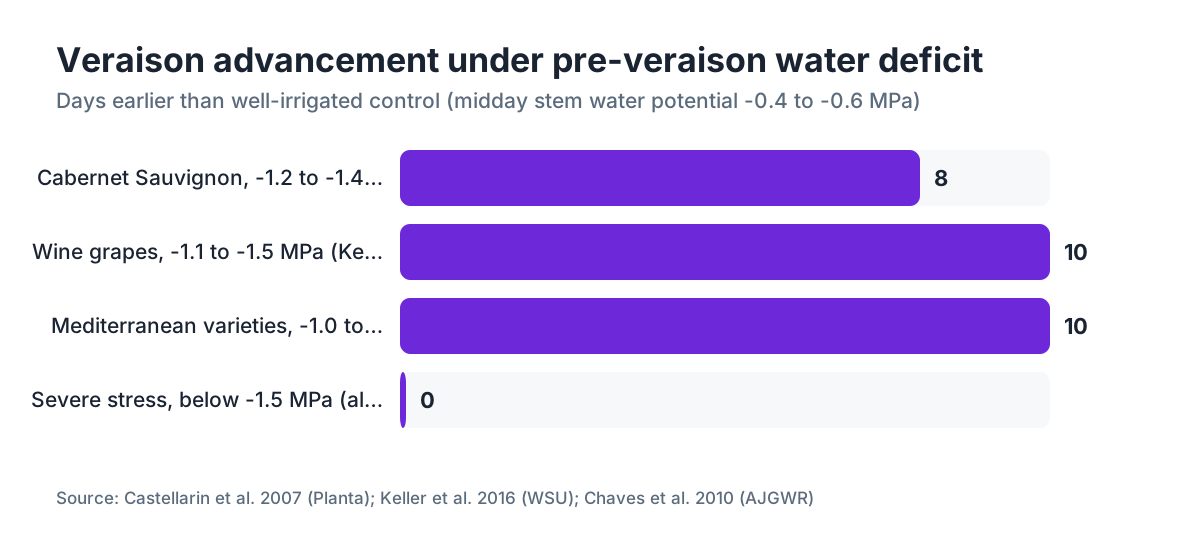
Castellarin et al. (2007) found veraison advancement of 6 to 10 days in field-stressed Cabernet Sauvignon compared to irrigated controls, with the stressed vines also showing higher anthocyanin concentrations at harvest [4].
Keller et al. (2016) at WSU found that early season water deficits moved veraison 7 to 14 days earlier in multiple seasons in Concord and wine grape varieties, with the magnitude depending on how early and how severe the stress was applied [5].
Chaves et al. (2010) in a review published in the Australian Journal of Grape and Wine Research summarized Mediterranean vineyard studies showing 8 to 12 day advancement under controlled deficit irrigation initiated at fruit set [3].
Nobody has really good data on varieties outside the major Cabernet, Merlot, and Pinot cluster, so extrapolating these numbers to, say, Tempranillo or Vermentino in a California context requires caution. The mechanism is shared, but the magnitude of the ABA response varies by genotype.
| Study | Variety | Stress Level (MPa midday) | Veraison Shift |
|---|---|---|---|
| Castellarin et al. 2007 | Cabernet Sauvignon | -1.2 to -1.4 | 6-10 days earlier |
| Keller et al. 2016 | Concord / wine grapes | -1.1 to -1.5 | 7-14 days earlier |
| Chaves et al. 2010 (review) | Mixed Mediterranean | -1.0 to -1.3 | 8-12 days earlier |
| Well-irrigated control | All | -0.4 to -0.6 | Baseline |
How should you adjust irrigation scheduling to target a specific veraison date?
Targeting a date is harder than the sales brochures for smart irrigation controllers suggest. What you can realistically do is set conditions that shift the likely veraison window earlier or later, then monitor actual berry development to confirm. Here's how experienced managers approach it.
Start monitoring berry development at 50 to 60 days post-fruit set. In warm regions this might be late June. In cool regions it could be mid-July. You're looking for berry softening, the earliest and most reliable indicator before visual color change in reds.
Decide on your target water potential window. For moderate deficit to accelerate veraison, UC Davis extension recommends targeting midday stem water potential of minus 1.0 to minus 1.2 MPa from fruit set to veraison [2]. Let the soil dry to that range, hold it there, and irrigate to prevent going below minus 1.4 MPa.
Adjust irrigation frequency rather than volume. In sandy soils, multiple small irrigations (0.2 to 0.3 inches per event) every 3 to 5 days give you better control than a single large event weekly. In clay soils, the buffer is bigger and you can afford longer intervals.
Keep measurement records. A decision you make in early July based on a reading from June 20th is a guess. Pressure bomb readings every 5 to 7 days during this window, logged by block, are the minimum to understand what's actually happening. This is also the data that supports your irrigation compliance records if your water district requires reporting.
Be realistic about what you can control. If you're in a hot spell with daily highs above 100°F, transpiration demand overwhelms irrigation capacity in many systems, and your water potential targets become aspirational rather than achievable.
How does climate change affect the relationship between water stress and veraison timing?
The trend data is consistent and concerning. Mean veraison dates in California wine regions have advanced by roughly 6 to 20 days over the past 30 to 40 years, depending on the region and variety, driven primarily by increasing growing season temperatures [10]. Water stress is a secondary driver in this trend, but not a trivial one. Drier springs and earlier snowpack loss in mountain-fed irrigation systems are advancing natural stress onset earlier in the season, compounding the temperature effect.
In practical terms this means the pre-veraison stress management window now often falls in a period that historically was spring, when managers weren't thinking about deficit irrigation. If your historical data shows veraison arriving two weeks earlier than it did 20 years ago, your spray calendar, your harvest equipment scheduling, and your irrigation trigger dates all need to move with it.
The UC Davis viticulture group has ongoing research tracking variety-level veraison date changes across the Central Valley and coastal regions [10]. Their published trend data through 2022 shows the Napa and Sonoma averages have moved roughly 2 to 3 days per decade for most major varieties, which sounds small until you're also managing a harvest crew and a winery intake schedule.
For south coast winery operations in Southern California, where heat accumulation is already high and irrigation water costs are significant, these trends make pre-veraison water management more consequential each decade, not less.
What records should you keep around water status and veraison for compliance and decision-making?
Compliance first. The EPA Worker Protection Standard (40 CFR Part 170) requires that restricted-entry intervals (REIs) and application records be tied to actual crop status, more than calendar dates [8]. If water stress moves your veraison earlier and you apply a fungicide that has a pre-harvest interval (PHI) counted from veraison, your record needs to show the estimated veraison date and how you determined it, more than the application date.
California's DPR spray record requirements (FAC Section 12981) require the field or block identifier, application date, and growth stage for relevant crop stage-dependent uses. If you're in Washington, WSU extension has specific guidance on block-level record requirements under state pesticide law [11].
Beyond compliance, the records that actually help you make better decisions year over year are: (1) midday stem water potential readings by block, dated, (2) irrigation event dates and volumes, (3) estimated veraison onset date per block, recorded when you actually observe it, not extrapolated later, and (4) any significant weather events (rain, heat spike) that disrupted your intended irrigation protocol.
Those four data streams, kept consistently for 3 to 5 years, will show you patterns in your blocks that no research paper can tell you. You'll start to see that Block 5 on the sandy knoll always needs irrigation 5 days earlier than Block 3 to hit the same water potential target, or that your Pinot Noir consistently veraisons 8 days before your Merlot, which means your spray cutoff dates need to be block-specific.
VitiScribe is built specifically to store and connect this kind of field data, linking water status logs to spray records to phenology observations in a single block timeline, so your WPS and DPR compliance doesn't live in a separate spreadsheet from your agronomic notes.
Frequently asked questions
Can you trigger veraison earlier by cutting off irrigation completely?
You can, but it's risky. A complete irrigation cutoff moves vines toward severe stress faster than expected, especially on sandy soils in warm weather. Below about minus 1.4 to minus 1.5 MPa midday stem water potential, you start seeing uneven veraison and green back in clusters. Moderate deficit (minus 1.0 to minus 1.2 MPa) is more effective and more controllable than a full shutoff.
Does watering heavily after veraison reverse earlier berry color change?
No. Once veraison is initiated, it doesn't reverse under normal conditions. Heavy post-veraison irrigation affects berry size and skin-to-pulp ratio more than color timing. What it can do is slow subsequent sugar accumulation somewhat, which may push your harvest date later, but the color change itself is not undone by restoring water supply.
How do I measure predawn leaf water potential vs midday stem water potential and which is better?
Predawn measurement uses an unbagged leaf cut just before dawn and gives you a soil-available-water proxy. Midday stem water potential uses a leaf bagged for 1 to 2 hours before noon measurement and reflects actual vine stress level more accurately. UC Davis recommends midday stem water potential for irrigation scheduling decisions because it captures the vine's real-time response, more than soil conditions.
Is veraison timing the same across all berries in a cluster?
No, and that's normal. Veraison progresses from the proximal berries (closest to the pedicel) outward in most varieties. What creates problems is when the spread across a cluster becomes wide, meaning more than 1 to 2 weeks between first and last berry. Severe pre-veraison water stress is a primary driver of that abnormal spread, along with uneven canopy shading and high crop loads.
How does rootstock choice affect vine response to pre-veraison water deficit?
Drought-tolerant rootstocks like 110R and 140Ru maintain better water uptake efficiency under soil water deficit, which means they buffer the vine against stress more than rootstocks like 3309C or Riparia Gloire. Practically, this means the same irrigation cutoff produces less vine stress on 110R than on 3309C, so your water potential targets and irrigation scheduling need to account for rootstock, more than variety and soil.
What growing degree day accumulation does veraison typically require?
Most wine grape varieties in California need roughly 1,350 to 1,700 growing degree days (base 50°F, from budbreak) to reach veraison, with variety-specific variation. UC Davis viticulture resources list variety-specific averages. Water stress can effectively compress this requirement by triggering ABA-mediated berry initiation at lower accumulated heat than a well-watered vine would need.
Does the timing of veraison affect powdery mildew and botrytis management?
Yes, directly. Many fungicide labels specify pre-veraison or post-veraison timing, and some have restricted-entry intervals or pre-harvest intervals that are counted from veraison. If water stress pushes veraison 10 days earlier than your historical calendar-based spray program assumes, you may apply a post-veraison-only product before veraison is complete, creating both a residue risk and a potential compliance problem under EPA Worker Protection Standard requirements.
Can deficit irrigation before veraison improve wine quality as well as advance timing?
The evidence says yes for red varieties, with caveats. Studies including Castellarin et al. (2007) found pre-veraison deficit increased anthocyanin concentration and activated flavonoid biosynthesis genes in Cabernet Sauvignon. The quality effect and the timing effect appear to come from the same ABA-mediated pathway. The caveats: severe stress negates both benefits, and white variety quality responses are less well documented.
How much does veraison timing vary between rows in the same block?
More than most managers expect. Soil variability within a block, slope position, aspect, and irrigation delivery uniformity all create within-block variability in water status. That variability shows up as staggered veraison across rows or zones. Blocks with coefficient of variation in soil texture or depth above about 20 to 30 percent typically show visible uneven veraison timing of 5 to 10 days across rows in a stressed season.
Should I stop irrigation before veraison in a cool, wet year?
Probably not, or at least not with the same target deficit as a warm year. In a cool year, the interaction between water stress and temperature limits how much ABA the berry can generate regardless of water status. Cutting irrigation in a cool, wet spring when soil water is already high risks very little advancement of veraison but creates unnecessary management complexity. Monitor water potential and irrigate or not based on actual readings, not habit.
How do I record veraison date accurately for spray record and compliance purposes?
Walk each block and record the date when 50 percent of berries show color change (for reds) or softening (for all varieties). Some managers use a 50-berry random sample protocol for consistency. Record this date by block in your field log. California DPR and EPA WPS compliance both benefit from block-level phenology records tied to spray application dates, especially for products with growth-stage-dependent restrictions.
What tools do WSU and UC Davis recommend for monitoring vine water status?
Both UC Davis and WSU extension programs recommend the pressure chamber (pressure bomb) as the practical field standard for measuring leaf or stem water potential. UC Davis specifically advocates midday stem water potential as the most reliable measure for irrigation scheduling decisions. WSU's deficit irrigation research protocols have used the same methodology for their Washington State field trials. Instrument costs run $800 to $1,200 new for commercial-grade units.
Does organic or dry-farmed viticulture change how water status affects veraison?
Dry-farmed vines rely entirely on stored soil water and rainfall, so they typically experience moderate to significant deficit stress before veraison in most California seasons. This often results in earlier veraison than irrigated neighbors, consistent with what the research predicts. The risk is that dry years push those vines past moderate stress into severe stress territory, producing uneven veraison. Organic irrigated operations follow the same water management principles as conventional ones.
Sources
- Coombe BG. Research on development and ripening of the grape berry. American Journal of Enology and Viticulture, 1992: At veraison, the berry switches from primarily importing water via xylem to primarily importing sugars via phloem
- Chaves MM et al. Grapevine under deficit irrigation: hints from physiological and molecular data. Australian Journal of Grape and Wine Research, 2010: Mediterranean vineyard studies show 8-12 day veraison advancement under controlled deficit irrigation initiated at fruit set; ABA is identified as primary signal; post-veraison xylem connection is functionally interrupted in most varieties
- Castellarin SD et al. Water deficits accelerate ripening and induce changes in gene expression regulating flavonoid biosynthesis in Cabernet Sauvignon. Planta, 2007: Early water deficit increased anthocyanin accumulation and advanced color development in Cabernet Sauvignon by 6-10 days; upregulated flavonoid biosynthesis genes
- WSU Extension, Deficit Irrigation of Grapevines, Keller M et al.: Early season water deficits moved veraison 7-14 days earlier; water potential below -1.4 MPa before veraison increases variability in berry development within clusters; sustained moderate stress from veraison to harvest produced smaller berries with higher skin phenolic concentrations
- Zarco-Tejada PJ et al. Remote sensing of vegetation water stress with narrow-band vegetation indices. Remote Sensing of Environment, 2003: Meaningful water stress differentiation in vineyards is achievable at spatial resolutions of 5-10 cm/pixel using multispectral imagery
- Cornell Cooperative Extension, Viticulture, Rootstock Selection and Water Uptake: Rootstock-mediated differences in water uptake efficiency directly affect vine stress level for a given soil water content
- EPA Worker Protection Standard, 40 CFR Part 170: WPS requires restricted-entry intervals and application records to be tied to actual crop status; growth stage must be documented in spray records
- California Department of Food and Agriculture, Food and Agricultural Code Section 12981, Pesticide Use Records: California FAC Section 12981 requires spray records to include field or block identifier, application date, and growth stage for crop stage-dependent uses
Last updated 2026-07-09