How to document a field crush versus winery delivery in records
TL;DR
- A field crush generates tonnage at a vineyard site and shifts the tax liability point before fruit leaves the property, requiring separate weight tickets, a Crush Report (TTB Form 5120.1), and any applicable pesticide application records tied to that location.
- A winery delivery documents grapes arriving at a licensed premises, triggering bond and inventory entries.
- The two records must never be merged.
Why does the distinction between field crush and winery delivery matter legally?
The federal government draws a hard line between where fruit is processed and where it is delivered. That line has tax and licensing consequences. Under the Internal Revenue Code, a bonded winery's excise tax liability attaches to wine produced on the bonded premises [1]. If you crush at the vineyard instead of at the winery, you have just created wine, or at minimum juice, outside the licensed premises unless that field site is itself listed on your TTB operating permit.
That is the core issue. TTB's winery regulations at 27 CFR Part 24 require that production operations happen at the bonded premises described in your permit, or at a listed alternate bonded wine cellar or alternate premises [2]. Crushing in the field without that coverage is a compliance violation, even if the resulting must gets trucked to a licensed winery the same afternoon.
State rules pile on top. Most production states, including California, Washington, and New York, layer their own premises and production-location requirements on the federal base. So your records cannot treat a field crush and a winery delivery as the same event. They are two distinct operational acts. Each one needs its own paper trail.
What records are required for a field crush operation?
Start with a weight ticket. Every load weighed at a portable scale or a certified truck scale needs a ticket showing the date, the vineyard block or APN, the variety, the gross and tare weights, and the name of the grower if you are crushing contracted fruit. That ticket is the foundation of your Crush Report, and TTB will expect the numbers to reconcile [3].
The Crush Report itself is TTB Form 5120.1, filed annually for most small producers or more often if your production crosses certain thresholds. The form captures pounds of grapes crushed by variety and appellation. For a field crush, the location line matters. You need to show the operation happened at a premises already listed on your permit, or you need documentation that the mobile crush unit was operating under your bonded premises coverage.
Pesticide records are the layer most operators underestimate. The EPA Worker Protection Standard [4] and state pesticide rules both require application records tied to the field where the product went down. If you are running a mobile crusher at a vineyard you own or manage, the spray records for that block have to be current and reachable on site the moment a state inspector shows up. UC agricultural extension publishes practical field record templates built for California operations [5].
One more thing. If any paid workers touch the field crush, you may need to document field sanitation and handler training under the WPS, since pesticide-treated foliage can still be present at crush. The restricted-entry interval (REI) for the last application is the number that decides whether your crew can legally set foot in the block [4].
What records are required for a winery delivery?
A winery delivery record documents grapes arriving at the licensed bonded premises. At minimum you need the delivery date, the variety, the weight (cross-referenced to the field weight ticket), the lot or tank the fruit is going into, and the grower or vineyard source.
If the fruit is coming from a contracted grower under a purchase agreement, that agreement should already spell out the variety, appellation, and any quality parameters. The delivery record ties the physical fruit back to that contract. Keep the grower contract, the weight ticket, and the receiving log as a matched set in one place, not scattered across separate binders [6].
For TTB purposes, bond coverage applies and your production record starts the moment fruit enters the bonded premises and fermentation begins. Most licensed wineries use a tank card or digital lot log that captures the date, gallons equivalent, variety, and Brix at intake. That log feeds directly into the Excise Tax Return and the annual Crush Report.
Get the receiving Brix right early. TTB uses it, alongside weight, to estimate potential gallons of wine and cross-check your tax math. A missed or guessed Brix reading is a small gap that turns into a big reconciliation headache at audit time.
How should weight tickets be recorded for each scenario?
Weight tickets do different jobs depending on where the weighing happens.
For a field crush, the weight ticket is proof that a specific quantity of fruit was processed at a specific location. A portable scale has to be certified under your state's Weights and Measures program. In California, the Department of Food and Agriculture runs scale certification under the Business and Professions Code [7]. An uncertified scale does not produce a legally defensible weight ticket, and if you are paying growers by the ton, that is a contract problem on top of a compliance problem.
For a winery delivery, the weight ticket usually comes off a certified platform or truck scale at the winery gate, or off the same certified portable scale if you are delivering from your own vineyard. Show the gross vehicle weight and the tare weight of the truck and gondola, more than the net fruit weight, so the math is auditable.
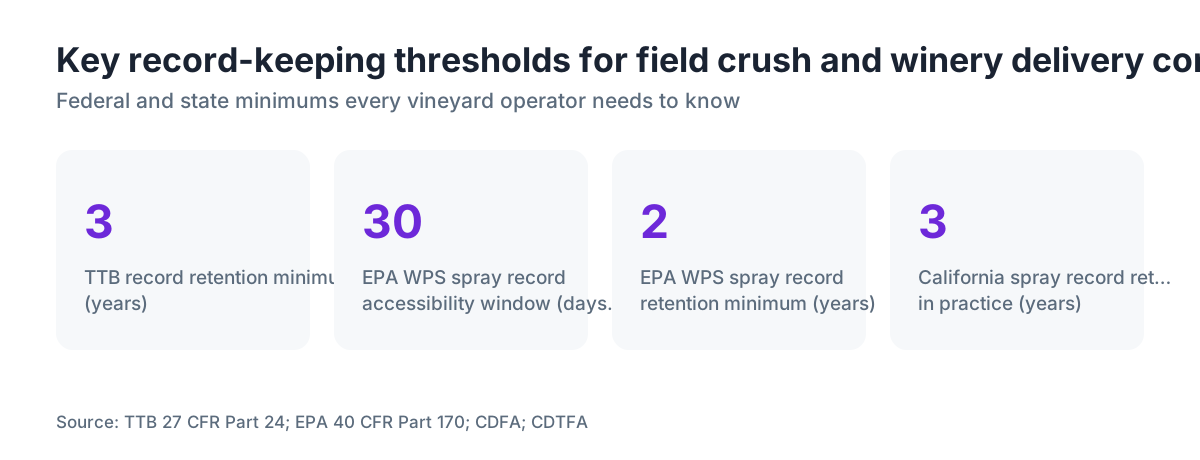
Keep the original weight tickets in a physical file organized by lot number and date. Then scan them. Weight tickets are small and they fade. TTB can request production records going back three years, and a faded or missing weight ticket for a single lot is the kind of gap that triggers questions about your entire Crush Report.
How do the TTB Crush Report entries differ between field crush and winery delivery?
TTB Form 5120.1, the Crush Report, captures the grapes processed under your permit during the reporting period. The column to watch is the one asking where the crush occurred.
If you crushed at the vineyard under an approved alternate premises or mobile crush arrangement, you report the fruit under your main permit number and note the field location in your supporting records. If the fruit arrived whole at the winery and was crushed there, the winery premises is the crush location and no alternate-premises documentation is needed.
Here is why it matters. TTB cross-references Crush Reports against state agricultural statistics. The USDA National Agricultural Statistics Service publishes annual crush data by county and variety [8], and regulators have long used those aggregate figures to spot-check whether individual winery reports land in the right ballpark. A field crush that shows up in county NASS data but does not appear cleanly in your TTB records is the kind of discrepancy that draws a follow-up letter.
The table below shows the key record fields and where each one comes from for the two scenarios.
| Field | Field Crush Record | Winery Delivery Record |
|---|---|---|
| Date | Date of crush operation at vineyard | Date fruit arrived at bonded premises |
| Location | Vineyard APN / alternate premises | Licensed winery premises address |
| Weight source | Certified portable or truck scale at field | Certified scale at winery gate |
| Variety & appellation | From vineyard block map | From grower contract + weight ticket |
| Brix at intake | Measured at crusher in field | Measured at crusher or at intake at winery |
| Pesticide record link | Block spray log, WPS REI confirmation | Not required at delivery, but grower's records must exist |
| TTB form reference | Form 5120.1, alternate premises column | Form 5120.1, bonded premises column |
| State report | Matches state ag crush report location | Matches bonded winery production log |
What pesticide and spray records must accompany field crush documentation?
This is where field crush operations carry exposure that winery deliveries never do. If you are running a crusher in a vineyard block, you are working in an agricultural field that has been sprayed. EPA's Worker Protection Standard, codified at 40 CFR Part 170, requires that workers and handlers in treated areas have access to application records and safety data for any pesticide applied within the last 30 days [4].
Your spray record for each treated block has to include the product name and EPA registration number, the application date, the rate applied, the applicator's name and certification number, the field identification, and the restricted-entry interval. That REI decides whether your crush crew can legally enter the block on the day you plan to crush.
WSU Extension publishes guidance on spray record formats for both EPA WPS and Washington State Department of Agriculture requirements [9]. The record structure they recommend works as a model for any state. The minimum fields map closely to what EPA requires nationally, but states like California add their own requirements through the county agricultural commissioner system.
If you are managing a field crush for a grower rather than your own estate, get a copy of their spray records for the relevant blocks before you send in a crew. Under WPS you are responsible for making sure your handlers have access to that information. "I didn't know" is not a defense if a crew member files a pesticide exposure complaint.
How do you handle grower-owned fruit delivered to a field crush site?
Custom crush adds another layer. If you are running a mobile crusher and processing fruit for several growers at one vineyard site, each grower's fruit needs its own weight ticket and its own lot designation. Commingle tonnage from two growers, even the same variety, and you create a reconciliation problem that follows you all the way to bottling.
The custom crush contract should name who keeps the pesticide and spray records for each block. In practice the vineyard owner or grower holds those records, but the processor carries the duty of confirming REIs have cleared before putting workers against the vines.
For TTB purposes, a bonded winery processing custom crush grapes owns all production records covering that fruit once it enters the permit boundary, or once a field crush happens under the winery's permit coverage. The grower has no independent TTB filing obligation for the crush itself unless the grower also holds a bonded winery permit.
Managing multiple lots across multiple growers at one field crush site is where tracking software like VitiScribe earns its keep. It links weight tickets to block records and spray logs in real time, which cuts the end-of-season reconciliation grind way down.
What are the tax point differences between field crush and winery delivery?
Federal excise tax on wine does not attach to grapes. It attaches to wine removed from the bonded premises for consumption or sale [1]. So technically, whether you crush in the field or at the winery, the excise tax point is the same: removal from bond.
The compliance risk is what shifts. If a field crush produces juice or must that does not move promptly into a bonded premises and into your production record, you have wine (or proto-wine) sitting outside bond coverage. That creates a theoretical tax liability problem and, more to the point, a gap in your chain of custody that makes your Excise Tax Return harder to reconcile.
The safe operational move is to transfer field-crushed must to the bonded premises the same day and open a tank record on arrival. If same-day transfer is not possible, ask your TTB specialist whether your permit covers in-field storage, even temporarily, and what documentation that period requires.
State excise taxes follow the same logic but vary. California taxes wine at removal from the winery premises, administered by the state tax and fee authority [10]. Washington applies excise at the point of sale or transfer for consumption. Neither state taxes grapes or must, but both want a clean paper trail from crush to bottle.
How do you document a split operation where crushing starts in the field and finishes at the winery?
Split operations, where a destemmer runs in the field and the must is trucked to the winery for pressing, are common. They also create a specific record gap if you are not careful.
The field-side record needs the date and time the crusher started, the block identity, the weight of grapes run through the destemmer (from your pre-crush weight ticket), and the Brix of the must coming off the machine. The winery-side record needs the date and time of must arrival, the tank it went into, the volume in gallons, and the Brix confirmed at intake.
Those two records have to cross-reference each other by lot number. If your field record shows 10 tons of Cabernet Sauvignon on September 14th at Vineyard Block 7, your winery receiving log should reference that same lot. Any real variance in Brix between field and winery is worth noting and explaining in the lot record, since temperature change during transport is a genuine variable.
WSU's extension viticulture program notes that many small producers fail to document the transfer leg of a split operation, treating it as an internal move that needs no record [9]. It does need a record. A transfer log with the truck plate, the departure time, the arrival time, and the lot number is minimal but enough.
How long do you need to keep field crush and winery delivery records?
Federal record retention for TTB is a minimum of three years from the date of the record [2]. That covers your Crush Reports, Excise Tax Returns, and production logs. California's Department of Alcoholic Beverage Control requires licensees to keep records for three years as well. Washington's LCB requires two years for most production records, though three years is safer since the federal floor governs.
Pesticide application records under the EPA WPS must be kept for at least two years from the date of application [4]. California county agricultural commissioners have long required three years, and if you are in a county with an active pesticide use reporting program, your spray records feed the state database anyway.
My rule: keep everything five years. The cost of extra storage, physical or digital, is nothing next to the cost of reconstructing records during a TTB audit or a pesticide exposure investigation. Scan originals, store the scans off-site or in the cloud, and keep a simple index that lets you pull any record by lot number, date, or block in a couple of minutes.
What are common record-keeping mistakes that cause audit problems?
The most common error is treating a field crush and a winery delivery as the same event in the production log. They are not. One happened at a vineyard, the other at a bonded premises. They need separate entries that reference each other.
Second is missing or unverifiable weight tickets. A handwritten estimate on a notepad does not satisfy TTB's requirement for a bonded winery's production record. Certified scale tickets do.
Third is the Brix gap. Many small producers measure Brix once at crush and never again at intake. When the numbers diverge on the Excise Tax Return versus the production log, it looks like fruit went somewhere unaccounted for.
Fourth is commingling pesticide and production records. They live in the same compliance universe but answer to different agencies. Jam them into one binder where neither is easy to pull and you have a practical headache even if it never becomes a formal violation.
Fifth, and this one gets missed a lot: failing to update your TTB permit when you add a new vineyard block as a field crush site. Adding a new premises requires an amended operating permit before you crush there, not after [2]. Crush at an unlisted premises and file the paperwork retroactively, and you are in violation for the whole stretch between crush and approval.
For operations running multiple properties, VitiScribe's lot tracking and block-level record structure was built to keep field crush and delivery records linked without merging them.
Frequently asked questions
Does a field crush site need to be listed on my TTB winery permit?
Yes. Under 27 CFR Part 24, all production operations must occur at a bonded premises listed on your TTB operating permit. A field crush site that is not listed as an alternate bonded wine cellar or approved alternate premises is not covered, and crushing there is a violation. File an amended operating permit before your first crush at any new site.
Can I use one weight ticket for both a field crush record and a winery delivery record?
No. A field crush weight ticket documents grapes processed at the vineyard site. A winery delivery weight ticket documents fruit arriving at the bonded premises. They may show the same net weight, but they serve different records and can come from different certified scales. Keep them as separate documents cross-referenced by lot number.
What Brix measurement goes on the TTB Crush Report?
TTB Form 5120.1 captures total tons of grapes crushed, not Brix directly. Brix belongs in your internal production lot record and feeds your potential gallons calculation on the Excise Tax Return. For a field crush, measure Brix at the crusher in the field. For a winery delivery, measure at the crusher or intake tank. Document both if you have a split operation.
Who is responsible for pesticide spray records when a grower delivers to my winery?
The grower keeps their own spray records for their vineyard blocks. You, as the processor, are responsible under EPA WPS for making sure your workers are not exposed during any field operations. If your crew handles fruit in the vineyard at field crush, you need access to the grower's spray records before workers enter. For a straight winery delivery, the grower holds their own records.
How do I document a mobile crush unit operating at multiple vineyard sites in one day?
Each site needs its own weight tickets, lot designations, Brix readings, and pesticide record confirmations. Build a daily field crush log with one section per site showing the vineyard APN, start and end time, variety, gross weight, and the name of whoever confirmed REI clearance. That log becomes the source document for each site's entry in your TTB production record.
What is the difference between the TTB Crush Report and my production log?
The Crush Report (Form 5120.1) is a federal filing that summarizes total tons crushed by variety and appellation for the period. Your production log is an internal ongoing record at the lot level showing dates, volumes, Brix, treatments, and transfers. The Crush Report is built from the production log, and the two must reconcile. TTB can request the underlying production log if the report numbers look off.
How do split operations where crushing starts in the field and finishing happens at the winery get reported to TTB?
Report the crush under the premises where the crushing equipment operated. If you ran a destemmer in the field under your permit's alternate premises coverage, the field site is the crush location. The transfer of must to the winery is documented as a lot transfer between premises in your production log. Both locations' records should reference the same lot number and the same original weight ticket.
Do I need a certified scale for a field crush, or will a load cell estimate work?
In California and most other states, weight tickets used for commercial transactions and regulatory records must come from certified scales under the state's Weights and Measures program. An uncalibrated load cell estimate is not a certified weight ticket. If you are paying growers by the ton or filing TTB records off that weight, you need a certified scale. Get portable scales certified before harvest.
How far back can TTB request field crush and production records during an audit?
Under 27 CFR Part 24, TTB can request records going back three years. That covers Crush Reports, Excise Tax Returns, production logs, and supporting weight tickets. Keeping records five years is safer. If an audit finds a discrepancy in year three, investigators will want corroborating records from earlier years, and gaps look worse than the original discrepancy.
What pesticide record fields does EPA WPS require for a field crush site?
EPA WPS at 40 CFR Part 170 requires application records to include the product name and EPA registration number, application date, rate applied, applicator name and certification number, field identification, and the restricted-entry interval. These records must be accessible at the field site for 30 days after application and retained two years. California requires three years plus county-level reporting.
Can a grower who delivers fruit to my winery file their own TTB Crush Report, or is that my responsibility?
A grower without a bonded winery permit has no TTB Crush Report obligation. Once fruit enters your bonded premises, all production records and the Crush Report are your responsibility as permit holder. If the grower also holds a winery permit and crushed at their own site before delivering must to you, they file for their crush and you file for your production.
What records do I need if I'm buying grapes from a different state and crushing them at my winery?
Grapes crossing state lines are not federally regulated at the fruit stage the way wine is, but you still need the full winery delivery record set: weight ticket, grower contract, variety and appellation declaration, and the receiving lot entry in your production log. If the origin state has grape movement restrictions or phytosanitary requirements, such as California's Pierce's Disease protocols, you will also need the relevant agricultural certificates.
Is there a standard form for a field crush log, or do I create my own?
There is no TTB-mandated form for a field crush daily log. TTB requires that records hold enough information to verify your Crush Report and production log entries, but the format is yours. UC agricultural extension and WSU Extension both publish sample field record templates covering the required fields. Using one as a base and adding your own lot numbering system is a reasonable start.
How do I correct a weight ticket error after I have already filed my Crush Report?
File an amended TTB Form 5120.1 for the relevant reporting period. Attach a written explanation of the discrepancy, the corrected weight ticket, and a note in your production log showing the correction date and reason. For small corrections, a TTB specialist will usually accept an amended filing without further action. For large variances, especially any suggesting wine existed outside bond, expect follow-up questions.
Sources
- Internal Revenue Code, 26 U.S.C. § 5041, Cornell Legal Information Institute: Federal excise tax on wine attaches at removal from the bonded winery for consumption or sale
- TTB, 27 CFR Part 24, Electronic Code of Federal Regulations: All wine production operations must occur at premises listed on the TTB bonded winery operating permit; record retention minimum three years
- EPA, Agricultural Worker Protection Standard, 40 CFR Part 170: WPS requires pesticide application records accessible in the field for 30 days post-application, retained two years; REI governs worker re-entry timing
- University of California Agriculture and Natural Resources: UC agricultural extension publishes practical field record templates for California vineyard operations
- Cornell University, College of Agriculture and Life Sciences: Cornell viticulture extension recommends keeping grower contract, weight ticket, and receiving log as a matched set
- California Department of Food and Agriculture, Division of Measurement Standards: California scale certification for commercial and regulatory weight tickets is administered by CDFA under the Business and Professions Code
- USDA National Agricultural Statistics Service, Grape Crush Report: USDA NASS publishes annual grape crush data by county and variety used to cross-check individual winery TTB reports
- Washington State University Viticulture and Enology: WSU Extension publishes spray record format guidance for EPA WPS and WSDA compliance; recommends documenting must transfer leg of split operations
- California Department of Tax and Fee Administration: California excise tax on wine applies at removal from the licensed winery premises, not at crush
Last updated 2026-07-11