How to document a foreign material contamination incident in the vineyard
TL;DR
- Found foreign material in your vineyard?
- Document it before you touch it.
- Photograph the site and the material, record the GPS location, date, and who found it, then work out whether pesticide drift, equipment debris, or wildlife is the source.
- Notify your buyer or certifier if your contract requires it.
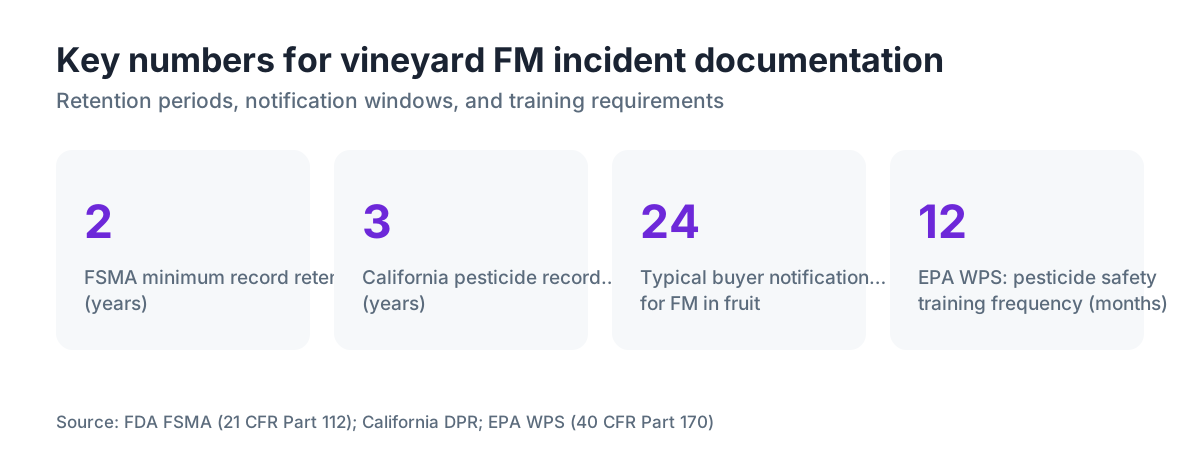
- Keep the record two years minimum, longer if a food-safety audit program says so.
What counts as foreign material contamination in a vineyard?
Foreign material (FM) is any physical object or substance that shouldn't be in your vineyard and could end up in fruit, juice, or wine. Glass, wire, baling twine, bird-shot, broken irrigation parts, pesticide drift deposits, fuel spills, packaging film, and bone fragments all qualify. So do biological contaminants like dead rodents or pest nests found in the canopy.
The definition that actually matters for your paperwork is the one your buyer uses. Wineries buying under a food-safety audit scheme like SQF, PrimusGFS, or California's Leafy Greens Marketing Agreement (LGMA, adapted for wine grapes in some contracts) will have their own written definition. If you sell to a buyer who requires GAP (Good Agricultural Practices) certification, the FDA's Produce Safety Rule under FSMA gives the underlying federal framework [1]. Wine grapes currently sit outside the Produce Safety Rule's commodity-specific requirements, but the documentation habits it enforces are the right standard to shoot for anyway.
For field purposes, treat anything that arrived from outside your normal inputs, or that broke off equipment and could end up in a harvest bin, as a reportable FM event.
Why does thorough documentation of a vineyard contamination incident actually matter?
Three reasons, and only one is about covering yourself legally.
First, if a winery rejects a load over FM and there's a dispute, your documentation is your evidence. A timestamped photograph and a written investigation record are the difference between a defensible position and your word against theirs.
Second, finding the source of FM contamination is genuinely useful agronomically. Broken drip emitter heads turning up near one block corner, documented across three seasons, will tell you something your memory won't. Cornell Cooperative Extension teaches that systematic field records are one of the few reliable tools small operations have for spotting recurring equipment or input failures [2].
Third, if you're audited, missing documentation gets treated the same as a violation by most certification bodies. The absence of a record reads two ways: the event wasn't taken seriously, or it wasn't noticed. Neither one helps you.
One more thing. Pesticide drift contamination (spray from a neighboring property landing on your vines or fruit) is a separate legal matter from physical FM. There, your documentation becomes potential evidence in a civil or administrative complaint. The EPA Worker Protection Standard requires employers to keep pesticide application records, and those records can help you build a timeline if you suspect an off-site source [3].
What should a foreign material contamination record include?
A good FM incident record has seven components. Miss any of them and you'll wish you hadn't when a buyer or auditor asks.
1. Date, time, and location. Write the block ID or row number, GPS coordinates if you have them, and the time of discovery. "Found near the barn" is not acceptable. "Block 4A, Row 12, approximately 20 meters from the north end, 38.4521° N 122.8103° W, 07:42 on June 14, 2025" is.
2. Who found it. Full name and role of the person who made the discovery. If a crew worker found it, name the supervisor who verified and documented it too.
3. Description of the material. What is it, exactly? Estimate the quantity. Note color, material type, approximate size. If you can identify it ("blue plastic irrigation flag stake, approximately 30 cm long, broken at base"), say so. If you can't, say that too.
4. Photographs. Take at least two: one wide enough to show vineyard context (row markers visible), one close-up of the material. Use your phone's native camera so the EXIF data captures the timestamp automatically. Don't edit or filter the images.
5. Extent of potential contamination. How many rows or vines could be affected? Was the material in the canopy, on the ground, or already in a harvest container? "Found on the ground between rows, no contact with fruit observed" is a very different situation from "fragment found inside a picking bin after bin was partially filled."
6. Immediate action taken. What did you do with the material? Removed and bagged for identification? Was the affected fruit quarantined or discarded? Did you halt harvest on that block?
7. Root cause assessment. This can come after the initial report, but it has to be there. Where did this material likely come from? Equipment malfunction? Adjacent land use? Wildlife? Contractor error? "Unknown" is fine if you genuinely can't determine the source, but the record should say what investigation ruled out the obvious possibilities.
Washington State University Extension recommends building a corrective action field into every FM report so the documentation loop closes, rather than just logging the problem [4].
What is the step-by-step process for documenting the incident right after discovery?
Do these in order. The sequence matters, because evidence quality drops fast in a field.
Step 1: Stop work in the affected area. If harvest is running and the FM was found in or near bins, halt that section. Don't move material until you've photographed it in place.
Step 2: Photograph everything before touching it. Wide shot, close-up, a scale reference if you can (a pen or glove next to the item). If the material is in a bin with grapes, photograph that too.
Step 3: Collect and contain the FM. Use a zip-lock bag or similar. Label it with the block, row, date, and your initials. Keep it until the investigation closes.
Step 4: Fill out your incident form immediately. Don't trust memory. No printed form? Use your phone's notes app and transfer to your official record within 24 hours. The details that seem unforgettable at 8 a.m. are gone by 4 p.m. after a full day in the rows.
Step 5: Notify up the chain. If you're the crew lead, tell your supervisor or owner. If you're the owner, notify your buyer or certifier based on severity (see the notification section below).
Step 6: Sweep the surrounding area. Check adjacent rows for similar material. Document what you found and what you didn't.
Step 7: Complete the root cause section within 48 hours. Walk the block. Look at equipment that was recently in that area. Talk to the person who found it and anyone working nearby.
Step 8: Document corrective action. What specific change stops this from happening again? A new equipment inspection checklist? Better contractor site cleanup? A different drip tape specification? Write it down, even if it's simple.
What form or template should you use to record the incident?
You can build a usable FM incident form on a single page. It doesn't need to be fancy. The fields map directly to the seven components above, plus a sign-off line for whoever completes the record.
Here's a minimal field list:
| Field | What to capture |
|---|---|
| Incident ID | Sequential number (FM-2025-001, etc.) |
| Date and time of discovery | Exact, not "morning" |
| Block / Row / GPS | Specific to the row |
| Discoverer name and role | Full name |
| Description of FM | Material type, color, size, quantity |
| Photo file names or IDs | Link photos to this record |
| Harvest status at time of discovery | Active / suspended / not in progress |
| Fruit potentially affected (yes/no) | If yes, quantity estimate |
| Immediate action taken | Quarantine, discard, removal, halt |
| Probable source | Equipment, neighbor, wildlife, unknown |
| Corrective action | Specific, with responsible person and date |
| Record completed by | Name, signature, date |
| Reviewed by | Supervisor name, signature, date |
Managing multiple blocks across a season? A digital system that ties photos to records and exports to PDF for buyer audits is worth setting up. A well-built spreadsheet works, but photo files get separated from the written record all the time. VitiScribe's field records module keeps photos, GPS data, and incident text in one exportable file, which matters at audit time.
The UC Davis IPM program has published food-safety record templates for vineyards that are free to download and work well as a starting point [5].
Who do you need to notify when a contamination incident occurs?
Notification depends on severity and your contracts. No single federal rule dictates this for wine grapes, so the answer comes from three places: your buyer contract, your certification body's rules, and plain judgment.
Your buyer. Most premium grape contracts have a clause requiring prompt notification of any food-safety incident affecting the contracted fruit. "Prompt" usually means 24 to 48 hours. Check your contract. If it says notify in writing, don't just call. Follow up with an email.
Your GAP or food-safety certification body. If you're certified under PrimusGFS or a retailer-driven GAP scheme, the program manual spells out which incidents trigger mandatory reporting and by when. A metal fragment found in a bin during harvest is almost certainly reportable. A piece of baling twine on the ground between rows in January may not be, depending on the program.
Your state department of agriculture, if the incident involves pesticide drift from an adjacent property. California requires that suspected pesticide drift incidents be reported to the county agricultural commissioner [6]. Oregon and Washington both run county-level structures where drift complaints get filed [10][11].
Your crop insurance carrier, if you're quarantining or discarding a meaningful volume of fruit. A properly documented FM incident is the basis for any claim.
You don't notify all four parties for every incident. A broken drip stake found on the ground in February doesn't trigger buyer notification unless your contract says otherwise. Scale your response to the risk, but document your notification decisions either way.
How long do you need to keep vineyard contamination records?
Two years minimum, and probably longer.
FSMA's Produce Safety Rule, which gives the federal baseline even though wine grapes sit outside its mandatory scope, sets a two-year record retention period for most farm records [1]. Many GAP certification programs match that number.
If you're in a state with a mandatory agricultural record retention rule, that state rule controls. California's Department of Pesticide Regulation, for one, requires pesticide application records to be kept three years and made available for inspection [6].
For FM incident records specifically, the practical answer is simple: keep them as long as the fruit they relate to is in the supply chain. If your 2024 vintage is sitting in barrel until 2027, an FM incident from the 2024 harvest belongs in your files until at least 2027. Wine has a longer supply chain than fresh produce, and a contamination concern can surface well after harvest.
Store records so they'll still be readable in five years. Paper in a binder in a dry spot works. PDFs on a cloud service work. An Excel file on a USB drive that gets lost behind the office desk does not.
What are the most common sources of foreign material in vineyards and how do you identify them?
Know the usual suspects and your root cause assessment gets faster and more accurate.
Irrigation equipment. Broken drip emitters, filter mesh, pressure regulators, and stake fragments are probably the most common FM category in modern vineyards. The tell is that fragments are plastic and often a consistent color or brand. Check what's installed in the block.
Harvest and pruning equipment. Broken harvest knife tips, pruning wire, staples, and trellis repair clips all show up. Metal FM from equipment is the most serious, because it can wreck winery processing gear and it's a food-safety priority for most buyers.
Wind-borne debris. Agricultural film, packaging, and flagging tape from neighboring properties blow in, especially after wind events. Document the wind conditions in the 24 hours before if you suspect this source.
Wildlife. Bird netting fragments, rodent nests, feathers in the canopy, and insect nests are all FM in a harvest context. These often spike late in the season when bird pressure is highest.
Pesticide drift. This is FM in the chemical sense rather than the physical one, but you document it the same way. If you see unexplained burn patterns or residue on leaves or fruit, photograph and sample, then contact your county agricultural commissioner. The EPA Worker Protection Standard at 40 CFR Part 170 governs notification if workers may have been exposed [3].
Contractor activity. Any outside crew bringing equipment, materials, or vehicles into the vineyard is a possible FM source. Pre-entry equipment inspections and post-work site sweeps, documented in writing, are your main controls here.
How do you handle foreign material found in a harvest bin during picking?
FM found mid-harvest in a picking bin is the highest-stakes scenario. Fruit may already be contaminated, and the bin may be on its way to the winery.
Stop that bin. Don't let it leave the vineyard until you've assessed and documented. If it already left, call the winery immediately.
For the bin in front of you: if the FM is localized and you can visually confirm the affected fruit, you may be able to hand-sort. Whether you discard or sort depends on what the material is. Glass, metal, and anything that could shed sharp fragments means the whole bin gets quarantined and likely discarded. Plastic film or organic material (leaf, twig) may be sortable, depending on your buyer's standards.
Document the bin number, the approximate weight of grapes in the bin, the nature and exact location of the FM within the bin, and what you did. If you discard the bin, weigh the discarded fruit and record it.
Notify the winery no matter what action you take. They need to know in case they see anything at receiving. A quick documented call, with a follow-up email summarizing the incident and your action, satisfies most buyer notification requirements and starts a paper trail that protects both sides.
How should you train your crew to spot and report foreign material?
Your documentation system only works if the people in the field know what FM is, know they should report it, and know they won't get grief for slowing a harvest to do it.
That last part is the real problem. In most FM incidents, the material was there to be noticed but nobody said anything, because harvest pace made it feel like the wrong moment. Training has to say this out loud: finding FM and reporting it earns credit, not a complaint.
EPA's Worker Protection Standard requires annual pesticide safety training for agricultural workers, and that training often includes contamination awareness [3]. Bolt FM identification onto whatever safety training you already run. It adds maybe 15 minutes.
Training points that work:
- Show real examples of the FM types common to your operation.
- Demonstrate the reporting process with the actual form you use, so it's not abstract.
- Walk through what happens after a report: "You tell me, I document it, we assess it together, we close it out. Your name goes on the form as the person who caught it, and that's a good thing."
- Make clear the reporting threshold is low. When in doubt, report.
Document the training: who attended, the date, topics covered, trainer name. That record is often required by GAP certification bodies and is good practice regardless [4].
What does a corrective action look like for a vineyard FM incident?
A corrective action is a specific, verifiable change to a process or practice that addresses the root cause. It's not "be more careful." It's a change you can prove happened.
For irrigation equipment FM: "Implement pre-season drip system inspection protocol for Block 4A using Checklist Form IE-01; assign to irrigation crew lead; complete by April 1, 2026."
For harvest equipment FM: "Add end-of-day equipment inspection to harvest crew sign-off checklist; crew lead initials required; effective immediately for remainder of 2025 harvest."
For contractor-sourced FM: "Require written pre-entry equipment condition sign-off from any outside contractor; form FC-02 completed before equipment enters vineyard; vineyard manager retains signed form."
The corrective action names a responsible person and a completion date. When you file the incident record, leave space for a follow-up note confirming the corrective action was implemented. That closure note, dated and signed, is what turns an FM incident record from a problem log into a working quality-management document.
If the same type of FM shows up in the same block two seasons running and your corrective action didn't stick, that's information you need. The record system shows it. That's exactly what records are for.
How does foreign material documentation connect to food safety audits and buyer requirements?
Sell to a winery that requires a food-safety audit and your FM records get reviewed. Auditors from SQF, PrimusGFS, and similar schemes look at three things: do you have a written procedure for FM response, do your actual incident records follow that procedure, and is there evidence the corrective actions happened?
A written procedure doesn't have to be long. One page describing what qualifies as FM, what the reporting and documentation process is, and how corrective actions get handled is enough. UC Davis's viticulture and enology food-safety resources include sample food-safety plan templates for wineries and vineyards that cover FM handling as a component [5]. USDA's GAP/GHP audit program evaluates the same core elements: written procedures, matching records, and documented corrective action [8].
The pattern auditors flag most is "no records found for the period" or "records found but corrective action column blank." The first suggests either no incidents occurred (implausible for an active commercial vineyard) or nothing got documented. The second says the operation treats FM documentation as a compliance chore rather than a real management tool.
For VitiScribe users running multiple blocks, the incident log exports directly to a format most third-party auditors accept, which cuts prep time before an annual GAP audit.
Buyer requirements vary more than audit program requirements, because buyers write their own contracts. Read yours carefully. Some wineries require notification within 24 hours for any FM event touching fruit. Others care only about events affecting the delivered load. Know the standard your buyer holds you to before an incident happens, not after.
Frequently asked questions
Do wine grape growers have to comply with the FDA Produce Safety Rule for foreign material incidents?
Wine grapes currently sit outside the commodity-specific requirements of the FDA Produce Safety Rule under FSMA. The rule's documentation framework is still the practical industry standard, and many winery buyers contractually require GAP practices that mirror it. Even with no mandatory federal requirement, following that documentation standard protects you during buyer audits and in any dispute over a rejected load.
How soon after discovering foreign material in a vineyard should I fill out the incident report?
Fill out the initial fields immediately, in the field, before you leave the site. Use your phone if you don't have a paper form. Transfer to your official record within 24 hours. The root cause section can wait up to 48 hours, but the discovery details, photographs, and location must be captured while you're still looking at the incident. Memory is not a documentation system.
What if I can't identify the foreign material?
Describe it as precisely as you can (color, texture, approximate size, shape, material type if you can tell) and write "source unknown" in the root cause field. Document what investigation you did to try to identify it. Keep the physical sample bagged and labeled until the incident closes. If it could be a pesticide residue or chemical contaminant, contact your county agricultural commissioner for guidance on sampling.
Does foreign material in the vineyard need to be reported to a state agency?
Physical FM (glass, plastic, metal) generally does not trigger mandatory state agency reporting. Pesticide drift or chemical contamination from an off-site source is different: California requires reporting suspected drift incidents to the county agricultural commissioner, and Oregon and Washington run similar county-level structures. If workers may have been exposed to a pesticide, EPA's Worker Protection Standard notification requirements apply at the federal level.
Can I use photos taken on my phone as official documentation?
Yes, and phone photos often beat the alternatives, because the EXIF data embeds the timestamp and, if location services are on, the GPS coordinates. Don't edit or apply filters. When you file the record, note the file names and where they're stored. The risk is photo files getting separated from the written record, so link them explicitly in your incident form or use a system that keeps them together.
What happens if foreign material from my vineyard makes it to the winery and causes a problem?
If your documentation shows a reasonable inspection and reporting process was in place, and you notified the winery of any known FM events, your exposure in a dispute drops sharply. No records and no process leaves you in a much harder spot. Beyond the legal angle, most buyers will end or renegotiate contracts after repeated undocumented incidents. Good records protect the relationship as much as the legal exposure.
How do I document foreign material contamination that may have come from a neighboring property?
Document it like any FM incident: location, description, photographs, timeline. Add a note on the probable external source. If you suspect pesticide drift, file a complaint with your county agricultural commissioner and keep a copy of that filing in your incident record. Document wind direction and speed in the hours before discovery if you can retrieve that data. This record matters if you pursue a legal remedy.
Should my foreign material incident record be different during harvest versus the off-season?
The form is the same, but the severity assessment changes. During harvest, any FM near or in fruit carries immediate food-safety implications and often triggers buyer notification requirements. Off-season FM (drip tape fragments, debris from pruning equipment) is worth documenting for root cause analysis and corrective action planning but rarely requires buyer notification. Urgency scales with proximity to harvestable fruit.
How do I train seasonal harvest workers to identify and report foreign material?
Keep it concrete: show real examples of what to look for in your vineyard, demonstrate the reporting process with the actual form, and make clear that reporting is expected and valued. Fold it into whatever pre-harvest safety briefing you already run. Document the training with a sign-in sheet: date, trainer name, topics covered, attendee names. Many GAP certification bodies require training records, and EPA Worker Protection Standard training is an annual requirement for pesticide-handling workers.
What is the minimum information required for a vineyard foreign material incident record to be audit-ready?
At minimum: date and time of discovery, specific location (block and row), name of discoverer, description of the material, photographs linked to the record, immediate action taken, probable source, and a corrective action with a responsible person and completion date. A closed record also needs a sign-off confirming the corrective action was completed. Missing any of these fields gets flagged by most third-party auditors.
How long should I keep foreign material contamination records for my vineyard?
Two years is the FSMA baseline for farm records, and most GAP programs match it. California's pesticide application records must be kept three years. For wine grapes, keeping FM records until the vintage tied to that harvest is fully out of commerce (sold, consumed) is a sensible rule. That often means three to five years for a vineyard selling to wineries with barrel-aged programs.
Does a corrective action have to be completed before I close out the incident record?
Yes. An incident record with no corrective action entry, or a corrective action with no follow-up confirming it happened, is an open record in audit terms. The corrective action can carry a future completion date, but the record stays open until that date passes and you've confirmed and documented the action was taken. Some certification programs treat open FM records as active nonconformances.
What should I do if foreign material is found in a bin that's already left the vineyard and arrived at the winery?
Call the winery immediately. Don't wait for email. Give them the bin number, what was found, and what you know. Then document the incident on your end as a vineyard record, noting the time of discovery (at winery), who called whom, and what was agreed. Follow up in writing within 24 hours. The winery handles disposition on their end, but your record should capture everything you knew and when you knew it.
Sources
- FDA, FSMA Produce Safety Rule (21 CFR Part 112): FSMA's Produce Safety Rule specifies a two-year record retention period for most farm records and establishes the federal documentation framework for agricultural food-safety incidents.
- Cornell Cooperative Extension, Agricultural Record Keeping for Farm Businesses: Cornell extension teaches that systematic field records are one of the few reliable tools small operations have for identifying recurring equipment or input failures.
- EPA, Agricultural Worker Protection Standard (40 CFR Part 170): The EPA Worker Protection Standard requires annual pesticide safety training for agricultural workers and governs notification requirements when workers may have been exposed to pesticide drift.
- Washington State University Extension, Food Safety on the Farm: WSU Extension recommends building a corrective action field into every FM report so the documentation loop closes, and requires training records including date, trainer name, and topics covered.
- UC Davis, Viticulture and Enology and Statewide IPM Program food-safety resources: UC Davis's viticulture and enology food-safety resources include sample food-safety plan templates for wineries and vineyards that cover foreign material handling as a component.
- California Department of Pesticide Regulation, Pesticide Application Records: California's Department of Pesticide Regulation requires pesticide application records to be kept for three years and to be available for inspection; suspected drift incidents must be reported to the county agricultural commissioner.
- FDA, Guidance for Industry: Guide to Minimize Microbial Food Safety Hazards for Fresh Fruits and Vegetables: FDA guidance on GAP practices for fresh produce establishes the documentation standards that many wine grape buyer contracts reference, including foreign material incident recording.
- USDA Agricultural Marketing Service, Good Agricultural Practices and Good Handling Practices Audit Verification Program: USDA's GAP/GHP audit program evaluates whether operations have written procedures for FM response, actual incident records following those procedures, and documented corrective actions.
- PrimusGFS, Food Safety Standard for the Fresh Produce Industry: PrimusGFS audit standards require operations to have a written foreign material control procedure and corresponding incident records as a component of farm-level food-safety certification.
- Oregon Department of Agriculture, Pesticide Complaint and Drift Reporting: Oregon has an agricultural commissioner structure where pesticide drift complaints are filed at the county level, analogous to California's county agricultural commissioner system.
- Washington State Department of Agriculture, Pesticide Management Division: Washington State's pesticide management structure handles drift complaints through its Pesticide Management Division, requiring documented evidence of the incident and a timeline.
Last updated 2026-07-10