How to prepare for an unannounced vineyard pesticide inspection

TL;DR
- County agricultural commissioners and state inspectors arrive unannounced during the growing season, often at dawn when crews head into the field.
- They check spray records, product labels, PPE, worker training logs, and posting compliance.
- Growers with complete, current records and trained staff on site almost always pass.
- Missing records and expired applicator licenses are the two violations that trigger the most fines.
Who actually shows up for a vineyard pesticide inspection?
In California, the county agricultural commissioner (CAC) runs most routine pesticide inspections. In Washington, it's the Washington State Department of Agriculture (WSDA). In Oregon, the Oregon Department of Agriculture. The EPA rarely knocks on a grower's door directly, though EPA regional offices audit state programs and investigate complaints.
Here's the part growers miss. These inspectors come from the same agency you file your pesticide use reports with, so they already have your submitted data before they park the truck. If your field records and your filed reports don't match, they'll catch it [1].
The legal authority for these visits comes from each state's pesticide control act, which generally mirrors the Federal Insecticide, Fungicide, and Rodenticide Act (FIFRA). Under FIFRA Section 8, inspectors have the right to enter any establishment where pesticides are held or applied, and to inspect and copy records [2]. California's Food and Agricultural Code Section 11401 et seq. gives county commissioners the same authority on behalf of the state.
Apply a pesticide anywhere on your vineyard, and an inspector can visit. You are required to cooperate.
What documents do inspectors actually look at on the day they arrive?
Most growers underestimate this list. Inspectors do more than check whether you filled out a spray record. They check whether every field in that record ties to a current, legally labeled product used at the correct rate on the correct crop.
Here's what they typically request on arrival:
| Document | What they verify |
|---|---|
| Pesticide use records (PURs) | Dates, product names, EPA reg. numbers, rates, acres treated, applicator name |
| Restricted-use pesticide (RUP) purchase records | That a licensed applicator bought and used the product |
| Applicator license / Pest Control Adviser (PCA) license | Current, not expired, correct category |
| Labels and Safety Data Sheets (SDS) | Present on-site, legible, match what was applied |
| Worker Protection Standard (WPS) training records | Each worker trained before field entry, dated and signed |
| WPS posting log | Central display site updated with each application |
| Restricted-entry interval (REI) records | No one entered a treated field before the REI expired |
| Emergency contact and decontamination site log | Accessible during REI |
California requires pesticide use records to be submitted to the CAC monthly, within 7 days after the end of each month [3]. Washington requires records within 90 days of application [4]. If you're inside a pre-harvest interval (PHI) window, inspectors may also ask about your last application date relative to your estimated harvest.
Two documents growers habitually forget: the actual physical label for the product used that day (not a photocopy from three seasons back if the label got revised), and the SDS for each product stored on-site. Both have to be accessible, not buried in a filing cabinet.
What are the most common violations inspectors find in vineyards?
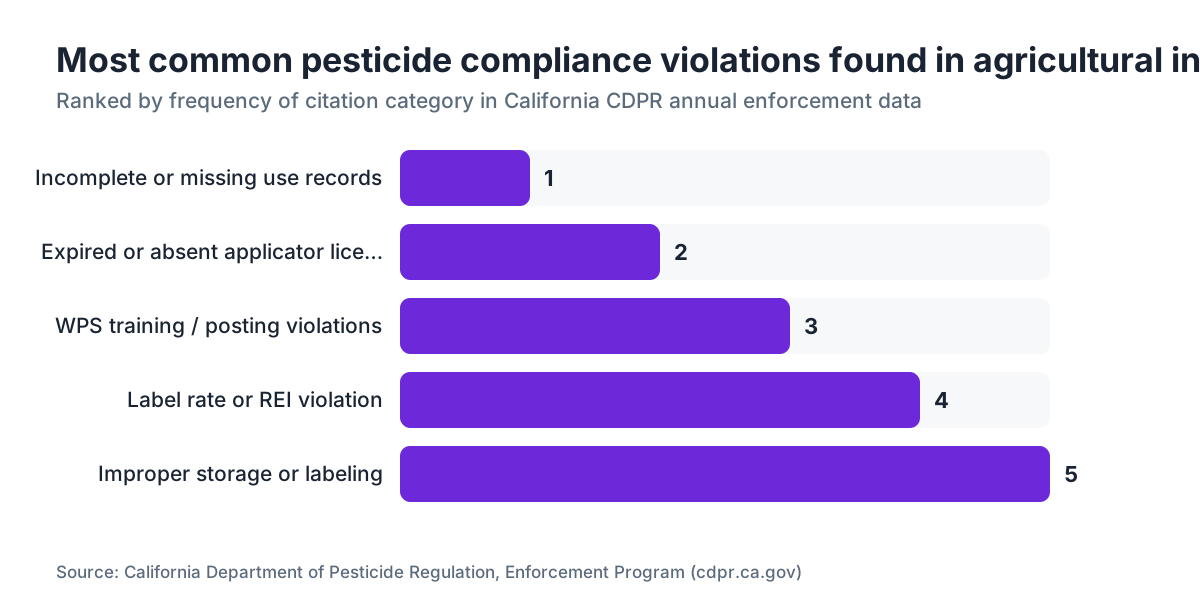
The violations that show up most in vineyard operations fall into a short list, and none of them are exotic. Extension programs at UC Davis and Cornell track complaint and citation patterns over time, and the pattern holds year after year.
Incomplete pesticide use records are the top hit. Missing the application start time, the equipment ID, or total product used per acre. California's required fields are specific: date, time, location by legal description or field name, operator name, applicator name, pest controlled, product name, EPA registration number, amount applied, and acres treated [3]. A record missing two of those is a deficient record.
Expired applicator licenses come second. A license that lapsed even one day before an application turns a legal application into an unlicensed application. That's a different, more serious violation than a paperwork gap.
WPS violations come third, and they get more scrutiny since the revised WPS rule took full effect [5]. The EPA's 2015 revision strengthened requirements for annual training, handler training by a certified trainer, and a minimum age of 18 for handlers of RUPs. Inspectors check whether workers who entered treated fields after the REI expired had proof of training. They also check the central display site for current application and emergency contact info.
Storage problems round out the list. Products in unlabeled containers. Products in areas open to untrained workers. Products without secondary containment where the label requires it.
Nobody has clean national data on vineyard-specific violation rates. The closest public source is California's annual pesticide enforcement summary, which the Department of Pesticide Regulation (CDPR) publishes each year and breaks down by county and commodity [6].
How much notice does an inspector give before arriving?
None. That's what unannounced means.
Inspectors running routine compliance checks do not call ahead. They may visit during peak spray season, at any hour the operation is active, and they may come back for a follow-up to watch a specific application. Some time their visits for early morning, when the crew is heading into the field, because that's when they can verify REI compliance in real time.
Most growers in a region see an inspector at least once every few years during a routine sweep. If a complaint has been filed against you, the visit happens faster and the inspector arrives with pointed questions.
So here's the standard to hold yourself to. Your records and your operation need to be inspection-ready every single day of the season, not only on days you think someone might show up.
How do you set up a record-keeping system that passes on day one?
Build a system where any staff member can find any required document within five minutes without your help. That's the real test. If you're the only person who knows where the SDS binder lives, you fail the operational test even when the documents exist.
Start with a physical binder or box at your spray shed. It holds:
- Current product labels for every pesticide in your inventory (download fresh copies when you buy new lots, since labels get revised)
- SDS sheets for every product stored on-site
- A printed copy of your applicator license and any PCA sign-off records
- WPS training sign-in sheets for the current season
- REI field entry logs
- Your central display site posting log, with the date each notice went up and came down
Complete your spray records the same day as the application, not from memory at the end of the week. The time a spray started and ended is a required field in California, and it's the one most often left blank because nobody remembers it by Friday [3].
For digital record-keeping, a system that timestamps entries and flags incomplete fields before submission saves a lot of pain. Tools like VitiScribe are built for vineyard spray record management and generate CAC-ready reports without reformatting. Whatever system you use, the point is that it's current within 24 hours and exportable if an inspector wants a printout on the spot.
Cornell Cooperative Extension recommends keeping records for at least two years past the application date, since some enforcement actions reach back that far [7].
What does the Worker Protection Standard require you to have on hand?
The EPA's Worker Protection Standard (40 CFR Part 170) is federal law. It applies to any agricultural employer who uses pesticides and has workers entering treated areas [5]. For vineyards, that's essentially every operation.
The WPS requires you to keep, at all times during the season, a designated central display site with three things: the safety poster (EPA's WPS safety information or an equivalent state poster), the name and phone number of the nearest emergency medical facility, and for each application made in the past 30 days, the product name, EPA registration number, active ingredient, treated location, application date and time, and when the REI expires.
The poster has to be the current version. EPA updated its required WPS safety poster in 2018, and some operations still run the pre-2015 version, which is out of compliance [8].
WPS training records must show the training date, the trainer's name and qualifications (for RUP handlers, the trainer must be certified), and the worker's or handler's name (a signature is strongly recommended). Training has to happen before the worker enters a treated area or handles pesticides, not at the end-of-season safety meeting [5].
Decontamination supplies (water, soap, single-use towels, and eyewash) must sit within a quarter mile of where workers are working or where handlers are working. The rule's language is "as close as practicable" to the site. Inspectors walk the vineyard and verify this. They don't take your word for it.
WSU's extension viticulture program publishes WPS compliance material for tree fruit and grape operations that turns the regulatory language into field-level steps [9].
What happens during the inspection itself, step by step?
An inspector arrives. They show credentials. You are legally required to allow access to fields, storage areas, and records. Refusing entry or stalling is itself a violation.
Inspectors usually start with paperwork. They ask for your pesticide use records, applicator license, and product labels for whatever is in your spray shed or was recently used. This runs 15 to 45 minutes depending on how organized your files are.
Then they may walk the vineyard. They're looking for WPS posting compliance, checking whether any workers are in a field still under an REI, and sometimes watching an active spray to verify equipment calibration and handler PPE.
If they see an application in progress, they check that the handler is wearing the PPE the label specifies at that moment. Not what you say they wear. What they're wearing right now. This is where operations that train well but supervise poorly get cited.
At the end, the inspector usually walks you through what they found. If there are violations, they describe the citation process. Minor violations (a blank field in a spray record) often draw a Notice of Violation with a window to correct. Serious violations (unlicensed application, workers in an REI field) can bring fines. California's fine schedule runs from a few hundred dollars for a first administrative violation up to $5,000 or more per day per violation for repeat or serious offenses [6].
The inspector will also copy or photograph your records. Cooperate. Don't argue the violation during the visit. You have an appeals process for that.
How should you handle PPE requirements so you pass an inspection?
PPE is one of the fastest things an inspector can judge, and one of the most common places operations fall short. The label sets the minimum PPE. That's the floor, not a suggestion.
For every product in your inventory, know the handler PPE requirements before the application happens. Build a quick reference card for your sprayer operator listing, per product, the exact PPE the label demands. Chemical-resistant gloves (which category), long-sleeved shirt, coveralls, respirator type if required. This takes 20 minutes to prepare and can head off a citation.
PPE that's torn, contaminated, or the wrong type counts the same as no PPE. Inspectors look at the actual gear, not whether someone is wearing something. Keep spares on hand. Nitrile gloves in multiple sizes, Tyvek suits, and the correct respirator cartridges for your most restricted products. If your operator is applying a product that requires a half-face respirator with organic vapor cartridges and he's wearing a dust mask, that's a violation.
Store PPE away from pesticide products. Most labels and OSHA requirements specify that PPE storage areas stay free of pesticide residue. A shelf in the spray shed works if it's clearly separated and covered [10].
Document PPE training separately from general WPS training. Your spray log can include a column for "PPE verified" with the applicator's initials.
What should you do immediately after an inspector visits?
Write down everything while it's fresh. Date, arrival and departure times, inspector's name and agency, every document they reviewed, every field they walked, and every comment they made. This is your contemporaneous record, and it matters if a dispute comes later.
If the inspector flagged deficiencies, fix them before the deadline they gave you. If the deadline isn't in writing, ask for it in writing. California's CAC offices generally allow 30 to 90 days to correct administrative violations before a formal citation issues, though this varies by county and severity.
Got a Notice of Violation you disagree with? You have an appeal right. The process is spelled out in your state's pesticide control regulations. Don't miss the window. California's agricultural commissioners typically allow 20 days to request an informal conference after a Notice of Violation [6].
Treat the visit as a free audit. Even a clean pass tells you what was on the inspector's checklist. Update your internal procedures around whatever they studied hardest.
How do restricted-use pesticide rules create extra compliance risk?
Restricted-use pesticides (RUPs) require a licensed certified applicator to buy the product and either apply it or supervise the application. If you hire a labor crew and a member who isn't a certified applicator applies an RUP, that's an unlicensed application even when a licensed person is somewhere on the property [2].
RUP purchase records get logged by the dealer at the point of sale. Inspectors can check dealer records against your use records without warning you first. If your PUR shows an RUP application on a date your licensed applicator was at a different property, that's a flag.
Keep a copy of your certified applicator license in your spray binder, and record the license number on every RUP application. That's the simplest way to document compliance. California requires the license number in the PUR [3].
Some wineries that source grapes from multiple vineyard properties across a growing region carry compounded risk here, because each property may have a different licensed applicator and sit under a different commissioner's jurisdiction. A property-by-property license and record set is the only clean approach.
What should a pre-season compliance checklist look like?
Running this list before your first spray of the season takes maybe two hours. That beats an emergency scramble when an inspector's truck rolls up your drive.
Licenses and certifications
- Certified applicator license(s) renewed and current (California Private Applicator certificates expire every three years [1]; Commercial Pest Control Operator licenses vary)
- PCA license current if a PCA is recommending applications
- Copy of all licenses in the spray binder
Products and labels
- Current product labels printed or downloaded for every product in inventory
- Confirm each product is registered for use on wine grapes in your state
- Confirm the EPA registration number on each container matches the label
- SDS sheets current and filed
WPS setup
- Central display site identified, weatherproof, accessible to workers
- Current WPS safety poster posted (2018 version or later)
- Emergency medical facility name and phone number posted
- WPS training scheduled before the first worker enters a field
Records system
- Spray log forms ready with all required fields
- REI log system in place
- Field map with legal descriptions or GPS coordinates for each block
Storage and PPE
- Pesticide storage area secured, ventilated, labeled
- Secondary containment in place where required
- PPE inventory checked, damaged items replaced
- Decontamination supplies stocked at the spray operations area
UC Davis publishes pest management guidelines for wine grapes that expand on pesticide safety and record-keeping for California operations [11]. WSU's extension viticulture program has equivalent materials for the Pacific Northwest [9].
Can digital record-keeping systems hold up to inspection scrutiny?
Yes, with conditions. An inspector will accept digital records if you can print or display them on demand during the visit. What they won't accept is a system where you say "the records are in the cloud" and then burn 20 minutes fighting a login while they wait.
If your spray records are digital, keep a recent printout in the binder at the spray shed. Print the current week every Friday. You get both the audit trail of the digital system and the instant access inspectors expect.
Some CAC offices in California now accept electronic submission of monthly PURs, but the rules vary by county. Check with your local CAC office before you drop paper submission.
A platform like VitiScribe exports inspection-ready spray record reports that match California CAC format fields, which cuts the friction of producing records on the spot. Whatever system you run, test the export function before you need it under pressure.
Cornell Cooperative Extension's guidance on pesticide record-keeping notes that records must contain all required fields regardless of format, and that electronic records should be backed up to prevent data loss [7].
Frequently asked questions
How far back can a pesticide inspector look at my vineyard records?
Federal FIFRA gives inspectors the right to review records going back at least two years from the inspection date. California's Department of Pesticide Regulation can pursue enforcement for violations within three years of occurrence under the state's statute of limitations. Keep all spray records, purchase receipts, and training logs for at least three years to cover the full exposure window.
Do I have to let an inspector into my vineyard without a warrant?
Generally yes. FIFRA Section 8 and most state pesticide laws authorize inspectors to enter agricultural operations during normal business hours without a warrant for routine compliance inspections. Refusal is itself a violation and can trigger escalated enforcement. If you believe an entry is improper, cooperate in the moment and consult an attorney afterward rather than blocking access.
What's the fine for a missing field in a California pesticide use record?
California's fine schedule for pesticide violations starts at a few hundred dollars for a first administrative violation. A deficient use record with missing required fields typically lands in the $500 to $2,500 range for a first offense, depending on the county and the severity of the omission. Repeat violations, or ones that caused actual exposure, carry far higher penalties up to $5,000 per day per violation.
What version of the WPS safety poster do I need to have posted?
The EPA updated the required WPS safety poster in 2018 to align with the revised Worker Protection Standard. Operations still using the pre-2015 poster are out of compliance. Download the current poster directly from the EPA's pesticide worker safety pages at epa.gov. It must be posted at your central display site in a language workers understand, and English-only posting may not be sufficient if your crew speaks another language.
Does a PCA (Pest Control Adviser) recommendation protect me if an inspector finds a violation?
A valid PCA recommendation is required for many restricted pesticide uses in California and shows that a licensed professional reviewed the plan. It lowers your risk of certain violations. It does not erase your responsibility as the operator. If the application was made at the wrong rate, in the wrong field, or without proper PPE, the operator and employer can still be cited even with a valid PCA recommendation on file.
Can an inspector show up during an active spray application?
Yes, and they sometimes time visits this way on purpose. An inspector watching an active application can check handler PPE in real time, verify equipment calibration, and confirm the product being used matches your records. If a handler is seen without the label-required PPE during an active application, that is a citable violation no matter what your training records say.
What records do I need for workers who re-enter treated vineyard blocks after the REI?
You need documentation that each worker had WPS training before field entry, and that the REI had expired before they entered. Log the REI expiration time against each application record. Early-entry exceptions, where workers enter during an REI under specific conditions, require extra employer-provided protections and training. California and Washington both require this documentation to be kept for at least two years.
How does organic certification affect pesticide inspection requirements?
Certified organic vineyards go through the same state pesticide inspection process and WPS requirements as conventional operations. They're also subject to audit by their organic certifier. The practical difference is that inspectors may check whether applied products are OMRI-listed or otherwise compliant with your organic system plan. An accidental or intentional application of a prohibited substance can cost you certification on top of any state enforcement action.
What should I do if an inspector cites me for a violation I believe is wrong?
Document everything right after the visit: the inspector's name, badge number, what they cited, and your account of the situation. Do not pay the fine or sign an agreement admitting liability before consulting your state's agricultural commissioner informal hearing process or an attorney. California allows a 20-day window to request an informal conference. Miss that window and you typically waive your right to contest the citation.
Are there pesticide inspection requirements specific to wine grapes as a crop?
Wine grapes don't have a unique inspection program separate from other commodities, but they carry specific product registration requirements. A pesticide must be registered for use on grapes in your state to be legally applied, and registration status can change. Products registered for table grapes in a neighboring state may not be legal on wine grapes in yours. Always verify current state registration before applying any product.
How do I document that my spray contractor, not me, was the applicator of record?
Your pesticide use record must list the name and license number of the actual certified applicator who made the application. If you hire a licensed spray contractor, they may file their own PURs in some states, but California requires the property operator to also retain complete records. Get a copy of every record from your contractor and confirm their license was current on the application date.
What training records do I need for a new seasonal harvest crew?
Before any seasonal worker enters a treated area or handles pesticides, they need WPS training documented with the date, trainer name, and the worker's name or signature. For workers who only enter fields after REIs expire and don't handle pesticides, basic agricultural worker training is sufficient. For workers who mix, load, or apply pesticides, handler training by a certified trainer is required under the EPA's WPS regulations.
Sources
- California Department of Pesticide Regulation, Pesticide Use Reporting: California requires pesticide use records to be submitted to the county agricultural commissioner monthly, and PUR data is used in routine compliance inspections
- U.S. EPA, Federal Insecticide Fungicide and Rodenticide Act (FIFRA): FIFRA Section 8 authorizes inspectors to enter establishments where pesticides are applied and to inspect and copy records; restricted-use pesticides require a certified applicator
- California Department of Pesticide Regulation, Enforcement Program: California PURs must include date, time, location, operator name, applicator name and license number, pest controlled, product name, EPA reg number, amount applied, and acres treated, submitted within 7 days after month end
- Washington State Department of Agriculture, Pesticides program: Washington requires pesticide use records to be retained and submitted within 90 days of application
- U.S. EPA, Agricultural Worker Protection Standard (40 CFR Part 170): The 2015 revised WPS requires annual worker training, handler training by certified trainers, minimum age of 18 for RUP handlers, central display site posting, and decontamination supplies within a quarter mile of workers in treated areas
- California Department of Pesticide Regulation, Enforcement and Penalties: California pesticide violation fines range from hundreds of dollars for first administrative violations to $5,000 or more per day per violation for repeat or serious offenses; annual enforcement summaries break down violations by county and commodity
- Cornell Cooperative Extension, Pesticide Safety Education Program: Cornell extension recommends retaining pesticide use records for at least two years beyond the application date, and notes that electronic records must contain all required fields
- U.S. EPA, Pesticide Worker Safety (WPS materials and safety poster): EPA updated the required WPS safety poster in 2018; operations using pre-2015 posters are out of compliance with the revised WPS rule
- Washington State University Extension: WSU Extension publishes WPS compliance checklists and pesticide safety materials for grape and tree fruit operations in the Pacific Northwest
- U.S. EPA, Safe Pest Control: EPA guidance specifies that pesticides be stored in original labeled containers and that PPE storage areas be free of pesticide residue contamination
- UC IPM, Pest Management Guidelines for Grape: UC publishes pesticide safety, record-keeping, and compliance guidelines specific to California wine grape operations
Last updated 2026-07-11