How to prepare soil for a vineyard: a practical field guide
TL;DR
- Preparing vineyard soil takes 1-3 years and covers four core tasks: soil testing to hit a pH of 6.0-6.5 and find nutrient gaps, subsoil tillage to 24-36 inches for root penetration, drainage corrections, and pre-plant cover crops or amendments.
- Skipping the subsoil work is the single most expensive mistake a new site makes.
Why does soil preparation matter so much before you plant vines?
You get one shot at the ground under your vines. Grapevines root 4-6 feet deep in loose, well-structured soil, and once the vine is in, you can fix almost anything above ground and almost nothing below it. A hardpan at 18 inches that you missed in site assessment is still there in year 10, holding vine size down and pushing your irrigation higher than it should be. That is why experienced growers treat the year before planting as the most important one they'll have on that block.
The other half of it is chemistry. Lime, sulfur, and phosphorus move slowly through the soil profile. Broadcast lime and till it into only the top 8 inches, and your pH correction stays shallow. Roots that eventually run down to 3 feet hit the same acidic subsoil you started with. A University of California Cooperative Extension guide notes that phosphorus and lime should go in before planting because surface applications move down through the profile very slowly [1].
So the work is physical and chemical, and both parts have to happen before the vine goes in the ground.
How do you do a proper soil test for a vineyard site?
Sample at multiple depths and mix many cores, or your numbers lie to you. Pull a composite from 0-12 inches and 12-24 inches at a minimum, plus 24-36 inches if you suspect a problem layer. Take 15-20 subsamples per testing block across the site and blend them. One core from the middle of the field tells you almost nothing, and spatial variability on vineyard sites runs larger than most people expect.
Send it to a certified agricultural lab, not a garden-center kit. Ask for a full nutrient panel: pH, organic matter, CEC (cation exchange capacity), phosphorus, potassium, calcium, magnesium, boron, zinc, and manganese. Add a texture analysis (percent sand, silt, clay) if you don't already know it. Some growers add a Bray or Mehlich extraction for phosphorus to match their region's calibration.
The target pH range for most Vitis vinifera varieties is 6.0-6.5 [2]. Below pH 5.5, aluminum and manganese turn soluble and go toxic to roots. Above 7.5, iron and zinc lock up. Cornell's viticulture extension recommends testing 1-2 years before planting so you have time to apply and incorporate lime, since agricultural lime takes 6-12 months to fully react in the soil [3].
Don't skip the subsoil sample. Plenty of sites carry fine topsoil chemistry over an acidic or compacted B horizon. Finding that early changes your whole amendment plan.
What pH and nutrient targets should you hit before planting?
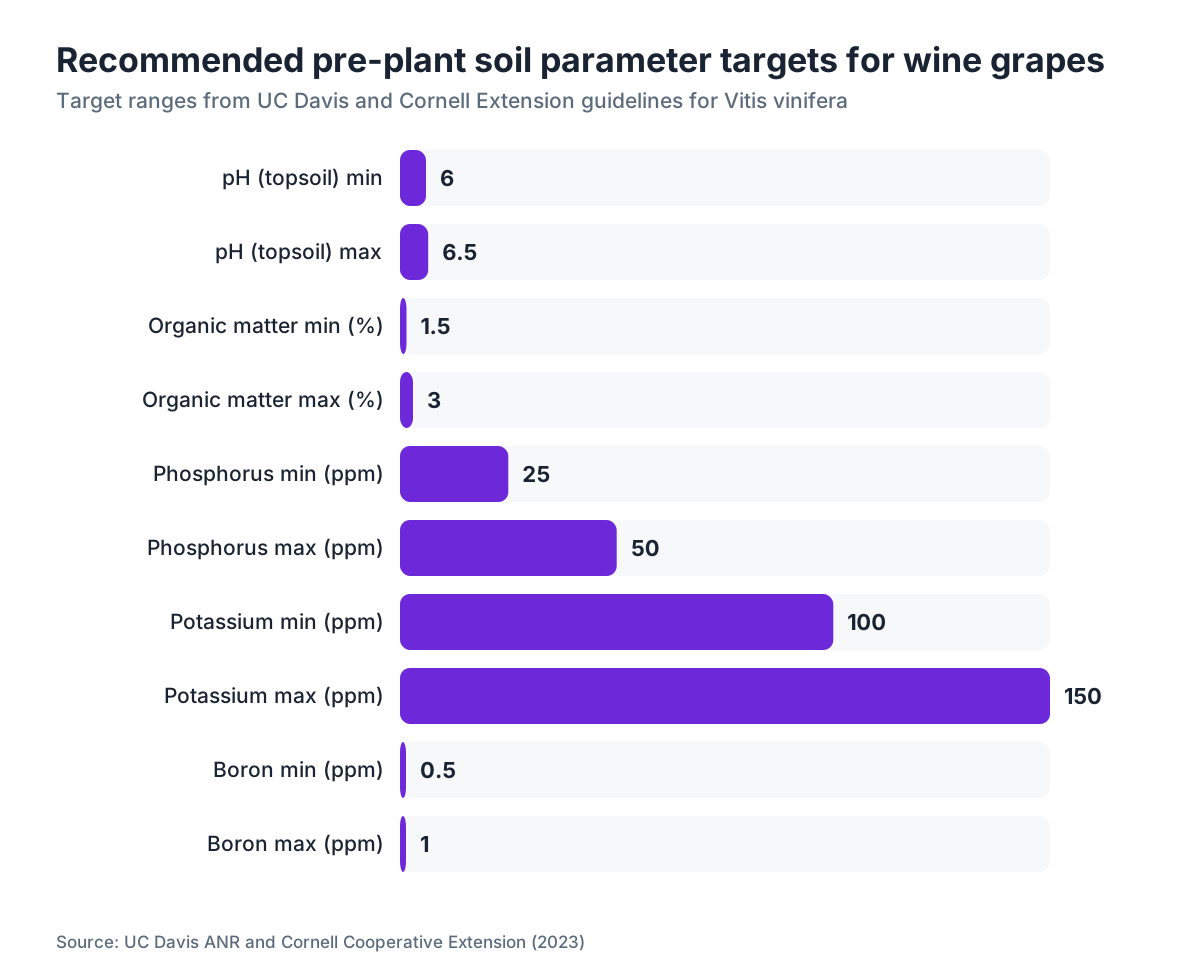
Here are the pre-plant soil targets that major university extension programs recommend for grapevines:
| Parameter | Target Range | Notes |
|---|---|---|
| pH (topsoil) | 6.0 to 6.5 | Lime or sulfur to adjust |
| pH (subsoil, 12-24") | > 5.5 | Deep lime if needed |
| Organic matter | 1.5 to 3% | Cover crop or compost |
| Phosphorus (Mehlich-3) | 25 to 50 ppm | Pre-plant incorporation only |
| Potassium | 100 to 150 ppm | Apply if deficient |
| Calcium:Magnesium ratio | 3:1 to 5:1 | Dolomite if Mg low |
| Boron | 0.5 to 1.0 ppm | Deficiency common on sandy soils |
If pH is below 6.0, apply agricultural lime at the rate your lab recommends off buffer pH, not active pH. Dolomitic lime brings both calcium and magnesium, so reach for it when your Ca:Mg ratio is narrow. If pH is above 7.0 on an irrigated arid-region site, elemental sulfur is the fix. Figure roughly 100-200 lbs per acre per 0.1 pH unit of drop, though that number swings hard with soil texture and buffering capacity [2].
Phosphorus is expensive to move after planting. If your test shows a deficiency, broadcast and incorporate it now. Potassium is more mobile and you can manage it in-season, but starting with adequate K saves you trouble in years 1-3 while the vines are establishing.
How deep should you till or rip the soil before planting vines?
Rip to 24-36 inches, and this is exactly where new vineyards underinvest. A single-shank subsoiler pulled to that depth breaks up compaction layers and opens channels for roots and drainage. Washington State University extension recommends deep tillage to at least 24 inches, and in heavy soils or sites with a claypan, 36 inches is better [4].
Rip in two passes at perpendicular angles across your planned row direction. Space the rip lines 18-24 inches apart. On steep hillside sites, rip on the contour first, or you'll cut drainage channels that erode.
After deep ripping, a disc or rotary tiller works your amendments into the top 12-18 inches. Do it in passes. On heavy clay, tilling wet builds compacted clods that are worse than what you started with, so wait for soil moisture at or below field capacity. The old test still works: squeeze a handful, and if it barely holds together and crumbles when you poke it, it's ready.
Subsoiling is a do-it-once job. Renting a D6 dozer with a ripper shank for two days before your first planting costs a fraction of tearing out and replanting a failing block 15 years later.
How do you fix drainage problems before planting a vineyard?
Fix drainage before you plant, because vines tolerate drought far better than wet feet. Phytophthora crown rot and stunted vigor both trace straight back to poor drainage. If your site holds standing water more than 48 hours after a rain, deal with it before a single vine goes in.
For minor surface issues, grade the site so water runs off-row. A 1-2% cross-slope usually does it. For subsurface problems, you have two main tools: French drains (perforated pipe in gravel-filled trenches) installed before planting, or raised beds where the vine row sits 12-18 inches above the original grade.
Raised beds work well on flat sites with high water tables. They cost more to install, sometimes 200-400 hours of tractor time per acre depending on site complexity, but they solve the problem for good. French drains suit hillside seep zones or sites where water concentrates from upslope.
Check the USDA Web Soil Survey before you do anything else [5]. It gives you the hydric soil designation, seasonal high water table depth, and permeability rating for your soil series, often down to the map unit. Many drainage problems show up there before you ever pull a shovel.
Should you plant a cover crop before the vines go in?
Yes, and it's one of the highest-return moves in the pre-plant year. A winter cover of cereal rye, oats, or a legume mix (hairy vetch plus triticale, say) builds organic matter, holds down weeds, and breaks compaction through root action. Mow it and incorporate it in spring, and you add a green manure charge of nitrogen and carbon [6].
If your organic matter came back below 1.5%, run two full seasons of cover cropping before planting. Organic matter drives water-holding capacity, CEC, and microbial activity in ways a bag of fertilizer can't touch. On sandy soils in warm climates, organic matter burns off fast, so starting high buys you a buffer.
Legume covers fix atmospheric nitrogen. Hairy vetch at a good stand fixes 80-150 lbs of nitrogen per acre per year [6]. That nitrogen releases as the cover decomposes, so time your termination (mowing or tillage) about 3-4 weeks before planting. The residue breaks down without robbing nitrogen from your young vines.
One thing to avoid: perennial pasture grasses as a pre-plant cover. They're nearly impossible to wipe out, and Bermudagrass or orchardgrass invading your vine rows in year 1 turns into a herbicide problem that costs real money.
What amendments and fertilizers should you apply before planting?
Lime is the amendment most sites need and the one with the longest lead time. Apply it at least 6 months before planting, 12 months if you can. If your subsoil pH is also low, ask your dealer about deep lime incorporation at ripping time; some operations pull lime straight into the rip channel.
Compost works well at 2-5 tons per acre tilled into the top foot, especially on sandy or low-organic-matter sites. Not all composts are equal. Ask for a certificate of analysis showing C:N ratio (look for 20:1 to 30:1), pH, and absence of heavy metals if there's any chance the feedstock included biosolids.
Boron runs short on granite-derived or heavily leached soils. If your test shows below 0.5 ppm, a pre-plant broadcast of sodium borate (Solubor) at 1-2 lbs of actual boron per acre pays off. Boron turns toxic at about twice the deficient rate, so don't eyeball it. Apply by the test result.
For phosphorus, broadcast and incorporate before final tillage. Triple superphosphate and rock phosphate both work; rock phosphate releases slower and suits acidic soils where it solubilizes over years. If potassium is deficient, sulfate of potash beats muriate of potash on many wine grape varieties, especially the chloride-sensitive ones.
Treat the pre-plant amendment window as your only chance at deep incorporation. Once vines are in, you're surface-applying everything, and the nutrients move down on the soil's timetable, not yours.
How do you handle cover crops and weed control in the year before planting?
Perennial weed pressure is the sleeper issue in vineyard soil prep. Bindweed, nutsedge, and Bermudagrass are all far easier to manage before vines are in the ground. Post-plant options shrink fast: you can't use soil-active herbicides near young vines without injury risk, and cultivation tears up shallow roots.
If your site already carries perennial weeds, apply glyphosate at full label rate during the growing season 1-2 years out, let it regrow, and hit it again. Two to three applications beat one big one for rhizome species like nutsedge. UC Davis integrated pest management guidelines note that yellow nutsedge takes persistent attention across multiple growing seasons before you can call it controlled [7].
After suppression, your pre-plant cover crop pulls double duty. It fills the space with plants you want and leaves less room for weeds to move back in. Terminate the cover with a flail mower or by incorporation 3-4 weeks before planting.
Record every herbicide application you make during site prep. Most states require pesticide application records under the EPA Worker Protection Standard or state pesticide rules, and the clock starts the moment you apply anything [8]. Keeping them in one consistent system from day one saves you the scramble when an inspector shows up. Tools like VitiScribe are built for exactly this kind of ongoing field record-keeping.
What is the typical timeline for preparing vineyard soil before planting?
It depends on how rough your starting conditions are, so there's no single right answer. Here's a realistic framework:
Year minus 2 (24 months before planting):
Pull soil samples at multiple depths. Get lab results back. Identify drainage problems. Apply lime if pH is well low. Start perennial weed management. Plant your first cover crop in fall.
Year minus 1 (12 months before planting):
Terminate the cover crop in spring. Deep rip the subsoil. Incorporate phosphorus, compost, and other pre-plant amendments. Retest soil pH to confirm the lime response. Plant a second cover crop in fall if organic matter is still low.
Year of planting (spring):
Terminate the winter cover crop 3-4 weeks before planting. Do final seedbed prep. Install irrigation. Plant vines.
Sites with severe drainage problems or very low pH subsoils earn a third year. Rushing it costs more in replanting, vine losses, and slow establishment than an extra season of prep ever could.
WSU Extension's guidelines for new vineyard establishment recommend starting soil preparation a minimum of one growing season before planting, and two seasons for problem soils [4].
What are the biggest mistakes growers make when preparing vineyard soil?
Skipping the subsoil sample. Every year, growers find out in year 3 or 4 that they have an acidic B horizon their topsoil amendments never reached. The fix at that point is surface lime and years of waiting. The original fix was a $30 sample.
Tilling wet. Clay worked when wet forms dense clods that don't break down, and you smear a compaction layer right at tillage depth. You end up worse off than when you started.
Ignoring slope. Bare, deep-ripped soil on a 12% grade is an erosion event waiting for the first rain. On steep sites, cover crop right after ripping. Some growers rip and seed in the same pass.
Over-applying manure or compost without testing it first. One heavy load of poultry manure on a site already at adequate potassium can push K and EC to levels that stall vine establishment. Know what you're putting down.
Ignoring rocks. Rocky ground means hand-picking (expensive), rock crushing (possible with the right gear), or laying out your rows around the worst spots. Hit a large rock with a subsoiler and you snap the shank. Walk the site before you rip it.
A well-planned vineyard site goes from raw land to first harvest in 3-4 years. Soil prep done badly pushes that 2 or more years further, or leaves you with a block that never quite performs.
How does soil type affect what preparation steps you need?
Sandy soils drain fast, warm early, and hold little water or nutrients. Pre-plant priorities are organic matter (compost, cover crop) and making sure trace elements like boron and zinc are present. Drip irrigation is almost always required.
Clay soils hold water and nutrients but drain poorly and compact easily. Pre-plant priorities are drainage (raised beds or tile drains), deep ripping on the right moisture day, and not over-working the seedbed. They respond well to gypsum as a conditioner, since calcium sulfate improves clay structure without shifting pH.
Loam soils are easier but still need the same testing and subsoil ripping. Don't assume a good-looking loam surface means the subsoil is fine.
Volcanic soils (andisols) fix phosphorus hard. Pre-plant phosphorus rates often need to run well above what you'd use on sedimentary soils to get adequate plant-available P. Test for phosphorus saturation if your site sits on volcanic parent material.
Calcareous soils (high calcium carbonate) in arid regions run high pH and can throw iron chlorosis on sensitive varieties. Rootstock choice at planting (110R, 1103P) is your main lever, but pre-plant sulfur helps if you have the time.
No site is perfectly uniform. A soil map from USDA Web Soil Survey [5] tells you what series and phases sit on your land, and UC ANR's catalog has variety and rootstock guides keyed to California soil types [1].
What records do you need to keep during soil preparation?
More than most first-time vineyard developers expect. At the federal level, the EPA Worker Protection Standard (40 CFR Part 170) requires that pesticide application records be kept for all agricultural pesticide applications, including any herbicides used during site prep [8]. Most state departments of agriculture stack their own requirements on top: California requires licensed pest control advisers for many restricted-use materials, and Washington requires commercial applicator records be kept for at least two years [9].
For non-pesticide inputs, keep records of lime and amendment applications: product name, rate, date, field block, and who applied it. These matter when you certify organic (the transition clock starts from your last prohibited-substance application, and you need the date documented) and when you're chasing down a soil chemistry problem 5 years in.
Save soil test results permanently, more than the most recent year. A lab result from your pre-plant year is the baseline you measure everything else against. Store it somewhere it won't vanish into a filing cabinet that leaves with a departing farm manager.
To keep all of this in one place from the start, VitiScribe handles spray records, soil amendment logs, and block-level field notes in a format built for vineyard compliance. Start your record system in the pre-plant year instead of at first harvest, and you never carry a gap in your paperwork.
Frequently asked questions
How long does it take to prepare soil for a vineyard before planting?
Most sites need 1-2 years of active soil preparation. Year one covers soil testing, lime application, drainage corrections, and initial cover cropping. Year two focuses on deep tillage, amendment incorporation, and a second cover crop if needed. Sites with severe compaction, very low pH subsoils, or heavy perennial weed pressure should budget the full two years, and sometimes three.
What pH should vineyard soil be before you plant grapevines?
Target a topsoil pH of 6.0 to 6.5 for most Vitis vinifera varieties. Below pH 5.5, aluminum turns toxic to vine roots. Above pH 7.5, iron and zinc lock up. Cornell Extension recommends testing 1-2 years before planting so you have enough time to apply and fully incorporate lime, which takes 6-12 months to react in the soil.
How deep should you till or subsoil a vineyard before planting?
WSU Extension recommends subsoiling to at least 24 inches, and 36 inches in heavy clay soils or sites with a hardpan. Deep ripping is typically done in two passes at perpendicular angles. It's a one-time operation: once vines are planted, you can't return to the subsoil without damaging roots, so doing it right before planting is the only real window.
Do you need to add compost or organic matter before planting a vineyard?
If your soil test shows organic matter below 1.5%, yes. Apply 2-5 tons per acre of compost and incorporate it into the top 12-18 inches. Cover cropping with legumes like hairy vetch, which can fix 80-150 lbs of nitrogen per acre per year, is an effective lower-cost alternative. Two seasons of cover cropping before planting can raise organic matter measurably on sandy or depleted soils.
How do you fix drainage problems in a vineyard site before planting?
For surface drainage, grade the site to a 1-2% cross-slope. For subsurface issues, install perforated French drain pipe in gravel-filled trenches before planting, or build raised planting beds 12-18 inches above grade. Check USDA Web Soil Survey for your site's hydric soil designation and seasonal high water table depth before deciding which approach fits. Vines in waterlogged soil develop Phytophthora root rot and chronic poor vigor.
What soil tests are needed before planting a vineyard?
Pull composite samples at 0-12 inches and 12-24 inches minimum, and 24-36 inches if you suspect a problem layer. Test for pH, organic matter, CEC, phosphorus, potassium, calcium, magnesium, boron, zinc, manganese, and texture (sand/silt/clay percent). Use a certified agricultural lab. A full panel typically costs $40-100 per sample. Cornell and UC Davis extension labs are calibrated for grape production in their regions.
When is the best time of year to rip or till a vineyard site?
Late summer to early fall is ideal in most regions: soils are dry enough to work well, you have time to incorporate amendments and establish a fall cover crop, and you avoid the erosion risk of bare soil over winter. Never till clay soils when wet; moisture at or below field capacity (soil just barely holds together when squeezed) is the right timing. On sandy sites the window is wider.
Should you use cover crops in the year before planting a vineyard?
Yes. A cereal rye, oat, or legume mix planted in fall of the pre-plant year builds organic matter, suppresses weeds, and adds nitrogen through fixation. Terminate it 3-4 weeks before vine planting so residue decomposes without tying up nitrogen. Avoid perennial pasture grasses as a pre-plant cover; Bermudagrass and orchardgrass are nearly impossible to eradicate once established under young vines.
How do you manage weeds before establishing a vineyard?
Perennial weeds like bindweed, nutsedge, and Bermudagrass are far easier to control before planting than after. Apply glyphosate at full label rate in the growing season 1-2 years before planting, let it regrow, and retreat. UC Davis IPM guidelines note yellow nutsedge requires multiple growing seasons of consistent treatment. Follow with a cover crop to occupy soil and cut weed reinvasion before vine planting.
What pesticide records do you need to keep during vineyard site preparation?
The EPA Worker Protection Standard (40 CFR Part 170) requires records for all agricultural pesticide applications, including pre-plant herbicide use. Most states add their own retention and reporting rules on top of federal ones. California and Washington both require at least two years of commercial applicator records. Keep records from day one: if you transition to organic, your prohibited-substance-free period starts from your last documented application.
How much does soil preparation cost for a new vineyard per acre?
Costs vary widely by site condition and region, but a realistic range for a typical new vineyard site in the U.S. West is $2,000-8,000 per acre for soil preparation, including testing, lime and amendments, subsoil ripping, cover cropping, and drainage work. Severe sites with heavy rock, deep drainage installation, or bad weed problems run higher. Cornell and WSU extension budgets for new vineyard establishment cover these figures in more detail.
What rootstock should you choose based on your soil type?
Rootstock is closely tied to soil: 110 Richter and 1103 Paulsen tolerate drought and calcareous soils well; 3309 Couderc and Riparia Gloire perform on cool, moist sites with low pH. 420A works on shallow limestone soils. UC Davis's Foundation Plant Services and WSU Extension both publish rootstock selection guides keyed to soil type, pH, and water table depth. Match rootstock to your soil test results before ordering.
Can you prepare vineyard soil yourself or do you need professional help?
Basic soil testing and cover crop planting are DIY-friendly. Deep ripping typically needs a large tractor (100+ horsepower) and a single-shank subsoiler, which most small operations rent or hire out. Lime spreading above a couple of tons per acre benefits from a commercial spreader with a calibrated rate. Reading a confusing soil test into a nutrient plan is worth paying a certified crop adviser for at least once.
Sources
- UC Cooperative Extension / UC ANR, Soil and Water Management for California Vineyards: Phosphorus and lime should be incorporated prior to planting because surface applications have limited downward movement in soil
- UC Davis ANR, Grape Nutrition and Soil Management: Target pH range of 6.0-6.5 for most Vitis vinifera; pH below 5.5 causes aluminum toxicity; sulfur application rates for pH adjustment vary by soil texture
- Cornell Cooperative Extension, Vineyard Establishment Guide: Cornell recommends testing 1-2 years before planting to allow time for lime application; agricultural lime takes 6-12 months to fully react in soil
- Washington State University Extension, Vineyard Establishment and Management: WSU Extension recommends deep tillage to at least 24 inches before planting, and a minimum of one growing season of soil preparation, two for problem soils
- USDA Natural Resources Conservation Service, Web Soil Survey: Web Soil Survey provides hydric soil designation, seasonal high water table depth, and permeability rating for U.S. soil map units
- USDA Sustainable Agriculture Research and Education (SARE), Managing Cover Crops Profitably: Hairy vetch in a good stand can fix 80-150 lbs of nitrogen per acre per year when used as a cover crop
- UC Statewide Integrated Pest Management Program, Yellow Nutsedge Management: Yellow nutsedge requires persistent attention across multiple growing seasons before it can be considered under control
- U.S. EPA, Worker Protection Standard for Agricultural Pesticides, 40 CFR Part 170: The EPA Worker Protection Standard requires pesticide application records to be kept for all agricultural pesticide applications
- Washington State Department of Agriculture, Pesticide Application Records Requirements: Washington requires commercial applicator pesticide records be retained for a minimum of two years
- UC Cooperative Extension, Sample Costs to Establish a Wine Grape Vineyard, North Coast: Pre-plant soil preparation costs for California wine grape vineyard establishment, including tillage, amendments, and cover crops
- Cornell University, Fruit Resources, Rootstock Selection for Grapes: Rootstock selection guides keyed to soil type, pH, and water table depth for northeastern U.S. grape production
Last updated 2026-07-09