How to prune grape vines: a complete practical guide
TL;DR
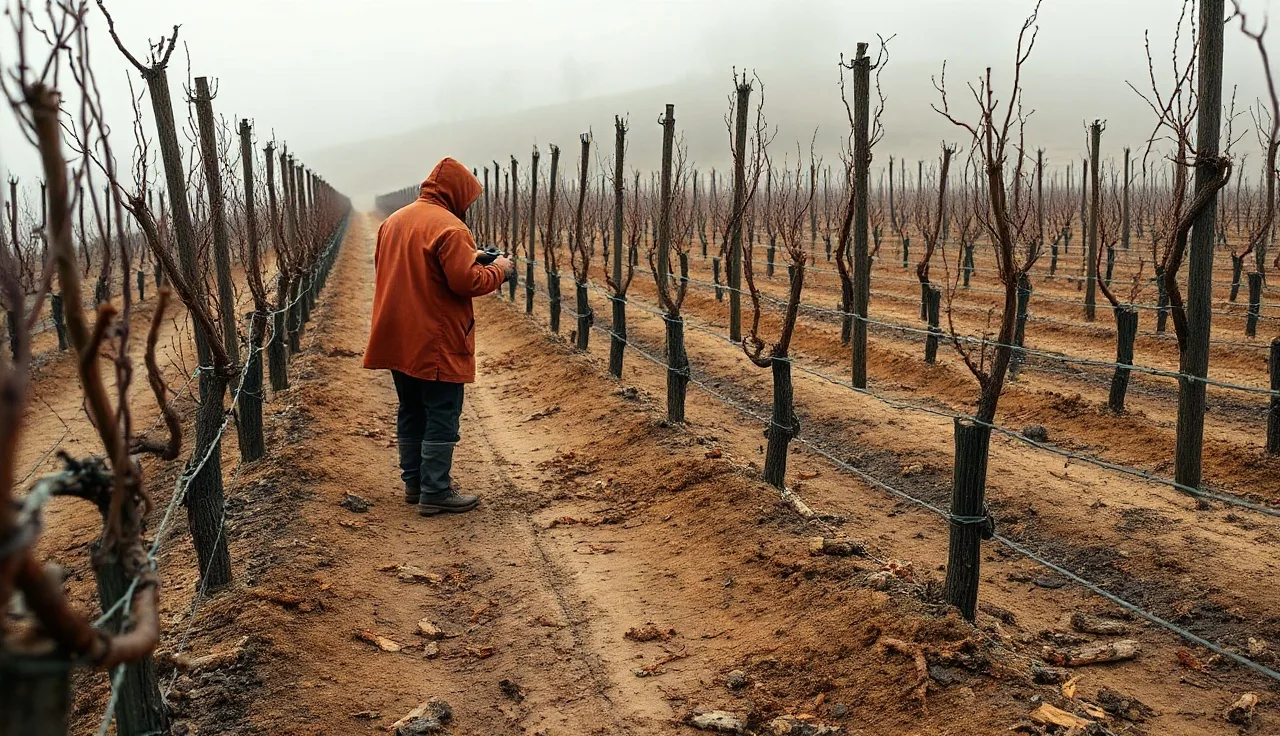
- Prune grape vines during full dormancy, usually January through early March in most U.S.
- regions, after your coldest nights have passed.
- Remove 70 to 90% of last year's growth.
- Pick cane or spur pruning based on your variety.
- Muscadines want spur pruning on permanent cordons.
- Get the timing wrong and you lose a full season of fruit.
Do you actually need to prune grape vines every year?
Yes. Every year, no exceptions. This isn't optional upkeep like edging a lawn. Grapevines grow with real force, and a skipped year sends all that energy into wood and leaves instead of fruit. Research summarized by UC extension viticulture programs shows big yield losses in vines left unpruned, because fruiting shoots come only from buds on wood that grew the previous season. [1]
There's a second reason that's easy to miss: disease control. A dense, unpruned canopy traps humidity and kills airflow, and that's the exact environment Botrytis cinerea and powdery mildew want. Pruning is your first disease management move of the year, before you ever open a spray tank.
Here's the short version. Prune every dormant season, take off most of what grew last year, and leave only the wood and buds you actually want to carry fruit.
When should you prune grape vines?
Prune during dormancy, which in most U.S. wine grape regions runs from late December through early March. The vine has to drop all its leaves and settle into true dormancy before you cut. Prune too early (October, November) and you can push late growth that cold then kills. Prune too late (after budbreak) and the vine 'bleeds' sap from every cut, which stresses it, though it rarely does lasting harm.
Most experienced growers wait until after their region's coldest nights. In the San Joaquin Valley that's often late January. In the Finger Lakes or Willamette Valley, think late February into March. Cornell's grape program advises pruning once average daily temperatures stay consistently above freezing to hold down cold injury on fresh cuts. [2]
One honest caveat about Eutypa dieback, caused by Eutypa lata. It spreads through pruning wounds when rain follows a cut. UC research found infection risk drops sharply when you prune after the rainy season ends, which in California can mean waiting until March or April in wet years. [3] In the eastern U.S., where spring rain is a given, wound protectants matter more than pruning date alone.
Winter pruning is the same job. You can prune a grape vine in winter as long as it's dormant and you're past your hardest freeze events. 'Winter pruning' and 'dormant pruning' mean the same thing in the field.
What is the best time of year to prune grape vines?
Late winter is the answer nearly every extension program lands on. Washington State University's viticulture program puts the window after the coldest temperatures of winter and before 50% budbreak, which works out to roughly January 15 through March 15 for most Pacific Northwest sites. [4]
Why not fall, right after harvest? Three reasons. The vine is still moving carbohydrates from leaves into roots and trunk, and cutting shoots short interrupts that. Fresh wounds then sit through months of wet, cold weather before they callus. And you won't know until late winter which canes survived the cold, so a November cut is a guess.
Why not spring, after budbreak? You can, and sometimes you have to, but every bud you remove after it swells is energy the vine already spent. It gets messy, too. A vine in full budbreak is hard to read for damage and structure.
Late January to mid-March covers most U.S. regions. Push two to three weeks later for colder climates like Michigan, upstate New York, and northern Washington.
Cane pruning vs. spur pruning: which method should you use?
This is the biggest pruning decision you'll make, and your variety mostly makes it for you.
Spur pruning leaves short stubs (spurs) of two to three buds each on permanent arms called cordons. Each spur grows two to four shoots during the season. You renew spurs every few years. It works for varieties that fruit reliably from basal buds, meaning the first bud or two on a cane: Syrah, Grenache, Zinfandel, most Italian varieties, and muscadine. It's faster to prune, easier to train a crew to do consistently, and it fits mechanical harvesting.
Cane pruning takes off nearly all of last year's wood and replaces it with one or two full canes (long shoots of 8 to 15 buds) tied to the trellis wire. It suits varieties with low fruitfulness at the base of the cane, where buds 1 and 2 just don't set clusters reliably: Riesling, Pinot Noir, Chardonnay, Gewurztraminer. Cornell's grape training resources note that Pinot Noir benefits from cane pruning because basal bud fruitfulness runs highly variable in that variety. [2]
The field difference is real. A spur-pruned row is quick to walk and cut. A cane-pruned row means selecting, positioning, and tying a replacement cane, which runs two to three times longer per vine. On a 10-acre block that gap adds up fast.
| Pruning Method | Best Varieties | Buds Left Per Vine | Relative Labor |
|---|---|---|---|
| Spur | Zinfandel, Syrah, Grenache, Muscadine | 20-40 | Lower |
| Cane | Pinot Noir, Riesling, Chardonnay | 40-60 | Higher |
| Cane (high-vigor sites) | Any variety on fertile soil | 50-80 | Higher |
How do you prune a grape vine step by step?
This covers spur pruning on a bilateral cordon, which is what most commercial U.S. vineyards run. Adjust for your trellis, but the sequence holds.
Step 1: Stand back and read the vine. Before you cut anything, look at the whole plant. Note where the permanent wood (trunk and cordons) is healthy versus cracked or diseased. Note where spurs are too long, too crowded, or pointed the wrong way. The decisions you make now lock in structure for three to five years.
Step 2: Remove dead, diseased, and crossing wood first. Clean up the obvious problems before you count buds. Diseased wood (dark streaking when you cross-cut, gummosis, Esca symptoms) comes off back to healthy tissue. Disinfect your loppers between vines if disease pressure is high. A 10% bleach solution or a commercial disinfectant works; some growers just carry isopropyl alcohol.
Step 3: Identify your renewal positions. On each spur, you want a shoot near the base to become next year's renewal spur. That keeps the cordon from creeping outward year after year.
Step 4: Cut spurs to two to three nodes. The bottom bud becomes next year's renewal. The upper one or two buds carry this year's fruit. Cut with clean, sharp bypass loppers at a 45-degree angle about half an inch above the top bud.
Step 5: Adjust for vine balance. A vigorous vine with thick, tight-spaced canes can carry more buds. A weak vine with thin, pencil-width shoots needs fewer, so the plant isn't asked to ripen more fruit than its roots can support. WSU's baseline: target shoots about the diameter of a pencil (roughly 3/8 inch). [4]
Step 6: Count your buds per vine. For a mature wine grape vine on a bilateral cordon, 20 to 40 buds is a common spur-pruning target. Write it down. That number feeds crop load estimation later.
Step 7: Apply wound sealant if needed. On cuts bigger than a half dollar, or in Eutypa country, a registered wound sealant (Topsin-M or equivalent) cuts infection risk. Not every grower does this on routine spur cuts, but if you're doing large cane removals or reworking old vines, it earns its time.
Tools: bypass loppers for most cuts, a hand saw for anything over an inch thick, and a folding hand pruner for detail work. Keep them sharp. Dull blades crush tissue instead of slicing it and leave ragged wounds that heal slowly.
How to prune muscadine grape vines specifically
Muscadines (Vitis rotundifolia) are different enough from European grapes (Vitis vinifera) to need their own approach. They're native to the southeastern U.S., they fruit on shoots that push from one-year-old wood, and they do best on spur pruning with permanent cordons. [5]
The standard muscadine trellis is a single high wire at about five to six feet, with two cordons running in opposite directions off the trunk. Each dormant season you cut all the lateral shoots back to spurs of two to four buds. Simple once the vine is mature, but getting there takes three to four years of training.
Year 1: Let one strong shoot grow straight up to the wire. Tie it. Remove all laterals.
Year 2: Train two horizontal shoots along the wire in opposite directions. These become your permanent cordons. Remove everything else.
Years 3-4: Cut lateral shoots along the cordons back to spurs of two to three buds. Your first real crop shows up in year 3.
Muscadines grow hard. A mature vine can easily throw 20 to 30 feet of new shoot growth in a season, and if you don't prune aggressively, fruit quality falls off fast. NC State's extension program, which covers more muscadine acreage than any other, recommends short spurs (two buds) rather than the three or four you might leave on vinifera, because basal bud fruitfulness on muscadines is high. [5]
Timing follows the same logic as vinifera, late dormancy, but muscadines break dormancy a little earlier than many vinifera in warm southeastern climates. February is usually the right month across Georgia, South Carolina, and North Carolina.
How to prune grape vines for winter (preparing the vine before cold weather)
There's a distinction worth drawing. 'Pruning for winter' can mean two different things: doing your actual pruning during winter (dormant pruning, covered above), or cutting the vine back before winter to reduce cold damage. The second is uncommon in commercial viticulture but comes up in home vineyards and cold northern sites.
Most of the time, you skip pre-winter pruning. The vine's leaves and canes help protect buds from early cold snaps by acting as insulation. Cutting canes short before fall frost strips that buffer away.
The exception: in regions with extreme freeze risk (Minnesota, Wisconsin, parts of Michigan), some growers trim canes partway before burying them or wrapping the trunk for winter protection. That's not final pruning, just shortening long canes so they're easier to handle. Final pruning still waits for late winter, once temperatures settle.
The University of Minnesota's cold-hardy grape program recommends leaving canes at full length through winter and doing dormant pruning no earlier than March, so you can assess winter injury before you cut. [6] That way you see which wood survived and set bud retention accordingly. A vine with heavy cold injury to its primary buds may need extra buds left to compensate, since secondary and tertiary buds are less fruitful.
How much wood should you remove when pruning?
The industry standard, sometimes called the 70-90% rule, says remove 70 to 90% of the previous year's shoot growth by weight. It's a lot. It looks aggressive the first time you do it.
A useful field check is the Ravaz Index, named for the French viticulturist Louis Ravaz: divide fruit weight at harvest by pruning weight. A ratio between 5 and 10 generally points to balanced vines. Below 5 means the vine is too vegetative. Above 10 means it's overcropped. It's imperfect, but it gives you a real number to compare across years and blocks. [7]
Another quick guide from WSU: count the shoots that grew to pencil thickness or better, then multiply by 10 for a rough maximum bud count next season. A vine that threw 40 pencil-width or larger shoots can probably carry about 40 buds. This is Nelson Shaulis's balanced pruning method, developed at Cornell in the 1960s and still the most practical field approach around. [2]
For home gardeners and one-vine setups on a simple two-wire trellis: figure four spurs per cordon arm, two cordon arms, two to three buds per spur. That's roughly 16 to 24 buds total. If the vine is weak, drop to 8 to 12.
Worker safety rules that apply to pruning crews
Running a pruning crew, even a small one, puts you under the EPA Worker Protection Standard (WPS) in any pesticide-treated area where workers operate. If you're applying wound sealants that are registered pesticides, those products carry re-entry intervals you have to post and communicate. [8]
Beyond pesticide exposure, repetitive-motion injury is the real occupational hazard in pruning. Loppers and hand pruners run six to eight hours a day drive tendinitis and carpal tunnel at a high rate in vineyard crews. NIOSH has documented musculoskeletal disorder rates in agricultural work among the highest of any farm task. [9] Ergonomic loppers (ratchet-style or pneumatic) cut grip force by 40 to 60% compared with standard bypass loppers. Pneumatic systems cost real money up front, but they pay off in a crew that's still functional in week four of a long season.
If you're logging pruning records for compliance, dates, operators, equipment, and any wound treatments, tools like VitiScribe can tie those into your field operations log so you're not running separate spreadsheets for spray records and cultural practices.
Keep pruning records. Certification programs (USDA Organic, Sustainable Winegrowing, Fish Friendly Farming) all want documentation of cultural practices. Date of pruning, bud count targets, and crew size are the floor.
Common pruning mistakes and how to avoid them
Pruning too early. November pruning on the heels of harvest feels efficient, but it opens the door to wound disease and skips your chance to read cold damage. Wait.
Leaving too many buds on a weak vine. Thin canes (much under 3/8 inch) are the vine telling you it lacks the reserves to carry a full crop. Cut harder, not softer. You get a smaller, cleaner crop and a stronger vine the next year.
Ignoring the trunk. Pruning attention goes to shoots and spurs, but the trunk and lower cordon arms collect dead wood, disease, and girdling. Spend ten seconds per vine on the trunk. Cankers, cracks, and gummosis point to Eutypa or Botryosphaeria, and those don't fix themselves.
Skipping the sharpening. A dull pruner crushes tissue at the cut, which slows callusing and widens the infection window. Sharpen loppers every morning before the crew starts and touch them up midday. It takes three minutes.
Skipping renewal spurs. Cut every shoot back to two buds without leaving a lower renewal shoot and your spur positions creep outward every year. After a decade you've got 18-inch spurs and a cordon with terrible canopy geometry. Always leave one shoot near the cordon to become next year's replacement.
Cutting too close to the bud. Cut at least half an inch above the top bud. The tissue right above the bud is the most sensitive, and a cut too close damages the bud's vascular connections.
How pruning decisions connect to crop estimation and record-keeping
Bud count at pruning is your first data point for the season's crop forecast. Know your variety's clusters per shoot and average cluster weight from prior years, and you can estimate yield within a reasonable range by April.
The math is simple: (buds left per vine) x (shoots per bud, usually 0.8 to 1.2 for healthy vines) x (clusters per shoot, varies by variety) x (cluster weight in pounds) x (vines per acre) = projected pounds per acre. None of those inputs are perfect in March, but a locked-down bud count gives you an anchor.
For vineyards selling to wineries under multi-year contracts that spell out tonnage, this carries weight. You're doing more than pruning for vine health. You're making a tonnage commitment.
Log your per-vine or per-block bud counts at pruning. You're already there, so it costs almost nothing. Later, when you're shoot thinning or cluster thinning, those records let you decide against a real baseline instead of guessing. For a vineyard of any size running formal production records, this is standard practice.
By harvest you can compare final yield to the pruning estimate and refine bud-count targets for next year. Over three to four seasons, that loop produces numbers that actually predict.
How long does it take to prune an acre of vines?
Honest answer: it depends on system, vine age, and crew skill, and nobody has great industry-wide data on it. The ranges below come from extension literature and practical field guides.
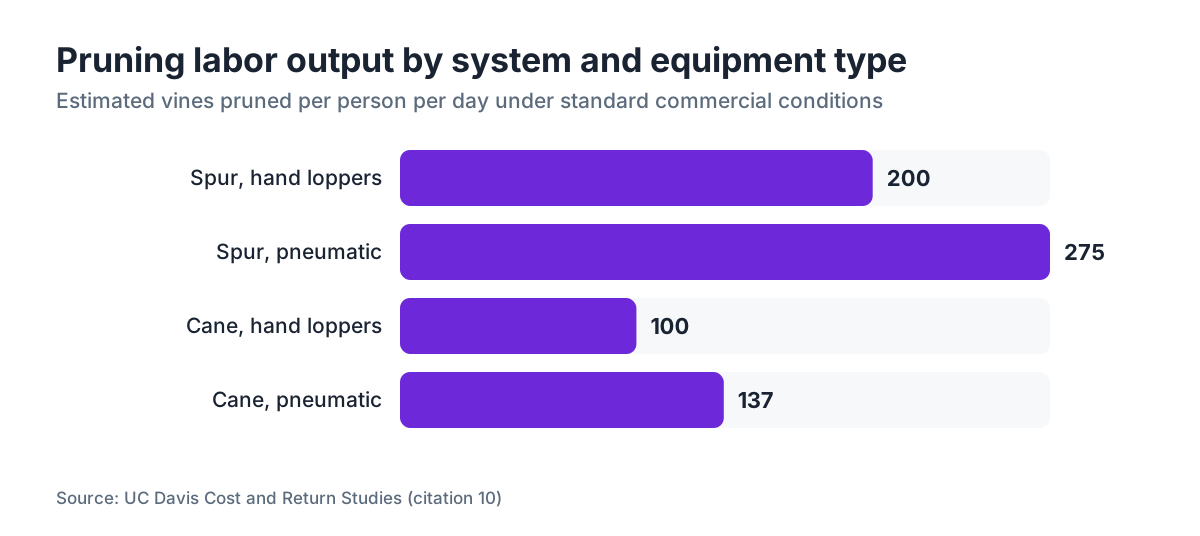
For spur pruning on a bilateral cordon, an experienced worker can prune 150 to 250 vines a day working alone with bypass loppers. At typical commercial spacing of 550 to 900 vines per acre, that's about 0.5 to 1.5 acres per person per day. [10]
Cane pruning runs roughly twice as long per vine because you have to select, position, and tie the replacement cane. Expect 75 to 125 vines per person per day on cane-pruned systems.
Pneumatic loppers can lift throughput 25 to 40% on spur-pruned systems. The payback usually turns positive around 10 acres, because the equipment cost (roughly $2,000 to $4,000 for a compressor and gun setup) comes back in labor savings inside one to two seasons.
For a small home vineyard of 50 vines, plan a full weekend if you're new to it, a half-day once you've got two or three seasons behind you.
| System | Vines/Person/Day | Acres/Person/Day (at 700 vines/acre) |
|---|---|---|
| Spur, hand loppers | 150-250 | 0.2-0.35 |
| Spur, pneumatic | 200-350 | 0.3-0.5 |
| Cane, hand loppers | 75-125 | 0.1-0.18 |
| Cane, pneumatic | 100-175 | 0.14-0.25 |
Frequently asked questions
How do I prune a grape vine for the first time?
In year 1, don't prune at all, let the vine establish. In year 2, pick one strong vertical shoot for your trunk and remove everything else. In year 3, train two horizontal cordons along the wire and cut back lateral shoots to one or two buds. By year 4 you're on a normal dormant schedule. Going slow in the early years builds permanent structure you'll live with for decades.
When can you prune grape vines without harming them?
Any time the vine is fully dormant, which means after leaf drop in late fall through late winter, before buds swell. In practice, late January through early March is the safest window in most U.S. regions. Avoid pruning right before or during your coldest freeze events, and in high-rainfall areas, pruning later in winter cuts fresh-wound exposure to Eutypa-spreading rain.
How do you prune grape vines that have gotten out of control?
Start with structure. Find the trunk and main cordon arms, then remove everything that isn't part of that framework or this year's intended fruiting wood. Don't try to restore a neglected vine in one season. Year 1, get back to a clean cordon. Year 2, set proper spur spacing. Year 3, you're on a manageable system. Fixing it all at once stresses the vine and throws a messy tangle of regrowth.
Should you seal pruning cuts on grape vines?
On large cuts (removing a whole cane or arm), a registered wound sealant like a thiophanate-methyl product cuts Eutypa and Botryosphaeria infection risk. For routine spur cuts, most commercial growers skip sealant because the surface is small and sealing 400 spurs per vine across a 20-acre block isn't practical. Prioritize sealant on cuts larger than a half dollar, especially in wet climates.
How many buds should I leave when pruning grape vines?
For mature vines on a bilateral cordon, 20 to 40 buds per vine is a common spur-pruning target, and 40 to 60 for cane pruning. Adjust for vigor: a strong vine with many thick canes carries more buds than a weak one with thin shoots. WSU's balanced pruning method suggests multiplying the count of pencil-diameter or larger shoots by 10 to estimate your maximum bud target for that vine.
When is the best time to prune grape vines in California?
In coastal California, February through March is the standard window. In the warmer San Joaquin Valley, January into February works because winters are mild and hard freeze risk is lower. In wet years, many California growers delay until March or April to reduce Eutypa infection through rain-exposed wounds. UC research confirms infection risk drops significantly when pruning happens after the rainy season ends.
How to prune muscadine grape vines each year?
Cut all lateral shoots along the permanent cordons back to spurs of two to three buds. Muscadines are vigorous and fruit from current-season growth off one-year-old wood, so hard annual pruning keeps the fruiting zone close to the cordon and stops the vine from turning into a tangle. NC State recommends slightly shorter spurs (two buds) for muscadines than for vinifera, because basal bud fruitfulness runs high in most muscadine varieties.
How do you prune old grape vines?
Old vines (usually 25 years or older) often carry trunk disease built up over decades. Check the trunk first: if more than half the cross-section shows dark streaking or canker tissue, consider trunk renewal by training a new shoot from the base. On disease-free old vines, pruning is the same as any mature vine, though you'll reach for a handsaw more often on thick cordon arms and be choosier about which spurs to keep.
Can I prune grape vines in the fall, right after harvest?
You can, but it's not the move in most cases. The vine is still moving carbohydrates from leaves to roots in fall, and cutting shoots short interrupts that. Fresh wounds also sit exposed through winter with little callusing. In very mild-winter regions with low disease pressure, some growers do partial fall cleanup, but final bud-count pruning should wait for late winter, when you can read cold damage and make good structural calls.
What tools do I need to prune grape vines properly?
A sharp pair of bypass hand pruners (not anvil-style, which crush tissue) handles most routine spur cuts. Bypass loppers take thicker canes and larger removals. A folding hand saw handles cordon sections and old trunk wood. For larger operations, pneumatic loppers on a portable compressor cut hand fatigue and lift daily throughput. Disinfectant (10% bleach or isopropyl alcohol) matters if disease is present in the block.
How to prune a grape vine in winter vs. other seasons?
Winter (during dormancy) is when you do the main structural pruning: removing 70 to 90% of shoot growth, setting bud counts, and establishing spur or cane positions. In summer you might do shoot thinning or leaf removal, but those are canopy management tasks, not pruning. A dormant vine tolerates heavy cutting without a stress response. Cutting during active growth triggers immediate sap flow and shoot proliferation that complicates canopy management.
How do you know if you pruned grape vines correctly?
Three signs of good pruning: the cordon arms are clean with evenly spaced spurs, each spur has a renewal shoot near the base for next year, and bud count per vine matches your yield target. By midsummer, well-pruned vines show even shoot spacing, good light into the canopy, and a balanced ratio of leaf area to fruit. If you see heavy shading or shoot crowding by July, bud count was too high.
How to prune grape vines trained on a simple two-wire backyard trellis?
Find your permanent trunk running up to the first wire, plus two horizontal cordon arms running in opposite directions along it. Each winter, cut all shoots off those cordons back to two-to-three-bud spurs. Leave spurs every six to eight inches along the cordon. A mature backyard vine on a two-wire system might carry six to eight spurs per cordon arm, 12 to 16 spurs total, giving you about 24 to 40 buds. That's plenty for personal production.
Do you need to prune young grape vines differently than mature ones?
Yes. Years one and two are about building the permanent framework (trunk and cordons), not fruit. Give up the early crops to get structure right. In year one, let the strongest shoot grow straight up without cutting it back. In year two, cut to the height of your first wire and train two lateral shoots. Only from year three do you treat the vine like a mature plant and apply normal bud-count targets.
Sources
- UC Agriculture and Natural Resources, Grape Viticulture: Fruiting shoots emerge only from buds on one-year-old wood, so unpruned vines suffer large yield losses
- Cornell University, Cornell Grape and Wine Program: Cornell recommends pruning after average daily temps stay above freezing; Pinot Noir benefits from cane pruning due to variable basal bud fruitfulness; balanced pruning multiplies pencil-diameter shoot count by 10
- UC Agriculture and Natural Resources, Eutypa Dieback of Grapevine: Eutypa lata infection risk through pruning wounds drops sharply when pruning occurs after the rainy season ends in California
- Washington State University Extension, Viticulture: WSU puts the optimal pruning window after the coldest temperatures of winter but before 50% budbreak; pencil-diameter shoots (3/8 inch) are the healthy baseline for balanced pruning
- NC State Extension, Muscadine Grape Production: Muscadines perform best on spur pruning with permanent cordons; NC State recommends two-bud spurs for muscadines due to high basal bud fruitfulness
- University of Minnesota Extension, Cold Climate Grapes: University of Minnesota recommends leaving canes at full length through winter and doing dormant pruning no earlier than March to allow assessment of winter injury
- American Journal of Enology and Viticulture: Ravaz Index (fruit weight divided by pruning weight) between 5 and 10 generally indicates balanced vines; below 5 indicates excessive vegetative growth
- US EPA, Agricultural Worker Protection Standard (40 CFR Part 170): EPA Worker Protection Standard requires posting and communicating re-entry intervals for pesticide-treated areas including wound sealant applications
- CDC/NIOSH, Agricultural Safety: NIOSH documented musculoskeletal disorder rates in agricultural work among the highest across all farm tasks
- UC Davis, Cost and Return Studies: An experienced worker can prune 150-250 vines per day by hand on spur-pruned systems; cane pruning takes roughly twice as long per vine
Last updated 2026-07-09