How to record a no-till vineyard floor management decision
TL;DR
- A no-till vineyard floor management record needs four things: the decision date, the specific block or row affected, the reasoning (weed pressure, erosion risk, soil health goal), and who made the call.
- One clear entry per growing season per block is the minimum.
- That record can satisfy USDA program requirements, organic certification audits, and your own spray justification trail.
Why does a no-till decision need to be recorded at all?
Most vineyard managers know they need spray records. Fewer realize that choosing NOT to spray needs documentation too. The logic is identical. If a regulator, certifier, or lender asks why you managed your floor a certain way this season, "that's just what we do" won't hold up.
The USDA Farm Service Agency and NRCS tie certain conservation program payments to documented management decisions, including floor management practices in vineyards [1]. Organic certification under the National Organic Program (7 CFR Part 205) requires a written Organic System Plan that describes your approach to pest and weed management, and that covers how you handle floor vegetation [2]. If your no-till approach is part of that plan and an auditor finds no record of the decision, you can lose certification for the block.
There's a plainer reason too. You will forget. A single rough spring with aggressive weed pressure looks a lot like a managed no-till cover crop two years later if you never wrote down which it was. The record is what separates an intentional agronomic call from a missed operation.
Worker Protection Standard (WPS) compliance under EPA 40 CFR Part 170 is spray-focused, but the documentation habit it builds applies here [3]. If you're explaining to a farmworker why no herbicide is going into a block, a written floor management plan makes that conversation clear and defensible.
What information belongs in a no-till floor management record?
The record doesn't need to be long. It needs to be specific. Here's what belongs in every entry.
Block or row identification. Use your internal block names, vineyard map coordinates, or APN-based designations. "The upper Cabernet block" is fine if your vineyard map makes that unambiguous.
Decision date. The date you made the call to start or continue no-till for that block in that growing season. Pre-season planning entries (January or February in most regions) are best.
Duration or scope. Are you committing to no-till for the full season? Just through bloom? Both in-row and between-row? Say it plainly.
Reasoning. This is the part most people skip, and the part that matters most in an audit. Your reason might be reducing erosion on a slope over 8%, building soil organic matter, keeping beneficial insect habitat, or avoiding compaction from tractor passes. Write the actual reason, not a generic line.
Vegetation description. What's growing? Native grasses, a planted cover crop mix, volunteer broadleaves? Note whether the floor was mowed, rolled, or left standing.
Who decided. Name and title. If a consultant recommended it, note that too.
Any equipment or inputs used. Even in no-till, you may run a mower or roller crimper. Log it. An equipment pass without chemical application is still a management event.
A table entry works well:
| Field | Example entry |
|---|---|
| Block ID | Block 4, Syrah, Row 1-24 |
| Decision date | 2025-02-15 |
| Season scope | Full growing season (Feb-Oct) |
| Rationale | Slope >10%, erosion history, building OM |
| Vegetation | Planted fescue/clover mix, previous season |
| Manager | J. Harrington, Vineyard Manager |
| Equipment | Flail mower pass, mid-May only |
| Reviewed by | Owner signature |
The whole entry takes five minutes. Do it once per block per season.
Does no-till floor management affect pesticide record requirements?
Yes, indirectly. Under EPA WPS and most state department of agriculture rules, you have to keep records of pesticide applications. A no-till decision is the mirror image. You're documenting a non-application, and the two records work together.
If a pesticide inspector sees your spray log shows no herbicide in Block 4, they may ask whether that block had a weed management strategy or whether you just missed the operation. A floor management decision record answers that on the spot [3].
California's Department of Pesticide Regulation requires written records of all pesticide applications within 24 hours of application, but it doesn't specifically require non-application records [4]. That doesn't mean you skip them. CDPR's enforcement framework asks whether you had a pest management plan, and a no-till decision record is part of that plan.
Washington State University Extension's IPM guidance treats both application and non-application decisions as part of a complete record, particularly for floor vegetation, because weed pressure and cover crop competition change disease risk in the vine canopy [5].
Keep the floor management record separate from your spray log, but file them together. One shows what you applied. The other shows what you chose not to apply and why.
How do you record a no-till decision for USDA conservation programs?
If your vineyard is in a USDA NRCS program like EQIP (Environmental Quality Incentives Program) or CSP (Conservation Stewardship Program), your no-till or cover crop floor management may be a contracted practice with its own recordkeeping rules [1].
NRCS Practice Standard 340 (Cover Crop) and Practice Standard 329 (Residue and Tillage Management, No-Till) both require documentation of the practice as implemented, more than as planned [8]. That means a record made during the season, describing what's actually in the ground and what you're actually doing.
For EQIP specifically, you'll typically need:
- A map showing which blocks or acres are under the practice
- The planting date and species mix if a cover crop is involved
- Annual confirmation that the practice is being maintained
- Notes on any deviations from the practice standard (say, one mowing pass for disease management)
Your local NRCS service center can tell you the exact format they accept. Some take a simple farm diary entry. Others want a specific form. Get that in writing before your first payment cycle, not after.
What does organic certification require for floor management records?
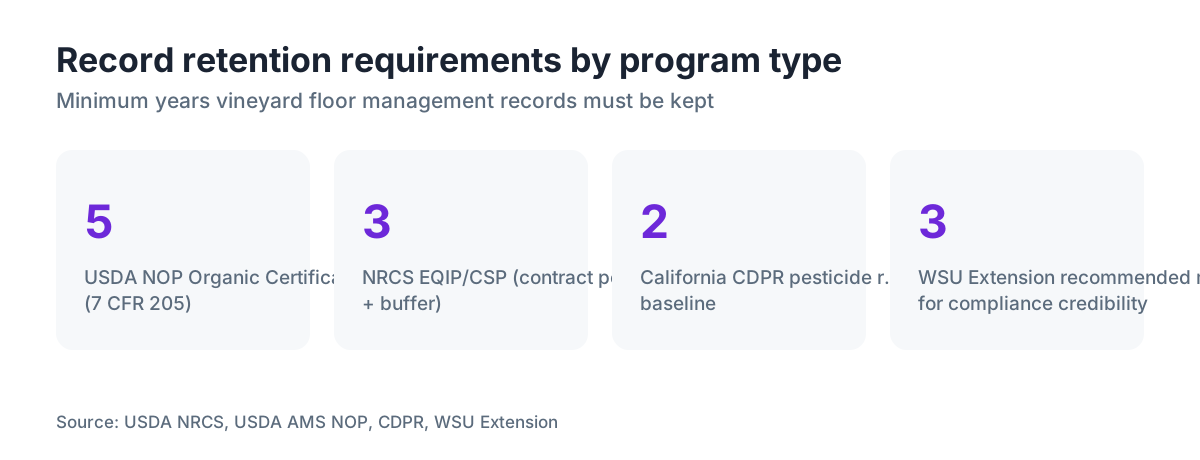
The National Organic Program (NOP) requires certified operations to keep records sufficient to show compliance for at least five years [2]. For floor management, that means your Organic System Plan (OSP) describes your approach, and your field records confirm you followed it.
The regulation at 7 CFR Part 205.201(a)(3) says the OSP must include "a description of the management practices and physical barriers established to prevent commingling of organic and nonorganic products," and 205.203 requires practices that maintain or improve soil organic matter. No-till floor management falls squarely under soil fertility because it drives organic matter accumulation, nitrogen cycling from legume cover crops, and soil biology [2].
What certifiers actually want in your records:
At the plan level: A written statement that you manage floor vegetation without synthetic herbicides, describing the approach (permanent sod, annual cover crops, mowing only, roller-crimper, and so on).
At the field level: Seasonal records confirming which blocks ran under that plan, what vegetation was present, and any deviations. A deviation might read: "Spot treatment of bindweed in Block 7 row ends with approved material, 2025-04-10."
Accredited certifiers like CCOF or Oregon Tilth use their own templates, but they all map back to the NOP rules. Cornell Cooperative Extension publishes guidance on organic vineyard recordkeeping that ties NOP fields to practical farm diary formats [6].
How should you structure the record for a multi-block vineyard?
If you manage ten or more blocks, you don't want ten separate documents. A single seasonal floor management log works better, with one row per block.
Set it up as a spreadsheet or table with columns for Block ID, Acres, Tillage Practice (no-till, cover crop, undervine cultivation), Vegetation Description, Decision Date, Mowing/Rolling Events, and Notes. Carry it across the whole season with a signature line at the bottom for the vineyard manager.
Operations that run field record software can log floor management decisions by block right next to spray records, so the compliance picture stays in one place. VitiScribe does this. The point is that floor management records and chemical records share the same block ID, so you can pull a full history for any block during an audit without rebuilding it from memory.
For paper operations, a binder with a tabbed section per block works. Put the floor management decision sheet at the front of each block's tab, ahead of the spray records. That sequence tells a story: here's what we decided, here's what we applied (or didn't).
If your vineyard spans multiple AVAs or operators, note that too. Certification and program compliance sometimes track at the operator level rather than the vineyard level.
When during the season should the record be made?
Before you implement the decision, or right after you confirm you're sticking with it. Not at year-end cleanup.
For no-till, the natural record point is late winter or early spring, when you build your seasonal management plan. That's when you're walking blocks, judging weed pressure from last season, checking cover crop establishment, and deciding whether to till, mow, or leave it. The walk is the decision moment. Record it then.
If something changes mid-season, make a new entry. You planned no-till, but a heavy broadleaf infestation in Block 2 forced a cultivation pass in June. Record that event, date it, note the reason, log the equipment pass. Your original no-till intent record stands. The deviation record sits beside it. Auditors like seeing that. A log showing zero deviations across five years is less believable than one with honest changes.
UC Davis Cooperative Extension recommends documenting vineyard floor management decisions at the start of each growing season as part of the annual block management review, and logging any changes within 48 hours of the decision [7].
Does no-till floor management affect your spray use reporting?
In most states, spray use reports are triggered by application, not by non-application. But the tie between floor management and spray records is real.
In California, growers file annual Pesticide Use Reports (PURs) with the county agricultural commissioner for any pesticide applied [4]. If you're doing no-till in a block, you should have zero herbicide entries for that block in your PUR for the period. If a discrepancy shows up, a documented no-till decision is your defense.
Other states set different thresholds. Washington requires reporting for commercial pesticide applications above certain volumes. Oregon tracks applications through ODA licensing. You won't face a spray report audit over a non-application. The reason to keep both records is consistency: floor management and spray records should tell one traceable story.
Some growers in Paso Robles have pointed to water board interest in herbicide runoff as the reason they tightened up floor management records alongside spray records see [paso-robles-wineries]. Their logic: if you can't show you had a floor management strategy, regulators may assume you were applying and just not reporting.
What's the minimum legally defensible record for a no-till decision?
This is the honest version of the question. If you're not in an organic certification program and not in a USDA cost-share program, what's the actual legal floor?
For most US states, there's no specific statute requiring you to document a no-till floor management decision. The law requires you to document what you apply, not what you don't. So technically the minimum is nothing.
That framing misses the point. The defensible minimum for any operation that might face a state ag commissioner visit, a water quality complaint, or a buyer audit is a short written entry per block per season. One paragraph. Date, block, decision, reason, who decided.
WSU Extension's IPM documentation guidance says records should demonstrate a systematic approach to pest management decisions, and it suggests keeping at least three years of records for credibility in any compliance review [5].
For USDA program participants, NRCS generally requires records for the life of the contract plus three years [8]. For NOP organic certification, five years [2]. For state pesticide programs, requirements vary, but California's CDPR requires pesticide application records for two years; keeping floor management records on the same schedule is a reasonable baseline [4].
If you sell to a winery with a sustainability program (Lodi Rules, SIP Certified, LIVE), those programs set their own documentation standards for floor management. Check your program's annual workbook.
What are common mistakes in no-till floor management records?
The most common mistake is treating a no-till decision as a default that needs no documentation. "We don't do anything" is not a record. It's the absence of one.
Second: making the record so vague it's useless. "No herbicides applied in Block 3" tells you nothing about whether that was intentional, whether there was a cover crop, or whether the block was managed at all. Vague records don't answer certifier questions.
Third: skipping mid-season deviations. If you planned no-till and then ran a cultivator in May over a mite habitat concern, that deviation belongs in the record. Unexplained gaps between plan and practice look like errors.
Fourth: filing floor management records so far from other block records that nobody can cross-reference them. Your floor management decision, irrigation schedule, spray log, and pruning records should all reference the same block IDs. If an auditor pulls records for Block 5 and the floor management data lives under a different name than the spray data, you'll burn an hour explaining conventions that should have matched from day one.
Fifth: not signing and dating the record. An unsigned, undated entry carries almost no evidentiary weight. Sign it. Date it. Both.
How do digital tools change what and how you record floor management decisions?
Field record software adds three things paper doesn't: timestamps, GPS-linked block IDs, and exportable audit reports.
The timestamp matters because it proves when the record was made. A paper log dated February 15 could have been written in October. A digital entry timestamped February 15 at 9:47 AM and synced to a server is harder to challenge.
GPS-linked block IDs tie your record to a specific spatial extent, not a hand-drawn label. If your vineyard has odd block shapes or was mapped differently by different consultants over the years, a GPS-based record kills the ambiguity.
Exportable audit reports matter because most certifiers and NRCS offices want records in their format, not yours. Software that exports a floor management summary by block, date range, and decision type saves hours during annual certification reviews.
That said, a paper record a second person reviews often beats a digital record nobody checks. The tool matters less than the habit. The right system is the one your team will actually use every season.
VitiScribe is built for this kind of block-level decision logging alongside spray records, which is where most vineyard managers want floor management data to live anyway.
Frequently asked questions
Do I have to record a no-till decision if I'm not certified organic?
No federal or state law specifically requires a no-till non-application record for conventional vineyards. But if you're in a USDA EQIP or CSP conservation program, your practice standards likely require it. Even outside those programs, a brief block-level record protects you during any state ag commissioner visit, water quality inquiry, or buyer sustainability audit. The cost is five minutes per block per year.
What's the difference between a floor management record and a spray record?
A spray record documents what pesticide or fertilizer you applied, at what rate, to which block, and when. A floor management record documents your strategic decision about how you're managing floor vegetation for a season, including when that strategy involves no chemical inputs. The two records are complementary. Together they tell the full story of how a block was managed.
How long do I need to keep no-till floor management records?
It depends on your program. USDA NOP organic certification requires five years. NRCS conservation program contracts generally require records for the contract period plus three years. California's CDPR requires pesticide application records for two years, and keeping floor management records on the same schedule is a practical baseline. WSU Extension suggests at least three years for credibility in any compliance review.
Can a no-till decision record be handwritten or does it need to be digital?
Handwritten records are legally valid in every US jurisdiction for this purpose. Certifiers and NRCS offices accept both. The requirements are that the record is legible, dated, signed, and kept for the required period. Digital records add timestamp verification and easier export for audits, but a well-organized paper binder per block satisfies every standard currently in force.
What if I planned no-till but had to make one cultivation pass mid-season?
Record the deviation separately. Your original no-till plan record stays as written. Add a second entry with the date, block, reason for the cultivation pass, and equipment used. Certifiers and NRCS offices expect real-world deviations and worry more about unexplained gaps than about honest mid-season changes. One documented exception doesn't void a season's floor management record.
Does a no-till record need to specify what vegetation is growing in the floor?
For organic certification and NRCS programs, yes. For general compliance, it's strongly recommended. Describing whether you have a planted cover crop mix, volunteer grasses, or unmanaged broadleaves tells a certifier whether the no-till decision was intentional agronomic management or a missed operation. The distinction matters for both compliance and your own year-over-year records.
Do I need a separate record for in-row vs. between-row floor management?
Not separate documents, but the record should specify scope. Many vineyards run no-till between rows and some form of undervine management (mechanical weeder, mulch, or cover crop) in-row. If your approach differs between zones, note both in the same entry. A single block-level record can describe in-row and between-row management in two sentences.
Can a floor management record help with water quality compliance?
Yes. Some regional water quality control boards, particularly in California under the Irrigated Lands Regulatory Program, ask about pesticide and sediment management practices as part of waiver compliance. A documented no-till or cover crop decision on sloped blocks shows erosion control intent. It won't replace a formal erosion control plan if one is required, but it supports your overall management narrative.
What does UC Davis Extension recommend for vineyard floor management records?
UC Davis Cooperative Extension recommends documenting floor management decisions at the start of each growing season as part of an annual block management review, and logging any mid-season changes within 48 hours of the decision. Their guidance emphasizes linking floor management records to block-level agronomic data, including soil type, slope, and cover crop history, to support long-term planning and compliance.
Is a no-till decision the same thing as a cover crop decision for record-keeping purposes?
They often overlap but aren't the same. A cover crop record documents what you planted, when, and the seed mix. A no-till record documents how you're managing tillage in the floor regardless of what's growing. You might have a planted cover crop and still till it in spring, or you might have no planted crop and manage volunteer vegetation without tillage. Both decisions need their own record entry.
What sustainability certification programs require floor management records in vineyards?
Several. Lodi Rules for Sustainable Winegrowing requires documentation of floor management practices in its annual self-assessment workbook. SIP Certified (Sustainability in Practice) includes floor management as a scored metric. LIVE (Low Input Viticulture and Enology) in the Pacific Northwest requires similar records. Each program has a specific workbook or checklist format; your floor management records should match those formats if you participate.
How do I record a no-till decision for a block that's transitioning to organic certification?
Transition-period records matter especially. You need a continuous three-year record of no prohibited substance use, and floor management is part of that picture. Document the transition start date for each block, your no-till or organic floor management approach, and any inputs used. Cornell Cooperative Extension publishes guidance on transition-period recordkeeping that maps directly to NOP requirements.
Should the vineyard owner or the vineyard manager sign the floor management record?
Whoever made the decision or is responsible for implementing it. For most operations that's the vineyard manager, with the owner countersigning annually. For organic certification, the certified operator of record must sign the Organic System Plan; field records can be signed by the manager. For NRCS programs, the program participant (usually the landowner or operator of record) carries the signature responsibility. Check your specific program agreement.
Sources
- USDA Agricultural Marketing Service, National Organic Program Regulations (7 CFR Part 205): 7 CFR Part 205 requires a written Organic System Plan and soil fertility practices that maintain or improve soil organic matter; records must be retained for five years
- US EPA, Agricultural Worker Protection Standard (40 CFR Part 170): EPA WPS establishes pesticide recordkeeping and worker communication requirements for agricultural operations, including management decisions communicated to farmworkers
- California Department of Pesticide Regulation, Pesticide Use Reporting: California CDPR requires written records of all pesticide applications within 24 hours and retention for two years; annual Pesticide Use Reports are required by county agricultural commissioners
- Washington State University Extension: WSU Extension IPM guidance recommends records include both application and non-application decisions for floor vegetation management, and suggests a minimum of three years of records for compliance credibility
- Cornell Cooperative Extension: Cornell Cooperative Extension provides guidance mapping NOP recordkeeping fields to practical farm diary formats for organic vineyard operations, including floor management documentation and transition-period records
- University of California Agriculture and Natural Resources (UC ANR / UC Cooperative Extension): UC Cooperative Extension recommends documenting vineyard floor management decisions at the start of each growing season as part of an annual block management review, and logging changes within 48 hours
- Lodi Winegrape Commission, Lodi Rules for Sustainable Winegrowing: Lodi Rules for Sustainable Winegrowing requires documentation of vineyard floor management practices as part of the annual self-assessment workbook
- SIP Certified (Sustainability in Practice), Vineyard Certification Standards: SIP Certified includes vineyard floor management as a scored metric in its certification standards, requiring records of floor management decisions
Last updated 2026-07-11