How to submit soil samples for vineyard nutrient analysis
TL;DR
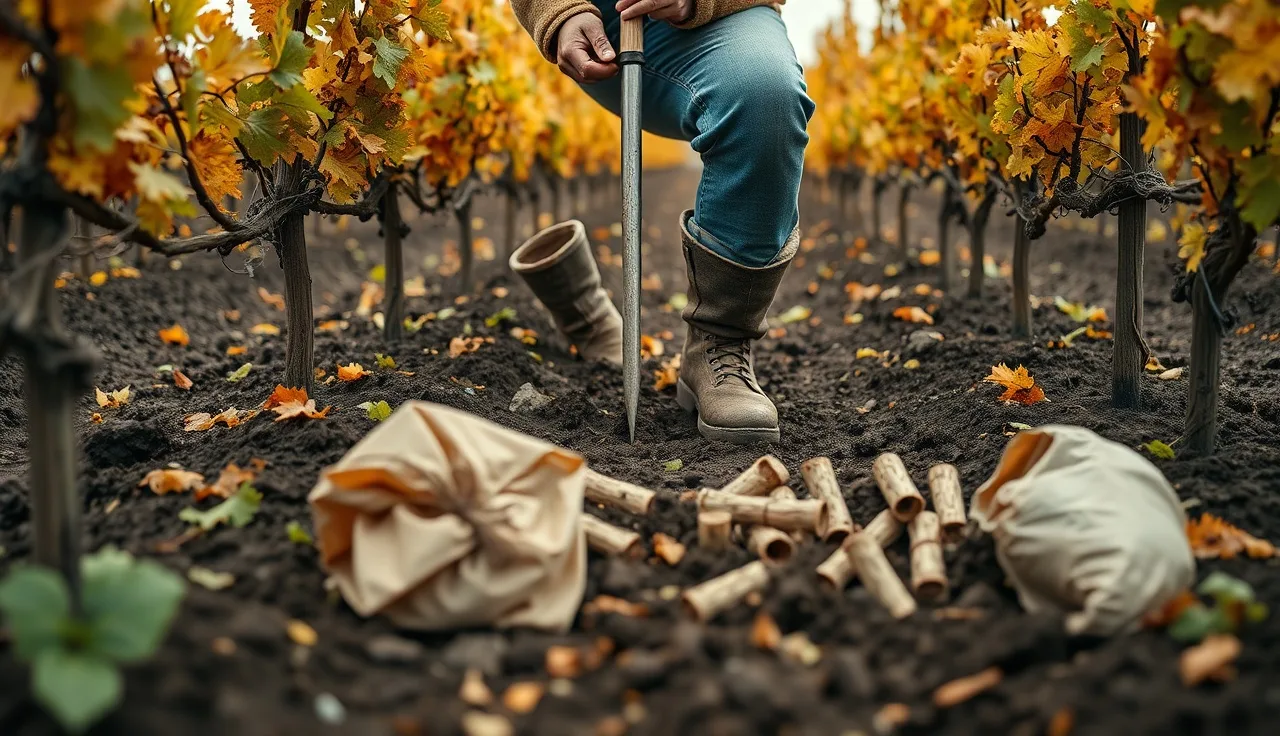
- Collect 15 to 20 sub-samples per vineyard block at 0 to 12 inches depth (and 12 to 24 inches if you suspect subsoil issues), air-dry overnight, mix into one composite sample per block, ship in a labeled paper bag to a certified soil lab.
- Most results come back in 5 to 10 business days and cost $15 to 60 per sample depending on the test package.
Why does soil sampling matter for vineyards specifically?
Grapevines are perennial. A nutrient imbalance you ignore in year one compounds across decades. Correcting a pH problem after planting costs real money in lime or sulfur applications, and some deficiencies, like boron toxicity from overcorrection, can set back a block for several seasons.
Soil sampling is also the legal and agronomic foundation for any fertilizer program you can justify to a buyer, a certification auditor, or your own accountant. Without baseline data, you're guessing. With it, you're spending money where the numbers say you should.
Vineyards have one more reason to sample carefully: grapevines are as sensitive to excess nutrients as to shortages. Excess nitrogen delays dormancy, increases disease pressure, and dilutes fruit quality. UC Davis Cooperative Extension notes that over-fertilized vines often produce excess canopy with no corresponding improvement in fruit [1]. The only way to know where you stand is to sample.
For growers new to soil testing, the vineyard overview covers foundational soil and site considerations worth reading alongside this guide.
When is the best time to collect vineyard soil samples?
The short answer: fall, after harvest, before any cover crop or compost applications. That timing gives you a stable nutrient snapshot before winter leaching or spring fertilizer additions change the numbers.
Fall sampling also gives you the full winter to get results interpreted, order amendments, and schedule applications before bud break. Sample in spring and you're often too late to correct a phosphorus or pH issue before the growing season is already underway.
Some extension programs recommend sampling in late October through November in most western wine regions [2]. In cooler climates like the Finger Lakes or Willamette Valley, aim for sampling before the ground freezes. WSU Extension specifically recommends sampling every two to three years for established vineyards and annually for blocks in the first three years post-planting [3].
There's one exception: if you suspect an acute problem mid-season, like visible yellowing that could be iron chlorosis or magnesium deficiency, sample immediately and pair it with a petiole sample. Don't wait for fall. A mid-season soil test won't perfectly match your fall baseline, but it gives you enough to act.
How many soil samples does a vineyard block need?
One composite sample per uniform block. The word "uniform" is doing real work there. A block is uniform when soil type, slope, drainage, vine age, and management history are consistent throughout. If one end of a block sits on a clay lens and the other drains like sand, those are two separate sampling zones.
Within each zone, you collect 15 to 20 individual sub-sample cores and mix them into one composite. That number comes from the inherent variability of soil, and it's not arbitrary. Cornell's nutrient management guidelines cite the 15 to 20 core minimum as the threshold for a statistically representative composite sample in orchard and vineyard settings [4]. Fewer cores and one outlier spot can skew the entire result.
For a typical five-acre block, a practical pattern is to walk a zigzag or W-shaped path and core at roughly equal intervals. Mark your path with a flag or use a GPS track so you can repeat it next sampling cycle. Repeatability matters almost as much as accuracy, because trends over multiple years tell you more than any single result.
Sample the vine row and the midrow separately if your management differs between them. Herbicide strips, for example, often show different pH and organic matter than mowed midrows.
What depth should you sample vineyard soil?
The standard recommendation is two depths: 0 to 12 inches and 12 to 24 inches. The upper horizon captures where most feeder roots and nutrient cycling happen. The lower horizon matters for pH buffering capacity, subsoil compaction clues, and boron, which moves downward with irrigation water.
For pre-plant sampling, go deeper. UC Davis recommends sampling to 36 or even 48 inches before planting a new vineyard, because lime and gypsum incorporated before vine establishment can correct pH at depth, while post-plant options are much more limited [1]. Once vines are in the ground, deep tillage for lime incorporation is essentially off the table.
Use a soil probe or auger, not a shovel, for consistent depth. A shovel introduces too much variability in the actual depth you're hitting. Steel tube probes ($30 to 80 at most farm supply stores) give you a clean, consistent core. For rocky soils common in many wine regions, a hammer-driven probe or a hydraulic unit saves a lot of frustration.
Remove any surface litter or mulch before coring. You want mineral soil, not a compost sample. Keep the core length consistent. If your probe collects 12 inches and you're targeting the 0 to 12 inch zone, use the full core. Don't eyeball it.
How do you prepare samples before shipping to the lab?
Mix your sub-samples thoroughly in a clean plastic bucket, then spread the composite loosely on a sheet of clean paper or a plastic tray and let it air-dry at room temperature overnight. Never use a microwave or oven. Heat changes nutrient availability readings, particularly for nitrogen fractions.
Aim for roughly one cup (about 200 to 300 grams) of dried soil per sample. Most labs specify their required volume on the submission form, and it ranges from 200g to 500g. When in doubt, send more. Labs can work with excess but can't work with too little.
Use a clean paper bag, not plastic. Plastic bags trap moisture and can cause mold growth during shipping, which throws off organic matter and nitrogen results. Write your sample ID on the bag in permanent marker, and put the ID on the outside of the bag and on a slip of paper inside. Labels fall off.
Don't combine samples from different blocks or depths into one bag even if you think they're similar. Once mixed, that information is gone forever. Keep every sample distinct.
What soil tests should a vineyard order?
A standard vineyard panel usually includes pH, buffer pH (for lime recommendations), organic matter, phosphorus, potassium, calcium, magnesium, sulfur, cation exchange capacity (CEC), and micronutrients: boron, zinc, manganese, iron, and copper.
Copper deserves special attention in wine grape operations. Long-term use of copper-based fungicides (Bordeaux mixture, copper hydroxide) accumulates copper in topsoil and can become phytotoxic over time. Testing copper annually in blocks with 10-plus years of copper fungicide history is money well spent.
Nitrogen is the one major nutrient most soil tests do NOT reliably predict. Inorganic nitrogen in soil is so mobile and variable day-to-day that a snapshot test has limited value. For nitrogen management, petiole analysis at bloom or veraison tells you more than soil nitrogen. Cornell Extension is explicit about this in its vineyard fertility guidelines [4].
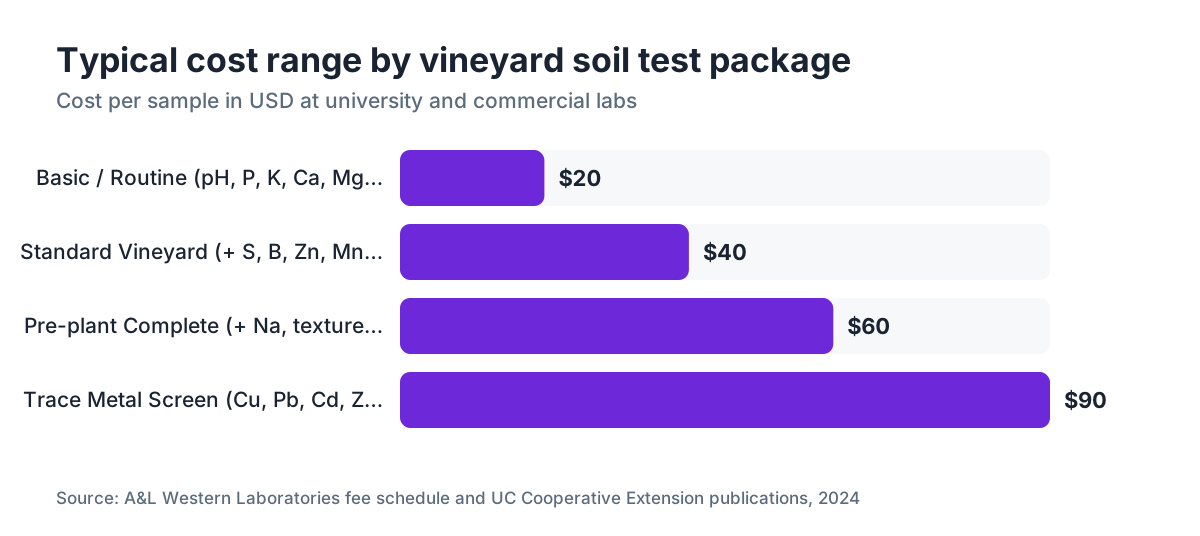
Below is a comparison of common test packages and what they typically include:
| Test Package | Typical Contents | Approx. Cost |
|---|---|---|
| Basic / Routine | pH, P, K, Ca, Mg, OM, CEC | $15 to 25 |
| Standard Vineyard | Above + S, B, Zn, Mn, Fe, Cu | $30 to 50 |
| Pre-plant Complete | Standard + Na, texture, lime rec | $45 to 75 |
| Trace Metal Screen | Cu, Pb, Cd, Zn, Ni (regulatory) | $60 to 120 |
Prices vary by lab and region. The cost range here comes from published fee schedules at several university and commercial labs [2][3][5].
Which soil testing lab should you use for vineyards?
Use a lab accredited through the North American Proficiency Testing (NAPT) program or one that participates in the Certified Crop Adviser soil test cross-referencing system. Accreditation means the lab runs blind check samples and its results are audited for consistency. This matters because nutrient recommendations are calibrated to specific lab methods, and switching labs mid-program without adjusting interpretations leads to bad decisions.
University labs are a good starting point. UC Davis Analytical Lab, Cornell Nutrient Analysis Lab, and WSU's regional lab partners all provide extraction methods calibrated to their respective region's research trials [1][3][4]. For growers in eastern Washington or Oregon, the Mehlich-3 extraction method is the standard. For California soils, some labs still use Olsen or Bray methods for phosphorus, and the method matters when comparing results across years.
Commercial labs like A&L Western, Waypoint Analytical, and Logan Labs are widely used in the wine industry and produce fast, reliable results. Many offer grower portals where you can track historical results across blocks, which is genuinely useful for spotting trends.
Whatever lab you pick, use the same lab every year for the same blocks. Year-over-year trends on a consistent method are worth more than any single absolute number.
For growers managing records digitally, this is where a tool like VitiScribe helps, because you can attach lab PDF results directly to your block-level records and track nutrient trends alongside spray and harvest data without hunting through filing cabinets.
How do you fill out the lab submission form correctly?
Every lab has its own form, but the required fields are predictable. You'll need: your name and contact info, a sample ID that matches your bag label, the crop (Vitis vinifera or table grape), intended use (wine grape, raisin, etc.), previous crop if pre-plant, irrigation type (drip, flood, overhead), and the depth sampled.
The crop and intended use fields determine which calibration tables the lab pulls for its recommendations. "Wine grape" and "table grape" can generate meaningfully different potassium recommendations because fruit composition goals differ. Don't leave this field blank or generic.
If you want a lime recommendation, specify your target pH. For wine grapes, most guidelines suggest targeting 6.0 to 6.5 for the top 12 inches, though some rootstocks and soil types call for different targets. The lab cannot give you a useful lime rate without knowing where you're trying to go.
Note any unusual history: recent compost applications, a fumigation, a flood event. These affect how the lab interprets results. A soil sample pulled six weeks after a heavy compost application is going to show elevated organic matter and possibly elevated phosphorus, and the lab analyst needs context to flag that.
How do you ship soil samples to the lab without damaging them?
Most labs accept standard USPS, UPS, or FedEx shipments. Pack paper bags in a cardboard box with enough newspaper or packing material to keep bags from breaking open. Do not use wet ice. Do not ship frozen samples unless the lab specifically requests it.
If you have more than five samples, number the bags and include a printed list of all sample IDs in the box so the lab can confirm receipt. For large operations submitting 20-plus samples at once, call the lab ahead of time. They appreciate the heads-up and can sometimes expedite processing.
Turnaround runs from 3 to 5 business days for rush processing (often an extra $10 to 20 per sample) to 7 to 14 business days for standard service. Labs get backlogged in fall, which is exactly when everyone is sampling. If your results need to inform an amendment application before December, ship by mid-October.
Keep a photo or scan of your labeled bags before shipping. It takes 30 seconds and has saved more than a few growers when a lab miskeyed a sample ID.
How do you read and use vineyard soil test results?
Results come back as raw numbers (parts per million or pounds per acre) alongside the lab's sufficiency ratings, typically Low, Medium, Optimum, High, or Excessive. Focus first on pH and CEC because they affect how every other number behaves. A potassium reading that looks fine at CEC 10 may be deficient at CEC 30 because high-CEC soils tie up more nutrients.
For pH, values below 5.5 likely need lime. Values above 7.5 in irrigated western vineyards often signal bicarbonate problems that require sulfur or acidifying fertilizers. Neither fix is quick. Lime takes 12 to 18 months to fully neutralize acidity through a soil profile, so your fall test informs next fall's result more than next spring's.
Compare results to published sufficiency ranges for wine grapes. UC Davis Extension publishes a table of optimal soil nutrient ranges specifically for Vitis vinifera [1]. Cornell's guidelines provide similar tables calibrated to northeastern soils [4]. Do not use generic agronomic crop ranges. Wine grape sufficiency ranges differ from corn or alfalfa, and using the wrong reference generates wrong recommendations.
If a nutrient shows Excessive (particularly boron, copper, or sodium), treat that as seriously as a deficiency. There's no way to remove boron from soil quickly. Excess copper from fungicide programs can persist for 20-plus years. If you see high copper in a test result, document it, reduce copper inputs in your spray program, and retest the next year to confirm the trend.
What records do you need to keep after soil testing?
Keep the original lab reports, your sample maps or GPS coordinates, and the amendment applications you made in response to results. This paper trail matters for three reasons: it shows due diligence for organic certification or sustainability audits, it allows year-over-year trend analysis, and it documents your fertilizer application rates for EPA Worker Protection Standard (WPS) compliance if any soil amendments involve restricted-use products [6].
The EPA WPS requires that records of pesticide applications, including fumigants sometimes applied at planting based on soil test recommendations, be kept for two years and be available for inspection [6]. Soil amendment records themselves are not required by WPS, but state departments of agriculture may have their own requirements. California's CDFA, for example, requires certain records under the fertilizer laws and under the Irrigated Lands Regulatory Program if you farm near regulated waterways [7].
For operations pursuing CCOF organic certification or SIP (Sustainability in Practice) certification in California, soil test results are supporting documentation for your nutrient management plan. The certifier wants to see that your inputs respond to demonstrated need rather than a calendar schedule [8].
Digital records are easier to audit than filing cabinets. VitiScribe lets you attach lab PDFs, flag blocks that need follow-up, and export nutrient trend reports for certification audits. That's worth considering if you're managing more than two or three distinct blocks.
What are the most common soil sampling mistakes vineyard managers make?
Taking too few cores is the most common problem. Growers who pull five or six cores to save time end up with a sample that doesn't represent the block, and then they over-apply an amendment based on an outlier reading. Fifteen to twenty cores takes an extra 20 minutes. It's worth it.
Sampling too close to a recent amendment application is the second most common error. If you limed in spring and sample in August, your pH reading reflects a partially-buffered soil that's still equilibrating. Wait at least three to four months after a major lime or sulfur application before sampling.
Mixing depths in one sample is a persistent problem in rocky or shallow soils where getting a clean 12-inch core is hard. If you can only reliably core to 8 inches in a rocky block, note that on the submission form. The lab needs to know the actual sampled depth to give an accurate pounds-per-acre conversion.
Using plastic bags because paper bags aren't handy is a small mistake that can invalidate a sample if moisture triggers microbial activity during a multi-day shipping transit. Keep paper bags in your truck. Most labs will send a bag of them for free with your first order.
One more: not re-sampling the same zones consistently. If your year-one sample covered the vine row and your year-two sample covered the midrow, you're not tracking the same thing. Mark your sample zones and stick to them.
Frequently asked questions
How much does a vineyard soil test cost?
A basic pH and macronutrient panel runs $15 to 25 per sample at most university and commercial labs. A standard vineyard panel with micronutrients including boron and copper typically costs $30 to 50. Pre-plant panels with texture analysis and trace metals can reach $75 to 120. Rush processing adds $10 to 20 per sample. University extension labs often deliver the same quality at the lower end of these ranges.
Can I use the same lab results for organic certification?
Yes. CCOF and most USDA National Organic Program certifiers accept standard soil test results from accredited labs as supporting documentation for your nutrient management plan. The key is showing that your inputs respond to demonstrated need. Keep the original lab reports with your application records and the certifier's inspection will go smoothly.
How often should I test soil in an established vineyard?
WSU Extension recommends every two to three years for established vineyards. Annual testing makes sense in blocks with a history of problems, new rootstock or variety plantings, or major management changes like converting from flood to drip irrigation. For stable, well-understood blocks, a biennial cycle gives enough data without unnecessary lab costs.
What is a composite soil sample and why does it matter?
A composite sample is a mixture of 15 to 20 individual cores from across a sampling zone, blended together before sending to the lab. It matters because soil nutrient levels vary widely within any block, sometimes by 30 to 50% over short distances. One composite from many cores gives a representative average, while a single core from one spot can wildly over- or under-represent the block.
Do I need to sample soil and petioles, or is one enough?
Both. They answer different questions. Soil tests tell you what nutrients are present and plant-available in the root zone. Petiole tests tell you what the vine is actually taking up. A block can have adequate soil potassium but still show low petiole K if soil pH or compaction limits uptake. Use soil tests for planning amendments, petiole tests for in-season corrections.
What soil pH should wine grapes target?
Most extension guidelines target 6.0 to 6.5 for the top 12 inches for wine grapes grown in typical western and eastern US soils. At pH below 5.5, aluminum and manganese can reach phytotoxic levels and phosphorus becomes less available. Above 7.0 to 7.5, iron and zinc deficiencies become common. The right target also depends on your rootstock, since some tolerate lower pH better than others.
How do I sample soil in a rocky or shallow vineyard?
Use a hammer-driven probe and accept shallower cores if needed. In very rocky soils, 8-inch consistent cores are more useful than inconsistent 12-inch attempts. Note the actual depth on your submission form every time. For blocks where subsoil is essentially bedrock, focus on the 0 to 8 or 0 to 10 inch zone and supplement with petiole testing to catch any nutrient uptake issues the shallow sample might miss.
Can I sample while irrigation is running or just after a rain?
No. Avoid sampling within at least 48 hours of irrigation or significant rain. Wet soil is harder to core consistently, and mobile nutrients like nitrate shift rapidly with water movement. If you absolutely must sample wet soil, note it on the submission form. The lab can flag the results as potentially affected by recent moisture, which helps with interpretation.
How do I track soil test results across multiple vineyard blocks over time?
A spreadsheet with block ID, sample date, depth, and key nutrients works for small operations. For larger farms or operations with certification requirements, a field management platform that stores lab PDFs and generates trend charts is more practical. The goal is being able to pull up three or four years of pH and potassium data for a specific block in under a minute, especially during certification audits.
What nutrients are most commonly deficient in wine grape vineyards?
Potassium, boron, and zinc top most lists for California and Pacific Northwest vineyards. Magnesium deficiency is common in high-rainfall eastern regions where leaching is significant. Phosphorus deficiency is relatively rare in established vineyards with any organic matter history, but can appear in pre-plant sandy soils. Copper toxicity from cumulative fungicide applications is a growing concern in older organic and conventional blocks alike.
Is there a difference between sampling under drip emitters versus between them?
Yes, and it matters. Nutrients and pH can vary substantially between the wetted zone under a drip emitter and the dry soil between emitters. Most guidelines recommend sampling 12 to 18 inches from the emitter, not directly under it or in the completely dry zone. This represents the bulk of the active root zone. Note your sampling position consistently year to year.
Do EPA Worker Protection Standard rules apply to soil sampling activities?
EPA's Worker Protection Standard primarily covers pesticide applications and handler activities, not routine soil sampling itself. But if your sampling occurs in a field under a pesticide restricted-entry interval, WPS rules apply to your entry. Fumigant applications made in response to soil test results are subject to WPS record-keeping requirements, so keep those application records for at least two years.
What should I do if soil test results show extremely high copper levels?
Document the finding, reduce or eliminate copper-based fungicides in that block, and shift to alternative fungicide programs where disease pressure allows. High soil copper is largely irreversible on any practical timescale. Some research suggests organic matter additions can partially bind copper and reduce phytotoxic effects, but it is slow. Retest annually to track whether the trend is stabilizing. Inform any potential buyer or lessee of the block.
Sources
- UC Davis Cooperative Extension, Nutrient Management in Vineyards: Over-fertilized vines often produce excess canopy with no corresponding improvement in fruit quality; pre-plant deep sampling to 36 to 48 inches recommended; optimal soil pH target 6.0 to 6.5 for wine grapes
- UC Cooperative Extension, Soil Sampling in Vineyards publication: Fall sampling recommended after harvest; late October through November cited as preferred window in western wine regions
- Washington State University Extension, Vineyard Nutrition and Soil Management: WSU Extension recommends soil sampling every two to three years for established vineyards and annually for blocks in the first three years post-planting
- Cornell Cooperative Extension, Nutrient Management Guidelines for Vineyards: 15 to 20 core minimum cited as threshold for statistically representative composite sample; inorganic soil nitrogen testing not reliable for vineyards; petiole analysis preferred for nitrogen management
- A&L Western Laboratories, Soil Test Fee Schedule: Standard vineyard soil test panel pricing range $30 to 50; pre-plant test with texture $45 to 75
- U.S. EPA, Worker Protection Standard for Agricultural Pesticides: EPA WPS requires pesticide application records including fumigants be kept for two years and be available for inspection
- California Department of Food and Agriculture, Fertilizing Materials Inspection Program: California CDFA requires certain fertilizer application records under state fertilizer law and the Irrigated Lands Regulatory Program near regulated waterways
- CCOF Certification Services, Organic System Plan and Nutrient Management Documentation Requirements: CCOF certifiers accept accredited lab soil test results as supporting documentation for organic nutrient management plans showing inputs respond to demonstrated need
- North American Proficiency Testing Program (NAPT), Soil and Plant Laboratory Accreditation: NAPT accreditation requires participating labs to run blind check samples with results audited for consistency
- UC Agriculture and Natural Resources, Soil pH and Lime Requirements for Vineyards: Lime takes 12 to 18 months to fully neutralize acidity through a soil profile; deep lime incorporation essentially not possible post-planting
- Cornell University, Viticulture and Enology Extension, Copper Accumulation in Vineyard Soils: Long-term copper fungicide use accumulates copper in topsoil; can remain phytotoxic for 20-plus years; recommended to monitor annually in older blocks
Last updated 2026-07-11