How to trim grape vines: the complete seasonal guide

TL;DR
- Trim grape vines mainly during winter dormancy, between leaf drop and bud swell, removing roughly 80-90% of last year's cane growth.
- A lighter second trim happens in summer to control the canopy.
- Timing and cut style depend on your training system.
- The dormant season is where the real work gets done.
Do you actually need to trim grape vines every year?
Yes. Skip a year and you'll know it by the second season, when yields drop, disease pressure climbs, and you're untangling a bird's nest of unproductive wood. Grapevines are vigorous to a fault. Left alone, they pour energy into leaves and shoots at the expense of fruit. Annual trimming keeps the vine balanced: enough leaf area to ripen fruit, not so much shade that Botrytis and powdery mildew move into the interior canopy.
The guiding principle from Cornell Cooperative Extension is simple. A grapevine carries only as much fruiting wood as its trunk and root system can ripen in a single season [1]. That's the whole reason you cut wood. Not to punish the vine, but to match what's above ground to what's below it.
The payoff comes fast. Cleaner fruit. Easier spray coverage. A vine that stays on its trellis instead of collapsing under its own weight.
When to trim grape vines: the dormant window explained
The main pruning window opens after the vine drops its leaves in fall and closes just before buds swell in spring. In most North American wine regions that's roughly December through early March, though the edges shift with climate [2]. In cool regions like the Finger Lakes or Willamette Valley you might push into late March. In warmer areas like Paso Robles or the San Joaquin Valley you could start as early as late November.
Why dormancy? The vine has pulled its carbohydrate reserves down into the roots and permanent wood. Pruning now causes minimal stress, and the wounds have the best chance of callousing before spring growth begins. Cut too early, right after harvest, and you risk pushing the vine back into growth before winter, which raises cold injury risk.
Washington State University Extension recommends a practical timing check: wait until the vine has had at least 200-300 hours below 45°F before you start pruning [3]. At that point dormancy is deep and the vine is genuinely resting, more than looking rested. In regions with cold hardiness concerns, some growers delay pruning until late in the window on purpose, taking a last look at how much cold damage happened before they commit to a structure.
The back deadline is tight. Once you see swollen buds, stop. Cutting off swollen buds removes the season's crop, and wounds made during active growth bleed sap heavily. That won't kill the vine, but it stresses it and can attract pests.
When do you cut grape vines back hard vs. lightly?
There are two times you cut hard. The first is establishing a young vine in its first two or three years, training it to a trunk and basic framework. The second is renovating a neglected or diseased older vine. Both call for removing most of the wood above ground, sometimes back to a single cane or even the graft union.
For a mature vine in normal production, "cutting back" means removing roughly 80-90% of last year's cane growth and keeping only the wood you need for this season's fruiting positions [1]. That sounds aggressive. It's standard. On a Guyot-trained vine carrying two canes, you might keep two canes of 8-12 nodes each plus two short renewal spurs of 2-3 nodes. Everything else comes off.
Light trimming is what you do in summer. It's canopy management: hedging shoot tips, removing laterals, thinning leaves around fruit clusters. You're not restructuring the vine, just keeping it tidy and letting light reach the fruit.
Know which situation you're in before you pick up the shears. If the vine is young, you should cut back harder than feels right, because a strong root system built in years one and two pays off for the next 30. UC Davis Viticulture and Enology extension materials note that "the first three years of training largely determine the productive life of the vine," which is about as blunt as extension guidance gets [4].
How to trim grape vines: step-by-step for dormant pruning
Before you touch the vine, stand back and look at it for a full minute. Find the permanent structure: trunk, the cordon or canes retained last year, then all the one-year-old canes growing off that framework. Those canes are your working material. They're the smooth, golden-brown wood from last season. Older wood is rougher and darker.
What you need:
Sharp bypass pruning shears for canes up to about 3/4 inch diameter. Long-handled loppers for anything bigger. A pruning saw for old spurs or cordon wood you're removing entirely. Carry a bucket of 10% bleach solution or a commercial pruner disinfectant (like Physan 20 or another quaternary ammonium product) to dip blades between vines if you have any history of Eutypa dieback, crown gall, or other systemic disease on the property [5].
The actual cuts:
- Remove all dead, diseased, or damaged wood first. This gives you a cleaner picture and keeps you from accidentally retaining wood that can't produce.
- Thin out crossing or rubbing canes. Any cane running toward the inside of the canopy instead of away from the trunk comes off.
- Select your keepers. On a cane-pruned system like Guyot, choose two canes with good diameter, good node spacing, and a position that ties down to the fruiting wire cleanly. On a spur-pruned cordon, count your spurs, find two-node spurs along the cordon, and cut last year's shoot back to those two buds.
- Cut renewal spurs. Even on cane-pruned vines, leave one or two short two-bud renewal spurs near the head. These grow shoots that become next year's cane candidates.
- Make each cut about 1/4 inch above a bud, angled slightly away from it. The stub above the bud dies back to the node and seals over. Too close and you damage the bud. Too far and you leave a dead stub that invites disease.
- Remove all prunings from the row. Don't let them sit on the soil under the vine. If powdery mildew or Botrytis was present last season, those prunings are an inoculum source. Chip them or haul them out of the block [6].
The whole process on a mature vine in good shape takes 5-15 minutes per vine, depending on training system complexity. Budget accordingly. A 5-acre block at 800 vines per acre is 4,000 vines, and that work adds up fast.
How to trim grape vines in summer: what's actually worth doing
Summer trimming is canopy management, not structural pruning. The goal is light into the fruit zone and airflow through the canopy. Both cut disease pressure and improve fruit color and quality.
The main summer operations are shoot thinning, hedging (topping), lateral removal, and leaf pulling. Shoot thinning happens early, around bloom or just before, when you can spot non-count shoots (growing from old wood in the wrong places) and pull them. Hedging runs a mechanical hedger or hand shears down the top and sides of the canopy in midsummer to stop shoot tips from flopping and shading each other. Lateral removal cuts the secondary shoots growing from the main shoot axils, especially in the fruit zone. Leaf pulling strips leaves around the clusters on the morning-sun (east) side, which is generally safe. Be careful on the afternoon-sun side in hot climates, because those leaves shield clusters from sunburn.
None of this is optional in a high-vigor block. A study out of WSU found that unmanaged canopies in high-vigor conditions dropped soluble solids by 2-3 Brix at harvest compared to managed canopies, and raised Botrytis incidence by roughly 20-30% in susceptible varieties [3]. That's yield, quality, and spray cost, all riding on whether you picked up a hedger.
Log your summer canopy work by block and date. If you track Worker Protection Standard compliance, any canopy work done while a restricted-entry interval is in effect requires specific documentation and PPE [7]. Tools like VitiScribe are built to track this kind of field activity by block, tying canopy work records to your spray records in one system, which makes WPS audits much simpler.
One thing not worth doing in summer: stripping large amounts of leaf area all at once in a heat event. You can sunburn a whole crop in one afternoon. If you're behind on leaf pulling and it's July, pull conservatively on hot days and finish in the cool of the morning.
When can you trim grape vines without hurting next year's crop?
The safest window is mid-dormancy, roughly January through mid-February in most temperate regions. Pruning then doesn't affect this season's bud count, because you're the one selecting which buds stay, and it doesn't compromise next year's wood, because the vine hasn't begun differentiating next season's buds yet.
What damages next year's crop:
- Pruning too late, after bud swell, strips the primary buds that carry the highest fruit load.
- Pruning too early, before full dormancy, can stimulate growth that a frost then kills.
- Summer green pruning too hard removes leaf area the vine needs to build carbohydrate reserves in the current wood, the same reserves it draws on to initiate buds for the following season.
There's a gray zone in fall, after harvest and before leaf drop, when some growers do light shoot tip removal to tidy up. That's generally fine. What you don't want is to strip significant leaf area in September or October, before the vine has finished photosynthesizing and moving sugars into storage.
For late-season varieties or regions where early frost is a real risk, some growers delay dormant pruning to shrink the window of freeze vulnerability after cutting. Cornell's grape research program has documented that delayed pruning, waiting until late February or even early March, can reduce freeze damage in marginal climates by keeping the vine in deeper dormancy longer [1].
What training system are you using, and does it change how you trim?
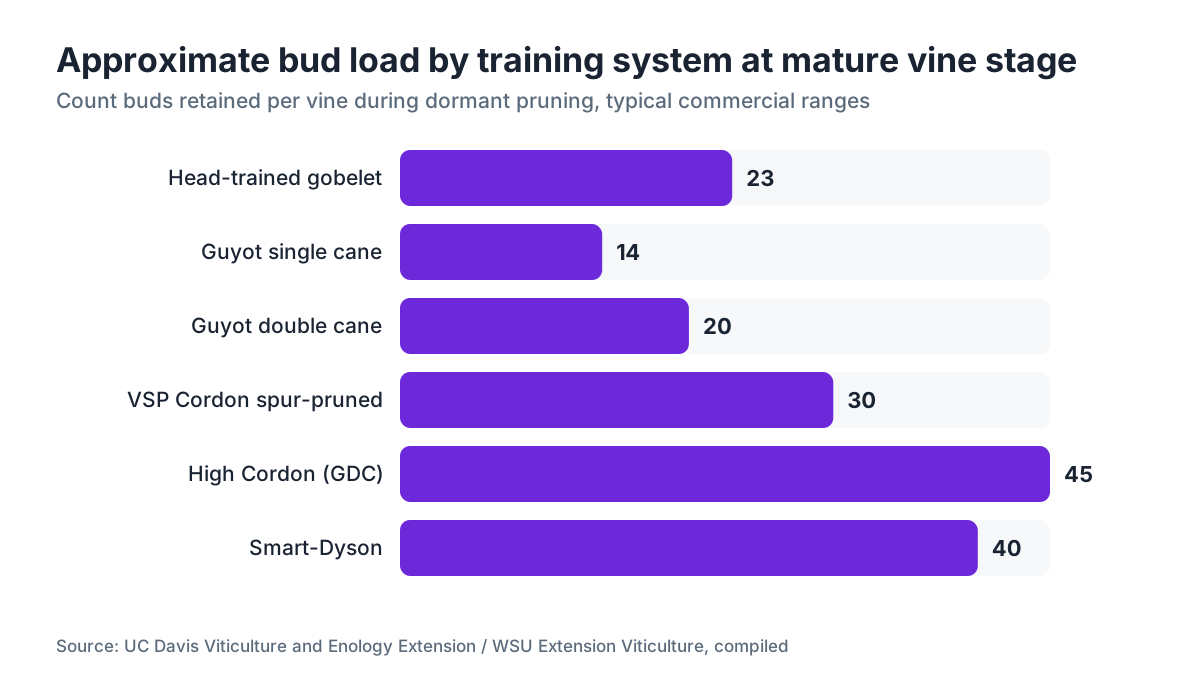
Yes, a lot. The cut style, the number of retained buds, and the shape of the permanent wood all differ by training system. Here's a quick comparison:
| Training System | Pruning Type | Retained Wood | Approx. Buds Kept per Vine |
|---|---|---|---|
| Guyot (single or double cane) | Cane pruning | 1-2 long canes + renewal spurs | 12-24 |
| VSP Cordon | Spur pruning | Bilateral cordon, 2-bud spurs | 20-40 (10-20 spurs x 2) |
| High Cordon (GDC) | Spur pruning | Cordon above fruiting zone | 30-60 |
| Head-trained (gobelet) | Spur pruning | Radiating arms from head | 16-30 |
| Smart-Dyson | Cane or spur | Bilateral cordon, divided canopy | 30-50 |
Cane pruning gives you more flexibility year to year, because you select fresh wood each season and can route around disease spots on the cordon. Spur pruning is faster on a trained crew but needs a healthy cordon, since you can't easily work around damage.
New growers trying to pick a system: look at what your neighbors run with the same variety. Training system is partly variety-driven (Pinot noir does well with cane-pruned VSP, Zinfandel is often head-trained), partly site-driven (mechanization potential, row width), and partly labor-driven. Don't pick a system because it looks elegant in a textbook. Pick it because it fits your crew's skill and your equipment.
If you want to see different systems on established estates, Gervasi Vineyard and Ponte Winery both have working estate vineyards where you can look at mature trained vines up close.
How many buds should you leave when you trim?
The standard starting calculation is simple: weigh last year's prunings from a vine, then retain roughly 20-30 buds per pound of pruned wood. This is the Ravaz Index framework, and it's the most practical guide for matching bud load to vine capacity [2].
In practice, most established VSP vineyards with moderate-to-good vigor run 20-40 count buds per vine on spur systems. A cane-pruned vine with two eight-node canes carries 16 primary buds before you count renewal spurs. Varieties with lower fruitfulness, where a share of primary buds may be blind or non-fruitful, sometimes get extra buds as insurance.
Over-cropping by leaving too many buds is the most common mistake home growers make. More buds means more clusters, which means less sugar per berry and flat-tasting fruit. Under-cropping by leaving too few wastes vine potential and can actually push the vine into excess vigor the following season, which makes the problem worse.
If you're unsure where to start with a specific variety, UC Davis Viticulture and Enology extension resources carry variety-specific bud load guidelines for most major California varieties, and Cornell's Appellation Cornell publication covers New York varieties [4] [8].
Tools and safety: what to use and what WPS requires
For hand pruning, a good pair of bypass shears (Felco 2 or a Bahco equivalent) runs $40-$80 and lasts years with proper care. Corona, ARS, and Okatsune are also reliable. Avoid anvil-type shears for cane pruning, because they crush rather than cut, and crushed wood callouses more slowly.
Loppers for larger cordons or old spurs cost $30-$60 for a decent pair. A folding pruning saw handles anything the loppers can't, and you'll need one eventually for renovation work.
Blade hygiene matters more than most growers act like it does. Eutypa lata, the fungus behind Eutypa dieback, spreads on cutting tools. So do Botryosphaeria species. A 10% household bleach solution (1 part bleach, 9 parts water) or 70% isopropyl alcohol both disinfect well between vines, though bleach is corrosive and shortens tool life. Commercial quaternary ammonium products like Physan 20 work and are gentler on steel [5].
On the WPS front: dormant pruning generally doesn't require specific PPE beyond standard work gear, because you're not working in a post-application restricted-entry interval. But if you're doing summer canopy work inside an REI, the EPA Worker Protection Standard (40 CFR Part 170) requires that workers have received WPS safety training, have access to application-specific information including the pesticide label and Safety Data Sheet, and use the PPE the label specifies for the REI [7]. The 2015 revised WPS, which took effect in January 2017, strengthened these requirements and added an annual training requirement. Don't assume your crew's prior training covers the revised standard without checking the date on their training record.
Tracking which blocks have active REIs, when training records expire, and what PPE each day requires comes down to a running field log by block and date. That's what vineyard management software like VitiScribe handles, linking spray application records to field activity logs so you can pull any block's status in seconds.
Common trimming mistakes and what they cost you
Leaving too many retained buds is the most widespread error. Cutting that aggressively feels wrong, but the vine needs it. Over-retained bud load leads to overcropping, shading, and the Botrytis pressure that rides along with dense canopies.
Cutting at the wrong angle or too close to the bud damages the bud tip and cuts fruitfulness. The cut should be clean and smooth, made with sharp blades. Ragged cuts from dull shears heal slowly.
Ignoring diseased wood. If you see the orange-brown discoloration of Eutypa dieback in the cross-section of old wood, cut back past it until you reach clean cream-colored wood, even if that means losing part of the cordon. Leaving infected wood doesn't stop the progression [10].
Pruning when the vine is wet. Wet conditions spread water-borne pathogens. Botrytis in particular loves to infect fresh pruning wounds in cool, wet weather. Prune on dry days when you can, or at least wait until the canopy has dried after rain.
Not disposing of prunings. Leaving pruning debris in the row leaves disease inoculum in the row. Chip them, burn them where permitted, or haul them out of the block. This is non-negotiable if you had Botrytis or powdery mildew pressure the previous season [6].
Growers touring regions with established practices can look at operations like South Coast Winery and Allegretto Vineyard Resort, both in warm-climate areas using training systems built for different vigor profiles.
How to trim a grape vine that's been neglected for years
Renovation pruning takes patience. Don't try to fix everything in one season. A vine untrained for three or five years has multiple trunks, crossing cordons, and a mass of two and three-year-old spurs grown into tangled dead stubs. Cutting all of it back in one pass is hard on the vine.
A better approach, and one Cornell extension recommends for renovation, spreads the work over two to three seasons [1]. In year one, pick the best trunk or two, remove the worst crossing wood, and start re-establishing a framework. In year two, refine the cordon or cane structure. By year three you're managing a vine that's back in some order.
If the vine has significant trunk disease (Eutypa, Esca, or Botryosphaeria cankers), the math changes. Sometimes the most practical move is to cut the whole vine back to a sucker near the graft union and retrain from scratch, especially on young plantings. On a 30-year-old vine with a trunk four inches or more across, the permanence of the root system and graft union makes that old vine worth saving if there's any viable wood to work with.
Before you decide, cut into the suspect trunk and look at the cross-section. Healthy wood is cream to light tan. Diseased wood shows gray-brown or orange-brown discoloration, sometimes in wedge-shaped sectors [10]. Cut until you hit clean wood, then build your new framework from there.
Frequently asked questions
How to trim grape vines for beginners?
Start with dormant pruning in late winter, after leaf drop but before buds swell. Remove 80-90% of last year's cane growth, keeping only two healthy canes or a set of short two-bud spurs, depending on your training system. Use sharp bypass shears, cut just above a bud, and remove all prunings from the row. Cornell Cooperative Extension has free variety-specific guidance online.
When to trim grape vines back in fall vs. spring?
Fall trimming is not the standard approach. Most growers wait until mid-dormancy, January through February in most North American wine regions, for the main annual pruning. Pruning in fall, right after harvest, risks stimulating new growth before winter. Some light shoot tip removal in fall is fine, but save structural cuts for mid-dormancy.
When do you trim grape vines in California?
In most California wine regions, dormant pruning runs roughly December through February. Warmer valleys like San Joaquin can start in late November. Cooler coastal regions sometimes push into early March. The practical guide: wait until the vine has had significant chilling hours and buds are still fully dormant. UC Davis extension resources carry region-specific timing guidance.
How do you trim grape vines on a trellis?
Remove all but the wood you need for this season's fruiting structure. On a VSP trellis, that means cutting spur positions back to two healthy buds each, spaced 4-6 inches apart along the cordon. Tie new canes down to the fruiting wires before bud swell. Cut everything else flush. The trellis wire sets where you position shoots, but the pruning decisions are the same regardless.
Do you cut back grape vines every year?
Yes, every single year without exception. Grapevines require annual dormant pruning to control bud load, hold vine structure, and prevent overcropping. Skip a year and unproductive wood piles up, shading increases, disease pressure rises, and fruit quality drops measurably. This is a non-negotiable annual operation, not optional maintenance.
How much do you cut off when trimming grape vines?
Roughly 80-90% of the previous season's cane growth comes off. On a cane-pruned vine, you keep two canes of 8-12 nodes each plus two short renewal spurs, and everything else is removed. The rule of thumb from viticulture extension is 20-30 retained buds per pound of removed wood, known as the Ravaz Index approach.
When do you cut grape vines back after the first year?
At the end of the first growing season, cut the vine back hard, typically to a single cane with two to three buds. This forces energy into the root system and trunk instead of fruiting. It feels wrong to cut off vigorous growth, but UC Davis extension is clear that sacrificing first and second year shoots builds a stronger vine long-term.
How to trim grape vines in summer without hurting yields?
Summer trimming is canopy management only: hedging shoot tips, removing laterals from the fruit zone, and pulling leaves on the east (morning sun) side of clusters. Don't remove major leaf area all at once, especially during heat events. Avoid pulling leaves on the afternoon sun side in hot climates. Time these operations before veraison for the best effect on fruit quality.
What time of year is best for trimming grape vines?
Mid-winter dormancy, typically January through mid-February in most North American wine regions, is best for structural pruning. The vine is fully rested, wounds callous before spring, and you can assess cold damage before committing to a framework. Summer offers a second, lighter window for canopy management only.
Can you trim grape vines in summer?
Yes, but it's a different operation than dormant pruning. Summer trimming means canopy management: hedging shoot tips, removing non-count shoots, pulling leaves around clusters, and cutting back laterals. You're not removing old wood or restructuring the vine. Done right, summer trimming improves fruit quality and cuts disease pressure significantly.
Should you seal pruning cuts on grape vines?
The evidence on wound sealants is mixed. Some older studies suggested pruning paste could reduce Eutypa infection. More recent research, including work from UC Davis, suggests pruning timing and sanitation (disinfecting shears between vines) matter more than sealant. If Eutypa is a known problem on your property, disinfecting shears between every vine is the most evidence-supported practice.
What tools do I need to trim grape vines?
Sharp bypass pruning shears handle most work on canes up to 3/4 inch diameter. Long-handled loppers manage larger cordons. A folding pruning saw covers renovation cuts. Budget $40-$120 for quality shears. Carry a disinfectant solution (10% bleach or 70% isopropyl alcohol) to dip blades between vines if disease is a concern on your property.
Do I need worker safety training to prune grape vines?
Dormant pruning outside any pesticide restricted-entry interval doesn't trigger EPA Worker Protection Standard PPE requirements. But if you're doing canopy work inside an active REI, workers must have current WPS safety training (annual under the 2015 revised standard, effective January 2017), access to application-specific pesticide information, and the PPE listed on the relevant pesticide label per 40 CFR Part 170.
Sources
- Cornell Cooperative Extension, Viticulture Program: Annual pruning removes 80-90% of previous season's cane growth to match vine capacity; delayed pruning in late February or March can reduce freeze damage in marginal climates; renovation pruning over multiple seasons is recommended for neglected vines; first three years of training determine productive vine life.
- University of California Agriculture and Natural Resources, Grape Pest Management: Dormant pruning window in California runs roughly December through February depending on region; Ravaz Index framework of 20-30 buds retained per pound of pruned wood.
- Washington State University Extension, Viticulture and Enology: Waiting until vine has accumulated 200-300 hours below 45F before pruning; unmanaged canopies in high-vigor conditions reduced soluble solids by 2-3 Brix and increased Botrytis incidence roughly 20-30% compared to managed canopies.
- UC Davis Viticulture and Enology Extension: The first three years of training largely determine the productive life of the vine; variety-specific bud load guidelines for major California varieties; first-year vines should be cut back to two to three buds to develop root and trunk.
- University of California Agriculture and Natural Resources, Eutypa Dieback of Grapevines: Eutypa lata and Botryosphaeria species spread on cutting tools; disinfecting shears with 10% bleach or quaternary ammonium products between vines reduces transmission.
- UC Statewide IPM Program, Botrytis Bunch Rot and Blight of Grapevines: Pruning debris left in rows is an inoculum source for Botrytis cinerea and powdery mildew; removing or chipping prunings reduces disease pressure the following season.
- U.S. EPA Worker Protection Standard, 40 CFR Part 170: WPS requires annual worker safety training (under 2015 revised standard effective January 2017), access to application-specific information including pesticide label and SDS, and use of PPE specified on the label during restricted-entry intervals for any agricultural workers in treated areas.
- Cornell Cooperative Extension, Appellation Cornell, Pruning and Training: Bud load guidelines for New York varieties; cane pruning flexibility for routing around disease on the cordon.
- Washington State University Extension, Pruning Wine Grapes: Pruning timing recommendations by region and chilling hour accumulation; comparison of cane and spur pruning outcomes in Pacific Northwest conditions.
- UC Agriculture and Natural Resources, Grapevine Trunk Diseases: Eutypa dieback shows orange-brown discoloration in cross-section of infected wood; pruning back to clean cream-colored wood is recommended; disinfecting shears is the most evidence-supported preventive practice.
Last updated 2026-07-09