Soil microbiology in vineyards: what's living under your vines
TL;DR
- Healthy vineyard soil holds 100 million to 1 billion bacterial cells per gram, plus thousands of fungal species, archaea, and nematodes.
- These communities run nutrient cycling, suppress root pathogens, and shape vine physiology.
- Tillage, cover crops, compost, fungicide timing, and irrigation method each shift those populations in measurable ways that reach fruit quality and vine longevity.
What microorganisms actually live in vineyard soil?
A single gram of healthy vineyard soil holds roughly 100 million to 1 billion bacterial cells, with an estimated 10,000 to 50,000 distinct bacterial species in a given field [1]. Fungi, archaea, protozoa, nematodes, and viruses share that same gram. The total microbial biomass in the top 15 cm of a vineyard can exceed 1,000 kg per hectare when conditions are good [2].
Bacteria do most of the heavy lifting. Genera like Pseudomonas, Bacillus, Rhizobium, Actinobacteria (particularly Streptomyces), and Nitrosomonas show up again and again in vineyard surveys. Actinobacteria earn attention on two counts. They produce compounds that suppress fungal pathogens, and they make geosmin, the compound behind that clean earthy smell after rain.
Fungi split into two working camps. Saprotrophic fungi break down organic matter. Mycorrhizal fungi, especially arbuscular mycorrhizal fungi (AMF) from the phylum Glomeromycota, plug physically into vine roots and expand the root's effective reach for water and phosphorus. UC research has found that AMF colonization is often reduced or eliminated in vineyards getting repeated phosphorus fertilization, because the vine stops "paying" the fungus once phosphorus is already abundant [3].
Archaea were long written off as extreme-environment specialists. They're actually common in vineyard soil at moderate abundances. Ammonia-oxidizing archaea (AOA) handle a large share of nitrification, especially in acidic or low-nitrogen soils [2].
Nematodes round out the picture. Some are plant-parasitic (Meloidogyne, Xiphinema) and genuinely damaging. Others are bacterivores or fungivores that keep microbial populations in check and speed up nutrient release.
Why does soil microbiology matter for vine health and wine quality?
The link is real, though it runs more sideways than marketing usually admits. Microbes don't make wine taste better on their own. They control nutrient availability, guard roots from pathogens, tweak plant hormone signaling, and set how efficiently vines pull water. Those effects carry through to vine vigor, berry composition, and fruit quality.
Nitrogen cycling is the cleanest example. Vines can't touch organic nitrogen until bacteria convert it to ammonium and then nitrate. Slow that process with compaction, flooding, or broad-spectrum biocides and you starve the vine even when total soil nitrogen reads fine on a lab report [2]. A biologically active soil with good organic matter does the opposite. It releases nitrogen steadily through the season and cuts your synthetic input bill.
Phosphorus follows similar logic but routes through mycorrhizal fungi first. AMF hyphae push centimeters past the root depletion zone and scavenge phosphorus roots can't reach. Vines with healthy AMF networks tend to show better drought tolerance and more balanced vegetative growth [3].
There's legitimate research tying vineyard microbial communities to regional wine character, an idea sometimes called "microbial terroir." A 2016 study in PNAS by Bokulich and colleagues found that fungal and bacterial communities on grapes and in vineyards tracked with geographic origin, cultivar, and climate [4]. The study's own framing describes wine grape microbiota as "conditioned by cultivar, vintage, and climate." That's a real finding with real caveats. The correlation is meaningful, causation is harder to pin down, and the effect size is almost certainly smaller than climate and winemaking choices.
On disease: beneficial soil bacteria like Bacillus subtilis and Trichoderma species produce antifungal compounds that suppress Botrytis, Phytophthora, and Fusarium under the right conditions. This isn't magic. It's competitive exclusion, and it works better when the resident community is diverse and well fed with organic matter.
How do common vineyard practices shift soil microbial communities?
Almost everything you do changes the microbial community. The real question is whether the change lasts a season or sticks around for years.
Tillage is one of the most disruptive common practices. A single deep pass rips through fungal hyphal networks (AMF hyphae can take months to rebuild), burns off organic matter fast, and flips the aerobic and anaerobic balance in the profile [5]. Repeated annual tillage, the disk-every-spring habit, consistently shows lower fungal biomass and lower microbial diversity than no-till or minimal-till systems in paired vineyard studies. Washington State University work on dryland and perennial cropping points the same direction [5].
Cover crops raise microbial diversity and total biomass. Legume covers add nitrogen-fixing bacteria (Rhizobium, Bradyrhizobium). Grass covers feed saprotrophic fungi. Mixed covers pull the broadest response. The catch is water. Covers compete with vines for it, so in arid ground like the Paso Robles area you may need to mow hard or lean on resident vegetation rather than seeded covers to keep vines out of drought stress through summer.
Compost and manure import microbial biomass outright and feed what's already there. A single application of finished compost at 5 to 10 tons per hectare can lift total microbial biomass carbon by 30 to 50% within one growing season, with effects lasting two to three years depending on soil texture and climate [2].
Fungicides are trickier. Systemic products that reach the soil (some DMI and SDHI chemistries) can suppress non-target soil fungi including AMF for weeks to months. Contact fungicides (copper, sulfur) break down faster in soil and generally hit soil organisms less at labeled rates, though copper piling up over decades is a documented problem in European vineyards with long spray histories [6]. Cornell viticulture extension has published copper phytotoxicity thresholds that matter to organic operations leaning hard on copper sprays [7].
Herbicides split too. Glyphosate has documented suppressive effects on AMF colonization and on some plant-growth-promoting rhizobacteria, though the size of the effect is debated and hinges on rate, soil type, and how often you spray. Paraquat and diquat act faster but hit soil organisms near the application zone just as hard [5].
Irrigation method matters as well. Drip concentrated near the vine row builds a wet rhizosphere microbiome and a dry inter-row one. Flood or furrow irrigation spreads moisture evenly and favors anaerobic organisms in the saturated patches. Neither wins outright. It depends on what you're managing for.
What is the rhizosphere and why is it different from bulk soil?
The rhizosphere is the thin sleeve of soil under the direct influence of root exudates, usually reaching 1 to 3 mm out from the root surface. It's the most biologically active zone in the whole vineyard profile.
Vines constantly leak sugars, amino acids, organic acids, and secondary metabolites from their roots. That exudate stream feeds bacteria and fungi selectively, so the community in the rhizosphere looks nothing like the soil even 5 cm away. Bacterial counts in the rhizosphere run 10 to 100 times higher than in bulk soil [1]. Certain genera (Pseudomonas, Bacillus, Azospirillum) get heavily enriched there because they've evolved to burn root exudates efficiently and pay the plant back with growth hormones and antifungal metabolites.
Vines actively pick who lives in their rhizosphere. Stressed vines (drought, disease, nutrient shortage) change their exudate chemistry and recruit different microbes. That's a real biological feedback loop, and it's one reason vine health interventions sometimes improve soil biology rather than the other way around.
Rootstock choice shapes rhizosphere microbiology too. Different rootstocks exude different carbon compounds, and studies comparing SO4, 101-14, and 3309C have found measurable rootstock-linked differences in bacterial community composition in the rhizosphere [4]. For a vineyard operation planning a replant, that's worth weighing alongside phylloxera resistance and vigor ratings.
How do you measure soil microbial health in a vineyard?
A standard soil chemistry panel (pH, NPK, CEC) tells you almost nothing about biological activity. You need different tests.
The most practical entry point for most vineyard managers is the Haney Soil Health Test. It measures microbial respiration (CO2 released over 24 hours), water-extractable organic carbon and nitrogen, and biological nutrient availability alongside conventional chemistry. Several commercial labs run it for $35 to $80 per sample as of 2024. It's not perfect. It does give you actionable numbers on a per-acre basis [8].
PLFA (phospholipid fatty acid) analysis profiles active microbial biomass by group (Gram-positive bacteria, Gram-negative bacteria, AMF, general fungi, actinomycetes). It costs more, usually $100 to $200 per sample, and it's more specific than respiration alone [8].
DNA-based sequencing (16S rRNA for bacteria and archaea, ITS for fungi) is the most detailed option and runs $150 to $400 per sample depending on sequencing depth and bioinformatics. It tells you who is there at the species or genus level. The catch: DNA sequencing counts dead cells and dormant spores right alongside the living, so it overstates functional diversity next to RNA-based methods [8].
| Test Type | What It Measures | Cost Range | Best For |
|---|---|---|---|
| Haney Soil Health | Respiration, extractable C/N | $35-80 | Baseline + seasonal tracking |
| PLFA | Microbial biomass by group | $100-200 | AMF and fungal:bacterial ratio |
| 16S/ITS Sequencing | Community composition | $150-400 | Research, block comparisons |
| Standard Soil Panel | Chemistry only | $20-50 | Nutrient management |
| Nematode Extract | Nematode community | $50-100 | Root health, food web status |
Here's the approach I'd use. Run a Haney test alongside your standard soil panel once a year, same blocks, same month, and build a three-to-five-year trend. Read the trend, not any single number. Year-to-year swings are big because soil biology reacts to temperature, moisture, and recent management, so one data point will lie to you.
What role do mycorrhizal fungi play in grapevine nutrition?
AMF are probably the single most useful group of soil organisms for an established vineyard, and they're also the easiest to wipe out by accident.
Here's how the AMF-vine deal works. Fungal hyphae push into root cortex cells and form arbuscules, branched structures where carbon and phosphorus trade hands. The vine sends sugars out to the fungus. The fungus sends phosphorus, zinc, copper, and water back. Because hyphae are far thinner than roots, they slip into pores roots can't enter, stretching the vine's foraging volume enormously.
Estimates of the AMF share of vine phosphorus nutrition span 20% to 80% depending on soil phosphorus, tillage history, and rootstock. That's a wide band, and honestly nobody has tight vineyard-specific data. The closest controlled study I'm aware of found phosphorus uptake gains of 40 to 60% in AMF-colonized vines against sterilized controls [3].
The main AMF killers in a vineyard: (1) soil fumigation (methyl bromide, chloropicrin), which basically sterilizes the AMF community, with recovery taking three to seven years without inoculation; (2) repeated tillage; (3) heavy phosphorus fertilization; and (4) certain fungicides applied to soil at repeated rates.
Inoculating transplants with commercial AMF is standard practice in replant blocks, and it's generally worth doing when the soil has been fumigated or heavily tilled. Inoculant value in soils that still hold a native AMF community is murkier, because native species often outcompete the commercial strains. UC Cooperative Extension advises that inoculant value is highest in disturbed or newly planted soils [3].
How does soil pH affect vineyard microbial communities?
pH is one of the strongest predictors of soil microbial community composition anywhere on earth. Bacteria generally want near-neutral pH (6.0 to 7.5). Fungi tolerate a wider range and often dominate in acidic soils (pH below 5.5). Archaea, particularly ammonia-oxidizers, can outcompete their bacterial counterparts at acidic pH [2].
For vineyards, this shows up a few ways. Grapevines grow acceptably across roughly pH 5.5 to 7.5, but nutrient availability (iron, manganese, phosphorus especially) and microbial composition both shift across that range. A soil at pH 5.0 carries plenty of fungi but sluggish bacterial nitrification, so organic nitrogen mineralizes slowly and you can see nitrogen deficiency even with good organic matter.
Liming acidic soil above pH 6.0 shifts the community toward higher bacterial diversity and faster nitrogen cycling. The AMF community moves too, since different AMF genera carry their own pH preferences. The takeaway: if your soil sits below pH 5.5 and you're fighting poor nutrient cycling or weak mycorrhizal establishment, liming may fix the biology more than the chemistry.
Calcareous soils (pH 7.5 to 8.5) bring different problems. Iron turns insoluble, iron-reducing bacteria become important, and AMF composition shifts again. Plenty of classic European vineyards sit on chalk and limestone at high pH, so the biology works there, but it takes the right rootstocks and communities adapted to the ground.
Can biological soil amendments replace synthetic fertilizers in a vineyard?
Partially, in some situations, with patience. Not fully, not fast, and not without watching the numbers.
The honest answer: biologically managed vineyards can often cut synthetic nitrogen inputs by 30 to 50% after three to five years of organic matter building, without losing yield or quality [2]. Getting there takes consistent cover cropping, compost, and reduced tillage, and it works better in higher-rainfall regions or where reliable organic sources are close.
Biostimulants (products carrying plant-growth-promoting bacteria like Bacillus or Azospirillum, or specific AMF strains) are a real category with real efficacy data behind some of them. But the effect sizes in peer-reviewed vineyard trials are modest. A Cornell field trial found shoot dry weight and fruit set gains in the 10 to 20% range for AMF inoculants in newly planted blocks, not the 40 to 60% jump some marketing implies [7].
Now the paperwork side. If you're running an organic or transitional block and using biological amendments, you need records of every input, biological products included. Some OMRI-listed inoculants still require documentation under the USDA National Organic Program [10]. Keeping those records straight, alongside your spray logs and soil test history, is the kind of field operations tracking that tools like VitiScribe are built to handle.
The bottom line on biostimulants: worth trying in specific spots (new plantings, post-fumigation recovery, organic transition), unlikely to change much in an already-healthy conventional vineyard, and never worth paying more than the nutrients they're supposed to replace.
How do cover crops change soil biology between vine rows?
Cover crops are probably the highest-payoff tool for building soil biology in an established vineyard, and they're underused mostly because the water competition worry scares managers off.
The mechanism is plain. Plant roots feed soil microbes through exudates. More root mass, from more plant species, feeds a more diverse community. Legume roots feed Rhizobium and Bradyrhizobium, which fix atmospheric nitrogen into plant-usable forms. Brassica roots release glucosinolates that suppress some soil pathogens (bio-fumigation). Grass roots build fungal networks and add carbon.
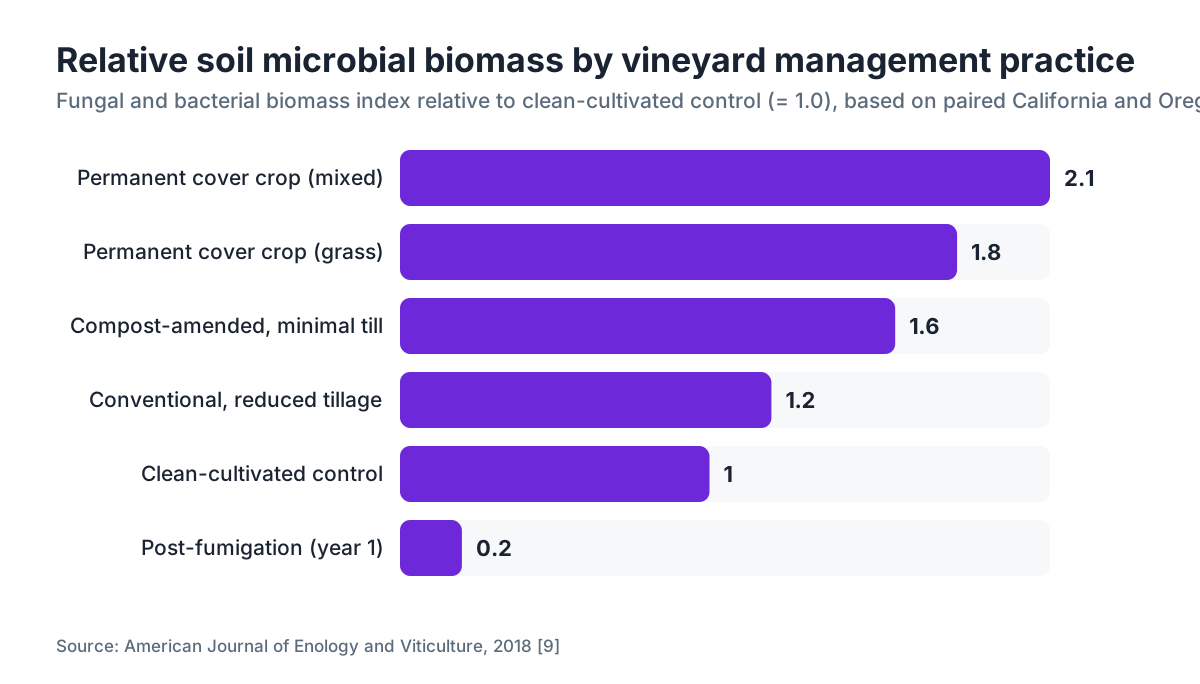
A 2018 study in the American Journal of Enology and Viticulture found that vineyards with permanent cover crops had significantly higher soil microbial biomass, higher fungal:bacterial ratios (linked to better nutrient cycling in perennial systems), and higher AMF colonization than clean-cultivated controls across California and Oregon sites [9].
In dry climates the water competition is real, and the fix is mowing timing plus species selection. Native grasses and drought-tolerant clovers that go summer-dormant compete far less in July and August than winter annuals you let run tall. Mow before inter-row soil moisture drops below 50% of field capacity and you keep the biology while easing off the vine stress.
One thing worth knowing: cover crop benefits are mostly an inter-row story. The vine row itself, usually kept weed-free, carries a different and often less biologically active soil profile than the inter-row. Some growers run resident vegetation in alternate rows to split the difference between competition and biology.
What pesticides harm soil microbes the most, and how do you minimize that damage?
Not all pesticides hit soil biology the same. The short version: soil fumigants do the most damage, then broad-spectrum soil-applied fungicides, then herbicides, then canopy-applied fungicides that never reach the soil in quantity.
Soil fumigants (chloropicrin, metam sodium, 1,3-D) go into vineyard replant situations and effectively sterilize the treated zone. Native community recovery usually takes three to seven years, and AMF recovery is the slowest of all. The EPA regulates fumigants under the Agricultural Worker Protection Standard at 40 CFR Part 170, which sets specific re-entry intervals and posting requirements that go beyond most other pesticide categories [6].
Copper fungicides accumulate with repeated use. European research found total copper above 200 mg/kg in vineyard soils with more than 30 years of copper spray programs, well over the 50 mg/kg threshold where earthworm populations and microbial diversity start to drop [6]. California organic operations using copper as their main disease tool have to watch cumulative loading, because the NOP caps copper at 6 lbs of metallic copper per acre per year [10].
Glyphosate at labeled rates has documented but moderate effects on soil communities. Multiple studies show reduced AMF colonization and shifts in bacterial composition, but the effects are generally reversible within one season in most soils [5].
To hold down the damage: (1) time fungicide applications away from peak biological activity (right after heavy rain or a compost application), (2) rotate fungicide modes of action to ease selection pressure on soil fungi, (3) use drip-applied products over broadcast where you can, to keep effects off the biologically active inter-row, and (4) keep cover crops in untreated inter-rows as a biological reservoir. WPS training requirements also cover workers entering treated areas, worth reviewing every year [6].
How does soil microbiology vary by vineyard region and soil type?
Geography shapes soil microbiology through climate, parent material, and land-use history, and the gaps between regions are large.
Sandy soils (common in parts of the Paso Robles region, Lodi, and coastal Sonoma) tend toward lower total microbial biomass than clay-loam soils because they hold less water and organic matter. But sandy soils drain fast, cut anaerobic stress, and often carry distinct, diverse fungal communities. Clay-heavy soils on the Napa Valley floor hold higher bacterial biomass but can turn anaerobic through wet spells, favoring denitrifying bacteria that convert nitrate to nitrogen gas, a real nutrient loss pathway.
Well-drained mountain vineyard sites with rocky soils often run low total biomass but interesting archaeal communities tuned to low-nutrient conditions. The shallow soils push vines into lower vigor, and that stress changes root exudate chemistry, which in turn reshapes the rhizosphere community.
California's Central Coast, the Pacific Northwest (WSU has published microbial community data across Walla Walla, Yakima, and Columbia Valley sites [5]), and the Finger Lakes all carry regionally distinct microbial signatures tracking soil type, pH, and land use. Vineyards converted from annual cropping usually show more bacterial-dominated communities and lower AMF diversity than sites that were grassland or woodland before planting, sometimes for decades after conversion.
Climate arguably matters as much as soil type. Warm, dry conditions (Mediterranean zones) favor sporulation of drought-tolerant fungi and slow bacterial turnover. Cool, wet regions favor bacterial-dominated communities with higher nitrogen cycling rates. None of this is good or bad on its own. It's context for reading your own soil test data.
What's the relationship between soil microbiology and grapevine disease resistance?
Diverse soil microbial communities give meaningful but imperfect protection against some soilborne diseases. Biostimulant marketing tends to oversell this, so here's what the data actually shows.
Armillaria (oak root fungus) and Phytophthora are the two soilborne diseases vineyard managers lose the most sleep over, alongside crown gall (Agrobacterium vitis) and the Eutypa and Esca trunk diseases that enter through wounds rather than soil. Against Armillaria specifically, there's limited evidence that soil biology alone controls established infections. Removing infected wood and fumigation stay the main tools.
For Phytophthora root rot, the evidence is better. Biologically active soils with strong Trichoderma and Bacillus populations suppress Phytophthora under field conditions, through competition for space and resources plus direct antibiosis. Cornell plant pathology extension documents Trichoderma-based biological controls that work inside integrated programs against Phytophthora in perennial crops [7].
The broader idea of "disease suppressive soils" is real science. Certain soils with specific microbial signatures resist establishment of soilborne pathogens even after the pathogen is introduced. The driver is usually high microbial diversity plus high organic matter, which hands beneficial organisms the competitive edge [1].
For grapevine trunk diseases the connection to soil biology is indirect. Esca and Eutypa infect through pruning wounds, not soil. But vines that are nutritionally balanced (which ties back to good soil biology) mount stronger wound-sealing responses and may resist infection better. That's the mechanism behind the hunch that healthy soil makes disease-resistant vines. It's true, but it's not linear or reliable enough to lean on as a primary disease strategy.
One compliance note. The EPA WPS at 40 CFR Part 170 requires that workers handling pesticides used against soilborne pathogens get annual training and access to personal protective equipment, and that applies to biological control agents registered as pesticides too [6]. If you're using a Trichoderma-based biopesticide, you still need a pesticide application record, with the same detail as a conventional spray log. Keeping your soil health notes next to your spray records makes that audit trail far easier to hold together.
Frequently asked questions
How many bacteria are in a gram of healthy vineyard soil?
Healthy vineyard soil typically holds 100 million to 1 billion bacterial cells per gram, representing 10,000 to 50,000 distinct species in a given field. Active organic matter management (compost, cover crops) pushes numbers toward the high end. Compacted, repeatedly tilled, or fumigated soils often sit an order of magnitude below that range.
Does soil fumigation destroy all soil microbes permanently?
Not permanently, but the hit is severe. Broad-spectrum fumigants like chloropicrin and metam sodium effectively sterilize the treated zone. Bacterial communities start recovering within months, but native AMF populations can take three to seven years to come back without inoculation. Inoculating transplants with commercial AMF strains at planting speeds that recovery a lot.
What is mycorrhizal fungi and why does it matter for grapevines?
Arbuscular mycorrhizal fungi (AMF) plug physically into vine roots and run hyphae far beyond the root zone, sharply raising phosphorus and water uptake. AMF can supply 20 to 80% of vine phosphorus nutrition depending on conditions. Heavy phosphorus fertilization, tillage, and fumigation all cut AMF colonization. Healthy AMF networks improve drought tolerance and trim the need for phosphorus inputs.
Can cover crops improve soil microbiology in a vineyard?
Yes, measurably. Research found vineyards with permanent cover crops had significantly higher soil microbial biomass, higher fungal:bacterial ratios, and higher AMF colonization than clean-cultivated controls. Legume covers add nitrogen-fixing bacteria, grass covers build fungal networks, and mixed covers pull the broadest response. In dry climates, use summer-dormant species and mow before soil moisture drops critically.
Does glyphosate harm soil microbes in vineyards?
At labeled rates, glyphosate has documented but moderate effects: reduced AMF colonization and shifts in bacterial composition come up consistently. Effects are generally reversible within one growing season in most soils. Repeated applications on the same zone (under-vine strips year after year) stack more risk than occasional passes. Rotating herbicide modes of action eases selection pressure on soil communities.
What soil tests tell you about microbial health in a vineyard?
Standard NPK panels tell you almost nothing about biology. The Haney Soil Health Test measures microbial respiration and biologically available nitrogen and carbon ($35-80 per sample). PLFA analysis profiles microbial biomass by group ($100-200). DNA sequencing identifies community composition to species level ($150-400). For most vineyard managers, a Haney test run annually from the same blocks over several years builds the most actionable trend data.
How does soil pH affect vineyard microbial communities?
pH is one of the strongest predictors of microbial community composition. Bacteria prefer near-neutral pH (6.0-7.5). Fungi dominate in acid soils (below pH 5.5). Ammonia-oxidizing archaea outcompete bacterial nitrifiers at low pH. Soils below pH 5.5 show slower nitrogen mineralization even with adequate organic matter. Liming acidic vineyard soils above 6.0 typically raises bacterial diversity and nitrogen cycling rates.
What is microbial terroir and is it scientifically real?
Microbial terroir is the idea that regional microbial communities in vineyard soils and on grape surfaces contribute to regional wine character. A 2016 PNAS study found grape and vineyard microbiota tracked with geographic origin, cultivar, and climate. The finding is real, but the effect size is likely modest against climate and winemaking decisions. It's a legitimate research area, not settled fact.
Does copper from organic fungicide sprays damage soil microbes over time?
Yes, with long enough exposure. European studies found copper above 200 mg/kg in vineyards with 30-plus years of copper spray programs, well over the 50 mg/kg threshold for reduced earthworm and microbial diversity. California's National Organic Program caps copper at 6 lbs of metallic copper per acre per year. Rotating copper with other allowed materials and tracking cumulative loading matters for operations with long copper histories.
How does rootstock choice affect vineyard soil microbiology?
Rootstock variety shapes rhizosphere microbiology through differences in root exudate chemistry. Studies comparing rootstocks like SO4, 101-14, and 3309C found measurable differences in bacterial community composition in the rhizosphere, even in the same soil block. Different rootstocks exude different carbon compounds, selectively feeding different bacterial and fungal populations. For replants, rootstock choice affects more than phylloxera resistance and vigor.
Are biological soil amendments and biostimulants worth buying?
Worth trying in specific spots, not everywhere. AMF inoculants show the clearest value in newly planted or fumigated blocks where native communities are depleted. Efficacy in soils with established native AMF is lower because native strains often outcompete commercial ones. Cornell field trials found 10 to 20% gains in shoot dry weight and fruit set for inoculants in new plantings. For already-healthy active soils, the return is uncertain.
Do EPA worker protection standards apply to biological soil treatments?
Yes. Under the EPA Agricultural Worker Protection Standard at 40 CFR Part 170, any product registered as a pesticide requires a pesticide application record, annual worker training, and re-entry interval compliance, whether it's a synthetic chemical or a biological control agent like a registered Trichoderma or Bacillus product. OMRI-listed biological products registered with EPA as biopesticides still require standard WPS documentation.
How long does it take to improve vineyard soil microbiology through management changes?
Measurable changes in microbial respiration and biomass can show up within one growing season after compost application or cover crop establishment. AMF recovery after fumigation takes three to seven years without inoculation. Building long-term diversity through consistent reduced tillage and organic matter additions usually takes three to five years before biological nutrient cycling meaningfully cuts synthetic input needs. Progress shows earlier in warmer, wetter climates.
Does drip irrigation affect vineyard soil microbiology differently than flood or sprinkler irrigation?
Yes. Drip creates distinct wet (rhizosphere) and dry (inter-row) microbiome zones, favoring different communities in each. Flood and furrow irrigation homogenize soil moisture and can create anaerobic conditions in saturated zones, favoring denitrifying bacteria and driving nitrogen loss. Neither system wins outright. The right choice depends on soil drainage, crop water demand, and which microbial functions you're prioritizing.
Sources
- FAO, State of Knowledge of Soil Biodiversity: Total microbial biomass in top 15 cm of productive soil can exceed 1,000 kg per hectare; archaea handle significant share of nitrification in acidic soils; compost lifts microbial biomass carbon 30 to 50%
- UC Agriculture and Natural Resources, Mycorrhizal Associations in Vineyard Soils: AMF colonization reduced by repeated phosphorus fertilization; inoculant value highest in disturbed or newly planted soils; phosphorus uptake increases 40 to 60% in AMF-colonized vines
- Bokulich et al., Microbial biogeography of wine grapes is conditioned by cultivar, vintage, and climate, PNAS 2016: Grape and vineyard microbiota tracked with geographic origin, cultivar, and climate; rootstock comparisons show rhizosphere community differences
- Washington State University Extension, Soil Health in Perennial Cropping Systems: Tillage reduces fungal biomass and microbial diversity; glyphosate at labeled rates causes reversible shifts; cover crops increase AMF colonization; regional microbial data across Walla Walla, Yakima, Columbia Valley
- EPA Agricultural Worker Protection Standard, 40 CFR Part 170: WPS requires re-entry intervals, annual worker training, and PPE access for all registered pesticides including biopesticides and fumigants; copper accumulation and 50 and 200 mg/kg thresholds documented
- Cornell University Cooperative Extension, Viticulture and Enology: Copper phytotoxicity thresholds documented; Trichoderma-based biological controls show efficacy against Phytophthora; AMF inoculants show 10 to 20% improvement in shoot dry weight in new plantings
- UC Agriculture and Natural Resources, Soil Health Tests for Vineyards: Haney Soil Health Test measures respiration and available C/N; PLFA and DNA sequencing methods and cost ranges described for vineyard use
- American Journal of Enology and Viticulture, Cover crops and soil microbiology in California and Oregon vineyards, 2018: Vineyards with permanent cover crops had significantly higher soil microbial biomass, fungal:bacterial ratios, and AMF colonization compared to clean-cultivated controls
- USDA National Organic Program: NOP caps copper at 6 lbs of metallic copper per acre per year; OMRI-listed biological inputs require documentation for certified organic operations
Last updated 2026-07-09