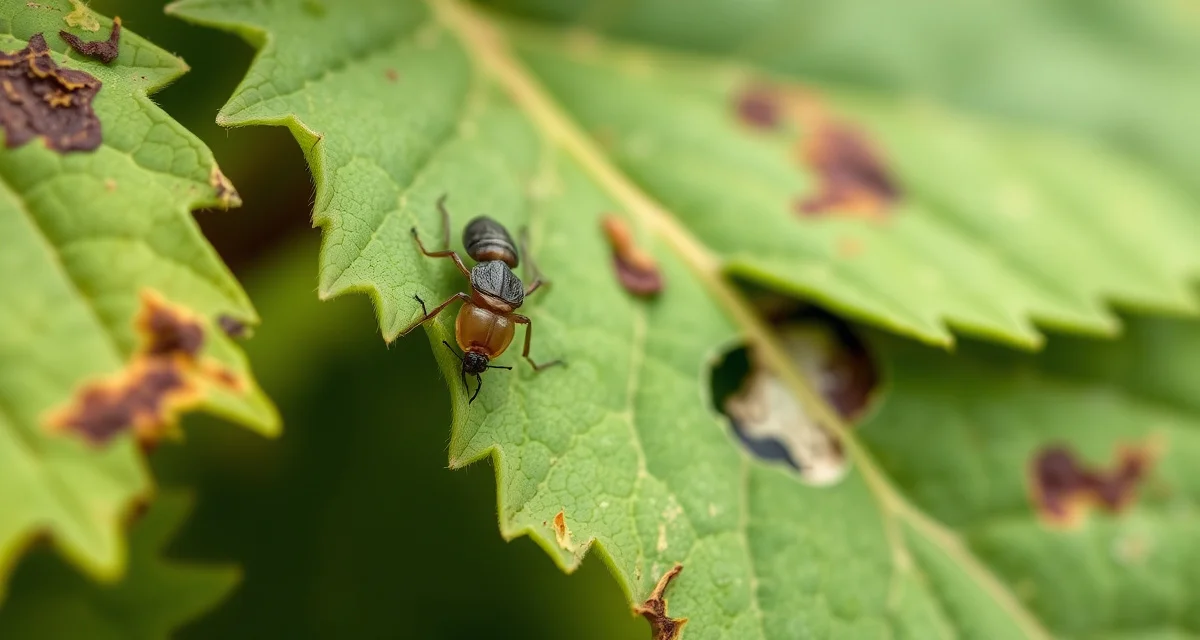
Phylloxera Monitoring and Management in Vineyards
Phylloxera (Daktulosphaira vitifoliae) destroyed 70% of European vineyards in the late 1800s. The solution -- grafting Vitis vinifera onto resistant American rootstocks -- has been the foundation of commercial viticulture ever since.
If you're farming own-rooted vines in California or another region where phylloxera is established, you either already know you have it or you have it and don't know it yet. Phylloxera doesn't announce itself early. By the time you see declining vines, the infestation has often been developing for years.
TL;DR
- Phylloxera infestations start in a few vines or a small cluster and spread outward at approximately 1-3 rows per year -- decline patches that appear "new" this season have typically been developing for 2-5 years before canopy symptoms become visible
- There are no economically viable chemical management options for phylloxera in established bearing vineyards -- once phylloxera is in your root system, management consists of monitoring, maintaining vine health, planning replanting, and preventing equipment-mediated spread
- California's 1980s-1990s replanting crisis was caused by biotype B phylloxera overcoming AxR#1 rootstock resistance -- AxR#1 should not be used in new plantings regardless of apparent performance in nearby blocks
- GPS mapping of decline patches in VitiScribe with annual progression tracking is the monitoring system that makes replanting planning actionable -- a decline patch that expanded by 12 rows in the last 3 seasons has a different urgency than one that has remained stable
- Equipment hygiene is the primary spread prevention tool -- phylloxera spreads through infested soil on tillage equipment, vehicles, and footwear, and cleaning before moving from infested to uninfested blocks matters most for multi-site operations
- Rootstock selection at replanting should account for soil texture, drainage, vigor class, and water availability for your site -- consulting your UC Farm Advisor or university extension viticulture specialist before rootstock selection is essential, as biotype-rootstock interactions are ongoing research
What Phylloxera Is and How It Damages Vines
Phylloxera is a tiny (1mm) insect in the aphid family. It has two damaging forms:
- Root form: Feeds on vine roots, causing nodosities (swellings) on fibrous roots and tuberosities on larger roots. Root feeding allows entry of pathogenic fungi. Damage to the root system reduces water and nutrient uptake.
- Leaf form: Creates galls on leaves. Less economically important in most situations but visible.
Own-rooted Vitis vinifera has no significant resistance to phylloxera. Root feeding eventually kills own-rooted vines -- the timeline from infestation to vine death can be 3-15 years depending on soil type, vine vigor, and phylloxera strain.
Rootstock resistance is based on resistance of American Vitis species (V. riparia, V. rupestris, V. berlandieri, V. aestivalis) that co-evolved with phylloxera. Rootstock resistance is not immunity -- it's tolerance that allows the vine to limit root damage to a level that doesn't kill the vine.
Phylloxera Biotypes and Rootstock Susceptibility
The original wave of phylloxera in California in the 1980s-1990s was caused by a new biotype (biotype B, later called biotype B or Type B) that overcame AxR#1 rootstock resistance. AxR#1 had been thought resistant; biotype B rendered it susceptible. The result was the massive replanting program of the 1990s.
Current concern: Emerging biotype variability means that rootstocks considered resistant may have varying performance with different phylloxera populations. The interaction between rootstock and local phylloxera biotypes is an ongoing area of research.
Commonly used resistant rootstocks and their performance:
- 110R: High resistance, good in dry conditions
- 1103P: High resistance, good drought tolerance
- 5C (Teleki 5C): Good resistance, productive
- 3309C: Moderate resistance, good in cool regions
- 101-14 Mgt: Good resistance, moderate vigor
Monitoring for Phylloxera
Visual Monitoring: Vine Decline Patterns
Phylloxera infestations typically start in a few vines or a small cluster of vines and spread outward in a roughly circular pattern. Monitor for:
- Irregular decline patches: Vines that are noticeably smaller, less vigorous, or have yellowing/reddening canopy
- Vine death following decline pattern: Not random vine death but clustered, expanding patches
- Root inspection: Dig near declining vines and examine fibrous roots. Look for characteristic nodosities (swellings at root tips) or tuberosities (larger root galls)
Document location and size of decline patches with GPS in VitiScribe's block mapping. Track expansion across seasons -- a phylloxera infestation expands by 1-3 rows per year on average, though rates vary.
Root Sampling
Definitive identification requires examining root tissue. For roots showing nodosities, fresh phylloxera can sometimes be seen with a hand lens -- tiny yellowish insects in crevices near root galls. For confirmation, your state's cooperative extension plant diagnostic lab can examine root samples.
Soil extraction methods can also detect phylloxera populations before vine decline is visible.
Record Keeping for Phylloxera Monitoring
Map each vine block showing:
- Rootstock identity (essential for evaluating susceptibility risk)
- Planting date (own-rooted vines are at risk; when were they planted and should replanting be planned?)
- Current vigor assessment by zone within the block
- Location and date of first decline symptoms observed
- Year-over-year expansion of any decline patches
VitiScribe's block-level records and GPS mapping tools support this monitoring. Documenting rootstock by block is basic data that also affects spray program decisions (rootstock affects vine vigor which affects canopy density which affects disease pressure).
For the new vineyard establishment framework that includes rootstock documentation from day one, see the new vineyard establishment IPM guide.
Management Options -- The Honest Assessment
There are no economically viable chemical management options for phylloxera in established vineyards. Once phylloxera is in your root system, chemical control is not effective at economic rates.
Management consists of:
- Monitoring to detect infestations early -- buying time to plan replanting
- Maintaining vine health -- irrigation, fertility management to extend productive life of declining vines
- Replanting planning -- selecting resistant rootstock appropriate for your site
- Preventing spread -- limiting movement of infested soil and plant material
Equipment hygiene: Phylloxera spreads through infested soil on tillage equipment, vehicles, and footwear. Clean equipment before moving from infested blocks to uninfested areas. This is especially important if you're farming multiple sites.
When Replanting Is the Answer
If you have a significant phylloxera infestation in own-rooted vines, the management question isn't "how do I control phylloxera" -- it's "when do I replant and with what rootstock."
Work with your local UC Farm Advisor or university extension viticulture specialist to select rootstock matched to your site conditions (soil texture, drainage, vigor class, water availability) and variety goals.
Document the replanting decision and timeline in your vineyard records. This history matters for future buyers, certifiers, and lenders.
Related Articles
- Cover Crop Management Records for Vineyards
- Eutypa Dieback in Vineyards: Complete Management Guide
- Leafhopper Management in Vineyards: IPM Guide
FAQ
How do I know if my vines have phylloxera?
The first signs are irregular decline patches -- groups of vines showing reduced vigor, smaller canopy, or unusual reddening/yellowing foliage that doesn't match the rest of the block. Dig near declining vines and examine the root system -- fibrous roots with swellings (nodosities) or larger root galls (tuberosities) indicate phylloxera feeding. Confirm with your local cooperative extension plant diagnostic lab. Not all vine decline is phylloxera, but irregular expanding patches in susceptible (own-rooted or AxR#1 rootstock) vineyards are strongly suggestive.
Can I spray insecticides to control phylloxera in my vineyard?
There are no insecticides registered in the US for economically effective phylloxera control in bearing vineyards. Soil fumigation is used in pre-plant situations. Once phylloxera is established in a bearing vineyard's root system, chemical control is not a viable management option. The practical management approaches are: monitor spread, maintain vine health to extend productive life, plan replanting onto resistant rootstock, and prevent spread to clean areas through equipment hygiene.
Which rootstock should I use when replanting a phylloxera-infested vineyard?
Rootstock selection depends on your specific site conditions -- soil texture, drainage, vigor potential, climate -- as well as your variety goals. Consult your UC Farm Advisor or state university viticulture extension specialist for current recommendations. Common resistant rootstocks used in California include 110R, 1103P, and 5C. Avoid AxR#1, which is susceptible to current biotypes. Research rootstock performance data from UC Davis for specific variety/rootstock combination information.
What records should be kept for phylloxera monitoring to support a replanting justification for lenders or buyers?
A replanting decision is a significant capital event that lenders and vineyard buyers will want to understand through records. The documentation that supports a replanting decision includes: the date and location of first decline observation (GPS-mapped), the year-over-year expansion of the decline patch with mapped progression, root inspection records confirming phylloxera identification (ideally with lab confirmation), the rootstock currently in place (to explain AxR#1 or own-rooted susceptibility), and any vigor and yield data from the affected blocks showing production decline. VitiScribe's block history records preserve this documentation over time -- a buyer reviewing a 10-year-old decline record that shows GPS-documented patch progression, root inspection results, and yield data has the evidence to understand the replanting need and timeline.
How should a vineyard manager document equipment hygiene measures taken to prevent phylloxera spread between a known-infested block and adjacent clean blocks?
Document equipment cleaning as a standard practice note in your block management records: date, equipment cleaned, method used (pressure wash, blow out soil, etc.), and which blocks were cleaned between. The most important documentation is consistency -- a single equipment hygiene record provides less assurance than a seasonal record showing routine cleaning every time equipment moves from an infested block to uninfested areas. If phylloxera is later detected in a previously clean block, equipment records demonstrating consistent hygiene practice support the interpretation that spread occurred through another pathway (airborne, water movement, bird activity) rather than equipment negligence.
What is Phylloxera Monitoring and Management in Vineyards?
[FAQ_ANSWER_PLACEHOLDER: This answer needs to be generated by AI with specific data, examples, and actionable advice relevant to Phylloxera Monitoring and Management in Vineyards. Target 50-150 words.]
How much does Phylloxera Monitoring and Management in Vineyards cost?
[FAQ_ANSWER_PLACEHOLDER: This answer needs to be generated by AI with specific data, examples, and actionable advice relevant to Phylloxera Monitoring and Management in Vineyards. Target 50-150 words.]
How does Phylloxera Monitoring and Management in Vineyards work?
[FAQ_ANSWER_PLACEHOLDER: This answer needs to be generated by AI with specific data, examples, and actionable advice relevant to Phylloxera Monitoring and Management in Vineyards. Target 50-150 words.]
Sources
- UC Cooperative Extension Viticulture
- UC Davis Viticulture & Enology
- Cornell Cooperative Extension
- American Vineyard Foundation
- Wine Institute
Get Started with VitiScribe
Phylloxera monitoring requires GPS-mapped decline patch documentation with annual progression tracking to make replanting decisions actionable -- a decline patch mapped in year one that shows 15 rows of expansion over 4 seasons has a different urgency than a stable 3-vine cluster. VitiScribe's block mapping records GPS-located decline patches, rootstock identity by block, and year-over-year monitoring observations in the block history that supports replanting justifications for lenders and future buyers. Try VitiScribe free and map your first block's rootstock profile and monitoring observations today.