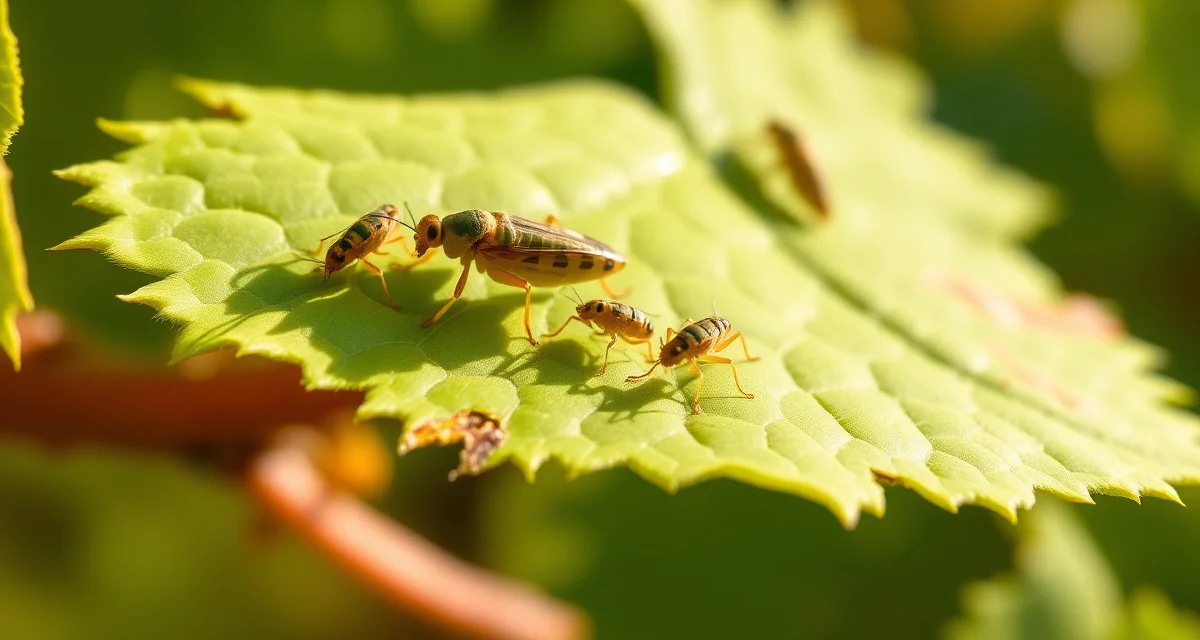
Leafhopper Management in Vineyards: IPM Guide
Grape leafhoppers are in nearly every vineyard in North America, and most of the time they're manageable. The question isn't whether you have them -- it's whether your population crosses the threshold where the economic cost of damage and the cost of control favor intervention.
TL;DR
- UC IPM leafhopper threshold is 15-20 nymphs per leaf during second-generation nymph counting -- this threshold applies alongside assessment of stippling severity and beneficial insect populations; populations below threshold with strong Anagrus epos parasitoid activity typically do not warrant treatment
- Two species dominate in California: western grape leafhopper (Erythroneura elegantula) and variegated leafhopper (Erythroneura variabilis) -- variegated is more common in warm interior regions and often shows higher late-season pressure
- Dimethoate (IRAC Group 1B) is a restricted-use pesticide in California requiring a county agricultural commissioner Pesticide Use Permit and documentation as an RUP application within 24 hours of application
- Pyrethroids (Group 3) provide rapid knockdown but severely disrupt Anagrus epos populations that suppress leafhopper eggs -- in vineyards relying on biological control, pyrethroids can eliminate the beneficials that would otherwise hold populations below threshold
- Canopy management (shoot positioning, leaf removal in the cluster zone done for botrytis and powdery mildew) also reduces leafhopper habitat by exposing nymphs to sun and wind -- document canopy management in the same system as leafhopper scouting to show the integrated approach
- VitiScribe stores scout record data linked to subsequent spray decisions so the IPM justification -- threshold exceedance count, beneficial activity assessment, and treatment decision -- is documented in one connected record
Two species dominate in California: the western grape leafhopper (Erythroneura elegantula) and the variegated leafhopper (Erythroneura variabilis). In eastern vineyards, additional species are present. Understanding which species you're dealing with, and what drives their populations, changes how you approach management.
Leafhopper Biology
Western grape leafhopper overwinters as adults in protected spots -- leaf litter, tall grass, debris. Adults move into vineyards at budbreak and lay eggs in leaf tissue. First-generation nymphs appear in late April through May. Two to three generations occur per season in most California wine regions.
Variegated leafhopper has a slightly different phenology and is more common in warm interior regions. Often has higher population pressure in late season.
Second-generation nymphs (mid-summer) cause the highest populations in most years. This is typically when threshold-based spray decisions occur.
Economic Thresholds
This is where IPM thinking matters. Not every leafhopper population warrants treatment. Cosmetic damage from feeding whitening (stippling) doesn't necessarily justify the cost and disruption of a spray application.
California guidelines suggest action thresholds of approximately:
- First generation: 15-20 nymphs per leaf (if present -- often doesn't warrant treatment)
- Second generation: 15-20 nymphs per leaf combined with evidence of economic stippling and carryover pressure
- Third generation: Population levels that would create fall skin stippling affecting fruit quality
Check your specific UC IPM or extension guidelines -- thresholds can vary by region and variety. Thin-skinned varieties with high skin-to-fruit contact in wine production may justify lower thresholds than varieties with thicker skin.
Scouting Protocol
When: Start scouting at 2-4 leaf stage and continue through harvest. Focus second-generation scouting from mid-June through July in California.
Method: Count nymphs per leaf on 10 leaves from mid-canopy position in 10 vines distributed across the block. Calculate average nymphs per leaf.
Also check: Stippling severity on 10 leaves (percentage of leaf surface affected). Heavily stippled leaves have reduced photosynthetic capacity and may affect fruit ripening.
Record all counts in VitiScribe's scout template with date, block, nymphs per leaf average, stippling percentage, and growth stage.
See the IPM scouting records guide for standardized counting methods and the threshold-linked documentation format that connects scouting observations to spray decisions.
Management Options
Biological Control
Anagrus epos (egg parasitoid) is the primary natural enemy of grape leafhopper and can be highly effective in vineyards with adequate habitat. Wild blackberries and other host plants near vineyard edges maintain Anagrus populations when leafhopper eggs aren't available in the vineyard in winter.
Avoid broad-spectrum insecticide applications that kill beneficial insects including Anagrus. Pyrethroid applications significantly disrupt Anagrus populations.
Habitat management: Planting flowering cover crops attracts and supports beneficial insect populations including Anagrus.
Chemical Controls
Dimethoate (IRAC Group 1B): Historically the most common leafhopper insecticide in California vineyards. Systemic, effective. Restricted use pesticide. PHI: 21 days.
Imidacloprid (Admire Pro, IRAC Group 4A): Systemic neonicotinoid. Effective but concerns about bee toxicity during bloom limit timing. PHI: 7 days for foliar.
Pyrethroids (IRAC Group 3): Contact activity, rapid knockdown. Significant impact on beneficial insects. Resistance can develop with repeated use. Use with caution in programs that rely on biological control.
Spirotetramat (Movento, IRAC Group 23): Primarily used for mealybug but has activity against leafhopper as well. Systemic.
Organic options: Insecticidal soap, pyrethrin (short residual), kaolin clay (deterrent effect). Limited efficacy for high-population situations.
Leafhopper and Canopy Management
Excessive canopy density creates ideal leafhopper habitat -- cool, shaded interior where nymphs feed undisturbed. Well-managed VSP canopies with adequate leaf removal expose nymphs to sun and wind, increasing natural mortality.
Shoot positioning and leaf removal in the cluster zone, done for botrytis and powdery mildew management, also reduces leafhopper habitat. Canopy management is a secondary leafhopper management tool but a real one.
Documentation for Leafhopper IPM
For California DPR compliance, dimethoate applications require a full restricted use pesticide record including permit number, applicator license, and all required fields.
Document scouting data that triggered the spray decision -- this is IPM documentation that demonstrates threshold-based management. If your CA DPR permit restricts dimethoate application to post-bloom or requires monitoring data, your records need to reflect that.
VitiScribe stores scout record data linked to subsequent spray decisions so the IPM justification is in one place.
Related Articles
- Crown Gall in Vineyards: Identification and Management Guide
- Eutypa Dieback in Vineyards: Complete Management Guide
- Phomopsis Vine Disease Management for Vineyards
FAQ
What is the economic threshold for leafhoppers in California vineyards?
UC IPM guidelines suggest action thresholds of approximately 15-20 nymphs per leaf during the second generation for most wine grape varieties, combined with assessment of stippling severity and beneficial insect populations. Thresholds vary by vineyard system, variety, and proximity to natural enemies. Always evaluate whether population levels will carry over to affect third generation and fall stippling before treating first or second generation.
Does dimethoate require a restricted use pesticide license in California?
Yes. Dimethoate is a restricted use pesticide in California and requires a valid Pesticide Use Permit from your county agricultural commissioner and a certified pesticide applicator license to apply. The permit specifies conditions including timing restrictions (typically post-bloom to protect pollinators) and buffer zones. Every dimethoate application must be documented as a restricted use pesticide application within 24 hours per California DPR requirements.
How do I encourage natural enemies of leafhoppers in my vineyard?
Anagrus epos (the primary leafhopper egg parasitoid in California) overwinters in eggs of other leaf-feeding insects in wild blackberry and other hedgerow plants. Maintaining hedgerow habitat near vineyard edges supports Anagrus populations. Avoid broad-spectrum insecticide applications during Anagrus active periods. Planting flowering cover crops increases overall beneficial insect diversity. If you're relying on biological control, avoid pyrethroid applications that severely disrupt beneficials.
How do I document a decision not to spray for leafhoppers when Anagrus parasitism is high?
A documented no-spray decision based on high Anagrus activity is one of the most effective IPM records you can produce -- it shows that you evaluated both pest and beneficial populations before deciding. Your scouting record should include the nymph count (even if below threshold), an estimate of Anagrus parasitism rate (percent of eggs parasitized, checked by examining eggs under a hand lens for the characteristic darkening that indicates parasitism), and a notation that the decision to withhold treatment was based on active biological control suppression rather than low pest pressure alone. This record, compared against a conventional calendar program with no beneficial monitoring, demonstrates the practical difference between IPM and calendar management.
What is the difference in leafhopper management documentation requirements between a conventional and organic California vineyard?
Both require the same DPR compliance fields for any pesticide applications made. The difference is in which products are available and what the scouting record needs to show. Organic programs are limited to OMRI-listed materials (insecticidal soap, pyrethrin, kaolin) with generally lower efficacy against high leafhopper populations -- making biological control habitat management and below-threshold tolerance more critical. Organic certifiers reviewing your leafhopper records want to see that you evaluated biological control options and habitat before applying any allowed materials. Conventional programs using dimethoate (RUP) need the full RUP documentation chain: permit number, applicator license, 24-hour DPR filing.
What is Leafhopper Management in Vineyards: IPM Guide?
[FAQ_ANSWER_PLACEHOLDER: This answer needs to be generated by AI with specific data, examples, and actionable advice relevant to Leafhopper Management in Vineyards: IPM Guide. Target 50-150 words.]
How much does Leafhopper Management in Vineyards: IPM Guide cost?
[FAQ_ANSWER_PLACEHOLDER: This answer needs to be generated by AI with specific data, examples, and actionable advice relevant to Leafhopper Management in Vineyards: IPM Guide. Target 50-150 words.]
How does Leafhopper Management in Vineyards: IPM Guide work?
[FAQ_ANSWER_PLACEHOLDER: This answer needs to be generated by AI with specific data, examples, and actionable advice relevant to Leafhopper Management in Vineyards: IPM Guide. Target 50-150 words.]
Sources
- California Department of Pesticide Regulation (CDPR)
- UC Cooperative Extension Viticulture
- American Vineyard Foundation
- American Society for Enology and Viticulture (ASEV)
- Wine Institute
Get Started with VitiScribe
Leafhopper IPM requires scouting records that capture both pest nymph counts and beneficial parasitoid activity, linked to the spray or no-spray decision that followed -- the complete IPM documentation chain that distinguishes threshold-based management from calendar spraying. VitiScribe's scouting module stores both pest and beneficial counts with threshold comparison, linked to the subsequent spray decision, giving you the connected record that DPR auditors and sustainable certifiers look for. Try VitiScribe free and log your first leafhopper scouting record with beneficial count and threshold comparison today.