Pruning backyard grape vines: a complete how-to guide
TL;DR
- Prune backyard grape vines once a year in late winter, after the coldest nights have passed but before buds swell.
- Remove 70 to 90% of last year's growth.
- Choose cane pruning or spur pruning based on your variety, not preference.
- Vines on an arbor use the same timing with a slightly different framework.
- Get this one task right and fruit quality follows.
When should you prune backyard grape vines?
Late winter. You want the window after temperatures stop dipping below about 0°F (-18°C) consistently, but before the buds swell and push green tissue. In most of the U.S., that falls somewhere between late January and late March depending on your climate zone. Central Valley growers in California often finish by mid-February. Finger Lakes growers in New York might still be pruning in March.
Here's why timing matters. Prune too early and a hard freeze can damage the cut canes at the wound, and any buds that started moving are especially exposed. Prune too late, after buds have broken, and you waste the vine's stored energy. The vine already pushed carbohydrates into those buds, and you're cutting them off.
There's a folk trick with real science behind it: watch for forsythia to bloom in your area. That's a rough proxy for the dormancy window closing. Cornell's viticulture program points to bud swell stage as the hard deadline for finishing pruning [1].
One more thing. If disease pressure was severe the previous season, particularly Botrytis or powdery mildew, some growers do a light pre-pruning cut in early winter to open the canopy and cut down on overwintering inoculum. That's a first pass, not the real event.
What's the difference between cane pruning and spur pruning for backyard vines?
The method you choose depends almost entirely on your grape variety, not your personal preference. This is the most misunderstood part of home grape growing.
Spur pruning means you leave short stubs (spurs) along a permanent cordon, the horizontal arm of the vine. Each spur carries two to three buds. Next year's shoots grow from those buds. Varieties that fruit well close to the base of the cane do fine on spurs. Think Cabernet Sauvignon, Zinfandel, and most Vitis vinifera wine grapes.
Cane pruning means you remove the entire fruiting arm each year and replace it with one or two long canes selected from last season's growth. You keep those canes at roughly eight to fifteen buds each. Concord, Niagara, and most American and French-American hybrids (Catawba, Marquette, Frontenac) fruit poorly from basal buds and need cane pruning to produce. Spur-prune a Concord vine and you'll get a mess of shoots and almost no fruit. That single mistake is the most common reason backyard vines disappoint their owners. [1]
A quick test if you're unsure of your variety: look up its parentage. Mostly V. labrusca or hybrid ancestry? Cane prune. Mostly V. vinifera? Spur pruning usually works, though cane pruning is never wrong for those either.
| Pruning Method | Good For | Buds Left Per Vine | Fruiting Position | |
|---|---|---|---|---|
| Spur pruning | V. vinifera, some hybrids | 20-40 total | Basal buds on short spurs | |
| Cane pruning | American types, most hybrids | 20-60 total (varies by vine size) | Buds along 8-15 bud canes | |
| Minimal pruning | Research trials only; not for home use | 100+ | Scattered | [2] |
How much wood do you actually remove when pruning grape vines?
More than feels comfortable. A lot more.
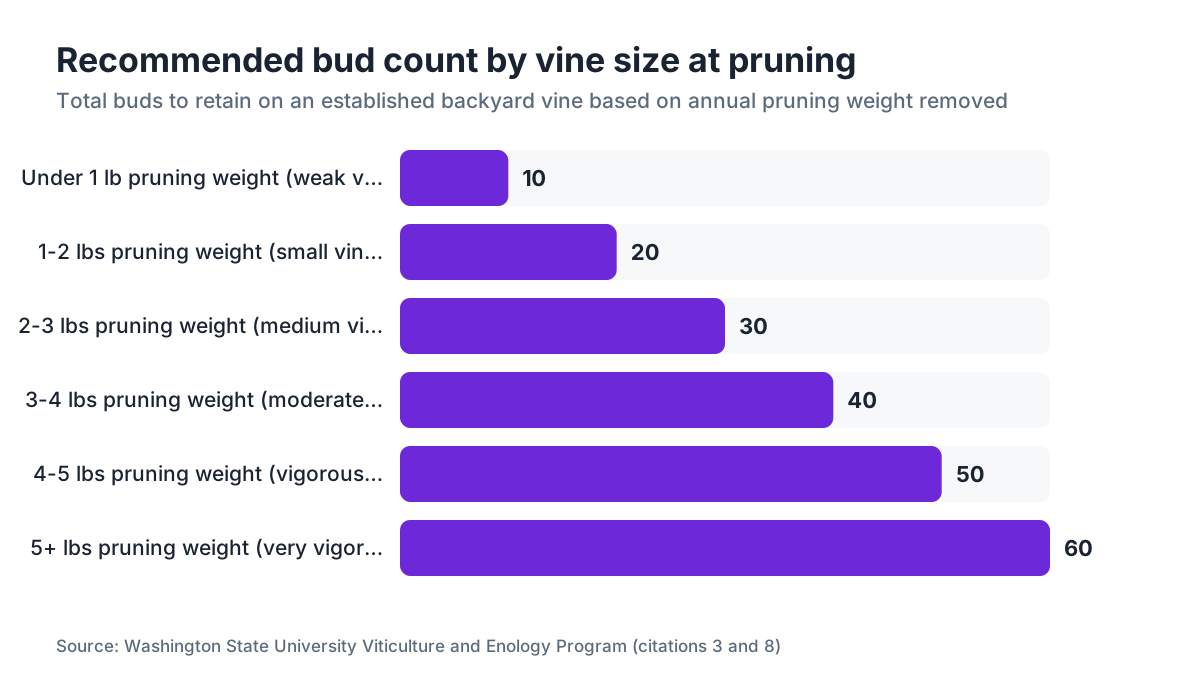
The standard rule in commercial viticulture is the 10-bud rule for balancing a vine: count the first 30 buds, save one pound of cane for each, and discard the rest. For a typical backyard vine on a simple two-arm cordon or a single four-arm Kniffin trellis, you'll leave somewhere between 20 and 60 buds total, depending on vine size and goals [1].
More useful for a home grower is the 70 to 90% removal figure. Look at a fully dormant vine. All that brown wood you see? Most of it goes. You keep the permanent structure (trunk, cordons or arms) and select a few well-positioned canes or spurs from last year's growth. Everything else comes off.
Over-prune (leave too little) and you get fewer clusters but larger, looser fruit. Under-prune (leave too much) and you get a huge canopy, poor air movement, more disease, and small flavorless berries from crowded clusters. Most backyard growers under-prune because cutting so hard feels wrong.
If your vine produces fewer than 2 pounds of pruning weight in a season, it's not vigorous enough to carry even 20 buds. Dial back and fix vine health first. WSU's viticulture program publishes a vine balance worksheet that walks through this calculation [3].
How do you prune grape vines growing on an arbor?
Arbor grape vine pruning follows the same dormant-season timing and the same biology as any other vine. The structure just changes how you execute it.
On an arbor, the goal is usually a permanent overhead canopy with fruiting wood hanging down or spreading across the top. The trunk grows up one or two posts, then arms radiate outward across the frame. Those arms become your permanent wood, the same role cordons play on a vineyard trellis.
Each year you select new fruiting canes from the permanent arms and remove the old ones. Because arbors often carry V. labrusca types (Concord is the classic porch and backyard arbor grape), cane pruning is usually right. Leave four to six canes of eight to fifteen buds each, spread across the arbor, and cut everything else.
The real challenge with arbor pruning is physical access. You're working overhead, which punishes your neck and shoulders. A good pair of bypass loppers with an extended handle helps. Some growers do the rough removal with a pole saw first, clearing obvious old wood, then come back with hand pruners for detail work.
Mature arbor vines run into a structural problem. The trunk gets thick and gnarled, cordons get long, and the fruiting zone creeps farther from the trunk every year. When you see this, retrain a younger basal shoot as a new cordon and phase out the old one over two to three seasons. Do it all at once and you'll shock the vine badly.
Cornell's viticulture extension resources have illustrated guides covering Kniffin and arbor systems if you want to see the cuts in practice [1].
What tools do you need and how should you prepare them?
For a single backyard vine or a small arbor, you need three things: quality bypass hand pruners, loppers for canes thicker than about 3/4 inch, and a folding pruning saw for trunk wood or very old cordons.
Anvil pruners are easier on your hand, but they crush instead of cut, which leaves a messier wound. Bypass pruners make a clean cut. Felco and Bahco both make reliable options in the $40 to $80 range. Skip the $12 hardware store pruners on a vine you care about.
Sanitize tools between vines, especially if you have any history of crown gall (Agrobacterium vitis), Eutypa dieback, or other wood-infecting diseases in your planting. A 10% bleach solution works, or isopropyl alcohol at 70% or higher. Wipe, dip, or spray between plants. It takes 30 seconds and keeps you from dragging a pathogen from one vine to the next.
Gloves earn their keep. Grape canes have surprisingly sharp cut ends and the work moves fast enough that you'll nick yourself without them. There's a compliance angle too. If you applied any pesticide to the vines the previous season, gloves and long sleeves during pruning are required under EPA's Worker Protection Standard when you're an employer or employee on a farm [4]. For a purely personal backyard vine those rules don't apply, but the protective habit still pays off.
How do you identify which canes to keep and which to remove?
Good keeper canes are pencil-thick (roughly 3/8 to 5/8 inch in diameter), medium brown, with nodes spaced three to five inches apart. Internodes shorter than two inches mean the cane grew too slowly, usually from low light or crowding. Internodes longer than six inches mean it grew too fast, usually over-vigor from excess nitrogen or water.
Color tells you something too. You want uniform medium-to-dark brown with smooth bark. Avoid canes that are pale and bleached (possible winter damage or poor ripening), dark and shriveled (desiccation or disease), or showing cracking or lesions.
The ideal cane sits close to the trunk or cordon, points in the direction you want next year's shoots to go, and shows no mechanical damage. On a spur-pruned vine, pick spurs evenly spaced along the cordon, roughly six to ten inches apart, to keep them from crowding.
If you have two candidate canes at one position and can keep only one, take the one closer to the trunk. Keeping fruiting wood close to the permanent structure is how you avoid cordons that migrate farther out every year.
What's the right pruning approach for a first, second, and third-year vine?
Young vines aren't mature ones, and the mistake most home growers make in years one through three is letting the vine fruit too early.
Year one: the vine is building its root system. Cut it back hard, to one or two buds above the graft union or the base. Don't let it fruit. If it sets clusters, remove them. It hurts to do, but the vine will be bigger and healthier in year three for it.
Year two: the vine should have several shoots. Pick the strongest, straightest one to become your trunk. Tie it to a stake. Remove all others. If that shoot reached your first wire or the top of your arbor, cut it there. If it fell short, cut it back to two strong buds near the base and try again next season.
Year three: now you build your permanent framework. If your trunk is at wire height, select two shoots to train as arms (cordons) along the wire, one in each direction, and remove the rest. A light crop is fine, but don't expect full production. UC Davis's viticulture resources lay out a year-by-year training progression worth bookmarking [2].
Full production from a backyard vine usually starts in year four or five, and the vine won't hit its full potential for ten years or more. It's a long game. That's part of why doing it right from the start matters.
How do you handle an old neglected vine that hasn't been pruned in years?
This happens all the time. Someone inherits a house with an ancient Concord on the back fence, or buys a property where the last owner let a patio arbor run wild for a decade. The vine is a tangle of old wood, straggly canes, and almost no fruit.
The honest answer: renovation takes two to three years. Cut everything back in one season and you risk serious stress or dieback. Here's a sane approach.
Renovation year one: remove the obviously dead, diseased, and crossing wood. Cut the total canopy by about half. Leave more buds than you would on a well-managed vine, because you don't yet know which framework wood is healthy. Let it grow and watch where the strongest shoots come from.
Year two: now you have better information. Select the best new growth and start training it to a proper structure. Keep removing old wood that isn't producing decent shoots.
Year three: you should be close to a properly trained vine with a clear framework. Prune to a normal bud count and fruit load from here on.
If the old vine has severe trunk disease, crown gall nodules on the trunk, or signs of Eutypa (dead spurs that failed to push, plus internal brown wood staining), the math changes. At some point, replanting with certified clean material beats trying to save a badly diseased vine.
How do you record and track your pruning from year to year?
Most backyard growers track nothing, then can't figure out why one year's fruit beats another, or when they last hit the dormant wood with a fungicide.
At minimum, write down the pruning date, the bud count you left, the total pruning weight (weigh the pile of cut canes, it takes two minutes), and any notes on cane quality or disease you saw. Year over year, this log tells you whether the vine is gaining or losing vigor, which drives how you adjust next season.
If you manage more than one vine or keep records for any commercial-adjacent reason, a spray application log is worth keeping too. Even dormant-season work (copper fungicide at budbreak, say) should be dated and documented. VitiScribe is built for this kind of field record-keeping, and it works for a five-vine home setup as well as a commercial block.
Selling fruit from your backyard vines to a local winery, even informally, can trigger documentation requirements around pesticide applications. Worth a call to your local farm bureau to learn what applies in your state.
What should you do right after pruning is finished?
A few things, in order.
First, clean up the canes you cut. Don't leave them piled under the vine. They harbor overwintering fungal spores and insect eggs. If your area saw powdery mildew or Botrytis pressure, burn or bury the prunings instead of composting them. A typical home compost pile doesn't get hot enough to reliably kill grape fungal pathogens.
Second, this is a good time to repair and tighten trellis wires or arbor supports while the structure is bare. It's much harder once the canopy fills in.
Third, consider a dormant copper fungicide application if you had downy mildew or black rot last season. Late dormant to early budbreak is the traditional window. Check the label for rates and re-entry requirements, and record the application date and product used [10].
Fourth, if any large cuts left wounds more than an inch across, a pruning wound sealant can lower Eutypa and Botryosphaeria infection risk. The research on sealants is mixed for small cuts, but for large ones the evidence generally supports using them [5].
Finally, step back and read the vine's structure as a whole. Sketch it if you can. Knowing what you intended this year helps you judge what actually happened come spring and summer.
Are there any safety or legal considerations for home grape vine pruning?
For a purely personal backyard vine, no. No permits, no applications. Pruning your own plants isn't regulated.
Where it gets complicated: if you hire someone to prune, even a teenager or a day laborer, EPA's Worker Protection Standard (WPS) may apply when a pesticide was applied to the vines within the previous 30 days and a restricted-entry interval is still in effect [4]. The WPS covers farms, forests, nurseries, and greenhouses, and coverage depends on whether the pesticide labels on products you used carry WPS language. If a label says "Agricultural Use Requirements," the WPS applies to anyone working in that treated area.
More practical concern: if your vines overhang a neighbor's property, the canes you prune may legally belong to your neighbor. In many states, a neighbor can legally harvest fruit from branches that overhang their side. Worth a conversation before you prune the reaching canes.
For disposing of vines that may have had pesticide applications, check your county's agricultural waste guidelines. Most dormant cane material can be burned or composted with no special requirements, but treated material follows the label's disposal directions.
EPA's WPS training and compliance resources are online and worth reviewing if you ever bring in a hired worker for any vineyard task [4].
How does climate zone affect pruning timing and technique?
The dormancy window is shorter in warm climates and longer in cold ones, which changes both when you prune and how hard.
In USDA Hardiness Zones 5 and 6 (much of the Northeast and Upper Midwest), late-season cold snaps can kill buds. Some growers deliberately prune late in these zones, letting the vine 'bleed' (weep sap through the cuts) as a way to confirm dormancy is truly breaking before they lock in bud counts. A vine bleeding from its cuts is past the coldest danger. Cornell's work in New York addresses cold-climate pruning adjustments directly [1].
In Zones 8 and 9 (California, much of the South), dormancy can be short and incomplete, especially in warm winters. Vines may push buds in January. There, early to mid-January pruning is often necessary, and some growers use hydrogen cyanamide to force more uniform budbreak after pruning.
Variety intersects with climate here. Cold-hardy hybrids like Marquette, La Crescent, and Frontenac, developed partly through University of Minnesota breeding work, hold extended dormancy and cold hardiness that give Zone 4 and 5 growers options V. vinifera can't offer [7]. These varieties need cane pruning regardless of climate.
One universal rule: prune when you can. Waiting for the perfect window and then missing it because of weather or schedule is worse than pruning a week early or late.
Frequently asked questions
When is the best time of year to prune grape vines in my backyard?
Late winter is the right time, after the hardest freezes pass but before buds swell. In most of the U.S., that means late January through late March depending on your climate zone. Zones 8-9 may need to prune as early as mid-January. Zones 5-6 often prune in March. Bud swell is the hard deadline; once green tissue shows, you've waited too long.
How much of the vine should I cut back each year?
Plan to remove 70 to 90% of the previous year's growth. That sounds extreme, but it's right. You keep the permanent structure (trunk and main arms) and select only a handful of well-positioned new canes or spurs. Leaving too much wood produces crowded canopies, poor fruit quality, and more disease. Most backyard growers under-prune because aggressive cutting feels wrong.
How do I prune grape vines growing on an arbor?
Arbor grape vine pruning follows the same late-winter timing as any other vine. The trunk grows up to the arbor frame, and arms (cordons) extend across it. Select four to six new fruiting canes from those permanent arms each year and remove the rest. Because most arbor grapes are Concord-type V. labrusca varieties, cane pruning (keeping eight to fifteen buds per cane) is usually the right method.
What's the difference between cane pruning and spur pruning, and which should I use?
Spur pruning leaves short two-to-three-bud stubs on permanent cordon arms. Cane pruning replaces the entire fruiting arm with a new long cane each year. The choice depends on your variety. Most V. vinifera wine grapes do fine on spurs. American types (Concord, Niagara) and most hybrids need cane pruning because they fruit poorly from basal buds. Using the wrong method is the most common reason home vines don't fruit well.
What tools do I need to prune backyard grape vines?
You need bypass hand pruners for most cuts, loppers for canes thicker than about 3/4 inch, and a folding saw for thick trunk or cordon wood. Quality bypass pruners (Felco, Bahco) run $40 to $80 and make cleaner cuts than cheap anvil-style pruners. Sanitize tools between vines with 70% isopropyl alcohol or a 10% bleach solution to avoid spreading wood diseases.
How should I prune a young grape vine in its first three years?
Year one: cut back hard to one or two buds and remove any fruit clusters. Year two: train the strongest shoot as your trunk, remove all others. Year three: establish your permanent arms (cordons) along the trellis or arbor. Allow only a light crop in year three. Full production typically starts in year four or five. Letting a young vine fruit too early stunts long-term development.
How do I renovate an old neglected grape vine that hasn't been pruned in years?
Plan for two to three seasons, not one dramatic cut. Year one: remove dead, diseased, and crossing wood, reducing the canopy by roughly half. Year two: train new growth toward a proper structure while removing more old wood. Year three: prune to a normal bud count. If the vine shows severe trunk disease or crown gall, replanting with certified clean material is sometimes the better choice.
Should I seal pruning wounds on grape vines?
For small cuts (under an inch in diameter), the research on wound sealants is mixed and most viticulture extension programs don't strongly recommend it. For large wounds from removing thick cordons or trunk sections, sealant products may reduce infection from Eutypa and Botryosphaeria fungi. Apply immediately after cutting. It's an inexpensive step for major cuts and the downside risk is low.
What should I do with the canes I cut off during pruning?
Remove them from under the vine promptly. Don't compost them if you had significant powdery mildew, Botrytis, or black rot pressure last season; home compost piles don't get hot enough to reliably kill grape fungal pathogens. Burn or dispose of them in yard waste. Clean canes from healthy vines can be composted or chipped for mulch, but keeping them away from the base of the vine is the safe habit either way.
How do I know if a cane is healthy enough to keep during pruning?
Good canes are pencil-thick (3/8 to 5/8 inch diameter), medium-to-dark brown, with nodes spaced three to five inches apart. Avoid pale or bleached canes (winter damage or poor ripening), dark and shriveled ones (disease or desiccation), and any cane showing lesions or cracking. Canes with very short internodes grew too slowly; very long internodes indicate over-vigor. Position close to the trunk is also a plus.
Does pruning timing change based on where I live?
Yes, meaningfully. In cold-climate zones (5-6), late pruning (March) reduces exposure to late-season frost damage on open cuts and moving buds. In warm zones (8-9), vines may push buds in January, requiring earlier action. In very cold areas, some growers prune late and watch for sap bleeding from cuts as a signal that the coldest danger has passed. Cornell's cold-climate viticulture resources are the best reference for northern growers.
Do EPA pesticide rules apply when I'm pruning backyard grape vines?
For a personal home planting, EPA's Worker Protection Standard does not apply to you pruning your own vines. It does apply if you hire someone to work in an area where agricultural-labeled pesticides have been applied and a restricted-entry interval is still in effect. If the pesticide label includes 'Agricultural Use Requirements,' the WPS applies. Check the product label and EPA's WPS resources if you use hired help for any vine work.
How many buds should I leave on a backyard grape vine?
For most established backyard vines, 20 to 60 total buds is a reasonable range, depending on vine size and vigor. A rough guide: weigh your pruning cuttings, then leave roughly 20 buds per pound of pruning weight removed, up to about 60 buds for a vigorous vine. Vines producing less than 2 pounds of pruning material aren't vigorous enough to carry even 20 buds; fix vine health before worrying about crop load.
Sources
- Cornell Cooperative Extension, Viticulture and Enology Program: Bud swell stage is the hard deadline for finishing pruning; cane pruning is required for V. labrusca types like Concord that fruit poorly from basal buds; cold-climate pruning adjustments and bleeding cuts as a dormancy indicator
- UC Davis Viticulture and Enology, Grape Growing Resources: Year-by-year training progression for young vines; spur pruning suitability for most V. vinifera varieties
- Washington State University Viticulture and Enology Program: Vine balance concept: leave roughly one pound of cane for every 10 buds retained; vine balance worksheet methodology; remove 70 to 90% of previous season's growth during annual dormant pruning
- EPA Worker Protection Standard, US Environmental Protection Agency: WPS applies when workers enter areas treated with agricultural-labeled pesticides; Agricultural Use Requirements label language triggers WPS coverage
- UC Statewide IPM Program, Grape Pest Management (Eutypa Dieback): Pruning wound sealants may reduce Eutypa and Botryosphaeria infection risk on large wounds; evidence is stronger for larger-diameter cuts
- Cornell Cooperative Extension, Viticulture and Enology Program: Late pruning strategy in cold climate zones reduces risk from late-season frost damage; bleeding cuts as a dormancy indicator
- University of Minnesota Extension: Cold-hardy hybrid varieties (Marquette, Frontenac, La Crescent) bred for extended dormancy and Zone 4-5 hardiness; all require cane pruning
- Washington State University Viticulture and Enology Program: Standard recommendation to remove 70-90% of previous season's growth during annual dormant pruning
- USDA National Agricultural Statistics Service: Baseline data on U.S. grape production and variety distribution referenced for context on variety-specific pruning systems
- UC Statewide IPM Program, Grape Pest Management Guidelines: Dormant copper fungicide application timing: late dormant to early budbreak window for downy mildew and black rot management
Last updated 2026-07-09