Pruning grape vines in fall: what to cut, what to wait on
TL;DR
- Most grape varieties should not be fully pruned in fall.
- Remove dead wood, diseased canes, and tangled growth after leaf drop, but save the structural pruning that sets next season's fruiting wood for late winter, just before bud swell.
- Muscadines and Concords follow the same principle, though timing windows shift by region.
- Full dormancy, not calendar date, is your trigger.
Why fall pruning of grape vines is more nuanced than it sounds
Fall is the wrong time to do your full annual prune on grape vines. Here's why that surprises people: harvest is done, leaves are dropping, the vine looks finished for the year. But it isn't dormant yet. Right after harvest, the plant is pulling carbohydrates out of the canopy and pushing them down into the roots for winter storage. Cut the canes too early and you interrupt that flow, which lowers the vine's cold hardiness and drains the reserves it needs at bud break next spring.
Fall is a fine time for removal work, which is a different job than structural pruning. Cut out the dead wood. Take out canes showing Botrytis or powdery mildew, pull the old cordon sections you already plan to replace, and clear the training wire of debris before you stack it for winter. That's the clean-up prune, not the production prune.
The structural decisions come later. How many buds to leave, which canes become your replacement spurs, how far back to cut the cordons: those get made in late winter, when the vine is fully dormant and the worst cold of the season has already passed. In cold climates that timing matters. A hard frost in January can kill canes you thought you were keeping, and if you pruned everything else away in November, you have no fallback wood.
So the real answer to the fall pruning question is short. Fall is for sanitation and removal. Late winter is for production pruning. Both jobs are necessary, and they are not the same job.
When exactly should you start fall pruning on grape vines?
The trigger is complete leaf drop plus two to three weeks, not a date on the calendar. You want the vine fully shut down, more than just bare after a windstorm. Across most of the US that window runs from late October through December, depending on latitude and variety. In the Pacific Northwest, Washington State University Extension puts full dormancy in most Riesling and Cabernet blocks somewhere in November, though a warm fall can push it into December [1]. In the South, muscadine vines may hold leaves until December or even January in mild years.
Temperature tells you more than the calendar does. Once nighttime lows sit regularly in the mid-20s Fahrenheit and daytime highs stay below 45°F, the vine has essentially stopped moving carbohydrates and you can do sanitation work without penalty. University of California Cooperative Extension recommends waiting until the vine has been through at least one good frost before any cutting begins [2].
Don't let the pull of operational efficiency drag your crew into the vineyard too soon. A two-week delay in late October costs nothing. Pruning three weeks too early in a warm September can cost you an estimated 10 to 20 percent of next year's yield if the vine goes into winter with reduced cold hardiness. Nobody has clean replicated data on exactly how much early pruning hurts yield in every situation. But the carbohydrate mechanism is well documented in viticulture physiology, and the extension consensus across UC Davis, Cornell, and WSU says the same thing: wait for true dormancy.
What should you actually remove during fall grape vine pruning?
This is the practical list. Work through it in order and you'll walk into winter pruning with a far cleaner vine.
First, cut out anything visibly dead. Dead wood is brown or gray all the way through the cross-section, with no green cambium when you nick it with your knife. Dead canes don't recover, and they hold fungal pathogens over winter.
Second, remove canes showing disease. Botrytis-infected wood carries that gray mold. Canes with Eutypa dieback show a V-shaped necrotic wedge in the cross-section, and those should come out completely, with cuts made 10 to 15 centimeters back into healthy wood [3]. Phomopsis-infected wood shows dark lengthwise lesions near the base. All of it is better gone now, off-site or burned, than left on the vine to sporulate through winter.
Third, thin the canopy tangle. Where canes cross, rub, or grow into the middle of the vine, take out the worst offenders. You're not picking your fruiting canes yet. You're cutting the chaos so that February selection is easier.
Fourth, strip the old foliage and rachis material off the training system. Dried petioles and stem bits hanging on the wire trap moisture and stretch the infection window for powdery mildew and downy mildew the following spring.
Fifth, make every removal cut in the right place. No long stubs. Cut to the base of the cane or to a clean node. Stubs die back and turn into entry points for wood pathogens.
One thing you should not do in fall: pick which one or two canes become next year's fruiting wood. Save that call for late winter, when you can see the whole vine and any cold damage has already declared itself.
How is fall pruning of Concord grape vines different from other varieties?
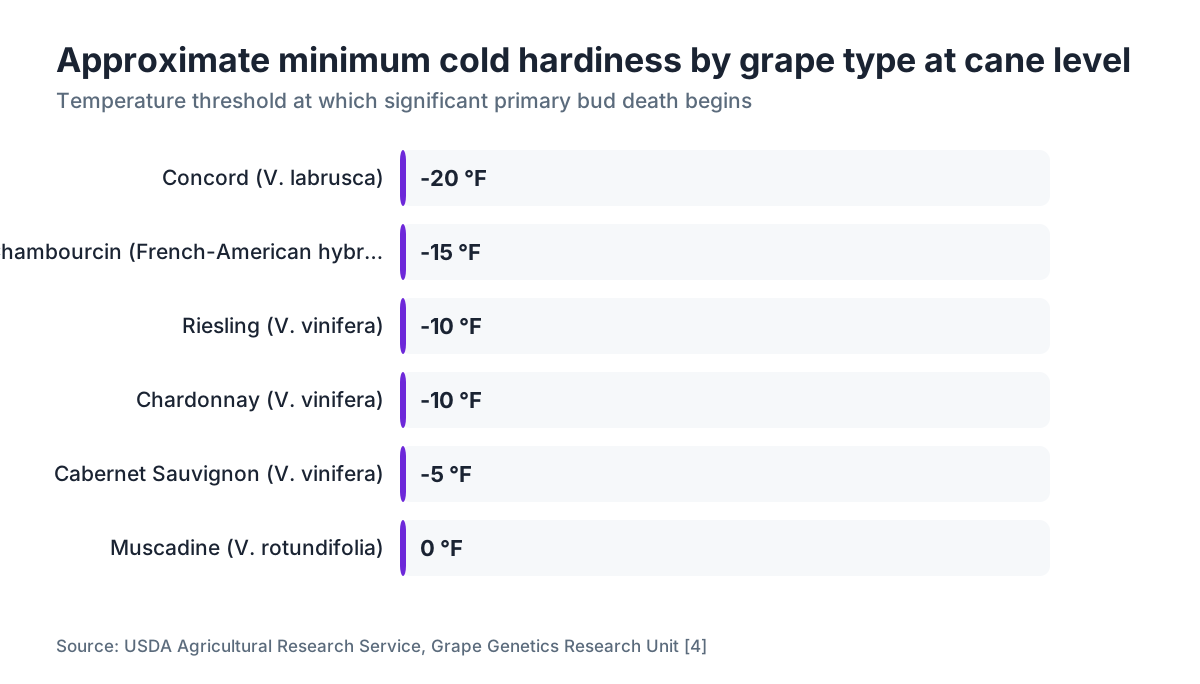
Concord is a Vitis labrusca cultivar and it's hardier than most Vitis vinifera, which shifts the winter risk math. A Concord vine in Michigan or New York survives cane-level temperatures down to around minus 20°F with reasonable rates, while something like Cabernet Sauvignon starts losing primary buds in numbers at minus 10 to minus 15°F [4].
That extra hardiness buys Concord growers in the Northeast and Great Lakes a little room. The risk of losing keeper canes to a January cold snap is lower, so some growers push closer to a full prune in late fall. Cornell Cooperative Extension's grape program, which covers the main Concord region of the US, still recommends holding the full production prune until late February or March, but notes that growers in zone 6b and warmer can often prune in December with limited risk [5].
For home growers and small commercial blocks, the advice is simple. Do your sanitation pruning in fall like any other variety. Clear the dead and diseased wood. If you're in zone 7 or warmer and you want the full prune done in late November or December, Concord will handle it. In zones 5 or 6 with serious cold events, wait.
Method matters more than timing for Concord. It's traditionally cane-pruned rather than spur-pruned because it fruits on canes off the previous year's wood, mostly nodes 3 through 10 on a mature cane. Cut it back to renewal spurs the way you'd handle a Cabernet spur cordon and you'll gut the crop. So at your final winter pruning, leave one or two full canes per vine at 10 to 15 buds each, plus one or two short renewal spurs at the base for next year's replacement canes.
For a visual reference, Cornell Cooperative Extension has published pruning video content for the Finger Lakes region that walks through the cane selection process step by step. Their viticulture team and the Lake Erie Regional Grape Program both post demonstrations worth your time.
How does pruning muscadine grape vines in fall differ from bunch grapes?
Muscadines (Vitis rotundifolia) are native to the southeastern US and run on a later dormancy timeline than bunch grapes. They're trained differently too, almost always on a bilateral cordon or multiple-arm system, with short fruit spurs cut back to two to four buds each season.
The timing question is the same in principle but shifted later on the calendar. Muscadines in Georgia, the Carolinas, and Florida often hold their leaves until December or later, and in the warmest parts of Florida they may never harden off the way a northern vine does. North Carolina State University Extension recommends waiting until after the first killing frost, which in Piedmont NC usually lands between late October and mid-November, before any muscadine pruning [6].
The required pruning is simpler with muscadines. Each spur on a mature cordon gets cut back to two to four nodes. There's no elaborate cane selection like Concord, no detailed shoot positioning like a VSP Cabernet block. The main fall task is the same as with bunch grapes: pull the dead wood, the diseased spurs, and the old cluster stems that dry on the vine after harvest.
One difference is worth knowing. Muscadine wood dries out fast once it's cut. Make your spur cuts in fall, catch a stretch of warm dry weather before the vine hardens fully, and the cut ends can desiccate back into the spur further than you planned. That's why some experienced Southern growers leave their spur cuts a little long in fall and do a final trim to the correct two-to-four-bud length in January or February. It's an extra pass, but it heads off the dieback.
What tools do you need and how should you handle them safely?
Bypass hand pruners, not anvil, handle most cane work. For older cordons and trunk sections you're removing, a folding pruning saw or a small electric reciprocating saw is faster. Long-handle loppers take thicker cordons without straining your wrist on every cut.
Blade sanitation matters far more than most growers treat it. Moving vine to vine without cleaning your pruners is one of the main ways Eutypa lata (Eutypa dieback) and Botrytis move through a block. A 10 percent bleach solution works but corrodes blades fast. A 70 percent isopropyl alcohol solution is nearly as effective and much easier on your equipment. Dip or spray between vines when you're in a block with known disease pressure, and at minimum between rows.
EPA Worker Protection Standard rules apply to agricultural workers in commercial operations, and pruning counts because it happens in fields where pesticides went down during the season. Depending on your last application and that product's restricted-entry interval, there may be worker protection requirements that govern when and how crews can reenter for pruning [7]. The WPS requires employers to post field safety information, give workers access to safety data sheets, and supply the correct personal protective equipment for work in treated areas.
For hand protection during pruning, cut-resistant gloves that still allow fine motor control are worth the money. Thorns on wild grape suckers are a real hazard, and the small cuts add up over a week of work.
If you track which blocks got which fungicides on which dates, that record sets your re-entry intervals and belongs in your spray records. Keeping it current through harvest makes the fall pruning window easier to plan. VitiScribe ties spray records to field maps, so you can pull up a block's last application date before you send your crew in and stay on the right side of WPS without digging through paper logs.
How many buds should you leave when you do prune?
This is the question that separates working viticulturists from people who just own grapevines. Bud count is not one-size-fits-all. It's calibrated to vine size, variety, training system, and your yield target.
Most production settings use balanced pruning. You weigh the dormant pruning wood you remove (in pounds or grams) and use that weight to calculate how many buds to keep. The formula most often cited for bunch grapes, developed from Nelson Shaulis's work at Cornell in the 1960s and still referenced by extension programs, runs roughly 30 buds for the first pound of pruning weight plus 10 buds for each additional pound [5]. A vine yielding 1.5 pounds of dormant wood gets 30 + 5 = 35 buds.
In the field, most spur-pruned Cabernet or Merlot vines on a VSP bilateral cordon end up with 30 to 50 buds. A cane-pruned Concord might carry 20 to 30 buds on two canes plus a couple of renewal spurs. A muscadine on a long cordon runs 15 to 25 spurs at 2 to 4 buds each.
Over-retain buds and you get too many shoots, a crowded canopy, poor air movement, and higher disease pressure. You also dilute fruit quality. Under-retain and you under-crop the vine while over-stressing it, because there's more vegetative push than the fruit load can balance. Neither extreme works. The balanced pruning formula, simple as it is, is a legitimate starting point backed by extension research.
| Training System | Variety Type | Typical Bud Count per Vine |
|---|---|---|
| VSP bilateral cordon (spur) | Vinifera (Cab, Chard) | 30-50 |
| Cane-pruned (4-arm Kniffin) | Concord / Labrusca | 20-30 |
| Bilateral cordon (spur) | Muscadine | 30-60 (2-4 buds/spur) |
| High cordon / GDC | Concord commercial | 40-60 |
| Geneva Double Curtain | Concord commercial | 50-80 |
Does fall pruning affect vine cold hardiness?
Yes, and it's the most under-appreciated risk in fall pruning. Cold hardiness in grapevines is not a fixed trait. The vine builds it during acclimation, the stretch from harvest to full dormancy, and that process needs the green tissue intact and working as a source of photosynthate to move into roots and trunk.
Research from the USDA Agricultural Research Service and WSU's viticulture program documents that Vitis vinifera varieties begin cold acclimation after harvest and hit maximum hardiness in January or February in most continental climates [8]. Prune before that process finishes and you can reduce the cold hardiness of the trunk and cordons by interrupting the hardening signals.
The practical result is stark. A vine pruned in October in a zone 6 climate may be measurably less cold-hardy in a January cold snap than an identical vine pruned in February. How much less? Nobody has clean replicated trials that hand you a precise number, but the mechanism is understood and the extension consensus across WSU, Cornell, and UC Davis is consistent. Wait.
In very mild climates (zones 8 and 9 in California, most of Florida) this matters far less, because the vines aren't facing lethal cold anyway. The earlier you can prune there, the earlier you're done with a big operation. Central Valley growers often start in December with no cold-damage worry. That's a real regional difference, not a contradiction.
What happens to the wood and debris you remove?
This gets less attention than it deserves. Pruning debris is a major inoculum reservoir for Botrytis, Eutypa, Phomopsis, and powdery mildew. Leaving brush piles at the row ends or pushing brush into the row and discing it in are both common, and they carry different risk.
Discing or flailing cuttings into the soil row speeds decomposition, but it also chops spore-laden wood into small pieces that rain can splash up onto the lower trunk and cordons. UC Davis plant pathology work on Eutypa dieback found that removing infected pruning wood from the block entirely reduced Eutypa inoculum pressure significantly compared to leaving it in the row [3].
Burning debris is the most effective pathogen option and is legal in many agricultural districts during set windows. Check your county air quality management district rules. In California, many counties restrict burning of vineyard brush during certain months.
Chipping and composting away from the vineyard is a middle path. If the compost pile runs hot enough (130°F or higher, sustained for several days) it kills most fungal pathogens. Many smaller operations just haul brush to a pile at the property edge and let it break down, which beats leaving it in the row but does less for pathogen control.
Whatever you choose, decide before you prune. A disposal plan with the equipment staged means the brush moves the same day you cut it, not three weeks later after it's sat through two rain events.
How do regional climate differences change fall pruning timing and approach?
The US has enough climate spread that no single recommendation holds everywhere. Here's how the main grape regions actually differ.
In California's coastal valleys and Central Valley, full dormancy arrives earlier than the calendar suggests, because warm weather stops abruptly with the first big rain and cool nights. Most California commercial operations begin dormant pruning in December and run through February, with the Central Valley finishing earliest and the cooler North Coast running latest. UC Cooperative Extension recommends January through early March as the production pruning window for most vinifera in California, with sanitation work fine as soon as leaves drop [2].
In the Pacific Northwest, the risk of cold damage to vines pruned too early is real, especially in inland Washington where temperatures can hit minus 10°F. WSU Extension recommends waiting until February in most of eastern Washington's Columbia Valley, with coastal Oregon able to start somewhat earlier. Sanitation pruning after leaf drop in November is fine [1].
In New York and the Northeast, Cornell's guidance for the Finger Lakes and Hudson Valley is to hold the full production prune until late March in exposed sites, aiming to finish before primary bud swell. January and February cold is a real yield risk in zone 5 and 6 sites. Fall sanitation pruning is recommended as soon as leaves are fully down [5].
In the South, muscadine and bunch grape growers in the Piedmont and coastal plain face shallow, brief dormancy. NC State Extension recommends a December through February window for muscadines in North Carolina, with January as the sweet spot [6].
In Texas Hill Country and the High Plains, disease pressure and the need to cut out Pierce's disease-infected wood push some growers toward more aggressive fall removal, because infected wood left over winter increases bacterial spread the next season. Texas A&M AgriLife Extension has specific Pierce's disease guidance that shapes pruning protocols in those regions [9].
What pruning records do you need to keep for compliance?
Pruning itself isn't regulated the way pesticide applications are, but it touches compliance in several ways that matter for commercial operations.
First, if your crew prunes in blocks that got pesticide applications during the season, re-entry intervals under the EPA Worker Protection Standard apply [7]. You need records showing the last application date, the product used, and the REI for that product to confirm the block is safe to enter. Those records have to be accessible, more than filed somewhere.
Second, if you're certified organic, your certifier may want records proving tools sanitized with non-approved materials weren't used in certified blocks. Bleach is generally acceptable; some synthetic fungicide-based sanitizers are not. Keep records of what sanitizer you used and when.
Third, if you sell grapes to wineries that require GAP (Good Agricultural Practices) certification or run their own audits, documentation of your sanitation practices, including removal and disposal of diseased wood, may be required.
Fourth, in states with agricultural labor laws, pruning hours need tracking, and in some states (California especially) piece-rate pruning has specific wage calculation requirements under Labor Code section 226.2.
Keeping these records in a system that ties field activity to block-level maps and spray records beats paper binders, especially when an auditor asks for the last three seasons of activity on a specific block. VitiScribe is built for exactly this field-to-record chain, and a free trial is available if you want to see how it handles block-level activity logs.
For growers running multiple varieties across different blocks, clear records of which blocks were sanitized, which disease wood was found and removed, and the disposal method also feed your integrated pest management documentation if you keep a formal IPM program [11].
What are the most common fall pruning mistakes and how do you avoid them?
Pruning too early tops the list, and it's covered at length above. The second most common mistake is the opposite: doing nothing in fall because you plan to do it all in winter, then walking into winter pruning with a tangled, disease-laden canopy that makes accurate cane selection nearly impossible.
Third is poor tool sanitation. A grower who carries one pair of pruners through an infected block in a single day can spread Eutypa, Botrytis, or Phomopsis to every vine touched. Dipping your pruners between vines takes 30 seconds. Most growers who skip it aren't lazy. They just haven't seen the disease maps that show infection clustering along the direction of travel through a block.
Fourth, specific to fall work, is cutting canes to arbitrary lengths instead of to a node or the base. Stubs between nodes die back slowly over winter and open entry wounds for wood pathogens. Always cut just above a node or to the base of the cane at the spur.
Fifth is disposing of debris poorly. Covered above, worth repeating: brush left in the vine row through winter is an inoculum reservoir that costs you in disease pressure the following spring.
Sixth, some growers make irreversible calls in fall they should save for winter. Removing an old cordon you think is unproductive, for instance. If that cordon still has viable wood and you're wrong about its output, you've set that vine back permanently. Wait until you can see the full picture in late winter, cold damage included, before deciding on trunk and cordon replacement.
Frequently asked questions
Can you prune grape vines in October?
October is generally too early for production pruning in most US regions. The vine is still moving carbohydrates from the canopy to the roots after harvest, and cutting canes interrupts that process. You can remove obviously dead or diseased wood in October if the vine has dropped its leaves and been through a hard frost, but save the final cane or spur selection for late winter, after the coldest period has passed.
Is it OK to prune Concord grapes in the fall?
Light sanitation pruning, removing dead, diseased, or crossing canes, is fine for Concord in fall after leaf drop. Full production pruning, where you select keeper canes and cut to final bud count, is better delayed until late February or March in zones 5 and 6. Concord is hardier than most vinifera, so growers in zones 7 and warmer can often do a fuller prune in December without significant risk.
When should you prune muscadine grape vines?
Muscadines in the southeastern US go fully dormant later than bunch grapes, often December or January. North Carolina State University Extension recommends pruning muscadines between December and February, with January as the practical sweet spot for most of the Piedmont and coastal plain. Wait for the first hard frost before starting. Each spur gets cut back to two to four buds on a mature cordon-trained vine.
How many buds should you leave when pruning grape vines?
The standard starting point is the balanced pruning formula: 30 buds for the first pound of removed dormant wood, plus 10 buds for each additional pound. In practice, a spur-pruned vinifera vine on VSP typically carries 30 to 50 buds, a cane-pruned Concord carries 20 to 30 buds on two canes, and a muscadine cordon ends up with 30 to 60 buds across 15 to 25 spurs. Adjust for vine vigor and target yield.
Should you seal pruning cuts on grape vines?
Wound sealants help most on large cuts, specifically cuts larger than about 2 centimeters in diameter on trunks or main cordons. Several commercial products contain Trichoderma or other biological agents that colonize the wound and reduce Eutypa infection. For routine cane pruning at normal spur or cane size, the research supporting sealing every cut is thin. UC Davis plant pathology guidance focuses sealant use on large trunk wounds where Eutypa pressure is high.
What diseases can spread during fall pruning if you're not careful?
Eutypa lata, which causes Eutypa dieback, is the most serious. It spreads through airborne ascospores that infect fresh pruning wounds, and contaminated tools can move it mechanically too. Botrytis cinerea, Phomopsis viticola, and the fungal complex behind Esca and black dead arm are all candidates for tool-to-tool spread. Sanitize pruners between vines in any block with disease history using 70 percent isopropyl alcohol or a 10 percent bleach solution.
Can you do all your grape vine pruning in the fall instead of waiting for winter?
In mild climates (zones 8 and 9), doing most of the production prune in late fall after full dormancy is practical and common. In colder climates (zones 5 through 7), a full fall prune raises your risk of losing keeper canes to a January or February cold snap. In those regions, do your sanitation work in fall and leave final cane or spur selection until late winter, when you can see what the cold has done.
What is the difference between fall pruning and dormant pruning for grapes?
Fall pruning, as growers use the term, is the sanitation pass after harvest and leaf drop: removing dead, diseased, and tangled growth without making final production decisions. Dormant pruning is the full annual structural prune, setting bud count and fruiting wood for the coming season, done in late winter when the vine is fully dormant and the worst cold risk has passed. Both are necessary, and they serve different purposes.
How do you prune an overgrown or neglected grape vine in fall?
Renovation of a badly neglected vine is a multi-year job; don't try to fix it all in one fall. In year one, remove dead wood, crossed canes, and any suckers from below the graft union. Pick the best-positioned trunk or trunks and remove competitors. Thin the canopy to the three or four best canes. Do final bud count selection in late winter. Expect three seasons to restore a neglected vine to productive structure.
Do EPA Worker Protection Standard rules apply during grape vine pruning?
Yes, for commercial agricultural operations. If workers enter fields where pesticides with active restricted-entry intervals were applied, WPS requirements govern entry timing, personal protective equipment, and employer notification. The EPA Worker Protection Standard (40 CFR Part 170) requires employers to post field safety information and give workers access to pesticide application records. Pruning needs no pesticide handler license, but the field re-entry timing for the last application does apply.
Where can I find a reliable video showing how to prune Concord grape vines?
Cornell Cooperative Extension's viticulture program has published video resources covering Concord pruning technique specific to the Finger Lakes and Northeast region. Search Cornell Cooperative Extension's YouTube channel or their Small Farms Program website directly. Cornell's viticulture faculty, including the Lake Erie Regional Grape Program, regularly publish video demonstrations of cane selection and balanced pruning methods for Concord and other labrusca varieties.
What time of day is best to prune grape vines in fall?
Time of day matters less than temperature. Avoid pruning when temperatures are below about 28°F, because grape wood turns brittle in hard freezes and pruner blades crush rather than cut cleanly, leaving ragged wounds. Morning work after frost has cleared is fine. Where fall days warm quickly, an earlier start in cooler air is sometimes nicer for crew comfort, but there's no strong physiological reason to prefer morning over afternoon.
How should you dispose of diseased grape vine prunings?
Burning is most effective and clears the pathogen load entirely, subject to local air quality burn permit rules. Removal from the block to an off-site compost pile that reaches sustained temperatures above 130°F is a reasonable second option. Avoid chopping or flailing diseased wood back into the vine row, since that spreads spore-laden material into the root zone and creates splash inoculum. At minimum, rake debris out of the vine row before it sits through rain events.
Does pruning grape vines in fall hurt next year's yield?
Full production pruning done too early in fall can cut yield by reducing the vine's cold hardiness and carbohydrate reserves. The loss is hard to quantify precisely, since it depends on how early you prune and how cold the winter gets. Sanitation pruning, removing only dead and diseased wood after full leaf drop and a hard frost, has no meaningful negative effect on next year's yield and may improve it by lowering disease pressure heading into the season.
Sources
- Washington State University Extension, Viticulture and Enology Program: Full dormancy in most WSU-region Riesling and Cabernet blocks arrives in November, and WSU recommends delaying production pruning to February in most of eastern Washington's Columbia Valley.
- University of California Agriculture and Natural Resources, Cooperative Extension: UC Cooperative Extension recommends waiting until the vine has experienced at least one good frost event before any pruning begins, and recommends January through early March as the production pruning window for most California vinifera.
- UC Davis Department of Plant Pathology, Eutypa Dieback of Grapevine: Removing infected pruning wood from the block entirely reduces Eutypa inoculum pressure significantly compared to leaving it in the row; wounds larger than 2 cm benefit most from biological wound sealants.
- USDA Agricultural Research Service, Grape Genetics Research Unit: Concord (Vitis labrusca) tolerates cane-level temperatures to approximately minus 20°F with reasonable survival, while Vitis vinifera varieties begin significant primary bud death at minus 10 to minus 15°F.
- Cornell Cooperative Extension, Statewide Viticulture Program and Lake Erie Regional Grape Program: Cornell recommends delaying full production pruning to late February or March in cold sites, references the Shaulis balanced pruning formula (30 buds for the first pound of pruning weight plus 10 per additional pound), and notes zone 6b and warmer sites can often prune in December.
- NC State Extension, Muscadine Grape Production Guide: North Carolina State University Extension recommends waiting until after the first killing frost before muscadine pruning, with December through February as the acceptable pruning window and January as the practical sweet spot.
- U.S. Environmental Protection Agency, Worker Protection Standard (40 CFR Part 170): The EPA Worker Protection Standard requires employers to post field safety information, provide workers access to pesticide application records, and enforce restricted-entry intervals before workers, including pruning crews, enter treated fields.
- USDA Agricultural Research Service, Grape Cold Hardiness Research: Vitis vinifera varieties begin cold acclimation after harvest and reach maximum hardiness sometime in January or February in most continental climates; early pruning can interrupt carbohydrate translocation and reduce cold hardiness.
- Texas A&M AgriLife Extension, Grape Production: Texas A&M AgriLife Extension has specific guidance for Pierce's disease management in Texas Hill Country and High Plains that affects pruning protocols, including removal of infected wood in fall.
- University of California Cooperative Extension, Grape Pest Management, Botrytis Bunch Rot: Botrytis-infected wood left in the vineyard over winter increases inoculum pressure the following spring; removal and off-site disposal is recommended as part of integrated disease management.
Last updated 2026-07-10