Pruning grape vines in Minnesota: a complete seasonal guide
TL;DR
- In Minnesota, prune grape vines between late February and early April, after the coldest weather passes but before budbreak.
- Cut cane cross-sections to read winter injury before you commit.
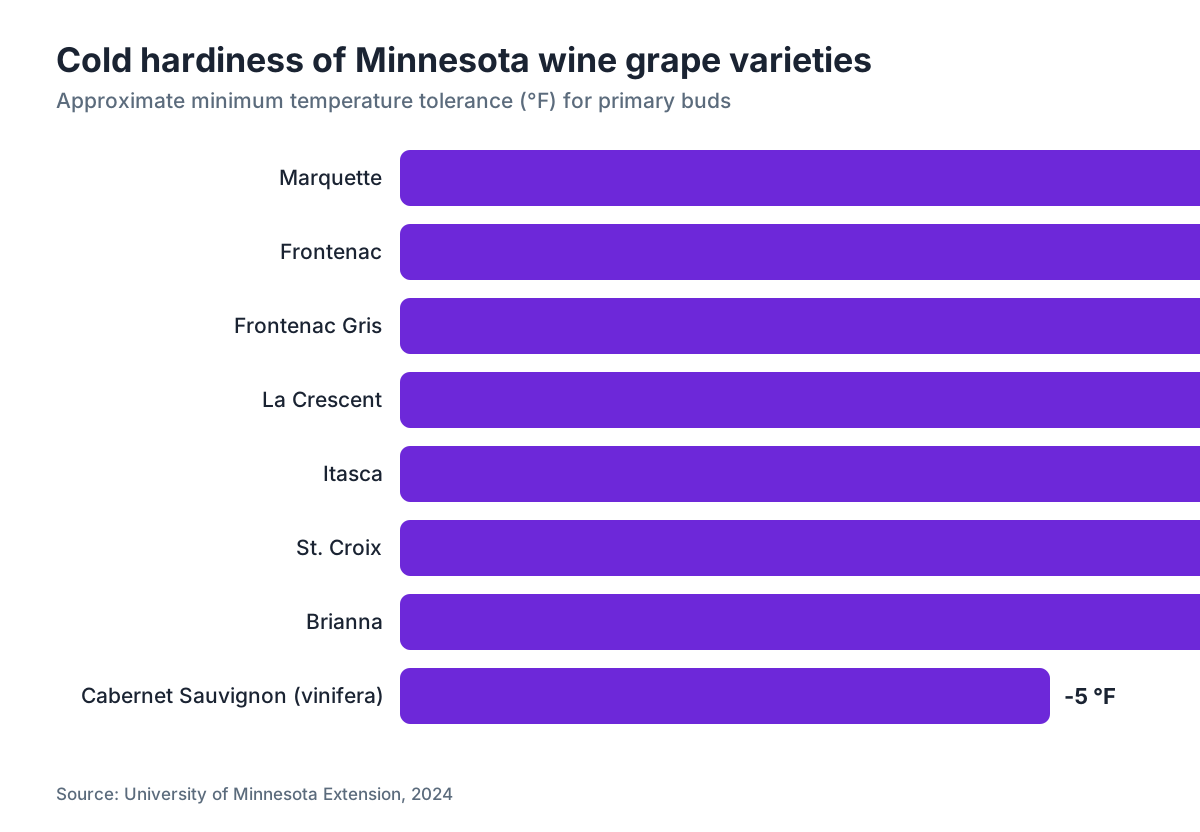
- Hardy varieties like Marquette and Frontenac survive cold down to roughly -30°F and handle cane pruning well.
- Hold off if subzero temps are still in the forecast.
- Budget 15 to 30 minutes per vine.
Why is pruning grape vines in Minnesota different from other states?
Minnesota is not Napa. It's not Texas either, where the pruning calendar is far more forgiving and winters rarely kill primary buds outright. Here, one February cold snap can wipe out primary bud tissue you thought was safely dormant. Prune before you know the damage and you can't take it back.
The state sits mostly in USDA Plant Hardiness Zones 3b through 5b [1]. That spread matters. A grower in Moorhead (Zone 4a) and a grower in Winona (Zone 5b) face meaningfully different risk, even growing the same variety. The University of Minnesota Grape Breeding and Enology Program has spent decades breeding for cold hardiness precisely because standard vinifera like Cabernet Sauvignon die around -5°F to -10°F, and exposed Minnesota vineyard sites routinely hit -20°F or colder [2].
That's the core difference. Pruning here isn't only about shaping the vine for yield. It's a damage assessment first and a shaping job second. Get that order backward and you'll either prune away your crop on cold-damaged vines or leave too much wood on vines that needed harder cuts to bounce back.
When should you prune grape vines in Minnesota?
Late February through the first two weeks of April is the window most Minnesota growers target. The exact start depends on your site and what the next 10 days of forecast look like.
The logic is simple. You want the vine fully dormant but past the most dangerous cold. Cuts made below 0°F can dry out the wound tissue and leave the vine more exposed. You also can't read bud viability accurately until temps have held above 20°F for a stretch. Cut a cane cross-section with a sharp knife: live primary bud tissue is green, dead tissue is brown or black. Make that cut before you commit to a plan.
Budbreak in Minnesota usually runs from late April to mid-May depending on location and variety [2]. Finish pruning at least two to three weeks before your expected budbreak date. Prune too close to budbreak on cold-hardy hybrids and the first warm days can trigger a rush of growth, right into the late frosts that commonly run through mid-May. Slow growth protects you.
One honest caveat: nobody has a clean formula, because Minnesota weather swings hard year to year. NOAA's 30-year climate normals put Minneapolis's average last freeze at April 19 [3], but that average hides years with killing frosts in late May. Watch the forecast, not the calendar.
How do you assess winter injury before pruning?
This step separates the growers who keep their crop from the ones who guess. Do it before you touch your loppers.
Collect 10 to 15 cane samples from across the vineyard in late January or early February. Bring them inside, let them warm to room temperature for 24 hours, then cut cross-sections every few inches with a clean, sharp knife. Live primary bud tissue is bright green. Brown or tan tissue is dead. Secondary and tertiary buds sit just outside the primary, and those are your insurance: when primary buds die, secondaries often survive and carry a partial crop, usually at 40 to 60% of normal yield [2].
Record findings by variety and row. If 80% or more of your primary buds are dead across a block, your whole strategy shifts. You may leave more nodes per cane and count on secondary buds to fill in. Cornell's viticulture extension guidance recommends leaving 20 to 40% more buds than normal once primary bud kill passes 50% [4].
If the injury runs deep enough that the trunk wood itself is brown on cross-section, you're looking at vine replacement, not a modified prune. That's a hard thing to face in February. The earlier you know, the earlier you can plan around it.
Document everything. A simple spreadsheet with variety, row, bud viability percentage, and date is enough. Past a few acres, vineyard record-keeping software speeds this up and gives you a searchable history year over year.
Which pruning system works best for Minnesota varieties?
Cane pruning is the right call for most Minnesota hardy varieties. The reason is practical: the University of Minnesota releases, including Marquette, Frontenac, Frontenac Gris, La Crescent, and Itasca, were bred partly to regenerate from cane wood after winter damage [2]. Cane pruning lets you pick fresh, healthy wood every spring.
Spur pruning works on the more vigorous hybrids, including some plantings of St. Croix and Brianna, and it's faster when it works. The catch is that spur pruning needs the permanent cordon to survive winter intact. In Zone 4a and colder, that's a gamble most years.
The standard cane-pruned setup in Minnesota is a high bilateral or unilateral cane system on a two-wire trellis, with canes laid down along the fruiting wire. The University of Minnesota recommends two to four canes per vine, each with 8 to 15 buds, plus renewal spurs to position next year's canes [2]. Your total bud count depends on vine vigor and the bud viability numbers from your winter injury assessment.
| Variety | Hardiness (°F) | Preferred system | Notes |
|---|---|---|---|
| Marquette | -34 | Cane | High quality, moderate vigor |
| Frontenac | -30 | Cane | High vigor, good disease resistance |
| Frontenac Gris | -30 | Cane | Mutation of Frontenac, pink-skinned |
| La Crescent | -30 | Cane | White; watch for overbearing |
| Itasca | -30 | Cane | Newer release, lower acid |
| St. Croix | -25 | Cane or spur | Vigorous; suits some spur training |
| Brianna | -25 | Cane or spur | High sugar potential |
Temperature thresholds are approximate and site-dependent. Source: University of Minnesota Extension [2].
What tools do you need and how do you keep workers safe?
For most operations you need bypass hand pruners (Felco 2 or equivalent), bypass loppers for older wood, and a folding or bow saw for trunk work. Bypass cuts heal better than anvil cuts. Keep blades sharp. A dull pruner crushes wood instead of slicing it, which slows healing and opens the door to disease.
Disinfect tools between vines in any block with a history of crown gall or Phomopsis. A 10% bleach solution works, but it eats metal over time. Many growers reach for 70% isopropyl alcohol instead, which is gentler on tools and still kills most fungal pathogens.
Worker protection is not optional. The EPA Worker Protection Standard (WPS) covers agricultural establishments with hired workers, including seasonal pruning crews [5]. Handlers and workers must get training before they enter fields where pesticides have been used. Pruning crews need to know the reentry intervals (REIs) for any fungicides or dormant sprays put on before or during the pruning season. Keep your pesticide records current and reachable, because WPS says field-specific information has to be posted and available within 30 minutes of a worker request [5].
Cold adds its own hazards. OSHA recommends recognizing the signs of frostbite and hypothermia, scheduling outdoor work for the warmest part of the day in extreme cold, and providing warm break areas [6]. Minnesota pruning often runs through February and March, when dawn temperatures are still well below freezing. Don't rush a crew through safety because the season is pressing on you.
How do you handle severely winter-damaged vines?
Sometimes the damage runs past the canes. Find brown cambium or dead pith in the trunk itself and the vine needs renovation, not a standard prune.
For partial trunk damage, cut back to where the wood is live and green on cross-section. If suckers are coming from below the graft union on vinifera, remove them. On own-rooted Minnesota hybrids, a sucker from the base can become your new trunk: train it up, tie it to the stake, and let it replace the damaged trunk over one to two seasons. This is retraining from a renewal shoot, and it's standard practice in Zone 4 Minnesota vineyards after a brutal winter.
Full vine loss happens. If the roots are alive (dig and check), you can still recover, but rebuilding a fruiting vine from scratch takes two to three years. Run those numbers against replanting before you decide whether to rehabilitate or pull.
For young vines in their first or second leaf, hilling soil over the graft union is common practice and cuts primary bud kill and trunk damage a lot in cold winters [2]. If you skipped hilling last fall and you're seeing widespread loss in young vines, that's your single biggest fix for next year.
What's a realistic pruning timeline and labor estimate for Minnesota vineyards?
It depends on vine spacing, training system, and how well the vines have been kept. Experienced pruners on mature cane-pruned vines in Minnesota move at roughly 150 to 250 vines per person per day in a healthy year [4]. Slow down 20 to 30% in years with real winter damage, because bud viability assessment eats time.
For a one-acre vineyard at standard 8x5 spacing (roughly 1,089 vines per acre), budget three to five person-days of pruning labor. Add a half-day of scouting up front if you're doing the winter injury assessment yourself.
Here's the full pruning-season workflow in Minnesota:
- Late January to mid-February: collect cane samples, assess primary bud viability
- Mid-February to early March: make pruning decisions from your viability data, order replacement plants if needed
- Late February to early April: prune, starting with the most cold-hardy varieties
- At pruning: pull brush, tie canes to the fruiting wire, check trellis hardware
- April: start the dormant spray program timed to delayed dormant and green tip stages
Juggling pruning records, spray logs, and worker training paperwork across multiple blocks is where time disappears. VitiScribe is built for exactly this kind of field-operations record-keeping, from bud viability notes in January through harvest logs in October.
Don't underestimate trellis repair. Cold winters heave posts, snap wires, and pop staples. Budget time to walk every row and fix problems before you tie canes.
How does dormant spraying fit into the Minnesota pruning window?
Dormant and delayed-dormant sprays are your best disease tool in Minnesota, and timing them off the pruning schedule keeps the logistics clean.
Lime sulfur at the delayed-dormant stage (swollen bud, just before green tissue shows) is the standard move for Phomopsis cane and leaf spot, one of the most common and damaging fungal diseases in Minnesota vineyards [7]. The label sets your rate, but typical dormant applications run 3 to 4 gallons of lime sulfur per 100 gallons of water. Apply when temperatures are above freezing and expected to stay there for 24 hours after.
Copper-based dormant sprays are an alternative, especially on varieties prone to powdery mildew or black rot. Washington State University's viticulture extension has solid guidance on copper rates and timing that carries over reasonably well to Minnesota conditions [8].
Watch the reentry math. Lime sulfur carries a 48-hour REI under most labels. If you're sending a crew in to tie canes after a dormant spray, read the label and count the hours [5]. This is exactly the detail that gets missed in small operations and turns into a compliance problem.
Keep spray records dated, with the product, EPA registration number, rate, REI, and the applicator's name. Minnesota requires pesticide use records be kept for three years [9].
What are the biggest pruning mistakes Minnesota growers make?
Pruning too early is the most common one. February can throw a run of 40°F days that makes the vineyard feel like spring, and growers get itchy. Then a cold front drops temps to -15°F in early March and the fresh cuts take the worst of it. Wait for a stable forecast.
Second is leaving too few buds after a bad winter. It feels backward, but if your primary bud kill is high, cutting back to a normal bud count means you're betting your whole crop on secondaries. Leave more nodes. You can always thin extra shoots during canopy management in June.
Pruning the wrong wood is third. On cane-pruned vines you want one-year-old wood, last season's growth, not old two-year or multi-year wood. New growers mix them up in dormancy. One-year wood is usually smoother-barked and thinner than two-year wood. When in doubt, count back from the trunk: one-year canes attach to two-year cordons or older trunk wood.
Skipping renewal spurs is the fourth recurring problem. A renewal spur is a two-bud cut left close to the head of the vine or main arm, positioned to throw a shoot that becomes next year's fruiting cane. Without renewal spurs you get stuck using canes off poorly placed wood, and the fruiting zone creeps further from the trunk every season.
How do Minnesota pruning practices compare to warmer regions like Texas?
The contrast teaches something. Pruning grape vines in Texas runs on a different calendar with different worries. Texas Hill Country growers typically prune in January, before frost risk has fully passed but after vines have hardened off from the previous season [10]. Their main concern isn't bud injury from cold. It's Pierce's Disease in East Texas and heat stress during fruit set, neither of which keeps a Minnesota grower up at night.
Texas growers often work with Blanc du Bois, Lenoir, and a range of vinifera in warmer zones, most of which a Minnesota winter would kill outright. The varieties, the systems, and the seasonal rhythm differ enough that Texas viticultural guidance mostly doesn't transfer north.
What does transfer is the underlying logic: match the vine's energy to the number of buds you leave, pick the healthiest wood, and time cuts to keep disease and weather exposure low. Those principles hold from Zone 3 Minnesota to Zone 9 Texas. Only the calibration changes, and it changes radically.
Growers curious how vineyards in very different climates run their canopies can look at what established operations like the paso robles wineries do, even though the systems don't map cleanly onto northern conditions.
What does University of Minnesota extension recommend for home growers vs. commercial vineyards?
The University of Minnesota Extension has produced some of the most practical cold-climate viticulture guidance anywhere [2]. Its advice for home growers and commercial producers shares the same core principles and differs mostly in scale and formality.
For home growers (one to 20 vines), the extension recommends starting with University of Minnesota released varieties, running a simple high cordon or cane system on a two-wire trellis, hilling vines in late October or early November, and pruning in March once the worst cold has passed. Its online guides walk the bud viability assessment step-by-step with photographs.
For commercial producers, the recommendations add tighter monitoring: actual bud sampling across multiple blocks, records of bloom timing and harvest dates, and spray record-keeping that meets Minnesota Department of Agriculture requirements [9].
Cornell's viticulture extension program, based in New York and deep in cold-climate experience, also puts out resources that apply to Minnesota, particularly on training system selection and renovation after winter damage [4]. Washington State University's extension is another good source, especially for pest and disease management in northern climates [8].
All three programs agree on one point: variety selection is the single highest-leverage decision a Minnesota grower makes. Planting cold-hardy University of Minnesota releases like Marquette or Frontenac sets a grower up to succeed. Planting Cabernet Franc in Zone 4a is a bet that usually ends badly.
Frequently asked questions
When is the best time to prune grape vines in Minnesota?
Late February through early April is the target window for most of Minnesota. Start after the deepest cold has passed, but finish at least two to three weeks before budbreak, which typically falls between late April and mid-May depending on location and variety. Always assess primary bud viability by cutting cane cross-sections before you commit to a pruning plan, especially after a harsh winter.
How do I know if my grape vines were damaged by winter cold before I prune?
Cut cross-sections of dormant canes with a sharp knife and look at the bud tissue. Live primary buds are bright green. Brown or black tissue means the bud is dead. Sample 10 to 15 canes from across your vineyard in late January or early February and record the percentage of dead primary buds by block and variety. That number tells you how many extra buds to leave during pruning to compensate.
What grape varieties are best suited for Minnesota vineyards?
University of Minnesota releases are the safest bets: Marquette, Frontenac, Frontenac Gris, La Crescent, and Itasca all tolerate temperatures down to roughly -30°F or colder. St. Croix and Brianna are also solid choices. Standard vinifera like Cabernet Sauvignon or Riesling die at -5°F to -10°F and are not suited to most Minnesota sites without heavy winter protection.
Should I use cane pruning or spur pruning for Minnesota grapes?
Cane pruning is the better choice for most Minnesota varieties and most sites. It lets you pick the healthiest one-year-old wood each spring, which matters a lot in years with variable winter damage. Spur pruning depends on the cordon surviving winter intact, a real risk in Zone 4a and colder. Some vigorous varieties like St. Croix can work with spur pruning on warmer sites.
How many buds should I leave per vine when pruning?
The University of Minnesota recommends two to four canes per vine with 8 to 15 buds each, plus short renewal spurs. If primary bud kill passes 50%, Cornell's extension guidance suggests leaving 20 to 40% more buds than usual to make up for expected secondary bud production. The exact count depends on vine vigor, variety, and how much winter damage you found during your early-season bud viability assessment.
Can I prune grape vines in Minnesota in the fall?
No. Fall pruning removes carbohydrate reserves stored in the canes and exposes fresh cuts to winter cold, both of which weaken the vine heading into the most dangerous season. Wait until late winter when the vine is fully dormant and the coldest weather has passed. The one fall task that does help is hilling soil over the graft union on young vines to protect them from trunk damage.
What should I do if the trunk of my grape vine was killed over winter?
First confirm the roots are alive by digging and checking for green tissue at the crown. If the roots are live, retrain from a sucker or renewal shoot growing from below the dead wood. On own-rooted Minnesota hybrids, pick the most vigorous shoot from the base and train it up as a new trunk over one to two seasons. Full recovery from trunk death typically takes two to three years to return to full production.
What tools do I need to prune grape vines properly?
Bypass hand pruners (Felco 2 or equivalent) handle most cuts. Bypass loppers take on older wood and larger canes. A folding or bow saw is useful for trunk work. Disinfect tools between vines with 70% isopropyl alcohol if there's any history of crown gall or Phomopsis in the block. Keep blades sharp, because dull blades crush wood and slow healing.
Do I need to apply dormant sprays after pruning in Minnesota?
Yes. Lime sulfur applied at delayed-dormant stage (swollen bud) is the standard approach for Phomopsis cane and leaf spot, which is common in Minnesota. Apply when temperatures are above freezing and will stay there for 24 hours. Lime sulfur carries a 48-hour reentry interval under EPA Worker Protection Standard labels. Keep spray records with product, rate, date, EPA registration number, and applicator name for the required three-year retention period.
How long does it take to prune a Minnesota vineyard?
Experienced pruners typically handle 150 to 250 vines per person per day on mature cane-pruned vines in a healthy year. Budget 20 to 30% more time in seasons with significant winter damage, because bud viability assessment slows the work. A one-acre vineyard at standard 8x5 spacing holds roughly 1,089 vines, so plan three to five person-days of pruning labor, plus time for trellis repair and cane tying.
What are the EPA Worker Protection Standard requirements for pruning crews?
Under the EPA Worker Protection Standard, all hired agricultural workers must receive WPS safety training before working in fields where pesticides have been applied. Pruning crews need to know reentry intervals for dormant sprays applied during or before the pruning season. Employers must post field-specific pesticide information and make it available within 30 minutes of a worker request. These requirements apply to any agricultural establishment with hired workers, including seasonal pruning crews.
How does Minnesota grape pruning differ from Texas or warmer states?
Minnesota growers prune later in the season (February to April versus January in Texas), have to assess winter cold damage before pruning, and work almost entirely with cold-hardy hybrid varieties rather than vinifera. The main risks in Minnesota are primary bud kill and trunk death from extreme cold. Texas growers focus on heat stress, Pierce's Disease, and water management, problems that simply don't exist at Minnesota latitudes.
How do I protect young vines from winter kill in Minnesota?
Hill soil 6 to 10 inches over the graft union or crown of young vines in late October or early November, before the ground freezes hard. This insulates the most critical part of the plant. Remove the mounded soil in spring before budbreak to avoid disease issues. Hilling matters most in the first two to three years, before the vine develops the trunk caliper and carbohydrate reserves that improve cold hardiness.
What records do I need to keep for grape pruning and spray applications in Minnesota?
Minnesota requires pesticide use records kept for three years, including product name, EPA registration number, rate applied, date, location, and applicator name. Beyond the legal minimum, notes on bud viability percentage by block, pruning dates, and bud counts by variety give you year-over-year data that sharpens your decisions. Many commercial growers use field operations software to consolidate these records and meet Minnesota Department of Agriculture requirements.
Sources
- USDA Plant Hardiness Zone Map: Minnesota sits mostly in USDA Plant Hardiness Zones 3b through 5b
- University of Minnesota Extension, Growing Grapes for Home Use: University of Minnesota grape varieties tolerate cold to -30°F; cane pruning recommendations, hilling practices, and bud viability assessment methods for cold-climate viticulture
- NOAA Climate Normals, Minneapolis-St. Paul (1991-2020): Minneapolis's 30-year average last freeze date is approximately April 19 based on NOAA climate normals
- Cornell University, College of Agriculture and Life Sciences, Viticulture Extension: Cornell recommends leaving 20-40% more buds than normal when primary bud kill exceeds 50%; rate of 150-250 vines per person per day for experienced pruners
- EPA Worker Protection Standard (40 CFR Part 170): WPS requires worker training before field entry, reentry interval compliance, and field-specific pesticide information available within 30 minutes of worker request
- OSHA, Cold Stress Guidance: OSHA recommends recognizing frostbite and hypothermia, scheduling outdoor work during the warmest part of the day in extreme cold, and providing warm break areas
- University of Minnesota Extension, Grape Disease Management: Phomopsis cane and leaf spot is one of the most common and damaging fungal diseases in Minnesota vineyards; lime sulfur at delayed-dormant stage is standard management
- Washington State University Extension, Viticulture and Enology: WSU extension guidance on copper-based dormant sprays and pest and disease management applicable to northern climate vineyards
- Minnesota Department of Agriculture, Pesticide Record-Keeping Requirements: Minnesota requires pesticide use records kept for three years, including product, rate, date, location, and applicator name
- Texas A&M AgriLife Extension, Viticulture Program: Texas Hill Country growers typically prune in January; primary concerns are Pierce's Disease in East Texas and managing heat stress
Last updated 2026-07-09